BBCR4 + RA.cc: The Viking Way

SFFaudio Online Audio

BBC Radio 4RadioArchives.ccFirst broadcast on BBC Radio 4, in November 2005, The Viking Way is David Aaronovitch‘s three part presentation exploring the world of the Vikings. The documentary is now available via RadioArchive.cc, the great public radio torrent site, HERE.

Part 1 – Ruling The Waves
This programme looks at who the Vikings were, where they came from, their social strata, their home life and why they were called Vikings.

It also examines their carpentry and boat-building skills: Norse craftsmen had a very sophisticated understanding of how to get the best out of wood, and used this knowledge in constructing their houses and ships.

In all nautical matters, Vikings were vastly superior to their contemporaries. Their navigational abilities alone are still being debated by historians and archaeologists: for how did they manage to navigate when out of sight of land?

Had they developed some kind of compass – and if not, what other methods did they use when travelling back and forth between places as far away as Iceland, Norway, and Greenland?

What were their fabled longships really like, and what was the effect of their appearance upon those the Vikings attacked?

…and did Viking warriors really wear those horned helmets?

Part 2 – A Danelaw Day
This programme explores what happened when the Vikings started attacking Anglo-Saxon communities in Britain .

Anglo-Saxon Britain was not a unified state – but it was a wealthy land, and much of that wealth was gathered in the monasteries. It had been gained largely by peaceful trade, but when the Vikings – or “north men” as they tended to be called – turned to raiding rather than trading, the various rival Anglo-Saxon kings found they had a common enemy.

Or did they? Our knowledge of the period is mostly due to the Anglo-Saxon Chronicles, written by the very people who were on the receiving end of that Viking approach to “free enterprise”. In addition, there are several different manuscript versions of the Anglo-Saxon Chronicles, written at different times and in different monasteries – and they don’t all tell the same story.
And what was life like under Norse domination? For those Anglo-Saxons who found themselves living in Danelaw – the area to the east of Britain ruled by the Danes – in what ways did their existence change? Would those at the bottom of the social scale have been better or worse off? Would they indeed have noticed much difference?

Part 3 – Inform, Educate And Entertain

After a hard day’s pillaging and plunder, what did a Viking do to relax?

Not surprisingly, alcohol featured a lot in their social activities – and picking a fight with a rival whilst emptying the goblets, was a commonplace occurrence. However, these were not just drunken brawls – for Norse society had a great love of poetry, and Viking warriors were practised at Insult-Poems: challenging eachother to aggressive poetic contests, each stanza followed by yet another drink…

The competitive element also emerged in a love of board-games, which have been described in such detail in Norse Sagas, that historians have a clear idea of the rules and stratagems used to play them.

However, Norse society’s chief creative contribution to the world, is the Saga. These secular narratives were filled with drama, action and adventure – and were as gripping for their audience as soaps are today. Not only did they provide massive entertainment, but they also demonstrated the Viking moral code: of bravery and loyalty, honour and vengeance, and the importance of kith and kin…

Posted by Jesse Willis
LibriVox: The Devil In Iron by Robert E. Howard

SFFaudio Online Audio

The Devil In Iron by Robert E. Howard

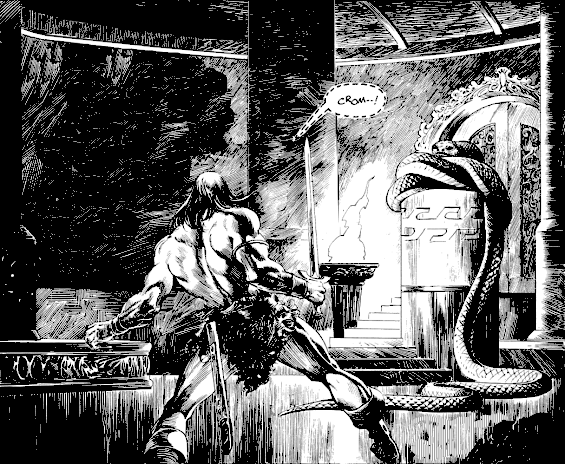
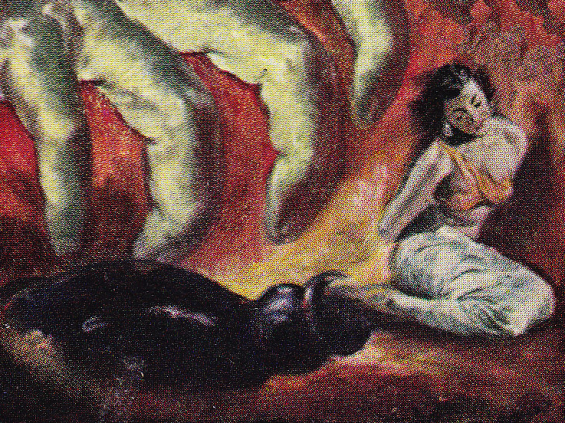
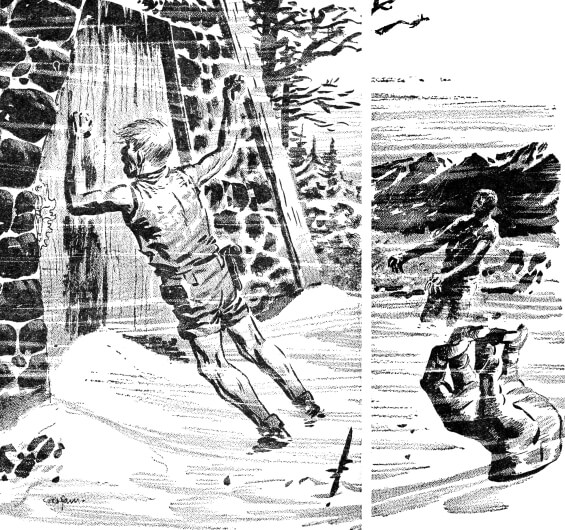
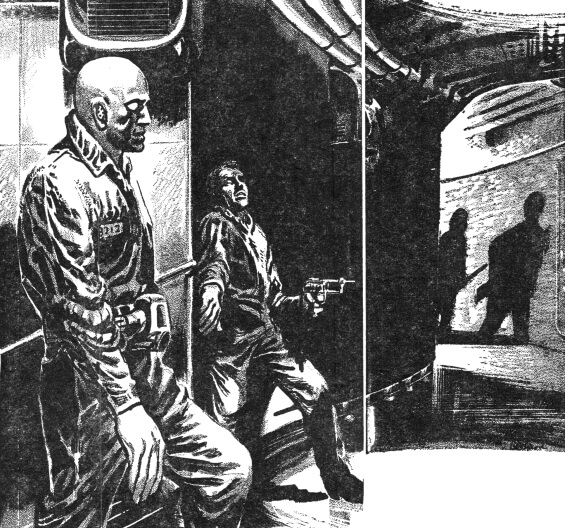
The Devil In Iron - illustration by John Buscema and Alfredo Alcala

Considered by some to be the worst Conan story written by Howard, The Devil In Iron isn’t my favourite either.

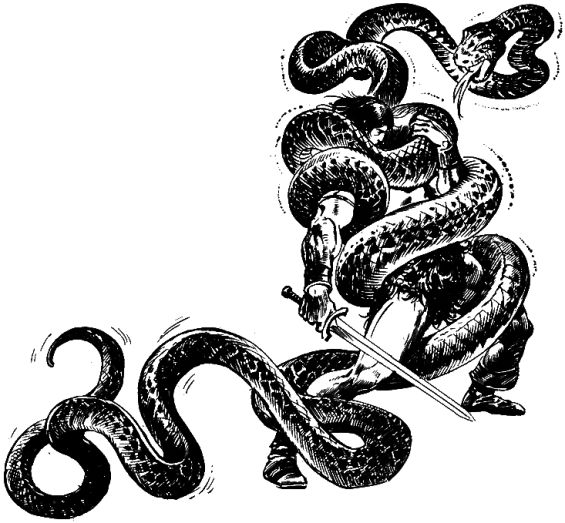
In it the “gay clad” barbarian visits an island fortress, wrestles a giant green snake, fights an unstabable demon, and saves a sleepy-headed and scantily dressed beauty.

The plot, which is rather intricate, doesn’t do much for me – but several scenes have that Howard writing magic I love.

LibriVoxThe Devil In Iron
By Robert E. Howard; Read by Phil Chevernet
6 Zipped MP3 Files or Podcast – Approx. 1 Hour 35 Minutes [UNABRIDGED]
Publisher: LibriVox.org
Published: March 16, 2013
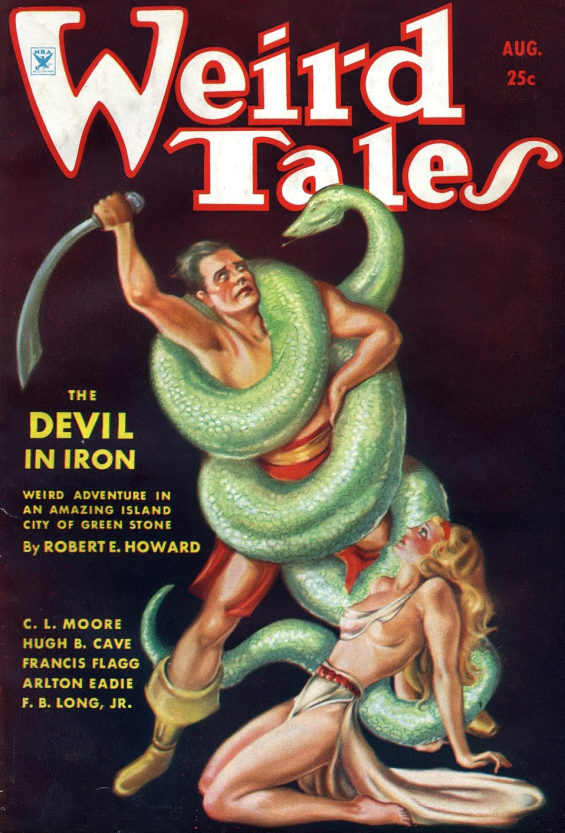
Alone on the strange enchanted island of Xapur, Conan must face Khostaral Khel, a fearsome monster made of living metal! First published in Weird Tales, August 1934.

Podcast feed: http://librivox.org/rss/7606

iTunes 1-Click |SUBSCRIBE|
The Devil In Iron - illustration by John Buscema and Alfredo Alcala

Weird Tales, August 1934

Posted by Jesse Willis

Review of Methuselah’s Children by Robert A. Heinlein

SFFaudio Review

Methuselah's ChildrenMethuselah’s Children
By Robert Heinlein; Read by MacLeod Andrews
6 CDs – 7 Hours [UNABRIDGED]
Publisher: Brilliance Audio
Published: July 2012
ISBN: 9781455878987
Themes: / space / genetic engineering / genetic modification / aging / death / interstellar travel / aliens /

Publisher Summary:

After the fall of the American Ayatollahs as foretold in Stranger in a Strange Land and chronicled in Revolt in 2100, the United States of America at last fulfills the promise inherent in its first Revolution: for the first time in human history there is a nation with Liberty and Justice for All.

No one may seize or harm the person or property of another, or invade his privacy, or force him to do his bidding. Americans are fiercely proud of their re-won liberties and the blood it cost them; nothing could make them forswear those truths they hold self-evident. Nothing except the promise of immortality….

This 1941 novel by Robert Heinlein is a short but epic space adventure about the Howard Families, a population of people who can live very long lives thanks to a history of selective breeding. Over the centuries, they took on different identities to hide their long-life nature from “short-lifers,” but eventually some of them decided to share their scientific achievement with the public.

However, instead of celebrating the Howard Families’ scientific achievement, the short-lifers suspect them of concealing the true secret to long life. This is where the story starts: when the government and the public begin to persecute the Howard Families, Lazarus Long (the kilt-wearing leader of the group who is more than 200 years old and who always has a knife strapped to his thigh) hijacks a city-sized starship so the families can flee Earth and go in search of a new home.

Despite its short size, this book covers a long length of time, is packed with ideas, and manages to explore deep themes such as aging, death, human genetic modification, and individualism, among others. There’s bound to be something in here for everyone, although personally I struggled with the first half because of the lengthy democratic meetings and the seemingly endless strategizing about what to do, how to do it, and when to do it. I also thought the discussions about the technicalities of interstellar travel or alien biology were a little tedious, but I’m sure hard-SF fans will love every moment.

I really got into the story later, when the families started arriving on other planets and things got weird. The alien cultures, worlds and philosophies were brilliant and often eerie. How can you not love aliens who say things like, “My people will like to see you and smell your skin.”

The human characters, on the other hand, were less lovable for me. They lacked depth and tended to speak literally and directly, without subtext. The narration on the audiobook didn’t help warm the dialog up either, because in the reading the characters sometimes sounded like they were barking lines at each other, and at other times odd words in the dialog were emphasized that I don’t think should have been.

The narrator McLeod Andrews did give a very clear reading though, and once I got used to his style the odd emphases were less noticeable. He did an awesome job of embodying the voice of grumpy but optimistic Lazarus Long, who was the most developed and interesting character.

Ultimately, even though not everything might be to your taste, there are just so many great ideas and themes squished into this book that you’re bound to find a ton to enjoy, despite its short length.

Review by Marissa VU

The Chaser by John Collier

SFFaudio Online Audio

The Chaser by John Collier

John Collier’s modern fairy tale, The Chaser, was adapted as an episode of the first season of the original The Twilight Zone. And now the story has just been narrated for Tom Elliot’s The Twilight Zone Podcast.

The Twilight Zone PodcastThe Chaser
By John Collier; Read by Danny Davis
1 |MP3| – Approx. 11 Minutes [UNABRIDGED]
Podcaster: The Twilight Zone Podcast
Podcast: March 18, 2013
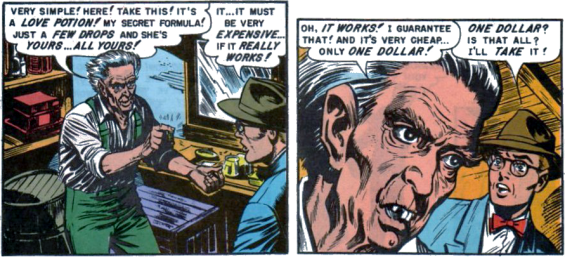
Alan, a lovelorn man, desperate for the object of his affections to return them, visits a queer chemist for a solution. First published in The New Yorker, December 28, 1940.

Podcast feed: http://feeds.feedburner.com/TheTwilightZonePodcast

iTunes 1-Click |SUBSCRIBE|

Here is a |PDF| of the story, and here is another |PDF|.

And here’s The Twilight Zone adaptation:

The story also inspired a Tales From The Crypt story, in issue 25:

Tales From The Crypt #25

That, in turn, was adapted for the television series, using the same name:

Posted by Jesse Willis

The SFFaudio Podcast #204 – AUDIOBOOK: The Status Civilization by Robert Sheckley

Podcast

The SFFaudio PodcastThe SFFaudio Podcast #204 – The Status Civilization by Robert Sheckley, read by Gregg Margarite.

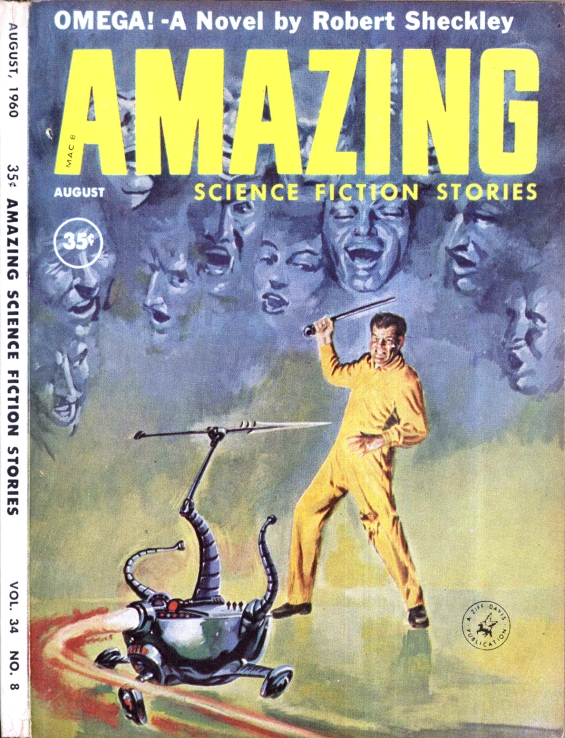
This UNABRIDGED AUDIOBOOK (4 Hours 53 Minutes) comes to us courtesy of LibriVox.org. The Status Civilization was first published under the title Omega and was serialized in the August and September 1960 issues of Amazing Science Fiction Stories Magazine.

Go back to episode (SFFaudio Podcast #056) to hear our discussion of it.

Will Barrent awakes without memories just before being deposited on Omega, a planet for criminals where the average life expectancy is three years. He’s listed as a murderer and released into the illicit society as a “peon” the lowest class imaginable. A mysterious girl gives him a weapon that starts him on his path to status, a path that requires constant brutality. But it must be borne if our hero is to discover the reason for his imprisonment; A reason that pits him against himself, and involves the sardonically similar but devoutly different creeds of Omega and Earth.

Amazing Science Fiction Stories - OMEGA by Robert Sheckley

Omega by Robert Sheckley - illustration by Grayam

Omega by Robert Sheckley - illustration by Grayam

Posted by Jesse Willis

To The Best Of Our Knowledge: S.T. Joshi on H.P. Lovecraft (and Cosmicism)

SFFaudio News

To The Best Of Our KnowledgeI posted about this To The Best Of Our Knowledge segment (and two others) back in 2009, but it’s worth a repost.

The video version below only includes the second segment, which is an excerpt from Garrick Hagon’s reading of Lovecraft’s The Call of Cthulhu and host Jim Fleming’s talk with S.T. Joshi about Lovecraft’s philosophy of “cosmicism.”

Cosmicism, according to Wikipedia, is the “philosophical position that mankind is an insignificant aspect of a universe at best indifferent and hostile.” Though putting it that way it seems to me that “cosmicism” is not so much a philosophical position as just an informed viewpoint.

And bonus How Big is the Universe? from Minute Physics:

Posted by Jesse Willis