News, Reviews, and Commentary on all forms of science fiction, fantasy, and horror audio. Audiobooks, audio drama, podcasts; we discuss all of it here. Mystery, crime, and noir audio are also fair game.
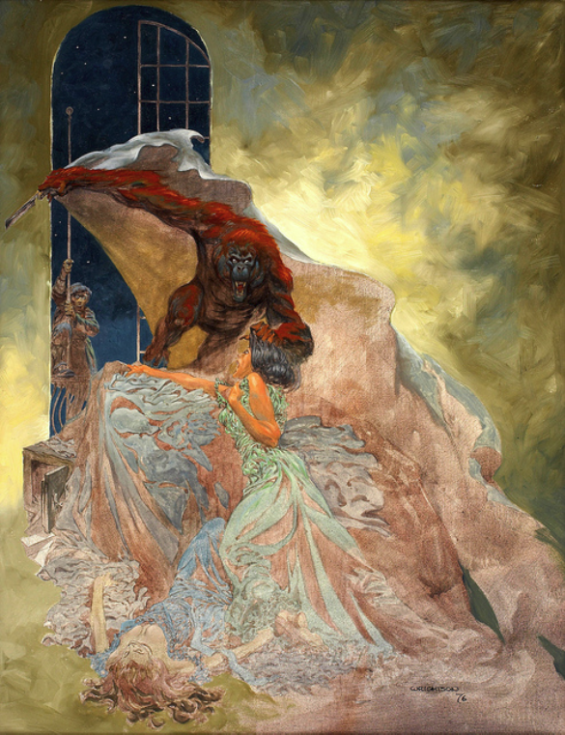
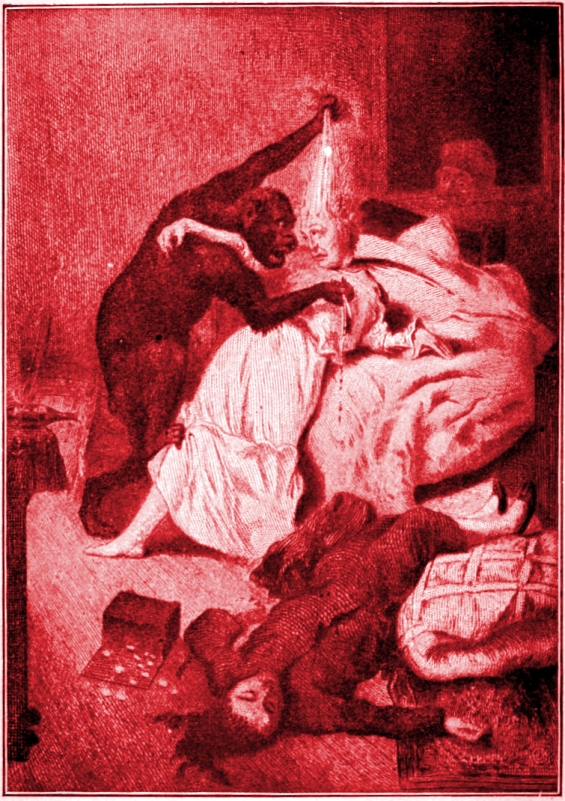
The SFFaudio Podcast #179 – The Murders In The Rue Morgue by Edgar Allan Poe, read by Bronson Pinchot. This is an UNABRIDGED AUDIOBOOK (1 Hours 31 Minutes) and comes to us courtesy of AudioGo and their collection Poe’s Detectives: The Dupin Stories by Edgar Allan Poe.
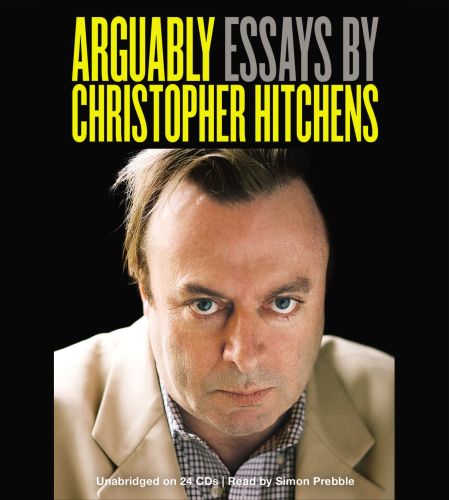
Arguably: Essays
By Christopher Hitchens; Read by Simon Prebble
24 CDs – Approx. 28.5 Hours [UNABRIDGED]
Publisher: Hachette Audio
Published: September 1, 2011
ISBN: 9781611139068
Themes: / Non-fiction / History / War / Biography / Science Fiction / Fantasy / Iran / Afghanistan / Germany / North Korea / France / Dystopia / Utopia / Religion / Tunisia / Piracy / Terrorism / Feminism / Pakistan /
The first new collection of essays by Christopher Hitchens since 2004, Arguably offers an indispensable key to understanding the passionate and skeptical spirit of one of our most dazzling writers, widely admired for the clarity of his style, a result of his disciplined and candid thinking. Topics range from ruminations on why Charles Dickens was among the best of writers and the worst of men to the haunting science fiction of J.G. Ballard; from the enduring legacies of Thomas Jefferson and George Orwell to the persistent agonies of anti-Semitism and jihad. Hitchens even looks at the recent financial crisis and argues for arthe enduring relevance of Karl Marx. The audio book forms a bridge between the two parallel enterprises of culture and politics. It reveals how politics justifies itself by culture, and how the latter prompts the former. In this fashion, Arguably burnishes Christopher Hitchens’ credentials as-to quote Christopher Buckley-our “greatest living essayist in the English language.”
Here’s a question I was thinking about while listening to Arguably.
What is fiction for?
One answer, the bad one, is that it’s for entertainment. That’s certainly where many readers are willing go, and the fiction writers who write it too. Maybe that’s precisely why so much fiction is just so very shitty.
To me, if you aren’t exploring ideas in your fiction, then you really aren’t serving a greater purpose. Idea fiction, fiction with ideas rather than just action and plot, is to my mind a kind of supplement to the wisdom found in writings on history, biography and science.
Of the many lessons learned I in listening to the 107 essays in Arguably I was particularly struck by the wisdom Christopher Hitchens gleaned from his reading of fiction. Hitchens reviews many books in this collection, nearly half of the essays are book reviews. Books like 1984, Animal Farm, Flashman, The Complete Stories Of J.G. Ballard, Our Man In Havana, and even, surprisingly, Harry Potter And The Deathly Hallows all get fascinating, critical, and reverent reviews.
Yet Hitchens also takes the lessons with him into his writing about his travels. Hitchens writes about visits to such places as North Korea, Cyprus, Afghanistan, and Kurdish Iraq. When talking about his visit to Beirut we see what comes when Hitchens, a man of ideas, acts upon them. The essay, The Swastika and the Cedar sees the convictions of the commited anti-fascist Hitchens beaten and nearly kidnapped for an act of vandalism on a prominently displayed swastika. Writes Hitchens:
“Well, call me old-fashioned if you will, but I have always taken the view that swastika symbols exist for one purpose only—to be defaced.”
In a review of two books, Lolita and The Annotated Lolita, Hitchens applies the controversial subject in a real life look at the modern, and very non-fictional oppression and objectification of women. Indeed, the ideas he appreciated in fiction helped Hitchens to come to grips with the real world.
I think the worst essay in this collection is the one on the serving of wine and restaurants, Wine Drinkers Of The World, Unite. It was simply a waste of the talent, too light, too easy a target. And yet, even that essay, the worst essay in all 107 has a memorable anecdote: “Why,” asks Hitchens’ five year old son, “are they called waiters? It’s we who are doing all the waiting.”
As to the narration of the audiobook. I’m ashamed to admit that I was initially dismayed when I saw that Christopher Hitchens had not narrated this audiobook himself. I was wrong to worry. Incredibly, Simon Prebble seems to have have become Hitchens for this narration. Prebble perfectly captures the erudite words, so eloquently performs them, and with an accent so like that of Hitchens’ own so as to make me think that it was Hitchens who had actually read it.
I think the worst essay in this collection is the one on the serving of wine and restaurants, Wine Drinkers Of The World, Unite. It was simply a waste of the talent, too light, too easy a target. And yet, even that essay, the worst essay in all 107 has a memorable anecdote: “Why,” asks Hitchens’ five year old son, “are they called waiters? It’s we who are doing all the waiting.”
Here’s a list of the book’s contents, with links to the original etexts when available, along with my own notes on each:
The Private Jefferson – a review of Jefferson’s Secrets: Death And Desire At Monticello by Andrew Burstein
Jefferson Vs. The Muslim Pirates – a review of Power, Faith, And Fantasy: America In The Middle East: 1776 To The Present by Michael B. Oren
Benjamin Franklin: Free And Easy – a review of Benjamin Franklin Unmasked: On the Unity of His Moral, Religious, And Political Thought by Jerry Weinberger
John Brown: The Man Who Ended Slavery – a review of John Brown, Abolitionist: The Man Who Killed Slavery, Sparked The Civil War, And Seeded Civil Rights by David S. Reynolds
Abraham Lincoln: Misery’s Child (aka Lincoln’s Emancipation) – a review of Abraham Lincoln: A Life by Michael Burlingame
JFK: In Sickness And By Stealth – a review of An Unfinished Life: John F. Kennedy, 1917–1963 by Robert Dallek
Saul Bellow: The Great Assimilator – review of six novels by Saul Bellow (The Dangling Man, The Victim, The Adventures Of Augie March, Seize The Day, Henderson The Rain King, and Herzog)
Vladimir Nabokov: Hurricane Lolita – reviews of Lolita by Vladimir Nabokov and The Annotated Lolita edited and annotated by Alfred Appel, Jr.
John Updike: No Way – a review of The Terrorist by John Updike (with reference to The Coup too) John Updike: Mr. Geniality – a critical review of the affable Due Considerations: Essays And Considerations by John Updike
Vidal Loco – Gore Vidal went crazier, more elitist and perhaps more racist as he got older (with attention and quips for Quentin Crisp and Oscar Wilde and Joyce Carol Oates)
America The Banana Republic – Hitchens on the “socialistic” bank bailout of 2008 (“socialism for the rich and free enterprise for the rest”)
An Anglosphere Future – a review of The History Of The English Speaking Peoples by Andrew Roberts (with reference to both Sherlock Holmes and The White Company by Sir Arthur Conan Doyle as well as to Cecil Rhodes and Rudyard Kipling)
Political Animals – a review of Dominion: The Power Of Man, The Suffering Of Animals, And The Call To Mercy by Matthew Scully
Old Enough To Die – on capital punishment as applied to children In Defense Of Foxhole Atheists – a visit to the United States Air Force Academy and the tax funded proselytizing
ECLECTIC AFFINITIES Isaac Newton: Flaws Of Gravity – a stroll through the medieval streets of Cambridge with the scientists, mathematicians, and philosophers who worked there
Gustave Flaubert: I’m With Stupide – a review of Bouvard et Pécuchet by Gustave Flaubert translated by Mark Polizzotti The Dark Side Of Dickens – a review of Charles Dickens by Michael Slater a biography (Hitchens was a not uncritical admirer of the subject)
Marx’s Journalism: The Grub Street Years – a glowing review of Dispatches for the New York Tribune: Selected Journalism Of Karl Marx edited by James Ledbetter, foreword by Francis Wheen (Marx admired the United States, and other fascinating facts about the father of communism)
Rebecca West: Things Worth Fighting For – an introduction to Black Lamb and Grey Falcon: A Journey Through Yugoslavia by Rebecca West
Ezra Pound: A Revolutionary Simpleton – a review of Ezra Pound, Poet: A Portrait Of The Man And His Work: Volume I: The Young Genius, 1885-1920 by A. David Moody (a biography of the fascist poet)
John Buchan: Spy Thriller’s Father – a review of John Buchan The Presbyterian Cavalier by David R. Godine (with discussion of The 39 Steps and a fantasy novelette The Grove Of Ashtaroth)
Fraser’s Flashman: Scoundrel Time – a look at the George MacDonald Fraser series of Flashman books and the connection with The Adventure Of The Empty House
AMUSEMENTS, ANNOYANCES, AND DISAPPOINTMENTS Why Women Aren’t Funny – a controversial essay on why more comedians are male and why women laugh at them the way they do
As American As Apple Pie – a literary and chronological history of the blowjob, with reference to Valdamir Nobokov’s Lolita
So Many Men’s Rooms, So Little Time – a fascinatingly insightful argument on what’s was going on with the Larry Craig bathroom airport scandal and related phenomena
A War Worth Fighting – a persuasively systematic review of Churchill, Hitler And The Unnecessary War: How Britain Lost Its Empire And The West Lost The World by Pat Buchanan
Just Give Peace A Chance? – a critical review of Human Smoke by Nicholson Baker
Don’t Mince Words – the disenfranchisement of south Asians in Britain isn’t the cause of bombings, hatred of women is.
History And Mystery – al-Qaeda in Iraq, jihadists, or “insurgents”? Do words matter? Of course they bloody well do.
Words Matter – political slogans make of “every adult in the country” an “illiterate jerk who would rather feel than think”
This Was Not Looting – how can a government “loot” it’s own weapons manufacturing facility? The government of Iraq managed it according to The New York Times.
The “Other” L-Word – a lighthearted piece on the prominence of the word “like” and it’s use
The You Decade – what’s wrong with you (marketing to the selfish)
Suck It Up – the Virginia Tech shootings prompted the wrong response from the world (namely that it prompted one)
A Very, Very Dirty Word – the English empire, in centuries to come, may only be remembered for soccer and the phrase “fuck off”
Wow! I’m loving this story, as narrated by John Feaster. Sez Feaster of his narration “it’s more a performance than a reading” and that’s absolutely true – Feaster seems to be taking the events of the plot very personally, and that lends power to what is the sort of twistily fantastic tale you’d see on something like Alfred Hitchcock Presents. And yet, Achmed Abdullah’s pulpy writing seems damned good too!
And, if even half the stories about the author, as detailed over on the Wikipedia entry for him, are true, he may be one of the most fascinating writers I’d never heard of.
Alexander Nicholayevitch Romanoff (aka Achmed Abdullah) was, apparently, a Russian born relative of the last Czar, the son of an Afghan princess, an Academy Award nominated scriptwriter, an officer in the British, Indian, and Turkish armies (serving in India, Afghanistan, Tibet, Africa, China, and Turkey), as well as being a Muslim, a Catholic, and a spy!
Fear
By Achmed Abdullah; Read by John Feaster
1 |MP3| – Approx. 22 Minutes [UNABRIDGED]
Publisher: LibriVox.org
Published: June 19, 2010
First published in Detective Story Magazine, 1919.
“One must not put a loaded rifle on the stage if no one is thinking of firing it.” -Anton Chekhov, November 1,1889.
Mindwebs – The Gun Without A Bang
By Robert Sheckley; Read by Michael Hanson
1 |MP3| – Approx. 19 Minutes [UNABRIDGED with a musical bed]
Broadcaster: WHA Radio (Madison, WI)
Broadcast: August 4, 1982
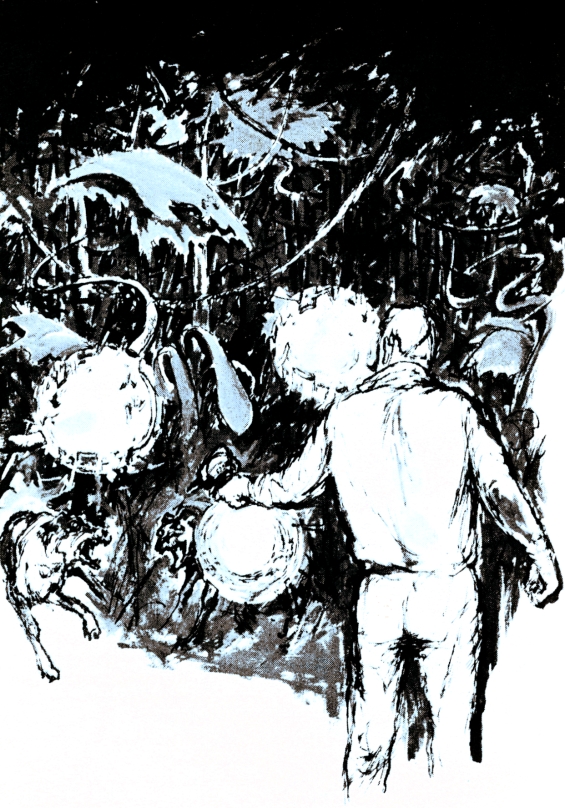
Provider: Archive.org Alfred Dixon is a weapons expert assigned to test, in hostile alien jungle conditions, a new deadly disintegration pistol. The thing kills alright, but there’s one thing it doesn’t do. It won’t report. First published in Galaxy Science Fiction, June 1958.
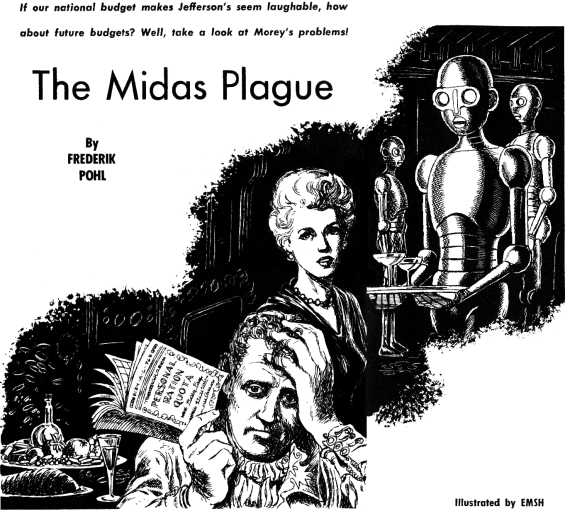
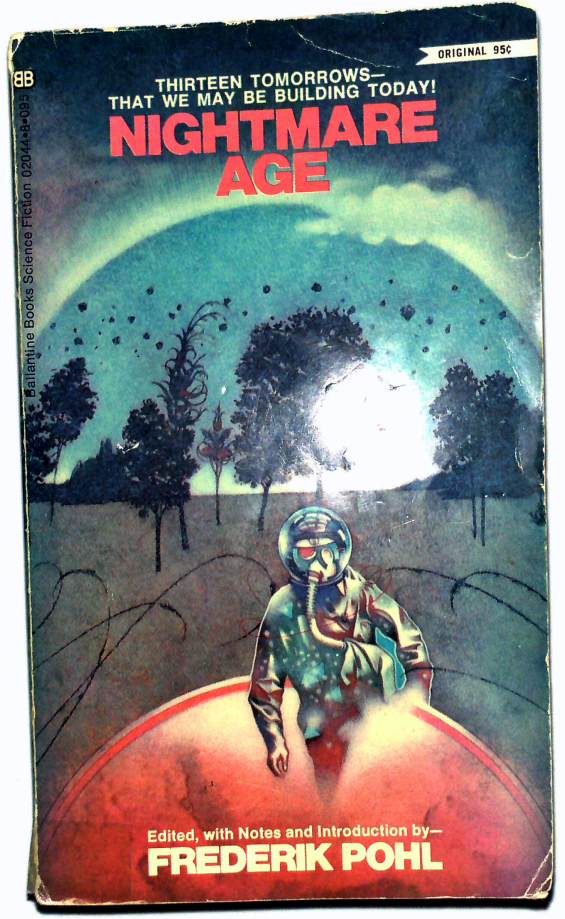
“the curse of want gives way to the curse of plenty” -Frederik Pohl, in the anthology Nightmare Age
Broadcast on BBC Radio 4, as a part of “The Shape of Things to Come” season in 1991 (a series of plays looking at the future) The Midas Plague was adapted from the acclaimed novella by Frederik Pohl.
Now, thanks to the terrific service RadioArchive.cc you can experience this positively smirk inducing satire of a consumer society flipped on it’s head.
Here’s my description of the premise:
Morey Fry lives in a post-scarcity world where cheap production has made commodities, consumer goods, and food ubiquitous. The “poor” are forced to spend their lives in a constant state of frantic consumption, continually upgrading their devices, clothes, jewelry, and appliances. But “poor” Morey can only wear-out his shirts so fast, and taking double cream in his coffee is giving a sick feeling. Meanwhile a black market in counterfeit ration book stamps flourishes, yet Morey is an honest man. When poverty stricken Morey marries a “rich” girl from the right side of the tracks they move into his well appointed mansion. There, the efficient household staff of robot butlers, valets, maids, cooks, and footmen foist endless consumer goods upon them both at a furious rate, something that upsets Morey’s new “wealthy” spouse – after all she’s is accustomed to a certain luxurious lifestyle.
The Midas Plague
Adapted by Mark Power from the story by Frederik Pohl; Performed by a full cast
1 MP3 (via TORRENT) – Approx. 44 Minutes [RADIO DRAMA]
Broadcaster: BBC Radio 4
Broadcast: September 4, 1991
Directed by Alec Reid
Cast:
Morrey Fry – Michael Drew
Cheri Fry – Diane White
Howland – Alan Covenay
Judge Elon – Eric Allen
Grace Elon – Caroline Hunt
Semmelweiss – Nick Chivers
Newman – Nick Chivers
Fairless – Clarence Smith
Sam – Clarence Smith
Wally – Richard Pearce
Blaine – Richard Pearce
Tanaquil – Catherine Neal
Wainwright – Fraser Kerr
Henry, the Robot – Geoffrey Collins
Profirio – Geoffrey Collins
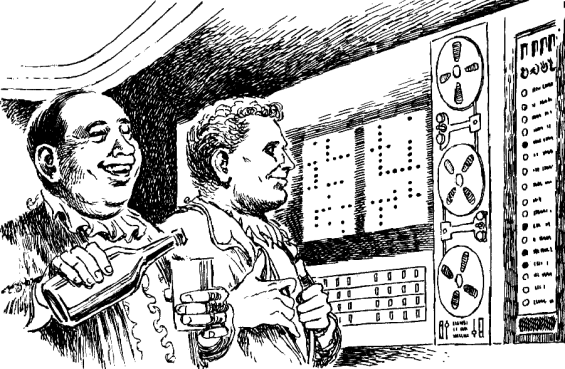
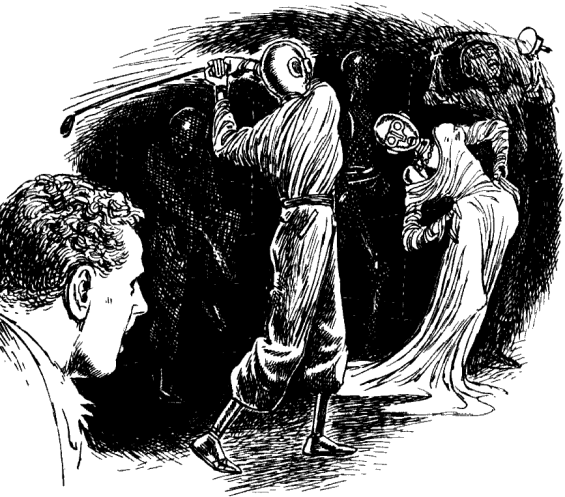
More illustrations from the publication in Galaxy, April 1954:
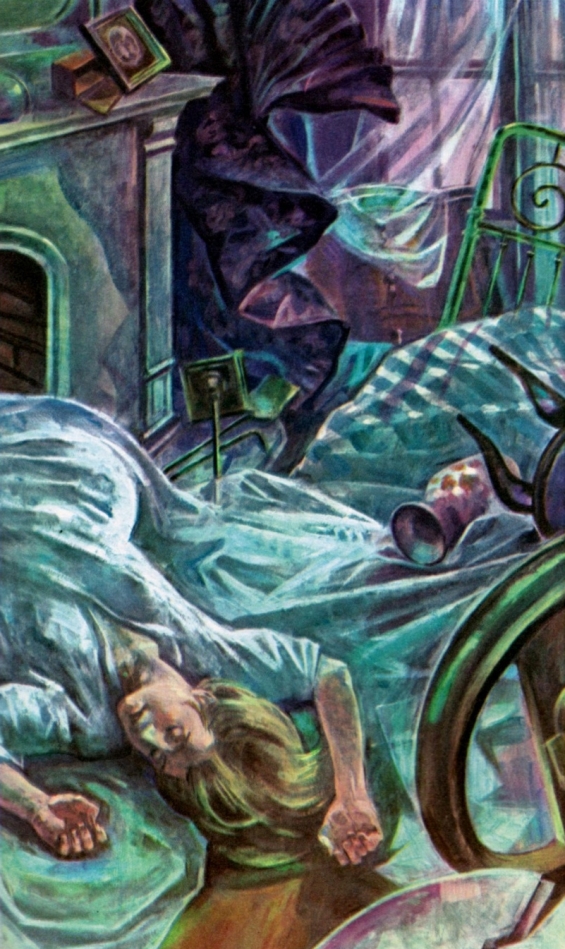
Professional narrator Xe Sands (Xe is pronounced “exy”) recorded a terrific sounding audiobook of Charlotte Perkins Gilman’s The Yellow Wallpaper back in June.
Sez Xe:
Originally, I wanted to record “The Lottery,” by Shirley Jackson. Sadly, it is not in the public domain. But then, for some reason, this wonderful, dark, gothic story of a woman’s descent into madness came to mind. Not sure whether to thrilled to have the perfect piece, or somewhat disturbed that a tale of neuroses run wild popped into my mind so easily, but I digress…
I think I’ve grown a bit angry.
Let me start with this – how the story is generally encapsulated:
“…a woman whose mental illness makes her a prisoner in her own home.”
“…a young wife and mother succumbing to madness ”
So why is this a problem? It’s true, right? She is unbalanced. She does descend into madness. But it’s all a question of why, WHY does she “succumb” to madness?
And this is where I grow a bit angry. Most of the dismissive language used in these summaries miss the point: that this story is a treatise on the attitudes toward women’s mental health during this period (written in 1899). The narrator, who we are supposed to believe is unreliable, is actually perfectly coherent and early on in the story, likely a far better judge about what would actually help her. It is the ignorance and arrogance of her husband that is the unreliable narrator, for his filter regarding her condition and what would help it, cannot be trusted to give the reader an accurate picture of what ails his wife.
Take a look at this bit from the author, “Why I Wrote the Yellow Wallpaper.” And tell me if attitudes are really all that different today? All I can say is that it is wonderful that she was able to save herself…and I think she put a hint of that in this story:
“He says no one but myself can help me out of it, that I must use my will and self-control and not let any silly fancies run away with me.”
Luckily for Gilman, she was able to do what her narrator could not.


 The SFFaudio Podcast #179 – The Murders In The Rue Morgue by Edgar Allan Poe, read by Bronson Pinchot. This is an UNABRIDGED AUDIOBOOK (1 Hours 31 Minutes) and comes to us courtesy of AudioGo and their collection Poe’s Detectives: The Dupin Stories by Edgar Allan Poe.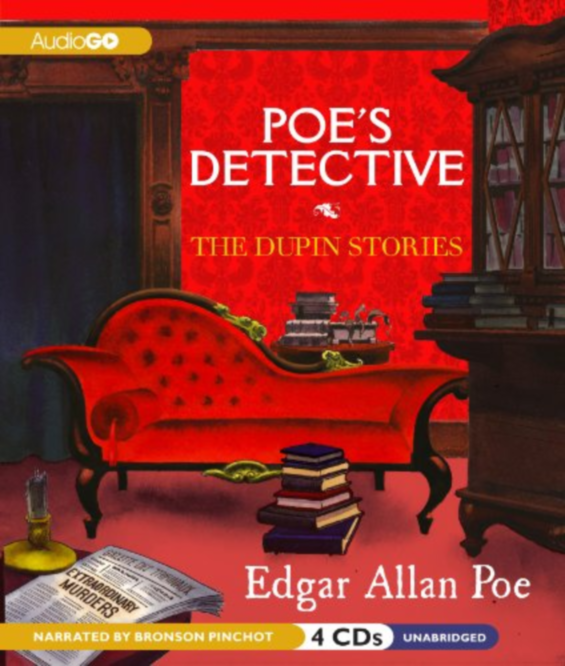

 Arguably: Essays
 Fear
Fear
 Mindwebs – The Gun Without A Bang