J. Michael Straczynski’s The Adventures Of Apocalypse Al to be a digital comic

SFFaudio News

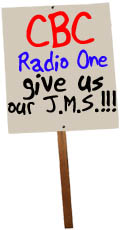
CBC! Give Us The Adventures Of Apocalypse AlIt seems that back in October that “MTV Comics announced a new comic by J. Michael Straczynski, The Adventures of Apocalypse Al, which will be published online and on tablets and mobile devices in Spring 2012.”

Apparently there are plans to then release it in paper form. And there are also plans for a “live-action webisode series on MTV Geek in the Fall of 2012.”

The Adventures of Apocalypse Al marks the Eisner, Hugo, Eagle and Inkpot award-winner’s first graphic novel to follow the New York Times best-selling Superman: Earth One. Originally developed as a radio serial for the CBC, Al was never released and has had fans wondering if it would ever see the light of day. “Joe and I have been discussing the property since sometime in 2007, and it’s amazing to finally bring this series to fans.” said MTV Comics’ Tom Akel. JMS has described it as “Monty Python meets the Maltese Falcon en route to the end of the world.”

This comes as a bit of a surprise given that The Adventures Of Apocalypse Al was originally conceived, written, and produced as a radio drama, consisting of twenty 5-minute episodes, for CBC.

I’ve been covering the glacial drama that is The Adventures Of Apocalypse Al since 2004. CBC Radio One has the show completed, in the can, and ready to run ago, but it never aired.

At this point I suspect the original incarnation of The Adventures Of Apocalypse Al will never be on the radio.

It is a great pity.

Posted by Jesse Willis

The SFFaudio Podcast #013 on YouTube

SFFaudio News

First podcast November 24, 2008.

The discussion with old school podcaster Mister Ron, from Mister Ron’s Basement Podcast, begins around twelve minutes in, until then we discuss audiobooks and prequel movies. Mister Ron podcast more than 2000 episodes of humorous fiction from the 19th century between 2005 and 2011.

HERE are the shownotes.

Posted by Jesse Willis

The SFFaudio Podcast #149 – TOPIC: METAPHOR in Science Fiction and Fantasy

Podcast

The SFFaudio PodcastThe SFFaudio Podcast #149 – Jesse, Luke Burrage, and Professor Eric S. Rabkin talk about METAPHOR in Science Fiction and Fantasy.

Talked about on today’s show:
Science Fiction and Fantasy sort of undercut the scholastic meaning of metaphor, my friend Bill, metaphors come in two parts – the vehicle and the tenor, giants vs. ogres, denuding the metaphor, Aldebaran 6 has astonishingly beautiful humanoids, unknown vehicles deliver us, The Monsters by Robert Sheckley, The War Of The Worlds, a Tolkienesque task, A Voyage To Arcturus by David Lindsay, Dark Universe by Ron Goulart, Plato’s cave, blindness, dead metaphors, the Burning Bush, Saul vs. Paul, a sound idea, Germanic grounds for divorce, Star Maker by Olaf Stapledon, The Door Into Summer by Robert A. Heinlein, 1984 by George Orwell, “the clock stuck thirteen”, constructing meaning, William Shakespeare, awful as in creating awe, Moses and Mount Sinai, “shining like the sun”, a sun god, Sampson, hairy like the sun, bald like the moon, Genesis, “you may look upon my hindparts”, Childhood’s End by Arthur C. Clarke, unconscious metaphors, Frankenstein by Mary Shelley, wretch, catwomen from Venus, voluptuous sex objects, building up the vocabulary, Halting State by Charles Stross, Neuromancer‘s opening line, text adventure, Enoch lived 365 years (the sun god), The Tower Of Babel by Ted Chiang, comparing the constructed worlds of video games with the constructed worlds of Science Fiction, Battlefield 2, a meta-metaphor for understanding what Science Fiction does for understanding our world, hamartia needs range finding, The Time Machine by H.G. Wells, “any fool can see”, a system of metaphors for the characters and the reader provides meta-uses, metaphor means “carry across”, Greek moving vans are called metaphore, the Morlocks are the workers, the Eloi are the owners, the Time Traveler is the manager, Get That Rat Off My Face by Luke Burrage, Science Fiction as thought experiment, Michael Crichton, deus ex machina, The War With The Newts by Karel Čapek, Finnegan’s Wake, experimental novels, Germinal by Émile Zola, Flatland by Edwin A. Abbott, allusion vs. metaphor, Sampson vs. Goliath, Luke and Eric prime each other, is Science Fiction useful?, should SF be useful?, Science Fiction and Personal Philosophy (SFBRP #100), reading only the Bible, The Cold Equations by Tom Godwin, the hard lesson namely: “sometimes you’re just fucked”, Star Trek II, cannibalism, Eric objects, the physical world vs. unconditional love, NASA staff need to read The Cold Equations, Steve Jobs (and his reality distortion field), a world full of things other than minds, smart by accident, Apollo 13, give the astronauts poetry, the title itself crystallizes the meaning, The Scarlet Letter by Nathaniel Hawthorne, a parametric center, how do we maintain individuality in the face of fascism?, the vehicle/tenor heuristic, The Great Gatsby by F. Scott Fitzgerald, Nick Carraway, the car is the parametric central of The Great Gatsby, martian vampires, Apollo 1 disaster, Velcro and oxygen, “a failure of imagination”, learning from the past, the metaphor falls and leaves behind a lesson about reality.

Posted by Jesse Willis

Spartacus on television and in history podcasts

SFFaudio Online Audio

Spartacus - Season 3

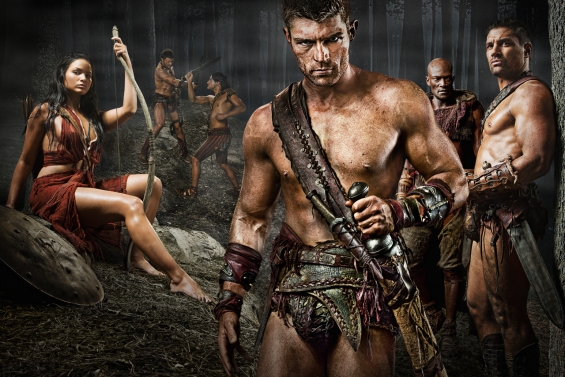
I’ve been enjoying, with a growing admiration, the New Zealand based Spartacus television series. I like it not least for the unique grammar the writers have developed. It’s a kind of a latinized English – mighty and subjectless sentences that are admirable.

The first episode nearly made me dismiss the show entirely. I didn’t like the 300-style effects, the slow motion blood, the constant bobbling of boobs nor the wall to wall green screening. But as the season went on I realized there was more to the show that the jeering mobs, the spectacle, and the nudity. By the final episode I was hooked. That was Spartacus: Blood and Sand. It gave us our hero’s origin story and his various reactions to slavery (denial, acceptance, pride, rebellion). And just as good were a pair of intensely (un)likeable villains, played by a pair of terrrific actors, showcased a cockeyed view of morality, Roman morality. Indeed, that first season began to tell the same story as the 1960 epic film staring Kirk Douglas (which itself was based on an book by Howard Fast). It did so at a slower pace, allowing for more of the historical detail to be played out.

Then there was the prequel series, Spartacus Gods Of The Arena, showing more of the background for the villains and supporting players. That season was supposed to be a stopgap, and it was, telling stories that were themselves only a background for the later seasons. But their own resonances resonated and proved themselves worthy. And now with the second (or third season depending on how you look at it) we have Spartacus: Vengeance, which outlines the beginnings of the bigger story, the latter half of the film version, and the massive slave rebellion that began in the Roman Republic.

the time, the first century BC, approximately 25% of all persons in Italy were slaves. And that’s where the heft of Spartacus comes from. It’s like Battlestar Galactica, but with a grounding in actual history. Spartacus was a real person. As were Crixus and Oenomaus. In these current episodes we see the foundations of the Third Servile War. It is history as drama, but it’s also the history of the opressed, not the rich, not popes, or kings, or robber barons. And this makes Spartacus unique among television programs currently airing.

Here are a couple of excellent old podcasts that made the show work all the better for me:

The History Of RomeMike Duncan’s excellent and long running The History Of Rome podcast covered the Spartacus story back in 2008. It’s still available and still fascinating!

|MP3|

Podcast feed: http://feeds.feedburner.com/TheHistoryOfRome


Military History PodcastAlso in 2008 George Hageman, who had a great podcast called the Military History Podcast, looked at the story of Spartacus from a more battles-based-perspective. Perhaps giving us a peek at the next season?

|MP3|

Podcast feed: http://geo47.libsyn.com/rss

Posted by Jesse Willis

To Virgil Finlay… by H.P. Lovecraft (narrated by Wayne June)

SFFaudio Online Audio

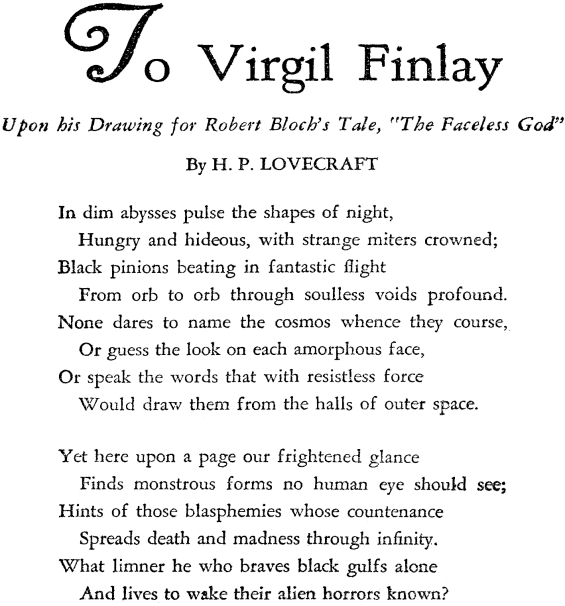
To Virgil Finlay by H.P. Lovecraft

I mentioned to Wayne June that I’d found the above poem in the July 1937 issue of Weird Tales. He hadn’t heard of it before. Then he went and narrated it for us!

|MP3|

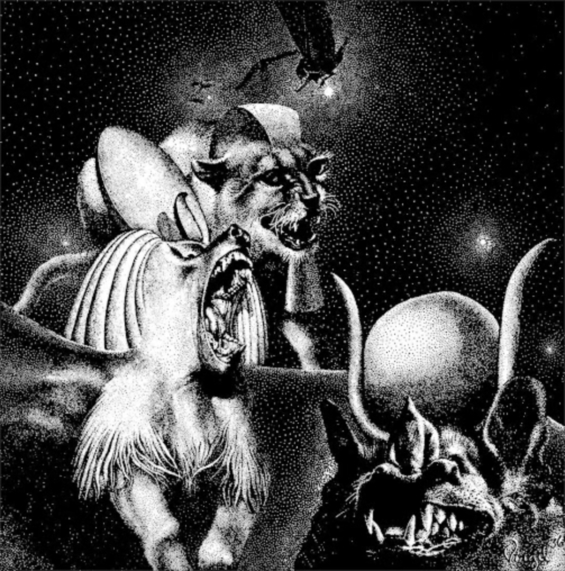
Written in a letter, dated November 30, 1937, it was sent from H.P. Lovecraft to Virgil Finlay. It was inspired by art drawn for a Robert Bloch story, published in the May 1936 issue of Weird Tales, and entitled The Faceless God. Here’s the illustration that inspired it:

The Faceless God - illustration by Virgil Finlay

Here’s at least part of the letter:

“I could easily scrawl a sonnet to one of your masterpieces if you weren’t too particular about quality. For example –

To Virgil Finlay Upon his Drawing Of Robert Bloch’s Tale “The Faceless God”
By H.P. LOVECRAFT

In dim abysses pulse the shapes of night,
Hungry and hideous, with strange miters crowned;
Black pinions beating in fantastic flight
From orb to orb through soulless voids profound.
None dares to name the cosmos whence they course,
Or guess the look on each amorphous face,
Or speak the words that with resistless force
Would draw them from the halls of outer space.

Yet here upon a page our frightened glance
Finds monstrous forms no human eye should see;
Hints of those blasphemies whose countenance
Spreads death and madness through infinity.
What limnner he who braves black gulfs alone
And lives to wake their alien horrors known?

Well well – quite in the Yuggoth tradition! I’ll have to keep a copy of this to try on one or another of the fan magazines!”

[Thanks Wayne!]

Posted by Jesse Willis