
I’ve made The SFFaudio Podcast available on YouTube. Here’s the first episode, from September 1, 2008!
The shownotes are HERE.
Posted by Jesse Willis
News, Reviews, and Commentary on all forms of science fiction, fantasy, and horror audio. Audiobooks, audio drama, podcasts; we discuss all of it here. Mystery, crime, and noir audio are also fair game.

I’ve made The SFFaudio Podcast available on YouTube. Here’s the first episode, from September 1, 2008!
The shownotes are HERE.
Posted by Jesse Willis
Lately I’ve been paging through dozens and dozens of magazines from the 1960s and 1970s. Several issues of Fantasy & Science Fiction from the mid-70s include a mysterious ad for a record from the future. Here’s a scan from the Fantasy & Science Fiction March 1975 issue:
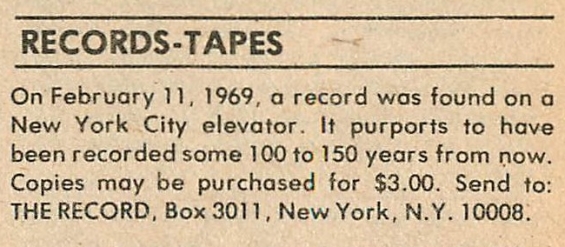
Here is the complete text:
RECORDS – TAPES
On February 11, 1969, a record was found on a
New York City elevator. It purports to have
been recorded some 100 to 150 years from now.
Copies may be purchased for $3.00. Send to:
THE RECORD. Box 3011. New York. N.Y. 10008.
I’m wondering … does anybody have a copy of this record from the future? Did you send away for it? I suspect it is public domain, as it hasn’t been created yet therefore it can’t have been copyrighted yet. If you do have a copy of the record, please send me an MP3 of it’s contents along with a scan or photograph of any packaging and labeling. Also, if it turns out that I am the one who recorded it, sometime in the future, I’ll need to start working on my time machine immediately.
Update:
Here’s part of the recording…
And here are some photos of the LP and it’s packaging:
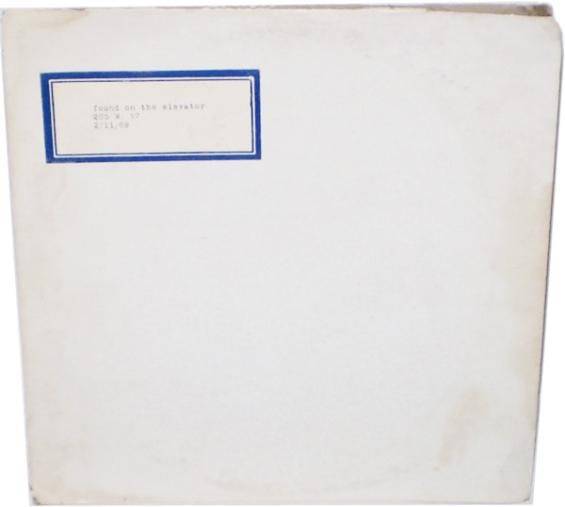
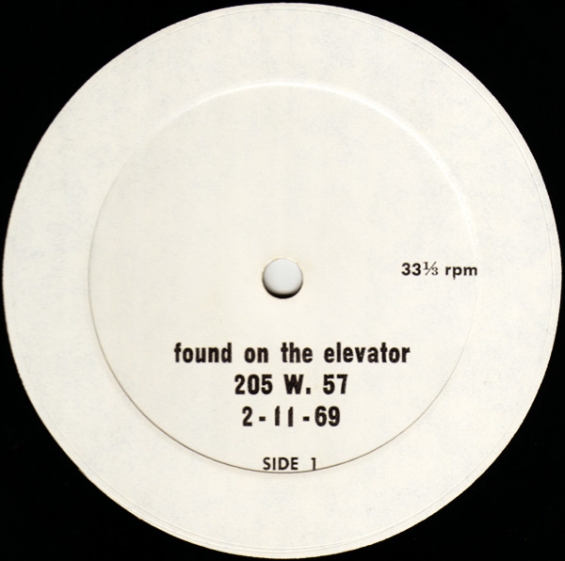
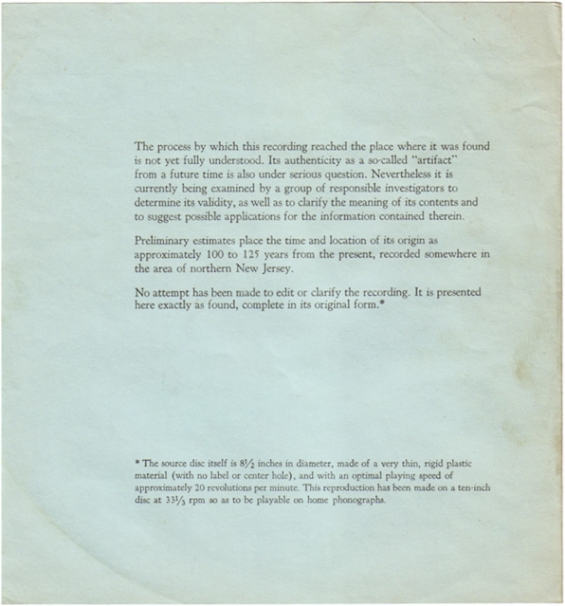
A transcript is available as scanned from a “1973 issue of Radical Software magazine (Vol. II Nr 3) contains a partial (inaccurate and rather poorly comprehended) transcript of a little over half of this recording, as well as a letter from Mr. Gesner declaring this recording to be a part of the public domain”: |PDF|
[Thanks Gregg!]
Posted by Jesse Willis

Where do you listen to audiobooks and podcasts?
I listen to a lot of novel length audiobooks while walking.

I listen to audiobooks when walking to work, from work, or walking a dog.
Short stories are for folding laundry, cooking or loading and unloading a dishwasher.



Depending on the length of the trip I either listen to audiobooks or podcasts while driving. Short podcasts are no good for long drives. So for longer drives I listen to BBC Radio 4’s In Our Time, CBC Radio One’s Ideas, or WKZU’s Entitled Opinions.



There are a few podcasts I consistently like to hear only on weekday mornings, like TVO’s Search Engine, CBC’s Spark, and WNYC’s Freakonomics. They somehow just seem to set the right tone – and that tone just doesn’t work for me in the evenings.



Some podcasts, like The Memory Palace, Today In Canadian History, and Eli Glasner On Film are so short I reserve them almost exclusively for walking to or from a car.


At the gym, while pumping iron, I tend to listen to interview podcasts like TWiT’s Triangulation, or Boing Boing’s Gweek. On the stationary bike I watch G4’s Fresh Ink because that’s a video podcast.

 I listen to audio drama almost exclusively in the evening. OTR Swag Cast, Radio Drama Revival, and Decoder Ring Theatre, are turned on in the minutes before I go to sleep.


 I listen to a couple of shows, Forgotten Classics and Science News Update, almost exclusively while getting dressed or clipping fingernails and toenails. I also listen to podcasts while in the bathroom – and that’s where my big pet peeve with podcasts comes most to a head – too many are just too quiet.
While brushing my teeth and when showering you need a decent volume to overcome the white noise of running water. I can’t listen to New Books In Public Policy in the bathroom, it’s volume is just way too low.
Where do you listen? And what do you listen to there?
Posted by Jesse Willis
William Gibson talks about his childhood (reading H.P. Lovecraft) and life in Canada.
Posted by Jesse Willis
Michael Geist compares Bill C-11 to SOPA in this brief vid that aired on The Hour.
Internet expert and academic Michael Geist outlines the content and implications of Bill C-11, a proposed copyright bill that has been called “Canada’s SOPA”.
Posted by Jesse Willis
William H. Patterson, Jr., author of Robert A. Heinlein: In Dialogue With His Century a new biography of Robert A. Heinlein, is the speaker in this Cato Institute video from 2010. Here’s the official description:
Robert A. Heinlein is regarded by many as the greatest science fiction writer of the 20th century. He is the author of more than 30 novels, including Starship Troopers, Stranger in a Strange Land, and the libertarian classic The Moon Is a Harsh Mistress. According to biographer William H. Patterson Jr., Heinlein’s writings “galvanized not one, but four social movements of his century: science fiction and its stepchild, the policy think tank; the counterculture; the libertarian movement; and the commercial space movement.” This authorized biography, reviewed enthusiastically by Michael Dirda in the Washington Post, is the first of two volumes, covering Heinlein’s early ambition to become an admiral, his left-wing politics, and his first novels. Heinlein later became strongly libertarian.
The speech itself is short, and isn’t particularity exciting, but Patterson gives some very detailed and interesting answers to audience questions. Some are about the connections between Ayn Rand and Robert A. Heinlein, the philosophy of Heinlein, socialism in the U.S.A., and Heinlein’s mysticism.
But one question asked, about how to rebuff arguments that Heinlein’s ‘Starship Troopers is fascist’, has Patterson point to the compulsory military service in Switzerland. He equates it with being a part of Swiss citizenship. However, military service is only compulsory for Swiss men. In South Korea, where the threat of war is much more pressing, compulsory military service works the same way – only men are compelled. In fact compulsory military service works, and has worked, that way just about everywhere – including in Nazi Germany and Fascist Italy. A much better example of equating military service with citizenship would be Israel, where compulsory military service includes both men and women – and there aren’t very many exemptions. Problem is, this isn’t what the book, or the movie, has. Heinlein has voting rights for veterans – soldiers can’t vote and anybody who doesn’t join the military can’t vote. That’s not fascism. I don’t know what it’s called but it is not fascism.
Posted by Jesse Willis