News, Reviews, and Commentary on all forms of science fiction, fantasy, and horror audio. Audiobooks, audio drama, podcasts; we discuss all of it here. Mystery, crime, and noir audio are also fair game.
The Alloy of Law by Brandon Sanderson, read by Michael Kramer The Hum and the Shiver by Alex Bledsoe, read by Emily Janice Card and Stefan Rudnicki The Apothecary by Maile Meloy, read by Cristin Milioti Why Read Moby Dick? by Nathaniel Philbrick, read by the author The Walking Dead: The Rise Of The Governor by Robert Kirkman and Jay Bonansinga, read by Fred Berman Psycho 2 by Robert Bloch, read by Paul Michael Garcia Steel and Other Stories by Richard Matheson, read by Scott Brick We’re Alive: Season Two by Kc Wayland, performed by full cast Bad Moon Rising by Jonathan Maberry, read by Tom Weiner Beggars Ride by Nancy Kress, read by Judy Young Vacation by Matthew Costello, read by Peter Macon To Sail Beyond the Sunset by Robert A. Heinlein, read by Bernadette Dunne
For those that aren’t on Twitter but use RSS readers to read blogs, I suggest you use this link to read the new Twitter feed as an RSS feed:
http://api.twitter.com/1/statuses/user_timeline.rss?screen_name=NewAudiobookIn
Stay tuned for other copied innovations, like the new SFFaudio Grill. We’ve also been playing with a new thing all the kids are doing called YouTube. Coming soon!
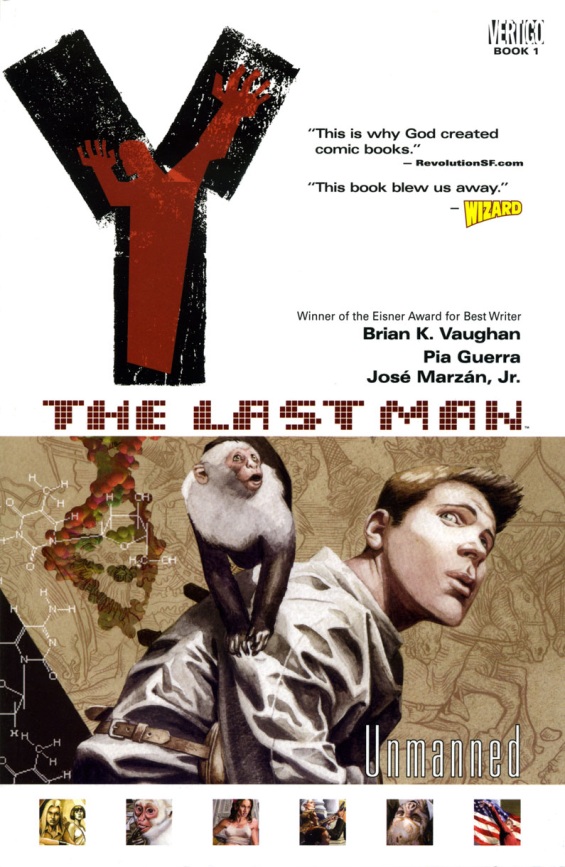
There’s an interesting 2008 interview with Brian K. Vaughan and Pia Guerra, the writer and artist behind Y: the Last Man, right here |MP3|. Here’s the description:
The inkstuds were joined by two stellar creators today. Brian K Vaughan and Pia Guerra have been doing Y the Last Man for the 5 years, and just released the last issue of their acclaimed series. It was a really neat chat about there collaborative work and the series.
Check out this wonderful video a 1949 group interview from the set of Destination Moon! Robert A. Heinlein is there, on set, as he served as a technical adviser.
Heinlein appears at about 5 minutes into Part 1. He reappears again, briefly, at the end of Part 3.
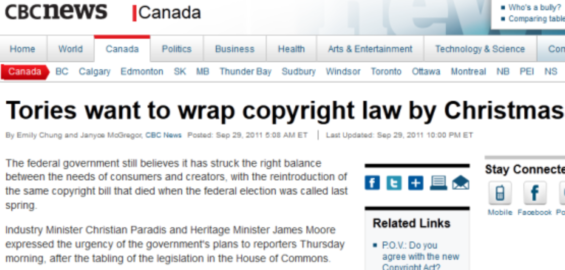
A September 29th, 2011 CBC.ca article entitled “Tories want to wrap copyright law by Christmas” garnered 596 comments in the 48 hours before comments were locked. The proposed legislation, now titled Bill C-11, appears to be an exact copy of the previously unpassable Bill C-32. The book burning provisions are just some of the new “rights” Bill C-11 offers:
-Copy content from one device to another, such as from a CD to a computer or an iPod. This provision, however, does not apply to content protected by a digital lock, which is any technological measure, such as encryption or digital signatures, that rights holders use to restrict access to or prevent the copying or playing of CDs, DVDs, e-books, digital files and other material.
-Record television, radio and internet broadcasts and listen to or view them later on whatever device they choose but not for the purposes of building up a library or for commercial use. This provision does not extend to content that is offered “on-demand” (streamed video, for example) or protected by a digital lock.
-Make a backup copy of content to protect against loss or damage — again unless that content is protected by a digital lock or offered as an on-demand service.
-Incorporate legally acquired copyrighted content into their own user-generated work, as long as it’s not for commercial gain and does not negatively impact the markets for the original material or the artist’s reputation. An example would be the posting of your own mash-up of a Lady Gaga song and, say, a Beyoncé number on YouTube.
-Use copyrighted content for the purposes of education, satire or parody. This expands what is known as the fair dealing provisions of the existing law — which until now covered only research, private study, criticism and news reporting.
-Copy copyrighted material that is part of an online or distance learning course in order to listen to or view it at a later time. Under this provision, teachers can provide digital copies of copyrighted material to students as part of the course but only if they and the students destroy the course material within 30 days of the end of the course. Teachers are also expected to take reasonable measures to prevent the copying and distribution of the material other than for the purposes of the course. Critics have referred to this part of the Act as the “bbook burning” provisions.
Ummm….aren’t we better off with the status quo?
The functions of VCRs and DVRs, we are told, have been illegal since their introductions in 1977 and 1999 respectively. I personally recorded thousands of hours off of TV with the half a dozen VCRs I’ve owned since the 1980s. Somehow TV still exists. Former Industry Minister Tony Clement’s iPod has 10,452 songs on it, “most of them transferred from CDs he bought” – we’re told that each such instance was an illegal act.
Funny that neither Clement nor I am in jail or being sued. Funnier still, nobody in Canada has been prosecuted for using their VCRs or DVRs to record TV shows. Nobody in Canada is being prosectued or sued for all of the stuff we’re being told is currently illegal. So how exactly are we better off if we change the law to make it easier to be sued and prosecuted?
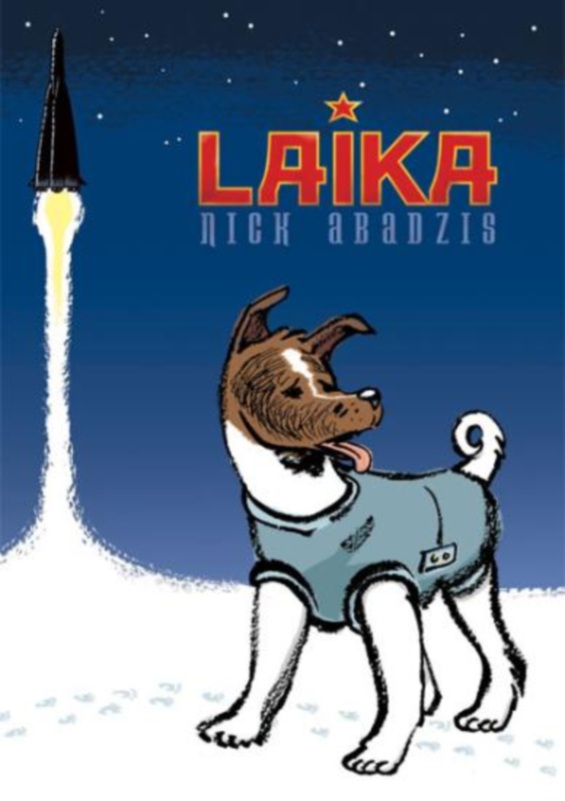
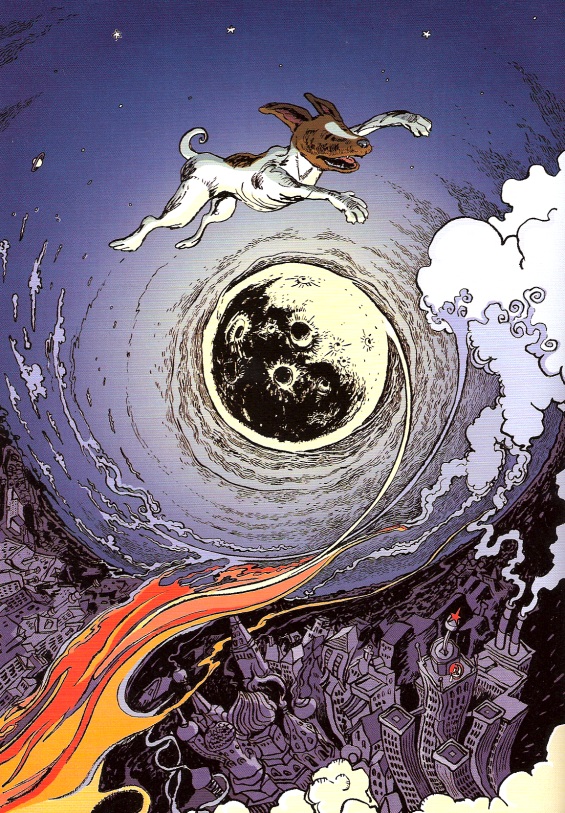
I’m reading a terrific graphic novel called Laika. That’s writer/artist Nick Abadzis’s fictionalized history of the little Soviet dog who became the first Terran in space. The art is nicely stylized, the colours are wonderful, and the story is very moving. Here’s a vintage podcast interview (2007) that was broadcast on CiTR and podcast by Inkstuds |MP3|. Here’s the description:
“To celebrate 50 years of the Space Age, Nick Abadzis joined us to discuss his new book, Laika. Laika is a wonderful piece of historical fiction, looking at the history of the first animal in space, the Russian dog, Laika. Published by First Second books, Laika is a great insite in the world of coldwar USSR and some of the unique characters that surrounded this special event.”



 Here at the SFFaudio Research and Development Lab, we’ve been