News, Reviews, and Commentary on all forms of science fiction, fantasy, and horror audio. Audiobooks, audio drama, podcasts; we discuss all of it here. Mystery, crime, and noir audio are also fair game.
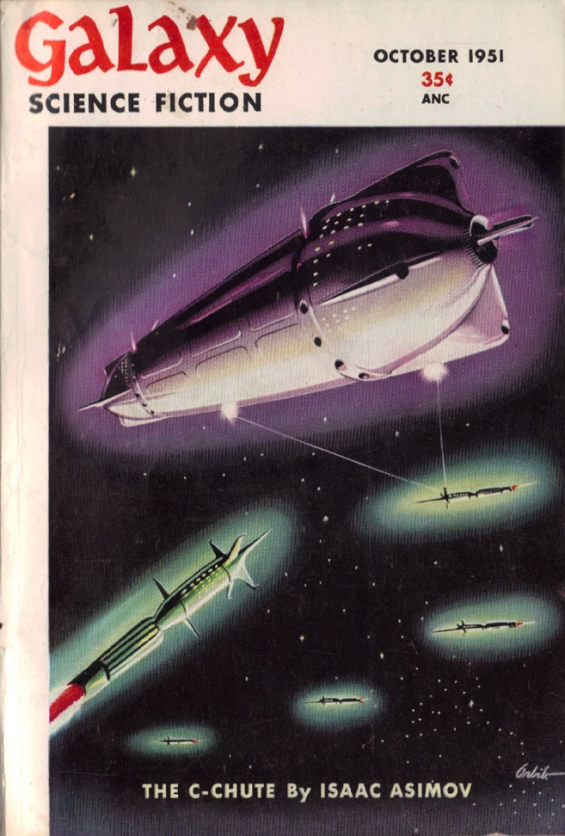
The C-Chute is one of the few Isaac Asimov stories that features aliens. Set during an interstellar war, it tells the story of a group of humans that are captured and imprisoned by an alien species. Most of the action of the tale comes in the playing out the group’s psychology. They all have differing backgrounds, experiences and motivations. – It kind of sounds like Cube right? – The story was originally submitted under the title “Greater Love.” But, as it was altered to The C-Chute as a part of several modifcations demanded by Galaxy Magazine editor, H.L. Gold. Asimov, who didn’t like the changes, was inspired to write another short story (The Monkey’s Finger) in which a fantasy writer, and his editor, get into a similar dispute.
Here’s the Galaxy magazine teaser for The C-Chute:
“Captured by an unthinkably alien race, the terrestrial spachsip formed a desperate human microcosm. Somebody had to be a hero … but who was it to be … and why?”
X-Minus One – The C-Chute
Based on the short story by Isaac Asimov; Performed by a full cast
1 |MP3| – Approx. 29 Minutes [RADIO DRAMA]
Broadcaster: NBC
Broadcast: February 8, 1956
Provider: Archive.org During Earth’s first interstellar war, a civilian transport traveling to Earth is captured by a spaceship piloted by the Kloros, a chlorine-breathing race of intelligent beings. They place two of their own on board the humans’ spaceship. With the human passengers sequestered as prisoners of war, the Kloros head to an unknown destination. The human passengers fall into argument and dispute, some coming to blows, with contradicting feelings on what should be done. Opinions range from a violent counteroffensive to a passive acceptance of their situation. Only Mullen, a shy, mild-mannered, short bookkeeper, is willing to make an attempt to take back control of the ship, which he does by exiting via the C-Chute which is normally used for launching corpses for burial in space.Based on the story by Isaac Asimov, originally published in Galaxy Science Fiction, October 1951
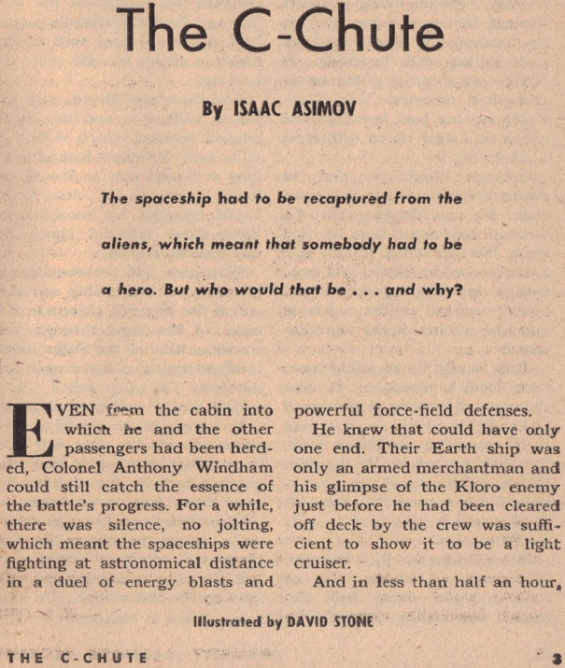
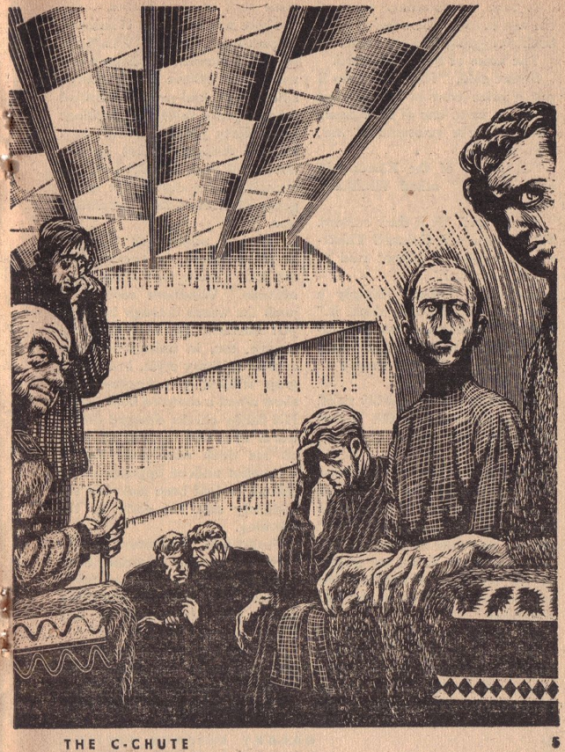
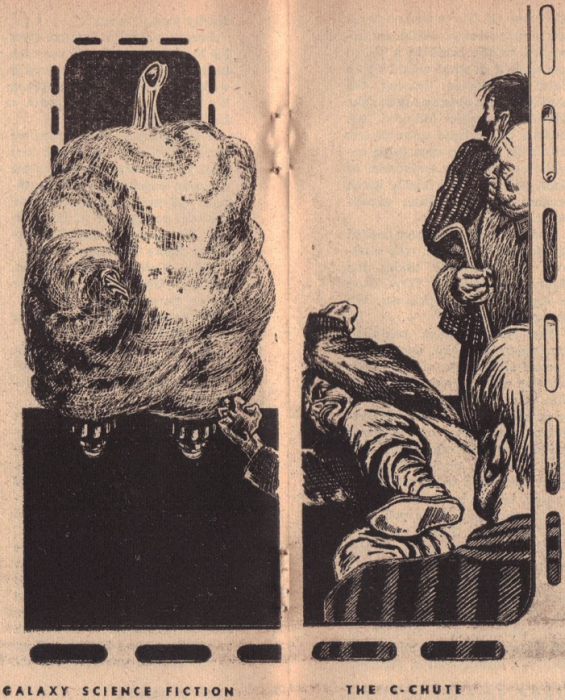
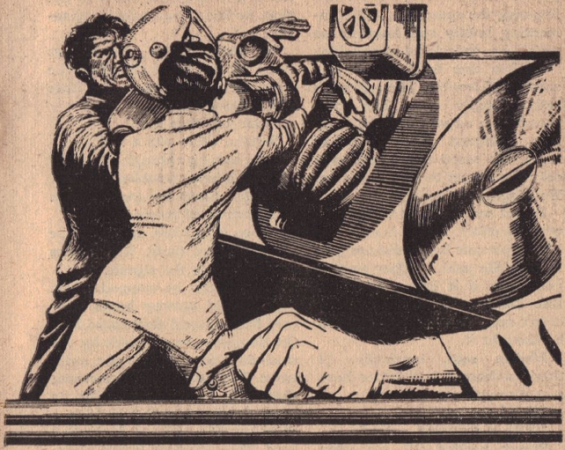
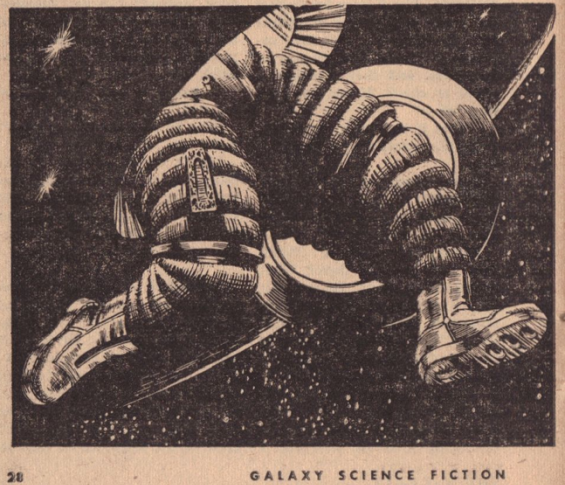
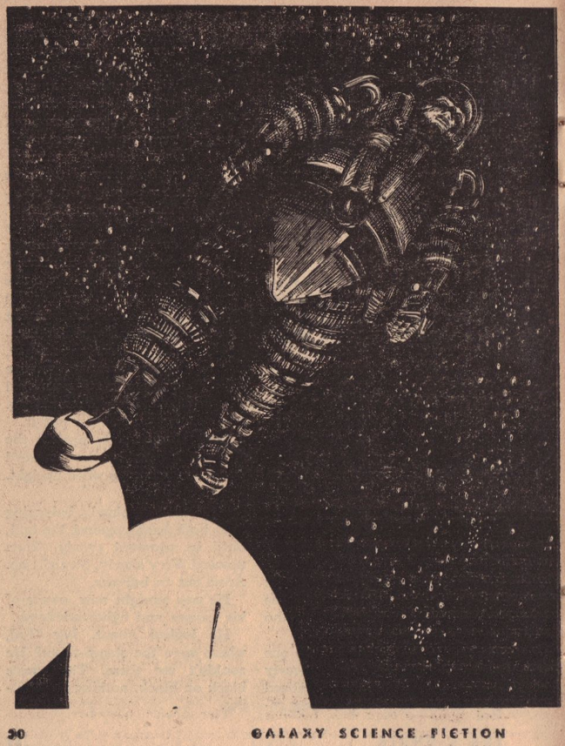
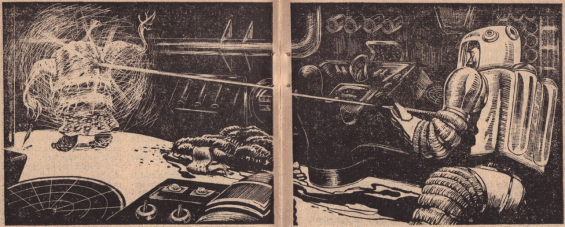
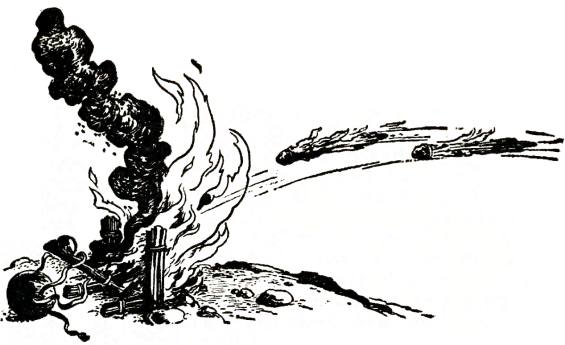
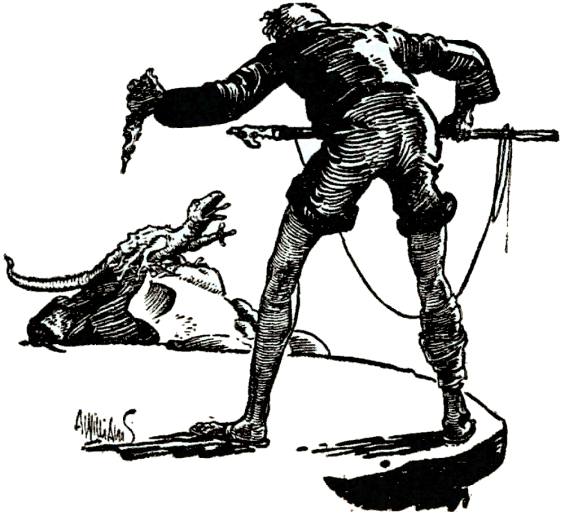
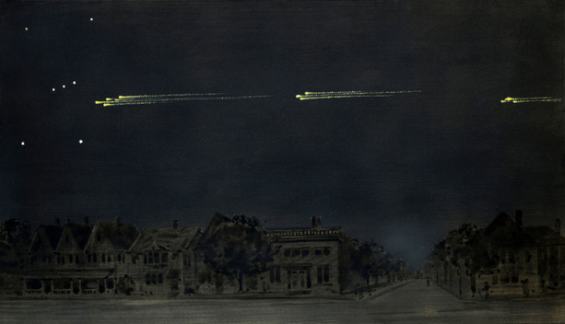
Here’s the art from the original Galaxy Magazine publication in the October 1951 issue:
The SFFaudio Podcast #096 – Scott and Jesse talk about recently arrived audiobooks as well as Y: The Last Man, James Tiptree Jr., Isaac Asimov, what author estates want and more!
Talked about on today’s show: Kage Baker, Subterranean Press, Blackstone Audio, In The Garden Of Iden by Kage Baker, Captive Market by Philip K. Dick, Janan Raouf, Time For The Stars by Robert A. Heinlein, Barret Whitener, telepathy, Starman’s Quest by Robert Silverberg, For Us The Living: A Comedy Of Customs by Robert A. Heinlein, Malcolm Hillgartner, Heinlein’s first and last novel, Spider Robinson, Variable Star by Robert A. Heinlein and Spider Robinson, Job: A Comedy Of Justice, Macmillan Audio, Death Cloud: Sherlock Holmes The Legend Begins by Andrew Lane, Dan Wyman, “endorsed by the Conan Doyle estate” = who cares, Poul Anderson on Sherlock Holmes, Laird of Muck, disabled protagonists, The Lighthouse Land by Adrian McKinty, The Lighthouse War, MG (middle grade) vs. YA, Gerard Doyle, Christopher Paolini, The Gods Of Mars by Edgar Rice Burroughs, William Dufris, viscous plant men, does Deja Thoris lay eggs?, Dynamite Entertainment‘s Warlord Of Mars, Valentine Pontifex by Robert Silverberg, Majipoor Chronicles, Lord Valentine’s Castle, Stonefather by Orson Scott Card |READ OUR REVIEW|, Emily Janice Card, The Geek’s Guide To The Galaxy, The Lost Gate, The Last Airbender, R.L. Stine, Timescape by, Darkside by Tom Becker |READ OUR REVIEW|, Bolinda Audio, London, Neil Gaiman-esque, The Graveyard Book, Venus by Ben Bova |READ OUR REVIEW|, Fantastic Audio, Jupiter, Nova Science Now, Neil deGrasse Tyson, Europa, Ganymede, A Stainless Steel Rat Is Born, Brilliance Audio, The Elvenbane by Andre Norton and Mercedes Lackey, dragons, elves, Odalisque by Neal Stephenson, Alan Moore loves allusions, The League Of Extraordinary Gentleman, Snow Crash, The Diamond Age, Honor Harrington, Honor Among Enemies by David Weber, manticore, pirates!, what’s up with all the mix-and-match creatures in the Middle East?, On Blazing Wings by L. Ron Hubbard, mercenaries, SFsite.com often reviews the L. Ron Hubbard Stories From The Golden Age, the paperbooks problem, The Unremembered by Peter Orullian, Anne Perry, The Desert Of Souls by Howard Andrew Jones, 8th century, Baghdad, The Desert Of Souls by Howard Andrew Jones, the Fantasy Book Critic blog review, unpronounceable character names, J.R.R. Tolkien, Philip K. Dick was inspired by the Odyssey, Beyond Lies The Wub, Strange Eden, Scott didn’t like Y: The Last Man, Brian K. Vaughan, Gulliver’s Travels, the problem of transitory pop-culture references, The Tyrrany Of Talented Readers, Scalped, Bertrand Russell, Pride Of Baghdad, anthropomorphic fiction, James Tiptree Jr., Her Smoke Rose Up Forever, Masters Of Horror: The Screwfly Solution, Dove Audio, Isaac Asimov, author estates, Escape Pod #100, Nightfall, Tantor Media, Robots Of Dawn, Audible.com has plenty of Arthur C. Clarke, Dream Park by Larry Niven and Steve Barnes, mystery, Science Fiction, On Stranger Tides, Brain Wave, PaperbackSwap, Del Rey art in the ’70s and ’80s was awesome, Scott’s Picasa gallery of book covers, Tom Weiner, Jesse has a terrible memory, our Oath Of Fealty readalong, the Pirates Of The Caribbean films.
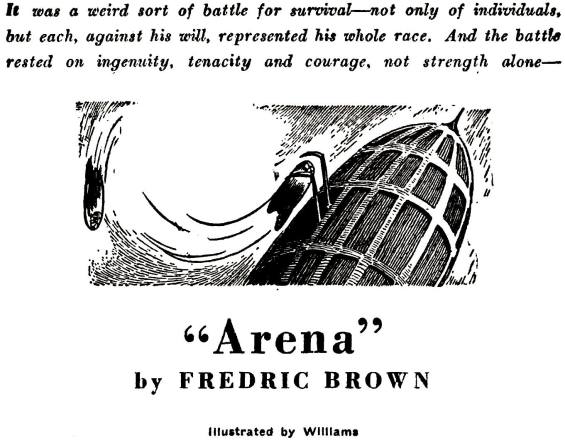
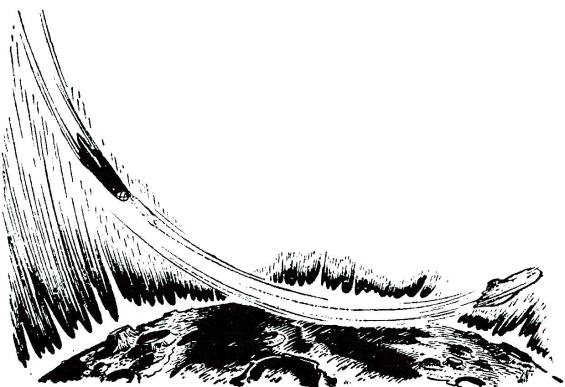
For nearly a year I’ve been studying the extensive influence of Fredric Brown’s 1944 short story, Arena. It took a recent article, on roughly the same topic, over on the excellent bare•bones e-zine blog, to prompt me to actually finish writing up this post – which is essentially a collection of inspired by and/or similar stories. That other post, by Jack Seabrook, mostly covers the Outer Limits‘ response to Arena – which is something that I’ve only briefly mentioned. Seabrook’s article and the thoughtful comments it’s spawned are well worth looking at |HERE|. One of the comments there also points out the connection to Richard Connell’s The Most Dangerous Game (but that’s another post altogether). My post on Arena begins here:
Arena (noun) – [Latin harēna, arēna, sand, a sand-strewn place of combat in an amphitheater, perhaps of Etruscan origin.] -1. An enclosed area, often outdoor, for the presentation of spectacular events -2. The part of a Roman amphitheater that was covered with sand to absorb the blood spilled by the combatants.
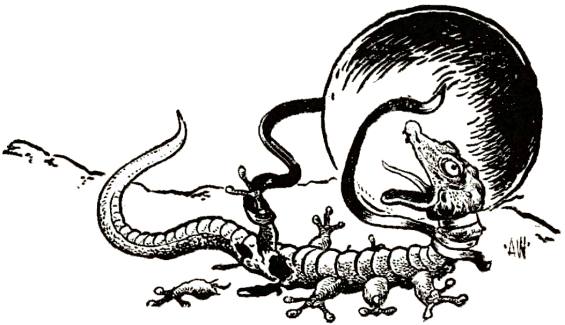
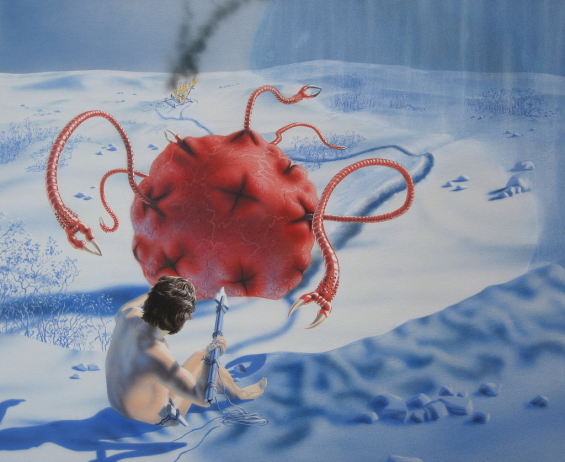
The SFFaudio Podcast #051 had a brief primer, by Professor Eric S. Rabkin, on Fredric Brown‘s spectacular short story Arena. Rabkin pointed out the curious description of the alien, and the year in which the story was first published (1944). The story being a fascinating metaphor for the Pacific War. The description of the alien, a “red sphere with several dozen fully retractable thin tentacles” is nicely comparable it with the Imperial Japanese battle ensign…
War flag of the Imperial Japanese Army:
Now if we keep looking for symbols, we can certainly find them. Take the blue sand of the arena itself. If Carson represents the USA, and the alien represents Japan, would the pervasive blue sand not therefore be representative of the Pacific Ocean? Of course it would!
Next, check out the original story, available in an unabridged audiobook version created by Rick Jackson (aka The Time Traveler) for The Time Traveler Show podcast…
Arena
By Fredric Brown; Read by William Spurling
1 |MP3| – Approx. 1 Hour [UNABRIDGED]
Podcaster: The Time Traveler Show
Podcast: July 23rd, 2006 The mysterious Outsiders have skirmished with Earth’s space colonies and starships. Their vessels are found to be faster and more maneuverable, but less well armed. Survivors of these encounters are able to provide little other information about the enemy. Fearing the worst, Earth builds a war fleet. Sure enough, scouts report a large armada approaching the solar system. Earth’s defenders go to meet them. All indications are that the two fleets are evenly matched. First published in the June 1944 issue of Astounding Science Fiction magazine.
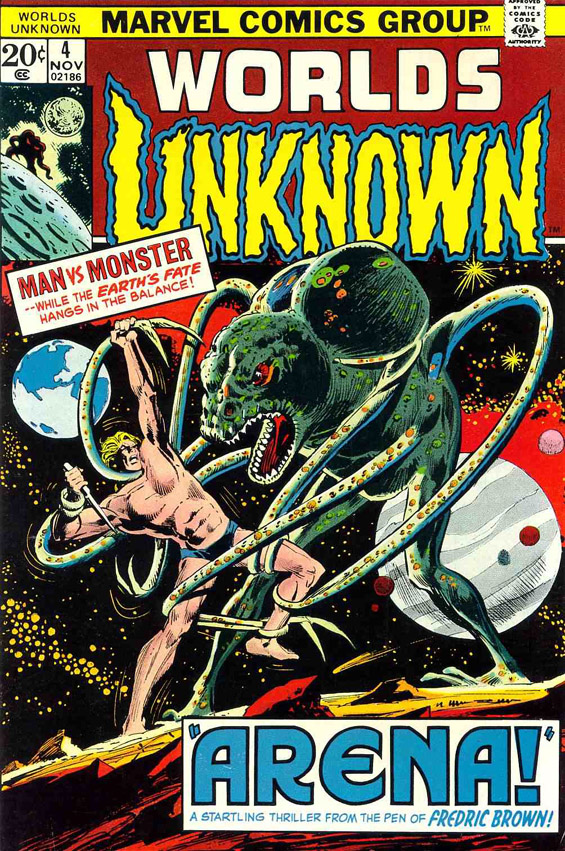
In the comics department, there was a 1976 Marvel Comics magazine adaptation in Unknown Worlds of Science Fiction. Of it, Pete Doree (Of The Bronze Age Of Blogs) sez:
“Arena is one of my all-time favourite one-off comic stories, from Roy Thomas’ short-lived Worlds Unknown. Rascally Roy obviously liked it as much as me, as he reprinted it in the last issue of his b/w follow up Unknown Worlds Of Science Fiction. What I like about it is that it’s storytelling pared right down to the bone: One man. One monster. Winner takes all. It’s that simple, and that elegant. The set up is so primal that you’re practically dealing in archetypes. Plus you get the amazing pairing of John Buscema & Dick Giordano on art. It was adapted from a story by Frederic Brown, a great old school sci-fi writer.”
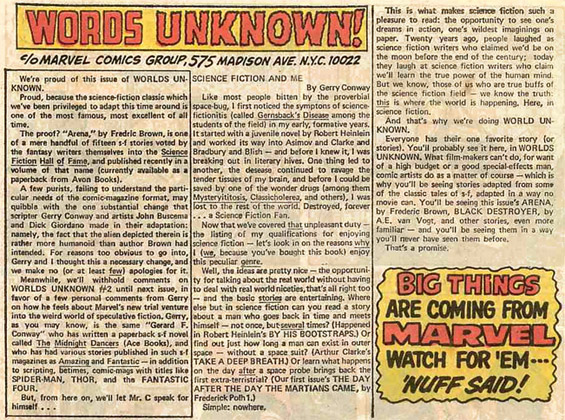
And, check out this editorial from Marvel Comics issue 4 of Unknown Worlds:
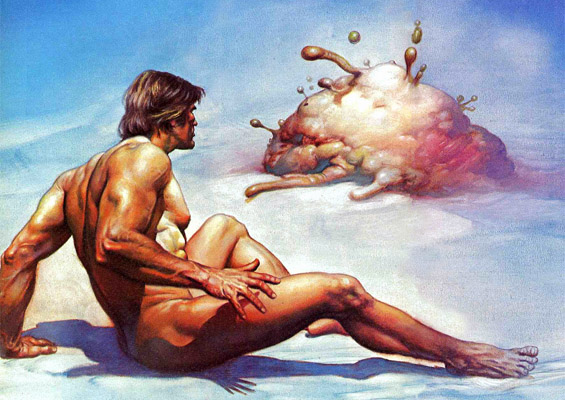
Keeping with the art theme, there’s Boris Vallejo’s depiction from the March 1977 Starlog Magazine printing of Arena (more on that |HERE|):
TV, movies and other SF authors also seem to have taken inspiration or paralleled Fredric Brown’s Arena too:
Star Trek: Arena:
Outer Limits: Fun And Games:
The one man against one man theme, as developed in Arena, departed the SF genre entirely with the 1968 film Hell In The Pacific. The movie stars Lee Marvin and Tishiro Mifune as shot down American and Japanese fighter pilots who make WWII more personal.
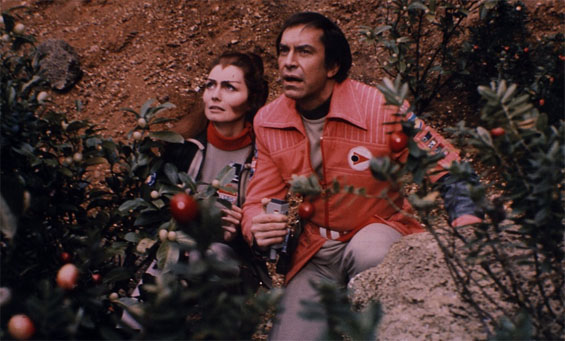
The meme sunk to its lowest low with the frighteningly awful (and least faithful) variation in “The Rules Of Luton” episode of Space 1999.
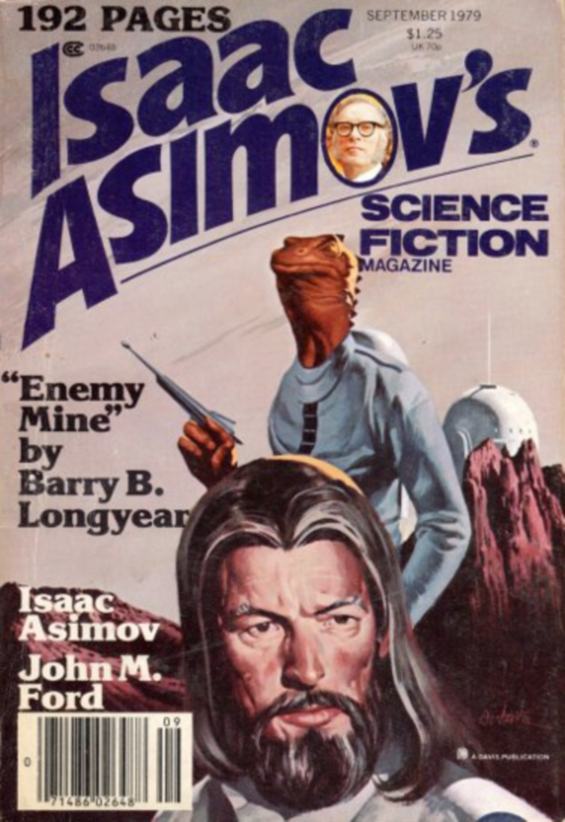
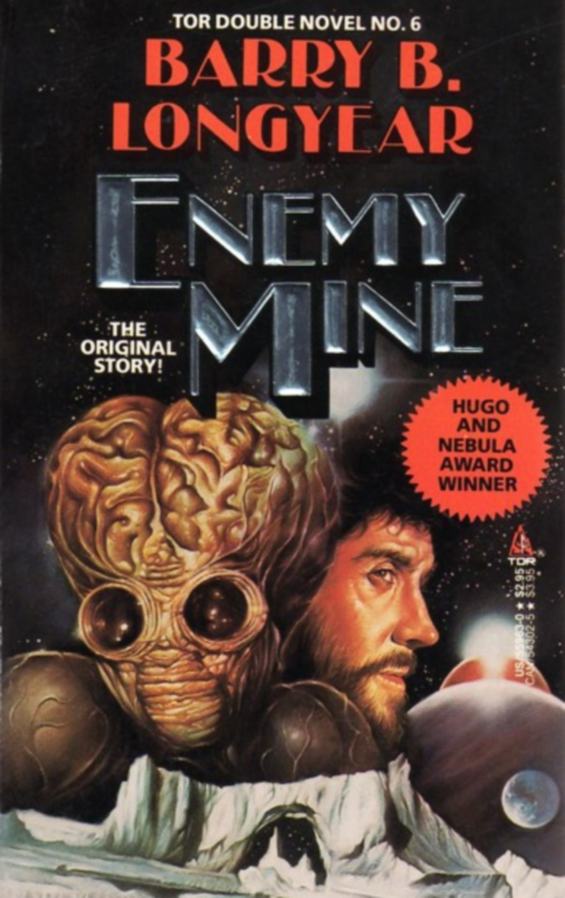
The meme transmogrified back into a man vs. alien confrontation for Barry B. Longyear’s 1979 novella Enemy Mine. Willis Davidge, a human fighter pilot, is stranded along with Jeriba Shigan, a Drac, on a hostile alien planet foreign to them both.
The movie version of Enemy Mine, 1985, magnified the allegory with a theme of racial brotherhood.
In 1989, Star Trek: The Next Generation first adopted the idea for an episode entitled “The Enemy“.
Another variation, in 1991, in an episode of Star Trek: The Next Generation called “Darmok” nearly eliminates the physical conflict, replacing it with an intellectual puzzle on the difficulties of communication.
Star Trek: Enterprise, in an attempt to recycle every previous Star Trek series plot, did their own take with the 2003 episode entitled Dawn:
Update:
David Schleinkofer illustrated the Reader’s Digest Edition of Arena in the early 1980s:
I love history, it’s news for people who want to know what really happened (and are willing to wait for it). For years I’d been waiting for someone to start a podcast just like Today In Canadian History. After more than six-months I can declare it a total success. Today In Canadian History is the perfect length for a daily podcast, running about ten minutes per episode. It uses concise interviews with enthusiastic experts to spectacular effect. Unlike some other history podcasts, Today In Canadian History is a true generalist history podcast – it covers everything – historical figures and events, natural disasters (and phenomena), military adventures and important legislation and social policy. I could recommend a dozen episodes to any history enthusiast, but for starters I’ll point you to just three:
Podcaster (iTunes App)
OS Environment: Apple iPhone / Apple iPod Touch / Apple iPad
Manufacturer: Alex Sokirynsky
Version: 3.73
“Over the Air” podcast manager. Subscript, download and play audio & video podcasts without having to sync with a computer.
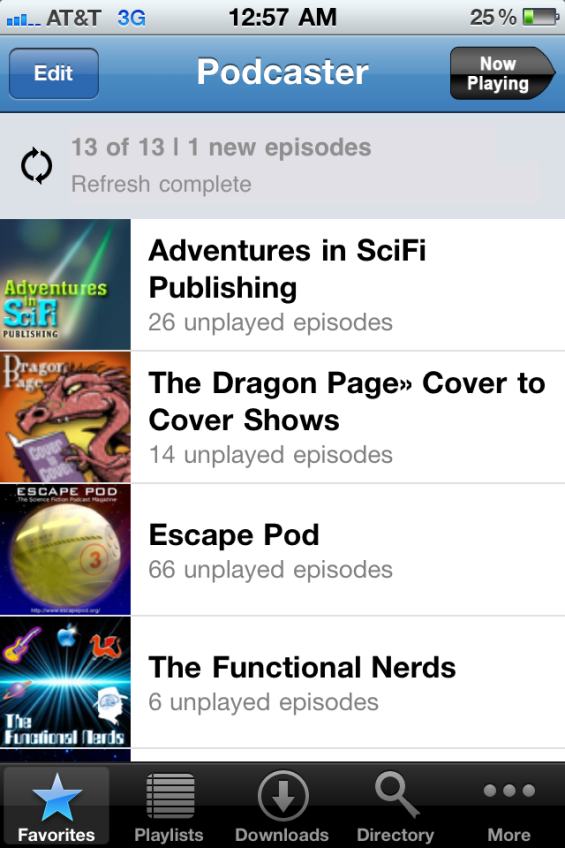
Here’s the app that I use to download podcasts to my iphone/ipod/ipad. You can keep track of all your subscriptions, unlike in the iTunes app on the phone. It can download an over 10-meg podcast over the 3g phone network, if you wanted to. It can use the Apple ‘push’ technology to notify you when a new episode is up; but if you want to keep an eye on over 10 different podcasts, it costs extra. You can download ‘in the background’ and switch to other apps, although there’s a 10 minute limit (set by Apple?). Often, I hit refresh on the ‘Favorites’ screen, hit start in the ‘Downloads’ screen, and then go to the ‘Unplayed Downloads’ playlist to play them. Here’s a link to an opml file backup of the 10 podcasts I normally listen to (they’re all somewhat sff related). You can copy & import this url in the Podcaster app ‘Directory’ screen, and edit out the ones you don’t want. (The io9 one is Geek’s Guide to the Galaxy, and tDP/C2C is Dragon Page, Cover to Cover) http://www.sffaudio.com/images11/PodcasterFeeds.opml

 X-Minus One – The C-Chute