The SFFaudio Podcast #064 – READALONG: The Stars My Destination by Alfred Bester

Podcast

The SFFaudio PodcastThe SFFaudio Podcast #064 – Scott and Jesse talk with Julie Davis and Luke Burrage about The Stars My Destination by Alfred Bester!

Talked about on today’s show:
Forgotten Classics, Science Fiction Book Review Podcast, Richard K. Morgan’s The Steel Remains, The Invisible Man, Robert Sheckley’s The Status Civilization, exploding volcanoes, Gulliver Foyle, jaunting as teleporting, BAMF, The Uncanny X-Men, Jumper by Steven Gould, Charles Fort Jaunte (is a reference to Charles Fort), Fortean Times, The Tyger by William Blake,Tā moko (Maori facial tattoo), religion, swearing, tabernac, future swearing, Louis Wu in Larry Niven’s Ringworld, the frivolity of the wealthy, satire, sailing as conspicuous consumption, telepathy, Paul Williams, The Stars My Destination as a “pyrotechnic novel”, the power of the narrative imagery, the audiobook (a Library of Congress Book for the Blind version), the heirs of Alfred Bester are fighting over the rights, transformation, Gulliver’s Travels by Jonathan Swift, “Most scientific!”, Alfred Bester’s years writing comics, WWII, the Wikipedia entry for The Stars My Destination, synesthesia, the long forgotten histories of synesthesia, Of Time, And Gully Foyle by Neil Gaiman, cyberpunk, a hard-boiled Philip K. Dick novel, passive schlubs, The Count Of Monte Cristo by Alexandre Dumas, Pyrenees, the induction scene in William Shakespeare’s The Taming Of The Shrew, a shotgun approach to transformation, The Stars My Destination as meta book, Peter F. Hamilton, the renaissance man, Classics Illustrated #3 The Count Of Monte Cristo, Fourmyle of Ceres, PyrE, (the inspiration for Pyr Books?), Napoleon Bonaparte, thought turning into action, our overcrowded future, Second Life, Surrogates, only in a cyberpunk future, retroactive foreshadowing, the 1991 BBC Radio Drama version of Alfred Bester’s Tiger Tiger, the old language, Hyperion by Dan Simmons, The Canterbury Tales by Geoffrey Chaucer, Pyrene, cyborgs, wired nerves, bullet time, you can’t spoil a book like this.

The Stars My Destination (Mediascene No. 36) 1979

Howard Chaykin art for The Stars My Destination - splash page 26, 1979

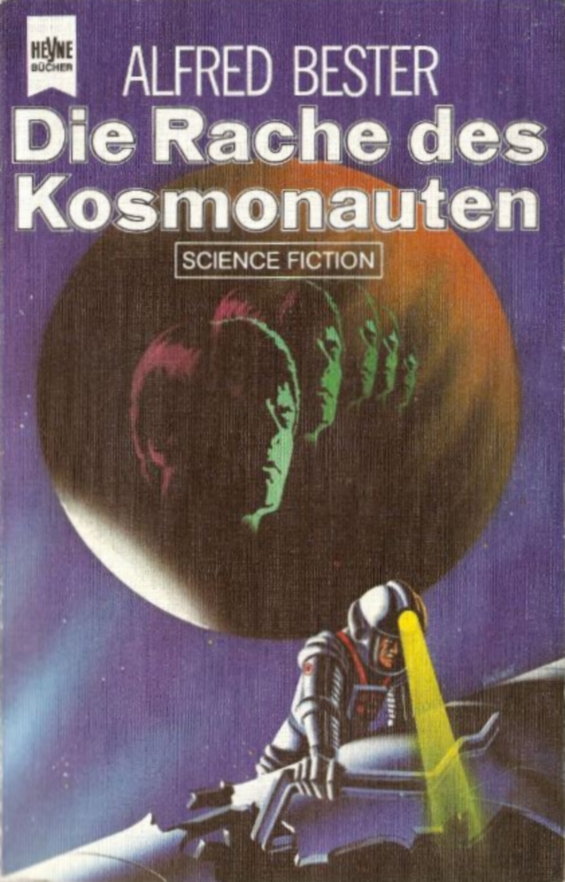
The Revenge Of The Cosmonaut by Alfred Bester

Posted by Jesse Willis

Review of Edgar Allan Poe Collection, Volumes 9 and 10

SFFaudio Review

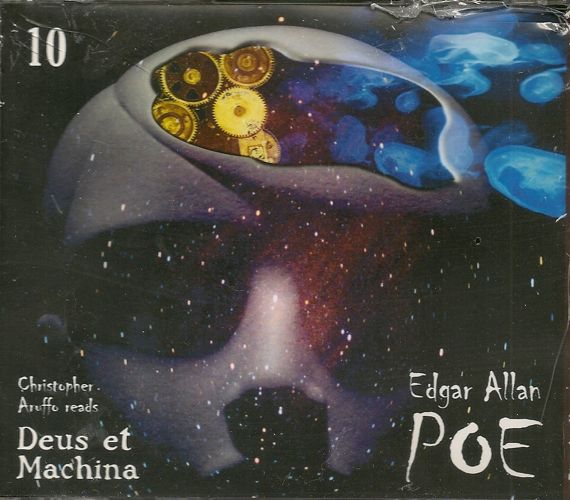
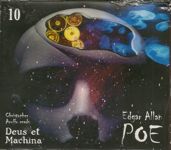
Horror Audiobook - Deus Et Machina by Edgar Allan PoeDeus Et Machina
By Edgar Allan Poe; Read by Christopher Aruffo
4 CDs – 4.5 Hours – [UNABRIDGED]
Publisher: Acoustic Learning
Published: 2009
ISBN: 9780980058161

 
 
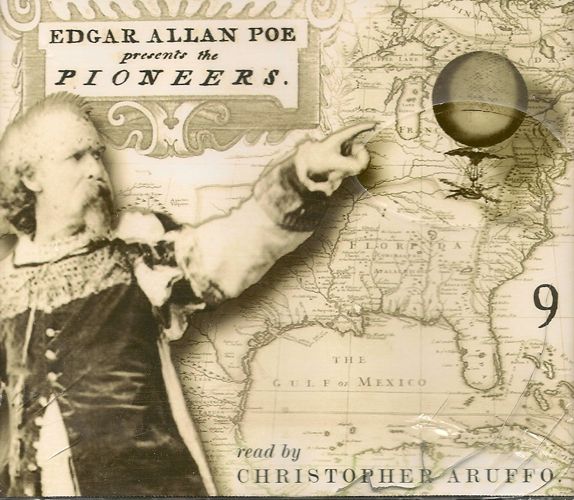
Horror Audiobook - The Pioneers by Edgar Allan PoeThe Pioneers
By Edgar Allan Poe; Read by Christopher Aruffo
6 CDs – 7.5 Hours – [UNABRIDGED]
Publisher: Acoustic Learning
Published: 2009
ISBN: 9780980058154
 
 
Themes: / Horror / Science fiction / Travelogue / Angels / Space Travel / Hot Air Balloons / Alchemy /

We don’t know Poe. The mad success of his weird fiction, combined with the myth of his erratic lifestyle, supply more than 90% of what we think we know about Edgar Allan. But was he really erratic, obsessed and disturbed? And even if he was, is that the whole story?

The folks at poeaudio.com are attempting to tell something close to the whole story of Poe with a series called the Edgar Allan Poe Audiobook Collection. In multiple volumes, the greats of the Poe prose oeuvre—your Rue Morgues, your House of Ushers and your Masques of the Red Death—are read with histrionic flair by actor Christopher Aruffo. Here, however, we review volumes 9 (The Pioneers) and 10 (Deus et Machina) which contain lesser-known works.

These two volumes bring out into the fresh air some of the more musty trunks from the attics of Poe’s cobwebbed mind. They will be of thrilling interest to Poe fans and scholars with completest proclivities. For the rest of us, they are of mixed interest. I’ll let you know which tracks are worth a listen.

Vol. 9, The Pioneers gathers together writings about travel. Some pieces are journalistic descriptions of underappreciated natural scenery in the United States; these are of mild interest. “The Journal of Julius Rodman” purports to be the journal of an explorer who became the first white man to cross the Rocky Mountains; this hoax, written by Poe, is a rather dull read to anyone not fooled by its true origin. (And worse, it stands unfinished.)

“The Balloon-Hoax” does a better job of passing its truth-in-labeling test, and describes the crossing of the Atlantic by a famous aeronaut which never happened. (What’s with all these hoaxes? Orson Wells, eat your heart out.) Again, the lack of any suspense on the part of the present-day audience renders this story uncompelling. Better read the history of these two stories than the stories themselves.

The one really interesting work of volume 9 is “The Unparalleled Adventure of Hans Pfaal”, an novella about a balloon ride—no kidding—from the Earth to the Moon. What shocks me is Poe’s attempt here, before the genre had even been invented, to create a work of hard (yes, I mean it, hard) science fiction. He goes to some length to marshal scientific evidence for the possibility of at least some atmosphere in deep space, based on the existence of zodiacal light, the faint glow that Poe assumed was atmospheric haze, but is scattered by space dust in the ecliptic.

This, and other tech-y details, such as the description of the balloon flipping over when the moon’s gravity becomes predominant, reveals Poe’s endearingly quaint attempt at scientific rigor. He seems to understand that his scenario goes too far, however, because he ends with a plot device meant to give him deniability regarding the seriousness of the story. (It’s that hoax thing again!) “Hans Pfaal” is the one work of this volume I strongly recommend.

Vol. 10, Deus et Machina (that’s a pun in the title, not a typo) focuses on metaphysics and technological advances. This latter emphasis is a real eye-opener. It turns out Poe was a tech geek! I would have never guessed–it’s the one big revelation of the audiobook. If he were alive today, he’d be writing articles for Seed Magazine. Poe loves to report especially on the latest in printing techniques, and, oddly enough, street paving. These articles are short, and very revealing of Poe’s psyche. I recommend them.

His big hobby horse is the advantage of wooden streets, which he seems to prefer especially because they make the urban environment quieter. (Here, he is entirely consistent with our myth of him as the high-strung, hyper-sensitive genius.) Discussing the main objection to using wood as paving material—it rots—he takes seriously concerns about unhealthy “miasmas” rising from the decay, yet he reacts with eye-rolling prose to fears that mercury-based preservatives might have any health impact.

The two headliners of this volume, “The Facts in the case of M. Valdemar” and “Von Kempelen and His Discovery,” are diverting but not especially compelling. “Valdemar” is an exploration of mesmerism interacting with what I can only call the death process. It posits a state of suspended animation which was meant to creep us out, but falls flat. Dude: mesmerism is so over. “Von Kempelen” is less original, and no more plausible: a slight account of the discovery of the laboratory of a successful alchemist. Leave these stories to the serious Poe fans.

Least interesting of all are Poe’s metaphysical musings in the form of angelic dialogs. These are some of the most difficult audio narration I’ve ever heard. (Or tried to hear. Multiple listening left me asking myself: what the heck was that about? What did he just say?)

The one gem in this metaphysical manure pile is The Conversation of Eiros and Charmion. It’s is another angel dialog, but it explores a speculative concept that merges apocalypse (in the Biblical, as well as more modern, sense) with science fiction in a way that must have been very advanced in its time. The surprise ending really shocks, and gives a taste of that old Poe horror we know and love. This one has aged very gracefully and is highly recommended.

Posted by the Fredösphere

Escape Pod: Bride Of Frankenstein by Mike Resnick

SFFaudio Online Audio

Our friend, Julie Davis of Forgotten Classics podcast, is the narrator of the latest Escape Pod episode. It’s a Mike Resnick story that retells the first Science Fiction novel.

Escape PodBride Of Frankenstein
By Mike Resnick; Read by Julie Davis
1 |MP3| – Approx. 39 Minutes [UNABRIDGED]
Podcaster: Escape Pod
Podcast: June 23, 2010
Victor can be so annoying. He constantly whistles this tuneless song, and when I complain he apologizes and then starts humming it instead. He never stands up to that ill-mannered little hunchback that he’s always sending out on errands. And he’s a coward. He can never just come to me and say “I need money again.” Oh, no, not Victor. Instead he sends that ugly little toady who’s rude to me and always smells like he hasn’t washed. And when I ask what the money’s for this time, he tells me to ask Victor, and Victor just mumbles and stammers and never gets around to answering. First published in the December 2009 issue of Asimov’s Science Fiction magazine.

Podcast feed:
http://escapepod.org/podcast.xml

iTunes 1-Click |SUBSCRIBE|

Posted by Jesse Willis

LibriVox: Heidi by Johanna Spyri

SFFaudio Online Audio

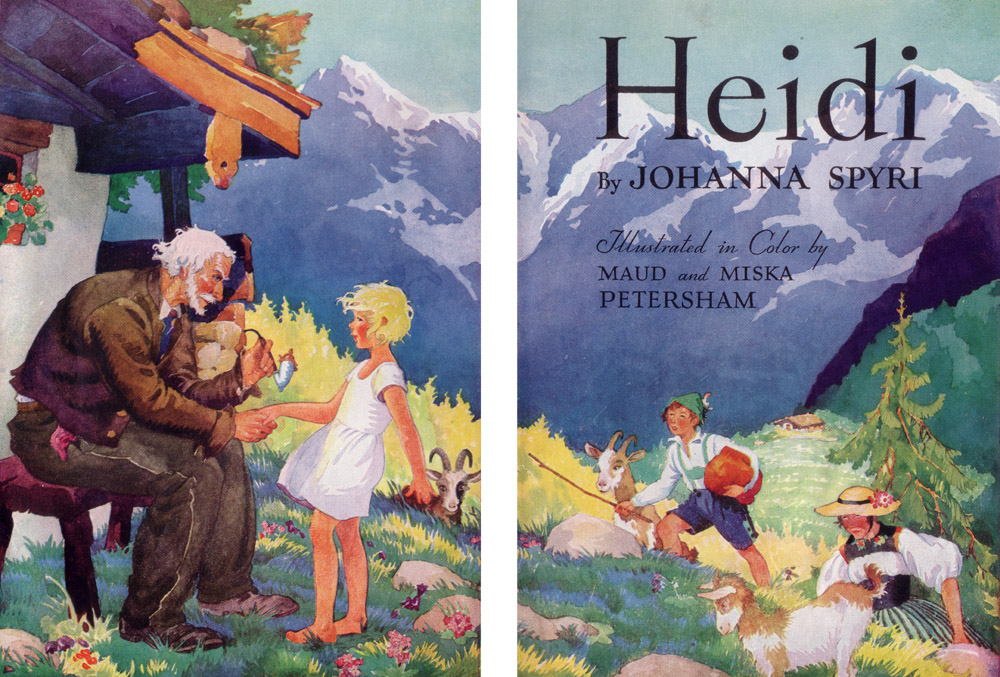
I’m not sure Heidi can be properly classified as an “adventure” novel. But it sure has one adventurous little girl as it’s star! PLUS, Kara Shallenberg’ narration is TRULY OUTSTANDING! She’s got what sounds like an authentic pronunciation for all those Swiss place-names. And, be sure to check out the gorgeously illustrated edition on Gutenberg.org! Here’s an illustration from the edition that my great grand parents gave to my uncle Paul on August 2nd, 1955. It was his birthday present and he had just turned 8 years old.

Heidi by Johanna Spyri

LIBRIVOX - Heidi by Johanna SpyriHeidi
By Johanna Spyri; Translated by Elizabeth P. Stork; Read by Kara Shallenberg
23 Zipped MP3 Files – Approx. 9 Hours 45 Minutes [UNABRIDGED]
Publisher: LibriVox.org
Published: May 8, 2006
Hear Heidi if you’ve ever longed to see the Swiss mountain slopes. This story transports the listener from the fine air and freedom of the mountaintop to the confines of Frankfurt, back to the peaks again, bounding in flowered fields with goats at your heels and sky utterly surrounding you.

We meet Heidi when she is 5, led up the mountain by her aunt who has raised the orphan but must leave now for a position in Frankfurt. In a mountain cottage overlooking the valley is Heidi’s grandfather, and there with him the girl’s sweet, free nature expands with the vista. The author’s voice is straightforward, and so is our reader’s, with the child’s wonder, devotion, and sometimes humorous good intentions. When Heidi is taken from the mountains and nearly doesn’t make it back again, the most humorous as well as most heart-wringing scenes occur. All she learns during her absence from the mountain she brings back as seeds that will grow to benefit everyone around her.

Podcast feed: http://librivox.org/bookfeeds/heidi-by-johanna-spyri-solo.xml

iTunes 1-Click |SUBSCRIBE|

Posted by Jesse Willis

The Cremation Of Sam McGee by Robert W. Service

SFFaudio Online Audio

LibriVoxThe Cremation Of Sam McGee
By Robert W. Service; Read by Katie Gibboney
1 |MP3| – Approx. 5 Minutes [POETRY]
Publisher: LibriVox.org
Published: November 30, 2007
First published in in 1907.

The Cremation Of Sam McGee by Robert W. Service

There are strange things done in the midnight sun
By the men who moil for gold;
The Arctic trails have their secret tales
That would make your blood run cold;
The Northern Lights have seen queer sights,
But the queerest they ever did see
Was that night on the marge of Lake Lebarge
I cremated Sam McGee.

Now Sam McGee was from Tennessee, where the cotton blooms and blows.
Why he left his home in the South to roam ’round the Pole, God only knows.
He was always cold, but the land of gold seemed to hold him like a spell;
Though he’d often say in his homely way that he’d “sooner live in hell”.

On a Christmas Day we were mushing our way over the Dawson trail.
Talk of your cold! through the parka’s fold it stabbed like a driven nail.
If our eyes we’d close, then the lashes froze till sometimes we couldn’t see;
It wasn’t much fun, but the only one to whimper was Sam McGee.

And that very night, as we lay packed tight in our robes beneath the snow,
And the dogs were fed, and the stars o’erhead were dancing heel and toe,
He turned to me, and “Cap,” says he, “I’ll cash in this trip, I guess;
And if I do, I’m asking that you won’t refuse my last request.”

Well, he seemed so low that I couldn’t say no; then he says with a sort of moan:
“It’s the cursed cold, and it’s got right hold till I’m chilled clean through to the bone.
Yet ’tain’t being dead — it’s my awful dread of the icy grave that pains;
So I want you to swear that, foul or fair, you’ll cremate my last remains.”

A pal’s last need is a thing to heed, so I swore I would not fail;
And we started on at the streak of dawn; but God! he looked ghastly pale.
He crouched on the sleigh, and he raved all day of his home in Tennessee;
And before nightfall a corpse was all that was left of Sam McGee.

There wasn’t a breath in that land of death, and I hurried, horror-driven,
With a corpse half hid that I couldn’t get rid, because of a promise given;
It was lashed to the sleigh, and it seemed to say: “You may tax your brawn and brains,
But you promised true, and it’s up to you to cremate those last remains.”

Now a promise made is a debt unpaid, and the trail has its own stern code.
In the days to come, though my lips were dumb, in my heart how I cursed that load.
In the long, long night, by the lone firelight, while the huskies, round in a ring,
Howled out their woes to the homeless snows — O God! how I loathed the thing.

And every day that quiet clay seemed to heavy and heavier grow;
And on I went, though the dogs were spent and the grub was getting low;
The trail was bad, and I felt half mad, but I swore I would not give in;
And I’d often sing to the hateful thing, and it hearkened with a grin.

Till I came to the marge of Lake Lebarge, and a derelict there lay;
It was jammed in the ice, but I saw in a trice it was called the “Alice May”.
And I looked at it, and I thought a bit, and I looked at my frozen chum;
Then “Here”, said I, with a sudden cry, “is my cre-ma-tor-eum.”

Some planks I tore from the cabin floor, and I lit the boiler fire;
Some coal I found that was lying around, and I heaped the fuel higher;
The flames just soared, and the furnace roared — such a blaze you seldom see;
And I burrowed a hole in the glowing coal, and I stuffed in Sam McGee.

The Cremation Of Sam McGee by Robert W. Service

Then I made a hike, for I didn’t like to hear him sizzle so;
And the heavens scowled, and the huskies howled, and the wind began to blow.
It was icy cold, but the hot sweat rolled down my cheeks, and I don’t know why;
And the greasy smoke in an inky cloak went streaking down the sky.

I do not know how long in the snow I wrestled with grisly fear;
But the stars came out and they danced about ere again I ventured near;
I was sick with dread, but I bravely said: “I’ll just take a peep inside.
I guess he’s cooked, and it’s time I looked”;. . . then the door I opened wide.

The Cremation Of Sam McGee by Robert W. Service

And there sat Sam, looking cool and calm, in the heart of the furnace roar;
And he wore a smile you could see a mile, and he said: “Please close that door.
It’s fine in here, but I greatly fear you’ll let in the cold and storm —
Since I left Plumtree, down in Tennessee, it’s the first time I’ve been warm.”

There are strange things done in the midnight sun
By the men who moil for gold;
The Arctic trails have their secret tales
That would make your blood run cold;
The Northern Lights have seen queer sights,
But the queerest they ever did see
Was that night on the marge of Lake Lebarge
I cremated Sam McGee.

There is also a solid NPR reading (read by Scott Simon and Daniel Pinkwater) |MP3|

And, NPR also has Johnny Cash’s reading:

[unsigned images from Sense And Feeling edited by R.J. Scott]

Posted by Jesse Willis

CBC Spark: The future of public library design

SFFaudio Online Audio

CBC Radio - SparkThe latest Spark podcast has a fascinating segment called “The future of public library design” in which host Nora Young talks to a Dutch librarian, and a designer, about their bold experiment in library design. The new Almere public library looks like a bookstore, features a big video gaming section, and uses a “shop concept” to make the various groups of patrons much more likely to stick around.

There’s a great idea, check it out … play X-Box and PC games, in the library!

Almere Library's "Gaming zone" (SOURCE: http://www.flickr.com/photos/nyedeichman/4461830753/)

Check out the full post over on the Spark blog HERE, and have a listen to the segment |MP3||.

Posted by Jesse Willis

P.S. CBC is still hiding the J. Michael Straczynski radio drama. Bad CBC!