Librivox: Short Science Fiction Collection Vol. 030

SFFaudio Online Audio

LibriVoxI’m still got several of the new to LibriVox recordings in this collection to listen to. But I’ve made a few notes on a few of them:

The Beast Of Space by F.E. Hardart is a tale of a woman hating asteroid miner who finds himself on a rescue mission. The writing is fairly clunky, but the ideas aren’t too bad.

Lester del Rey’s Dead Ringer is about an alien invasion by things that look like, but aren’t, human. The hero of the story, Dane Phillips, began gathering the evidence after a grenade tore the throat out of one of his buddies on Guadalcanal. This tale, as read by Gregg Margarite, is well worth a listen! In fact it’s a first rate short story, quite evocative, kind of The Twilight Zone-esque and would make an excellent audio drama.

tabithat’s reading of Herbert D. Kastle’s The First One is also worth checking out. Set in 2020, it features an astronaut who has returned from long space voyage. It should be a time of celebration, he is the first one to return, but after the parade a troubling uncertainty grips his family members – does it have something to do with the long frightening scars all over the astronauts body? You bet it does!

Pushbutton War, by Joseph P. Martino (a retired USAF Colonel), is a story about an Apache astronaut who takes inspiration from his grandfather’s warrior code to count coup on a hydrogen bomb. It’s a kind of Strategic Defense Initiative story but it also makes a nice companion piece to one of the Malcolm Gladwell-style anecdotes about radar screen operators and their ability to discern, in the blink of an eye, between enemy missiles and friendly aircraft. And I like the idea of a Space Apache!

It took me a couple of attempts to get into The Skull by Philip K. Dick. But with PKD you have to keep trying, so I kept trying. Reading along with the text helped, and after about 150 words or so I could manage the story without the extra textual assistance. I guess this is one of those stories that doesnt translate to audio that well. That said, once I got into it it was worth it. The Skull is a time travel story that makes a nice companion piece to Michael Moorcock’s Behold The Man. It’s about a future criminal who goes on a mission to kill a religious revolutionary from the 1960s.
LIBRIVOX - Short Science Fiction Collection Vol. 030Short Science Fiction Collection Vol. 030
By Various; Read by various
15 Zipped MP3 Files or Podcast – 6 Hours 36 Minutes [UNABRIDGED]
Publisher: LibriVox.org
Published: November 01, 2009
Science Fiction is speculative literature that generally explores the consequences of ideas which are roughly consistent with nature and scientific method, but are not facts of the author’s contemporary world. The stories often represent philosophical thought experiments presented in entertaining ways. Protagonists typically “think” rather than “shoot” their way out of problems, but the definition is flexible because there are no limits on an author’s imagination. The reader-selected stories presented here were written prior to 1962 and became US public domain texts when their copyrights expired.

Podcast feed: http://librivox.org/bookfeeds/short-science-fiction-collection-030.xml

iTunes 1-Click |SUBSCRIBE|
LibriVox Science Fiction - As Long As You Wish by John O'KeefeAs Long As You Wish
By John O’Keefe; Read by Bellona Times
1 |MP3| – Approx. 13 Minutes [UNABRIDGED]
Publisher: LibriVox.org
Published: November 01, 2009
If, somehow, you get trapped in a circular time system . . . how long is the circumference of an infinitely retraced circle? First published in Astounding Science Fiction, June, 1955.

LIBRIVOX - The Beast Of Space by F.E. HardartThe Beast Of Space
By F.E. Hardart; Read by Mark Nelson
1 |MP3| – Approx. 31 Minutes [UNABRIDGED]
Publisher: LibriVox.org
Published: November 01, 2009
A tale of the prospectors of the starways—of dangers— From Comet July 1941.

LIBRIVOX - The Big Trip Up Yonder by Kurt Vonnegut, Jr.The Big Trip Up Yonder
By Kurt Vonnegut, Jr.; Read by Gregg Margarite
1 |MP3| – Approx. 23 Minutes [UNABRIDGED]
Publisher: LibriVox.org
Published: November 01, 2009
If it was good enough for your grandfather, forget it … it is much too good for anyone else! From Galaxy Science Fiction January 1954.

LIBRIVOX - Cost Of Living by Robert SheckleyCost Of Living
By Robert Sheckley; Read by tabithat
1 |MP3| – Approx. 20 Minutes [UNABRIDGED]
Publisher: LibriVox.org
Published: November 01, 2009
If easy payment plans were to be really efficient, patrons’ lifetimes had to be extended! From Galaxy Science Fiction December 1952.

LIBRIVOX - Dead Ringer by Lester del ReyDead Ringer
By Lester del Rey; Read by Gregg Margarite
1 |MP3| – Approx. 24 Minutes [UNABRIDGED]
Publisher: LibriVox.org
Published: November 01, 2009
There was nothing, especially on Earth, which could set him free—the truth least of all! From Galaxy Science Fiction November 1956.


Fantastic Universe September 1955The Doorway
By Evelyn E. Smith; Read by Bellona Times
1 |MP3| – Approx. 12 Minutes [UNABRIDGED]
Publisher: LibriVox.org
Published: November 01, 2009
A discerning critic once pointed out that Edgar Allan Poe possessed not so much a distinctive style as a distinctive manner. So startlingly original was his approach to the dark castles and haunted woodlands of his own somber creation that he transcended the literary by the sheer magic of his prose. Something of that same magic gleams in the darkly-tapestried little fantasy presented here, beneath Evelyn Smith’s eerily enchanted wand. From Fantastic Universe September 1955.
LIBRIVOX - The First One by Herbert D. KastleThe First One
By Herbert D. Kastle; Read by tabithat
1 |MP3| – Approx. 26 Minutes [UNABRIDGED]
Publisher: LibriVox.org
Published: November 01, 2009
The first man to return from beyond the Great Frontier may be welcomed … but will it be as a curiosity, rather than as a hero…? From Analog July 1961.

Fantastic Universe January 1957Grove Of The Unborn
By Lyn Venable; Read by tabithat
1 |MP3| – Approx. 24 Minutes [UNABRIDGED]
Publisher: LibriVox.org
Published: November 01, 2009
Glamorous Lyn Venable of Dallas, Texas, makes a first appearance in these pages (but by no means her first appearance in this field), with this sensitive story of a young man who needn’t have run. A contributor to William Nolan’s (Of Time And Texas, November, 1956, Fantastic Universe) famous Ray Bradbury Review, Miss Venable wants, very very much, to be a part, albeit small, of the comeback of science fiction that is seen today, as she wrote us recently. From Fantastic Universe January 1957.
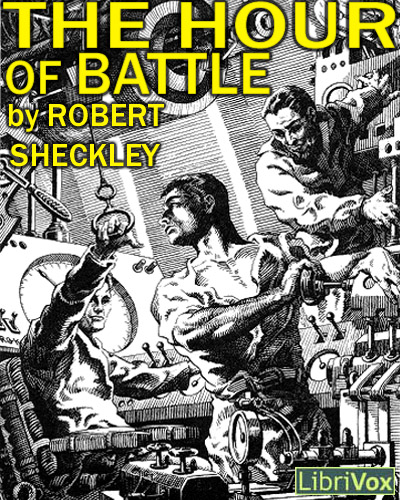
LIBRIVOX - The Hour Of Battle by Robert SheckleyThe Hour Of Battle
By Robert Sheckley; Read by Megan Argo
1 |MP3| – Approx. 14 Minutes [UNABRIDGED]
Publisher: LibriVox.org
Published: November 01, 2009
As one of the Guardian ships protecting Earth, the crew had a problem to solve. Just how do you protect a race from an enemy who can take over a man’s mind without seeming effort or warning? From Space Science Fiction September 1953.
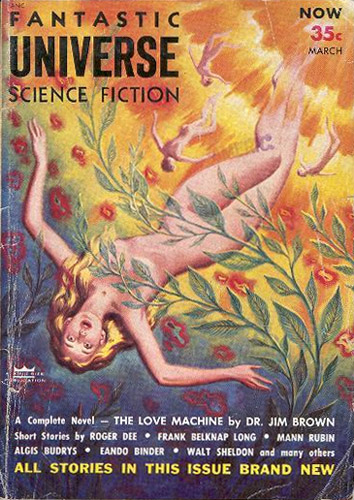
Fantastic Universe March 1954The Man From Time
By Frank Belknap Long; Read by Norm
1 |MP3| – Approx. 30 Minutes [UNABRIDGED]
Publisher: LibriVox.org
Published: November 01, 2009
The method by which one man might be pinpointed in the vastness of all Eternity was the problem tackled by the versatile Frank Belknap Long in this story. And as all minds of great perceptiveness know, it would be a simple, human quality he’d find most effective even in solving Time-Space. From Fantastic Universe March 1954.
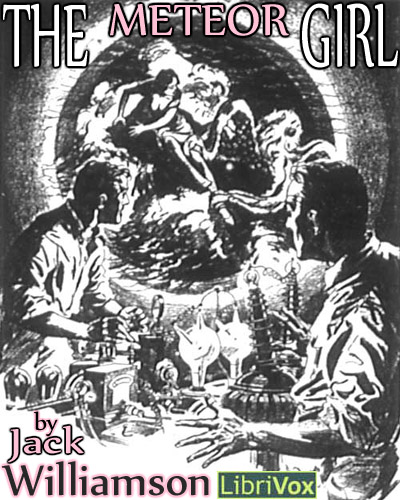
LIBRIVOX - The Meteor Girl by Jack WilliamsonThe Meteor Girl
By Jack Williamson; Read by Gregg Margarite
1 |MP3| – Approx. 46 Minutes [UNABRIDGED]
Publisher: LibriVox.org
Published: November 01, 2009
Through the complicated space-time of the fourth dimension goes Charlie King in an attempt to rescue the Meteor Girl. From Astounding Stories, March 1931.
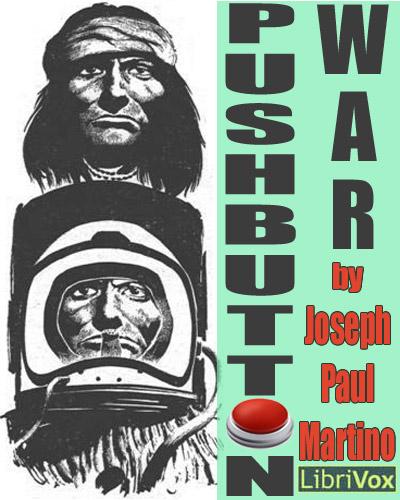

LIBRIVOX - Pushbutton War by Joseph Paul MartinoPushbutton War
By Joseph Paul Martino; Read by FNH
1 |MP3| – Approx. 40 Minutes [UNABRIDGED]
Publisher: LibriVox.org
Published: November 01, 2009
In one place, a descendant of the Vikings rode a ship such as Lief never dreamed of; from another, one of the descendants of the Caesars, and here an Apache rode a steed such as never roamed the plains. But they were warriors all. From Astounding Science Fiction August 1960.
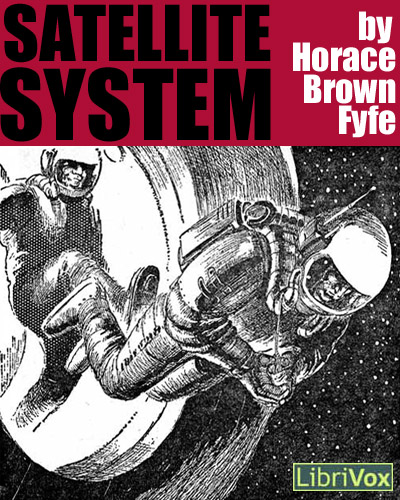
LIBRIVOX - Satellite System by Horace Brown FyfeSatellite System
By Horace Brown Fyfe; Read by Bellona Times
1 |MP3| – Approx. 31 Minutes [UNABRIDGED]
Publisher: LibriVox.org
Published: November 01, 2009
Fyfe’s quite right … there’s nothing like a satellite system for a cold storage arrangement. Keeps things handy, but out of the way… From Analog Science Fact & Fiction October 1960.
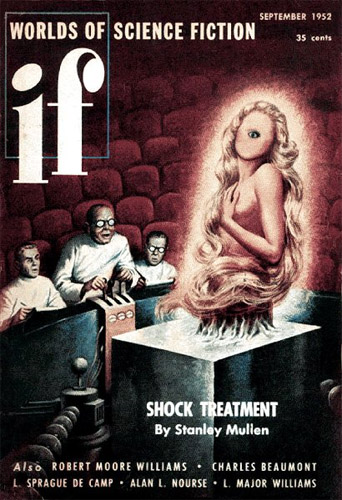
Worlds Of If - September 1952The Skull
By Philip K. Dick; Read by Gregg Margarite
1 |MP3| – Approx. 50 Minutes [UNABRIDGED]
Publisher: LibriVox.org
Published: November 01, 2009
Conger agreed to kill a stranger he had never seen. But he would make no mistakes because he had the stranger’s skull under his arm. From If Worlds of Science Fiction September 1952.
LibriVox Science Fiction - Star Mother by Robert F. YoungStar Mother
By Robert F. Young; Read by TC Parmelee
1 |MP3| – Approx. 12 Minutes [UNABRIDGED]
Publisher: LibriVox.org
Published: November 01, 2009
A touching story of the most enduring love in all eternity. From Amazing Stories January 1959.

[Thanks also to Wendel Topper and Lucy Burgoyne]

Posted by Jesse Willis
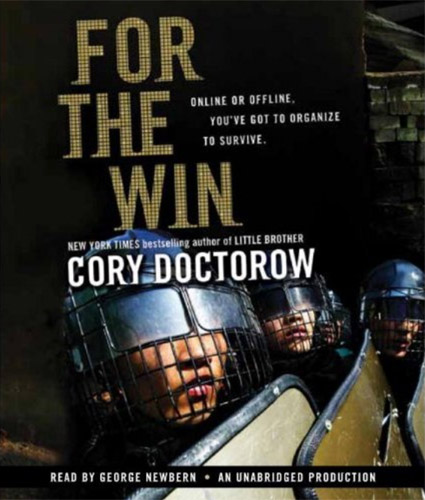
New Releases: For The Win by Cory Doctorow

SFFaudio Online Audio

I really enjoyed Cory Doctorow’s novel Little Brother |READ OUR REVIEW|, and I am looking forward to reading his latest novel For The Win.

LISTENING LIBRARY - For The Win by Cory DoctorowFor The Win
By Cory Doctorow; Read by George Newbern
CDs – Approx. 16.5 Hours [UNABRIDGED]
Publisher: Listening Library
Published: May 11, 2010
ISBN: 0307710696
Listen to a sample |MP3|
At any hour of the day or night, millions of people around the globe are engrossed in multiplayer online games, questing and battling to win virtual gold, jewels, and precious artifacts. Meanwhile, millions of “gold farmers” toil in electronic sweatshops harvesting virtual treasure that their employers sell to First World gamers for real money. Mala is a brilliant fifteen-year-old from rural India whose leadership skills in virtual combat have earned her the nickname “General Robotwalla.” In China, Matthew defies his former bosses to build his own gold-farming crew. Leonard lives in Southern California and spends his nights fighting virtual battles alongside his buddies in Asia. All of these young people, and more, become entangled with the mysterious woman called Big Sister Nor, who builds them into a movement to challenge the status quo. Fighting pitched battles in the virtual worlds of every MMORPG worth playing, Nor’s network of gamers is so successful that it incurs ruthless opposition. Ultimately, Big Sister’s people devise a plan to crash the economy of every virtual world at once—a Ponzi scheme combined with a brilliant hack that ends up being the biggest, funnest game of all.

Doctorow has read a segment for his podcast |MP3| and another one for an Electronic Frontier Foundation fundraiser |MP3|.

[via SFSignal.com and Open Buddah]

Posted by Jesse Willis

Aural Noir review of No Score by Lawrence Block

Aural Noir: Review

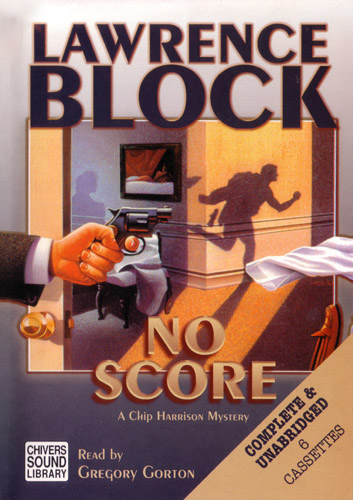
CHIVERS - No Score by Lawrence BlockSFFaudio EssentialNo Score (book #1 in the Chip Harrison series)

By Lawrence Block; Read by Gregory Gorton
6 Cassettes – Approx. 5 Hours 30 Minutes [UNABRIDGED]
Publisher: Chivers Audio
Published: 1999
ISBN: 0792722620
Themes: / Crime / Sex / Quest / Pornography / Chicago /

It is a mystery why a street-smart young man like Chip Harrison has to resort to elaborate plans to attract a young woman like Francine. But someone turns Chip’s dream into a nightmare of danger. Chip has to act fast and furiously in a sizzling and suspenseful adventure that only Edgar Award-winning Lawrence Block could have written. Chip Harrison rightfully takes his place beside Block’s best known characters.

Seventeen year old Chip Harrison is a virgin. Francine, the narcissistic sexpot sitting on his bed, is two years older than Chip. All that stands between Chip and Francine is a tight yellow sweater and a green plaid skirt. Chip’s been preparing for this situation for a while now. He’s read all the right books, practiced all his moves on other girls, and now it’s all actually going to happen! And then, just as the deed is about to be done, a man with a gun walks in and shoots poor Chip! That’s chapter one. In chapter two Chip fills in some details about what happened before that – he’s an orphan, the son of a pair of con-parents. With no funds in the bank and not enough game on the basketball court. Poor Chip was kicked out of his prep school just a couple of months shy of graduation! Now, with little more than the clothes on his back, Chip Harrison has to meet and lay the girl of his dreams – the question is, will he get to do it? Or will he die trying?

Yep, that’s it! The whole novel is basically one kid’s quest to make it with a beautiful girl, almost any beautiful girl will do. As such, No Score probably the slimmest connection to mystery and crime of any book I’ve ever reviewed for SFFaudio. Later novels in the Chip Harrison series actually are genuine mysteries (they are all parody/homages to Rex Stout’s Nero Wolfe mysteries in fact). Though later books in the series are more properly mystery novels, like No Score they all share Chip’s enthusiasm and all the juvenile charm he brings to the telling. Lawrence Block is probably my favourite writer of first person perspective fiction. His sentences are chock full of wry humor and quick wit. When you pair his terrific writing with a capable narrator the results are explosively good. This is just such a novel and just such a pairing. While there’s not more than one or two actual jokes in No Score the laughs are all out loud and come every few minutes. I sure wish narrator Gregory Gorton was still recording audiobooks. He is a terrific performer with a wide range. In No Score he performs as Chip, a chipper and horny young man, Gregor, a fortyish immigrant from an unnamed Balkan country, and several sexy women in a terrific falsetto.

Posted by Jesse Willis

The Lottery by Shirley Jackson

SFFaudio Online Audio

What’s the point of The Lottery? It’s a Rorschach test.

“A chilling tale of conformity gone mad.”
-Kent Brockman, Channel 6 News

There’s a special kind of pleasure that comes from a combination of persistence and serendipity. For years I’ve described the fruits of this activity as “obscure goodness.”

Let me tell you a story. Not that long ago I would frequent numerous Blockbuster and Rogers Video stores looking to buy used VHS movies. I’d dig through endless bins of tapes with a copy of a movie guide close to hand. I found hundreds of amazing movies that way. I found The Wonderful Ice Cream Suit (1998), Sorcerer (1977) and The Wicker Man (1973), to name just a few.

Podcast discovery, by the way, can be similarly rewarding. Digging around the internet you can find some truly amazing old programs that nobody seems to be talking about. I’ve already pointed you towards the wonder that is A Bite Of Stars, A Slug Of Time And Thou, for instance. That series has a persistent excellence that should be far better known. This whole website is basically an exercise in the search for “obscure goodness.”

I told you this story only to explain why I’m not going to explain why you should listen to Shirley Jackson’s The Lottery.

The Lottery is by no means the best story I’ve read or heard, in fact it’s nowhere even close to that, but because I found it serendipitously I liked it a lot. Apparently a lot of people have read this story, its pretty famous actually, but it was new to me. Here are two versions, one narrated, one dramatized.

Fiction (from the New Yorker) PodcastThe Lottery
By Shirley Jackson; Read by A.M. Homes
1 |MP3| – Approx. 32 Minutes [UNABRIDGED]
Podcaster: New Yorker: Fiction
Podcast: November 12, 2008
A village of 300 assembles in a square to observe a time-honored ritual. The heads of each family draws a slip of paper to choose the winner. First published in the June 26, 1948, issue of The New Yorker.

NBC Presents "Short Story"NBC Presents: SHORT STORY – “The Lottery”
Based on the short story by Shirley Jackson; Adapted by Ernest Kinoy; Performed by a full cast
1 |MP3| – Approx. 28 Minutes [RADIO DRAMA]
Broadcaster: NBC Radio
Broadcast: March 14, 1951
Provider: Archive.org
“A story about a quaint old custom.”
Cast: Charles Seel; Gail Bonney; John McGovern; James Nusser; Jack Nessler; Louise Lorimer; Jeff Corey; Irene Tedrow; Margaret Bryaton; Jeffrey Silver; Steven Chase; Morris King (folk singer).

Posted by Jesse Willis

BBC7 & RA.CC: Trueman And Riley

Aural Noir: Online Audio

BBC Radio 7 - BBC7My good friend Julie, from the Forgotten Classics podcast, sent me an email pointing out Trueman And Riley a BBC Radio “Drama series about two bickering detectives, starring Robert Daws and Duncan Preston.” Sez Julie:

“Just in case you hadn’t heard it, this [Trueman And Riley] is a good ‘un. Just finished listening to the first episode which was a good little mystery and showed great promise for future character development of the ‘tecs.[detectives]”

I hadn’t heard of it, but found both series 1 and series 2 of Trueman And Riley available via torrent over on RadioArchive.cc!

I’ve now heard the first series, and I must say I do kind of like it. The programme features unpredictable mysteries with a contemporary feel (one episode is set at a James Bond convention). Trueman And Riley might be the very epitome of BBC “light entertainment.” It isn’t as gritty as McLevy, nor as engrossing as the Falco series. But, there is a certain breezy charm to the very modern, middling problems that Trueman and Riley are forced to face.

Here’s the skinny on it from the Wikipedia entry:

Trueman And Riley is a British radio drama series written by Brian B. Thompson and starring Robert Daws and Duncan Preston. Originally named Trueman it began life on BBC Radio 4 on 17 April 2002 with DI Trueman being called back to work after a nervous breakdown in order to solve a high profile murder case, backed up by DS Riley (Duncan Preston). Renamed Trueman And Riley for a relaunch on BBC7, and relocated from Hull to Leeds, the new series saw the pair attempt to solve slightly more everyday crimes, and frequently disagreeing about the best way to proceed.

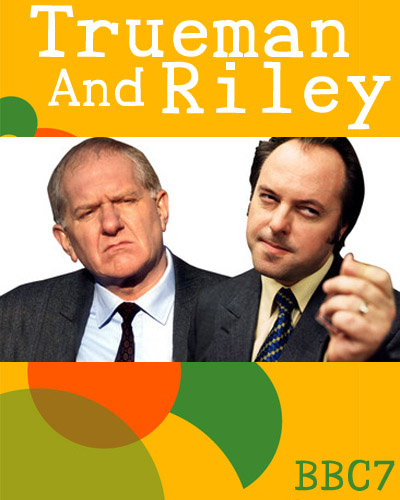
BBC7 - Trueman And RileyTrueman And Riley
By Brian B. Thompson; Performed by a full cast
30 Minutes [AUDIO DRAMA]
Broadcaster: BBC Radio 7
Broadcast: 2007, 2009

Cast:
DI Trueman, Robert Daws
D.S. Riley, Duncan Preston
Written by Brian B. Thompson.
Produced by Toby Swift.

Series One:

Episode 1: Vanished
Detectives Trueman and Riley investigate the mysterious disappearance of a man en route from London to a new life in Leeds.

Episode 2: Story
A journalist has fallen from a building while working on a story, but was she pushed? Trueman and Riley are on the case.

Episode 3: Bond
Intrigue and suspicion at a James Bond convention as Trueman and Riley go in search of a stolen ring.

Episode 4: Speed
An angry Riley’s been sent on a speed awareness workshop. But that puts him on the trail of an ex-con from the old days in Hull.

Series Two:

Episode 1: The Road to Nowhere
The Leeds detectives find themselves on assignment to the Student Crime Prevention Team.

Episode 2:The Three Degrees
A student reunion turns sour when a man ends up in the canal. Trueman & Riley investigate.

Episode 3: A Man’s World
Trueman and Riley return to CID to deal with a series of thefts from pregnant women.

Episode 4: The Other Chic
Trueman and Riley are called in when a lingerie shop is burned down in an arson attack.

Episode 5: Love Bytes
Trueman and Riley are sucked into the world of an online role play game.

Posted by Jesse Willis

Review of The Eyes of the Dragon by Stephen King

SFFaudio Review

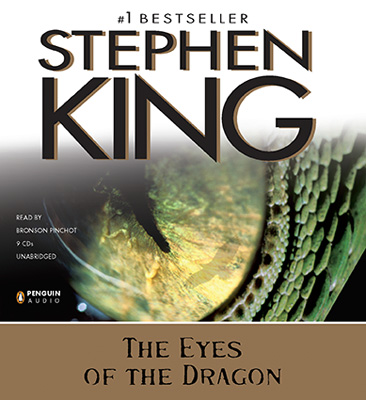
Fantasy Audiobook - The Eyes of the Dragon by Stephen KingThe Eyes of the Dragon
By Stephen King; Read by Bronson Pinchot
11 Hours – [UNABRIDGED]
Publisher: Penguin Audio
Published: 2010
Themes: / Fantasy / Good and evil / Magic / Monarchy / Wizards /

After writing his magnum opus IT, Stephen King briefly stepped away from the genre that defined his career. The result was The Eyes of the Dragon (1987), a fantasy novel. King said that he wrote The Eyes of the Dragon for his daughter Naomi (for whom the book is dedicated, along with King’s friend Ben Straub) who reportedly never liked her father’s terrifying tales.

While that may be true, I also think that King may have thought he had said all that he had to say about horror and was looking to explore other genres. He may also have simply exhausted himself with the tome-like IT and needed to try his hand at something short and simple. Compared with most King novels, The Eyes of the Dragon is a chapbook (it’s nine compact discs in the Penguin Audio version, 380 pages in paperback including illustrations).

In brief, The Eyes of the Dragon is a story about the inheritance of the kingship of the fictional realm of Delain. Roland, the old king, fathers two sons late in life, Peter and Thomas. Peter, the eldest, is slated to inherit the throne. Peter possesses all the qualities you would want in a monarch—he’s smart, just, honest, and brave. Thomas on the other hand is a near clone of his father—an average thinker, prone to vacillations, reluctant to make important decisions. Roland’s adviser is Flagg, a shadowy wizard who has served the kings of Delain for centuries, perhaps longer. Flagg is actually a demonic figure who wants to see Delain in ruins and the world thrown into a dark age of bloody anarchy. He devises a plot to poison Roland, framing the murder so that the blame falls on Peter. When the dust settles, Thomas, only 12 years old, unfit to rule and terrified with his new responsibility, is put on the throne. Flagg knows that Thomas will be a puppet in his hands and the instrument through which he can finally see his centuries-long evil plans come to fruition. Peter is sentenced to life in a prison in the tower of the Needle, a small cell high above the city.

King has professed a love for the writings of J.R.R. Tolkien (The Stand is a semi-homage to The Lord of the Rings, and The Dark Tower series draws its inspiration from that book as well). The Eyes of the Dragon shares a lot in common with The Hobbit. Roland’s ancient heirloom is the arrow Foe-Hammer, one of the names given to Gandalf’s sword Glamdring. It’s also an allusion to the black arrow Bard uses to bring down the dragon Smaug. King tells the tale using an omniscient narrator who speaks with a pleasant, conversational voice, and seems to be relaying the tale years later and from some other time and place. This authorial voice is another hallmark of The Hobbit, written initially for Tolkien’s children and meant to be read aloud.

In general I liked The Eyes of the Dragon very much. As with all of King’s stories it’s wonderfully told with a compelling narrative. It feels like a fairy tale with an edge, in which the events will likely work out for the good in the end but with blood spilled and hearts broken along the way.

Peter is a great character and is easy to root for. Despite his unjust sentence and the fact that he knows he will likely never leave the Needle alive, he refuses to succumb to despair. Peter is a born leader with a carriage of command. Guards who initially spit in his soup or try to bully him, believing that as a convicted murderer he will be humbled and easy prey, are cowed by his regal bearing. His captors begin to question whether he indeed murdered his father. Peter has truth on his side and maintains his innocence with a quiet certitude that inspires awe. After his first week in the Needle he makes up his mind to live, and to not relinquish his kingship. Though he’s been convicted and stripped of his regalia and title he is in all respects still the uncrowned King of Delain.

If you’re a fan of King’s world and works you’ll recognize the name of Flagg, who is also the main villain of The Stand and The Dark Tower. While menacing in The Eyes of the Dragon, I found Flagg not as terrifying as he is portrayed in The Stand. Perhaps it’s because he’s less mysterious here and more of a prototypical evil dark wizard. He only reaches the truly insane level of depravity and malice I came to associate with Flagg of The Stand at the very end of the novel.

The Eyes of the Dragon is a moral tale and uses the fantasy trope of pitting opposing sides of good and evil against each other (Peter is almost stainlessly pure, while Flagg is an unredeemable monster who wants to see Delain thrown into a 1,000-year reign of anarchy and blood-soaked chaos). In between are characters with shades of gray, and just like The Lord of the Rings the outcome is decided by a few average folk who have to make difficult choices that run at odds with their own best interests.

But The Eyes of the Dragon is not without a few flaws. In my opinion King is far more comfortable and convincing when he’s writing about our world and in particular his Maine birthplace. Fictional small towns like Derry and Castle Rock feel real because King knows their environs and peoples. In contrast, the kingdom of Delain is unremarkable and without character (it’s a typical monarchy with kings and a servant class, whose technology is roughly high medieval). Any truly fantastic elements are at a minimum: Flagg is the only person who has access to magic and his spells are more alchemy than spellcraft. The only monster we see is a single smallish dragon in a flashback sequence whose head is mounted on the wall of Roland’s sitting room (from this trophy we get the title of the novel).

There are some holes in the plot, too. For someone who is incredibly ancient, powerful, and brilliantly evil, how does Flagg let Peter live for more than five years, letting him patiently spin his escape plot from the top of the Needle? Flagg recognizes Peter almost from birth as a formidable threat: Why wouldn’t he poison him, or pay the guards to murder him, or simply do it himself? When Flagg finally does catch on to Peter’s escape plan and comes racing up the stairs of the Needle swinging his monstrous double-bladed axe like a medieval version of Jack Torrance, I wondered why he had chosen to wait so long.

The second plot hole is Peter’s method of escape. I won’t spoil it here, but it seemed unrealistic that one of the omnipresent guards (who frequently pop their heads into the window on Peter’s cell door) wouldn’t have caught him in the act at some point during his five-plus years of imprisonment.

Still, a few problems aside, The Eyes of the Dragon is, like most of King’s material, a great read and highly recommended. Bronson Pinchot does a wonderful job as narrator and in particular delivers a wonderfully-voiced Flagg, delivering his lines with a whispering malice.

Posted by Brian Murphy