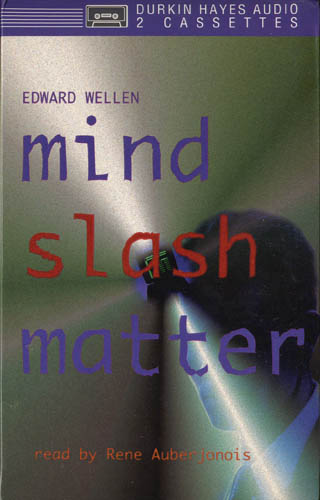
MIND SLASH MATTER AUDIOBOOK at AUCTION~check it out

SFFaudio News

I’ve put this very rare audiobook up to auction. It’s our very last copy (perhaps the last sealed copy on Earth). It got an excellent review from my son Jesse Willis…

See the review HERE – then please go bid on it at:


http://cgi.ebay.com/ws/eBayISAPI.dll?ViewItem&item=370200836661

THIS IS AN EXTREMELY RARE AUDIOBOOK. It is Out Of Print and very hard to find, the publisher is also out of business so it won’t be reprinted. This audiobook was published in 1995 and is amazingly STILL SEALED IN ITS ORIGINAL PACKAGING. It is in absolutely perfect condition. This is a 2 cassette audiobook and is UNABRIDGED (approx running time of 180 minutes).

And to quote Jesse’s review:

“For a straight reading – no music, no voice effects – this is perfect. Cover art is a little hard to decipher but is adequate. To top it all off, Mind Slash Matter was, until recently, only available only as an audiobook. Such an amazing story and straight to audio!”

Posted by Elaine Willis

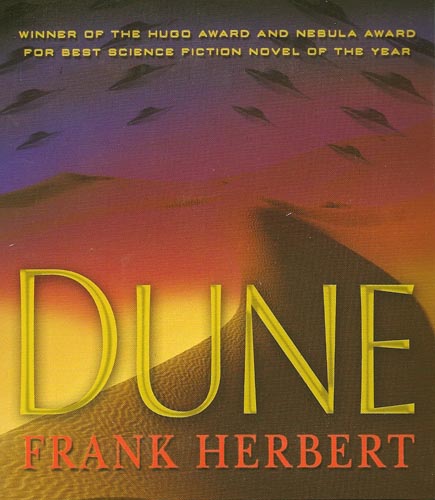
Review of Dune by Frank Herbert (Macmillan Audio)

SFFaudio Review

Science Fiction Audiobook - Dune by Frank HerbertSFFaudio EssentialDune
By Frank Herbert, Performed by Simon Vance
18 CDs – 22 hours – [UNABRIDGED]
Publisher: Macmillan Audio
Published: 2007
ISBN: 9781427201430
Themes: / Science Fiction / Politics / Space travel / Culture / Ecology /

Dune. Arrakis. Desert Planet.

I first read Dune when I was in college (late 1980’s), after a few false starts. I desperately wanted to read it, so I made it the only thing I took with me on a 30 hour bus ride from Tucson, Arizona to Idaho Falls, Idaho. It was a long trip. I smelled like cigarettes. But I got that book read, and loved it.

Years later, I reviewed an unabridged recording of Dune for SFFaudio that was read by George Guidall. Loved that one, too. Revisiting the book was a treat and Guidall is the Yoda of audiobook narration, so win-win.

Now, years after that, I’ve heard yet another unabridged version of Dune, this time a multi-voice presentation from Macmillan Audio. And again, I loved it. Frank Herbert’s novel remains one of the finest examples of world-building the genre has to offer. The political intrigue is delicious, the implied history deep and satisfying, and the characters smart.

Simon Vance is the main narrator. Each character’s dialogue is performed by actors, and skilled actors at that. I can’t find a list of the entire cast, but it includes Scott Brick, Katherine Kellgren, Orlagh Cassidy, and Euan Morton. I enjoyed it thoroughly. The actors were allowed to perform, and most of the time the attributives were dropped. Vance’s narration bridges the conversations, and the book is immersive and engaging.

I’m not certain why, but there are long passages that Simon Vance narrates himself. Vance is right up there with Guidall, so it’s an excellent reading. I’m just not certain why the audiobook wasn’t done with a full cast all they way through. I point this out as a curiosity rather than a flaw.

A few short years ago, if a person had asked me if I prefer a single narrator to a full cast recording, there wouldn’t have been any hesitation. Single narrator, definitely. But now, I’d have a difficult time choosing between a full cast narration and a single narrator, assuming the single narrator is good, the actors in the full cast narration are good, and – this is very important – the attributives in the full cast narration are dropped so I don’t have to hear the maddening “he said angrily” after an actor has made it quite clear that a character is angry. The problem is that most full cast narrations lean too far toward audio drama, adding too much sound and music. I love audio drama, but audio drama and audiobooks are very different experiences. Most productions that aim somewhere between the two fail in my opinion. Because of this leaning, there aren’t many full cast narrations I’ve enjoyed, but this production from Macmillan Audio and anything from Full Cast Audio are top-notch.

Despite my enjoyment of Dune, I have never read past it. I can’t explain why. I’ve owned a copies of Dune Messiah and Children of Dune for years, but have never read them. Brian Herbert and Kevin J. Anderson published a book called The Road to Dune (SFFaudio Review), which presented the history of the creation of the Dune books. In there it said that Frank Herbert intended Dune, Dune Messiah, and Children of Dune to be one story. It’s long past time I try more of these novels. Lucky for me, all six of Frank Herbert’s original books have been completed and released by Macmillan Audio, all as full cast productions.

 
On to Dune Messiah!

Posted by Scott D. Danielson

Audio Drama: The Flickerman

SFFaudio Online Audio

The FlickermanLance Dann writes in to tell us about his “interactive SF audio drama” called The Flickerman. Says Dann:

It’s an experimental SF piece that [has] received excellent reviews in the UK national press when the first series was broadcast on the radio in London (Resonance 104.4FM). It received a review in the national paper The Guardian that was particularly strong.

There’s a short introductory film HERE along with the first episode. It’s also got a standard podcast feed but you may prefer to listen right off the site – as you’ll need your browser handy for the full experience.

Podcast feed:
http://www.theflickerman.com/?feed=podcast

Posted by Jesse Willis

Recent Arrivals from Brilliance Audio

SFFaudio Recent Arrivals

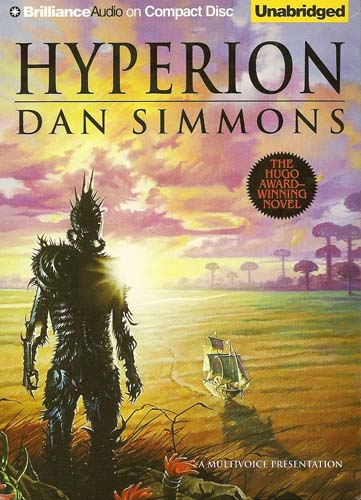
Hyperion by Dan SimmonsHyperion
By Dan Simmons; Read by Various
19 CDs – 21 hours – [UNABRIDGED]
Publisher: Brilliance Audio
Published: 2009
ISBN: 9781423381402

On the world called Hyperion, beyond the law of the Hegemony of Man, there waits the creature called the Shrike. There are those who worship it. There are those who fear it. And there are those who have vowed to destroy it. In the Valley of Time Tombs, where huge brooding structures move backward through time, the Shrike waits for them all. On the eve of Armageddon, with the entire galaxy at war, seven pilgrims set forth on a final voyage to Hyperion seeking the answers to the unsolved riddles of their lives. Each carries a desperate hope–and a terrible secret. And one may hold the fate of humanity in his hands.

A stunning tour-de-force filled with transcedent awe and wonder, Hyperion is a masterwork of science fiction that resonates with excitement and invention, the first volume in a remarkable new science fiction epic by the multiple-award-winning author of The Hollow Man.

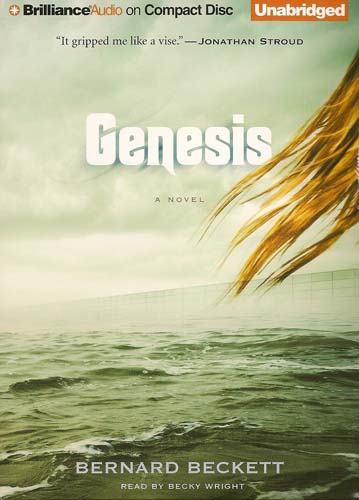
Genesis by Bernard BeckettGenesis
By Bernard Beckett; Read by Becky Wright
4 CDs – 4 hours – [UNABRIDGED]
Publisher: Brilliance Audio
Published: 2009
ISBN: 9781423381501

Candidates for The Academy must endure a grueling entrance exam, and young Anaximander has chosen as her special subject the life of Adam Forde, her long-dead hero. She begins by telling Forde’s story:

Late in the twenty-first century the island Republic has managed to survive a devastating worldwide plague by isolating its citizens completely from outside contact. For many years, approaching ships and planes are gunned down, refugees are shot on sight. No one is allowed in or out. The islanders are safe, but not free. Until a man named Adam Forde rescues a girl from the sea…

“Anaximander, we have asked you to consider why it is you would like to join The Academy. Is your answer ready?”

To answer that deceptively simple question, Anaximander finds she must struggle with everything she has ever known about herself and her beloved Republic’s history. What is the nature of being human, of being conscious? What does it mean to have a soul? And when everything has been laid bare, she must confront The Republic’s last great secret, her own surprising link to Adam Forde, and the horrifying truth about her world.
Genesis is a provocative novel of ideas that forces us to contemplate the very essence of what it means to be human. You will want to finish it in one sitting, and you will want to listen to it again and again.

Posted by Scott D. Danielson

Review of Blood of Ambrose by James Enge

SFFaudio Review

Blood of Ambrose by James EngeBlood of Ambrose
By James Enge; Read by Jay Snyder
Audible Download – 14 hours 29 mins [UNABRIDGED]
Publisher: Audible Frontiers
Published: 2009
Themes: / Fantasy / High Fantasy / Arthurian Legend / Sword and Sorcery / Necromancy / Regency / Immortality /

In his introduction to the Audible Frontiers recording of Blood of Ambrose, James Enge places his debut novel in the “swords and sorcery” fantasy sub-genre. While the work certainly fulfills the expectations established by that label–it’s replete with feats of arms, dark conjurings, and roguish characters–it also owes debts to the Arthurian tradition and to humorous fantasy in the vein of David Eddings and Joe Abercrombie. The resulting mélange of tropes and styles sometimes clashes, but in the end it leaves the reader with a varied and satisfying reading experience.

The blurb from Pyr, who publishes the hardcopy edition, reads as follows:

Centuries after the death of Uthar the Great, the throne of the Ontilian Empire lies vacant. The late emperor’s brother-in-law and murderer, Lord Urdhven, appoints himself Protector to his nephew, young King Lathmar VII and sets out to kill anyone who stands between himself and mastery of the empire, including (if he can manage it) the king himself and his ancient but still formidable ancestress, Ambrosia Viviana.

When Ambrosia is accused of witchcraft and put to trial by combat, she is forced to play her trump card and call on her brother, Morlock Ambrosius—stateless person, master of all magical makers, deadly swordsman, and hopeless drunk.

As ministers of the king, they carry on the battle, magical and mundane, against the Protector and his shadowy patron. But all their struggles will be wasted unless the young king finds the strength to rule in his own right and his own name.

With names like Uthar and Viviana, even the most casual scholar of Arthuriana will recognize several connections to that illustrious tradition. Even the book’s title, Blood of Ambrose, is an allusion to Arthur, since in some medieval texts King Arthur is sometimes conflated with the late Roman British official Ambrosius Aurelianus. Though the novel is set in a seemingly fictional realm, tantalizing connections to our own world fleetingly appear, including overt references to the Latin tongue and to Britain itself. The relationship between the Ontilian Empire and our own past, however, is never fully explored. While Enge asserts that Blood of Ambrose serves up a completely self-contained story, he certainly leaves room for future world-building.

King Lathmar VII, as the above blurb suggests, is ostensibly the novel’s protagonist. Seen in this light, Blood of Ambrose is a coming-of-age story, and in this capacity it succeeds beautifully. In the book’s early hours, Lathmar is tossed around “like a sack of beans,” as he says, but by book’s end he’s making his own decisions and asserting his rightful authority. His relationship with the other characters are fraught with ambivalence and ambiguity.

The novel’s shining star, though, is the almost-immortal Morlock, who epitomizes the paradoxical swords-and-sorcery antihero. On the one hand, he’s valiant, protective, and very kind to Lathmar. Yet at times he is prone to violent outbursts or spells of depression. In a unique twist, we’re also told that he’s had a drinking problem in the past, and his refusal to let spirits pass his lips recurs as a frequent talking point among the other characters.

Unfortunately, the novel’s plot isn’t on par with its vibrant characters. Blood of Ambrose certainly tells some thrilling, engaging, and poignant stories, but they work better as standalone adventures rather than building a unified edifice. Characters like Lathmar, Morlock, and the arch-villain poisoner Steng serve as unifying threads,  but the plot simply lacked the momentous drive to keep me interested in what would happen next. Luckily, the character development was strong enough to provide me with that forward impetus.

Jay Snyder’s reading of Blood of Ambrose is mostly run-of-the-mill, with one significant exception. His resonant, laconic, intentionally dead-pan portrayal as Morlock transcends mere performance. This is how a flesh-and-blood Morlock really would speak. Seldom in my experience listening to audiobooks has a character been so indelibly linked to the narrator who gives him voice. Snyder’s depiction of Lathmar also deserves note; the transition from tremulous stuttering to firm command mirrors the development of the young king. His rendition of the tempermental Ambrosia is less flattering, and her outbursts can grate on the listener’s ears like claws. Of course, that may well be intentional.

Though it tells a rather lackluster story, Blood of Ambrose introduces a fascinating settting populated by a host of multi-faceted characters. It’s my hope that James Enge will continue to work and play with this colorful palette.

Posted by Seth Wilson

Archive.org: Free Culture by Lawrence Lessig

SFFaudio Online Audio

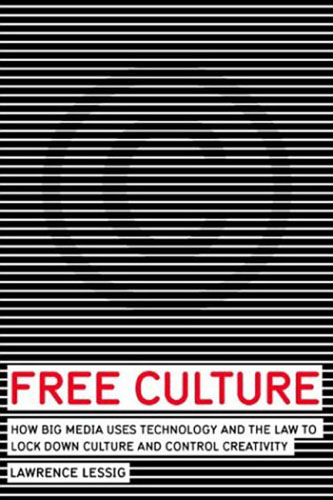
Internet Archive - Open Source AudioI don’t know if there exists a non-fiction book with more downloads than Free Culture by Lawrence Lessig. The Archive.org stats show it having been downloaded more that 13,000 times. That’s impressive. More impressive is how readable it is. The narrators are all amateurs and they occasionally mispronounce a word or stumble over the descriptions of the images and charts in the paperbook. It doesn’t matter though. The content is delivered extremely well – Lessig is an excellent explicator, and the book is highly relevant for anyone who visits this website. Americans in particular will find immense value in this audiobook. I highly, highly recommend it.

Free Culture by Lawrence LessigFree Culture
By Lawrence Lessig; Read by various
18 Zipped MP3 Files or Podcast – Approx. 9 Hours 42 Minutes [UNABRIDGED]
Publisher: AKMA / Turnstyle.org
Published: 2004
Provider: Archive.org / Open Source Audio

I got this audiobook through a torrent. You can get it that way too. Unfortunately I don’t know how to link to a torrent so I’ve made a HuffDuffer podcast feed for it…

Podcast feed: http://huffduffer.com/jessewillis/tags/free_culture/rss

iTunes 1-Click |SUBSCRIBE|

Here’s the entire audiobook for streaming listening too…


Those still unconvinced should have a look/listen to this April 17, 2009 powerpoint enhanced that Lessig gave at the University of Pennsylvania. It’s entitled The Forbin Problem – its title takes inspiration from the AMAZINGLY AWESOME Science Fiction movie called Collusus The Forbin Project.

Posted by Jesse Willis