Recent Arrivals: The Disembodied Man by Larry Maddock

SFFaudio Recent Arrivals

REB Audio - The Disembodied Man by Larry MaddockThe Disembodied Man
By Larry Maddock; Performed by Bill Mills and Roxanne Mills
MP3 Download – Approx. 31 Minutes [DRAMATIZED READING]
Publisher: REB Audio Books
Published: April 2009
Listen to a sample |MP3|
Unique SF Romance and Puzzler! From the creator of time traveling secret agent Hannibal Fortune and his sardonic, shape-changing colleague, Webley, comes one of the rarest stories in science fiction history, in an all new audio dramatization. “The Disembodied Man” was published only once, in the legendary sf pulp zine “Imagination” in the early 1950s. Off-beat and humorous like much of Maddock’s work, it is at once a unique tale of an unconventional romance and an intricate puzzler with two O’Henry-like twists, resulting in a delightfully human and touching short story. Who was the disembodied man? How had he gotten that way? Who was the mysterious woman that seemed to watch over him day and night? And could a woman, could any woman, fall in love with “the man who wasn’t there?”

Bill Mills, of this audiobook, sez:

Larry Maddock (aka Jack Jardine), the author of the original piece, died yesterday, April 14th. Maddock may be best known for his 60’s Ace Books SF series The Agent of T.E.R.R.A. Jack was also one of my oldest and dearest friends.

I hoped that perhaps you guys would give the audio book a listen and review. A mention from SFFAUDIO would be a true kindness in tribute to Larry Maddock’s passing.

The audiobook of “The Disembodied Man” is available at http://REBAUDIOBOOKS.COM for $3.00 as an mp3 download in 96k and 32k files. I am currently working on uploading 192k files and they will soon be available as well.

Posted by Jesse Willis

New Orson Scott Card from Blackstone Audio

SFFaudio Recent Arrivals

If you are an Orson Scott Card fan, then you’ve got to be enthused by the amount of audio out there. Nearly everything he’s written has an unabridged audio version, and Blackstone Audio has published a whole bunch of them. Here are two more:

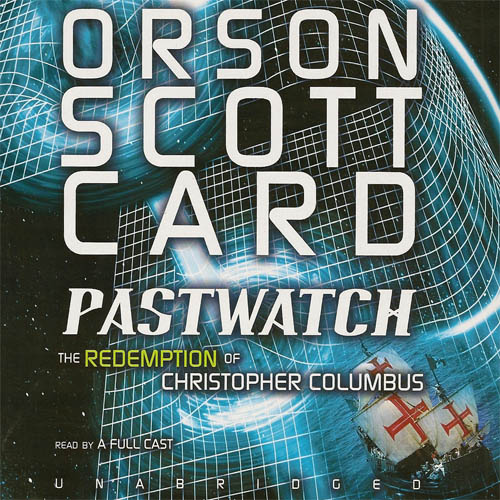
Pastwatch: The Redemption of Christopher Columbus by Orson Scott CardPastwatch: The Redemption of Christopher Columbus
By Orson Scott Card; Read by a Full Cast
12 CDs – 13.5 hours – [UNABRIDGED]
Publisher: Blackstone Audio
Published: 2009
ISBN: 9781433217180

In a not-too-distant future that is not quite ours, there has been a major scientific breakthrough, a way to open windows into the past, permitting historical researchers to view but not participate in the events of the past.

In one of the most powerful and thought-provoking novels of his remarkable career, Orson Scott Card interweaves a compelling portrait of Christopher Columbus with the story of a future scientist who believes she can alter human history from a tragedy of bloodshed and brutality to a world filled with hope and healing.
 
 
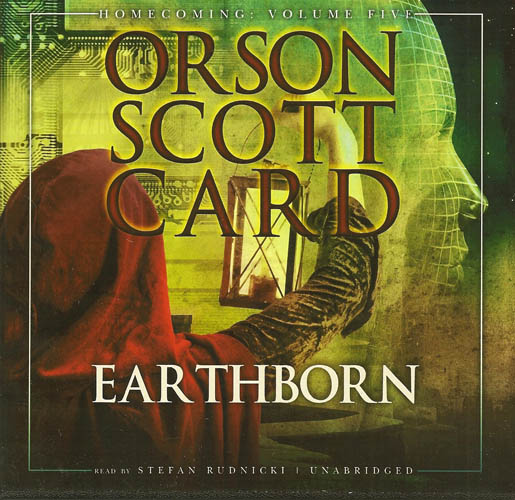
Earthborn (Homecoming, Volume Five) by Orson Scott CardEarthborn (Homecoming, Volume 5)
By Orson Scott Card; Read by Stefan Rudnicki
12 CDs – 14 hours – [UNABRIDGED]
Publisher: Blackstone Audio
Published: 2009
ISBN: 9781433217180

High above Earth orbits the starship Basilica. On board the huge vessel is a sleeping woman. Of those who made the journey, Shedemai alone has survived the hundreds of years since the Children of Wetchik returned to Earth.

She now wears the Cloak of the Starmaster, and the Oversoul wakes her sometimes to watch over her descendants on the planet below. The population has grown rapidly—there are cities and nations now, whole peoples descended from those who followed Nafai or Elemak.

But in all the long years of watching and searching, the Oversoul has not found the thing it sought. It has not found the Keeper of the Earth, the central intelligence that also can repair the Oversoul’s damaged programming.
 
 
Posted by Scott D. Danielson

The Agony Column Interviews Lou Anders

SFFaudio Online Audio

The Agony Column The Agony Column interviews Lou Anders (Pyr Books) |MP3|

You can subscribe to the feed at this URL:

http://bookotron.com/agony/indexes/tac_podcast.xml

Posted by Charles Tan

Recent Arrival from Galaxy Press

SFFaudio Recent Arrivals

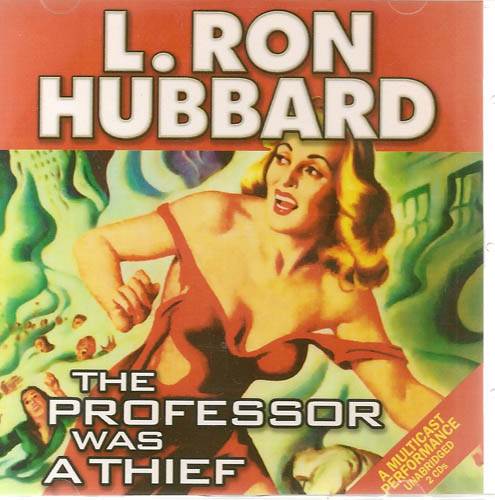
The Professor Was a Thief by L. Ron HubbardThe Professor Was a Thief
By L. Ron Hubbard; Performed by a Full Cast
Publisher: Galaxy Press
Published: 2009
2 CDs – 2 hours – [UNABRIDGED]
ISBN: 9781592123247

Galaxy Press continues it’s publication of Golden Age Stories from L. Ron Hubbard:

Primed for promotion to the World-Journal city editor, grizzled senior reporter Pop is stunned when it’s announced that young Leonard Caulborn, the publisher’s son-in-law, will get the post. Worse, the lad wants him out. In protest, Pop demands to be given a beat again and gets his wish. . . only now he’s got just two days to find the “real” story about a dead-end assignment— a month-old physics lecture— or be fired.

When Pop starts searching for the story’s source, a professor named Pertwee, he lands in the middle of the story of a century after the Empire State Building, Grant’s Tomb and Grand Central Station all disappear. Apparently, Pertwee’s the mastermind behind it all. But Pop soon discovers that, instead of inventing a new way to blow things up, the professor may be doing quite the opposite.

ALSO INCLUDES THE SCIENCE FICTION STORIES “BATTLE OF WIZARDS” AND “THE DANGEROUS DIMENSION”

Posted by Scott D. Danielson

The Public Domain: Enclosing The Commons Of The Mind

SFFaudio Online Audio

A BoingBoing post that links to a podcast lecture nicely explains why caring about intellectual property is so important…

The Royal Society PodcastThe Public Domain: Enclosing The Commons Of The Mind
1 |MP3| – Approx. 69 Minutes [LECTURE]
Podcaster: The Royal Society Podcast
Podcast: March 11th 2009
Is the public domain as vital to knowledge, innovation and culture as the realm of material protected by intellectual property rights? James Boyle thinks so and visits the RSA to call for a new movement to preserve it. If we continue to enclose the “commons of the mind”, Boyle argues, we will all be the poorer.

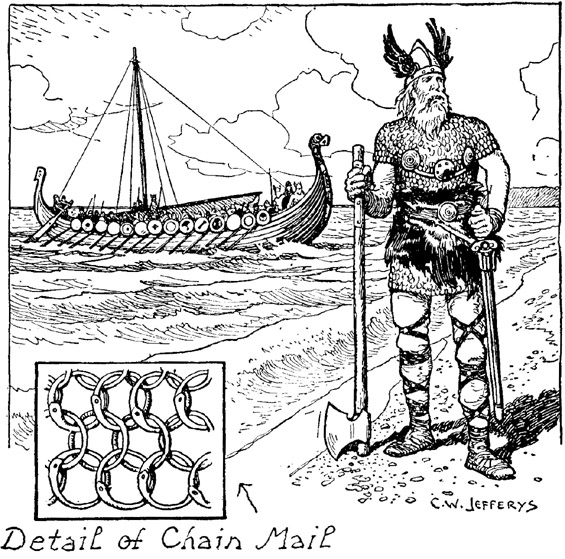
A paperbook, The Picture Gallery Of Canadian History Volume 1 (copyright 1942), that I picked up just today, is a great example of what Boyle talks about. While I listened to Boyle speak I was flipping through the book and imagining all the uses I could put it to. Today I’ve only used them to illustrate this post but when it’s public domain, you can do ANYTHING you want. What would you do with these pictures?

Page 61 from The Picture Gallery of Canadian History Volume 1 (1942)

Page 62 from The Picture Gallery of Canadian History Volume 1 (1942)

Vikings in Ontario. Cool huh? Incidentally, there are plenty of images from The Picture Gallery Of Canadian History Volume 1 on the web already but no-one has done a complete scan of it yet. It is clearly in the public domain in Canada (has been since 2001). Incidentally it won’t be PD in the USA until 2021. I found that fascinating, and utterly retarded. Here’s a 1938 Time magazine article that relates the story that goes with the scans above. If you liked these pics please have a listen to the lecture.

Posted by Jesse Willis

Review of WWW: Wake by Robert J. Sawyer

SFFaudio Review

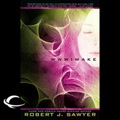
WWW: Wake by Robert J. SawyerWWW: Wake
By Robert J. Sawyer; Read by Jessica Almasy, Jennifer Van Dyck, A. C. Fellner, Marc Vietor, and Robert J. Sawyer
Audible Download – 12 hours 13 minutes [UNABRIDGED]
Publisher: Audible Frontiers
Published: 2009
Themes: / Science Fiction / Artificial Intelligence / Cyberpunk / Cybernetic Implants / Technothriller / Consciousness /

I don’t normally inject personal anecdotes or experiences into my reviews. It just isn’t my style. In the case of WWW: Wake, however, I simply can’t resist. I’m legally blind, and Robert J. Sawyer’s latest novel concerns itself with ways of seeing, in both the purely physical sense and in more metaphorical ways. It tells the story of 15-year-old blind math genius Caitlin Decter, whose family has just relocated from Austin, Texas to Waterloo, Ontario. She receives an email from a scientist in Tokyo who believes he can restore her sight by means of a behind-the-eye implant linked via Bluetooth to a pocket-sized transmitter and decoder which the ever-witty Decter dubs her “Eye-Pod”. Instead of seeing the real world, Caitlin initially sees only a kaleidoscope of criss-crossing lines and circles transposed on a flashing checkerboard of seemingly random lights. After some initial puzzlement, researchers determine that Decter is actually seeing the inner workings of the World Wide Web.

This premise is already intriguing enough, but add to it a nascent consciousness growing inside the raw data transmitted through cyberspace, and you have the makings of a great technothriller. Fortunately, Sawyer’s writing doesn’t fall victim to many of the clichéd tropes of that genre. There’s very little in the way of the sensationalism of films like Lawnmower Man or Ghost In The Machine. Instead, Sawyer explores the philosophical implications of a growing, learning artificial intelligence. Meanwhile, of course, Caitlin Decter must come to grips with her new “web sight”, as she calls it, in addition to facing the normal teenage challenges of adjusting to a new high school.

WWW: Wake strikes a good balance between the cerebral and the emotional. The novel stops just short of qualifying as “hard science fiction”, but it also, as I said, shies away from becoming a popcorn thriller. Decter is a complex and ultimately likable character. She’s a brilliant mathematician–in the online world she goes by the alias Calculass–and she’s confident in her mental prowess, but at the same time she faces the insecurities caused by her blindness in addition to the standard turbulence of adolescence. The supporting cast of characters in Caitlin’s life are just as three-dimensional. Her mother is loving and generous, while her father, a theoretical physicist, is well-meaning but emotionally distant. The interactions and conflicts between the characters are subtly portrayed, lending WWW: Wake a sense of realism despite the bizarre goings-on behind Caitlin’s eyes.

Is Caitlin’s blindness realistic? This is where my own personal experience comes into play. I’ve been legally blind since birth, although since I have some residual vision the comparison isn’t exact. Even so, it’s evident to me that Robert J. Sawyer has done his homework in this regard. Caitlin’s life is replete with all the trappings associated with blind life: white canes (which I just traded in for my first guide dog), text-to-speech screen-reading software, and braille displays. More importantly, Sawyer understands how the world is conceived and constructed for those of us with either no vision or limited vision. This becomes apparent as Caitlin’s sight changes throughout the novel in interesting ways, and as she struggles to pin names and concepts to the new visual stimuli that are firing down her optic nerves.

The Audible Frontiers production of Wake is stellar in its production value. As the voice of Caitlin Decter, Jessica Almasy does most of the heavy lifting, and her performance shines. Sound and voice is especially important in the world view of a character who, through much of the novel, lacks any kind of visual stimuli, and Almasy deftly handles these complex nuances. Of course, Decter is also a precocious and spunky teenage girl, and Almasy rises to the challenge of matching Decter’s dynamic character. The other narrators also do an excellent job, and Sawyer himself even lends his voice to occasional passages.

The book’s one weakness lies in its plotting. Along with Caitlin’s story and the development of the “web consciousness”, two other storylines weave in and out of the novel. While they’re interesting in their own right, they never come to a satisfying conclusion and never intersect in a meaningful way with the main story. I understand that Wake is merely the first in the WWW trilogy of novels, and that Sawyer will likely resolve them in upcoming volumes. Still, an author as talented as Sawyer should be able to bring these narrative threads to enough of a climax to maintain the novel’s cohesion.

Minor structural shortcomings aside, WWW: Wake is both an emotionally satisfying story of a blind girl coming to grips with ways of seeing, and an intellectually stimulating examination of technology and consciousness. Along with William Gibson’s Neuromancer and Neal Stephenson’s Snow Crash,Wake presents a unique perspective on information technology. I eagerly await its sequels Watch and Wonder.

Update: I didn’t realize this at the time, but apparently I wrote this review on the birthday of Annie Sullivan, who taught the deaf-blind Hellen Keller how to communicate with the world. Sullivan is a strong symbolic and thematic presence in Wake. Coincidence, or fate?

Posted by Seth Wilson