Coast To Coast AM: Interviews with Paul Di Filippo, Joe Haldeman, Lois McMaster Bujold, and Larry Niven

SFFaudio Online Audio

Coast To Coast AM, a long running overnight U.S. based conspiracy show has aired a nearly three hour long episode featuring interviewing with Paul Di Filippo, Joe Haldeman, Lois McMaster Bujold, Larry Niven.

Niven explains the basic premises behind Ringworld, Protector, The Soft Weapon, The Long Arm Of Gil Hamilton, The Draco Tavern, Lucifer’s Hammer – as well as 1984, The Marching Morons, The Moon Is A Harsh Mistress. Early on Technovelgy.com gets a shout out too.

Here’s the official description:

Saturday June 22, 2013

John B. Wells welcomed four highly respected science fiction authors: Larry Niven, Joe Haldeman, Lois McMaster Bujold, and Paul Di Filippo. They discussed their respective works, and how sci-fi can help us predict the future.
Host: John B. Wells

[Thanks Eric!]

Posted by Jesse Willis

Review of Swarm by B. V. Larson

SFFaudio Review

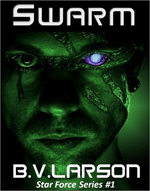
Swarm Swarm (Star Force #1)
By B. V. Larson; Performed by Mark Boyett
Publisher: Brilliance Audio
[UNABRIDGED] – 10 hours

Themes: / aliens / military sci-fi /

Publisher summary:

Earth arms marines with alien technology and builds its first battle fleet! Kyle Riggs is snatched by an alien spacecraft sometime after midnight. The ship is testing everyone it catches and murdering the weak. The good news is that Kyle keeps passing tests and staying alive. The bad news is the aliens who sent this ship are the nicest ones out there…. A novel of military science fiction by bestselling author B. V. Larson, Swarm is the story of Earth’s annexation by an alien empire. Long considered a primitive people on a backwater planet, humanity finds itself in the middle of a war, and faced with extinction.

One of the fundamental challenges of writing fiction is the need to make characters and events believable without making them boring, or retreading the same ground as a dozen authors before you. This is especially difficult in genre fiction, such as military sci-fi, where so many wildly imaginative authors have already gone before. Fortunately, B. V. Larson walks the line between realism and action with near perfect balance. Swarm, the first book in his Star Force series, contains little in the way of truly original science fiction material, but the author assembles these familiar pieces into a fantastic roller coaster of a tale.

Our protagonist is Kyle Riggs, who proves to be one of the most resourceful computer science professors in history. When alien machines invade earth he goes from being a mild-mannered single father, eating popcorn and watching movies with his kids, to a hard-hearted military commander in the course of about two weeks. By the end of the novel he is commanding full battalions of augmented marines, guiding the development of devastating weapons, and fighting toe to toe with robots the size of skyscrapers. It is a testament to the author’s skill at narration that all of these remarkable events happening to a single character only seems odd in retrospect. As the tale unfolds, each of Kyle’s actions and decisions makes sense in the moment, if not in the big picture, painting him as an everyman who is continually pulled into extraordinary circumstances.

The only real problem with Swarm is the nature of the threat that humanity faces. Essentially, the entire planet is placed at the center of a struggle between microscopic robots, which are obviously named Nanos, since they don’t have a name for themselves, and gigantic robots, which are immediately dubbed Macros. It doesn’t take long before the action of the novel descends into the most visceral, mindless sort of fights that we have seen before in countless robots versus humans films. I won’t deny that all of that is fun to read, but I couldn’t help wondering why the Nanos didn’t just build some big robots to blow up the Macros, or the Macros build some macroscopic robots and start turning everything they touched into grey goo. Or why the Nanos didn’t just infest the Macros and take them apart. Or why the Macros didn’t start strip mining the entire planet from beneath the safety of their shields, instead of fighting humanity in the field.

But that’s a debate for another time. It doesn’t matter whether the two strangely, intractably, even inexplicably different robots behave appropriately any more than it matters how an alien can have a silicon-based biology and acid for blood. I suppose we can also overlook, for this book at least, the rapid changes in Kyle’s character, the incredulous, borderline Stockholm Syndrome, relationship between Kyle and his girlfriend Sandra, and the sudden, mildly disappointing ending. What matters is that B. V. Larson uses all of these pieces to tell a fun story. I just hope to see some more character development as the series continues.

The audiobook of Swarm is produced by Audible, published on CD by Brilliance Audio, and as a whole meets the usual quality I expect from these companies. Each disc begins and ends with brief musical backgrounds which, while they do little to enhance the story, are not distracting. The last few sentences, about five to fifteen seconds, of each disc are repeated at the beginning of the next disc, which is a feature I always appreciate to draw me back into the story after pausing to change discs. Mark Boyett’s skillful narration perfectly portrays the voice of Kyle Riggs, whether he is calmly describing the procedures for programming an alien computer, or speaking in a panicked, but still clear, tone to convey the terror of facing an alien machine on the battlefield.

Posted by Andrew Linke
Escape Pod: Rescue Party by Arthur C. Clarke

SFFaudio Online Audio

Rescue Party, seems to have fans, though to my ears it seems rather like Sir Arthur C. Clarke’s worst story. Clarke is at his most unpolished in this novelette, his first sold story. It has, of course, good ideas, as we came to expect of Clarke, but is none of that deft writing. Perhaps most interestingly it is actually an inversion of the plot of one of Clarke’s best written stories, The Star and thus we could say that Rescue Party has at least a kind of a curiosity value. But that’s may be putting it too harshly, the story is pretty good despite it’s bad and lengthy writing.

That there is a full cast reading of Rescue Party seems overkill. Norm Sherman, who also does the audio production for his other podcast, the Drabblecast, has the main narration duty – perhaps you won’t notice, but I found myself hypnotized by the aspiration preceding Sherman’s every sentence – the characters are voiced by various Escape Pod alumni. And some of them seem to have added vocal distortion – I guess to make them more alieny. There are also sound effects.

Podcast - Escape PodRescue Party
By Sir Arthur C. Clarke; Performed by a full cast
1 |MP3| – Approx. 1 Hour 15 Minutes [UNABRIDGED]
Podcaster: Escape Pod
Podcast: June 18, 2013
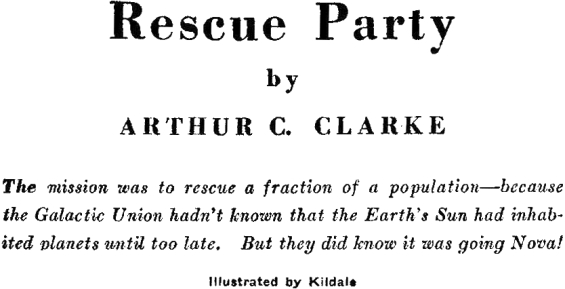
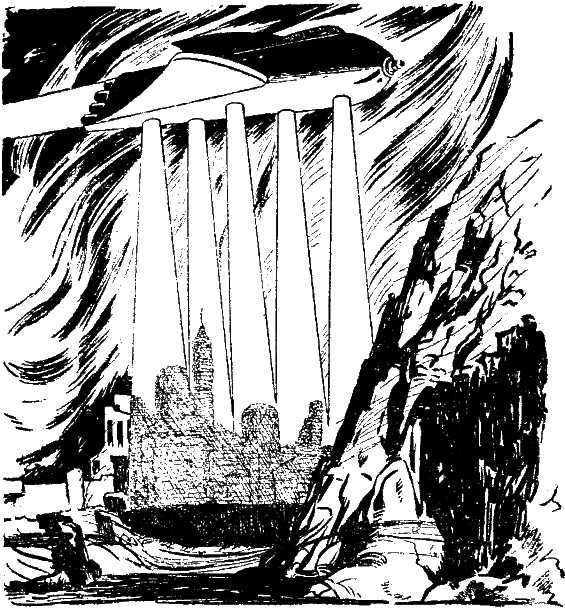
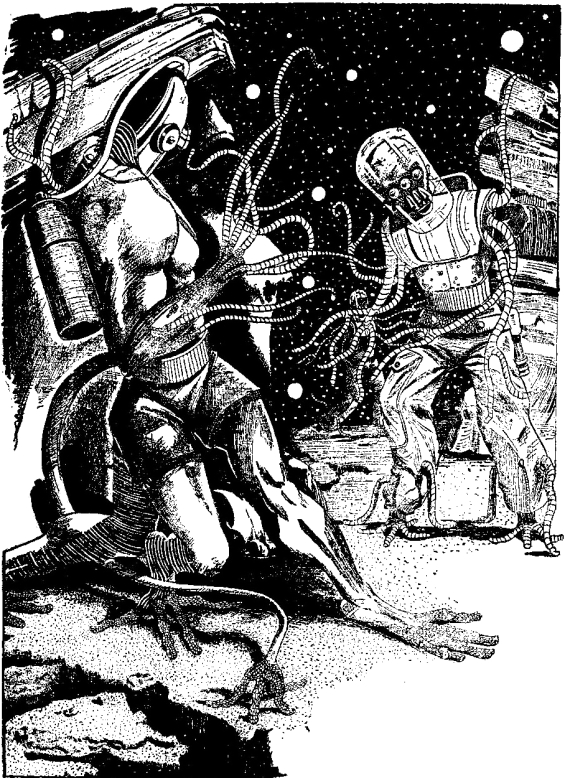
“The mission was to rescue a fraction of a population – because the Galactic Union hadn’t known that Earth’s Sun had inhabited planets until too late. But they did know it was going Nova!” First published in Astounding, May 1946.

Rescue Party by Arthur C. Clarke

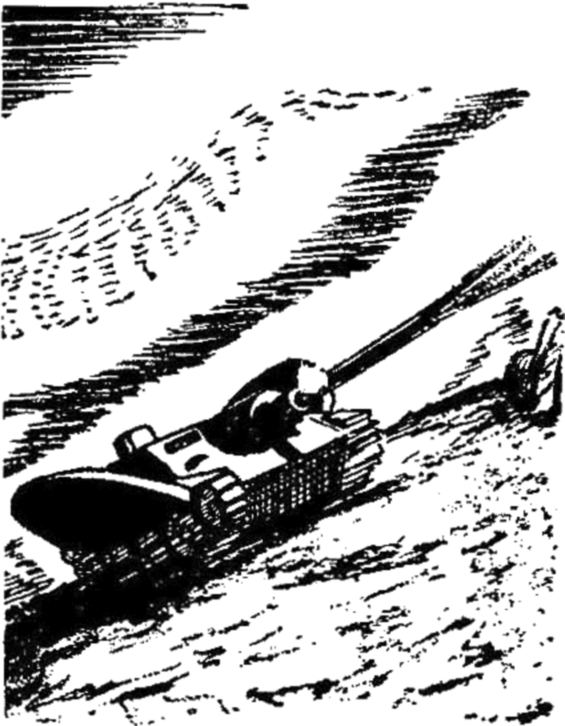
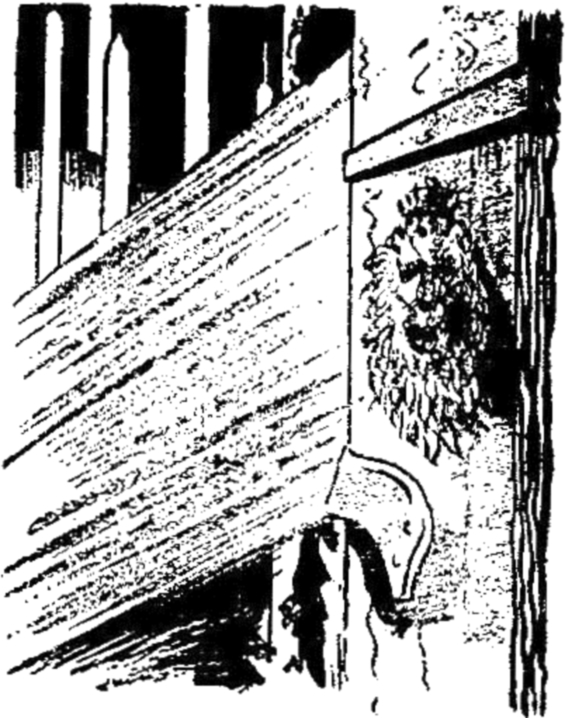
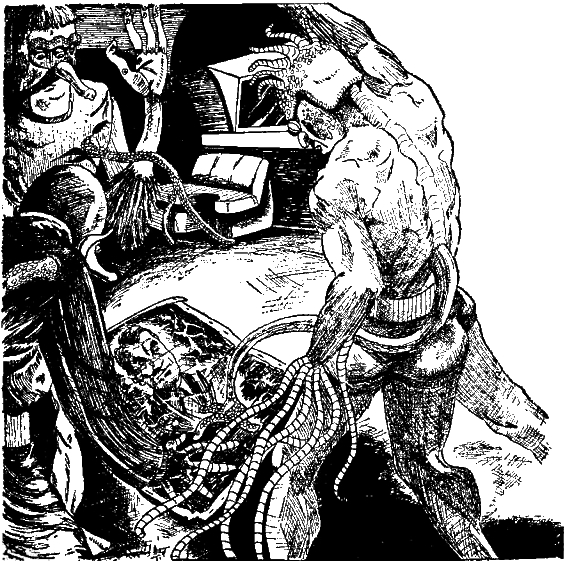
Rescue Party by Arthur C. Clarke - illustrated by Kildale

Rescue Party by Arthur C. Clarke - illustrated by Kildale

Rescue Party by Arthur C. Clarke - illustrated by Kildale

Rescue Party by Arthur C. Clarke - illustrated by Kildale

Rescue Party by Arthur C. Clarke - illustrated by Kildale

Posted by Jesse Willis

Review of Murray Leinster Collection

SFFaudio Review

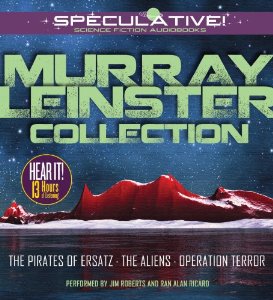
Science Fiction Audiobook - Murray Leinster CollectionThe Murray Leinster Collection
By Murray Leinster; Read by Jim Roberts and Ran Alan Ricard
13 Hours – [UNABRIDGED]
Publisher: Speculative!, Brilliance Audio
Published: 2013
Themes: / Science Fiction / space pirates / aliens /

Contains: “The Pirates of Ersatz” / “The Aliens” / “Operation Terror”

This is a really wonderful selection that represents the many facets of Murray Leinster’s work. There’s a little comedy, a little straight adventure, and tale of terror.

The Pirates of Ersatz: Bron Hodon’s homeworld has one occupation – space piracy. His dream, naturally, is to be an electrical engineer. Whether he tries to ply his trade on a sophisticated world or a barbarian one, no one seems interested in engineers. He winds up bouncing from one problem (and adventure) to another, leaning on advice that his grandfather, a sage space pirate, gave him long ago. This is a great example of Leinster’s trademark tongue-in-cheek humor.

The Aliens: This is a much shorter story than the other two. It tells of humanity’s first contact with an alien race. Evidence of The Plumies has been found on distant planets but humans have never seen one. When the two races finally meet, amidst disaster in space, will it be war or peace?

Operation Terror: A mysterious spacecraft lands in Boulder Lake Colorado. The one report that gets out is of alien creatures. They have a “terror ray” that incapacitates anyone upon whom it is used. Can Lockley and the girl he loves escape and warn the government of what he’s learned?

A common feature for all of these stories is an ingenious hero who notices details, thinks outside the box, and tries to solve problems rather than giving up when the going gets tough. Whether humorous or serious, I really enjoyed each of these tales. They give the reader credit for intelligence and the ability to keep up with the hero, while telling a rattling good yarn. Operation Terror in particular had me on the edge of my seat wondering, along with Lockley, what precisely are these aliens and how can they ever escape?

Unfortunately, the narration in this collection is very uneven. Ran Alan Ricard is brilliant narrating “The Aliens”. I could listen to him read the phone book and be entertained. Unfortunately Jim Roberts, who narrates the other two, longer tales, comes nowhwere near Ricard’s abilities. I am not sure how his reading managed to be both boring and annoying but that is how it struck me. In fact, the combined power of the stories and annoyance of his narration was such that I finally went to LibriVox and downloaded “The Pirates of Ersatz” and “Operation Terror” so I could find out what happened.

I simply can’t recommend this collection due to Roberts’ poor narration. However, I highly recommend you get Murray Leinster’s stories from LibriVox and enjoy them that way.

Posted by Julie D.

A Martian Odyssey by Stanley G. Weinbaum

SFFaudio Online Audio

A Martian Odyssey by Stanley G. Weinbaum

A Martian Odyssey is a classic of alien human interaction. Isaac Asimov said of it and of Weinbaum:

“With this single story [A Martian Odyssey], Weinbaum was instantly recognized as the world’s best living science fiction writer, and at once almost every writer in the field tried to imitate him.”

It is also argued that this is the first story to satisfy Astounding editor John W. Campbell’s famous challenge:

“Write me a creature who thinks as well as a man, or better than a man, but not like a man.”

When it was republished, just 4 years later, in Startling Stories, A Martian Odyssey was added to the “Scientifiction Hall Of Fame”:

Scientifiction Hall Of Fame - Editor's Note
And with that that same printing was this extolling editorial explanation:
Stanley G. Weinbaum - Pioneer Of Scientifiction

LibriVoxA Martian Odyssey
By Stanley G. Weinbaum; Read by Gregg Margarite
1 |MP3| – Approx. 58 Minutes [UNABRIDGED]
Publisher: LibriVox.org
Published: January 13, 2009
Early in the twenty-first century, nearly twenty years after the invention of atomic power and ten years after the first lunar landing, the four-man crew of the Ares has landed on Mars in the Mare Cimmerium. A week after the landing, Dick Jarvis, the ship’s American chemist, sets out south in an auxiliary rocket to photograph the landscape. Eight hundred miles out, the engine on Jarvis’ rocket gives out, and he crash-lands into one of the Thyle regions. Rather than sit and wait for rescue, Jarvis decides to walk back north to the Ares. First published in Wonder Stories, July 1934.

Here’s an illustrated |PDF| made from the original publication in Wonder Stories.

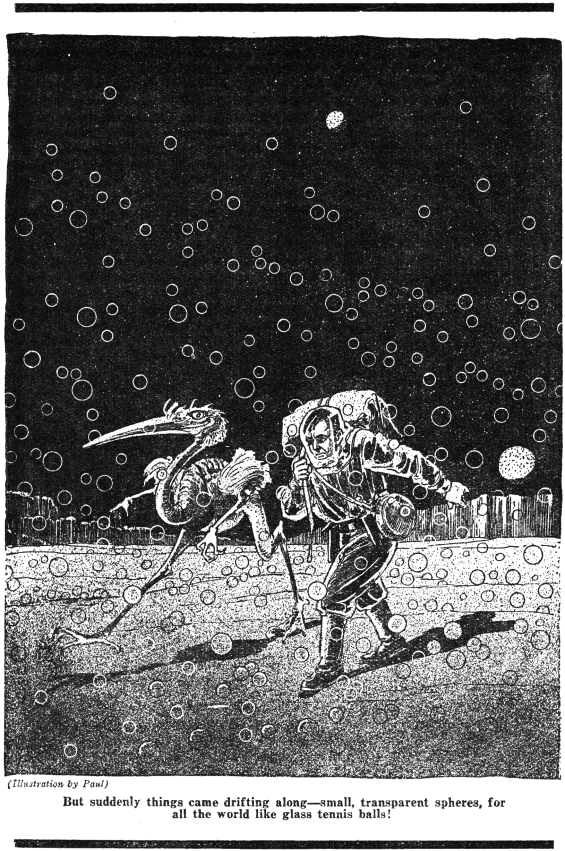
A Martian Odyssey - illustration by Frank R. Paul

Posted by Jesse Willis

Review of The Sphinx by Bob Mayer

SFFaudio Review

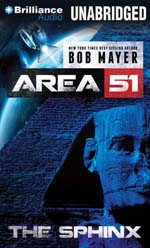
SphinxThe Sphinx  (Area 51 #4)
By Bob Mayer; Performed by Eric G. Dove
Publisher: Brilliance Audio
11 hours [UNABRIDGED]

Themes: / military sci-fi / aliens / hybrids / nuclear /

Publisher summary:

Dr. Lisa Duncan and Special Forces officer Mike Turcotte know better than anyone that no secret is safe for long — especially one that offers untold power. Case in point: no sooner does Turcotte’s elite Area 51 team uncover a dormant alien ship in earth orbit than a group of alien-human hybrids seizes it and uses its technology to commandeer a satellite array bristling with nuclear missiles. Now they’re demanding that humankind hand over the key to an ancient stash of alien technology…or watch an entire continent be reduced to atomic rubble. Doom seems certain, as the required key is believed lost to the ages — until an unwitting anthropologist discovers the first of many clues to its hiding place. As Duncan and Turcotte race to reach the key — and the powerful treasure it can unlock — ahead of their alien foes, the quest leads them deep into a deadly maze within the Great Sphinx of Giza. The prize? Nothing less than the legendary Ark of the Covenant.

For fans of this series, Bob Mayer delivers a story that lightly scratches the military SF itch but never arrives at satisfaction.  If you don’t mind foreshadowing and rather flat characters that encounter somewhat predictable puzzles, then I think you’ll like this installment of the Area 51 series.  I’d say that Mayer has written the equivalent of a bacon cheeseburger.  You know what you’re going to get before you order it, and if you are in the mood for a run of the mill bacon cheeseburger, then I say “Dig in and don’t be shy about using napkins.”

Eric G. Dove acts as narrator and I am on the fence with his delivery.  So here’s the down and dirty with Dove.  When he reads dialogue, Dove is on top of his game and carries this audio performance.  When Dove is left to recite, I mean read exposition; he becomes the human equivalent of narrator elevator music.  Seriously, Dove reads exposition like most people might read a road map but with less enthusiasm.  But when Dove engages a character, everything changes and this somewhat average audiobook becomes almost enjoyable.

Final thoughts.  If you’re even thinking about reading this book then it’s a fair assumption to think you’ve read the previous books in this series.  If you have and are considering reading on, I encourage you to do so as I think you will be happy.  If you have read the books in the series are aren’t sure if you want to continue, then I say “Turn back when you still can.”

Posted by Casey Hampton.