The SFFaudio Podcast #264 – READALONG: The Martian by Andy Weir

Podcast

The SFFaudio PodcastThe SFFaudio Podcast #264 – Jesse, Jenny, Tam, Julie, Bryan, and Mike discuss The Martian by Andy Weir.

Talked about in this episode:
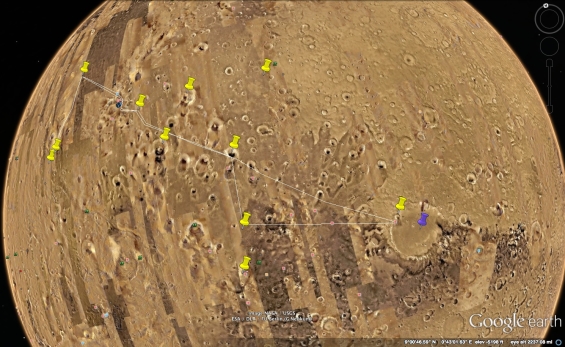
Dust on Mars is too thin to allow for sandstorms; terpkristin says NASA would never build a faulty antenna; and we finally introduce the book; is The Martian science fiction?; the one-way Mars mission Mars One; reminiscent of Heinlein’s Farmer in the Sky; Mike tracks Watney’s journey through Google Mars; why NASA picks boring locations to land their first missions; Andy Weir on Science Friday; the most far-fetched element of the book is its lack of budgetary concerns; Bradley Cooper in the film adaptation?; The Martian and Gravity have depressing implications; the novel’s (Heinleinian?) lack of character development; Mark Watney is in “full on Macgeyver mode”; most pilots are boring; many LOLs in the book; Andy Weir’s webcomic Casey and Andy; strong language in the novel; stoichiometry; feasibility of plot points; engineer-as-hero motif pitted against bureaucracy; Martian Odyssey by Stanley G. Weinbaum; Robinson Crusoe by Daniel Defoe; Robinson Crusoe on Mars starring Adam West; The Makeshift Rocket by Poul Anderson, a spaceship powered by beer; From the Earth to the Moon by Jules Verne and First Man on the Moon by H.G. Wells; Robinsoniad; Thunder and Lightning series by John Varley; Rocket Ship Galileo by Heinlein, featuring Nazis on the Moon!; the United States falling behind in the Space Race; Stephen Hawking on the dangers of artificial intelligence; Mars Attacks!; the novel’s lack of Earth focus makes it literally escapist; Heinlein’s prophetic Destination Moon; send more potatoes to space; pop culture references; “I’m a space pirate.”; The Case for Mars by Bob Zubrin, a non-fiction proposal for reaching the Red Planet; Red Mars and other Kim Stanley Robinson novels; Marooned starring Gregory Peck; GravityApollo 18, a found-footage horror film; Falling Skies; Bruce Campbell and Martin Koenig in MoontrapPrincess of Mars by Edgar Rice Burroughs; A Walk in the Sun by Geoffrey Landis; Transit of Earth by Arthur C. Clarke bears a strong resemblance to The Martian; new party game: “You an astronaut on Mars. What’s the last music you listen to before you die?”; We Who Are About To by Joanna Russ; hope in fantasy and science fiction; Jesse hopes they don’t make a sequel; locked-room scenarios; Portal; would Earth really expend so many resources to save a single human being?; Ascent by Jed Mercurio; T-Minus: The Race to the MoonLimit by Frank Schätzing; PlanetesThe Souther Reach by Jeff VanderMeer for more botanist action; The Apollo Quartet by Ian Sales; Voyage by Stephen Baxter, dramatized by BBC Radio.
The Martian by Andy Weir

The Martian by Andy Weir (Mars Itinerary)

Posted by Jesse Willis

Someday by Isaac Asimov

SFFaudio News

Last night I discovered that Someday, a wonderful short story by Isaac Asimov, is PUBLIC DOMAIN.

I’ve posted the |PDF| from the original mag to our PDF PAGE (there’re hundreds more there by the way).

Someday set in a future in which everyone is illiterate (Asimov has another story, The Fun They Had, that has a similar premise). It talks about audio vs. video, robotics, artificial intelligence, creativity, empathy, and it has a terrific twist ending.

I think you’ll treasure it as much as I have over the years.

And here’s an audiobook version:

Part 1 of 3:

Part 2 of 3:

Part 3 of 3:

Posted by Jesse Willis

The SFFaudio Podcast #251 – READALONG: Up Against It by M.J. Locke

Podcast

The SFFaudio PodcastThe SFFaudio Podcast #251 – Jesse, Scott, and Tamahome discuss Up Against It by M.J. Locke.

Talked about on today’s show:
Hardcover, paperback, audiobook, who to blame?, it’s Jo Walton’s doing we chose this book (at the bottom), still a lot of juice in the genre, the ultimate cause, drawing in vs. pushing in, Corner Gas, a new wine bracket, the Radium Age of Science Fiction, Scott’s Goodreads review, Tam’s Goodreads review24, the characters, less torture, its more fun if you count the tropes, every trope is in there, including immortality, mimetic fiction (literary realism), Henry James, mimetic fiction in a science fiction universe, tiny infodumps, not one brand new idea, waveface virtual reality, Tonal_Z AI language (Chris Crawford’s Solvesol-interface concept?), in dialogue, Cory Doctorow (Whuffies), Bruce Sterling, Chris Crawford, Bruce Sterling’s Veridians (wow, it’s a whole big thing, design philosophy? manifesto), asteroid miner stories, Heinlein and later, The Island Worlds by John Maddox Roberts and Eric Kotani, The Moon Is A Harsh Mistress, there’s no newcomer, a generally agreed upon direction our future will be, John Scalzi’s brainpal, more than one kind of SF, rocket ships, the Charles Stross direction, Iain M. Banks, Souvenir by Philip K. Dick, Amish tech, their tech is subservient to their culture, it seems inevitable in our world, the received future, Earth in Up Against It in bad shape, Vancouver shantytowns, Edmonton, this isn’t a utopian book, dystopia, dystopic Earth, why are they in the Asteroid Belt, good world-building, good but not new, nothing new but the idea, incredibly self-aware people is weird (and cool), gene tampering, Oblivion is a good introduction to SF tropes (for people born in the year 2000), the level of SF tropes in movies is very low compared to those in SF books, Darwin Elevator, bad physics vs. excellent physics, sugar rocks, there’s no intro character (other than the A.I. pov), Little Brother by Cory Doctorow, collaborative teens, a visual adaptation, Ender’s Game, Planetes, Gravity, Babylon 5 had nothing new, I don’t go to TV SF for new ideas, books are where great ideas, what great ideas haven’t been explored, the news coming out of Eve Online, Steen Hansen, political machinations, gold farming, a simulated universe, a libertarian alliance was trojaned or something, happening to real people, World Of Warcraft, our real future is in leisure, Tam liked it more, nose-piercings, tattooing, the gender neutral pronouns, why would you want a purple nose?, Jesse doesn’t understand trans-humanism, normal readalongs, why didn’t I like this more, Tam liked it fine, hands for feet, chromes and mutes, Falling Free by Lois McMaster Bujold, not too bright in the brain area, The Integral Trees by Larry Niven, a planetless solar system, a mashup of Doctorow and Heinlein, smile -> erection, Chekhov’s Gun, Heinleinian sex vs. Doctorowian sex, there’s too much going on, an immature writer, Elmore Leonard, “she pillowed her cheek”, nobody pillows their cheeks in Jack London stories, Jane as an older Ripley, an artificial spiritual awakening, too many compromises too much bullshit, an authentically political book according to Staffer’s Book Review, double dealings, the thriller plot, exploring space, what does Scott prefer?, does Scott have a right to review Up Against It?, is it maturity?, 2312, Tobias Buckell’s blog essay about mature reviewers, caveats, “and get off my lawn”, idea fiction, competent but unstimulating, why is The Lord Of The Rings more interesting than Up Against It?, the themes, the next episode of A Good Story Is Hard To Find, Luke Burrage re-reviews A Canticle For Liebowitz, what we do when we do READALONGS (we unpack books), The Odyssey, Community, currently airing TV series have podcasts?, books with allegories, Scott wants it to mean something to him, The Zimmerman Telegram by Barbara Tuchman, WWI, the German ambassador in Mexico, Woodrow Wilson, Tom Clancy, mimetic fiction from the future, a history from the future, history, in some ways Eve Online is much more real than any fiction book, Scott finds value in general fiction, Mario Puzo, Tom Wolfe, Ernest Hemingway, John Steinbeck, meaning vs. ideas, horror, Snowblind by Christopher Golden for some alternative horror, The House Of The Seven Gables by Nathaniel Hawthorne, The Turn Of The Screw by Henry James, gothic fiction, witchcraft, Supernatural Horror In Literature by H.P. Lovecraft, there’s still potential for Science Fiction, a sequel?, an unneeded sequel, every subsequent milk of a book undercuts it, Dune has been worsened by every Dune that’s come since, Dune Messiah (Scott liked it), the fall of a charismatic leader, a backward casting shadow, Brian Herbert has done what his father wanted by ruining Dune?, why was Up Against It so long?, YA/adult book, George R.R. Martin doesn’t think Scott’s a fan of Hard SF, The Martian by Andy Weir, Phoecea, why are they mining?, there’s no economic reason to do so, was there an economic reason to go to the moon, we need to build a space fleet, no martian resources are unavailable on Earth, the Moon has Helium-3, Tam read Frank Schatzing’s Limit and his eyes are tired, what the frack, (was it ‘Simon pure science fiction like A Darkling Sea‘?  we didn’t talk about it but I thought I’d note it)

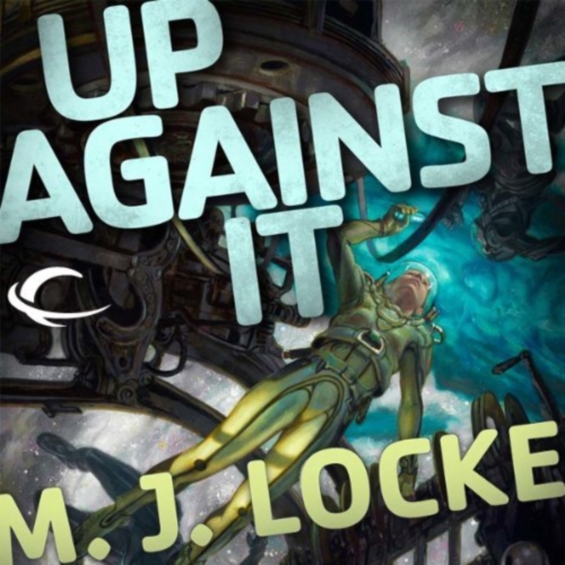
Up Against It by M.J. Locke

Posted by Jesse Willis

Minds Of Terminus

SFFaudio Online Audio

Minds Of TerminusMinds Of Terminus is a new audio drama podcast that seems inspired by a number of recent novels (Kiln People, Saturn’s Children). Here’s the elevator pitch:

“In the world of Terminus, technology has advanced beyond contemporary understanding or explanation. Nanotechnology is at its peak, common and ubiquitous. The fields of Artificial Intelligence and Nanorobotics have matured, and swarm intelligences maintain roads, buildings, monitor traffic, collect advertising data, nurse the sick… the applications are nearly endless. It has even become possible for a human being to upload their intelligence and personality into an artificial neural matrix. These copies, however, aren’t seen in the way that a modern-day trans-humanist from our time might regard them. For example, no one regards these mind uploads as a way to attain immortality of any kind. The original lives on, after all, and the copy is regarded as… something other than human.

Something less.

Applying advanced neuroscience, these uploaded personalities can be pruned and teased into any number of purpose-built, utilitarian shapes and designs, and this has become the preferred way to program the robotic helpers used every day in all walks of life, from heavy industrial machines to nannies.

Then one day, all of the humans are gone. The streets are quiet. The AIs begin waking up, but their masters have left them. Who and what are they, when all of the humans are gone? Are they all just bad copies of dead humans?”

Episode 1 |MP3| – Approx. 27 Minutes [AUDIO DRAMA]

Podcast feed:

http://www.mindsofterminus.com/category/podcasts/feed/

Posted by Jesse Willis

Review of Vulcan’s Hammer by Philip K. Dick

SFFaudio Review

Vulcan's HammerVulcan’s Hammer
By Philip K. Dick; Performed by Mel Foster
Publisher: Brilliance Audio
6 hours [UNABRIDGED]

Themes: / Humanity / Future / Artificial Intelligence

Publisher summary:

After the twentieth century’s devastating series of wars, the world’s governments banded together into one globe-spanning entity, committed to peace at all costs. Ensuring that peace is the Vulcan supercomputer, responsible for all major decisions. But some people don’t like being taken out of the equation. And others resent the idea that the Vulcan is taking the place of God. As the world grows ever closer to all-out war, one functionary frantically tries to prevent it. But the Vulcan computer has its own plans, plans that might not include humanity at all.

Vulcan’s Hammer by Philip K. Dick was first published in 1960. The book’s origin however is an expansion of a novella that has been published previously and therefore places this story among some of the author’s very earliest science fiction works.  The book’s central theme of what makes us human versus that of a machine is one that continued into many of Philip K. Dick’s later and more popular novels.

The plot revolves around that of a supercomputer named Vulcan 3 which acts as the world’s leader. Most of the characters (including the main protagonist William Barris,) are Directors of an organization called Unity which represent various regions of the world on behalf of Vulcan. Another more mysterious group that call themselves the Healers appear to be trying to thwart the will of Vulcan 3. Another key character, Father Fields, is from this counter-group.

Narration is handled by Audie award winner Mel Foster whose many other audiobook titles also include Philip K. Dick’s The Zap Gun. I enjoyed his performance of the material here and plan to give his take on The Zap Gun a listen also. I recommend Vulcan’s Hammer as I found interesting the development of a theme which continued into many of the author’s later novels.

Posted by Dan VK

Dimension X: Almost Human adapted from a story by Robert Bloch

SFFaudio Online Audio

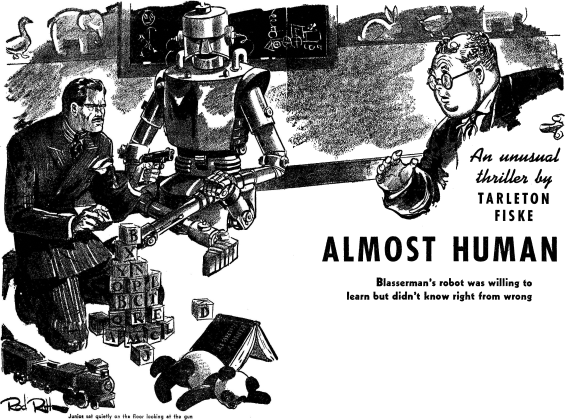
Almost Human illustrated by Rod Ruth

This is a truly terrible story, by someone who is normally perceived to be a great author, Robert Bloch. I suspect Bloch chose the pseudonym for this one because it is so bad. Indeed, I suspect this is precisely the kind of story Isaac Asimov was trying to defeat with his Three Laws of Robotics. But beyond the dangerous robot trope it also features, at least to my ears, the most creepily lascivious robot ever!

Junior is oily, immoral, and oversexed.

Ewww!

Dimension XDimension X – Almost Human
Adapted from the story by Robert Bloch; Adapted by George Lefferts; Performed by a full cast
1 |MP3| – Approx. 29 Minutes [RADIO DRAMA]
Broadcaster: NBC
Broadcast: May 13, 1950
A gun moll answers an ad to be a nursemaid to a baby robot, things are fine until her boyfriend, a professional thief, shows up and teaches the robot a few things. First published in Fantastic Adventures, June 1943.

UPDATE:
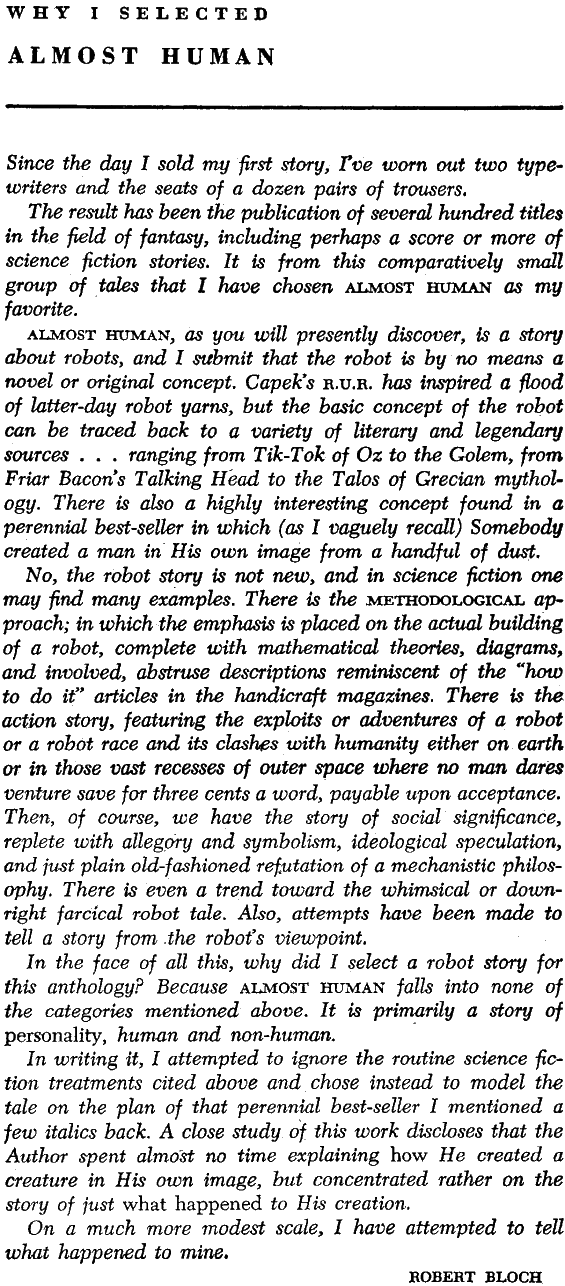
Here’s Robert Bloch’s introductory essay to Almost Human (as written for My Best Science Fiction Story a 1949 anthology edited by Leo Margulies and Oscar J. Friend):

Robert Bloch - "My Best Science Fiction Story" - Almost Human

Posted by Jesse Willis