News, Reviews, and Commentary on all forms of science fiction, fantasy, and horror audio. Audiobooks, audio drama, podcasts; we discuss all of it here. Mystery, crime, and noir audio are also fair game.
A Monster Calls
By Patrick Ness; Narrated by Jason Isaacs
4 hours [UNABRIDGED]
Publisher: Brilliance Audio
Publication Date: 23 September 2011
Tags: / YA / fantasy / monsters / nightmares / illness /
The monster showed up after midnight. As they do. But it isn’t the monster Conor’s been expecting. He’s been expecting the one from his nightmare, the nightmare he’s had nearly every night since his mother started her treatments, the one with the darkness and the wind and the screaming…. This monster, though, is something different. Something ancient, something wild. And it wants the most dangerous thing of all from Conor. It wants the truth. Patrick Ness spins a tale from the final story idea of Siobhan Dowd, whose premature death from cancer prevented her from writing it herself.
Darkly mischievous and painfully funny, A Monster Calls is an extraordinarily moving novel about coming to terms with loss from two of our finest writers for young adults.
This book is inspired by an idea from author Siobhan Dowd (4 February 1960 – 21 August 2007). Patrick Ness was granted the opportunity to explore these ideas, and soon ideas gave way to other ideas, which yielded this book. There’s a terrific interview that follows the audiobook reading wherein Ness discusses the writing process and challenges he faced in such an undertaking. Ness successfully sidesteps weighty sentiment and delivers emotional authenticity while allowing room for empathy, and it is for these reasons that this book resonates long after reading.
The writing is clean and the story is as deep and layered as you wish it to be. Don’t let the young protagonist fool you. This isn’t your generic YA plastic-wrap fantasy story packed with breathless bubblegum adventure and paint-by-number characters. There are monsters and there is loss. The emotion is real, and Ness allows enough room for empathy to turn, to circle like an unquiet animal that knows the end isn’t far. Couple this with genuine wisdom, and we have a story that demands attention, that successfully spans that artificial genre-based boundary to shake reader out their slumber.
Jason Isaacs narrates the audiobook, and conducts the follow-up interview with Patrick Ness at the book’s conclusion. Isaacs nails the reading. In my opinion the audiobook is flawless, and Isaacs never makes himself known to the listener, rather he is a conduit, something only the very best readers manage to pull off. Too many contemporary audiobook narrators perform the text when all they need to do is get out of the way and read. Thank you, Jason Isaacs.
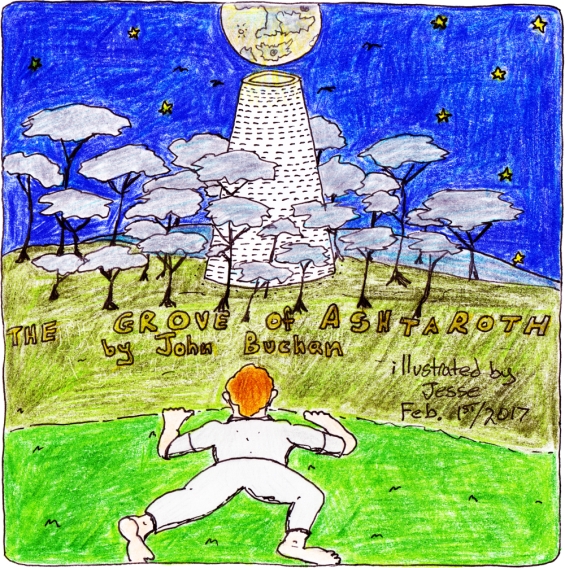
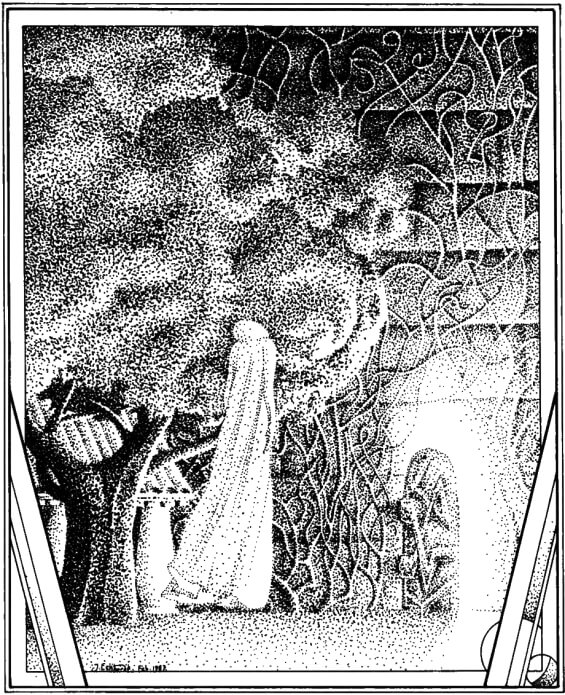
The SFFaudio Podcast #409 – The Grove Of Ashtaroth by John Buchan, read by Mr Jim Moon. This is a complete and unabridged reading of the short story (1 hour 5 minutes) followed by a discussion of it (by Jesse, Mr Jim Moon, and Paul)
Talked about on today’s show:
1910, obsession, kinda gross, fundamentally based on racism, Jewishness, troublesome, H.P. Lovecraft, a racist filter, horror as fear of the other, the same intellectual climate, racial theory, a sensitivity alarm bell, scare not offend, on the cusp, an off note, Sax Rohmer, yellow peril, Fu Manchu is the hero, the Escape audio drama adaptation, Harlan Ellison, Red Hook territory, uncomfortably of its time, its about race, his friend’s changing disposition, the Saxon Mother vs. the “strong wine of the east”, that logic is still in force, 1/64th Cherokee, if this was set in the highlands…, natural peace, a benevolent supernatural force, white hat vs. black hat, the theme of colonialism vs. race and heredity, imperialism, two-fisted adventure vs. poetry and philosophy and pathos, the landscape, the skyline, the love that Lawson has is reflected by Buchan himself
At midday it cleared, and the afternoon was a pageant of pure colour. The wind sank to a low breeze; the sun lit the infinite green spaces, and kindled the wet forest to a jewelled coronal. Lawson gaspingly admired it all, as he cantered bareheaded up a bracken-clad slope. ‘God’s country,’ he said twenty times. ‘I’ve found it.’ Take a piece of Sussex downland; put a stream in every hollow and a patch of wood; and at the edge, where the cliffs at home would fall to the sea, put a cloak of forest muffling the scarp and dropping thousands of feet to the blue plains. Take the diamond air of the Gornergrat, and the riot of colour which you get by a West Highland lochside in late September. Put flowers everywhere, the things we grow in hothouses, geraniums like sun-shades and arums like trumpets. That will give you a notion of the countryside we were in. I began to see that after all it was out of the common.
beautiful writing, the sensual description of Lawson,
Being a fair man, he was gloriously tanned, and there was a clear line at his shirt-collar to mark the limits of his sunburn. I had first known him years ago, when he was a broker’s clerk working on half-commission. Then he had gone to South Africa, and soon I heard he was a partner in a mining house which was doing wonders with some gold areas in the North. The next step was his return to London as the new millionaire — young, good-looking, wholesome in mind and body, and much sought after by the mothers of marriageable girls. We played polo together, and hunted a little in the season, but there were signs that he did not propose to become a conventional English gentleman. He refused to buy a place in the country, though half the Homes of England were at his disposal. He was a very busy man, he declared, and had not time to be a squire.
a bromance at the least, homoeroticism, nudity or flannels, naked on the veldt, the gorgeousness of the writing, T.S. Eliot, The Wasteland, The Lovesong of J. Alfred Prufrock, a miniseries on Cecil Rhodes, the empire builder, Rhodesia, like Rhodes Lawson made his money in mining, Buchan knew Rhodes, a giant country estate, Buchan is the name of the unnamed narrator in the audio drama adaptation, biographies, First World War Hidden History blog,, at the center of spying and propaganda, Lord Tweedsmuir, use in a role playing game, Kim Philby, the old boy network, the revolving door policy, no longer conspiracy, no longer tin-foil hat territory, rewarded with the Governorship of Canada, nobility by appointment, “gone to the wall”, with the riff-raff and the hoi-poloi, “gone to seed”, a pun, the fertile and lush garden, the flower of his youth, a railroad from South Africa to Egypt, nursemaided by Rhodes, illness,
Then we went to work to cut down the trees. The slim stems were an easy task to a good woodman, and one after another they toppled to the ground. And meantime, as I watched, I became conscious of a strange emotion.
It was as if some one were pleading with me. A gentle voice, not threatening, but pleading — something too fine for the sensual ear, but touching inner chords of the spirit. So tenuous it was and distant that I could think of no personality behind it. Rather it was the viewless, bodiless grace of this delectable vale, some old exquisite divinity of the groves. There was the heart of all sorrow in it, and the soul of all loveliness. It seemed a woman’s voice, some lost lady who had brought nothing but goodness unrepaid to the world. And what the voice told me was, that I was destroying her last shelter.
That was the pathos of it — the voice was homeless. As the axes flashed in the sunlight and the wood grew thin, that gentle spirit was pleading with me for mercy and a brief respite. It seemed to be telling of a world for centuries grown coarse and pitiless, of long sad wanderings, of hardly-won shelter, and a peace which was the little all she sought from men. There was nothing terrible in it. No thought of wrongdoing. The spell, which to Semitic blood held the mystery of evil, was to me, of a different race, only delicate and rare and beautiful.
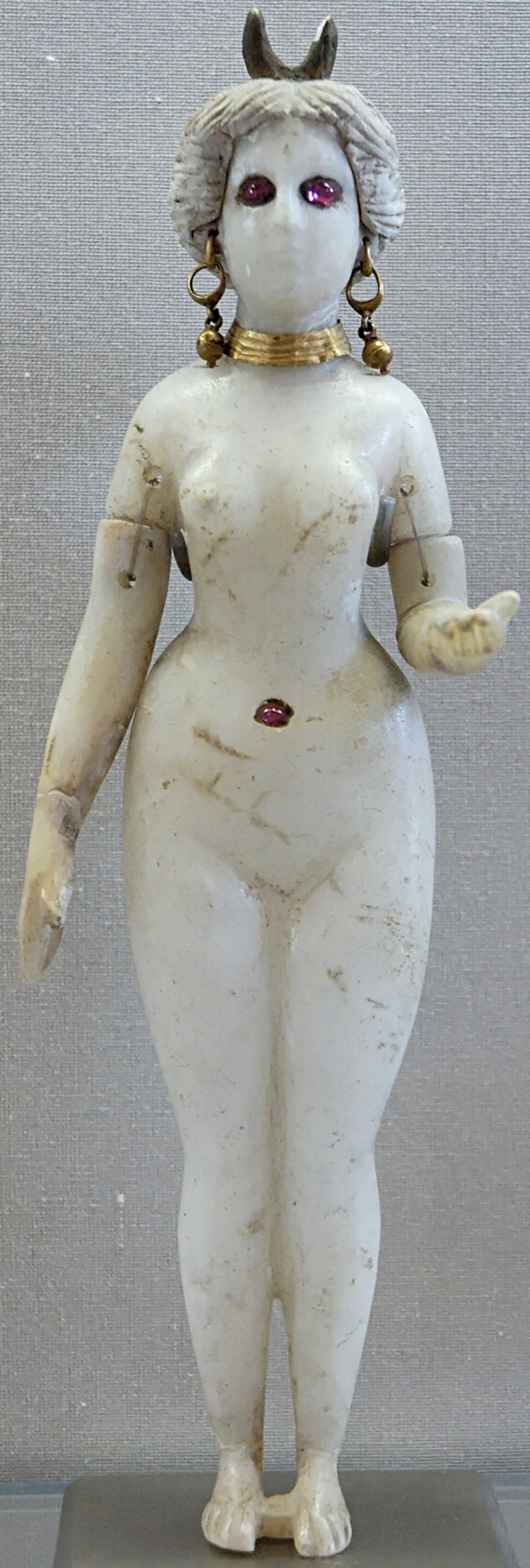
poor spirit, parallel to an extinction, running away from the destruction of man, reading the story from Lawson’s point of view, what is he doing there?, an alabaster moon, blood sacrifice, depleting life force, a lonely deity, The Call Of Cthulhu role playing game, a temple ruin, an abandoned mine, a tiki-fetish, some ancient horrible power, maybe we’ve done wrong here,
And then my heartache returned, and I knew that I had driven something lovely and adorable from its last refuge on earth.
the last doorway, the model for this tower, the Great Zimbabwe, where could I read up on that?, a country house with a mock temple: “the folly“, druid orders, cheese rolling, a week later, keeping a secret, dropsy or yellow fever, the revenge of the land, disease, looking down on the tropics, three years, scarfe, natural beauty, that library, the moon of alabaster, the bird statuettes, turtle doves, green doves, auk-like bird carvings, everything is going extinct, the sin at the story’s end, the two-fisted action, shotguns make short work, the birds on the pyre, salting the earth, the Punic wars, improve on Josiah, dynamiting a priceless ancient temple, a “land without history”, purpose of visit: colonialism, sad but true, ancient ruins of Africa, ancient Greece, ancient Egypt, the character names all end in “son”: Lawson, Isaacson, Jobson (the factor), the Hudson’s Bay Company, the East India Company, wagons, more money than the Queen, Ming pots, a night watchman, the natives won’t go to the temple, local folk, indemnification, Adamson, half-English, Biblical naming, The Skids, Richard Jobson, Travers, Lowson, H.P. Lovecraft’s Supernatural Horror In Literature, building or rebuilding an ancestral home, The Moon Bog, The Rats In The Walls, they have the exact same structure, illness, lifted up into the sky, Ashtaroth the Moon goddess, Captain Norris, Magna Mater, Exham Priory, “what on Earth is going on here man?”, Out Of The Earth by Christine Campbell Thomson (aka Flavia Richardson), standing stones, mummy fiction, atavism, reverting to ancestral type, seeing things backwards, the industries that allow you to work, an inversion, an environmental horror story, silver bark, a beautiful image, Ishtar -> Ashtaroth, male and female spelling, an interest in weird fiction, one of the big names, scant detail, The Golden Bough, To The Devil A Daughter (1976), Astarte, a punny title, if this is a true story…, the covenant, the “Call of Ashtaroth”, the blood ritual, body horror, a psychic impasse, a taste, is there more than one force at work?, Of Withered Apples by Philip K. Dick, an apple tree, a bad farm, eating a withered apple is a bad move, the call of nature, it wants you, its using you, the last portal through, not of this Earth, a moonbeam, She by H. Rider Haggard, elegiac and wistful, a pleasure to read, layers and layers, old school weird fiction, layers of questioning and ambiguity, homages and reinterpretations, Neil Gaiman, Warren Ellis, Alan Moore, Michael Moorcock, no clear lines, ambiguity comes to the fore, vs. early 20th century polemic, it would be an amazing comic book, visually stunning, Sir Arthur Conan Doyle, the albatross of The Thirty-Nine Steps, literary highways and byways, The Moon Endureth, Christopher Hitchens essays,
“In a remarkable short story, ‘The Grove of Ashtaroth,’ the hero finds himself obliged to destroy the gorgeous little temple of a sensual cult, because he believes that by doing so he will salvage the health and sanity of a friend. But he simultaneously believes himself to be committing an unpardonable act of desecration, and the eerie voice that beseeches him to stay his hand is unmistakably feminine.”
-Christopher Hitchens (The Atlantic Monthly, March 2004)
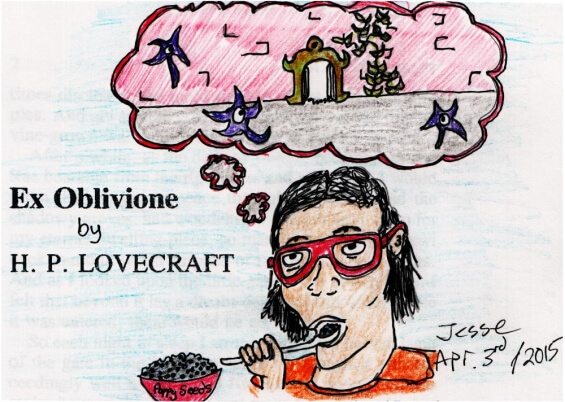
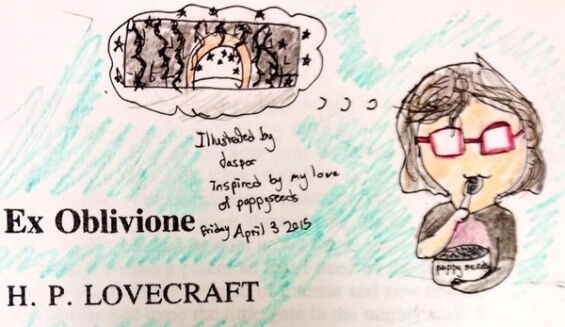
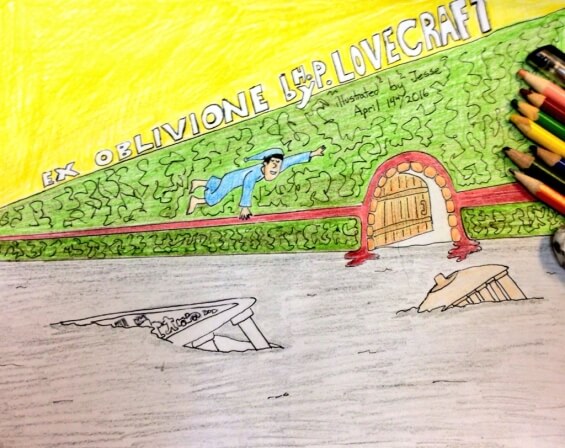
The SFFaudio Podcast #393 – Ex Oblivione by H.P. Lovecraft, read by the great Wayne June. This is a complete and unabridged reading of the short story (5 Minutes) followed by a discussion of it (by Jesse, Paul Weimer, and Jim Moon)
Talked about on today’s show:
the pronunciation, Athenae, not from Weird Tales, a prose poem vs. a story, flash fiction, it does everything, the big elephant, it avoids all the things people decry Lovecraft for, the pure experience, pure Dreamlands Lovecraft, living in the outrage culture, it is much better to be dead than it is to be alive, drug use, reflections, new colours, From Beyond, The Colour Out Of Space, beyond the colours we know, The Dreamquest Of Unknown Kadath, a little dreamquest, no cat, Zakarion, King Kuranes, Basil Elton, The White Ship, big themes, tentacled monsters, sanity-blasting, nihilism, transcendence and revelation, wonder and awe, a compression, a packet of seeds, The Gardens Of Yin and The Window, gateways and passages, a distillation,
Some of the dream-sages wrote gorgeously of the wonders beyond the irrepassable gate, but others told of horror and disappointment. I knew not which to believe, yet longed more and more to cross forever into the unknown land; for doubt and secrecy are the lure of lures, and no new horror can be more terrible than the daily torture of the commonplace. So when I learned of the drug which would unlock the gate and drive me through, I resolved to take it when next I awaked.
opiate, poppy seed cookies, Wayne June, The Crawling Chaos, the decay and pain of disease, seeking non-existence in unconsciousness, Hypnos, breaking through the barrier, horrible and wonderful, duality of perception,
But as they pierced the stone, a rush of air
Burst from the alien voids that yawned beyond.
They fled—but I peered through and found unrolled
All the wild worlds of which my dreams had told.
I’m out of here!, The Shadows Over Innsmouth, this is AMAZING!, the horrible as transcendent, not-quite apotheosis, transfiguration, a counter-point to the insignificance of humanity, stepping beyond, The Wonderful Window by Lord Dunsany, the wild world of his dreams,
A Memory
There were great steppes, and rocky table-lands
Stretching half-limitless in starlit night,
With alien campfires shedding feeble light
On beasts with tinkling bells, in shaggy bands.
Far to the south the plain sloped low and wide
To a dark zigzag line of wall that lay
Like a huge python of some primal day
Which endless time had chilled and petrified.
Minnesota, the Sawtooth Mountains,
I shivered oddly in the cold, thin air,
And wondered where I was and how I came,
When a cloaked form against a campfire’s glare
Rose and approached, and called me by my name.
Staring at that dead face beneath the hood,
I ceased to hope—because I understood.
giving Death a high-five, The Gardens of Yin
Beyond that wall, whose ancient masonry
Reached almost to the sky in moss-thick towers,
There would be terraced gardens, rich with flowers,
And flutter of bird and butterfly and bee.
There would be walks, and bridges arching over
Warm lotos-pools reflecting temple eaves,
And cherry-trees with delicate boughs and leaves
Against a pink sky where the herons hover.
the gorgeous garden,
All would be there, for had not old dreams flung
Open the gate to that stone-lanterned maze
Where drowsy streams spin out their winding ways,
Trailed by green vines from bending branches hung?
I hurried—but when the wall rose, grim and great,
I found there was no longer any gate.
a retelling of earlier voyages, Jack Vance, Planet Of Adventure, The Dying Earth, strange vistas, lush imagery, opening up perceptions, the grey sameness of ordinary existence, consuming all the senses, rich or decadent description, baroque, gorgeously saturated prose, The Moon Moth, a maginfied orientalist, operatic, fantasies of exotic lands, arabesques, sarabandes and curlicues of hashish smoke, Clark Ashton Smith, William Morris, Tolkienized, pipeweed and beer, that connection to Dunsany, Idle Days On The Yann,
When the last days were upon me, and the ugly trifles of existence began to drive me to madness like the small drops of water that torturers let fall ceaselessly upon one spot of their victim’s body, I loved the irradiate refuge of sleep. In my dreams I found a little of the beauty I had vainly sought in life, and wandered through old gardens and enchanted woods.
Once when the wind was soft and scented I heard the south calling, and sailed endlessly and languorously under strange stars.
Once when the gentle rain fell I glided in a barge down a sunless stream under the earth till I reached another world of purple twilight, iridescent arbours, and undying roses.
And once I walked through a golden valley that led to shadowy groves and ruins, and ended in a mighty wall green with antique vines, and pierced by a little gate of bronze.
temples, not sunken temples, what happened to the temples?, almost Robert E. Howardy, The Circular Ruins by Jorge Luis Borges, Lovecraft was reading a lot of Schopenhauer,
I knew that all sights and glories were at an end; for in that new realm was neither land nor sea, but only the white void of unpeopled and illimitable space. And happier than I had ever dared hoped to be, I dissolved again into that native infinity of crystal oblivion from which the daemon Life had called me for one brief and desolate hour.
very Platonic, called forth by Life, Socrates, ahh, yes I remember fire, the trauma of childbirth wipes your memory, opium, mind blown, ever to wise to ever have been born in the waking world, Waking Life, Philip K. Dick, now I remember, native infinity, everything goes back to that Platonic realm, The Dreamquest Of Vellitt Boe by Kij Johnson, if you’re born in the dream world…, Jesse gets to the dreamland by a route obscure and lonely, the Zoog wood touches the waking world, Paul’s role playing game, Dante and stories of the underworld, a one way passage, the official entrance, passing bodily into the underworld, a gem of a story, poppy seeds that flourish and grow, to round table it, is the end positive or negative?, the closing of a circle, eastern philosophy, definitely positive, he just overdosed on a drug in real life, in your dissolved state, this is not Heaven (Garden of Yinn style), looking at it from the outside, staying in bed too long, symptoms of depression, the reason for his voyage, the ugly trifles of existence,
The SFFaudio Podcast #390 – Second Variety by Philip K. Dick, read by Gregg Margarite.
This UNABRIDGED AUDIOBOOK (1 Hours 42 Minutes) comes to us courtesy of LibriVox.org. Second Variety was first published in Space Science Fiction, May 1953.
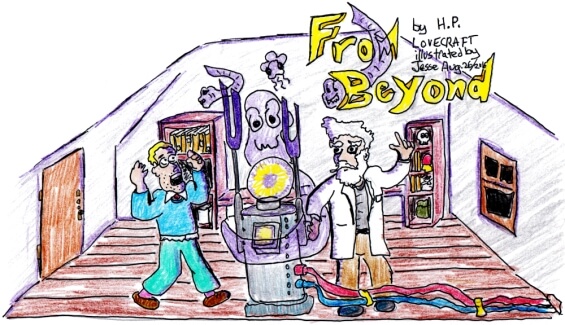
The SFFaudio Podcast #388 – From Beyond by H.P. Lovecraft; read by Martin Reyto courtesy of Legamus. This is an unabridged reading of the short story (19 minutes) followed by a discussion of it. Participants in the discussion include Jesse, Paul Weimer, and Mr Jim Moon.
Talked about on today’s show:
Fantasy Fan, this story has to be visualized, the 1986 movie, the baroque language does not work on film, comedy gore and sex instead of adjectives, scary looking, a golden age of practical special effects, fantastic horror is the pinnacle of going nuts, Stuart Gordon, the servants all left three days ago, piles of clothes, The Hounds Of Tindalos by Frank Belknap Long, Trail Of Cthulhu, the Hypnogoria podcast, Netflix’s Stranger Things, Ubbo-Sathla by Clark Ashton Smith, dilettante occultist, perceiving space time as a dimension, seeing beyond the veil, the Ravenous Bugblatter Beast of Traal, more cosmic than a Narnian wardrobe, levels of reality co-terminus with out own, cyclopean temples, The Horror From The Heights by Sir Arthur Conan Doyle, a huge beaked terror, hooked onto, Robert Hooke (rival of Newton), Micrographia, 1665, all the living things all over your body and that permeate reality but were previously unseen, Antonie Leeuwenhoek grinding your own lenses, creatures from beyond, there’s nothing that doesn’t have living creatures all over it, the stage of childhood, no amount of cleaning will ever let you escape these creatures, gut flora, scrubbing clean the world, a nightmare, Tillinghast’s monologues, look through this telescope look through this microscope,
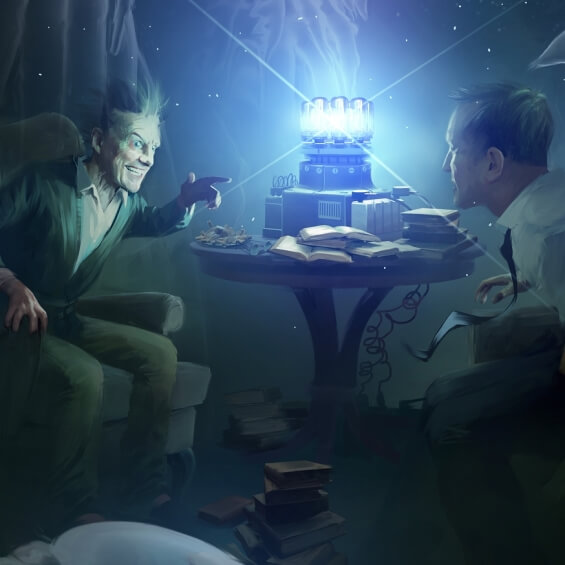
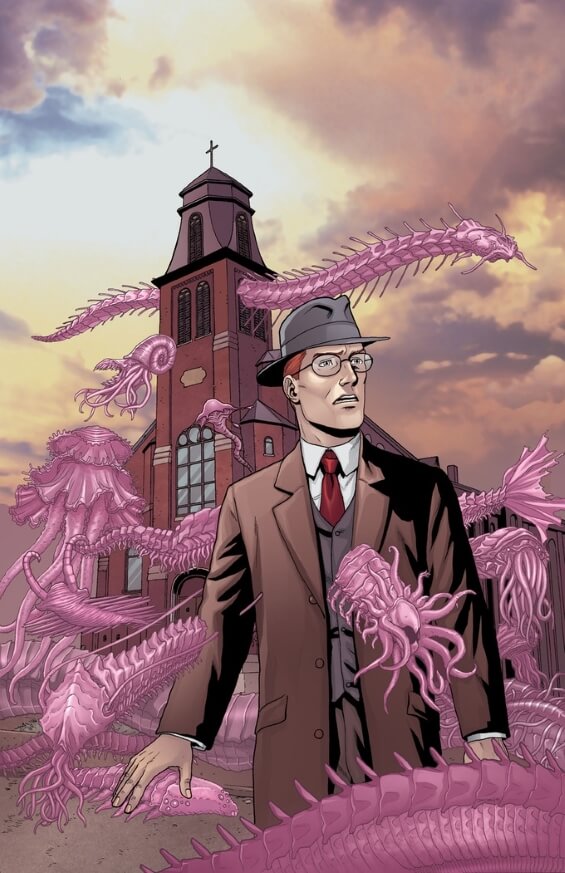
Foremost among the living objects were inky, jellyfish monstrosities which flabbily quivered in harmony with the vibrations from the machine. They were present in loathsome profusion, and I saw to my horror that they overlapped; that they were semi-fluid and capable of passing through one another and through what we know as solids. these things were never still, but seemed ever floating about with some malignant purpose. Sometimes they appeared to devour one another, the attacker launching itself at its victim and instantly obliterating the latter from sight. Shudderingly I felt that I knew what had obliterated the unfortunate servants, and could not exclude the things from my mind as I strove to observe other properties of the newly visible world that lies unseen around us.
not only can we see these things they can see us, ignorance as protection, The Silence (Doctor Who), the size of the Earth in relation to the size of the universe, washing the dishes, incommensurate, Tillinghast a mad scientist,
We see things only as we are constructed to see them, and can gain no idea of their absolute nature. With five feeble senses we pretend to comprehend the boundlessly complex cosmos, yet other beings with a wider, stronger, or different range of senses might not only see very differently the things we see, but might see and study whole worlds of matter, energy, and life which lie close at hand yet can never be detected with the sense we have. I have always believed that such strange, inaccessible worlds exist at our very elbows, and now I believe I have found a way to break down the barriers….I believe I have found a way to break down the barriers. I am not joking. Within twenty-four hours that machine near the table will generate waves acting on unrecognized sense-organs that exist in us as atrophied or rudimentary vestiges. Those waves will open up to us many vistas unknown to man, and several unknown to anything we consider organic life. We shall see that at which dogs howl in the dark, and that at which cats prick up their ears after midnight. We shall see these things, and other things which no breathing creature has yet seen. We shall overleap time, space, and dimensions, and without bodily motion peer to the bottom of creation.”
peering to the “bottom of creation” unicellular life, deep into space and back into time, an analogy for the product of science, despair, a 17th century gentleman, an anglophile, From Beyond or The Hound Of Tindalos have jobs, this story is talking about something real, Banshee Chapter, down the rabbit hole, drugs created by the CIA, that’s a real fucked up story, Lovecraftian and Dickian, an acid trip, effecting dreams, “a bronze gate”, a drug instead of a machine, equally an adaptation of The Hounds Of Tindalos, attuned, pineal gland as a radio transmitter, the “numbers stations” radio queue, one of the strangest true things in our world today, a TV repair shop, the NSA, the electrical circuit brought her dissolution, two guys sitting in a room talking about philosophy, The Render Of Veils by Ramsey Campbell, Daolath, shifting planes and shapes, They Live and Eight O’Clock In The Morning, Tillinghast glasses, the political version of From Beyond, having the veil lifted (fantasy), using glasses or a telescope or a microscope or a drug (science fiction), the fantasy version, patient 11, clairvoyance, The Mist by Stephen King, once unleashed, Tillinghast thinks he is the master of the universe he has created, Hypnos by H.P. Lovecraft, fleeting a demon from the demon star (Algol), the distorted face of Tillinghast in the glowing constellation of our galaxy, passing beyond, being consumed, a very rich little short story, shooting the machine, destroying the window, death by apoplexy, apoplexy is for men, hysteria is for women, neglecting the body, met pets are not pretty, aesthetic standards are very different, disintegration, “trembling, eh?”, “they are coming, curse you look, it’s just over your left shoulder!”, is Tillinghast dead?, was it a hallucination?, what happened to the murdered servant’s bodies?, reader beware, we’re not safe, Banshee Chapter is an even more faithful adaptation than From Beyond (1986), their own predatory ecosystem, master or victim?, existential horror, the great world outside is dark and horrible, insanity shattering, sleep well at night.

 A Monster Calls