
The SFFaudio Podcast #238 – AUDIOBOOK: The Invisible Man by H.G. Wells

Podcast

H.G. Wells' The Invisible Man

The SFFaudio PodcastThe SFFaudio Podcast #238 – The Invisible Man by H.G. Wells, read by Cathy Barratt (for LibriVox.org).

This audiobook, 4 hours 35 minutes, is complete and unabridged.

Griffin, a scientist, devoted himself to research into optics – he invented a chemical that could change his body’s refractive index to that of air – he absorbs no light, he reflects no light – he is completely invisible.

First published in Pearson’s Magazine, June 12, 1897.

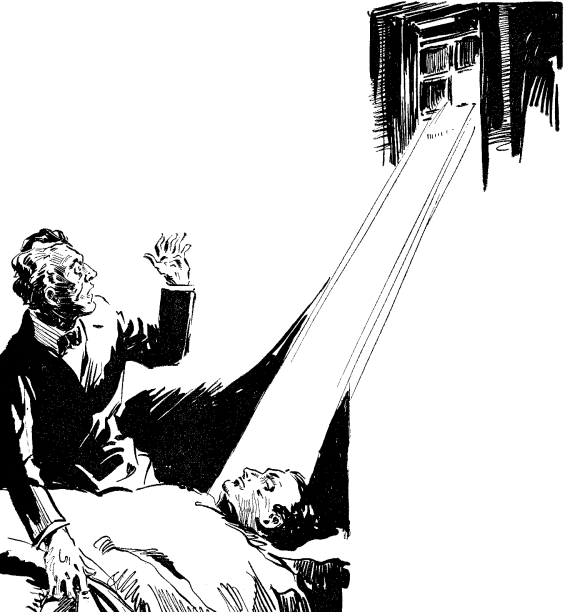
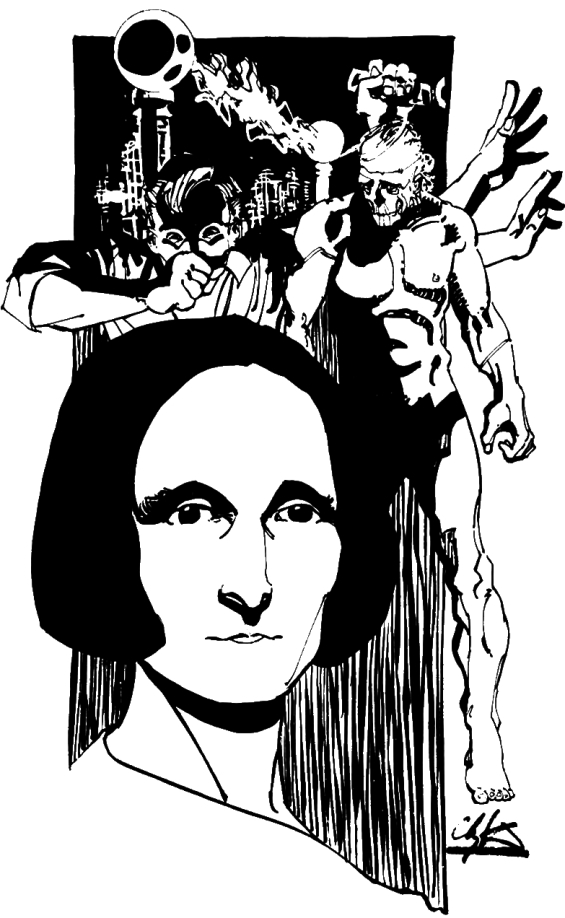
The Invisible Man - illustration by Dino Castrillo and Rudy Mesina

The Invisible Man arrives - illustration by Val Mayerik and Dan Atkins

The Invisible Man - illustration by Val Mayerik and Dan Atkins

And Now Do You See What I Am, Idiots?

The Invisible Man by H.G. Wells - POCKET CLASSICS

The Invisible Man by H.G. Wells

Posted by Jesse Willis

Protecting Project Pulp: Prominent Author by Philip K. Dick

SFFaudio Online Audio

Prominent Author is a great example on the joke theory of short stories. Look to the meaning of character names, listen for the clever turns of phrase (‘he wasn’t just a cog in the machine anymore’) then add in the fun bit of stuff happening with the wife and wife’s girlfriend back at home – Philip K. Dick knew his stuff.

Nick Camm’s accent doesn’t quite fit the story, but his narrative abilities sure do. In fact, now that I think about it, it’s pretty clear to me that Protecting Project Pulp hits more home runs than any other podcast in the District Of Wonders network!

Paul Orban illustration from Prominent Author by Philip K. Dick

Protecting Project PulpProtecting Project Pulp No. 67 – Prominent Author
By Philip K. Dick; Read by Nick Camm
1 |MP3| – Approx. 47 Minutes [UNABRIDGED]
Podcaster: Protecting Project Pulp
Podcast: November 4, 2013
“It was the dawn of a golden age of transportation. Terran Development was ready to market a fourth dimension ‘vehicle’ which afforded almost instantaneous travel. For instance Henry Ellis commuted 160 miles to work in five steps and a few seconds. Then, one morning, he met some people on the way…” First published in If: Worlds Of Science Fiction, May 1954.

And, here is a |PDF| made from this story’s first publication.

Posted by Jesse Willis

Expediter by Mack Reynolds

SFFaudio Online Audio

Expediter by Mack Reynolds

Mack Reynolds is an SF author who needs more attention. Unfortunately his non-public domain works, the majority of his work, are languishing, orphaned. Escape Pod has paired this less than stellar novelette with an excellent narrator, Corson Bremer, but even so it’s a less than stellar representative example of Reynold’s most thoughtful societal thinking. Expediter merely hints at the kinds of things Mack Reynolds could do. Come to think of it, what we really need is an expediter to make the still copyrighted works of Mack Reynolds available as ebooks (and audiobooks).

Podcast - Escape PodExpediter
By Mack Reynolds; Read by Corson Bremer
1 |MP3| – Approx. 1 Hour 22 Minutes [UNABRIDGED]
Podcaster: Escape Pod
Podcast: October 28, 2013
His assignment was to get things done; he definitely did so, Not quite the things intended, perhaps, but definitely done. First published in Analog, May 1963.

Podcast feed: http://escapepod.org/podcast.xml

Here is the |ETEXT|.

And I’ve assembled a |PDF|.

Expediter by Mack ReynoldsIllustrated by George Schelling

Posted by Jesse Willis

The SFFaudio Podcast #236 – AUDIOBOOK/READALONG: The Hills Of The Dead by Robert E. Howard

Podcast

The SFFaudio PodcastThe SFFaudio Podcast #236 – The Hills Of The Dead by Robert E. Howard, read by Paul Boehmer (courtesy of Tantor Media’s The Savage Tales Of Solomon Kane). This is a complete and unabridged reading of the story (60 minutes) followed by a discussion of it. Participants in the discussion include Jesse, Mr Jim Moon, Matthew Sanborn Smith, and Bryan Alexander

Talked about on today’s show:
Second-to-last Solomon Kane story chronologically, “Red Shadows” and “Wings of the Night” close contenders for Solomon Kane stories, the latter featuring harpies from Jason and the Argonauts, history of Solomon’s staff explained in other stories, fetishes (not THAT kind!), juju stick, magical weapons, Wandering Star edition illustrated by Gary Gianni, comic book adaptations, vampire-slaying, story uncharacteristically well-plotted including foreshadowing, “plains and hills full of lions” oh my!, lion sleeping habits, “Africa is full of never-explained mysteries” excuses plot holes, prefigures Richard Matheson’s I Am Legend, Kate Beckinsale’s Underworld movies, one of few stories to depict ‘nation of vampires’, Kiss of the Vampire (film), Transylvania, homeopathic symbolism, sex sells, ‘Howardian damsel in distress’, voodoo, feminization of the jungle, homoerotic undertones, Howard biography Blood and Thunder by Mark Finn, post-Colonial critique, vampires in fiction oscillate between sexualized and homicidal, Stephen King slams Stephanie Meyer’s Twilight vampires, Nosferatu (relatively unknown at the time of this story’s writing) introduced the idea that sunlight kills vampires, the Devil as source of Kane’s lustful urges, “Howard doesn’t do metaphors very well”, vampire-zombie continuum, Howard as great visual writer, animal characteristics ascribed to Kull and Conan but not Kane, snake imagery (related to serpent in Garden of Eden?), Slave Coast, vultures, nature of the soul, “Rogues in the House” (written in one sitting while Howard had a headache), the dangers of over-interpreting Howard, Howard’s subconscious, early 20th-century magazines preoccupied with race, Cosmpolitan (it was once a literary magazine), race hierarchy, Solomon Kane less racist than Howard himself, racial hierarchy, Berbers, Solomon Kane’s conflicted personality, the New Model Army, Howard’s characters are solitary, Puritans, Kane has a death wish, Kane’s celibacy, significance of Solomon Kane’s name, Ben Jonson satirizes Puritan names (in Bartholomew Fayre), so does Terry Pratchett (in Lords and Ladies, Mormonism, concept of congregation of all believers, English Civil War and its sects, Grendel in Beowulf as descendant of Cain, Sandman comics, Kane is “always on the road”, Matthew Hopkins witchfinder general, wood imagery, we learn what a palaver is, The Dark Tower series, temptation, inquisition, H. P. Lovecraft, cohesion of Howard’s works, history of the English language, George Harrison’s coyright infringement, parallel evolution in fiction, Clark Ashton Smith, Charles Baudelaire, genocide, the importance of a shared reader-author premise, shared cultural values, Hitler, The King in Yellow, Woodrow Wilson was a racist, zombies vs. animals.

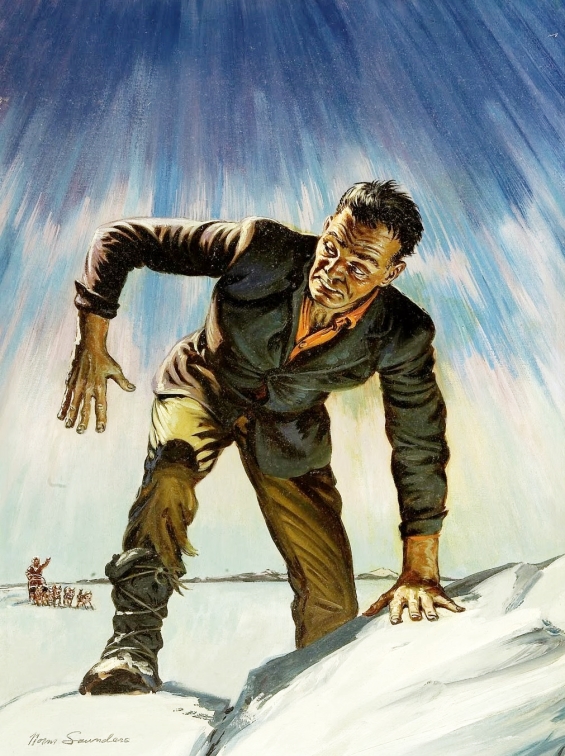
The Hills Of The Dead - Illustration by Greg Staples

The Hills Of The Dead by Robert E. Howard

The Hills Of The Dead

Solomon Kane's Fetish Staff

Solomon Kane in Africa

The Hills Of The Dead by Robert E. Howard

The Hills Of The Dead by Robert E. Howard - illustration by Hugh Rankin from Weird Tales, August 1930

ad for The Hills Of The Dead by Robert E. Howard from WEIRD TALES, July 1930

ad for The Hills Of The Dead by Robert E. Howard from WEIRD TALES, July 1930

The Hills Of The Dead - illustrated by Gary Gianni

Guillem H. Pongiluppi illustration of The Hills Of The Dead

Marcus Boas art - Robert E. Howard's Hills Of The Dead

Posted by Seth Wilson

Riya’s Foundling by Algis Budrys

SFFaudio Online Audio

Riya's Foundling by Algis Budrys

Julie Hoverson recently recorded Riya’s Foundling. It’s a little Science Fiction gem from the hands of Algis Budrys and the pages if Science Fiction Stories, #1 (1953).

It’s a story about an intelligent cow (actually a cow-like alien being) that adopts a young human calf.

I’m not very much interested in the earthbound setup – frankly it’s weak – but there’s something very Alfred Besterian about the writing and the alien POV is really fascinating (and somehow familiar).

Here’s the audio, |MP3| Approx. 19 Minutes [UNABRIDGED]

And here’s the |PDF| version!

Posted by Jesse Willis

Review of The Scarlet Plague by Jack London

SFFaudio Review

DREAMSCAPE AUDIOBOOKS - The Scarlet Plague by Jack LondonThe Scarlet Plague
By Jack London; Read by Drew Ariana
Approx. 2 Hours 13 Minutes [UNABRIDGED]
Publisher: Dreamscape Audio
Published: August 20, 2013
Themes: / Science Fiction / San Francisco / Plague / Post-Apocalypse / Disease / Philosophy / Politics / Class Conflict /

The year is 2013 and plague has struck. Not a wannabe killer like SARS or the Spanish flu, but a tsunami type devastation that swallows every living thing, check that, every person, in its path. Its nickname is the red death because at its arrival the first thing that happens to the infected person is they start sporting a red face – like a beacon for everyone else around them to – RUN. The next thing that happens is they die. Well a little more goes on in between, numb feet, numb hands, a heart so numb it stops. All within an hour, or a few hours if the person is lucky/unlucky enough to have it drag out that long. Then for fun what’s left of the numbed, red faced, ex-person, immediately starts decomposing, falling apart before the eyes of anyone still around to witness it, practically shooting decomposing germs into the air like a plant shooting its spores. There are two classes of people, the ultra rich and everyone else. As the ultra rich jump into their airships to get as far away as possible, they just carry death with them – first class. Everyone else simply falls down and dies where they are. The devastation’s full name is Scarlet Plague. Sixty years into the future when the very few last contenders of what was once the mighty human race hear tell about it, they can’t even decipher what scarlet means because language (like life) has degraded to the point of only holding on to what’s necessary. Scarlet is red. Counting only needs to go as high a ten. The squiggles on money and books are meaningless, but that’s of no consequence because neither books nor money are in use anyway. Apologies, I’m getting ahead of myself. About 160 years ahead.

The Scarlet Plague by Jack London, published in 1912 is about the plague that will strike 100 years from his time, told from a perspective 60 years hence by the last man alive who’s ever seen an airship or read a book. 2013, a hundred years into the future for Jack London, is today and yesterday, this week. Hearing this story now, is like what it was to read (or re-read) 1984 in 1984. Sort of surreal. Interestingly 1984 is a year that was mentioned in the story of the plague. Did George Orwell choose that year with a tip of his hat? Probably. I’ve heard George was a fan.

Back to Jack. What did he get right? What did he miss? Commercial airships? Instant wireless communication? Check, check. About 8 billion people planet wide? Check. The ultra rich and everyone else, hmmm, not that far off the mark, probably pretty close considering he was most likely exaggerating a little to make a point. The work didn’t actually feel like science fiction, it felt contemporary, the section that describes this part of the century anyway. Like his projection to 2073 started from here, not from a century ago. Because the today part of the story is so right, it makes the rest of the story worse.

Not worse as in it’s a bad story. It’s an excellent, superbly imagined, tangible story. Worse in regards to how Mr. London judged the human condition. 60 years from now, 160 years from when the book was written, James Howard Smith or Grandsir, is telling his three grandsons the story of the plague. A story that was in great demand 20 or 30 years before, is quickly becoming lost – now of passing interest to two of the boys, and of real interest to only one. For one thing Grandsir’s sentences are way too complicated, especially when he goes off into his memories and starts speaking as he used to do when he was professor of English literature at Stanford. Speech has become staccato and minimalist, the niceties of language having died off with everyone that had time for that sort of thing. The other problem is the things Grandsir talks about make no sense to the boys. Cities, cars travelling by air, exchanging things with money, wasting time with written markings, all of it is so outside of what the boys know it might as well be make believe. The ramblings of a deranged, lost, old mind. With an estimated world population of less than 500, life has become a question of survival. If you want to eat then you have to go out and kill yourself some dinner. Grandsir calls his grandsons savages. When he was a boy (one of his constant refrains) there were those who gathered food and those who ordered its gathering. His progeny has been reduced to food gatherers. Interestingly Grandsir’s still got them gathering food for him. Old habits die hard I guess.

So why was this professor of classical literature spared to help re-forge humanity? No reason. One in every few million just didn’t get red faced. Maybe death momentarily blinked as it passed them by or got distracted by the particularly amusing scene of the mountains of bodies piling up at its feet. A couple of feeble minded, the very richest most splendid woman in America, a violent, vile, wife beating chauffer who made himself her husband, our friend the professor – just a few random cards in the deck. Life’s like that. You build your magnificent cities, you spend your time creating art and pondering the great questions, and life responds by carelessly wiping itself out. Careless in that it doesn’t quite finish the job. But no matter, because life will make its way forward again.

And now we come to the worst part of the story. It’s not the plague and what happens in the aftermath. The author makes it clear that ultimately, in the long run, humanity will rally back. They’ll rebuild and create again. The worst part is what Mr. Jack London sees after that.

Drew Ariana who read the story in this recording did a good job. My only issue was the character voice he assumed for Grandsir. I didn’t have a problem with the voice, the problem was, so much of the story was told using this voice it became a little distracting. Otherwise, an easy, pleasant listen.

By the end of the book, awash in dystopia, I was seeing a little red. Too delightful not to share, here’s a little red (or Scarlet) for you. “All man’s toil upon the planet was just so much foam. He domesticated the serviceable animals, destroyed the hostile ones, and cleared the land of its hostile vegetation and then he passed and the primordial flood of hostile life rolled back again, sweeping his handy work away.”

Posted by Maissa Bessada