News, Reviews, and Commentary on all forms of science fiction, fantasy, and horror audio. Audiobooks, audio drama, podcasts; we discuss all of it here. Mystery, crime, and noir audio are also fair game.
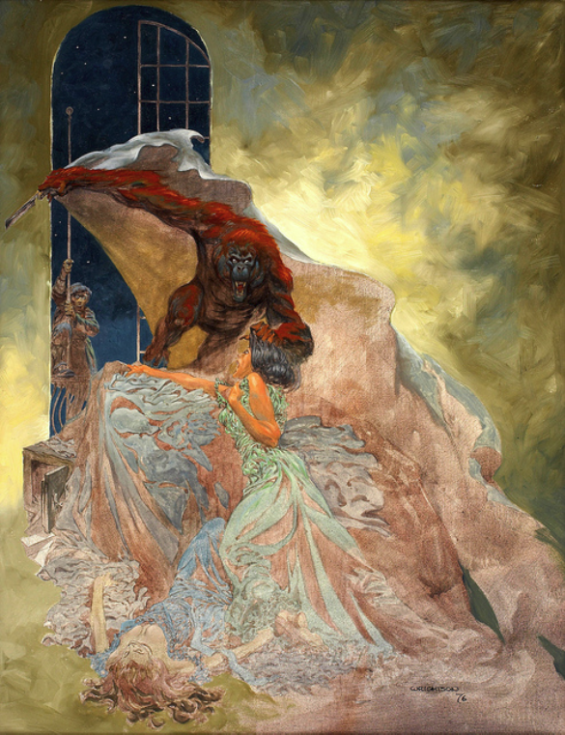
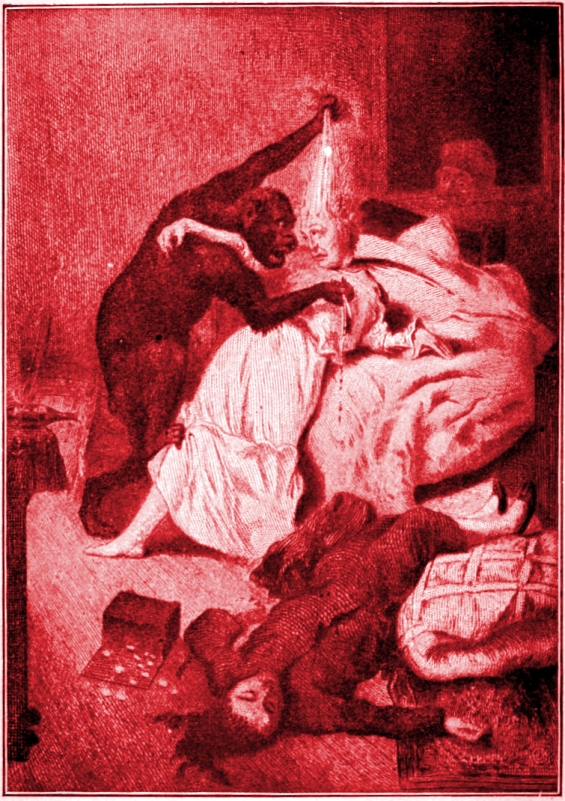
The SFFaudio Podcast #179 – The Murders In The Rue Morgue by Edgar Allan Poe, read by Bronson Pinchot. This is an UNABRIDGED AUDIOBOOK (1 Hours 31 Minutes) and comes to us courtesy of AudioGo and their collection Poe’s Detectives: The Dupin Stories by Edgar Allan Poe.
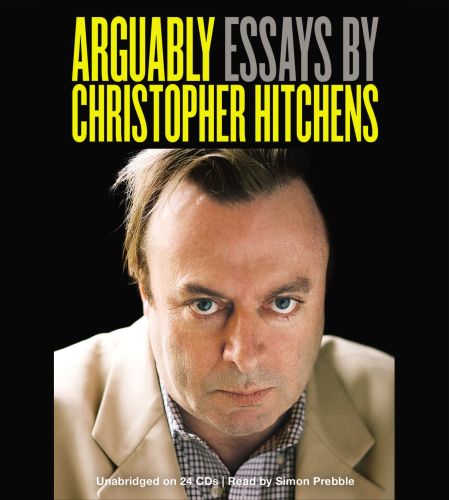
Arguably: Essays
By Christopher Hitchens; Read by Simon Prebble
24 CDs – Approx. 28.5 Hours [UNABRIDGED]
Publisher: Hachette Audio
Published: September 1, 2011
ISBN: 9781611139068
Themes: / Non-fiction / History / War / Biography / Science Fiction / Fantasy / Iran / Afghanistan / Germany / North Korea / France / Dystopia / Utopia / Religion / Tunisia / Piracy / Terrorism / Feminism / Pakistan /
The first new collection of essays by Christopher Hitchens since 2004, Arguably offers an indispensable key to understanding the passionate and skeptical spirit of one of our most dazzling writers, widely admired for the clarity of his style, a result of his disciplined and candid thinking. Topics range from ruminations on why Charles Dickens was among the best of writers and the worst of men to the haunting science fiction of J.G. Ballard; from the enduring legacies of Thomas Jefferson and George Orwell to the persistent agonies of anti-Semitism and jihad. Hitchens even looks at the recent financial crisis and argues for arthe enduring relevance of Karl Marx. The audio book forms a bridge between the two parallel enterprises of culture and politics. It reveals how politics justifies itself by culture, and how the latter prompts the former. In this fashion, Arguably burnishes Christopher Hitchens’ credentials as-to quote Christopher Buckley-our “greatest living essayist in the English language.”
Here’s a question I was thinking about while listening to Arguably.
What is fiction for?
One answer, the bad one, is that it’s for entertainment. That’s certainly where many readers are willing go, and the fiction writers who write it too. Maybe that’s precisely why so much fiction is just so very shitty.
To me, if you aren’t exploring ideas in your fiction, then you really aren’t serving a greater purpose. Idea fiction, fiction with ideas rather than just action and plot, is to my mind a kind of supplement to the wisdom found in writings on history, biography and science.
Of the many lessons learned I in listening to the 107 essays in Arguably I was particularly struck by the wisdom Christopher Hitchens gleaned from his reading of fiction. Hitchens reviews many books in this collection, nearly half of the essays are book reviews. Books like 1984, Animal Farm, Flashman, The Complete Stories Of J.G. Ballard, Our Man In Havana, and even, surprisingly, Harry Potter And The Deathly Hallows all get fascinating, critical, and reverent reviews.
Yet Hitchens also takes the lessons with him into his writing about his travels. Hitchens writes about visits to such places as North Korea, Cyprus, Afghanistan, and Kurdish Iraq. When talking about his visit to Beirut we see what comes when Hitchens, a man of ideas, acts upon them. The essay, The Swastika and the Cedar sees the convictions of the commited anti-fascist Hitchens beaten and nearly kidnapped for an act of vandalism on a prominently displayed swastika. Writes Hitchens:
“Well, call me old-fashioned if you will, but I have always taken the view that swastika symbols exist for one purpose only—to be defaced.”
In a review of two books, Lolita and The Annotated Lolita, Hitchens applies the controversial subject in a real life look at the modern, and very non-fictional oppression and objectification of women. Indeed, the ideas he appreciated in fiction helped Hitchens to come to grips with the real world.
I think the worst essay in this collection is the one on the serving of wine and restaurants, Wine Drinkers Of The World, Unite. It was simply a waste of the talent, too light, too easy a target. And yet, even that essay, the worst essay in all 107 has a memorable anecdote: “Why,” asks Hitchens’ five year old son, “are they called waiters? It’s we who are doing all the waiting.”
As to the narration of the audiobook. I’m ashamed to admit that I was initially dismayed when I saw that Christopher Hitchens had not narrated this audiobook himself. I was wrong to worry. Incredibly, Simon Prebble seems to have have become Hitchens for this narration. Prebble perfectly captures the erudite words, so eloquently performs them, and with an accent so like that of Hitchens’ own so as to make me think that it was Hitchens who had actually read it.
I think the worst essay in this collection is the one on the serving of wine and restaurants, Wine Drinkers Of The World, Unite. It was simply a waste of the talent, too light, too easy a target. And yet, even that essay, the worst essay in all 107 has a memorable anecdote: “Why,” asks Hitchens’ five year old son, “are they called waiters? It’s we who are doing all the waiting.”
Here’s a list of the book’s contents, with links to the original etexts when available, along with my own notes on each:
The Private Jefferson – a review of Jefferson’s Secrets: Death And Desire At Monticello by Andrew Burstein
Jefferson Vs. The Muslim Pirates – a review of Power, Faith, And Fantasy: America In The Middle East: 1776 To The Present by Michael B. Oren
Benjamin Franklin: Free And Easy – a review of Benjamin Franklin Unmasked: On the Unity of His Moral, Religious, And Political Thought by Jerry Weinberger
John Brown: The Man Who Ended Slavery – a review of John Brown, Abolitionist: The Man Who Killed Slavery, Sparked The Civil War, And Seeded Civil Rights by David S. Reynolds
Abraham Lincoln: Misery’s Child (aka Lincoln’s Emancipation) – a review of Abraham Lincoln: A Life by Michael Burlingame
JFK: In Sickness And By Stealth – a review of An Unfinished Life: John F. Kennedy, 1917–1963 by Robert Dallek
Saul Bellow: The Great Assimilator – review of six novels by Saul Bellow (The Dangling Man, The Victim, The Adventures Of Augie March, Seize The Day, Henderson The Rain King, and Herzog)
Vladimir Nabokov: Hurricane Lolita – reviews of Lolita by Vladimir Nabokov and The Annotated Lolita edited and annotated by Alfred Appel, Jr.
John Updike: No Way – a review of The Terrorist by John Updike (with reference to The Coup too) John Updike: Mr. Geniality – a critical review of the affable Due Considerations: Essays And Considerations by John Updike
Vidal Loco – Gore Vidal went crazier, more elitist and perhaps more racist as he got older (with attention and quips for Quentin Crisp and Oscar Wilde and Joyce Carol Oates)
America The Banana Republic – Hitchens on the “socialistic” bank bailout of 2008 (“socialism for the rich and free enterprise for the rest”)
An Anglosphere Future – a review of The History Of The English Speaking Peoples by Andrew Roberts (with reference to both Sherlock Holmes and The White Company by Sir Arthur Conan Doyle as well as to Cecil Rhodes and Rudyard Kipling)
Political Animals – a review of Dominion: The Power Of Man, The Suffering Of Animals, And The Call To Mercy by Matthew Scully
Old Enough To Die – on capital punishment as applied to children In Defense Of Foxhole Atheists – a visit to the United States Air Force Academy and the tax funded proselytizing
ECLECTIC AFFINITIES Isaac Newton: Flaws Of Gravity – a stroll through the medieval streets of Cambridge with the scientists, mathematicians, and philosophers who worked there
Gustave Flaubert: I’m With Stupide – a review of Bouvard et Pécuchet by Gustave Flaubert translated by Mark Polizzotti The Dark Side Of Dickens – a review of Charles Dickens by Michael Slater a biography (Hitchens was a not uncritical admirer of the subject)
Marx’s Journalism: The Grub Street Years – a glowing review of Dispatches for the New York Tribune: Selected Journalism Of Karl Marx edited by James Ledbetter, foreword by Francis Wheen (Marx admired the United States, and other fascinating facts about the father of communism)
Rebecca West: Things Worth Fighting For – an introduction to Black Lamb and Grey Falcon: A Journey Through Yugoslavia by Rebecca West
Ezra Pound: A Revolutionary Simpleton – a review of Ezra Pound, Poet: A Portrait Of The Man And His Work: Volume I: The Young Genius, 1885-1920 by A. David Moody (a biography of the fascist poet)
John Buchan: Spy Thriller’s Father – a review of John Buchan The Presbyterian Cavalier by David R. Godine (with discussion of The 39 Steps and a fantasy novelette The Grove Of Ashtaroth)
Fraser’s Flashman: Scoundrel Time – a look at the George MacDonald Fraser series of Flashman books and the connection with The Adventure Of The Empty House
AMUSEMENTS, ANNOYANCES, AND DISAPPOINTMENTS Why Women Aren’t Funny – a controversial essay on why more comedians are male and why women laugh at them the way they do
As American As Apple Pie – a literary and chronological history of the blowjob, with reference to Valdamir Nobokov’s Lolita
So Many Men’s Rooms, So Little Time – a fascinatingly insightful argument on what’s was going on with the Larry Craig bathroom airport scandal and related phenomena
A War Worth Fighting – a persuasively systematic review of Churchill, Hitler And The Unnecessary War: How Britain Lost Its Empire And The West Lost The World by Pat Buchanan
Just Give Peace A Chance? – a critical review of Human Smoke by Nicholson Baker
Don’t Mince Words – the disenfranchisement of south Asians in Britain isn’t the cause of bombings, hatred of women is.
History And Mystery – al-Qaeda in Iraq, jihadists, or “insurgents”? Do words matter? Of course they bloody well do.
Words Matter – political slogans make of “every adult in the country” an “illiterate jerk who would rather feel than think”
This Was Not Looting – how can a government “loot” it’s own weapons manufacturing facility? The government of Iraq managed it according to The New York Times.
The “Other” L-Word – a lighthearted piece on the prominence of the word “like” and it’s use
The You Decade – what’s wrong with you (marketing to the selfish)
Suck It Up – the Virginia Tech shootings prompted the wrong response from the world (namely that it prompted one)
A Very, Very Dirty Word – the English empire, in centuries to come, may only be remembered for soccer and the phrase “fuck off”
Wow! I’m loving this story, as narrated by John Feaster. Sez Feaster of his narration “it’s more a performance than a reading” and that’s absolutely true – Feaster seems to be taking the events of the plot very personally, and that lends power to what is the sort of twistily fantastic tale you’d see on something like Alfred Hitchcock Presents. And yet, Achmed Abdullah’s pulpy writing seems damned good too!
And, if even half the stories about the author, as detailed over on the Wikipedia entry for him, are true, he may be one of the most fascinating writers I’d never heard of.
Alexander Nicholayevitch Romanoff (aka Achmed Abdullah) was, apparently, a Russian born relative of the last Czar, the son of an Afghan princess, an Academy Award nominated scriptwriter, an officer in the British, Indian, and Turkish armies (serving in India, Afghanistan, Tibet, Africa, China, and Turkey), as well as being a Muslim, a Catholic, and a spy!
Fear
By Achmed Abdullah; Read by John Feaster
1 |MP3| – Approx. 22 Minutes [UNABRIDGED]
Publisher: LibriVox.org
Published: June 19, 2010
First published in Detective Story Magazine, 1919.
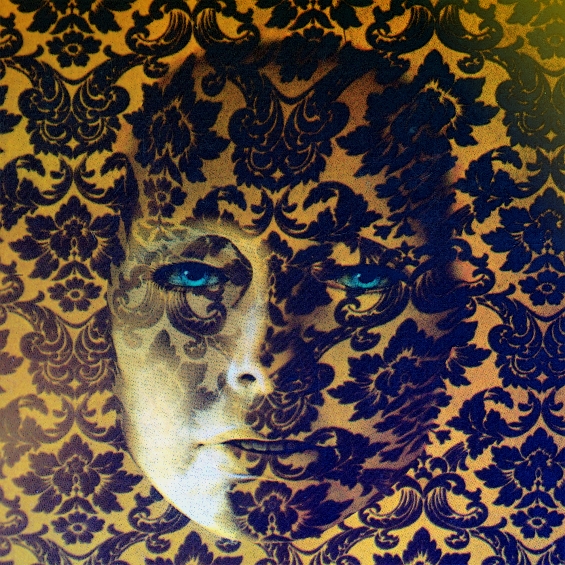
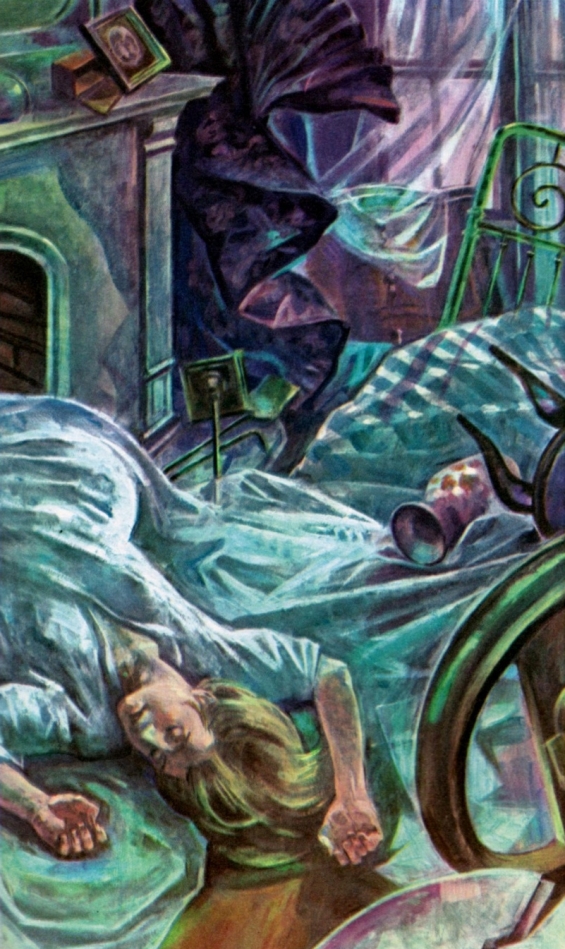
The SFFaudio Podcast #178 – An unabridged reading of The Yellow Wallpaper by Charlotte Perkins Gilman (32 minutes, read for LibriVox by Michelle Sullivan) followed by a discussion of it. Participants in the discussion include Jesse, Tamahome, Jenny Colvin, and Julie Hoverson.
Talked about on today’s show:
Charlotte Perkins Gilman vs. Charlotte Perkins Stetson, wall-paper vs. wallpaper, a seminal work of feminist fiction, a ghost story, a psychological horror story, the Wikipedia entry for The Yellow Wallpaper, Alan Ryan, “quite apart from its origins [it] is one of the finest, and strongest, tales of horror ever written. It may be a ghost story. Worse yet, it may not.” postpartum depression, “the rest cure”, phosphates vs. phosphites, condescending husbands, infantilization of women, superstitions, is she dangerous?, is she only pretending to go insane or is she actually mad?, will reading The Yellow Wallpaper drive you to insanity?, an androcentric society, Titus Andronicus by William Shakespeare, Life by Emily Dickinson
MUCH madness is divinest sense
To a discerning eye;
Much sense the starkest madness.
’T is the majority
In this, as all, prevails.
Assent, and you are sane;
Demur,—you ’re straightway dangerous,
And handled with a chain.
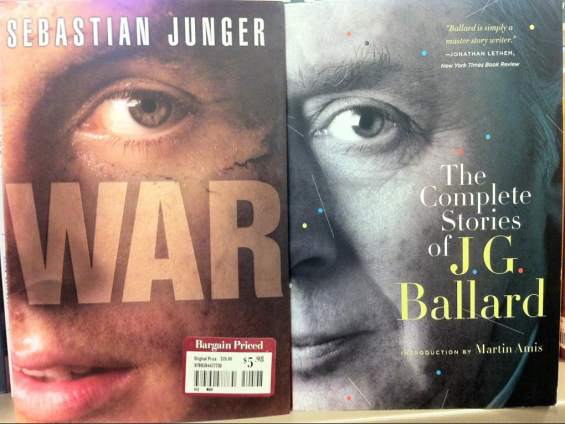
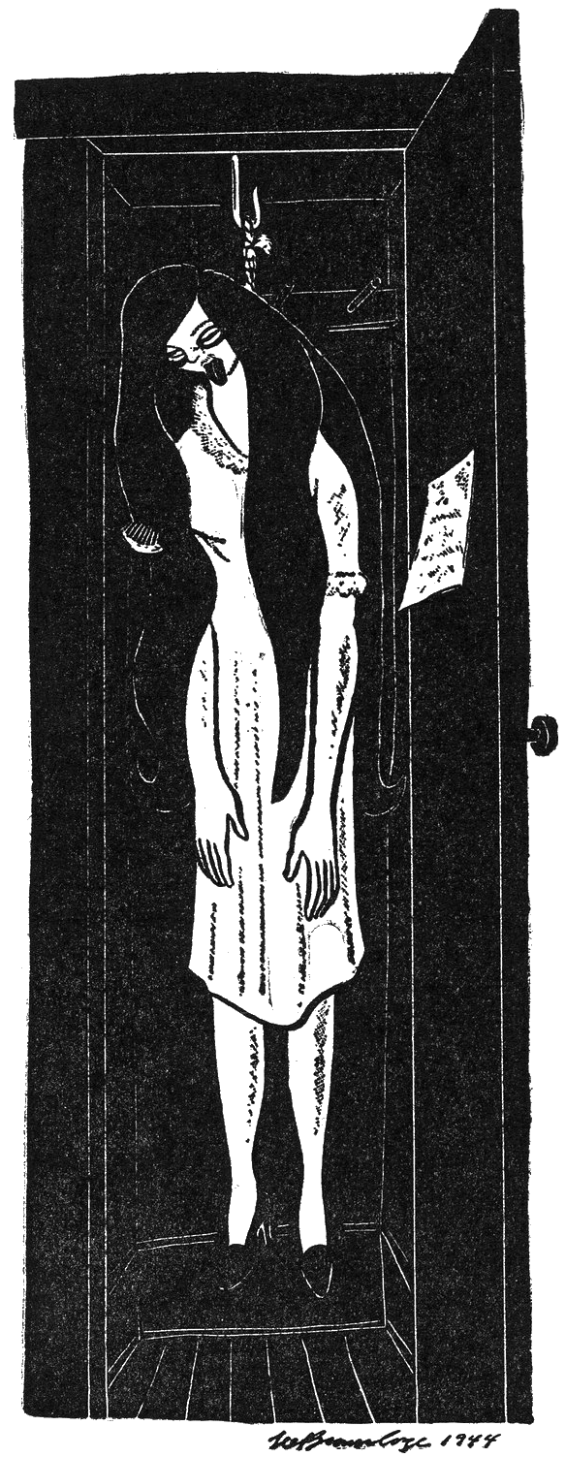
Jenny is the husband’s sister (or mistress?), “gymnasium or prison, she doesn’t know she’s living in a short story”, does the family think she’s crazy a the story’s start?, biting the bed is a bit suspicious, barred windows, suicide, has she forgotten that she’s the wrecked the wallpaper to begin with, a haunted house vs. a haunted woman, is the supernatural only within minds?, Julie goes crazy without something to read, first time motherhood can be a struggle, duplicity, crazy people are known to make unreasonable requests, “why is the cork on the fork?”, Dirty Rotten Scoundrels, what’s the rope for?, “all persons need work”, counting the holes, are women moral by default?, Herland by Charlotte Perkins Gilman, utopia, “everything is both beautiful and practical”, the eighteenth amendment to the U.S. Constitution (prohibition), the husband faints (and so she wins?), creeping vs. crawling, the creepiest ending, smooch vs. smudge, neurasthenia, William James (brother of Henry James), “Americanitis”, the fashion of being sick, hypochondria as a fad, the “fresh air” movement, Kellogg’s cereal 9and other patented medicines), a yogurt colonic, mental illness is shameful in Asia, mental illness vs. oppression, an absolutely unreliable narrator, Stockholm syndrome style thinking, “You think you have mastered it, but just as you get well under way in following, it turns a back-somersault and there you are. It slaps you in the face, knocks you down, and tramples upon you.” worrying a tooth, tooth loss as an adult is horrific, as a kid it’s fun, why are we rewarded by the tooth-fairy?, is the tooth-fairy universal?, was chronic fatigue syndrome a fad?, fame is popular, Münchausen’s syndrome (the disease of faking a disease), take up a hobby!, distinguishing genuine from real, syndrome (symptoms that occur together) vs. disease (dis-ease), “which is worse…”, how to look at doctors, Tam’s doctor is nicer than House, M.D., witch doctors, non-invasive cures, gallium, Vitamin C, The Disappearing Spoon: And Other True Tales of Madness, Love, and the History of the World from the Periodic Table of the Elements by Sam Kean, Julie Hoverson’s reading of The Yellow Wallpaper, the unnamed narrator (let’s call her Julie), “what’s with the plantain leaf?”, a modern version of The Yellow Wallpaper would be set at fat camp (is that The Biggest Loser), starts off, Flowers In The Attic by V.C. Andrews, arsenic doughnuts (are not Münchausen syndrome by proxy), The Awakening by Kate Chopin, civilizing influence, bathing!, “men know what side their sex is buttered on”, In The Next Room (or The Vibrator Play) by Sarah Ruhl, Changeling (screenplay by J. Michael Straczynski), what is your Yellow Wallpaper?, fiction is Jesse’s wallpaper, ‘tv, videogames, comics … none of these make you crazy’, heroin chic, Julie has many yellow papers, Tam’s yellow wallpaper is the bookstore, Sebastian Junger vs. J.G. Ballard, 1920s, The Great Gatsby by F. Scott Fitzgerald, posing gowns, identical wigs, Jenny’s yellow wallpaper is dreams, The Evil Clergyman (aka The Wicked Clergyman) by H.P. Lovecraft, nice wallpaper, authorial self-interpretations, Eric S. Rabkin, re-reading as an adult something you read as a kid, The Prince Of Morning Bells by Nancy Kress, The Portrait Of A Lady by Henry James, The Lord Of The Rings by J.R.R. Tolkien, old time radio comedies, should you read fiction from the beginning? Start with Canterbury Tales by Geoffrey Chaucer?, Hyperion by Dan Simmons, Jonathan Swift, Peter F. Hamilton, E.E. ‘doc’ Smith, Mastermind Of Mars by Edgar Rice Burroughs.
Here’s a terrific audiobook. It’s one I hadn’t thought of for a long while, but now, looking at its plot and themes, it seems fresher than ever before. It’s about healthcare, political lobbies by powerful interest groups, ethics in a time of corruption, and the red planet, Mars.
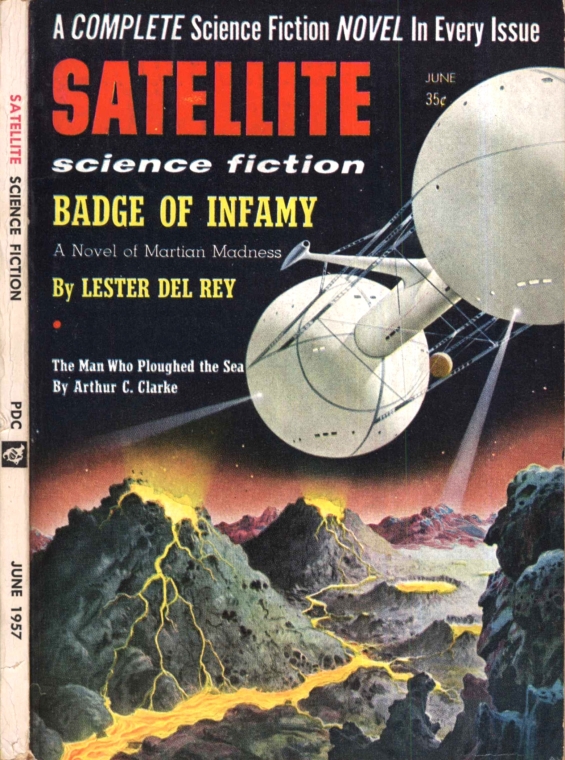
The complete audiobook is available from LibriVox, but what’s new here is a |PDF| made from a scan of it’s original publication in Satellite Science Fiction, June 1957! And it’s beautiful!
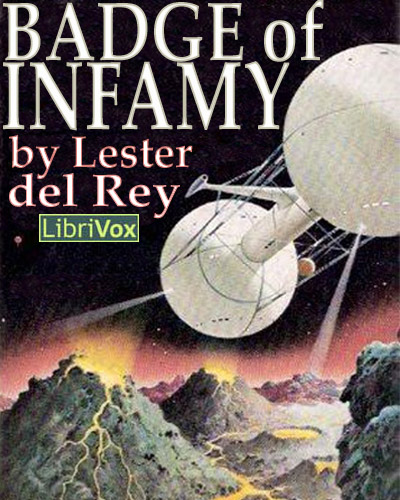
Badge Of Infamy
By Lester del Rey; Read by Steven H. Wilson
1 |M4B|, 15 Zipped MP3 Files, or Podcast – Approx. 3 Hours 19 Minutes [UNABRIDGED]
Publisher: LibriVox.org
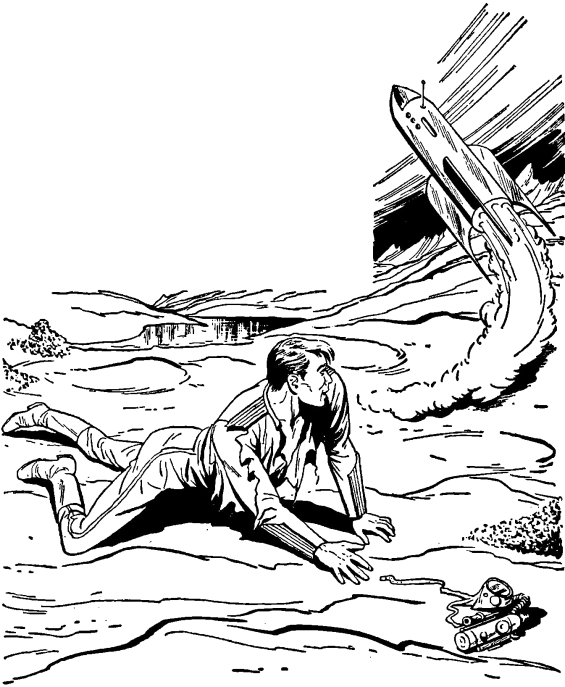
Published: January 17, 2007 Daniel Feldman was a doctor once. He made the mistake of saving a friend’s life in violation of Medical Lobby rules. Now, he’s a pariah, shunned by all, forbidden to touch another patient. But things are more loose on Mars. There, Doc Feldman is welcomed by the colonists, even as he’s hunted by the authorities. But, when he discovers a Martian plague may soon wipe out humanity on two planets, Feldman finds himself a pivotal figure. War erupts. Earth is poised to wipe out the Mars colony utterly. A cure to the plague is the price of peace, and only Feldman can find it.
Here’s a haunted hotel story, that while being rather melancholy is also surprisingly uplifting.
The Occupant Of The Room
By Algernon Blackwood; Read by Mooseboy Alfonzo
1 |MP3| – Approx. 23 Minutes [UNABRIDGED]
Publisher: LibriVox.org
Published: September 15, 2008
First published in Nash’s Magazine, December 1909.


 The SFFaudio Podcast #179 – The Murders In The Rue Morgue by Edgar Allan Poe, read by Bronson Pinchot. This is an UNABRIDGED AUDIOBOOK (1 Hours 31 Minutes) and comes to us courtesy of AudioGo and their collection Poe’s Detectives: The Dupin Stories by Edgar Allan Poe.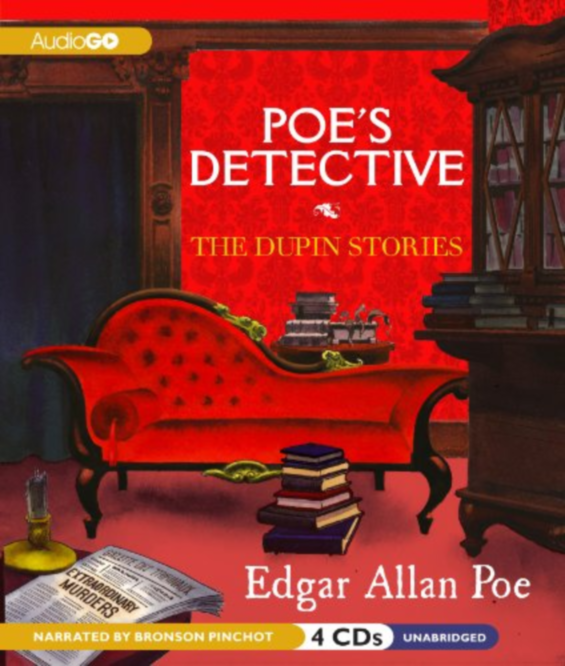

 Arguably: Essays
 Fear
Fear