
 Out of the Dark
By David Weber; Read by Charles Keating
17 hours – [UNABRIDGED]
Publisher: Macmillan Audio
Published: 2011
Themes: / Science Fiction / Military / Aliens / Alien invasion / Historical /
No one would have believed in the early years of the 15th Century that human affairs were being watched from the orbiting ships of the Galactic Hegemony’s Survey Force. No-one could have dreamed that we were being scrutinised as the French and English forces advanced towards each other across the field of Agincourt. Few men even considered the possibility of life more vegetarian than ours and yet, from their survey ships, minds immeasurably more craven than ours, regarded this Earth with horrified revulsion. And slowly and surely, they drew their plans against us.
David Weber attempts to take the traditional alien invasion and add an unusual twist. The twist, unfortunately, isn’t brought to fruition until very nearly the end of the book, where it clangs into place more like a late addition, a Deus Ex Machina.
Out of the Dark starts as a typical alien invasion: ships arrive in-system, observe us for a while to find where the big cities and military bases are, then strike them from orbit. Wipeout the majority of the population and then attempt to sweep in to rule over the cowering survivors. Shock and Awe. Unsurprisingly the aliens discover how tenacious we humans are. They struggle to comprehend why we are unhappy about having half the population of Earth wiped out in an afternoon. Is there something wrong with us? Are we not civilised?
In the Galactic Hegemony vegetarianism is the norm for intelligent star-faring races. Omnivores and carnivores being too aggressive to develop the required technological base required to reach the stars without wiping themselves out. There is one exception to this rule, the Shongairi, and they make the other races in the Hegemony nervous just by existing. So, in an attempt to weaken the Shongairi, the Hegemony grant them the right to colonise three other worlds, including one discovered some 500 years before. A world that also has the pacifistic Hegemony worried.
According to the Colonisation rules of the Hegemony, any race that has not advanced enough technologically are fair game to be colonised. Naturally their assumption is that Earth, being populated by a crazy race that commits such bloodthirsty battles as that observed at Agincourt five centuries earlier, will still be very low on their technology scale. The Shongairi are then somewhat surprised to find that we have developed so far as we have, indeed possessing some technologies that rival their own. We may still be trapped upon our home planet, but we have advanced computer technology and encryption techniques that make them think we should really be classed at a level where we would be granted a protected status. Considering the expense of the time and resources involved in the launch this offensive, the Shongairi Commander decides to sweep that data under the carpet and hope that no-one notices. Bombing us back to the stone-age to hide the evidence if necessary. And thus the invasion goes ahead and half the world’s population is lost to a kinetic bombardment.
The novel follows several characters, although most are expended showing how effective our weaponry is against an alien ground force that expected to face nothing more advanced than a bow and arrow. They are expended in that they demonstrate, repeatedly, that the Shongairi react with overwhelming orbital strikes. This pattern repeats several times through out the book and does become a little tedious.
The Shongairi alien nature is basically that of a predatory pack animal, almost canine in nature. Their philosophy is that when faced with an overwhelming opponent you surrender. That humans refuse to acknowledge the Shongairi’s superiority confuses them. This mentality reminded me a lot of the elephant-like aliens from Larry Niven and Jerry Pournelle’s Footfall from the ’80’s.
The characters include Master Sergeant Stephen Buchevsky who finds himself a passenger on a military cargo plane flying over Eastern Europe when the aliens strike and his plane is force to make a crash landing. With only a handfull of other US personnel from the plane he begins gathering locals around him as he becomes their protector. He joins up with a local group who’s charismatic leader seems to be too friendly, helpful and successful at defending against the Shongairi. Buchevsky is a gee-shucks hero doing the best he can.
One of the other main characters is Dave Dvorak. Or, as I think of him, Dave “Mary Sue” Dvorak. Dvorak is one of the most prepared people to hide out in the Carolina hills, in what reads like a palatial cabin with his family and friends. Although he actually does very little plot-wise he becomes a middle-man for lots of other survivors in the area and through these contacts we hear about much of what is happening in the world. When we aren’t watching sacrificial attacks against Shongairi troops. We do get to hear in excruciating detail how, over the previous few years, he and his brother-in-law converted a family cabin in the woods into a home away from home, complete with redundant power generators, hidden food and weapon caches and a huge underground fresh water tank.
We are also shown the invasion from the alien’s perspective. Much of their emotions are expressed in the positioning and twitching of their ears, reinforcing the K-9 impression that their omnivore and pack nature suggests. There is almost no physical description of them, that I remember, beyond this.
The cover blurb talks of the survivors receiving help from an “old enemy”. I’m not going to spoil this aspect of the book, although I guessed it just from reading the blurb and was actually looking forward to it. Other readers have claimed to have been blind-sided by it. I can see why, but only if they simply hadn’t read the book cover. It is not a genre I’m aware Weber has written in before. I was disappointed with the execution of this aspect. The surprise element doesn’t feel integrated into the book as a whole. It really felt like the story had originally been written without it, then realising that he had dug a hole too deep for humanity to get out of, he had to go back and add this in to tip the scales in our favour. The conclusion wraps up very quickly; like a TV series been told they are being cancelled and only have two episodes to wrap everything up. Or he got bored with the story and wanted to finish it and move on to something else.
And yet, this is not the worst aspect of this book for me. I have also been listening to Weber’s Safehold series, but have abandoned it after the third book, in large part due to this flaw. Weber has started writing massive monologues for many of his characters that run on for tens of minutes at a time. They are both internal and external discourses where the characters go into minute detail about what has already happened, their current position, beliefs, expectations and plans. Two or three times per book I could swallow, but this feels like it is becoming Weber’s go-to method of filling out a scene. They feel completely unnatural, especially when it is one character talking at another. In some situations this would be okay, a specific character who was prone to this sort of thing, or that the situation called for the character to speak for such an extended time, without any apparent aide-memoire or time to prepare. Even if it helped to move the plot on quickly, I might be tempted to forgive it, but it seldom does. It is often a repeat of information we already know, explained from the current character’s slightly different perspective. Yet not actually adding anything to the story other than word count. Unfortunately any interruption to my listen during one of these monologues meant that when I returned I had no little or no idea who was talking. I could eventually infer who was talking, after a few minutes, based on the geography and names of characters they mentioned, but seldom from how the character spoke. Neither the writing nor unfortunately the narration had enough colour when it came to most of the character voices.
The narrator, Charles Keating, does well with most of the book, especially the alien lisping Shongairi. Unfortunately he too struggles to bring life into Weber’s indigestible, interminable speeches.
This had the potential to be an interesting hybrid of genres, but really feels like something bolted on at the end. Weber’s editor needs to get tough with him and curtail those endless monologues.
Posted by Paul [W] Campbell



 The Beautiful People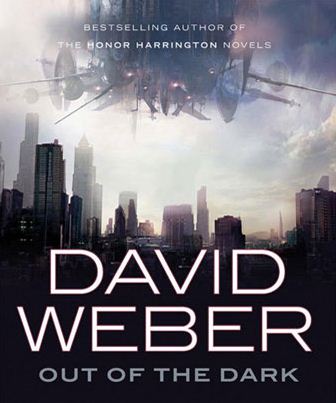
 The Thousand-And-Second Tale Of Scheherazade

