The SFFaudio Podcast #907 – READALONG: Highways In Hiding by George O. Smith

Jesse and Scott Danielson talk about Highways In Hiding by George O. Smith

Talked about on today’s show:
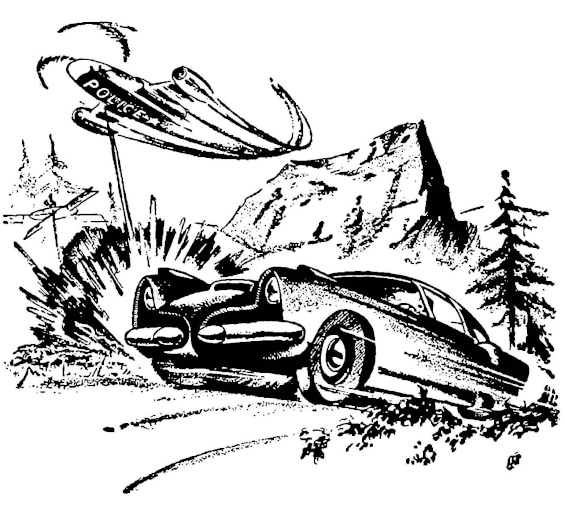
Space Plague, the Spanish title: Caminos Occultos, 1956, 1955 for the serialization, a 70s vibe, the previous book was more 50s, the way the space drive worked, a road book, a plague from space?, no space, pick from the following writers, Floyd C. Gale, Sam Moskowitz, Sturgeon, which do you like, let’s here from Sturgeon, Adventure Science Fiction, November 1957, type and time, buy it instead of food, selling you on, revised paperback, the field needs more of this by George!, a review of Two Sought Adventure, the shortest review, another?, Analog, July 1968, E.E. Doc Smith, both scientists, interplanetary communication, telepathy and dirty work, so John W. Campbelly, Satellite, February 1957, resident review, Gnome Press, the electronic laboratory, the pace and high level of interest, one of the years best fantasy books of the year, pretty positive, the first Hugo awards, it’s a science fiction novel, a lot of it was fantastic, Floy C. Gale’s five star shelf, lie Bester in The Demolished Man, an ESPer, a car pile-up, a perceptive such as he, his fiance has disappeared from the car without a trace, a tickling memory, something wrong with the highway signs, tangled of morass of paths, Mekstrom’s Disease, you’ll go for this, hardboiled dialogue, all positive reviews so far, from Infinity, Damon Knight, the yearest dumbest sounding title, an underground organization, from Maine to California, the fleur-de-lis, disarmingly cheerful and vigorous, the only known carrier, pretend she was never there, woman-hunt, hypnotized from, Rhine institute, a telepathy or clairvoyant, surprising firmness, psionic dead stop, neologism, #you dirty slob#, Heinlein’s worst, the virtues of first rate science fiction, a lot less superficial than it used to be, to stand there and watch the eyes of a woman, poignant touches, cheerful bloopers, the law of least reaction, piracy and pillage, in the realm of grammar, a tin-ear, science fiction is literature, I hope that whomever he was, Astounding, 1956, P. Schuyler Miller, Van Vogtian melodrama, a rattling good yarn, incurable fatal, they disappear, an ingenious network, much action, rapid juggling, out before the deadline, Anthony Boucher, easily Smith’s best book to date, wild melodrama, seeking to control a mysterious disease, indestructible supermen, plot contrivance, unflaggingly excitingly, rich in typographical errors, what do you think Goodreads has to say?, a 3.68, slightly above the average, full of misogyny, the bad guys are woman haters, really interesting, the ESP, a road trip, Venus Equilateral, in Astounding in the 1940s, a rocky relationship with John W. Campbell, a Scott guy, an electronics guy, tons of parallels between this and Hellflower, a road book with lots of cars, not as good as Westlake, the venn diagram, people who write in a plain way, super-effective, exactly the same set up as the last one, before the book started, a space accident, she wasn’t there in the first place, tapped to be a secret spy, go undercover, he thought he did it himself, exactly the same plot, different baddies, intriguing, a space accident later in the book, the girl crashes the car, the art for the original serial, April, May and June 1955 issues of Imagination, a woman stepping out of a completely wrecked car, a 227 page PDF, introducing the author, create loyalty to the magazine by making the authors real, William Hamling, cluttering up science fiction magazines, 100,000 words per year, I write science fiction because…, 20 years in the electronics field, oatmeal box, a radio set of my own build, atoms were still indivisible, Mt. Wilson, distant galaxies, “island universes”, Pluto was confirmed and named, astronomy and celestial mechanics, liberally peppered, honest fact and bafflegab, a technical background, just excluded almost every modern science fiction writer, a traffic ticket for jaywalking in Cincinnati, fell heir to a typewriter, magazines pay money for printable material, writing yarns that I like to read, 3 subsequent replacements for item 1, melodramatic, a hotel detective, everybody is gaslighting him, one of the most damning indictments, a stuff happening book?, the gaps and the ESP and all that, two different groups with solutions from a disease, different motivations for wanting to keep it secret, make it for the elites vs. give it to everybody, almost a Simak idea underneath, sees evil in the world, going for a walk with your best girl and your dog, my girlfriend is a liar, overall pretty good, not just stuff happening, not a comics guy, totally X-Men, mostly action things, clairvoyance and remote viewing, on the bullshit wagon, ESP things, maybe there’s something to some of this, fucking testing this forever, the dead areas thing is never explained, natural depleted mana zones, the Niven method, The Magic Goes Away, a wasteland of telepathic ability, not reproducible, the dead area kind of explains that, underexplained, scratchin my chin at the end, the Rhine institute, making everybody telepaths and espers, the heroes, Professor X, the gene, a cross or a helix, recruited to help humanity in a secret way, the League Of Evil Mutants, are we the baddies?, lead by Gandalf (Magneto), in the concentration camps as a Jew, on a mission to let any of his people be controlled or killed by the government, not on the government side, what to do in a post-mutant society, what this book is about, the medicalized rhine society, doctorates of telepathy and physiognomy, all of them have superpowers, Cyclops, shoot light out of his eyes, they get pounded on all day, Wolverine, hardened skin, nearly indestructible bodies, this strain coming out of Analog, call from his mom, his father had died in the night, a twitter thread, an essay by Mark Twain, Mental Telegraphy, a letter came to him, travelling with his lawyer, held the letter up to his head like that Johnny Carson bit, it is kinda uncanny, if you squint a little bit, really well explained, driving down the highway, radio and microwave radar, listing to something happening elsewhere, almost like telepathy, to see through things, what an MRI or x-rays, knowledge and speculative thoughts, if those were in human bodies, make it longer, that happens some more, another one by George O. Smith, much like Simak, shares that space with Simak, in the Fishhook book, Time Is The Simplest Thing, so many gimmies at the beginning of this book, I bought it, he sold it, some of his books are like a kitchen sink, feels like thinking through, feeling your way, ends quite abruptly, why the book exists, a common technique in writing, a space, a page break, capitalization of the first word, doesn’t show up well in audio, the coda without saying coda, inoculating the families of the victims, we’re still underground for two reasons, unless you have trouble, Steve Junior, further plans, what makes the book even better, stop at the gas station to fill up, cleaning the windshield, at the spinner rack near the checkout, this makes it an underground book, written for the underground, what’s this book really about, about the underground railway, they look like us but they’re not like us, it isn’t about racism, it’s about moral intention, the question of race, how do you tell if someone is good or bad, perceive them with your esper skill, they’re intention is good, team elite or team bottom up, the tension between the two, this figure within the movement, us reading it and saying I’m inspired, these groups have merged, defeating the baddie at the center, reorientation, Babylon 5, Brad Dourif, [Passing Through Gethsemane], entirely demolished, built up from a blank, he suffered demolition, did our hero get manipulated to do everything in the book, hypnogaged?, sniffing out the highways in hiding, the whole world becomes maybe, there stories line up, a solipsism, the girl was against him, what do you do with that, not quite on the level of The Demolished Man, this might have been a science fiction classic that everybody talks about, these three concepts, there comes to be a character who is both telepath and esper, one of the best movies ever to come out of Hollywood that’s an original science fiction idea…, Rogue One, The Book Of Eli (2010), Gary Whitta, he’s not blind because he sees the world as god sees it, or as Daredevil sees it, the best literary exploration of this, innovative things, following the letter, a piece of his girl’s cloth, he goes and sits by the mailbox, Apple airtag, a psychic airtag, a book in your desk drawer about me, not this, Van Vogtish, every 2000 words change everything, he does spark, long enough to do the thing, quite beautiful to explore, things blossom in conversation, this big Simak read, books that don’t use action plots, making the girls more girly, his thinking voice, his writing voice, she [Jessica Martin] had to do all the girls, if she [Jessica Martin] could have been a male narrator, a very excellent narration, miscalculated, Spacemen Lost aka Lost In Space, the alien spaceships were watching and waiting, The Fourth “R”, an electromechanical educator, a stuff happening book!, extraordinary intelligence, Operation Interstellar, those who don’t want him to succeed, Three Skeleton Key, in the Atlantic, waiting for rescue, covered in rats, the rats took over the ship, they ate the crew, this tall tale, swarm all over the lighthouse trying to get in, a really good radio drama, waves of rats, taking over their little island, thousands of them, the same appeal as all the zombie stories, they’ve taken over, a horror story, Leiningen Versus The Ants by Carl Stephenson, I am German I will stop it, the story of a siege, escaped from a prison, Papillion (1973), like Playboy without the nudes, Esquire, catering to the same class, high class rich middle class set in the 1930s, Fred Greenhalgh, Suspense and Escape, radio drama can do things that nothing else can do, The Hitchhiker’s Guide To The Galaxy, J. Daniel Sawyer, his name came up, got to his website, auto-didactic, talking about Heinlein stuff on twitter, For Us, The Living by Robert A. Heinlein, the plot barely exists, get out of the house, now they go to San Fransisco, a crush on, in the future you can like more than one girl.


Highways In Hiding by George O. Smith

Highways In Hiding by George O. Smith

Highways In Hiding by George O. Smith

Highways In Hiding by George O. Smith

Highways In Hiding by George O. Smith

Posted by Jesse Willis

The SFFaudio Podcast #471 – AUDIOBOOK/READALONG: Out Of The Earth by Arthur Machen

Podcast

The SFFaudio PodcastThe SFFaudio Podcast #471 – Out Of The Earth by Arthur Machen; read by Mr Jim Moon. This is an unabridged reading of the short story (21 minutes) followed by a discussion of it. Participants in the discussion include Jesse, Paul Weimer, and Mr Jim Moon.

Talked about on today’s show:
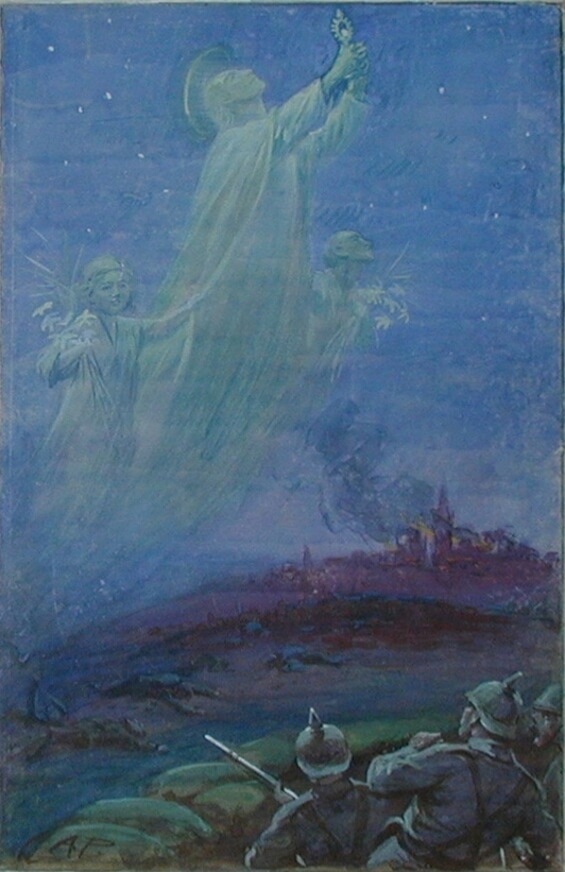
the proper pronunciation of Machen, Arthur Llewellyn Jones, Up Under The Roof by Manly Wade Wellman, apprentice journalist, The Great God Pan by Arthur Machen, The Lost Club, Reading, Short And Deep, identicals, a Hellfire Club, a big scary black book, never heard from again, a very weird story, truly as the first weird fiction author, Edgar Allan Poe, cosmicism, Mr Weird, H.P. Lovecraft, “it is this”, M.R. James, bedrock authors, Machen lived this stuff, a real-life magical society, the Esoteric Order of the Golden Dawn, W.B. Yates, a genuine mystic, landscape, in the modern world people see things on the surface and don’t apprehend the meaning, meta narrative, the interior story, so deeply framed, so nested, the hoopla surrounding The Bowmen, it’s not the story, the story is not the story, the story is the effect of the story, embarrassed by the story, a disappointment, surprisingly funny, a bit of whimsy, the early weeks of WWI, a ray of hope, taken as a genuine report from the front line, the Angel of the Mons, fighting the tide, how rumours take hold without any evidence, “snow on your boots”, reading it a straight up, a weird meta-fiction, pre-Borges, this sounds familiar, so popular, side projects, tales, stories, a meme, fascinating, how many Machens?, not a good story, T.P.’s Weekly, November 22nd, 1915, the retreat from Mons (August 1914), September 1914, six months later, weird podcasts, Tin Foil Hat Podcast, part of being an adult is being interested in the truth, conspiracy, half of capitalism, Clinton and Pizzagate, really fucked up things going on in government, punishment for plebs, a Clinton, New York child sex scandal, in the memory, it couldn’t be killed, all the letters Machen got, death threats, bottom up stories and top down stories, Russia! Russia! Russia!, collaborating or colluding, a conspiracy theorist, the person who testified who can’t be found, the Russian rumor, reports of Russian troops seen in Britain, a plague of spies, Cossacks at train stations heading south, a huge flap, a third myth, the Rape of Belgium, a rumour among German troops, resisting the invasion, buckets full of eyes, necklaces of German soldiers’ eyeballs, breasts cut off, every conceivable atrocity, a British censor on war time reports, the liars did very well, James Hayward’s Myths And Legends Of The First World War, German corpse factories, “the vile Hun”, fake news, the horrible little children, the Edwardian equivalent of the internet, into the papers in a round about fashion, how the nature of rumor and myth begins, transmitted in times of uncertainty and trouble, official news sources, Fox News, MSNBC, CNN, they’re all correct, CIA infiltration of news agency [and MI5 screening of BBC], a lack of news, filling the gap with whatever they can find, the whole Russia story, 13 Russian trolls, Facebook ads, “the big gotcha moment”, the Internet Research Agency, in the business of trolling (for money), fake accounts, we have these rubes, for commercial purposes, Trump somehow helped the Russians hack the DNC servers?, borders mean nothing to the ultra-rich, puppets, Bernie-bro,

“army recruiters reported problems in explaining the origins of [WWI] in legalistic terms” hence an evolution in tactics, or different tactics for different classes, or the intellectual vs. the visceral

posters from 1914 and 1918

Seventy years ago your great-grandfathers and their great-grandfathers signed a document that made certain guarantees about Belgium’s neutrality.

vs.

Remember when the Germans raped their way through Belgium

this was Pearl Harbor!, why this story is so relevant, the thing that is the story, a powerful point about war, Morgan the childlike man, Castle Coch, the Red Keep, read about Belgium, and think they could haven been more than five or six years old, they were to ear what slime is to the touch, blasphemies struck like blows, a swarm of noise-some creatures, children with old men’s faces, one paragraph, Morgan to dream of Avalon, to purge himself of the fuming corruption of the streets, is this a true story?, places that are deprived and poor, the underwolves, super-predators, the Central Park five, seven fold increase in prison population, harvesting slaves, whatever new drug it is, top down or bottom up, moral panics, juvenile delinquents, hoodies, chavs, thuggish people, picked up by politicians, class war, welfare is for crack and knives, mainstream news, rock and roll, Beatles records, video nasties, horror comics, Dungeons & Dragons, video game violence, Trayvon Martin, manipulate the facts, the funny children, is Machen starting another story?, this is how I make this stuff up, the myth of the JD (juvenile delinquent), teddy boys, rockers, mods, a Bank Holiday British tradition, Quadrophenia, arguments about-for-and-against education, bad seeds, evil children, The Midwich Cuckoos, teenage hoodlums, Graham Greene’s The Destructors, free rides, sticking it to the man, sense of power, community centers, midnight basketball, psychology, the irresistible impulse to knock over a house of cards, the impulse for destruction, they just came in from Siberia, a train ride from Scotland, the British, Americans, and Canadians invade Siberia to try to reverse the Russian Revolution, The Sandbaggers, the rumour becomes the reality, wanting to believe the legend, not caring about evidence, fossilized in this story, what Robert E. Howard calls the little people, elves and trolls and gremlins, from fantasy to fake news, fake fairies, a strange new power, The Novel Of The Black Seal, The Novel Of The White Powder, Panther paperback, terrible cruel dwarf elves, the horror of war, he took a long time to get there, what’s this mention of Belgium, the worst swearword known in the galaxy, a weird momentum, the story has to keep replicating, the introduction to The Bowmen And Other Stories, the answer of course is in the question, struggles in truth in news, false, the seedbed for new conspiracy theories, official unknown sources, trying to fill dead air, Mr Jim Moon’s Folklore On Friday articles, Krampus, absolute bullshit, Mr Jim Moon’s shows on Halloween, the received wisdom is always wrong, a new dark age, perceiving reality, where this story is set, who’s saying it, there are so many narrators, real places, Glastonbury Tor, Morgan le Fay, the myth of Avalon seems to be a bottom up story, Geoffrey Of Monmouth, Mallory, John Boorman’s Excalibur, a gel filter, the land of the fairy, Morgan le Fay is she has sex with her half brother, Mordred is killed by Arthur, Arthur is wounded and goes to the island of Avalon where he is healed by his sister and the mother of his child, how you get out of the horror of the Belgian horror, internecine war, the Kaiser and the Czar hugging each other.

propaganda evolution in WWI

The Angels Of The Mons

Posted by Jesse Willis

Review of Consumed by David Cronenberg

SFFaudio Review

consumedConsumed
By David Cronenberg; Narrated by William Hurt
Publisher: Simon & Schuster Audio
Publication Date: 30 September 2014
[UNABRIDGED] – 12 hours, 50 minutes

Themes: / body horror / technofear / medical / sex / conspiracy /

Publisher summary:

The exhilarating debut novel by iconic filmmaker David Cronenberg: the story of two journalists whose entanglement in a French philosopher’s death becomes a surreal journey into global conspiracy.

Stylish and camera-obsessed, Naomi and Nathan thrive on the yellow journalism of the social-media age. They are lovers and competitors – nomadic freelancers in pursuit of sensation and depravity, encountering each other only in airport hotels and browser windows.

Naomi finds herself drawn to the headlines surrounding Célestine and Aristide Arosteguy, Marxist philosophers and sexual libertines. Célestine has been found dead and mutilated in her Paris apartment. Aristide has disappeared. Police suspect him of killing her and consuming parts of her body. With the help of an eccentric graduate student named Hervé Blomqvist, Naomi sets off in pursuit of Aristide. As she delves deeper into Célestine and Aristide’s lives, disturbing details emerge about their sex life – which included trysts with Hervé and others. Can Naomi trust Hervé to help her?

Nathan, meanwhile, is in Budapest photographing the controversial work of an unlicensed surgeon named Zoltán Molnár, once sought by Interpol for organ trafficking. After sleeping with one of Molnár’s patients, Nathan contracts a rare STD called Roiphe’s. Nathan then travels to Toronto, determined to meet the man who discovered the syndrome. Dr. Barry Roiphe, Nathan learns, now studies his own adult daughter, whose bizarre behavior masks a devastating secret. These parallel narratives become entwined in a gripping, dreamlike plot that involves geopolitics, 3-D printing, North Korea, the Cannes Film Festival, cancer, and, in an incredible number of varieties, sex. Consumed is an exuberant, provocative debut novel from one of the world’s leading film directors.

“Let me unbox you…”
-Aristide Arosteguy

This is a novel best suited to two audiences: those looking for innovative horror, and people interested in visionary possibilities of new media. It would also be good for fans of first-time novelist David Cronenberg’s work in film, but I suspect they’d fall into the first two categories.

(I fall into all three, being a lifelong Cronenberg fan since I first saw the mad genius of Videodrome.)

Consumed is, as one might expect from the author, a challenging and strange book. I can describe the plot like this: two journalists investigate a Parisian crime, wherein a husband killed and ate part of his wife. The (former) couple were influential philosophers, Célestine and Aristide Arosteguy, and a cute parody of Jean-Paul Sartre and Simone de Beauvoir. They made waves with a theory of consumer society (hence one meaning of the title). Naomi and Nathan are lovers and colleagues, fellow gadget hounds, but they usually live apart, and follow their joint inquiry along separate, parallel lines.

What follows is a picaresque or road trip, as the two N’s travel the world: Paris, Japan, Canada, Hungary, Cannes, Holland. Cronenberg teasingly refuses to give us much local color, offering instead the thin, usually tech-mediated views of our protagonists, or sketches of the people they meet.

So much for the plot’s initial action. But I’d also need to tell you more about the book’s style. Consumed adores its surfaces and fetishes. It lovingly describes clothing, technologies, record covers (oh yes), body parts, and interior decorating exactly as far as major characters obsess over them. Technology looms large; this is very much a novel about modern digital devices and how we intimately use them.

Consumed is also about pushing against discussing awkward or awful topics, mostly in a horrific way. Without spoilering too much, I can mention offhandedly cannibalism, murder, autocannibalism, apotemnophilia, acrotomophilia, deformed body parts, sexually transmitted diseases, cancerous body parts, and medical fetishism. Which brings us back to Cronenberg’s tone. He doesn’t revel in these topics, but comes to them thoughtfully, from a character’s mind, almost (and sometimes literally) clinically.

In a sense Consumed is an update of Videodrome, a deep dive into our current media obsessions and how they warp (and delight) ourselves. “Naomi was in the screen” is how it begins. In a sense this is about limitation, especially by the end. Yet Cronenberg isn’t simply a techno-skeptic, at least not in the text; he’s too fond of devices and their powers. He sees their depths, and shares them with us through his well-informed, perverse vision.

It’s also a horror novel by any stretch of the term. There’s body horror, dread, suspense, and even a touch of something deeper by the end.

It is also funny, although not everyone laughs with me. There are running gags, like many characters’ obsession with landing a New Yorker story, or in Naomi and Nathan’s banter, or nearly everything the bad Hungarian surgeon says.

I’d recommend this to the audiences mentioned above.

William Hurt does a terrific job with the audiobook overall, handling a wide range of accents. He seems especially at home with Aristide Arosteguy’s voice. Early on Hurt inserts odd, non-Shatnerian pauses into sentences that disconcert, but this ceases by the middle of the book. It’s a pleasure to listen to.

Posted by Bryan A.

Review of The Scarifyers (9) The King Of Winter by Simon Barnard and Paul Morris

SFFaudio Review

The Scarifyers (9) The King Of WinterThe Scarifyers (9) The King Of Winter
By Simon Barnard and Paul Morris; Performed by a full cast
Digital Download or 2 CDs – Approx. 1 hour 34 Minutes [AUDIO DRAMA]
Publisher: Bafflegab
Published: October 17th, 2014 (PRE-ORDER AVAILABLE NOW)

Midsummer, 1938. When a train porter is frozen to his living room chair (then nearly crowned Miss Croydon), MI-13’s Harry Crow and Professor Dunning are on the case. But what links the unfortunate porter to the equally glaciated peer-of-the-realm, Lord Trumpley? MI:13’s investigations lead them to exclusive gentleman’s establishment, The Tartarus Club, whose membership appears to be rapidly dwindling. What is the secret of the Tartarus Club? Why are the villagers of Thornton Gibbet afraid of a 300-year-old ghost? And why is it snowing in June? As everlasting winter sets in, Crow and Dunning find themselves pitted against their greatest foe yet… THE KING OF WINTER.

Harry Crow, played by David Warner, and Professor Dunning, played by Terry Molloy, make a terrific duo. Though the main thrust of The King Of Winter is towards laughs the imposing voice of Warner is pure gravitas. This is the actor who played “Evil” in Time Bandits, the Cardassian torturer on Deep Space Nine, and the Master Control Program in the original TRON. Seeing him, or rather hearing him, commandeer a pair of tennis rackets for use as makeshift snowshoes is a truly delightful experience. Terry Molloy, though a staple of BBC radio drama, is probably more famous as the actor who portrayed the evil Davros, the creator of the Daleks. In The Scarifyers Molloy plays against the megalomaniacal type he’s so well know for, being a meek professor of occult literature. Together in The King Of Winter Dunning and Crow investigate the sudden freezing of seemingly unconnected men. There are also mysterious disappearing coins, oddly-aproned men (in a certain secret society that controls the entire world), and ribald jokes!

The period root of The Scarifyers series isn’t all that grounds this madcap show. Take, for example, Professor Dunning’s name. Dunning is the protagonist of M.R. James’ most famous story, Casting The Runes. And where The King Of Winter diverges from the mainstream of weird fiction is in the humour – this is very funny stuff what with two royal Georges, two green men, and two Father Christmases kicking each other. In fact, the writers throw in practically every kind of comedy, from thinly veiled ridicule of famous modern public figures, to the poking fun at dramatic convention itself. Personally, my favourite parts are the god-awful puns and word humour. This is particularly evident in this adventure as there’s a Shakespearian stage play in the climax – when a stage-frightened Professor Dunning improvises his rhymed lines, dressed as a tree … well you’ve got to hear it

Worthy of repeated listening The Sacrifyers: The King Of Winter, like its terrific theme song, is rousing comedic fun.

Cast:
David Warner as Harry Crow
Terry Molloy as Professor Dunning
Guy Henry as Charles Blackthorn
David Benson as Alexander Caulfield-Browne and Reverend Spicer
Stephen Critchlow as Prince George and Sir Reginald Flash
Lisa Bowerman as Dr Crook and Miss Lewis Smith
David Bickerstaff as Lord Huntingdon and Roger Dillcock
Alex Lowe as Hartley and King George VI

Posted by Jesse Willis

The SFFaudio Podcast #136 – READALONG: Neuromancer by William Gibson

Podcast

NEUROMANCER
The SFFaudio PodcastThe SFFaudio Podcast #136 – Jesse, Tamahome, Eric S. Rabkin, and Jenny talk about Neuromancer by William Gibson.

Talked about on today’s show:
What was really going on in 1984, the introduction to the audiobook, 3 MB of RAM, Commodore 64, Apple IIe, TI-99/4A, the 10 Year Anniversary Edition of Neuromancer, video arcade vs. arcade, Tank War Europa, Spy Hunter, Sinistar, BBC audio drama adaptation of Neuromancer, cyberpunk, Jenny couldn’t connect with Case the first time, Alfred Bester, the revolutionary effect of Neuromancer, “a very special book”, Mexico City, “an important novel”, Yevgeny Zamyatin’s We, The New Yorker’s parody of Neuromancer, the New Wave, “one great new idea per book”, Samuel “Chip” Delany, The Einstein Intersection, The Lovesong Of J. Alfred Prufrock by T.S. Eliot, “The sky above the port…”, Blade Runner, “time to murder and create”, Hesiod, “And he never saw Molly again.”, an untethered morality, the Rastafarian religion, WWI, virtual worlds, Second Life, Gibson’s intentions, Gravity’s Rainbow by Thomas Pynchon, conspiracy, The Crying Of Lot 49, William S. Burroughs, Naked Lunch, “the silent frequency of junk”, The Wonderful Wizard Of Oz, Dorothy’s shoes, L. Frank Baum, “the face of evil is the face of total need”, The Electric Kool-Aid Acid Test by Tom Wolfe, “slouching through the streets of Paris”, Case is a “man of decided inaction”, God was Adam’s employer, Dixie Flatline wants to die, Free Will, Eric felt for Case, 1980s, Watergate, a totemic fascination with color and material, branding, Pattern Recognition, the Sanyo spacesuit, Hosaka is a computer?, a dead channel would be blue (today), Ian Fleming, James Bond, Walther PPK, “elegance and cosmopolitanism”, John Brunner’s Stand On Zanzibar, Escape From New York, Johnny Mnemonic, the fear of what technology is going to bring, Case’s youth, detritus vs. kipple, Philip K. Dick, Martian Time-Slip, Galactic Pot-Healer, “you can’t prove that the United States exists” in Neuromancer, Case was a street-kid, Gibson has built something that has mythic power, the lame Braun robot, Molly -> Mother -> Mary, SSN vs. SIN, a Case study (pun), he has been assigned a SIN, Oedipus, they function as if they were physical, Case: “You know you repeat yourself man.” Dixie: “Yeah, it’s my nature.”, the Sprawl trilogy and “when it changed”, when is Neuromancer set?, “a rich kid’s hideout”, real kipple vs. fake kipple, “built by carpenters to look rustic”, 18th century fake ruins, Versailles (and the Hameau de la reine), the Tessier-Ashpool are fucked up, Mona Lisa Overdrive, cloning, Count Zero, “they dumped themselves into this matrix”, communication technologies begin with porn, A Chorus Line, SimStim gets short shrift in Neuromancer, Strange Days, Molly’s meat-puppet memories, 1-900 numbers, the lotus eaters, Circe, the Sirens song, The Lion of Comarre by Arthur C. Clarke, the heisters are motivated or moved by their A.I. puppet-master, Case’s motivation, Molly’s motivation, Corto/Armitage’s motivation, like Rabbit in Vernor Vinge’s Rainbow’s End, these characters want to believe in their own free will, Neuromancer‘s motivation, “who’s the bad guy in this book?”, “who isn’t?”, the shuriken is the only moral totem in the book, dystopia vs. dystopic, “the wavelength of amphetamine”, spit instead of cry, Jenny is kind of cheating (because she’s read the sequels), is Molly wrong for Case?, Eric questions the new pancreas, it’s Noir (because everyone smokes), Jo Walton’s review of Neuromancer (see the top and comment 59.), Jesse appreciates the world (and the great motivation of the plot), Eric likes Case (in part) because he’s the only one who doesn’t want to physically hurt anyone else, O’Neil colony, the fake French youths, Case is not Neo, The Matrix is a fairy tale with a prophecy whereas Neuromancer is Science Fiction, the Sprawl Trilogy vs. The Matrix Trilogy, Star Wars, “stuck in bullet time”, V: For Vendetta is a fantastic movie, Jenny thinks we should listen to the soundtrack to The Matrix, “the machine and the moment”, Tama thought the second half of Neuromancer dragged, Mary Shelley’s Frankenstein is also Necromancer‘s antecedent ,”what do we owe to what we create?”

Neuromancer

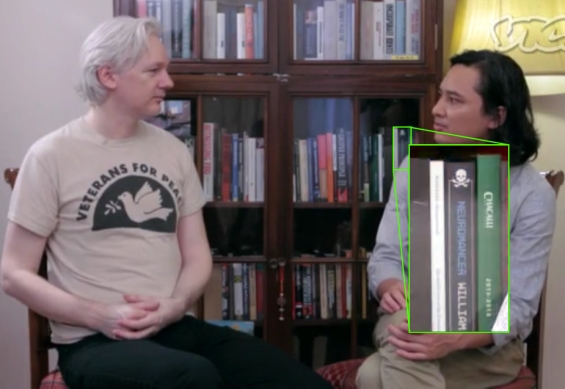
Julian Assange has a copy of Neuromancer by William Gibson

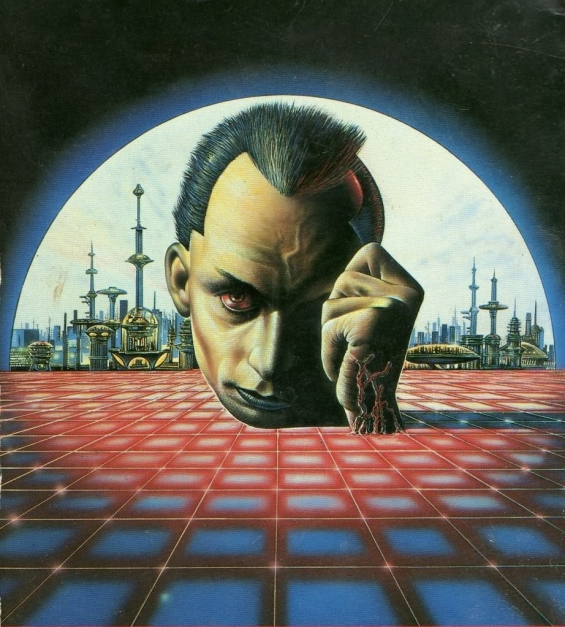
NEUROMANCER - illustration by Barclay Shaw

Posted by Jesse Willis

FREE LISTENS REVIEW: The 39 Steps by John Buchan

Review

The Thirty-Nine Steps by John Buchan39 steps cover

SourceLibriVox (zipped mp3s)
Length: 4 hours, 20 minutes
Reader: Adrian Praetzellis

The book: Before Dan Brown or The Bourne Identity, John Buchan got the ball rolling in the man-on-the-run conspiracy novel sub-genre in 1915. The 39 Stepsfollows Richard Hannay, a South African mining engineer who has moved to London to start a new life. Hannay finds this new life dreadfully boring until he crosses paths with a secret agent who has uncovered a shocking conspiracy. Soon, the shadowy members of the Black Stone are on the trail of Hannay and he must discover the meaning of the phrase “the thirty-nine steps” before time runs out.

This was a fun light read. The plot relies far too much on serendipitous circumstances to be believable, but the story is exciting and fast-paced enough to let the ridiculous coincidences slide. Buchan strikes the right balance between making Hannay competent enough to be interesting without making him a do-everything superman. I can easily see how this novel became a favorite among soldiers in the trenches of World War I: it’s great escapist fiction.

Rating: 8/10

The reader: As I mentioned in my review of Treasure Island, Praetzellis is probably the best narrator at LibriVox. In fact, I’d put him in the top 10 of all narrators working in audiobooks, professional or amateur. He does wonderful voices for each of his characters, from a deep Scottish brogue to the received pronunciation of government officials. I’ve read this book before in print and don’t remember enjoying it near as much as I did from Praetzellis’s narration.

Posted by Seth