Aural Noir review of Columbine by Dave Cullen

Aural Noir: Review

I didn’t expect to be reviewing this audiobook. Prior to its arrival in the SFFaudio mailbox I didn’t even know this audiobook existed. It is neither Science Fiction, nor Fantasy. Its Horror is of the very detached and remote kind because of the way it is told. I scoured the packaging looking for a sign as to why we were sent this audiobook. The only thing that stood out was that it was directed by Emily Janice Card (that’s Orson Scott Card‘s audiobook producing daughter). That’s a very tenuous connection to what is normally our kind of audiobook. But, after listening to the book in its entirety I found I had some things to say about it. And… we do have this handy “Aural Noir” tag that I use to talk about the Mystery, Thriller, and Noir audiobooks that I so love. Why not review it under its aegis?

Done!

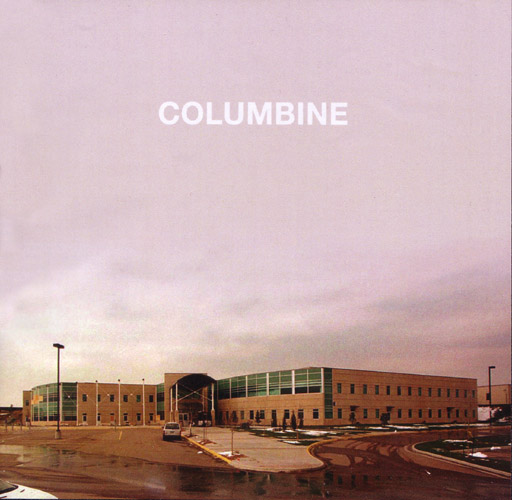
Blackstone Audiobooks - Columbine by Dave CullenColumbine
By Dave Cullen; Read by Don Leslie
11 CDs – Approx. 13 Hours [UNABRIDGED]
Publisher: Blackstone Audiobooks
Published: March 2009
ISBN: 9781433290435
Themes: / Crime / History / Colorado / Murder / Suicide / Psychopathy /

“If you want to understand ‘the killers,’ quit asking what drove them. Eric Harris and Dylan Klebold were radically different. Klebold is easier to comprehend, a more familiar type. He was hotheaded, but depressive and suicidal. He blamed himself for his problems. Harris is the challenge. He was sweet-faced and well-spoken. Adults, and even some other kids, described him as ‘nice.’ But Harris was cold, calculating, and homicidal. ‘Klebold was hurting inside while Harris wanted to hurt people.'”

Journalist Dave Cullen has assembled what must be, for the foreseeable future, the definitive book about the 1999 Columbine High School massacre. Myself, I was only vaguely familiar with the incident at the time. In 2002 I watched Michael Moore’s disturbing film Bowling For Columbine. It was a kind of editorial-documentary on the event itself, the connections with other shootings and firearms in general. Since then, the Columbine High School massacre had been completely off my radar. Dave Cullen’s non-fiction book Columbine supports my conviction that if you really want to know what exactly happened, you’ll have to wait for the facts to be ferreted out by a historian. Cullen is just such a historian. The history Cullen paints is rich in factual details. His sources are: the writings and videos of Eric Harris and Dylan Klebold themselves, county records, friends of the murderers, their fellow students, eyewitness interviews, police records, victims, victim’s families and probably most crucially a senior FBI agent. That agent, Dwayne Fuselier, had a son attending Columbine High School on the day – so his arrival on the scene was both personal and professional – his later investigations reveal insights into the vast reams of documents and video produced by the killers themselves. With Fuselier’s assistance Cullen debunks virtually all of the many myths and falsehoods that swirled around the media’s coverage of the massacre.

Other than the two murderers, and the gun suppliers, the only other major villain in Cullen’s account of the massacre and its aftermath is the Jefferson County Sheriff’s Office. “Jeffco” was in charge of the investigation. It was also responsible for a lot of the incompetence that lead to it being necessary. In the aftermath Jeffco had a limelight loving sheriff who was concocting conspiracy theories that he had no investigative evidence for. But that bunk seems to have supressed some very interesting facts. For instance. Were you told the police had, prior to the attack, documented murder threats by Harris/Klebold prior to the attack? Did you know that the police had even made out a search warrant based on these threats? Did you know that, if the warrant had been taken to a judge, it would have allowed the police to discover the weapons cache the teens were preparing? Did you know that Eric Harris and Dylan Klebold been arrested together, for another crime, prior to the attack?

Other myths Cullen debunks are those generated by the media and church groups. Had you heard about the girl who said ‘yes’ when asked if she ‘believed in God’? Ya, I had too. Did you know that she actually didn’t say it? That another teen had, and that she wasn’t shot? That instead this survivor, the one who had actually proclaimed her belief, was branded a liar by the evangelical community? I hadn’t known that.

With Columbine Cullen, has assembled a first rate piece of non-fiction history. It illustrates exactly why a public reaction to the daily news so often leads to dangerously false beliefs. If there was just one takeaway from this audiobook let it be that American society needs to be more focused on the problem of detecting psychopathy. Not all psychopaths are murderous, in fact most are law abiding. What unites them all is that other people don’t matter to them, except as a means to their ends.

Blackstone has issued the same stark cover for the audiobook as is on the paperbook. Chapters jump back and forth in time, showing the consequences of and the preparations for the murderous assault. This is a wise structural move as the day’s events themselves are not the primary focus of this book. In fact a good deal of the narrative follows others who were there that day: Frank DeAngelo, the Columbine High School principal, some of surviving victims and their families or the workings of the media itself. Don Leslie, the narrator, is given the grim task of reading the words of Klebold and Harris. It isn’t an enviable job, but he is up to the task. There is a disclaimer at the beginning of the audiobook that explains that all the words in quotes are sourced from interviews, transcripts and articles. This is naturally less clear in the audiobook version than the paperbook edition but Leslie does his best to make each quote as clear as he can.

Posted by Jesse Willis

LibriVox: The Invisible Man by H.G. Wells

SFFaudio Online Audio

LibriVoxThe prospect of listening to an amateur narration of an audiobook may not get your shaft cranking but perhaps that’s because you haven’t yet found the right one. Here’s an older LibriVox recording, one that’s made many a listener happy. Alex Foster’s English accent is perfectly aligned for a reading of The Invisible Man by H.G. Wells – so much so that nobody haas bothered recording another version for LibriVox! This is something rather unusual on LibriVox – at least for a work as famous as The Invisible Man!
LibriVox - The Invisible Man by H.G. WellsThe Invisible Man
By H.G. Wells; Read by Alex Foster
13 Zipped MP3 Files or Podcast – Approx. 4 Hours 54 Minutes [UNABRIDGED]
Publisher: LibriVox.org
Published: 2006
The Invisible Man (1897) is one of the most famous science fiction novels of all time. Written by H.G. Wells (1866-1946), it tells the story of a scientist who discovers the secret of invisibility and uses it on himself. The story begins as the Invisible Man, with a bandaged face and a heavy coat and gloves, takes a train to lodge in a country inn whilst he tries to discover the antidote and make himself visible again. The book inspired several films and is notable for its vivid descriptions of the invisible man–no mean feat, given that you can’t see him!

Podcast Feed:

http://librivox.org/bookfeeds/invisible-man-by-h-g-wells.xml

iTunes 1-Click |SUBSCRIBE|

Posted by Jesse Willis

Aural Noir Review of FALCO: Venus In Copper – a RADIO DRAMA

Aural Noir: Review

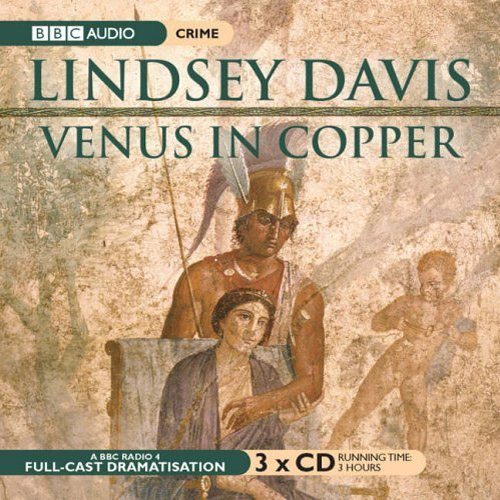
BBC Audio - Venus In Copper - based on the novel by Lindsey DavisSFFaudio EssentialFalco: Venus In Copper
Based on the novel by Lindsey Davis; Performed by a full cast
3 CDs or Audible Download – Approx. 3 Hours [RADIO DRAMA]
Publisher: BBC Audio / Audible.com
Published: July 2006
ISBN: 1846071399
Themes: / Crime / Ancient Rome / Detective / Murder / Noir /
Sample: MP3

“Greetings! Marcus Didius Falco at your service, private informer, investigator to you. If you need references ask the emperor. I’ve just done a big job for him. It went very well, so well his chief spy got jealous and threw me in prison, accused me of stealing some imperial lead. Those ingots are going to haunt me forever. I’d have given them the money if anyone had bothered to ask. Still it wasn’t all bad rotting in jail. I had company, a very friendly rat. But before I had time to get to know him better my mother bailed me out.”


Marcus Didius Falco is the central character and narrator of Venus In Copper (the third in a series of novels by Lindsey Davis). Falco’s narration and dialogue is sprinkled with half-nods and sly-winks to the private detective stories of the 20th century. At least one or two lines out of Falco’s mouth each episode echoes something from Chandler, Chinatown or another quip you’ll half recognize. Falco lives in 70’s AD Rome under the rule of Emperor Vespasian. He works as a ‘private informer’ solving mysteries for the citiy’s elites or the nouveau riche freed slaves. That latter is the case with this mystery, concerning the investigation of a black widow set to marry into a rich family made up of freed slaves. The serpentine plot takes the fore of the drama with Davis and dramatist Mary Cutler (a friend of Davis’s) beeing careful to detail Falco’s personal life just enough to make us care about them all. I mentioned that the program seems to delight in referencing the 20th century private detective story. But it also seems highly interested in showing us actual historical 1st century AD detail. The feel for Rome itself, the interplay between fact actually informs the plot – how wonderful and refreshing for a historical mystery! Te program is both comforting in its familiarity and simultaneously fascinating in its new setting. The characters are likewise familiar and new. Venus In Copper is wonderful.

Anton Lesser, playing Falco, is absolutely extraordinary, carrying the program to the heights of radio drama excellence. Anna Madeley, playing Falco’s aristocratic girlfriend, is also amazing. In fact the entire cast does excellent work. Falco’s world is depicted with a rich soundscape with atmospheric effects and well themed music. The only flaw in the entire production was an artificial sounding talking parrot – but then again I don’t think I’ve ever heard a convincing talking parrot imitation. The program is available in stereo on CD or (occasionally via BBC iplayer) or in monaural via Audible.com. Highly recommended.

Posted by Jesse Willis

Aural Noir Review of The Cutie by Donald E. Westlake

Aural Noir: Review

BBC Audiobooks America - The Cutie by Donald E. WestlakeHard Case CrimeSFFaudio EssentialThe Cutie
By Donald E. Westlake; Read by Stephen R. Thorne
Audible Download – Approx. 5 Hours 27 Minutes [UNABRIDGED]
Publisher: BBC Audiobooks America / Audible.com
Published: March 2009
Themes: / Mystery / Crime / Noir / Murder / New York /

“Mavis St. Paul had been a rich man’s mistress. Now she was a corpse. And every cop in New York City was hunting for the two-bit punk accused of putting a knife in her. But the punk was innocent. He’d been set up to take the fall by some cutie who was too clever by half. My job? Find that cutie – before the cutie found me.”

That’s Clay, the strong right arm of Ed Ganolese, talking above. Ed’s a NYC syndicate boss. The mob may have old roots but the syndicate, the crop of gangsters in this novel, only goes as far back as WWII. See during the show in Italy a bunch of D-Day Dodging G.I.s found themselves allied with some old-world black marketeers. And now, twenty or so years later, in the 1960s those bonds lead Clay down strange alleys. He’s forced to turn amateur detectivewhich is something new for a mob enforcer. But his boss Ed, but you call him Mr. Ganolese, is under the squeeze from the “parent company” in Italy. And when Ed asks, Clay does. So, Clay takes the case. He needs to solve the frame-up murder put over on a low level pusher named Billy Billy. Billy Billy is innocent – everyone knows he wouldn’t harm a fly – but the cops like him for the murder. And it looks bad for Billy Billy because he woke-up from his heroin induced stupor in the middle of the murder scene. Everyone knows he’s innocent, Ed knows, Clay knows but the cops, well they just don’t care. Since Billy is someone’s patsy and just a hair’s-breadth ahead of the law that means Clay has really got his work cut-out for him.

I had previously read the paperbook of this novel, but not with the Hard Case Crime title of The Cutie. When I read it originally the novel was called The Mercenaries. The strange thing is that the title seems to have influenced my opinion as to the character of the book, maybe its a combination of things. The title and the way it was read. When I first read the novel about five or six years ago I would have classified it as a rather dark, but with this new title, new cover art (by Ken Laager), and the brightly lit voice acting by Stephen R. Thorne it comes off as surprisingly light. Almost a caper in fact. Part of of it must also be because The Cutie is told in first-person from Clay’s point of view. Narrator Thorne brings a youthful confidence to the part (something my inner voice apparently didn’t). But, it’s still strange how Clay is really a cold blooded and murderous thug – Westlake gives him an excellent backstory. But then again perhaps I’m still hearing Thorne’s reading of Somebody Owes Me Money |READ OUR REVIEW|. The Cutie is fully utterly engaging, I found myself trying to solve the central mystery again, all the while marveling at Westlake’s masterful storytelling. The Cutie is a gritty, fast paced, and well plotted murder mystery with a highly unusual criminal/detective lead. If you haven’t tried a Westlake novel before this, now and with The Cutie is your perfect place to start – this was Donald Westlake’s first novel under his real name.

Posted by Jesse Willis

DRT Summer Showcase #3: The Knightmare

SFFaudio News

And here are details from the first of Decoder Ring Summer Showcase #3‘s program…

The Knightmare by Bill Cunningham

The man behind this production, Bill Cunningham, says that “The Knightmare is a hero cut from the same cloth as The Shadow or The Green Hornet.” Not unlike Decoder Ring’s Red Panda himself! In this 2-part episode, The Knightmare is fighting Hollywood gangsters, Hollywood cops and Nazis (probably not from Hollywood). Unlike RP this story is set in Los Angeles.

The KnightmareThe Knightmare (The Murder Legion Strikes at Midnight)
By Bill Cunningham; Performed by a full cast
2 Parts – [AUDIO DRAMA]
Podcaster: Decoder Ring Theatre
Podcast: May 30th, 2009 & June 6th, 2009

Podcast feed:

http://decoderring.libsyn.com/rss

Here’s a downloadable sample from the intro to the show |MP3| and |HERE| is the full press release.

Posted by Jesse Willis

LibriVox: Short Science Fiction Collection Vol. 012

SFFaudio Online Audio

LibriVox - Short Science Fiction Collection Vol. 012Short Science Fiction Collection Vol. 012
By various; Read by various
10 Zipped MP3 Files or Podcast – Approx. 4 Hours 22 Minutes [UNABRIDGED]
Publisher: LibriVox.org
Published: March 12, 2009
Science fiction (abbreviated SF or sci-fi with varying punctuation and case) is a broad genre of fiction that often involves sociological and technical speculations based on current or future science or technology. This is a reader-selected collection of short stories that entered the US public domain when their copyright was not renewed.

Podcast feed:

http://librivox.org/bookfeeds/short-science-fiction-collection-vol-012.xml

iTunes 1-Click |SUBSCRIBE|

LibriVox Science Fiction - As Long As You Wish by John O'KeefeAs Long As You Wish
By John O’Keefe; Read by Joelle Peebles
1 |MP3| – Approx. 11 Minutes [UNABRIDGED]
Publisher: LibriVox.org
Published: March 12, 2009
From Astounding Science Fiction, June, 1955.
If, somehow, you get trapped in a circular time system . . . how long is the circumference of an infinitely retraced circle?

LibriVox - The Big Fix by George O. SmithThe Big Fix
By George O. Smith; Read by Alan Winterrowd
1 |MP3| – Approx. 58 Minutes [UNABRIDGED]
Publisher: LibriVox.org
Published: March 12, 2009
Anyone who holds that telepathy and psi powers would mean an end to crime quite obviously underestimates the ingenuity of the human race. Now consider a horserace that had to be fixed…
From Astounding Science Fiction December 1959.

Future Science Fiction No. 30, 1956The Fourth Invasion
By Henry Josephs; Read by Tibbi Scott
1 |MP3| – Approx. 10 Minutes [UNABRIDGED]
Publisher: LibriVox.org
Published: March 12, 2009
Psychopathology has offered possible answers to why, from time to time, people in large quantities “see” strange things in the sky which manage to evade trained scientific observers, or conform to what is known about the behavior of falling or flying bodies. And mass hysteria is by no means a product of the present century. But—what if these human foibles were deliberately being exploited? From Future Science Fiction No. 30 1956.

Goliah
By Jack London; Read by Gregg Margarite
1 |MP3| – Approx. 57 Minutes [UNABRIDGED]
Publisher: LibriVox.org
Published: March 12, 2009

LibriVox - The Man Who Saw The Future by Edmond HamiltonThe Man Who Saw The Future
By Edmond Hamilton; Read by Gregg Margarite
1 |MP3| – Approx. 31 Minutes [UNABRIDGED]
Publisher: LibriVox.org
Published: March 12, 2009
“Jean de Marselait, Inquisitor Extraordinary of the King of France, raised his head from the parchments that littered the crude desk at which he sat. His glance shifted along the long stone-walled, torchlit room to the file of mail-clad soldiers who stood like steel statues by its door. A word from him and two of them sprang forward.” First published in Amazing Stories, October 1930. Later reprinted in the February 1961 issue of Amazing Stories.

LibriVox Science Fiction - The Nothing Equation by Tom GodwinThe Nothing Equation
By Tom Godwin; Read by Janet Moursund
1 |MP3| – Approx. 20 Minutes [UNABRIDGED]
Publisher: LibriVox.org
Published: March 12, 2009
From Amazing Stories December 1957. The space ships were miracles of power and precision; the men who manned them, rich in endurance and courage. Every detail had been checked and double checked; every detail except—

LibriVox - The Putnam Tradition by Sonya DormanThe Putnam Tradition
By Sonya Dorman; Read by Tibbi Scott
1 |MP3| -Approx. 15 Minutes [UNABRIDGED]
Publisher: LibriVox.org
Published: March 12, 2009
Through generations the power has descended, now weaker, now stronger. And which way did the power run in the four-year-old in the garden, playing with a pie plate? From Amazing Stories January 1963.

Astounding Stories November 1932A Scientist Rises
By D.W. Hall; Read by David Adamson
1 |MP3| – Approx. 19 Minutes [UNABRIDGED]
Publisher: LibriVox.org
Published: March 12, 2009
All gazed, transfixed, at the vast form that towered above them. From the November 1932 issue of Astounding Stories.

The Shadow And the Flash
By Jack London; Read by Gregg Margarite
1 |MP3| – Approx. 34 Minutes [UNABRIDGED]
Publisher: LibriVox.org
Published: March 12, 2009

LibriVox - We Didn't Do Anything Wrong, Hardly by Roger KuykendallWe Didn’t Do Anything Wrong, Hardly
By Roger Kuykendall; Read by Joelle Peebles
1 |MP3| – Approx. 8 Hours 55 Minutes [UNABRIDGED]
Publisher: LibriVox.org
Published: March 12, 2009
After all—they only borrowed it a little while, just to fix it— From Astounding Science Fiction May 1959.


Posted by Jesse Willis