The SFFaudio Podcast #333 – READALONG: The Picture Of Dorian Gray by Oscar Wilde

Podcast

TheSFFaudioPodcast600The SFFaudio Podcast #333 – The Picture Of Dorian Gray by Oscar Wilde. Participants in the discussion include Jesse, Julie, Seth, and Rose.

Talked about on today’s show:
the 1891 version, the 1890 version, Heather Ordover‘s reading of The Picture Of Dorian Gray, a rich odor of lilac, a saddle-bagged divan, Mark Twain’s A Double Barrelled Detective Story, making fun of somebody, a single esophagus, elaborate descriptions, oriental texts, the monotony and tedium of this kind of life, Lord Henry’s epigrams, entertainment vs. a savage critique of society, the dark side, being clever vs. delving deeper, Basil, sin, vanity, a Faustian pact, eternal beauty, beauty as inspiration, don’t say such things in front of Dorian!, the preface, epigrammatic writing, the trial, celebrity, the libel lawsuit, Basil’s trip to France, giving in to the senses, the decadent movement, turns of phrase, the cost of everything and the price of nothing, little witticisms, art and artists, the Gothic parts, those who find ugly meanings in beautiful things, taking the preface seriously, Edgar Allan Poe, should I take this seriously, the decline of the epigrammatic novel, linguistic sophistry, “all influence is immoral”, being immoral is fine, the seven deadly virtues, The Hound by H.P. Lovecraft, a wizard’s medallion, so full of ennui, St. John is a mangled corpse, devastating ennui, only the somber philosophy of the decadents, Baudelaire, that detestable course, Lovecraft’s response to what Wilde was responding to, the Black Museum, voluminous black hangings, the uncovered grave, just like Dorian Gray, another literary connection, The Great Gatsby, skeletons in his closet, the critic and the spectator, all art is quite useless, putting too much into art, the lowest form of art, Lord Henry never involves himself, Wilde can’t adhere to his own philosophy, putting yourself into art, the yellow covered book, he was poisoned by a book, swayed by everything, the book argument, Sibyl Vane, Juliet, Imogen, Viola, perpetuating Basil’s error, lots of cool things in it, the jewels and the clothing and the fabric, Renaissance poisonings, evil as a mode to realize the beautiful, so many good things to like, Sibyl Vane as a reflection of Dorian Gray, reflected suicide, Vane as a triple entendre, killed by her grease paint, the Yellow Book, Jesse loves intertextual things, À Rebours by Joris-Karl Huysmans, ten bound copies bound in different colours, double the amount of orchids and no white ones, every flavour of feeling and experience, indulging in every kind of experience, living your life as a piece of art, the Yellow Book rebound for every mood he was in, camouflage, yellow as code for gay, the yellow nineties (the 1890s), adding a layer, To Kill A Mockingbird, 1894, The Yellow Book (magazine), 1895, The King In Yellow by Robert W. Chambers, symbolism of artistic movements, the vane family, Dorian as a byproduct of melodrama, an allegory for artistic movements, a reaction to Victorianism, reveling in immorality, a sin of thoughtlessness, eventually all that’s left is evil, the rage of Caliban, this is a really important book, the deal with the devil, super-realistic, a very constructed book, making a very real point, the second time Caliban comes up, the Lipincott’s version, the critics mostly savaged the book, then the preface as a standalone defense, the volume publication, edits, the second appearance of Caliban, The Tempest by William Shakespeare, Miranda, the beginning of chapter 7, the Jewish manager, The Horror At Red Hook, racism, a pompous humility, going bankrupt over a poet, anti-semitism, making fun of Charles Dickens, is it just Dorian Gray that’s racist?, the most amazing waistcoat, gorgeous servility, behind the scenes, the “Bard”, you can’t trust anything Lord Henry says, private letters, Dorian Gray starts to resemble in his interests and his appearance the Jew manager, ugly on the outside, overly dramatized servility, Mrs. Vane’s words, indentured servitude or genuine theatrical enthusiasm, wanting Sibyl Vane to succeed, you can’t trust appearances, the chapter about jewels, cloth, Dorian Gray is obsessed with exterior appearance, Fitz-James O’Brien’s The Diamond Lens, a microscopist, what you need is a diamond for your microscope, it doesn’t count, casual racism, this is why we cannot censor books, “man” instead of “Jew”, the hideous man in an amazing waistcoat, re-reading Uncle Tom’s Cabin by Harriet Beecher Stowe, we love them, in one letter, a massacre of Jews, Wilde loves to shock, Basil is who Oscar Wilde sees himself as, artists pouring things in to books that they can’t themselves see, an accumulated spackle (of censorship), Geoffrey Chaucer, Julie’s movie group, Philomena, what are we doing?, putting a taboo on looking at power, horrible corruption, Basil’s murder, first time reads, Lord Henry’s wife is named Victoria, why it isn’t called a “portrait” of Dorian Gray, The Oval Portrait by Edgar Allan Poe, “It’s perfect!”, The Canterville Ghost as a redemptive and sweet story, an obvious homage to Mr Hyde from Strange Case Of Dr Jekyll And Mr Hyde by Robert Louis Stevenson, how do you balance, looking at temptation, starting in a garden, the poison of the book, Henry is wreathed in smoke [like Satan!], something with strawberries, if this is a Faustian tale…, the issue we all deal with all of the time, The Long Conversion Of Oscar Wilde, flirtations with Catholicism, 1888, the very first book where spoiler applied is Strange Case Of Dr Jekyll And Mr Hyde, we know about the painting, the scientist friend should have been named Dr Jekyll, Jesse watched almost every movie version, I need my equipment…I hate you, a later suicide, this book applies to the entire Victorian society, saying the same thing a different way, Sherlock Holmes, 1891, The Yellow Wallpaper, 1892, The Time Machine, 1897, Dracula, The Island Of Dr Moreau, 1899, Heart Of Darkness, will the books of this decade be remembered in 120 years?, The Rosie Project, Fifty Shades Of Dorian Gray, are we sympathetic?, nudges, and the audio drama, will you stay tonight, the 1945 film version is very good and faithful, the use of color, fifty shades of silver, 1973 TV movie version (is on YouTube), Dark Shadows, Angela Lansbury as Sibyl Vane, 1976 version, Jeremy Brett as the painter, the 2009 horror movie version is horrible, Colin Firth, the niece, every Dorian Gray is handsome, too handsome, why is no one asking about his youthful appearance?, diet or exercise, male Dorian Grays, the Selfie Of Dorian Gray, modern gender views, really quite gay, Wilde, Stephen Fry, Wilde’s children and wife, the term “homosexual”, indecency.
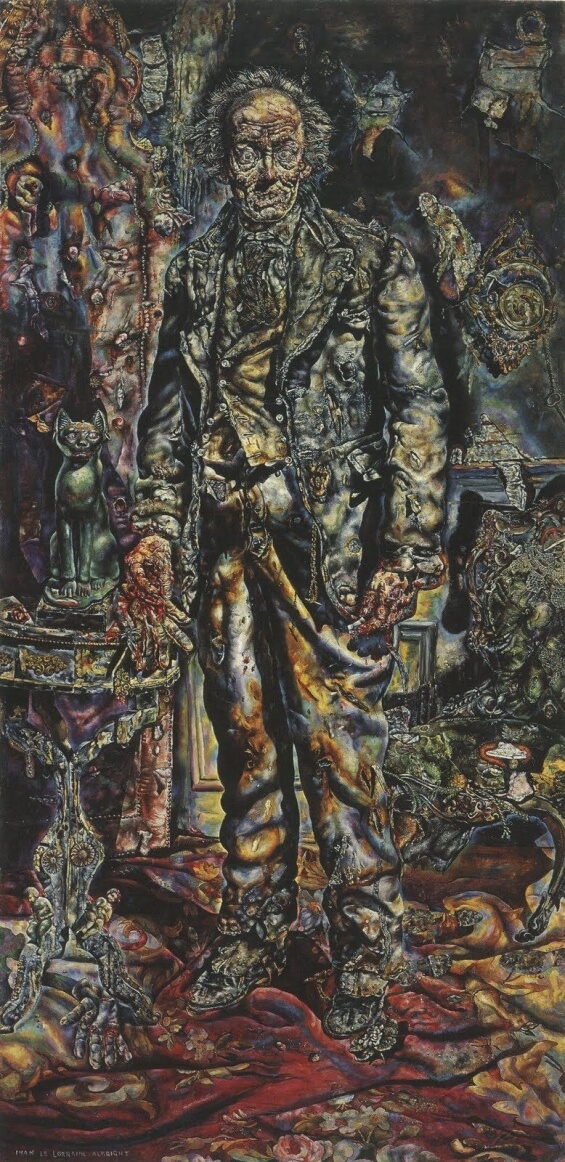
A Portrait Of Dorian Gray from the 1945 movie

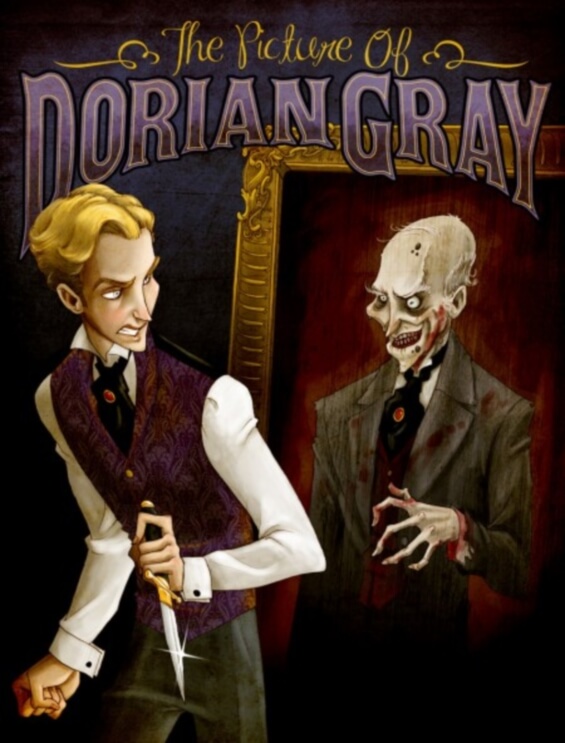
The Picture Of Dorian Gray by Oscar Wilde - illustration by Lisa K. Weber

Posted by Jesse Willis

The SFFaudio Podcast #178 – AUDIOBOOK/READALONG: The Yellow Wallpaper by Charlotte Perkins Gilman

Podcast

The SFFaudio PodcastThe SFFaudio Podcast #178 – An unabridged reading of The Yellow Wallpaper by Charlotte Perkins Gilman (32 minutes, read for LibriVox by Michelle Sullivan) followed by a discussion of it. Participants in the discussion include Jesse, Tamahome, Jenny Colvin, and Julie Hoverson.

Talked about on today’s show:
Charlotte Perkins Gilman vs. Charlotte Perkins Stetson, wall-paper vs. wallpaper, a seminal work of feminist fiction, a ghost story, a psychological horror story, the Wikipedia entry for The Yellow Wallpaper, Alan Ryan, “quite apart from its origins [it] is one of the finest, and strongest, tales of horror ever written. It may be a ghost story. Worse yet, it may not.” postpartum depression, “the rest cure”, phosphates vs. phosphites, condescending husbands, infantilization of women, superstitions, is she dangerous?, is she only pretending to go insane or is she actually mad?, will reading The Yellow Wallpaper drive you to insanity?, an androcentric society, Titus Andronicus by William Shakespeare, Life by Emily Dickinson

MUCH madness is divinest sense
To a discerning eye;
Much sense the starkest madness.
’T is the majority
In this, as all, prevails.
Assent, and you are sane;
Demur,—you ’re straightway dangerous,
And handled with a chain.

Jenny is the husband’s sister (or mistress?), “gymnasium or prison, she doesn’t know she’s living in a short story”, does the family think she’s crazy a the story’s start?, biting the bed is a bit suspicious, barred windows, suicide, has she forgotten that she’s the wrecked the wallpaper to begin with, a haunted house vs. a haunted woman, is the supernatural only within minds?, Julie goes crazy without something to read, first time motherhood can be a struggle, duplicity, crazy people are known to make unreasonable requests, “why is the cork on the fork?”, Dirty Rotten Scoundrels, what’s the rope for?, “all persons need work”, counting the holes, are women moral by default?, Herland by Charlotte Perkins Gilman, utopia, “everything is both beautiful and practical”, the eighteenth amendment to the U.S. Constitution (prohibition), the husband faints (and so she wins?), creeping vs. crawling, the creepiest ending, smooch vs. smudge, neurasthenia, William James (brother of Henry James), “Americanitis”, the fashion of being sick, hypochondria as a fad, the “fresh air” movement, Kellogg’s cereal 9and other patented medicines), a yogurt colonic, mental illness is shameful in Asia, mental illness vs. oppression, an absolutely unreliable narrator, Stockholm syndrome style thinking, “You think you have mastered it, but just as you get well under way in following, it turns a back-somersault and there you are. It slaps you in the face, knocks you down, and tramples upon you.” worrying a tooth, tooth loss as an adult is horrific, as a kid it’s fun, why are we rewarded by the tooth-fairy?, is the tooth-fairy universal?, was chronic fatigue syndrome a fad?, fame is popular, Münchausen’s syndrome (the disease of faking a disease), take up a hobby!, distinguishing genuine from real, syndrome (symptoms that occur together) vs. disease (dis-ease), “which is worse…”, how to look at doctors, Tam’s doctor is nicer than House, M.D., witch doctors, non-invasive cures, gallium, Vitamin C, The Disappearing Spoon: And Other True Tales of Madness, Love, and the History of the World from the Periodic Table of the Elements by Sam Kean, Julie Hoverson’s reading of The Yellow Wallpaper, the unnamed narrator (let’s call her Julie), “what’s with the plantain leaf?”, a modern version of The Yellow Wallpaper would be set at fat camp (is that The Biggest Loser), starts off, Flowers In The Attic by V.C. Andrews, arsenic doughnuts (are not Münchausen syndrome by proxy), The Awakening by Kate Chopin, civilizing influence, bathing!, “men know what side their sex is buttered on”, In The Next Room (or The Vibrator Play) by Sarah Ruhl, Changeling (screenplay by J. Michael Straczynski), what is your Yellow Wallpaper?, fiction is Jesse’s wallpaper, ‘tv, videogames, comics … none of these make you crazy’, heroin chic, Julie has many yellow papers, Tam’s yellow wallpaper is the bookstore, Sebastian Junger vs. J.G. Ballard, 1920s, The Great Gatsby by F. Scott Fitzgerald, posing gowns, identical wigs, Jenny’s yellow wallpaper is dreams, The Evil Clergyman (aka The Wicked Clergyman) by H.P. Lovecraft, nice wallpaper, authorial self-interpretations, Eric S. Rabkin, re-reading as an adult something you read as a kid, The Prince Of Morning Bells by Nancy Kress, The Portrait Of A Lady by Henry James, The Lord Of The Rings by J.R.R. Tolkien, old time radio comedies, should you read fiction from the beginning? Start with Canterbury Tales by Geoffrey Chaucer?, Hyperion by Dan Simmons, Jonathan Swift, Peter F. Hamilton, E.E. ‘doc’ Smith, Mastermind Of Mars by Edgar Rice Burroughs.

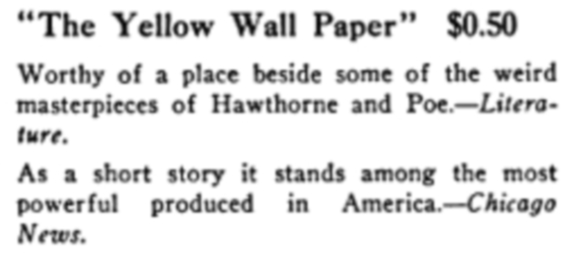
Ad for The Yellow Wall Paper from 1910

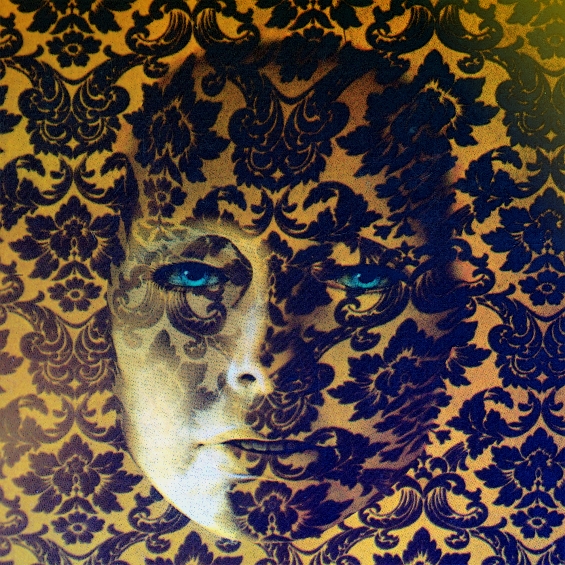
The Yellow Wallpaper by Charlotte Perkins Gilman - illustration by J.K. Potter

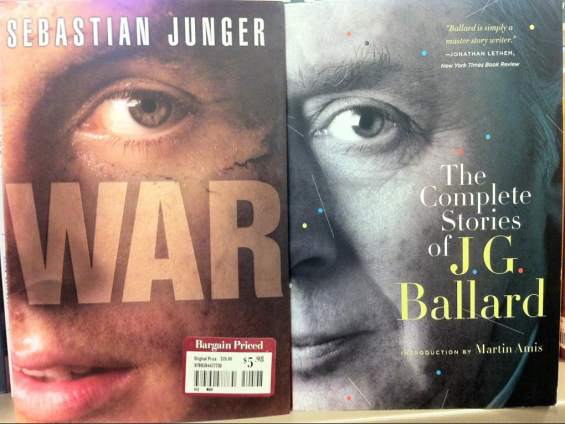
Sebastian Junger vs. J.G.  Ballard

Yellow Wallpaper

The Yellow Wallpaper - illustrated by Hyperphagia

Posted by Jesse Willis

National Endowment for the Arts: Big Read: The Great Gatsby by F. Scott Fitzgerald

SFFaudio Online Audio

National Endowment for the Arts: Big ReadThe National Endowment for the Arts presents a complied interview piece on F. Scott Fitzgerald’s The Great Gatsby. It features Matthew J. Bruccoli, Maureen Corrigan, Dana Gioia, Andrew Sean Greer, Gish Jen, Robert Redford and Sam Waterston.

|MP3|

There’s a teacher’s guide HERE too.

Subscribe via the podcast feed:

http://feeds2.feedburner.com/neabigread

Posted by Jesse Willis

The SFFaudio Podcast #149 – TOPIC: METAPHOR in Science Fiction and Fantasy

Podcast

The SFFaudio PodcastThe SFFaudio Podcast #149 – Jesse, Luke Burrage, and Professor Eric S. Rabkin talk about METAPHOR in Science Fiction and Fantasy.

Talked about on today’s show:
Science Fiction and Fantasy sort of undercut the scholastic meaning of metaphor, my friend Bill, metaphors come in two parts – the vehicle and the tenor, giants vs. ogres, denuding the metaphor, Aldebaran 6 has astonishingly beautiful humanoids, unknown vehicles deliver us, The Monsters by Robert Sheckley, The War Of The Worlds, a Tolkienesque task, A Voyage To Arcturus by David Lindsay, Dark Universe by Ron Goulart, Plato’s cave, blindness, dead metaphors, the Burning Bush, Saul vs. Paul, a sound idea, Germanic grounds for divorce, Star Maker by Olaf Stapledon, The Door Into Summer by Robert A. Heinlein, 1984 by George Orwell, “the clock stuck thirteen”, constructing meaning, William Shakespeare, awful as in creating awe, Moses and Mount Sinai, “shining like the sun”, a sun god, Sampson, hairy like the sun, bald like the moon, Genesis, “you may look upon my hindparts”, Childhood’s End by Arthur C. Clarke, unconscious metaphors, Frankenstein by Mary Shelley, wretch, catwomen from Venus, voluptuous sex objects, building up the vocabulary, Halting State by Charles Stross, Neuromancer‘s opening line, text adventure, Enoch lived 365 years (the sun god), The Tower Of Babel by Ted Chiang, comparing the constructed worlds of video games with the constructed worlds of Science Fiction, Battlefield 2, a meta-metaphor for understanding what Science Fiction does for understanding our world, hamartia needs range finding, The Time Machine by H.G. Wells, “any fool can see”, a system of metaphors for the characters and the reader provides meta-uses, metaphor means “carry across”, Greek moving vans are called metaphore, the Morlocks are the workers, the Eloi are the owners, the Time Traveler is the manager, Get That Rat Off My Face by Luke Burrage, Science Fiction as thought experiment, Michael Crichton, deus ex machina, The War With The Newts by Karel Čapek, Finnegan’s Wake, experimental novels, Germinal by Émile Zola, Flatland by Edwin A. Abbott, allusion vs. metaphor, Sampson vs. Goliath, Luke and Eric prime each other, is Science Fiction useful?, should SF be useful?, Science Fiction and Personal Philosophy (SFBRP #100), reading only the Bible, The Cold Equations by Tom Godwin, the hard lesson namely: “sometimes you’re just fucked”, Star Trek II, cannibalism, Eric objects, the physical world vs. unconditional love, NASA staff need to read The Cold Equations, Steve Jobs (and his reality distortion field), a world full of things other than minds, smart by accident, Apollo 13, give the astronauts poetry, the title itself crystallizes the meaning, The Scarlet Letter by Nathaniel Hawthorne, a parametric center, how do we maintain individuality in the face of fascism?, the vehicle/tenor heuristic, The Great Gatsby by F. Scott Fitzgerald, Nick Carraway, the car is the parametric central of The Great Gatsby, martian vampires, Apollo 1 disaster, Velcro and oxygen, “a failure of imagination”, learning from the past, the metaphor falls and leaves behind a lesson about reality.

Posted by Jesse Willis
Recent Arrivals/Commentary: Blackstone Audio – Anderson, Powers, Matheson, Kress and Heinlein

SFFaudio Recent Arrivals

Blackstone AudiobooksWe all know that old idiom – “don’t judge a book by its cover” – we all know it is a metaphor, that it isn’t supposed to be literal. In fact, to take it literally is to actually misunderstand the point of it.

But books, the literary things that they are, ARE of course pre-judged based on their covers. We decide whether we want to buy, borrow or steal them, rightly or wrongly, because of their covers. Here’s a great set of covers. I judge these covers as actually looking like really good reads based on their covers. The author names being clearly legible help me, the titles and font being legible and clever help me, but it is the images that are the most visceral component of helping me decide which book is to be picked up, and which is to be ignored.

Take this one. This is the kind of cover that makes you say: “That is fucking cool! Lemme see it for a second.” Then you gaze at it for a while, flip it over, read the back and buy it.

BLACKSTONE AUDIO - Harvest Of Stars by Poul AndersonHarvest Of Stars
By Poul Anderson; Read by Tom Weiner
15 CDs – Approx. 17.9 Hours [UNABRIDGED]
Publisher: Blackstone Audio
Published: August 1, 2011
ISBN: 9781441788986
Earth lies crushed in the grip of totalitarianism. To save her planet, Kyra Davis is sent on a mission to liberate the last bastion of freedom and to rescue its legendary leader. Her bold adventure will sweep her from Earth’s rebel enclaves to the decadent court of an exotic lunar colony.

I like the cover on this one too. Its creepy and ethereal. The blood and the textual shadow make it look like a ghost or vampire story. Without actually telling me the story it still gives me a real sense of what the book might be like (whether that’s accurate or not). This is an affective cover.

BLACKSTONE AUDIO - The Stress Of Her Regard by Tim PowersThe Stress Of Her Regard
By Tim Powers; Read by Simon Vance
14 CDs – Approx. 16.7 Hours [UNABRIDGED]
Publisher: Blackstone Audio
Published: May 1, 2011
ISBN: 9781441757180
When Michael Crawford discovers his bride brutally murdered in their wedding bed, he is forced to flee not only to prove his innocence but to avoid the deadly embrace of a vampire who has claimed him as her true bridegroom. Joining forces with Byron, Keats, and Shelley in a desperate journey that crisscrosses Europe, Crawford desperately seeks his freedom from this vengeful lover who haunts his dreams and will not rest until she destroys all that he cherishes. Told in the guise of a secret history, this tale of passion and terror brilliantly evokes the nineteenth century. The chilling horror and adventure blend to create a riveting romantic fantasy.

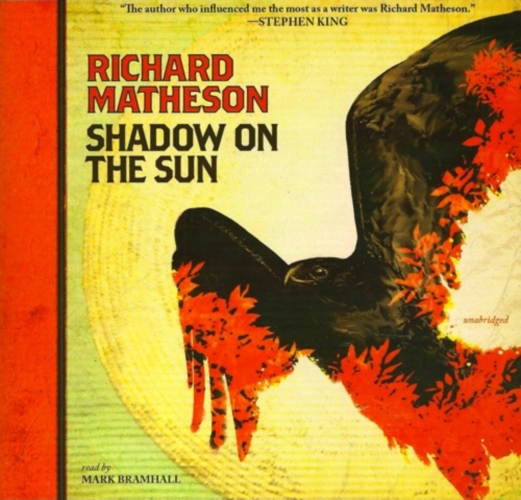
Image and color and font work much better than color and font alone. We get the “shadow on the sun” of the title, along with an actual shadow on the sun (which is maybe a raven or a hawk). I’m not much for abstract, but the boughs in a fiery orange could be fire or leaves or both. It’s much better than just color and font. This cover is both striking and mysterious.

BLACKSTONE AUDIO - Shadow On The Sun by Richard MathesonShadow On The Sun
By Richard Matheson; Read by Mark Bramhall
5 CDs – Approx. 5.6 Hours
Publisher: Blackstone Audio
Published: July 1, 2011
ISBN: 9781441739957
Southwest Arizona, a century ago — An uneasy truce exists between the remote frontier community of Picture City and the neighboring Apaches. That delicate peace is shredded when the bodies of two white men are found hideously mutilated. The angry townspeople are certain the “savages” have broken the treaty, but Billjohn Finley, the local Indian agent, fears that darker, more unholy forces may be at work. There’s a tall, dark stranger in town, who rode in wearing the dead men’s clothes. A stranger who may not be entirely human.

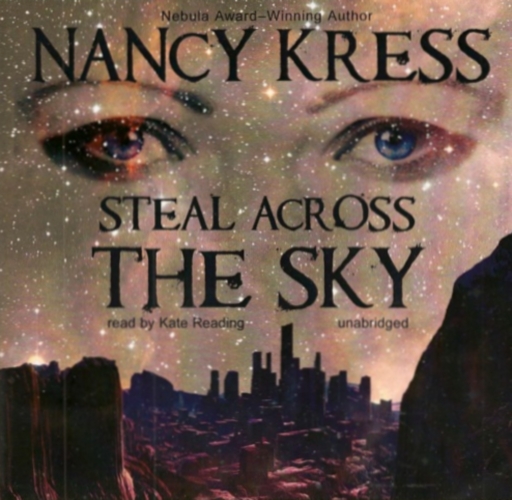
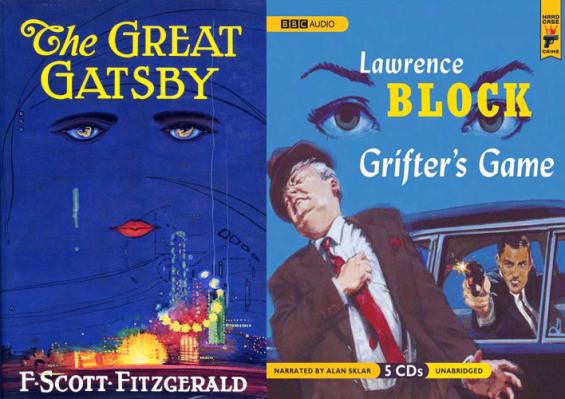
In this case the image is actually a visual allusion to the cover of The Great Gatsby (and other covers). The foreground framing invites us in, as through a doorway, to go down into the valley where lies that city, a mesa metropolis – and all the while the stars above are watching. The only criticism I have here is that while the font is good there is a repeat on the “E” (and the “S”) – that’s slightly distracting.

BLACKSTONE AUDIO - Steal Across The Sky by Nancy KressSteal Across The Sky
By Nancy Kress; Read by Kate Reading
9 CDs – Approx. 10.5 Hours [UNABRIDGED]
Publisher: Blackstone Audio
Published: July 1, 2011
ISBN: 9781441792402
The aliens appeared one day, built a base on the moon, and put an ad on the Internet: “We are an alien race you may call the Atoners. Ten thousand years ago we wronged humanity profoundly. We cannot undo what has been done, but we wish humanity to understand it. Therefore we request twenty-one volunteers to visit seven planets to Witness for us. We will convey each volunteer there and back in complete safety. Volunteers must speak English. Send requests for electronic applications to [email protected].” At first, everyone thought it was a joke. But it wasn’t. This is the story of three of those volunteers and what they found on Kular A and Kular B.

This one feels like it was made quickly (by a skilled artist) mostly out of stock images. The pocket-watch and the radioactive hazard trefoil give you a couple of tips as to the plot (time travel and nuclear war), but there’s also the Sam Browne belt equipped figure (with double braces) walking into what looks like an African Savannah – it all makes you want to open it up and see where that dude is going.

BLACKSTONE AUDIO - Farnham's Freehold by Robert A. HeinleinFarnham’s Freehold
By Robert A. Heinlein; Read by Tom Weiner
8 CDs – Approx. 9.3 Hours [UNABRIDGED]
Publisher: Blackstone Audio
Published: June 5, 2011
ISBN: 9781441791702
Hugh Farnham is a practical, self-made man, and when he sees the clouds of nuclear war gathering, he builds a bomb shelter under his house, hoping for peace and preparing for war. But when the apocalypse comes, something happens that he did not expect. A thermonuclear blast tears apart the fabric of time and hurls his shelter into a world with no sign of other human beings. Farnham and his family have barely settled down to the backbreaking business of low-tech survival when they find that they are not alone after all. The same nuclear war that catapaulted Farnham two thousand years into the future has destroyed all civilization in the northern hemisphere, leaving Africans as the dominant surviving people. In the new world order, Farnham and his family, being members of the race that nearly destroyed the world, are fit only to be slaves. After surviving a nuclear war, Farnham has no intention of being anyone’s slave, but the tyrannical power of the Chosen race reaches throughout the world. Even if he manages to escape, where can he run to?

Posted by Jesse Willis

The SFFaudio Podcast #102

Podcast

The SFFaudio PodcastThe SFFaudio Podcast #102 – Scott, Jesse and Tamahome talk about new audiobook, book, and comic book releases.

Talked about on today’s show:
The Infinite Worlds Of H.G. Wells, Sherlock Holmes, Memory by Donald E. Westlake, Hard Case Crime, A Good Story Is Hard To Find, nihilism, SFSignal’s 122 books that bring Scott to tears, All The Lives He Led by Frederik Pohl (a semi-nihilistic novel), Yellowstone, “half minus negative zero”, A Matter Of Time by Glen Cook, The Black Company, Abel One by Ben Bova, blood and flesh and shirtless, Deathless by Catherynne M. Valente, BoingBoing, Russian Ark, Enigmatic Plot vs. Enigmatic Pilot, Enclave (aka Razorland) by Ann Aguirre, The Maze Runner by James Dashner, The Scorch Trials, The Hunger Games, Hunt The Space Witch and Other Stories by Robert Silverberg, WWW: Wonder by Robert J. Sawyer, Starstruck, Blair Butler, “Geoff Boucher’s Los Angeles Times Hero Complex ‘Get Your Cape On’ pick of the week”, The Quantum Thief by Hannu Rajaniemi, Macmillan Audio, Audible.com, Brilliance Audio, Warriors edited by George R.R. Martin and Gardner Dozois, Forever Bound by Joe Haldeman, Lawrence Block, O. Henry-ish, “I see no reason to buy through iTunes” (vs. Audible.com), Limitless (aka The Dark Fields) by Alan Glynn, F. Scott Fitzgerald, Flowers For Algernon, Understand by Ted Chiang, acquiring a whole bag of pills, “smart people are neat”, Tantor Media, History Is Wrong by Erich von Däniken, Jesse becomes momentarily depressed, The Guns Of August by Barbara W. Tuchman, John Lee, the John Cleaver series, have world events have sped because of modern technology?, Libya, Tripoli, “The Graveyard Of Empires”, “from the halls of Montezuma to the shores Tripoli”, NPR, A History Of The World In Six Glasses by Tom Standage, beer, wine, spirits, tea, coffee, cola, the Today In Canadian History podcast, the Canadian Navy, I Don’t Want To Kill You by Dan Wells, I Am Not A Serial Killer, “normally I don’t do this”, Dexter, the Writing Excuses podcast, Homeward Bound by Harry Turtledove, alternate history, We by Yevgeny Zamyatin, Grover Gardner, Eric S. Rabkin, George Orwell’s 1984, Herland by Charlotte Perkins Gilman, William Dufris, binary fission, Tantor Media is very innovative in including ebooks with their audiobooks, we need a new demarcation to desperate urban fantasy romance from SF, “conspiracy and ignorance based books”, The Prefect by Alastair Reynolds, Tales From A Thousand Nights And The Night (aka 1,001 Nights!) translated by Richard Burton, The Thousand Nights And A Night is the first fix-up novel, Nostromo by Joseph Conrad, South America, Three Men In A Boat (To Say Nothing Of The Dog) by Jerome K. Jerome, To Say Nothing Of The Dog by Connie Willis, Have Spacesuit, Will Travel by Robert A. Heinlein, Atlantis And Other Places by Harry Turtledove, Slave To Sensation shouldn’t be a science fiction novel, Orson Scott’s Card Intergalactic Medicine Show, Rejiggering The Thingamajig by Eric James Stone on Escape Pod #277, body-swapping, I Will Fear No Evil by Robert A. Heinlein, gender-swapping, For Us The Living: A Comedy Of Customs by Robert A. Heinlein, Heinlein’s old theme: “naked people talking to each other”, Heinlein likes to examine social preconceptions and social prejudices, “not a Heinlein classic but still classic Heinlein”, Eifelheim, Luke Burrage, Idiot America by Charles P. Pierce, George Washington riding a dinosaur, The Broken Sword by Poul Anderson, contemporary with Tolkien (rather than derivative of Tolkien), Michael Moorcock, Eric Birghteyes by H. Rider Haggard, Bronson Pinchot, The Plague Dogs by Richard Adams, anthropomorphic fiction, quasi-Science Fiction, quasi-Fantasy, Coyotes In The House by Elmore Leonard |READ OUR REVIEW|, The Call Of The Wild by Jack London, We Three by Grant Morrison, Transmetropolitain, Warren Ellis, Tama’s pet peeve in comics is silent panels, Audible Frontiers, The Death Of Grass by John Christopher, The Tripods, The Sam Gunn Omnibus, The Steel Remains, Cliffs Notes are now available as audiobooks, Brave New World, The Spiral Path by Lisa Paitz Spindler, Eat Prey Love by Kerrelyn Sparks, William Coon’s Eloquent Voice titles, Andre Norton’s The Time Traders, Gilgamesh The King by Robert Silverberg |READ OUR REVIEW|, Philip K. Dick, Henry James, Anton Chekov, Paul of Cthulhu, Yog-Sothoth.com The Whisperer In Wax, wax cylinder tech, Embedded by Dan Abnett, SFSignal.com.

Posted by Jesse Willis