Review of Gilgamesh the King by Robert Silverberg

SFFaudio Review

Gilgamesh the King by Robert SilverbergGilgamesh the King
By Robert Silverberg; Read by William Coon
MP3 Download – Approx. 13 Hours 22 Mins – [UNABRIDGED]
Publisher: Eloquent Voice, LLC
Published: September 2010
ISBN: 9780984413898
Themes: / Fantasy / Gods / Demi-gods / Ancient Civilization /

The Epic of Gilgamesh is one of the earliest known works of literature, being from around 2200 B.C. It tells of Gilgamesh the king of Uruk (a city-state in Sumer) who is half human and half god.

If you are as unfamiliar with the story as I was, here it is in a nutshell. Gilgamesh is running rather roughshod over the people of Uruk. When they beg the gods to make him a good king, the gods create Gilgamesh’s equal, a wild man named Enkidu. After discovering that they are indeed equals, the two become fast friends and have many adventures together, one in particular because Gilgamesh rejects the goddess Ishtar’s marriage proposal. When the gods become offended by one of the adventures and take Enkidu’s life as forfeit, Gilgamesh becomes obsessed with the idea of immortality. He then sets off on a new series of adventures in quest of eluding death, only to find that all men must die. He returns to Uruk and becomes the good king that the people wanted all along.

After a story has been around as long as the Epic of Gilgamesh, it is not surprising that there are several versions which have been recovered on ancient clay tablets. What is surprising is that Gilgamesh’s story is alive and well in different versions in modern culture, ranging from music to television to video games. That makes it more understandable that Robert Silverberg, that prolific master of science fiction, brought his talents to bear on retelling the tale in 1984. One wonders how earlier authors missed taking advantage of a story with such fantastic elements: a demi-god, slayer of monsters and master warrior, searching for the key to immortality.

Silverberg spins a mesmerizing tale that follows the basic plotline of the original epic. Told by Gilgamesh himself, it begins with the funeral of his father and 6-year-old Gilgamesh’s realization that friends and servants are being sent to their death so they can serve the king in the next life. Thus, the theme of man’s struggle with the inevitability of death is introduced. We also meet the young girl who will become the high priestess of Inanna (Sumerian goddess equivalent to Ishtar). As the personification of the goddess of love and war, she both tempts and infuriates Gilgamesh in a lifelong struggle for love and power. As well as the exciting adventures and fun of seeing how Silverberg interpreted the original epic, we see also that Gilgamesh is pondering the big questions of life: why must people die, what is the meaning of life, and how to balance destiny with action and free will.

In the afterword, Silverberg himself admits that he strove to give the story a historical setting and tell it from the point of view of the original Gilgamesh, the king, although he wove in elements of the epic. I have seen reviewers who lament this approach. It is true that in some of Gilgamesh’s adventure Silverberg has stripped them of their fantastic elements and the result was to make those parts mundane compared to the epic. However, I do not think that this book’s critics give Silverberg enough credit. As Mary Stewart did with her Arthurian novels (The Crystal Cave, etc.) and C. S. Lewis did in his retelling of the myth of Cupid and Psyche (Till We Have Faces), Silverberg carries the reader to ancient times and into the mind of the main character. Gilgamesh experiences the gods’ power and magic and, thus, so does the reader. The writing style is appropriately spare and simple, as if to echo how it would have been written in antiquity, as well as how difficult it would have been for an action-oriented hero to get his thoughts written down.

William Coon’s narration is what makes this book come alive. I honestly doubt if I would have stayed with the book past the first few chapters if he hadn’t communicated Gilgamesh so clearly. Coon’s ability to slightly change intonation so that listeners feel Gilgamesh’s emotions and motivations was what pulled me into caring about the character. That same ability to slightly change intonation and inflection allowed him to faithfully communicate other characters so that I could feel I knew Inanna and Enkidu especially. Somehow his reading also managed to echo that spare, simple style that one would imagine was faithful to early storytelling. Suffice it to say that William Coon’s narration transformed the book into a trip to the past for me. Perhaps it is that narration, in fact, which allowed me to overlook the elements which critics decried when Silverberg chose a scientific explanation over a mystical one.

This was a superior listening experience and I highly recommend the book based on that fact, as well as the book itself.

Posted by Julie D.

Review of On Stranger Tides by Tim Powers

SFFaudio Review

BLACKSTONE AUDIO - On Stranger Tides by Tim PowersOn Stranger Tides
By Tim Powers; Read by Bronson Pinchot
10 CDs – Approx. 11.7 Hours [UNABRIDGED]
Publisher: Blackstone Audio
Published: August 2010
ISBN: 9781441754981
Themes: / Fantasy / Pirates / Magic / Caribbean / Voodoo / Zombies /

On Stranger Tides follows the exploits of John “Jack Shandy” Chandagnac, who travels to the new world after the death of his puppeteer father to confront his uncle, who has apparently made off with the family fortune. During the voyage, he befriends Beth Hurwood and her father Benjamin Hurwood, an Oxford professor. Before they arrive at their destination, their ship is waylaid by Blackbeard (via Davies) and his band of pirates. With the help of the professor and his assistant, the captain is killed and Chandagnac is pressed into piracy and sorcery as Blackbeard searches for the Fountain of Lost Youth (and other nefarious goals). Chandagnac, newly dubbed “Jack Shandy,” must stop the evil plot and save Beth Hurwood.

I was all set to buy the audiobook, when I found an iPhone app for half as much.  The app has some problems though.  The sleep function only works when you disable locking on the phone.  So if you fall asleep, you might get screen-burn.  Also, frequently the app would lose its place in the current chapter, and if I didn’t write down my place in Simplenote app, I would have had to start the chapter over.  Otherwise it was a bargain.

I have some reservations with this book as an audiobook.  Bronson Pinchot is very dramatic in his reading of the dense text, but if you’re in your car or walking in public with some ambient noise, some of the whispering (Blackbeard), mumbling, and toothless (Skank) characters may be hard to hear.  Plus, the plot is so Byzantine, if you miss some important piece of information, you may not know what is going on later on, and get bored.  And watch out because some of the characters have multiple names, like Blackbeard may also be called Thatch or Hunzie Conzo (?), and others.  Hurwood and Shandy’s uncle assume different identities as well.  Even ships like the Vociferous Carmichael may change their identities.  This link may help (possible spoilers).  (Help me, Wikipedia, with a better plot summary.)  By the way, this is how you spell ‘Bocor’ (“Hatian witchdoctor”).  You’ll want to google it .  I’m still not sure what a ‘loa’ is.  Plus you have to watch out for scenes that only take place in fantasy, or within characters’ minds.  I found much more enjoyment when I listened to the book in a quiet room and actually took notes.  But it took a little more effort than I want from a novel.  The characters didn’t seem to have much depth to me, except maybe the evil zophtig Leo Friend.  So the plot is the highlight, and there are some good scenes toward the end, some memorable death and puppetry.

Also, listening to Tim Powers’ 2010 interview (scroll down) on the Agony Column helped me appreciate the book more.  He talks about this book around the 8 minute mark.  His method is to research and find ’20 cool true things’ and string them together into a novel.  (Yes, Blackbeard was real.)  If only the book had a nice appendix.

Remember, never eat a chicken with writing on the beak.

posted by Tamahome

The Lion, The Witch, And The Wardrobe by C.S. Lewis

SFFaudio Online Audio

Here’s a nice surprise! The Lion, The Witch, And The Wardrobe by C.S. Lewis! The Listener, who runs the ever admirable Free Listens blog, sez this:

Rating: 10/10

I’m absolutely amazed that Ancient Faith was able to get permission from HarperCollins and the Lewis estate to podcast this novel. Hart has a pleasing British accent and the confidence of someone who is comfortable in front of a microphone. She makes a couple of repetition errors, but is otherwise flawless. The recording quality is very good, as is befitting such a professionally produced podcast. The other books in The Chronicles of Narnia series are also available for free through the same website, so head on over to collect all seven books.

And, for my part I’ve HuffDuffed all eight files.

The Lion, The Witch, And The Wardrobe by C.S. LewisThe Lion, The Witch, And The Wardrobe
By C.S. Lewis; Read by Dr. Chrissi Hart
8 Podcast MP3 Files – Approx. 4.5 Hours [UNABRIDGED]
Podcaster: Ancient Faith Radio / Under The Grapevine
Podcast: March – May 2009
A fantasy novel for children by published in 1950 and set circa 1940. It is the first-published book of The Chronicles of Narnia series and is the best known book of the series. Although it was written and published first, it is second in the series’ internal chronological order, after The Magician’s Nephew.

Podcast feed: http://huffduffer.com/jessewillis/tags/c.s._lewis/rss

iTunes 1-Click |SUBSCRIBE|

Character list:
Lucy Pevensie, the youngest Pevensie child
Edmund Pevensie, the third of the Pevensie children.
Susan Pevensie, the second oldest of Pevensie children
Peter Pevensie, the oldest of the Pevensie siblings
Aslan, a lion
The White Witch
Tumnus, a faun
Professor Digory Kirke, takes the Pevensie children in when they are evacuated from London
Mr. Beaver, a friend of Tumnus
Mrs. Beaver, Mr. Beaver’s wife
The Dwarf, the White Witch’s right hand man (hench-dwarf)
Maugrim (aka Fenris Ulf), a wolf
Father Christmas
Mrs. Macready, the housekeeper for Professor Kirke
Giant Rumblebuffin

[via Free Listens!!!!!]

Posted by Jesse Willis

The Library Of Babel by Jorge Luis Borges

SFFaudio Online Audio

In research for my review of Jorge Luis Borges: Collected Fictions I spotted this recording of the great George Guidall reading The Library Of Babel. This is a kind of Fantasy, but somehow it reminded me of Ted Chiang‘s Exhalation. But before you begin listening, consider: How many letters are in the English and Spanish alphabets?

PENGUIN AUDIO - Jorge Luis Borges: Collected FictionsThe Library Of Babel
By Jorge Luis Borges; Translated by Andrew Hurley; Read by George Guidall
1 |MP3| – Approx. 21 [UNABRIDGED]
Publisher: Penguin Audio
Published: July 2010
ISBN: 9780142428085
Source: MPages.org
The universe consists of an enormous expanse of interlocking hexagonal rooms, each of which contains the bare necessities for human survival—and four walls of bookshelves. Though the order and content of the books is random and apparently completely meaningless, the inhabitants believe that the books contain every possible ordering of just a few basic characters (letters, spaces and punctuation marks). Though the majority of the books in this universe are pure gibberish, the library also must contain, somewhere, every coherent book ever written, or that might ever be written, and every possible permutation or slightly erroneous version of every one of those books. |ETEXT|

Posted by Jesse Willis

The SFFaudio Podcast #097 – READALONG: The Garden Of Forking Paths by Jorge Luis Borges and Fair Game by Philip K. Dick

Podcast

The SFFaudio PodcastThe SFFaudio Podcast #097 – Scott and Jesse talk with Luke Burrage about about two short stories: The Garden Of Forking Paths by Jorge Luis Borges |ETEXT| and Fair Game by Philip K. Dick |ETEXT|. The audiobook edition of The Garden Of Forking Paths can be found in the Penguin Audio audiobook Jorge Luis Borges: Collected Fictions.

Talked about on today’s show:
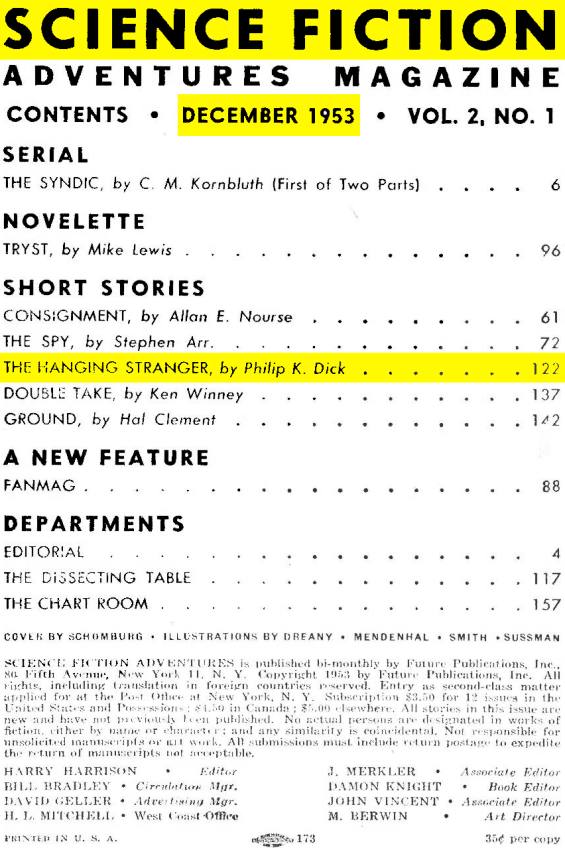
The virtues of short stories, metafiction, Fair Game by Philip K. Dick, If magazine, Anthony Boucher, The Garden Of Forking Paths, Ellery Queen Mystery Magazine, espionage, fantasy, alternate history, WWI, “start the scene as close to the action as possible”, labyrinth, recursion, the Wikipedia entry on The Garden Of Forking Paths, choose your own adventure, parallel worlds, The Hitchhiker’s Guide To The Galaxy, the Necronomicon, H.P. Lovecraft, “The Garden of Forking Paths is an incomplete, but not false, image of the universe as Ts’ui Pên conceived it.”, why doesn’t Luke review short stories on SFBRP?, Eifelheim by Michael Flynn |READ OUR REVIEW|, The Merchant And The Alchemist’s Gate by Ted Chiang, Gene Wolfe, The Book Of The New Sun, Labyrinths: Selected Stories And Other Writings by Jorge Louis Borges, A Solar Labyrinth by Gene Wolfe, “dense as in wonderfully deep”, Penguin Audio, Collected Fictions by Jorge Louis Borges, how are Fair Game and The Garden Of Forking Paths connected?, “how you read a story matters to your understanding of a story”, Professor Anthony Douglas, “An immense eye gazed into the room, studying him.”, The Twilight Zone, “The damn thing was looking at me. It was me it was studying.” Douglas’s voice rose hysterically. “How do you think I feel — scrutinized by an eye as big as a piano! My God, if I weren’t so well integrated, I’d be out of my mind!”, Colorado, “we are the face in the sky staring down at this paper”, physics, the observer effect, the wave function collapses, Schrödinger’s cat,

“What is Doug? About the best nuclear physicist in the world. Working on top-secret projects in nuclear fission. Advanced research. The Government is underwriting everything Bryant College is doing because Douglas is here.”

“So?”

“They want him because of his ability. Because he knows things. Because of their size-relationship to this universe, they can subject our lives to as careful a scrutiny as we maintain in the biology labs of — well, of a culture of Sarcina Pulmonum. But that doesn’t mean they’re culturally advanced over us.”

“Of course!” Pete Berg exclaimed. “They want Doug for his knowledge. They want to pirate him off and make use of his mind for their own cultures.”

“Parasites!” Jean gasped. “They must have always depended on us. Don’t you see? Men in the past who have disappeared, spirited off by these creatures.” She shivered. “They probably regard us as some sort of testing ground, where techniques and knowledge are painfully developed — for their benefit.”

big brother, 1984, “money and sex and food”, To Serve Man by Damon Knight, Fredric Brown, Space by James A. Michener, Apollo 18, payoff first – ironic twist next, Dick vs. Borges, is Dick cynical?, mountains and religion, the atmosphere is an ocean of air around the Earth, “Colorado is the shallows in the Earth.”, what does ample mean?, science fiction, “Ts’ui Pên was a brilliant novelist, but he was also a man of letters who doubtless did not consider himself a mere novelist.”, is Dick taking the piss?, high-minded Science Fiction, what is the significance of the title Fair Game?, this is not a podcast for people aren’t going to read the books, “I think Philip K. Dick bases all of his stories on his own life.”, Upon The Dull Earth by Philip K. Dick, Luke’s novels, is Luke as clever as PKD and Borges?

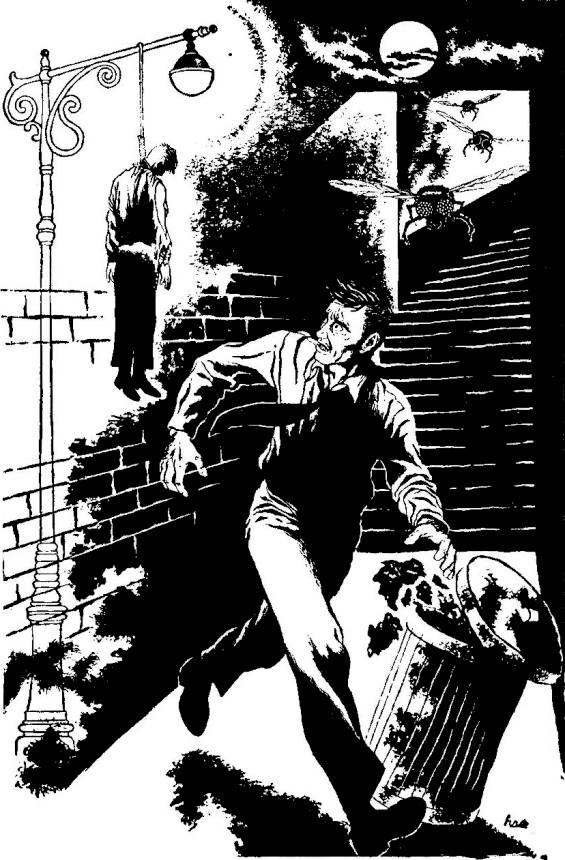
Looks like it was inspired by Fair Game by Philip K. Dick

Burrage:

Posted by Jesse Willis

Review of Earthbound by Richard Matheson

SFFaudio Review

Blackstone Audio - Earthbound by Richard MathesonEarthbound
By Richard Matheson; Read by Bronson Pinchot
6 CDs – Approx. 6.5 Hours [UNABRIDGED]
Publisher: Blackstone Audio
Published: September 2010
ISBN: 1441756886
Themes: / Fantasy / Horror / Gothic Horror / Haunted House / Ghosts / Succubi / Marriage / Sex /

David and Ellen Cooper came to the lonely beach-side cottage in hopes of rekindling their troubled marriage. Yet they are not alone on their second honeymoon. Marianna, a beautiful and enigmatic stranger, comes to visit David whenever Ellen is away. Who is Marianna, and where has she come from? Even as he succumbs to her seductive charms, David realizes that Marianna is far more than a threat to his marriage, for her secrets lie deep in the past and beyond the grave. And her unholy desires endanger the life and soul of everyone she touches.

TV writer David Cooper is trying to revitalize his shaky marriage by returning with his wife to their original honeymoon location. While the Coopers do end up in the same sea-side resort, they find their original digs are unavailable and have to stay in a disused beach cottage. There, every time Ellen steps out, or goes to sleep, a sexy woman named Marianna appears and quickly seduces David. She fucks him harder than he’s ever been fucked and that’s the entirety of Earthbound‘s simple setup. The plot from there is but a dance between David’s realization of it and his doing something.

There are essentially four characters in Earthbound. Approximately ninety-five percent of the novel is set within the confines of the haunted cottage. It’s all told in a tight third person, over the shoulder perspective. We get the thoughts of David’s mind in elaborate detail and hear the other two characters exclusively from his POV. It becomes immediately clear to the reader that Marianna is not only a ghost but also a quasi-succubus. Matheson never actually names the marriage-ruining ghost as a sexual vampire, instead the characters only describe Marianna as simply the ghost of a depraved woman. It takes nearly a half-dozen sex sessions with the vitality draining Marianna, and several visits from a helpful neighbor (who lives just up the beach) to point this out to David. It then takes several more for him to actually believe what he’s being told and experiencing. David wants to believe he’s just been cheating on his wife with a mysterious stranger – but the evidence he’s been presented with is fairly convincing. In the meantime David gets into several, what I would call, disappointment swaps with Ellen, they go out to dinner once and have some unsatisfying sex. About half way through the book I began expecting that Ellen’s many convenient absences would be explained by her being haunted by an incubus – I was wrong on that score.

I don’t think this book is really all that horrible. The storytelling flows quite smoothly and likely achieves the purpose intended. Unfortunately it carries no lasting impression. Being a confirmed bachelor, I guess I just don’t want to read about people fixing their marriages at haunted seaside cottages. And, as for it being one of the gothic novels of psychology, I far prefer the depths of ambiguity in Henry James’ The Turn Of The Screw to the shallows of Earthbound. This is the fourth Matheson novel I’ve read, the first being I Am Legend |READ OUR REVIEW| and the second being The Incredible Shrinking Man |READ OUR REVIEW|. Like the former, Earthbound lacks the one thing I really cared about: a haunting message to go with its competent psychological character study. Like the second, The Incredible Shrinking Man, I came away from Earthbound thinking it was absolutely the kind of book I never need read again, a story premise with a character who was too wrapped up in his own psychology for me to care what was happening to him. I guess I just want some ideas to go with my characters and not to simply see them interacting or responding to a set of unusual circumstances. Earthbound, therefore, is most similar to the third Matheson novel I read, A Stir Of Echoes |READ OUR REVIEW|. If you liked A Stir Of Echoes I suspect you will enjoy Earthbound. Myself, I can only recommend the earth-shatteringly good I Am Legend and Matheson’s truly amazing short story Born Of Man And Woman.

Speaking of short stories, when Earthbound was first published (by Playboy Paperbacks in 1982) Richard Matheson used a pseudonym, “Logan Swanson.” Reading around the internet, I got the impression that he’d balked at some editorial changes in the Playboy Paperbacks edition – and so declined to have his real name put on the cover. But, the story is probably a little more complicated than that. After doing some more digging I noted that one Amazon reviewer had this to say: “…not a lot of people realize this, but this book started out as a short story written very early in Matheson’s career.” Noting that the succubi in fiction article on Wikipedia includes one Matheson story, called The Likeness Of Julie. I dug up my copy of Shock II (it’s also collected in Hot Blood: Tales Of Erotic Horror) and read it. The Likeness Of Julie, which is just 9 or 10 pages, has a bit more of a punch than Earthbound, and is clearly the predecessor to a novelized re-working. Interestingly, it too was first published “as written by Logan Swanson” in a 1962 anthology called Alone By Night. And the pseudonym there was not likely due to a protest, but rather the fact that there was another story by Matheson in the collection. In any case, this Blackstone Audio edition uses the author’s full text version of Earthbound.

Bronson Pinchot, has been recording up a storm for Blackstone Audio of late (there are currently 44 titles with him as a narrator). For Earthbound he does little extraordinary other than voicing three females, two carnal women and one ethereal succubus. Surprisingly, he doesn’t have to stretch very much for in this small scale novel; he pretty much makes himself invisible in the text. I’d like to see him tackle some more meaty material.

Posted by Jesse Willis