News, Reviews, and Commentary on all forms of science fiction, fantasy, and horror audio. Audiobooks, audio drama, podcasts; we discuss all of it here. Mystery, crime, and noir audio are also fair game.
The SFFaudio Podcast #217 – Jesse, Tamahome, Jenny, and Marrisa VU talk about audiobook NEW RELEASES and RECENT ARRIVALS.
Talked about on today’s podcast: Hammer Chillers, Mr. Jim Moon, British audio drama horror anthology, Hammer Films, Janette Winterson, Paul Magrs, Stephen Gallagher, the official physical list, spaceship sci-fi, Honor Harrington, David Weber, Audible.com, Horatio Hornblower in space, broadsides and pirates, gravity propulsion, Steve Gibson, a telepathic treecat, Lois McMaster Bujold, Luke Burrage (The Science Fiction Book Review Podcast), David Drake, S.M. Stirling, 90% of Lois McMaster Bujold’s sales are audiobooks, Sword & Laser, a girl writer, Prisoners Of Gravity, religion, J.R.R. Tolkien, George R.R. Martin isn’t Tolkien deep, secondary world, The Curse Of Chalion by Lois McMaster Bujold, Blackstone Audio, Paladin Of Souls, Miles Vorkosigan, low magic vs. high magic, high fantasy, Westeros world vs. Harry Potter world, the Red Wedding (and the historical inspiration), the guest host relationship, John Scalzi, Redshirts, Agent To The Stars, The Human Division, The Ghost Brigades, Old Man’s War, William Dufris, Wil Wheaton as a narrator (is great at 2x speed), snarky comedic Scalzi stories, Little Brother by Cory Doctorow, Kirby Heyborne, Fuzzy Nation, Andrew L., Starforce Series, Mark Boyette, military SF, Legend: Area 51 by Bob Meyer, Eric G. Dove, traditional fantasy, epic fantasy, conservative fantasy, elves princes quests, fewer tattoos more swords, Elizabeth Moon, Graphic Audio, truck drivers, comic books, westerns, post-apocalyptic gun porn, Paladin’s Legacy, Limits Of Power, elves, simultaneous release, Vatta’s War, horses in space, The Deed Of Paksenarrion, Red Sonja, non-beach armor, Elizabeth Moon was a marine, sounds pretty hot, Any Other Name, the split-world series, Neal Stephenson, Greg Bear, The Assassination Of Orange, Terpkristin’s review of The Mongoliad Book 1, The Garden Of Stones by Mark T. Barnes, books are too long!, books are not edited!, cut it down, self-contained books, find the good amongst the long and the series, Oberon’s Dreams by Aaron Pogue, Taming Fire, Oklahoma, urban fantasy, Blue Blazes by Chuck Wendig, Adam Christopher, blah blah blah quote quote quote, “Wow I’ve never read anything like this before!, a head like a wrecking-ball, cool artwork, Lovecraft sounds like the book of Jeremiah, Net Galley, a Chuck Wendig children’s book, Under The Empyrean Sky, The Rats In The Walls, “two amorphous idiot flute players”, Old Testament Lovecraft, Emperor Mollusc Vs. The Sinister Brain by A. Lee Martinez, lucky Bryce, Legion by Brandon Sanderson, we have sooo many reviewers!, Deadly Sting by Jennifer Estep, Jill Kismet, Flesh Circus by Lilith Saintcrow, Nice Girls Don’t Bite Their Neighbors, a vampire child, B.V. Larson, The Bone Triangle, Hemlock Grove (the Netflix series), True Blood, Arrested Development, House Of Cards, House Of Lies, The Lives of Tao by Wesley Chu, Angry Robot, the Angry Robot Army, a complete list, Peter Kline, in the style of Lost, The Lost Room by Fitz James-O’Brien, Myst, Simon & Schuster, Random House, Joyland by Stephen King, Hard Case Crime, Charles Ardai, HCC-013, Haven, The Colorado Kid, setting not action, mapbacks, Iain M. Banks died, the Culture series, Inversions, Player Of Games, Brick By Brick: How LEGO Rewrote The Rules Of Innovation And Conquered The Global Toy Industry by David Robertson and Bill Breen, Downpour.com, At The Mountains Of Madness by H.P. Lovecraft, Edward Herrmann, Antarctica, Miskatonic University, The Gilmore Girls, M*A*S*H, 30 Rock, The Shambling Guide To New York City by Mur Lafferty, New York, great cover!, Spoken Freely … Going Public in Shorts, Philip K. Dick, Edgar Allan Poe, Abraham Lincoln, Mark Turetsky, Xe Sands, The Yellow Wallpaper, The Shining Girls by Lauren Beukes, a time-traveling serial killer, Chicago, Jenny’s Reading Envy blog, fantasy character names, Ringworld by Larry Niven, Louis Wu, The Shift Omnibus Edition by Hugh Howey, The Wool Series (aka The Silo Series) by Hugh Howey, a zombie plague of Hugh Howey readers, why is there no audiobook for Fair Coin by E.C. Myers?, The Monkey’s Paw, YA, Check Wendig on YA, what is a “fair coin“, rifling through baggage, dos-à-dos, The Ocean At The End Of The Lane by Neil Gaiman, Coraline, The Graveyard Book, Odd And The Frost Giants, The Wolves In The Walls, Audible’s free Neil Gaiman story, Cold Colors, Shoggoth’s Old Peculiar, Audible download history and Amazon’s Kindle 1984, the world is Big Brother these days, George Orwell, dystopia, BLOPE: A Story Of Segregation, Plastic Surgery, And Religion Gone Wrong By Sean Benham, The Hunger Games, Philip K. Dick, The Man In The High Castle, alternate history, Antiagon Fire by L.E. Modesitt, Jr., William Dufris, what podcasts are you listening to?, Sword & Laser, Dan Carlin’s Common Sense, Dan Carlin’s Hardcore History, Sword & Laser‘s interview with Lois McMaster Bujold, ex-Geek & Sundry, Kim Stanley Robinson, KCRW Bookworm with Michael Silverblatt, The Geek’s Guide To The Galaxy, Writing Excuses, A Good Story Is Hard To Find, the Savage Lovecast, WTF with Mark Maron, depressed but optimistic, Maron, Point Of Inquiry, Daniel Dennet, Neil deGrasse Tyson, S.T. Joshi, how do you become a Think Tank, a weird civil society thing, Star Ship Sofa’s SofaCON, Peter Watts, Protecting Project Pulp, Tales To Terrify, Crime City Central, the District Of Wonders network, Larry Santoro, Fred Himebaugh (@Fredosphere),
Stan
Beyond the valleys, green and grand,
Peek the frightened eyes of the weak colossal Stan,
the giant boy of infant lands.
Stan grasps with Herculean hands the pinnacle peaks,
Clutching feebly with avalanche force.
It’s azure bulky hides his enormous and titanic hulk
From the frightening lights of the big small city.
Stan’s fantastic feet,
Like ocean liners parked in port.
His colossal thighs,
Like thunderous engines resting silently for a storm to come.
His tremendous teeth like hoary skyscrapers shaking in an earthquake,
like a heavenly metropolis quivering beneath a troubled brow,
above a wet Red Sea of silent tongue.
Stan, insecure in his cyclopean mass,
Feels fear for his future beyond the warm chill range of the bowl-like hills
That house his home and heart.
Stan fears a fall filled with
Judging eyes,
Whispered words,
Of mockery and shame.
How could city slick students stand Stan’s pine scented skin?
His dew dropped pits dripping down in rivulets turned to rivers!
And what does a giant know of school and scholarship?
What can mere tests, of paper and pen, say
For the poor and friendless figure who quakes and sighs
Behind the too small mountain looming high over
A big small city to which young Stan has never been?
SFSqueeCast, vague positivity, Charles Tan, SFFaudio could use more positivity, Hypnobobs, Batman, weird fiction, Peter Cushing, The Gorgon, Christopher Lee.
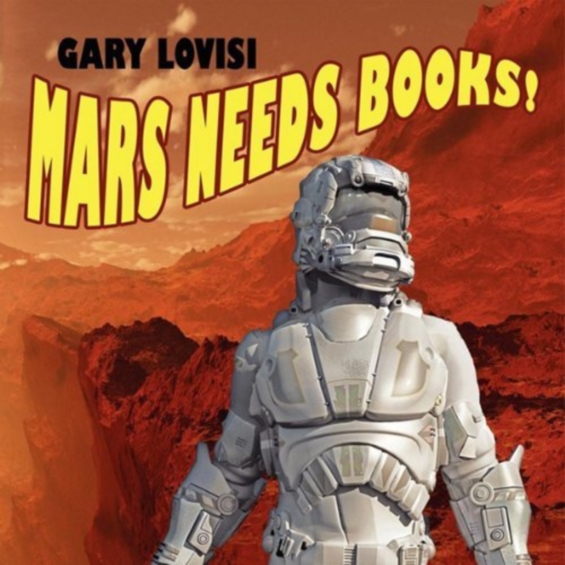
The SFFaudio Podcast #200 – Jesse, Mirko, and Gary Lovisi discuss the Science Fiction novel Mars Needs Books! by Gary Lovisi.
Talked about on today’s show:
the great description, Audible.com, it’s a prison novel, it’s a dystopian science fiction novel, it’s a book collector’s novel, Philip K. Dick, a reality dysfunction, The Man In The High Castle, 1984 by George Orwell, “retconning“, Stalin, airbrushing history, a new Science Fiction idea!, Amazon’s Kindle, Mark Twain, “The Department Of Control”, J. Edgar Hoover, Simon is the most evil character ever, oddball individualists, a straw man gulag, one way of keeping the population in control is to send troublemakers away, another is to give them someone to hate, The Moon Is A Harsh Mistress by Robert A. Heinlein, the Attica Prison riot (1971), Arabella Rashid, entertainment media, when you can’t tell what the truth is anymore it’s very easy to control people, maybe it’s an allegory for our times, Paperback Parade, SF writers were wrong about what our times are like, Mars, crime novels, Science Fiction as a metaphor, people are scared of reading, “I like good writing”, Richard Stark’s Parker novels, getting the word out about Mars Needs Books!, Gargoyle Nights, H.P. Lovecraft, Clark Ashton Smith, Jack Vance, horror, fantasy, nice and short, short books pack a punch (and don’t waste your time), Stephen King, Patrick O’Brian, ideas, paperback novels from the 1950s, 1960s, and 1970s, customers want thick books, Winter In Maine by Gerard Donovan, were looking at a different readership today, James M. Cain’s The Postman Always Rings Twice, there’s nothing that doesn’t add to the story, “Lawrence Block is scary good”, Donald E. Westlake, Robert Bloch, Eight Million Ways To Die, A Pair Of Recycled Jeans by Lawrence Block, Evan Hunter (Ed McBain), Charles Ardai (was on SFFaudio Podcast #090), book-collectors, Murder Of A Bookman by Gary Lovisi (is also on Audible.com), collectable glassware, Sherlock Holmes Mystery Magazine, cool dialogue, Driving Hell’s Highway by Gary Lovisi (also on Audible.com), That Hell-bound Train by Robert Bloch, noir, Violence Is The Only Solution by Gary Lovisi (paperback), hard-boiled, revenge, betrayal, personality disorder, Sherlock Holmes, westerns, “if there’s one truth in the universe that I know it’s that Germans love westerns”, which frontier are you talking about?, The Wild Bunch, a western with tommyguns, Akira Kurosawa, Outland (is High Noon in space), Altered Carbon by Richard K. Morgan, hard-boiled, violence, the Martian national anthem, Prometheus Award, libertarian motifs, world-building, GryphonBooks.com, Hurricane Sandy, Wildside Press, POD Books, eBooks, fire and water, that paperback is still in readable condition in 150 years?, fanzines, Jack Vance, The Dying Earth, Robert Silverberg, Dell Mapbacks, paperbacks were disposable, used bookstores, sex books.
Talked about on today’s show:
written in 1921, is it a ‘Russian’ novel?, H.G. Wells, Synchronicity and Arthur Koestler, Industrialism, the struggle to be a good citizen, the Guardians and Plato’s Republic, the numbers in character names (ah hah!), lips and poet Pushkin, don’t eat the prolefeed, sexual hour, review of We by George Orwell, character development, the Integral ship name, more on numbers in names, biblical references?, why it pays to have Eric, THX 1138 (trailer), Zilboorg vs Ginsburg translation, mathematics, Randall and Brown translations, imaginary numbers, the green wall and glass, Logan’s Run and the outside, the number ’40’, Baudelaire’s The Flowers of Evil, is the novel hopeful at the end?, lying, Caesar and hair, The Space Merchants, how science fiction and We get respect, ranking We among dystopian fiction, Jenny is Ms. Dystopia, eutopias and outopias and autopias, Childhood’s End, this podcast is perfect, Scriabin piano music is passionate, ayre (music)
Here’s another classic SF novel we’ll be discussing on an upcoming podcast. Read by the irreplaceable Grover Gardner!
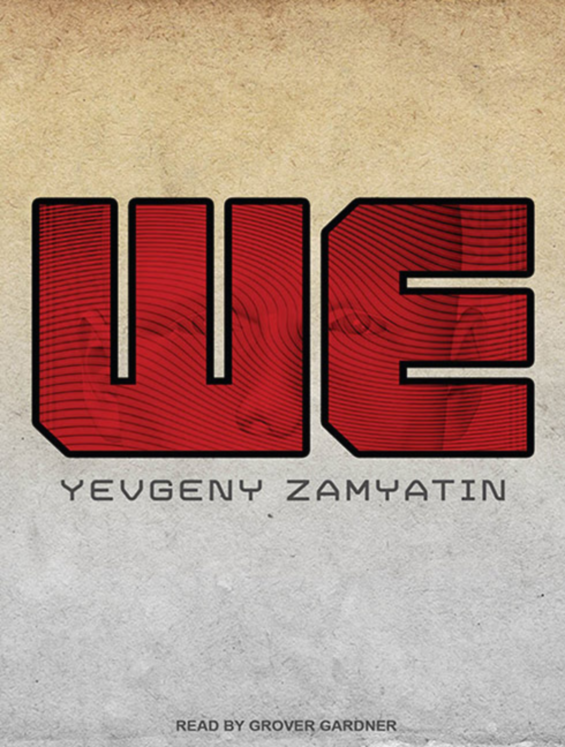
We
By Yevgeny Zamyatin; Translated by Clarence Brown; Read by Grover Gardner
MP3 Download – Approx. 7 Hours [UNABRIDGED]
Publisher: Tantor Media
Published: March 2011 Set in the twenty-sixth century A.D., Yevgeny Zamyatin’s masterpiece describes life under the regimented totalitarian society of OneState, ruled over by the all-powerful “Benefactor.” Recognized as the inspiration for George Orwell’s 1984, We is the archetype of the modern dystopia, or anti-Utopia: a great prose poem detailing the fate that might befall us all if we surrender our individual selves to some collective dream of technology and fail in the vigilance that is the price of freedom. Clarence Brown’s brilliant translation is based on the corrected text of the novel, first published in Russia in 1988 after more than sixty years’ suppression.
Metropolis, an astoundingly great radio dramatization of a famous novel that was turned into a famous movie, is nuanced, deep, surprising, and totally, idea based.
I’m astounded, really and truly astounded and amazed too at the depth and power an hour long program is able to achieve.
The script has humor, skepticism, cynicism, hope, sex, romance, informative infodumps, and a city full of pathos.
The production, acting, pacing, and composite audio experience is completely awe inspiring.
What gets me most is that even though it is based on a 1926 novel by Thea von Harbou, this version of Metropolis is, arguably, even more relevant than either Brave New World (1931) or 1984 (1949).
Those two classics don’t feel wholly and completely modern – this production of Metropolis does. It’s modernity is ripe, it’s like an episode of Black Mirror, and it should be on your radar.
Still not sold? Then imagine a Science Fiction version of Fight Club but set in the world of The Space Merchants or Judge Dredd and imagine it written by either Philip K. Dick or Frederik Pohl.
An audacious portrayal of a futuristic city as much as a state of mind, and an iconic film to boot, Metropolis (Radio 4, Friday) doesn’t exactly scream radio adaptation. But writer Peter Straughan and director Toby Swift, who won the Prix Italia in 2004 for their adaptation of Fritz Lang’s M, clearly aren’t put off by such hurdles. Their Metropolis was all deliciously claustrophobic intensity and dark interiority; their mega-city full of bubbling, menacing sounds you soon wanted to shut out. Without the famous visuals, you never really got a sense of the scale of Lang’s vision – you didn’t believe in the 62 million workers in Metropolis – but you did get the chilling psychological dimension of the dystopia. Edward Hogg, as Freddy, though sounding like a young Woody Allen at times, convinced as the alienated, lonely outsider who manages to subvert the mega-state from within. There were laughs, too, at least early on. “When was the last time you slept?” a therapist asks a suicidal Freddy. “About eight years ago,” says Freddy. “No,” the therapist concludes, “I don’t think that’s significant.”
Peter Straughan, the adaptor, and Toby Swift, the director, have achieved a classic for our time and for the ages – this is highly, highly recommended!
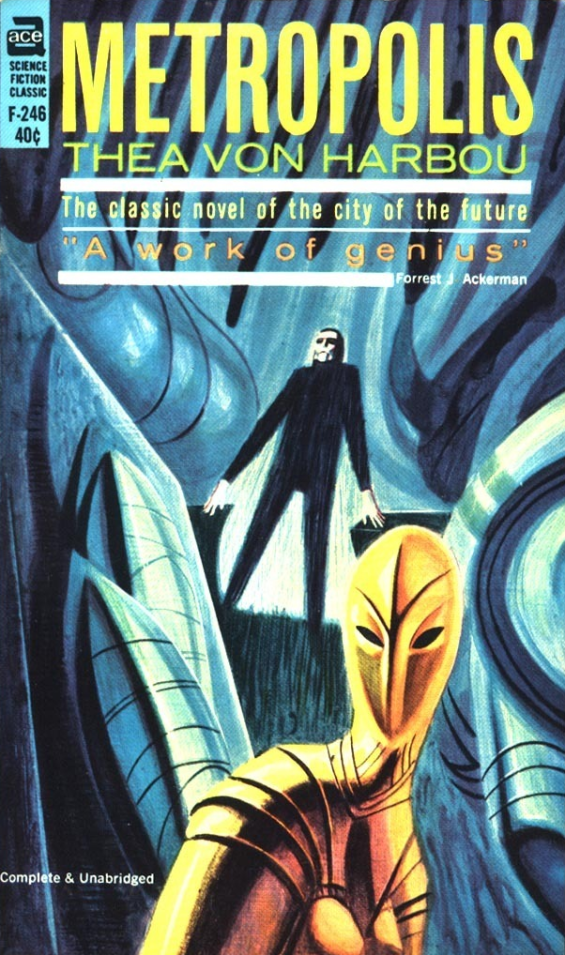
Thea von Harbou’s Metropolis
Adapted by Peter Straughan; Performed by a full cast
MP3 via TORRENT – 57 Minutes [RADIO DRAMA]
Broadcaster: BBC Radio 4 (Friday Drama)
Broadcast: March 24, 2006
Available via RadioArchive.cc Freder, the protagonist of Metropolis is an underworked “captain” in a high level position in the futuristic consumer society of the mega city named Metropolis. Feeling suicidal, but unable to understand why, Fredor switches identities with a low level “product insertion” – a kind of telemarketing – but failing at that Fredor soon finds himself working for Maria, an imperfect beauty with all the answers. Maria plunges Fredor into the depths of her underground conspiracy to disrupt the workings of society.
Directed by Toby Swift
Cast:
Freder – Edward Hogg
Maria – Tracy Wiles
Josaphat – Damian Lynch
Schmale – Peter Marinker
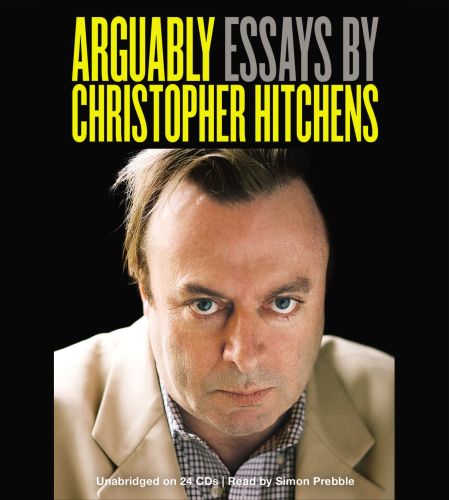
Arguably: Essays
By Christopher Hitchens; Read by Simon Prebble
24 CDs – Approx. 28.5 Hours [UNABRIDGED]
Publisher: Hachette Audio
Published: September 1, 2011
ISBN: 9781611139068
Themes: / Non-fiction / History / War / Biography / Science Fiction / Fantasy / Iran / Afghanistan / Germany / North Korea / France / Dystopia / Utopia / Religion / Tunisia / Piracy / Terrorism / Feminism / Pakistan /
The first new collection of essays by Christopher Hitchens since 2004, Arguably offers an indispensable key to understanding the passionate and skeptical spirit of one of our most dazzling writers, widely admired for the clarity of his style, a result of his disciplined and candid thinking. Topics range from ruminations on why Charles Dickens was among the best of writers and the worst of men to the haunting science fiction of J.G. Ballard; from the enduring legacies of Thomas Jefferson and George Orwell to the persistent agonies of anti-Semitism and jihad. Hitchens even looks at the recent financial crisis and argues for arthe enduring relevance of Karl Marx. The audio book forms a bridge between the two parallel enterprises of culture and politics. It reveals how politics justifies itself by culture, and how the latter prompts the former. In this fashion, Arguably burnishes Christopher Hitchens’ credentials as-to quote Christopher Buckley-our “greatest living essayist in the English language.”
Here’s a question I was thinking about while listening to Arguably.
What is fiction for?
One answer, the bad one, is that it’s for entertainment. That’s certainly where many readers are willing go, and the fiction writers who write it too. Maybe that’s precisely why so much fiction is just so very shitty.
To me, if you aren’t exploring ideas in your fiction, then you really aren’t serving a greater purpose. Idea fiction, fiction with ideas rather than just action and plot, is to my mind a kind of supplement to the wisdom found in writings on history, biography and science.
Of the many lessons learned I in listening to the 107 essays in Arguably I was particularly struck by the wisdom Christopher Hitchens gleaned from his reading of fiction. Hitchens reviews many books in this collection, nearly half of the essays are book reviews. Books like 1984, Animal Farm, Flashman, The Complete Stories Of J.G. Ballard, Our Man In Havana, and even, surprisingly, Harry Potter And The Deathly Hallows all get fascinating, critical, and reverent reviews.
Yet Hitchens also takes the lessons with him into his writing about his travels. Hitchens writes about visits to such places as North Korea, Cyprus, Afghanistan, and Kurdish Iraq. When talking about his visit to Beirut we see what comes when Hitchens, a man of ideas, acts upon them. The essay, The Swastika and the Cedar sees the convictions of the commited anti-fascist Hitchens beaten and nearly kidnapped for an act of vandalism on a prominently displayed swastika. Writes Hitchens:
“Well, call me old-fashioned if you will, but I have always taken the view that swastika symbols exist for one purpose only—to be defaced.”
In a review of two books, Lolita and The Annotated Lolita, Hitchens applies the controversial subject in a real life look at the modern, and very non-fictional oppression and objectification of women. Indeed, the ideas he appreciated in fiction helped Hitchens to come to grips with the real world.
I think the worst essay in this collection is the one on the serving of wine and restaurants, Wine Drinkers Of The World, Unite. It was simply a waste of the talent, too light, too easy a target. And yet, even that essay, the worst essay in all 107 has a memorable anecdote: “Why,” asks Hitchens’ five year old son, “are they called waiters? It’s we who are doing all the waiting.”
As to the narration of the audiobook. I’m ashamed to admit that I was initially dismayed when I saw that Christopher Hitchens had not narrated this audiobook himself. I was wrong to worry. Incredibly, Simon Prebble seems to have have become Hitchens for this narration. Prebble perfectly captures the erudite words, so eloquently performs them, and with an accent so like that of Hitchens’ own so as to make me think that it was Hitchens who had actually read it.
I think the worst essay in this collection is the one on the serving of wine and restaurants, Wine Drinkers Of The World, Unite. It was simply a waste of the talent, too light, too easy a target. And yet, even that essay, the worst essay in all 107 has a memorable anecdote: “Why,” asks Hitchens’ five year old son, “are they called waiters? It’s we who are doing all the waiting.”
Here’s a list of the book’s contents, with links to the original etexts when available, along with my own notes on each:
The Private Jefferson – a review of Jefferson’s Secrets: Death And Desire At Monticello by Andrew Burstein
Jefferson Vs. The Muslim Pirates – a review of Power, Faith, And Fantasy: America In The Middle East: 1776 To The Present by Michael B. Oren
Benjamin Franklin: Free And Easy – a review of Benjamin Franklin Unmasked: On the Unity of His Moral, Religious, And Political Thought by Jerry Weinberger
John Brown: The Man Who Ended Slavery – a review of John Brown, Abolitionist: The Man Who Killed Slavery, Sparked The Civil War, And Seeded Civil Rights by David S. Reynolds
Abraham Lincoln: Misery’s Child (aka Lincoln’s Emancipation) – a review of Abraham Lincoln: A Life by Michael Burlingame
JFK: In Sickness And By Stealth – a review of An Unfinished Life: John F. Kennedy, 1917–1963 by Robert Dallek
Saul Bellow: The Great Assimilator – review of six novels by Saul Bellow (The Dangling Man, The Victim, The Adventures Of Augie March, Seize The Day, Henderson The Rain King, and Herzog)
Vladimir Nabokov: Hurricane Lolita – reviews of Lolita by Vladimir Nabokov and The Annotated Lolita edited and annotated by Alfred Appel, Jr.
John Updike: No Way – a review of The Terrorist by John Updike (with reference to The Coup too) John Updike: Mr. Geniality – a critical review of the affable Due Considerations: Essays And Considerations by John Updike
Vidal Loco – Gore Vidal went crazier, more elitist and perhaps more racist as he got older (with attention and quips for Quentin Crisp and Oscar Wilde and Joyce Carol Oates)
America The Banana Republic – Hitchens on the “socialistic” bank bailout of 2008 (“socialism for the rich and free enterprise for the rest”)
An Anglosphere Future – a review of The History Of The English Speaking Peoples by Andrew Roberts (with reference to both Sherlock Holmes and The White Company by Sir Arthur Conan Doyle as well as to Cecil Rhodes and Rudyard Kipling)
Political Animals – a review of Dominion: The Power Of Man, The Suffering Of Animals, And The Call To Mercy by Matthew Scully
Old Enough To Die – on capital punishment as applied to children In Defense Of Foxhole Atheists – a visit to the United States Air Force Academy and the tax funded proselytizing
ECLECTIC AFFINITIES Isaac Newton: Flaws Of Gravity – a stroll through the medieval streets of Cambridge with the scientists, mathematicians, and philosophers who worked there
Gustave Flaubert: I’m With Stupide – a review of Bouvard et Pécuchet by Gustave Flaubert translated by Mark Polizzotti The Dark Side Of Dickens – a review of Charles Dickens by Michael Slater a biography (Hitchens was a not uncritical admirer of the subject)
Marx’s Journalism: The Grub Street Years – a glowing review of Dispatches for the New York Tribune: Selected Journalism Of Karl Marx edited by James Ledbetter, foreword by Francis Wheen (Marx admired the United States, and other fascinating facts about the father of communism)
Rebecca West: Things Worth Fighting For – an introduction to Black Lamb and Grey Falcon: A Journey Through Yugoslavia by Rebecca West
Ezra Pound: A Revolutionary Simpleton – a review of Ezra Pound, Poet: A Portrait Of The Man And His Work: Volume I: The Young Genius, 1885-1920 by A. David Moody (a biography of the fascist poet)
John Buchan: Spy Thriller’s Father – a review of John Buchan The Presbyterian Cavalier by David R. Godine (with discussion of The 39 Steps and a fantasy novelette The Grove Of Ashtaroth)
Fraser’s Flashman: Scoundrel Time – a look at the George MacDonald Fraser series of Flashman books and the connection with The Adventure Of The Empty House
AMUSEMENTS, ANNOYANCES, AND DISAPPOINTMENTS Why Women Aren’t Funny – a controversial essay on why more comedians are male and why women laugh at them the way they do
As American As Apple Pie – a literary and chronological history of the blowjob, with reference to Valdamir Nobokov’s Lolita
So Many Men’s Rooms, So Little Time – a fascinatingly insightful argument on what’s was going on with the Larry Craig bathroom airport scandal and related phenomena
A War Worth Fighting – a persuasively systematic review of Churchill, Hitler And The Unnecessary War: How Britain Lost Its Empire And The West Lost The World by Pat Buchanan
Just Give Peace A Chance? – a critical review of Human Smoke by Nicholson Baker
Don’t Mince Words – the disenfranchisement of south Asians in Britain isn’t the cause of bombings, hatred of women is.
History And Mystery – al-Qaeda in Iraq, jihadists, or “insurgents”? Do words matter? Of course they bloody well do.
Words Matter – political slogans make of “every adult in the country” an “illiterate jerk who would rather feel than think”
This Was Not Looting – how can a government “loot” it’s own weapons manufacturing facility? The government of Iraq managed it according to The New York Times.
The “Other” L-Word – a lighthearted piece on the prominence of the word “like” and it’s use
The You Decade – what’s wrong with you (marketing to the selfish)
Suck It Up – the Virginia Tech shootings prompted the wrong response from the world (namely that it prompted one)
A Very, Very Dirty Word – the English empire, in centuries to come, may only be remembered for soccer and the phrase “fuck off”

 The SFFaudio Podcast #217 – Jesse, Tamahome, Jenny, and Marrisa VU talk about audiobook NEW RELEASES and RECENT ARRIVALS.