The Shepherd by Fredrick Forsyth; Read by Alan Maitland

SFFaudio News

If you were to take a stab at guessing the favourite audiobook of Canadians you’d be well to guess a Christmas story that includes a vampire, a ghost, and a mosquito.

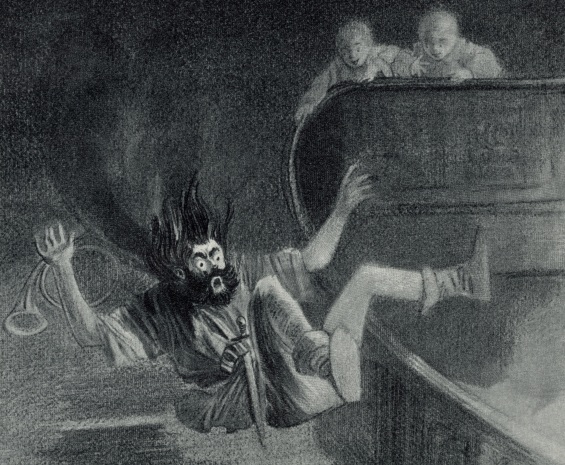
Produced for CBC Radio this classic reading of Frederick Forsyth’s The Shepherd is superbly read by Alan Maitland (aka Frontporch Al, aka Fireside Al, aka Graveside Al).

Bonus: A CBC interview with Frederick Forsyth about the story, the interviewer is Barbara Budd!

Vampire

Mosquito

Posted by Jesse Willis

The SFFaudio Podcast #144 – READALONG: Immortality, Inc. by Robert Sheckley

Podcast

The SFFaudio PodcastThe SFFaudio Podcast #144 – Jesse, Tamahome and Gregg Margarite talk about the audiobook of Robert Sheckley’s 1959 novel Immortality, Inc..

Talked about on today’s show:
Time Killer was nominated for a Hugo, the Blackstone Audio audiobook, Sheckley’s family of themes, a collage of images, Immortality, Inc. is a comedy, Bronson Pinchot’s narration, Peter Lorre, Midnight Cowboy, “those are real tears”, a cartoon, Buddhism, reincarnation, the yoga machine, “manipulation catches up to theory”, surviving beyond death, Futurama, suicide booths, New New York, Douglas Adams, Matt Groening, zombies, are we chicking or egging, Mindswap by Robert Sheckley (SFFaudio Podcast #076), Richard K. Morgan’s Altered Carbon, “you are not…”, are you your memories?, hundreds of trillions of assumptions, “why did communism fail?”, Tam knits, sweet sweet coffee, Harrison Bergeron, we need the CPU as well as the memory, Gregg would still be Gregg in another body, a body as an automobile for genes, aren’t skills a part of your mind, your memories?, bayoneting skills, Gregg wants longer pinkies, dynamic finger growth is optimal, episodic, the hunt, have the lawyer leave the room, “what if there is nothing more?”, this is a book about death, ghosts, walking through all the explanation for what happens after they die, tomb like an Egyptian, sane ghosts vs. nutjob ghosts, “the competition never ends”, “different dimension, same shit”, “transplant”, a black-market copy of a sensory recording of our hero’s story, interest in the twentieth century is waning, 1950s New York, Jesse has never been to New York, security theater, Gregg promises to take Jesse to New York, a private Winnebago?, the suspension of habeas corpus, Canada is a country that doesn’t work in theory (but works in practice), the United States as a utopian experiment, Australia has mandatory voting, Mayberry, “the right to die”, death is exactly like before you were born, you can only look forward to death, Mark Twain, death is just one damn thing after another, What Dreams May Come by Richard Matheson, Dante’s Inferno, does love conquer all?, Cinderella, happily ever after, arguments that get all of us killed, Pakistan vs. India, tribalism, Ghandi vs. Jinnah, “the enemies of progress”, China, Buddhism, Confucianism, Shinto, ancestor worship, Khmer mythology, Hanuman the monkey king, “reality is only inside you”, are most people half-believers?, Sheckley doesn’t pick one way, did the serialization inform the storytelling, The Status Civilization, Sheckley looks at the world and laughs, there’s no thesis Sheckley is trying to explicate, Sheckley is “a sane Phil Dick”, horror vs. humor, Freejack is a loose adaptation of Immortality, Inc., Emilio Estevez and Mick Jagger, the role of the reader, the magic of radio (drama), The World According To Garp (film vs. novel), converting the nonconvertible, a romantic relationship, Aristotle’s Poetics, plot should follow necessarily (or at least probably) from that which came before, Accessory Before The Fact by Algernon Blackwood, “it all happens at the same time”, flat characters vs. round characters, do we live in a serial world?, if Hamlet was a television series, Gilgamesh still works, Star Trek, Gene Roddenberry vs. J.J. Abrams, an anthologic approach, Babylon 5 as the counter-example, Neil Gaiman, J. Michael Straczynski, Doctor Who, the vehicle of the series, will the dancing toilet paper company care?, Gregg: “I’m no longer god”
The Time Killer by Robert Sheckley - Illustration by Wood
Freejack credits - "Based upon the novel "Immortality, Inc." by Robert Sheckley
Suicide Booth

Posted by Jesse Willis

RadioArchive.cc: A Stir Of Echoes by Richard Matheson

SFFaudio Online Audio

RadioArchives.ccThe greatest resource for public radio fans on this planet has Richard Matheson’s spooky novel A Stir Of Echoes! Yes, RadioArchive.cc has the 2009 audiobook that’s perfect for this time of year. It was produced for what was then called BBC Radio 7 (and now called BBC Radio 4 Extra) and broadcast as an abridged reading. If you’re more inclined for the UNABRIDGED edition check out Blackstone Audio’s version, which we reviewed not too long before the original broadcast |READ OUR REVIEW|.

A Stir Of Echoes by Richard MathesonA Stir Of Echoes
By Richard Matheson; Read by Trevor White
5 MP3s via |TORRENT| – Approx. 2 Hours 21 Minutes [ABRIDGED]
Broadcaster: BBC Radio 7
Broadcast: 2009
Tom Wallace lived an ordinary life in a seemingly normal neighbourhood until his brother-in-law hypnotises him; a chance event that awakens psychic abilities he never knew he possessed. Now he can hear the private thoughts of the people around him, and learns shocking secrets he never wanted to know.

Posted by Jesse Willis

Maria Lectrix: The Pot Of Tulips by Fitz James O’Brien

SFFaudio Online Audio

Sez Maureen O’Brien: “This ghost story is pretty fun. Lost treasure! A wronged heiress! Communication from beyond the grave!”

Sez Bibliophilia Obscura:

“The purely supernatural has its place in O’Brien’s stories as well. The Pot of Tulips effectively retells a story, as old as antiquity, of a miser who in death reveals through signs and symbols the location of his hidden fortune.

O’Brien writes most of the stories in the persona, apparently well know to him, of the comfortable bachelor, ensconced in his cozy lodgings, be it a haunted boarding house or a decaying Dutch mansion in upper Manhattan. Late evenings with cigar or opium, discussing supernatural possibilities with companions set a cozy tone, which will be upended by a shift of reality as objects of speculation become all too real. It would be wrong to judge O’Brien’s themes as hoary simply because we have encountered them in more well known authors who followed him down these speculative paths. Taken as exemplars of early nineteenth-century speculative fiction, these stories are still worth a read on a chill winter’s night.”

The Pot Of Tulips by Ftiz James O'BrienThe Pot Of Tulips
By Fitz James O’Brien; Read by Maureen O’Brien
1 |MP3| – Approx. 48 Minutes [UNABRIDGED]
Podcaster: Maria Lectrix
Podcast: October 30, 2005
Source: Archive.org
A lost treasure, a lady in distress, and a message from beyond the grave! This 1855 story is an earlier appearance of Harry Escott from “What Was It? — A Mystery“, and features the same entertaining mixture of science fiction, fantasy, and horror. First published in Harper’s, Nov. 1855.

Posted by Jesse Willis

Naxos Audiobooks: 2 FREE Horror tales, The Damned Thing by Ambrose Bierce and The Canterville Ghost by Oscar Wilde

SFFaudio Online Audio

Naxos AudiobooksNaxos Audiobooks, is offering a couple of free audiobook downloads this month!

Here’s part of the description of the first one:

Bierce’s ghost stories are not among the best-written but they are unusual and distinctly ‘modern’ in their definition of what constitutes a ‘ghost’. They enjoy a popularity today that eluded them during Bierce’s lifetime, perhaps because the late twentieth century reader is more prepared to accept his psychological approach to the genre. The stories resist neat classification, no conclusions are offered. Whatever the true nature of the entity in The Damned Thing, Bierce offers no tidy answer. One of the protagonists offers his theory but it is no more than that and you are left with the feeling that perhaps the entity wanders the earth to this day and that Bierce merely recorded one episode of its existence.

NAXOS AUDIO - The Damned Thing by Ambrose BierceThe Damned Thing
By Ambrose Bierce; Read by Jonathan Keeble
1 |MP3| – Approx. 20 Minutes [UNABRIDGED]
Publisher: Naxos Audiobooks
Published: 2007
ISBN: 9789626344941
First published in 1894.

The Damned Thing has been adapted as an episode of Masters Of Horror as well as for the comics in Graphic Classics: Ambrose Bierce, 2nd Edition:

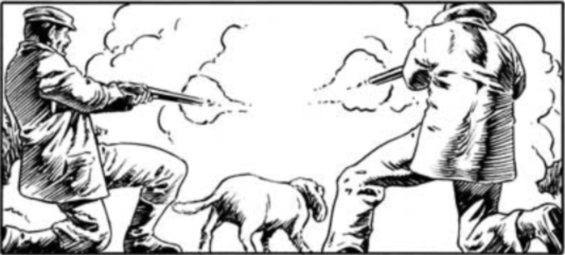
The Damned Thing - illustration by Reno Maniquis

The second audiobook is longer, but not huffduffable. It’s wrapped in a zipped folder with 12 MP3s (and also includes a wonderful 8 page PDF with story notes by Chloé Harmsworth).

NAXOS AUDIO - The Canterville Ghost by Oscar WildeThe Canterville Ghost
By Oscar Wilde; Rupert Degas
1 Zipped MP3 – Approx. 77 Minutes [UNABRIDGED]
Publisher: Naxos Audiobooks
Published: 2009
ISBN: 9789626349748
“A terrifying ghost is haunting the ancient mansion of Canterville Chase, complete with creaking floorboards, clanking chains and gruesome disguises – but the new occupants seem strangely undisturbed by his presence. Deftly contrasting the conventional gothic ghost story with the pragmatism of the modern world, Wilde creates a gently comic fable of the conflict between old and new. Rupert Degas’s hilarious reading brings the absurdity and theatricality of the story to life.”

The Canterville Ghost - illustration by Wallace Goldsmith

The Canterville Ghost has been adapted to film more than a dozen times! Here’s the trailer for the first such, from 1944:

Posted by Jesse Willis

Hypnobobs: What Was It? by Fitz James O’Brien

SFFaudio Online Audio

Mr. Jim Moon, a recent guest on SFFaudio Podcast #126, has recorded another story you just have to hear! It’s an old one, it’s wonderful, it’s obscure and it’s been recorded with an amateur’s enthusiasm and a professional’s sound. Mr. Moon, who I’m coming to realize is something of an expert in weird fiction, tracked down the complete text – apparently nearly all modern editions have used a slightly condensed version – cleanly narrated it (without any added sound effects or annoying bed music), then complimented the reading with what I can only describe as a very thoughtful commentary of an impassioned researcher.

Honestly, how could anyone ask for more than that?

My figurative hat is off to you Mr. Jim Moon. You are what makes the internet a wonderful place to visit.

What Was It? by Fritz James O'BrienWhat Was It?
By Fitz James O’Brien; Read by Jim Moon
1 |MP3| – Approx. 50 Minutes [UNABRIDGED]
Podcaster: Hypnobobs
Podcast: September 18, 2011
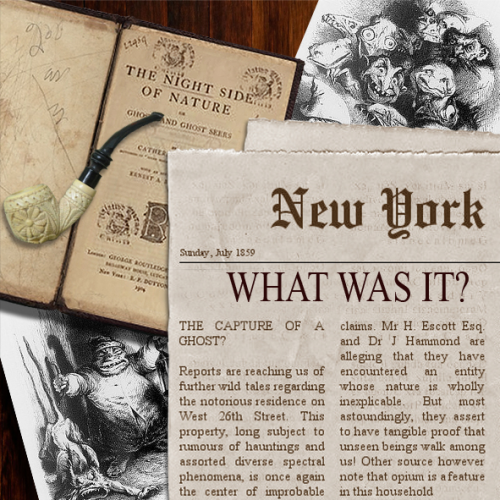
One of the earliest known examples of invisibility in fiction is What Was It? by Fitz James O’Brien – He’s been called “the most important figure after Poe and before Lovecraft” and this story serves as a kind of a bridge between the supernatural and the scientific, between the likes of de Maupassant’s The Horla and Wells’ The Invisible Man.

Podcast feed: http://feeds.feedburner.com/Hypnobobs

Posted by Jesse Willis