
Review of The Chief Designer by Andy Duncan

SFFaudio Audiobook Review

Audiobook - The Chief Designer by Andy DuncanThe Chief Designer
By Andy Duncan; Read by Jared Doreck
2 CDs – 132 minutes – [UNABRIDGED]
Publisher: Infinivox
Published: 2006
ISBN: 1884612547
Themes: / Science Fiction / Alternate History / Space Flight / History / Ghosts / Heroic Journey /

“Tsiolkovsky,” he said. “Your memory is excellent, Comrade Korolev.” The man who had held the open book before Korolev’s face reversed it and examined it himself. He wore a full-dress officer’s uniform, and two soldiers flanked him. “Exploration of Cosmic Space with Reactive Devices, by Konstantin Tsiolkovsky. Published 1903.

Though you’d be hard-pressed to spot the fantastic elements this tale is a inspirational and deeply moving for any true Science Fiction fan. I’m not a spiritual person, I think that spirit is bunk and people who believe in spirit are all marks. But in a very deeply emotional sense I can almost understand the need for something like the spiritual when I look up into the deep night. There is nothing more powerful than seeing the immensity of existence and then comparing our thus far pitiful explorations to them. Those persons with the will to embrace the larger goals of space travel, by passing by the little miasma of our insignificant apish little goals, to get a shiny new car, a cell phone or an expensive suit are those worthy of worship. One such man was Sergei Korolev, the “Chief designer” of the secret Soviet space program. This story follows his management of the men who would create the universe’s only known spacefaring species from 1957’s Sputnik forward into what we can only hope would be a bright future. The story spans from World War II, when Korolev was released from a prison camp to design rockets, to 1997 and the Mir space station.

Andy Duncan is not someone I’d read anything of prior, but his work here is remarkable. If this wasn’t supposed to be Alternate History, and it is very subtle if it is even that, I’d have said the story of Koralev’s life history was massaged to provide a more ballistic plot. Though Koralev was sent to the Gulag, as depicted in the opening sentences of this novella, the reason for his departure from it didn’t happen, in real life, for the reasons stated in the story.

Michael Swanwick called The Chief Designer, “A portrayal … of the single most positive enterprise of the twentieth century”, and he is right, but too limiting, Koralev’s genius, along with men like Wernher von Braun was to expand the meaning of humanity from mere animal to demi-god. Before these men, their vision and action, we were just animals with tools and language, afterwards we became creatures capable of refining the metal of the crust of the planet upon which we were born, shaping it into cylinders filled with explosives and sending our representatives to other worlds. The Chief Designer is a portrayal of the single most important enterprise in human history! Koralev is in a very real sense our real life Titan, our very real and historical Prometheus, stealing fire from the gods and giving it to humanity.

The Chief Designer is winner of the 2002 Theodore Sturgeon Memorial Award, the Southeastern Science Fiction Achievement Award, a 2003 Nebula Award finalist and a 2002 Hugo Award finalist. Today we can add SFFaudio Essential to its many achievements.

Posted by Jesse Willis
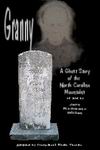
Review of Granny: A Ghost Story of the North Carolina Mountains
Horror Audio Drama - GrannyGranny, A Ghost Story of the North Carolina Mountains
By Steven Wilson, performed by Prometheus Radio Theatre
1 CD – 30 minutes [AUDIO DRAMA]
Publisher: Prometheus Radio Theatre
Published: 2004
Themes: / Ghosts / Southern History /

“If the Lord spares my life, I’ll be back here Saturday,” Granny had said when she left. The Lord didn’t spare her life, but Granny still came back. What unfinished business kept her from her rest? Her twelve-year-old granddaughter, Hannah, was determined to find out. Based on a true story.

According to Steven Wilson, the director, Granny, A Ghost Story of the North Carolina Mountains is based on a story that his grandmother swore “to her dying day” was true. In fact, as a bonus at the end of the radio show, Mr. Wilson shares a clip of his grandmother telling the tale.
Listening to it, I could understand why it kept him awake at nights as a child. Sadly, that sense of creeping chill was not translated to this production. While Steven Wilson and Ethan Wilson turn in creditable performances and Cindy Woods does a nice job as the young Hannah, the rest of the cast are as stiff in their reads as if this were their first time in front of a microphone.

As if in an attempt to compensate for the lackluster performances, the foley effects are so loud that they at times almost overwhelm the dialogue. The show is filled with footsteps, creaking rocking chairs, and an unending parade of insect life which do nothing to enhance any of the action. Indeed, most of the time it was a distraction. At one point, Papa and Hannah were talking and I had to strain to understand what was happening and finally realized that Papa had stirred the fire, walked across the room and sat in the world’s creakiest rocking chair. None of which had anything to do with the story, or the dramatic tension in the scene; it was foley for the sake of foley.

There are some nicely eerie moments, such as when the family first hears the ghost of Granny crooning “Amazing Grace” in the chimney. I wish the rest of the show were half as effective.

Posted by Mary Robinette Kowal

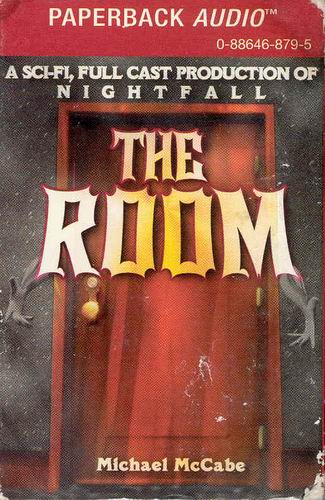
Review of Nightfall: The Room by Michael McCabe

Horror Audiobooks - The RoomNightfall: The Room
By Michael McCabe; Performed by a Full Cast
1 Cassette – 55 Minutes [AUDIO DRAMA]
Publisher: Durkin Hayes
Published: 1996
ISBN: 057943687959
Themes: / Horror / Ghosts / Haunted House /

It was late one night. I mean really late – two-something in the morning late. My eyes opened, I got up for some water, a bathroom break, then back to bed. A minute or so later, I knew that I wasn’t going to get back to sleep quickly, so I got back up to find something to listen to. I found my cassette Walkman, into which I placed Nightfall: The Room. A half an hour later, I was listening for strange noises and thinking that it was awfully dark in the bedroom, for The Room is one heck of a fine ghost story.

In the story, a widow named Ameila Watts explains to a man that several people have stayed in the “yellow room” in her house, but they’ve gone mad in the attempt, because the room is haunted. She offers the man 1000 pounds to attempt it himself, and because he’s a man who does not believe in the supernatural and needs the money, he accepts. What follows is an excellent example of audio drama done right. A first-rate scary production.

On the flip side of the cassette is a story called “Maid’s Bell” by Edith Wharton. Also well-produced, “Maid’s Bell” is the story of the experience of a woman who is hired to be a maid in a mansion. One of the other maids tells her that the previous women who have held the job left quite abruptly, and the mystery unfolds from there.

The best resource I know of if you want to know more about Nightfall, the CBC Radio series of which this is a part, try Nightfall-25. Many of these were published in single cassette editions by Durkin Hayes – they are out of print, but many can be found on eBay. Publishers: A Best-Of collection from these wonderful shows would be very welcome.

Posted by Scott D. Danielson

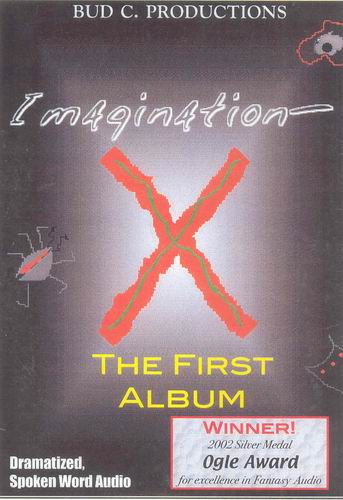
Review of Imagination X: The First Album by Jeffrey Adams

Science Fiction Audio Drama - Imagination XImagination X: The First Album
By Jeffrey Adams; Performed by a Full Cast
1 CD – 1 hour [AUDIO DRAMA]
Publisher: Bud C. Productions
Published: 2003
ISBN: 0974201200
Themes: / Fantasy / Horror / Ghosts / Artificial Intelligence / Dreams /

If you are a fan of Twilight Zone fiction, you are going to enjoy Imagination X. There are eight dramatized stories included in this 1-hour album, each performed by a full cast:

“The House in the Woods” – A woman is haunted by visions in her dreams of a house in the woods.

“Box Love” – A hilarious look at love between two artificially intelligent kitchen appliances.

“Up on the Rooftops” – Something’s moving up on the roof – is it Santa Claus?

“Background” – A researcher goes to a haunted house and tape records notes while he looks around. But the tapes contain more than his voice…

“Mandible Hill” – Do you know what the person sitting next to you is capable of?

“The Prisoner” – A tortured soul cries out his torment – or does he?

“Distance” – A space traveler deals with his computer which is also trying to deal with him.

Find this audio at Bud C. Productions – you’ll be glad you did. The website leaves quite a bit to be desired, but there is some interesting information there. If you click on an episode, you can find some of Jeffrey Adams’ notes on the production along with cast info. A piece of data I found interesting: The computer voice was played by the ‘Speakable Items’ function of my iMac computer, the existence of which was the inspiration for the episode, and, to some extent, for the entire series.

I enjoyed the time I spent with these stories, and am looking forward to more from Jeffrey Adams and crew.

Posted by Scott D. Danielson

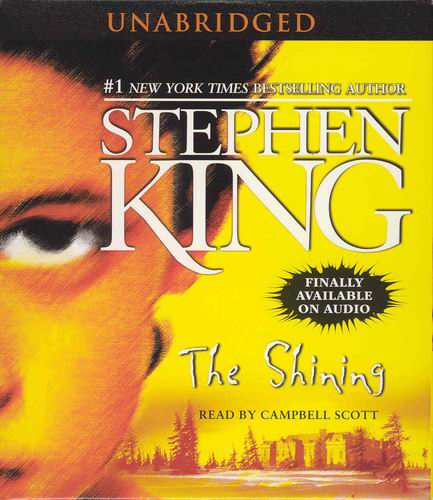
Review of The Shining by Stephen King

Horror Audiobooks - The Shining by Stephen KingThe Shining
By Stephen King; Read by Campbell Scott
14 CD’s – 16 hours [UNABRIDGED]
Publisher: Simon and Schuster Audio
Published: 2005
ISBN: 0743537009
Themes: / Horror / Ghosts / Alcoholism /

The Shining was first published in 1977, and is one of my three favorite Stephen King novels, the other two being ‘Salem’s Lot and The Stand. Incidentally, Simon and Schuster Audio recently published a fine unabridged version of ‘Salem’s Lot, but no The Stand in sight!

The Shining‘s main characters are Jack Torrance, his wife Wendy, his psychically gifted son Daniel, and the majestic (and haunted) Overlook Hotel. The story begins when Jack Torrance accepts a job as winter caretaker of the hotel, which closes 6 months out of the year because of its remote location in Colorado. Jack and his family are to stay at the Overlook during the winter, taking care of the building while snow flies around them. The family looks forward to a healing time alone, but the hotel and its ghosts have different plans.

King creates a rich array of characters here. From Jack Torrance and his alcoholism to Wendy, a kind but damaged person in her own way, and Daniel, whose power inadvertently gives the spirit inhabitants of the Overlook Hotel a gateway to become more than just frightening apparitions.

Campbell Scott gives a superior performance here. I couldn’t imagine this novel being done any better. It was very difficult for me to keep Jack Nicholson’s performance of Jack Torrance from Stanley Kubrick’s film version of The Shining out of my head. Campbell Scott seemed to embrace this, though, because Nicholson is perfect for that part. Campbell Scott apparently is, too, because every character in this novel, including Torrance, was engaging and believable.

Posted by Scott D. Danielson

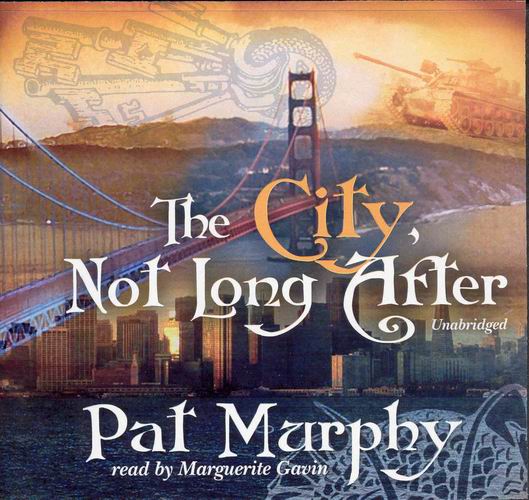
Review of The City, Not Long After by Pat Murphy

Science Fiction Audiobook - The City, Not Long After by Pat MurphyThe City, Not Long After
By Pat Murphy, read by Marguerite Gavin
7 CD’s – 8.5 hours [UNABRIDGED]
Publisher: Blackstone Audiobooks
Published: 2005
ISBN: 0786180862
Themes: / Science fiction / Fantasy / Magic realism / Post-apocalypse / Military / Pacifism / Art / Ghosts / War

At the root of all major religions is the simple, powerful assumption that every human being is capable of changing his character. With this premise, Nirvana, Salvation, and Enlightenment are opened to each of us, no matter what lies in our past. The logical extension beyond ourselves is that we are obliged to forgive our fellow man for his transgressions against us, because to do otherwise would deny him the possibility of redemption. Gandhi, Christ, and King have demonstrated that it takes a great deal of sacrifice and patience to follow this idea to its full conclusion, but the resulting justice for friend and foe alike cannot be won by anything less.

The vast bulk of our literature, however, belies our preference for punishing our enemies rather than enlightening them. Fantasy literature, in particular, usually frames central conflicts in terms of absolute good and evil, and shuns the possibility of change on either hand. Science fiction often simply avoids the issue by casting an inhuman force as the antagonist, such as a robot, an alien, or some crisis of scientific circumstance. But even so, these conflicts often favor a single-minded, unyielding approach to resolution, with a clear victor and a clear loser. This is especially true in the watered-down SF found in popular media.

Pat Murphy’s intriguing novel The City, Not Long After offers an exception to these rules, although it, too, flinches at the moment of truth. Apocalyptic fantasy is virtually defined by final clashes between good and evil, but Murphy’s post-apocalyptic tale pits peaceful artists against aggressive warriors in a future San Francisco that has been largely depopulated (along with the rest of the world) by a plague. The inhabitants of San Francisco are mostly bizarre artists, and they are struggling not only for their social freedom against an invasive force led by the militant General Nathan “Four Star” Miles, but for creative freedom against the incursions of a conformist society. In order to preserve their art and their free spirits, they make their resistance non-violent, and Pat Murphy takes the opportunity to make the resulting action interesting and original. In the course of it, she offers a clear-eyed examination of some darker elements from America’s past and present, and a scathing review of militant patriotism, both of which seem startlingly out of place in our current culture of eternal, chest-thumping war.

The best thing about this book is that, despite the description of its conflict above, it does not devolve into a moralistic sermon. In fact, the conflict which defines the plot takes up less than ten per cent of the novel. The rest of the time is spent developing the strange, arty, self-important characters who populate San Francisco. I’m not a big fan of characters (real or imagined) who go around proclaiming themselves artists, bemoaning society’s inability to recognize their gifts, and sculpting execrable statuary out of cold cream jars, but I ended up liking these people, especially Danny Boy and Jax, who provide the novel’s axis. They have real wounds and real tenderness that win out over their purposeful strangeness.

Marguerite Gavin’s narration was the perfect foil for these exotic, New Agey artists, for her voice is almost surgically precise and antiseptically clean. Her syllables are razor-edged for Jax and for the general narration, so the laid-back stoner voice she conjures for Danny Boy comes as a revelation. Gradually, I came to relate to almost all the voice characterizations, except for that of “Four Star”, who sounds more like a parody of a wicked military man than a real human being.

Thematically, I ultimately found the book to be a failure. The first problem is that our non-violent heroes require a discouragingly huge amount of supernatural help to stand a chance against bullets and bombs. The second is, to be vague enough not to spoil the book for you, that the climax is a cop-out. Murphy spends considerable time in the denouement trying to rub out this flaw, and she does succeed in provoking some thought, but nothing can cover the capitulation of the resolution.

That said, I still recommend this book. Murphy’s characters and situations are complex, vital, and often inspiring. It is far more interesting to watch her try and fail to deliver on her moral premise in this book than simply to wallow in the philosophical shallowness of summer-multiplex violent justice. At least The City Not Long After will make you both think and feel a little, and that is no small achievement.

Posted by Kurt Dietz