Watching for Robert Sheckley’s Watchbird

SFFaudio Online Audio

Every time I read a Robert Sheckley story I become re-enamored with the cutting burn of his insights. The latest Sheckley tale that I’ve been reading is his 1953 futuristic fable Watchbird. It’s about a new policing tool, a device that can prevent murder at the point of action. It’s not funny exactly, but it is satirical, and quite beautiful in parts:

“Over the town, the watchbird soared in a long, lazy curve. Its aluminum hide glistened in the morning sun, and dots of light danced on its stiff wings. Silently it flew.

Silently, but with all senses functioning. Built-in kinesthetics told the watchbird where it was, and held it in a long search curve. Its eyes and ears operated as one unit, searching, seeking.”

The watchbirds of the title are flying robots equipped with the tools to do their jobs – they sniff out the “outpouring of certain glands” and “taste” the “deviant brain wave” of a murderer before he or she can strike. But the watchbirds have also been programmed with the knowledge that not all murderers are wrathful, some like one hit-man who shows up in the story, have no feelings about the murders they commit. And so, they must learn to watch out for these hidden murders, to look out for the precursors to cold killings. And that’s where I think Sheckley’s radical departure comes in.

Denotation is at the heart of human conflict.

I take this as the thesis of Robert Sheckley’s short story Watchbird. Like many of those classic Science Fiction stories, Watchbird is nothing like plausible. I can’t imagine that Galaxy’s editor, Horace Gold, accepted Sheckley’s tale on the grounds that it was a logical extrapolation of where technology was going. This, even despite the long history of unmanned aerial vehicles which I am sure both Sheckley and Gold were aware of. Indeed, though we now live in a world where the likes of the General Atomics MQ-9 Reaper, equipped with air-to-ground AGM-114 Hellfire missiles, can strike any target – the technology was never the issue. Sheckley’s concern is in what motivates their use. So the question then, as now, is: “What’s the difference between a killing and a murder?”

In answer to that question I think Watchbird should be better known, more read, and perhaps like Orwell’s novels Animal Farm and 1984, it should be read by those who would seek to govern. Sadly, I think this unlikely. I’m not convinced Watchbird‘s epistemological skepticism is as palatable as the simplicity of: a “boot stamping on a human face— forever” or that of a megalomaniacal pig.

Epistemology is a hard, hard sell, but as we strive for the moral conclusions we so desire, we must, if we are to be clever, first reconcile all the varied definitions that we think we know.

This kind of story is of history and humanity, written as with an exploded view. Words like “right” and “wrong”, “murder” and “kill” are used to map the world and as such they are the explanation of, and sometimes the reasons for, the actions we see all around us. As evidence I can only submit Watchbird:

Audiobooks:
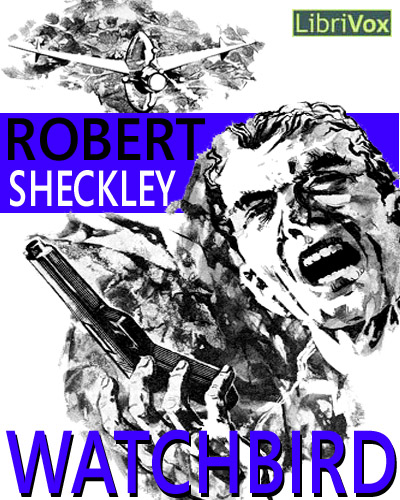
LIBRIVOX - Watchbird by Robert SheckleyWatchbird
By Robert Sheckley; Read by Gregg Margarite
1 |MP3| – Approx. 47 Minutes [UNABRIDGED]
Publisher: LibriVox.org
Published: May 16, 2010
Strange how often the Millennium has been at hand. The idea is peace on Earth, see, and the way to do it is by figuring out angles. First published in the February 1953 issue of Galaxy Science Fiction.

Audio Drama:

Tales Of TomorrowTales Of Tomorrow – Watchbird
Based on a story by Robert Sheckley; Performed by a full cast
1 |MP3| – Approx. 28 Minutes [RADIO DRAMA]
Broadcaster: ABC Radio (American Broadcasting Company)
Broadcast: 1953
Provider: OTR-Cat.com
2000X - Watchbird based on the story by Robert Sheckley2000X – The Watchbird
By Robert Sheckley; Performed by a full cast
Audible Download – Approx. 35 Minutes [RADIO DRAMA]
Publisher: The Hollywood Theater of the Ear / Audible
Published: 2000
Science invents a flying robot that prevents murder, but there’s a fateful glitch. Adapted for audio by William F. Nolan and Ytzhak Berle, with a cast featuring Newell Alexander, Janet Carroll, Jerry Castillo, Joe Greco, Melissa Greenspan, Allan Miller, Stefan Rudnicki, Hamilton Camp, Brian Finney, and Bradley Schreiber.

Springbok Radio - SF'68SF’68 – Watchbird
Based on the story by Robert Sheckley; Adapted by Michael McCabe; Performed by a full cast
1 |MP3|* – Approx. 30 Minutes [RADIO DRAMA]
Broadcaster: Springbok Radio
Broadcast: 1968
Provider: The Zombie Astronaut’s Frequency Of Fear #0.048
*The adaptation begins at approx. the 43 minute mark.
SF’68 was produced in Johannesburg, South Africa in 1968.

Other:

-The original publication in Galaxy Science Fiction |ETEXT|HTML|

-Video adaptation in The Masters Of Science Fiction TV series.

Posted by Jesse Willis

LibriVox: The Skylark Of Space by E.E. Smith

SFFaudio Online Audio

LIBRIVOX - The Skylark Of Space by E.E. SmithThe Skylark Of Space
By E.E. Smith; Read by Richard Kilmer
19 Zipped MP3 Files or Podcast – Approx. 9 Hours 22 Minutes [UNABRIDGED]
Publisher: LibriVox.org
Published: December 16, 2010
The novel begins with the accidental discovery, in a Government laboratory in Washington D. C., of a form of clean nuclear power. Our hero, Dr. Richard Seaton, uses this power to build first a flying belt and then an interstellar spaceship. He later discovers that the process operates by generation and manipulation of gravity fields. When his government coworkers do not believe him, Seaton acquires rights to his discovery from the government and commercializes it with the aid of his friend, millionaire inventor Martin Crane. A former colleague, Dr. Marc DuQuesne, joins with the unscrupulous World Steel Corporation to try to steal Seaton’s invention. The resulting conflict escalates, as Seaton and Duquesne develop greater and greater technical capabilities and enlist more and more powerful alien races as allies.

Podcast feed: http://librivox.org/rss/4865

iTunes 1-Click |SUBSCRIBE|

[Thanks also to mim@can and Barry Eads]

Posted by Jesse Willis

LibriVox: Asteroid Of Fear by Raymond Z. Gallun

SFFaudio Online Audio

LIBRIVOX - Asteroid Of Fear by Raymond Z. GallunAsteroid Of Fear
By Raymond Z. Gallun; Read by Gregg Margarite
2 Zipped MP3 Files or Podcast – Approx. 1 Hour 32 Minutes [UNABRIDGED]
Publisher: LibriVox.org
Published: December 15, 2010
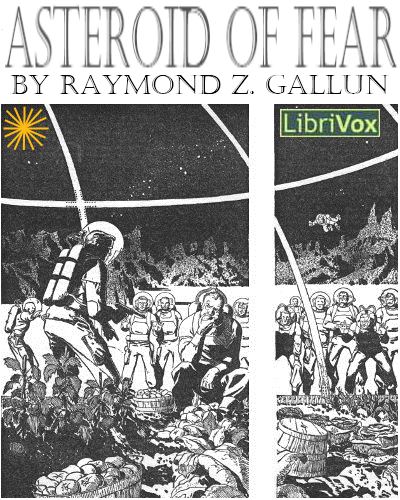
John Endlich needed to clean up his act. Gambling, drinking, a hot temper and wanderlust were the last things Rose and the kids needed. So he went to the Homesteaders Office and signed up to terraform Vesta, a chunk of a once thriving alien planet that had exploded from within; a flat lump of crust which was now the remains of a farm on one side and a mining operation on the other. The miners hated Endlich and sabotaged his plans at every opportunity. They were going to kill him and his family if he didn’t find a way to stop them. First published in the March, 1951 edition of Planet Stories magazine.

Podcast feed: http://librivox.org/rss/5014

iTunes 1-Click |SUBSCRIBE|

Part 1 |MP3| Part 2 |MP3|

[Thanks also to Betty M.]

Posted by Jesse Willis

The SFFaudio Podcast #084

Podcast

The SFFaudio PodcastThe SFFaudio Podcast #084 – Jesse talks recent arrivals and new releases with Paul W. Campbell, Luke Burrage, Rick Jackson and Gregg Margarite

WATCH OUT FOR THE FALSE ENDINGS (mostly attributable to Luke)

Talked about on today’s show:
Role playing game names, “Tom And His Friends” Dungeons And Dragons comedy (aka Farador), SFFaudio Challenge #2, Rebels Of The Red Planet by Charles L. Fontenay, Mars, martian rebels, Podiobooks.com, Cossmass Productions, Mark Douglas Nelson, Dan Simmons’ Hyperion, the least interesting vs. the least fitting, I’m Dreaming Of A Black Christmas by Lewis Black, Christmas = Fantasy?, The Daily Show with Jon Stewart, Suck It, Wonder Woman |READ OUR REVIEW|, Star Wars, what makes Star Wars Science Fiction is a sense-of-wonder?, Star Trek, METAtropolis: Cascadia, Star Trek The Next Generation narrators vs. Battlestar Galactica narrators, Wil Wheaton as a narrator, Dove Audio, Levar Burton as a narrator, liking Star Trek for all the wrong reasons, Theodore Sturgeon, Harlan Ellison, assimilation is a neat idea, “who the hell are the Borg?”, The Unincorporated Man by Dani Kollin and Eytan Kollin |READ OUR REVIEW|, The Unincorporated War, “is there true Science Fiction to be found in sequels?”, The Hunger Games by Suzanne Collins, Peter F. Hamilton’s The Void Trilogy, Blackout by Connie Willis, The Doomsday Book by Connie Willis |READ OUR REVIEW|, Firewatch, dragging the story out, Whiteout by Connie Willis, World War II, Katherine Kellgren as a narrator, Jenny Sterlin as a narrator, Recorded Books, Brilliance Audio, Audible.com, Amazon.com, Earth Abides by George R. Stewart, Deep Six by Jack McDevitt, introductions to audiobooks, the introduction as an apology for the book, Slaughterhouse Five by Kurt Vonnegut Jr. |READ OUR REVIEW|, The Stainless Steel Rat by Harry Harrison, The Time Traders by Andre Norton, H.G. Wells, The First Men In The Moon, Around The Moon, Jules Verne, continuing characters rather than continuing series, Sherlock Holmes, Khyber Pass vs. Reichenbach Falls, Sir Arthur Conan Doyle, The Valley Of Fear, The Hound Of The Baskervilles, Lois McMaster Bujold’s Miles Vorkosigan series, does reading a series defeat the hope of being surprised? Priest Kings Of Gor by John Norman, A Game Of Thrones by George R.R. Martin |READ OUR REVIEW|, fun vs. funny, crime and adventure vs. ideas, A Princess Of Mars by Edgar Rice Burroughs, Bill The Galactic Hero, Slippery Jim DiGriz, The Stainless Steel Rat’s Revenge, This Immortal by Roger Zelazny, The Speed Of Dark by Elizabeth Moon, Books On Tape, Grover Gardner, Gregg has a grumbly voice, The Space Dog Podcast, The Science Fiction Oral History Association, Gordon Dickson, Isaac Asimov, Arthur C. Clarke, Cordwainer Smith, Scott Westerfeld, Ben Bova, Luke’s next podcast project, NaNoWriMo, what podcast schedule should you have?, Robert Silverberg AUDIOBOOKS are coming from Wonder Audio, the old stuff vs. the new stuff, Jay Snyder as a narrator, a Science Fiction story that has little SF content, autism, Charly, Understand by Ted Chiang, Flowers For Algernon, interacting with the world, I Am Not A Serial Killer by Dan Wells, psychopathy, an unreliable first person narrator, young Dexter, Asperger syndrome, The Curious Incident Of The Dog In The Night-Time by Mark Haddon, a detached (but reliable) narrator, the two audiobook versions of The Curious Incident Of The Dog In The Night-Time, Quicksilver by Neal Stephenson, the Baroque Cycle, Anathem, John Allen Nelson as a narrator, Phat Fiction, The Way Of Kings by Brandon Sanderson, The Towers Of Midnight by Robert Jordan and Brandon Sanderson, walking around central park as a retired person as my new career, who listens to audiobooks?, working the unworked niche, they really like Gregg’s voice!, no RSS-feed = soooo sad, Sam This Is You by Murray Leinster, Black Amazon Of Mars by Leigh Brackett, The World That Couldn’t Be Clifford D. Simak, The Idiot by John Kendrick Bangs, The Hate Disease, Asteroid Of Fear, Industrial Revolution by Poul Anderson, A Horse’s Tale by Mark Twain, anthropomorphic fiction, A Dog’s Tale by Mark Twain, Gregg has bugles lying around, Jonathan Swift, Gulliver’s Travels, Thought You Were Dead by Terry Griggs, Iambik Audio‘s upcoming Science Fiction audiobooks, LibriVox, working with small press publishers, Extract From Captain Stormfield’s Visit To Heaven, Blackstone Audio, The Many Colored Land by Julian May, Bernadette Dunne as a narrator, time travel, The Pliocene Epoch, sequel and prequel fatigue, flooding the Mediterranean, Blake’s 7: Zen : Escape Veloctiy is a Science Fictiony audio drama series, Firesign Theatre? (he means Seeing Ear Theatre), The Moon Moth based on the story by Jack Vance, Don’t Crush That Dwarf, Hand Me The Pliers, Mistborn, Terminal World by Alastair Reynolds, Lord Of Light by Roger Zelazny, Finch by Jeff Vandermere, Flood by Stephen Baxter, thematic exploration vs. bad writing, GoodReads.com, Eifelheim by Michael Flynn |READ OUR REVIEW|, Luke’s books should be audiobooks, The Fifth Annual SFFaudio Challenge, all the cool Science Fiction ideas in Luke’s books, Gregg Margarite is a secret author with a secret pseudonym, Eric Arthur Blair, the publishing industry headache is intolerable to many, good writers + savvy marketers = sales success?, Redbelt, David Mamet, drowning in an ocean full of crap, the Jesse Willis bump?, catering to the listeners (or readers) desires vs. publishers desires, Pogoplug, Out Of The Dark by David Weber, artificial robots vs. natural robots, What Technology Wants by Kevin Kelly, art and techne, does evolution have goals?, the Cool Tools blog, eyes vs. I, natural selection, zero-point energy, the Cat in Red Dwarf was pulled to the fish dispensing vending machine, if you won’t give me eyes at least give me bilateral symmetry, goals vs. patterns or positions, starfish vs. Inuit, technology is a function of evolution, Luke re-writes The War Of The Worlds in under 20 minutes, red weed and green mist, stomach-less martians, “the final final part” and the musical version, flipping over the narrative is fun, Ender’s Game vs. Ender’s Shadow, what do the martians have against doors?, keeping the martian cannon canon, The Dragon With The Girl Tattoo by Adam Roberts.

Posted by Jesse Willis

The SFFaudio Podcast #082 – READALONG: Memory by Donald E. Westlake

Podcast

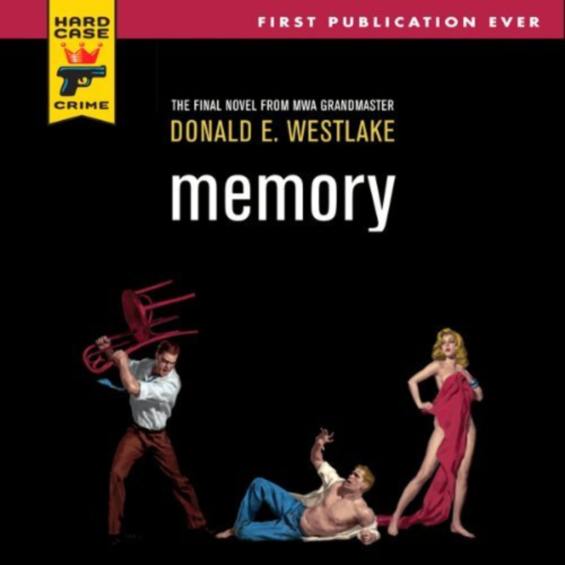
The SFFaudio PodcastThe SFFaudio Podcast #082 – Jesse talks with Gregg Margarite and Trent Reynolds about the BBC Audiobooks America and Hard Case Crime novel Memory by Donald E. Westlake.

Talked about on today’s show:
Iambik Audio, LibriVox, The Violent World Of Parker, Richard Stark’s Parker novels, The Ax by Donald E. Westlake, The Hook, crime writers who murder each other, the state of the U.S. economy, The Hot Rock, Charles Ardai, this isn’t a normal Donald Westlake book, 18 different dramatic situations, merciless forces, realistic brain damage, amnesia vs. Korsakoff’s syndrome, memory and personality, selfishness, ego, id, superego, cognitive psychotherapy: “flooding“, the philosophy amnesia, Catholicism, if you can’t remember your sins are you a sinner?, New York vs. Jeffords, the big city vs. the small town, acting vs. manual labour, lining-up the archetypes, the predatory agent, the first incarnation of Paul Cole vs. the second incarnation of Paul Cole, “and a lull”, scumbag vs. operator, the square of shiny metal, Westlake’s “Nephew books”, “I’m not a criminal but I have and uncle who is.”, the theme of the book: “people are selfish”, persistent unwanted thoughts, “he’s the surrogate son”, that “mumford” speech, they shrug into their coats and hug themselves, life as narrative, Momento, people would have said Momento is inspired by Memory, noir vs. hard-boiled, “What’s my name?!”, is the main character in a coma?, Nebraska, Iowa, “the mechanics of this novel are not fully understood until the end”, “life is noir hidden by fluffy clouds and puppies”, the Rara-Avis Yahoo! Group, Otto Penzler, there are no happy endings, Jim Thompson, James M. Cain, Double Indemnity, The Postman Always Rings Twice, the Glen Orbik cover art for Memory, blindsight, neurological memory problems vs. psychological memory problems, suppressed vs. repressed memories, Oedipus never repressed his memories, Hard Case Crime cover art, Witness To Myself by Seymour Shubin, iambik audio, “desire is the appendix of emotions”, that Westlake smoothness, sowing paranoia, the opposite of paranoia (is pronoia), social groupings, this book made me want to clean my apartment, Westlake’s intellectualism, The Cutie by Donald E. Westlake |READ OUR REVIEW|, Shop Class As Soulcraft: An Inquiry Into The Value Of Work by Matthew Crawford, the condemned man in the mirror, the painfully uncomfortable scenes of Memory, actors must let go to inhabit their characters, the audiobook version of Memory, kudos to Stephen R. Thorne’s narration, straight narration, Neil Gaiman as a narrator, bleak vs. hopeless, the department of narrative and physics, what do you see in the abyss?, “it’s not a who-dun-it, it’s an i-did-it?”

BBC AUDIOBOOKS AMERICA - Memory by Donald E. Westlake

Posted by Jesse Willis

LibriVox: Eric Brighteyes by H. Rider Haggard

SFFaudio Online Audio

LibriVoxBack in April my friend Brian Murphy wrote a wonderful essay generally extolling the virtues of Viking Age Fantasy, and particularly recommending H. Rider Haggard’s Eric Brighteyes as one of the best of the genre. Here’s a taste:

“…I would unhesitatingly declare it [Eric Brighteyes] among the finest works in the genre, better than [Bernard] Cornwell and at least as good as [Poul] Anderson’s best. It may not be as much a household name as Haggard’s more famous works King Solomon’s Mines and She, but it’s nevertheless rightly considered a classic in some quarters and one of Haggard’s best.”

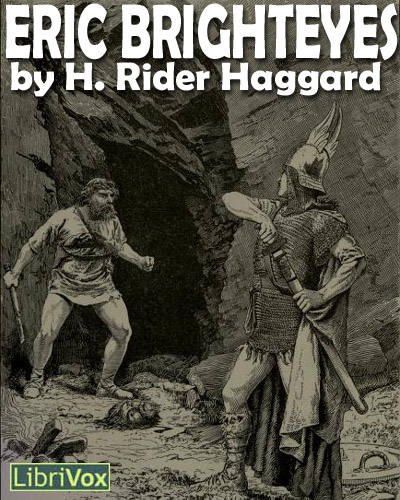
The entire in-depth review can be read over on The Cimmerian. And if you’re looking for more of Lancelot Speed‘s wonderful illustrations (like the one I used for the art below), check out Archive.org’s scan of the 1891 edition HERE. It is wonderful!

LIBRIVOX - Eric Brighteyes by H. Rider HaggardEric Brighteyes
By H. Rider Haggard; Read by Brett W. Downey
33 Zipped MP3 Files or Podcast – Approx. 10 Hours 17 Minutes [UNABRIDGED]
Publisher: LibriVox.org
Published: November 2, 2010
Eric Brighteyes is the title of an epic viking novel by H. Rider Haggard, and concerns the adventures of its eponymous principal character in 10th century Iceland. Eric Thorgrimursson (nicknamed ‘Brighteyes’ for his most notable trait), strives to win the hand of his beloved, Gudruda the Fair. Her father Asmund, a priest of the old Norse gods, opposes the match, thinking Eric a man without prospects. But deadlier by far are the intrigues of Swanhild, Gudruda’s half-sister and a sorceress who desires Eric for herself. She persuades the chieftain Ospakar Blacktooth to woo Gudrida, making the two men enemies. Battles, intrigues, and treachery follow. First published in 1890.

Podcast feed: http://librivox.org/rss/4317

iTunes 1-Click |SUBSCRIBE|

[Thanks also to Theresa L. Downey and Diana Majlinger ]

Posted by Jesse Willis