
Aural Noir Review of The Hook by Donald E. Westlake

Aural Noir: Review

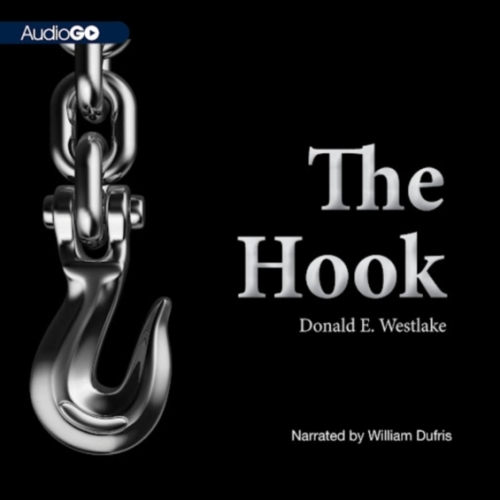
AUDIOGO - The Hook by Donald E. WestlakeThe Hook
By Donald E. Westlake; Read by William Dufris
MP3 Download – Approx. 7 Hours 17 Minutes [UNABRIDGED]
Publisher: AudioGo
Published: 2012
ISBN: 9781609988654
Themes: / Crime / Murder / New York /

Bryce Proctorr has a multimillion-dollar contract for his next novel, a trophy wife raking him over the coals of a protracted divorce, a bad case of writer’s block, and an impending deadline. Wayne Prentice is a fading author in a world that no longer values his work. He’s gone through two pseudonyms, watched his book sales shrivel, and is contemplating leaving the writing life. Proctorr has a proposition: If Prentice will hand over his unsold manuscript to publish under Proctorr’s name, the two will split the book advance fifty-fifty. There’s just one small rider to the deal…

I’m a literal babe in the woods when it comes to mystery/suspense. The Hook by Donald Westlake would be … the first book I’ve ever read in the genre. No, really. So if you’re interested in an evaluation of The Hook’s place among the all-time great works of crime fiction, or of learned comparisons to other like authors and works, you’ve come to the wrong place. But if you’re interested in reading the opinion of a purely neutral observer—a Fantasy/SF fan’s clear-eyed observations of a completely alien genre—read on.

I liked The Hook. It was a lot of fun. It’s obviously the product of a man with a lot of writing experience under his belt. This certainly describes Westlake (1933-2008), a legend in the genre more than a hundred novels and non-fiction books to his credit. The prose is effortless and engaging, the dialogue convincing. It’s mainly suspense, not action, though the violence is unexpected and shocking, and well-portrayed.

Bryce Proctorr is a bestselling mystery/suspense author in the midst of an ugly divorce with a terrible case of writer’s block. With his bills mounting, alimony looming, and a million-plus dollar advance hung up on a book he cannot produce, Bryce asks a former friend, Wayne Prentiss, a struggling mid-list author, to give him his manuscript in exchange for half the advance. The only caveat: Wayne has to kill Bryce’s wife first. Yikes.

The ending is not predictable, save as one possible outcome among many. Westlake keeps you guessing: Have Wayne and Bryce sufficiently covered up their tracks? Will the persistent New York detective Johnson solve the crime? Will Wayne decide that Bryce is too unbalanced and kill him to save his own skin? Will Bryce go off the deep end, cracking under the strain of covering up an awful deed and the mounting pressures in his life? These questions keep you reading on to a chilling end.

In addition to its intrigues The Hook also contains an interesting insider’s look at the publishing business and the squeeze put on midlist writers with the advent of the computer. Wayne’s lament: The bookstores took on 5,000 copies of his last book but only sold 3,100. So for his next work the computer recommends an order of only 3,500 copies. The result is thinner national distribution and lower sales: Wayne’s next book only moves 2,700 copies. So the computer calls for an order of 3,000. And so the downward spiral continues. His advances fall from $75,000 to $20,000. Wayne hits on a workaround: Writing under a pen name, he is able to get a good advance as a “first time” author with a good book. But when his pen name suffers the same fate, he takes up Bryce on his offer to collaborate as a behind-the-scenes ghostwriter. And so the events of The Hook unfold.

It’s hard to go into too much additional detail, lest spoilers ensue. But I will say I can definitely see the appeal of mystery/suspense, which lies in its unpredictability, the tension within and between the characters, and not knowing how or even whether a character’s bad deeds will go unpunished. Will I become a regular mystery reader? Probably not. Would I read something else by Westlake, should the chance arise? Certainly yes. The man can write.

William Dufris does a fine job narrating the tale; my only criticism is his voice portrayal of Bryce Proctorr, which seemed a little too reminiscent of J. Peterman of Seinfeld fame. Overall he has a fine voice for mystery.

Posted by Brian Murphy

Sci-Fi Radio Theater: The Ba Gua Etuis Box (a “sci-fi murder mystery involving robots”)

SFFaudio News

Sci-Fi Radio TheaterSci-Fi Radio Theater is “the brain child of international internet man Charles Davis and opera singer Josie Corichi.” Here’s their mission statement:

To produce high quality original fiction radio play podcasts that fall within the science fiction, fantasy and horror genres.

Why Sci-Fi? Because it’s what we like and it’s what we know. At SFRT we are huge personal fans of this genre of story telling and we feel that we have more to offer to the science fiction community than being observers. Our drive is to be active participants in the creation of original Science Fiction stories.

Why a Radio Play Podcast? Because the greatest imagery that exists is within your own mind. We believe that by delivering these stories in an audio format we allow the listener to be taken to a far deeper and more complex world than we would be able to offer through video.

Another reason is the freedom of length. One of the joys of a science fiction story is the depth and detail you are able to get into. By presenting these radio plays as a podcast we are able to tell a story as long as it naturally takes to tell.

The only question I have is whether the narrator is intentionally doing a Bill Hollweg impersonation.

Posted by Jesse Willis

Recent Arrivals: AudioGo: Donald Westlake and Richard Stark

Aural Noir: Recent Arrivals

AudioGo Hard Case CrimeAudioGo, formerly BBC Audiobooks America and formerly Chivers Audio, has a terrific MP3 download program up and running. It works similarly to Tantor Media, with similar pricing. You can get DRM free MP3 downloads via AudioGo.com after a quick sign up. I just tried it out and found it works really well, almost without a hitch, and doesn’t even require a software download (though that is optional). The files come down as Zipped MP3s, numbered and ready for use. There’s even cover art embedded!

First up, it’s the subject for our next Donald E. Westlake readalong! And apparently the last novel of Westlake’s ever – I have a feeling that Hard Case Crime will dig around until they find a few more – at least I hope they do! That said, this is actually a novel that’s never been published before – and comes from the middle of his writing career. I’m very much looking forward to hearing…

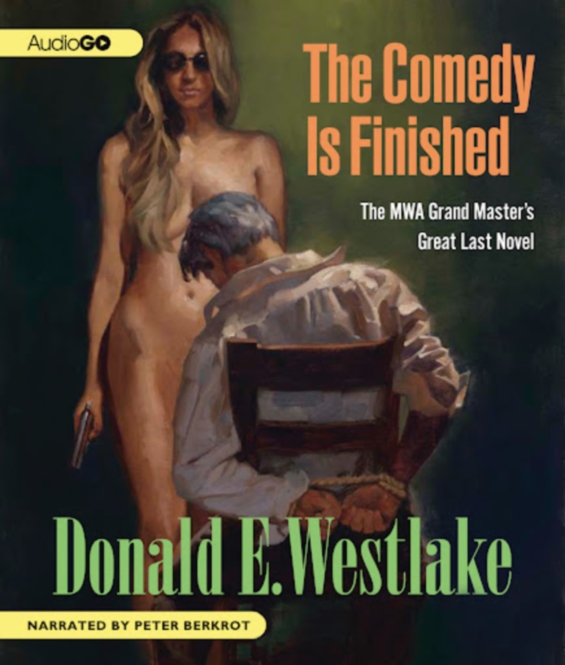
The Comedy Is Finished by Donald E. Westlake; Read by Peter Berkrot – Approx. 10 Hours 44 Minutes [UNABRIDGED]

The year is 1977, and America is finally getting over the nightmares of Watergate and Vietnam and the national hangover that was the 1960s. But not everyone is ready to let it go. Not aging comedian Koo Davis, friend to generals and presidents and veteran of countless USO tours to buck up American troops in the field. And not the five remaining members of the self-proclaimed People’s Revolutionary Army, who’ve decided that kidnapping Koo Davis would be the perfect way to bring their cause back to life…

AudioGo - The Comedy Is Finished by Donald E. Westlake

I read The Hook, and loved The Hook, years ago. It was first published in 1990 and may have been the first William Dufris narrated novel I’ve ever heard. It’s a wonderful audiobook and a great book about the publishing industry, writing and murder.

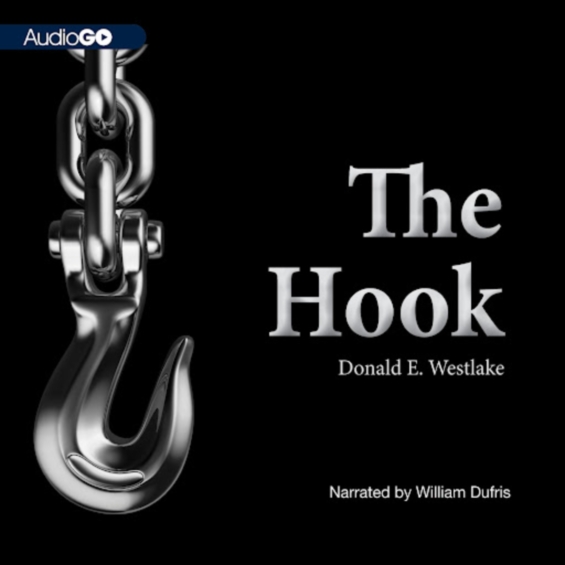
The Hook by Donald E. Westlake; Read by William Dufris – Approx. 7 Hours 17 Minutes [UNABRIDGED]

Bryce Proctorr has a multimillion-dollar contract for his next novel, a trophy wife raking him over the coals of a protracted divorce, a bad case of writer’s block, and an impending deadline. Wayne Prentice is a fading author in a world that no longer values his work. He’s gone through two pseudonyms, watched his book sales shrivel, and is contemplating leaving the writing life. Proctorr has a proposition: If Prentice will hand over his unsold manuscript to publish under Proctorr’s name, the two will split the book advance fifty-fifty. There’s just one small rider to the deal…

AudioGo - The Hook by Donald E. Westlake

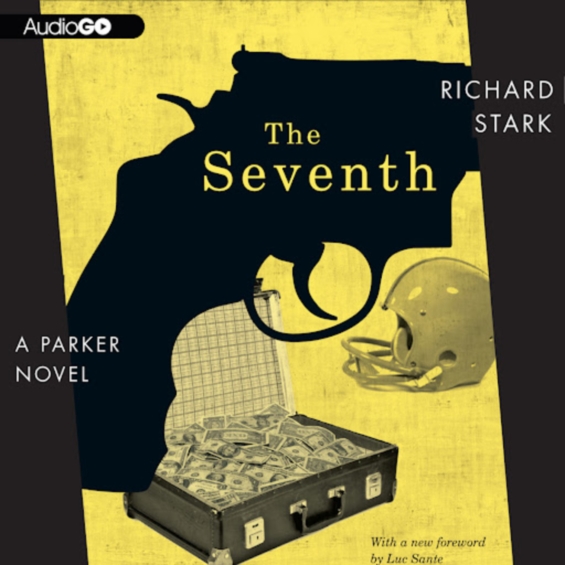
Also by Westlake, but written under his Richard Stark pseudonym, The Seventh is the seventh book in a long running series of terrific crime novels about a heister named Parker. This new audiobook edition features a new narration by Westlake veteran Stephen R. Thorne! The old one, recorded for Books On Tape by Michael Kramer, is long out of print. The only thing lacking from this edition is the Luc Sante introduction (which is even advertized on the cover art below).

The Seventh by Richard Stark (aka Donald E. Westlake); Read by Stephen R. Thorne – Approx. 4 Hours 26 Minutes [UNABRIDGED]

The robbery was a piece of cake. The getaway was clean. And seven men were safely holed up in different places while Parker held all the cash. But somehow the sweet heist of a college football game turns sour, Parker’s woman is murdered, and the take is stolen. Now Parker’s looking for the lowlife who did him dirty, while the cops are looking for seven clever thieves-and Parker must outrun them all. When hunters and hunted meet, some win, some lose…

AudioGo - The Seventh by Richard Stark

Posted by Jesse Willis

The SFFaudio Podcast #142 – AUDIOBOOK/READALONG – Accessory Before The Fact by Algernon Blackwood

Podcast

The SFFaudio PodcastThe SFFaudio Podcast #142 – Accessory Before The Fact by Algernon Blackwood, read by Gregg Margarite. This is a complete and unabridged reading of the short story (16 Minutes) followed by a discussion of it (by Jesse, Tamahome, and Gregg Margarite).

Talked about on today’s show:
Accessory Before The Fact was published in 1911, Jesse doesn’t understand this story, Wilkie Collins, ethereal planes are the hook (rather than the detail), Gilligan and The Skipper vs. Laurel and Hardu vs. Harold and Kumar, “this is not a time-slip story”, “this is a precognative story”, paranoia, “spirtitualized”, Germanophobia, WWI, bigotry on display, L. Frank Baum’s racism, Teutonic invasion, how many characters are in this story (4 or 3)?, peeling away the layers, déjà vu, see/feel the future, quantum theory, is time a superimposition onto real reality?, slipstream, fantasy, should we dismiss this story?, Ten Minute Short Stories, adventure, Accessory Before The Fact is at the genesis of all this, an accountant on vacation, “what do you do when you have one of these events and you can’t prove it”?, The Moment Of Decision by Stanley Ellin, 13 More Stories They Wouldn’t Let Me Do On TV edited by Alfred Hitchcock, An Occurance At Owl Creek Bridge by Ambrose Bierce, time is an illusion, “time is a serious problem…”

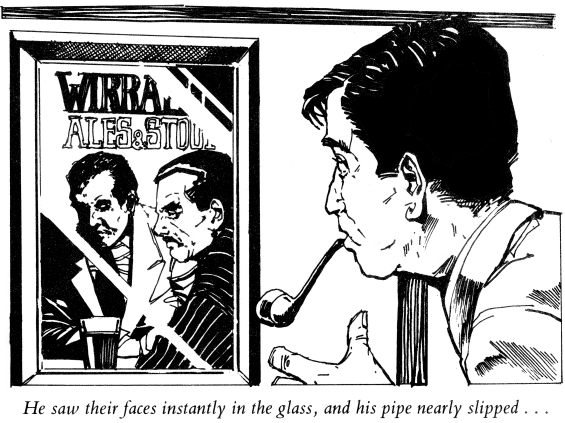
Accessory Before The Fact by Algernon Blackwood - illustration by Bob Harvey

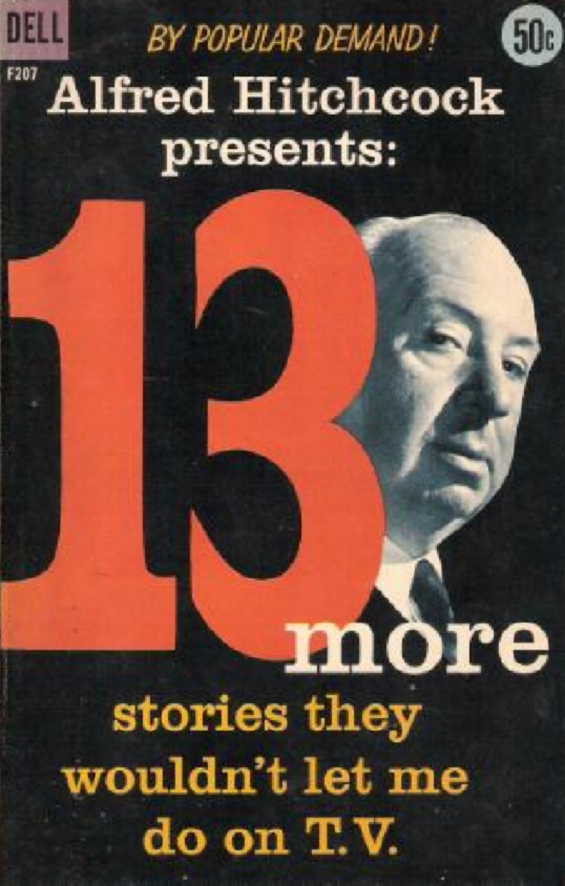
Alfred Hitchcock Presents: 13 More Stories They Wouldn't Let Me Do On TV

Posted by Jesse Willis

The SFFaudio Podcast #134 – READALONG: The Curious Incident Of The Dog In The Night-Time by Mark Haddon

Podcast

The SFFaudio PodcastThe SFFaudio Podcast #134 – Jesse, Scott, Tamahome, Eric S. Rabkin, and Jenny talk about The Curious Incident Of The Dog In The Night-Time by Mark Haddon.

Talked about on today’s show:
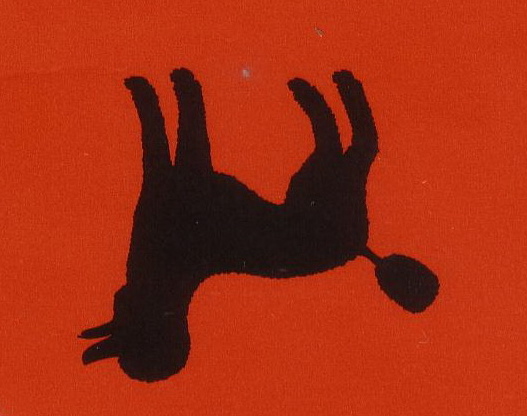
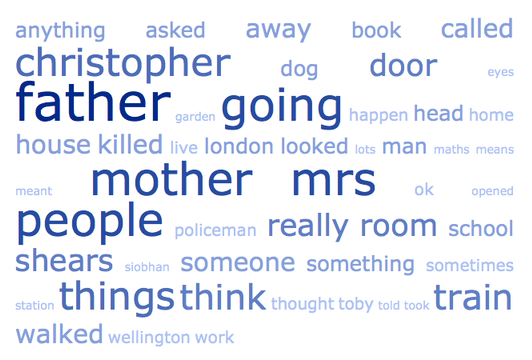
the upside-down dog cover, Jesse doesn’t like the cover, Eric finds hidden meaning in the cover, Sir Arthur Conan Doyle, is it mainstream or a mystery or YA?, Asperger’s or autism?, what is it like to be inside another person’s head?, generates tolerance, Elaine’s post on TED Talk: Elif Şafak on The Politics Of fiction, neurotypical characters, extraordinary abilities and extraordinary deficits, Constituting Christopher: Disability Theory And Mark Haddon’s by Vivienne Muller, Scott loves lists, the reader is ahead of the narrator, unreliable narrators, Flowers For Algernon by Daniel Keyes, The Speed Of Dark by Elizabeth Moon, mystery vs. family drama, Oedipus, “Sophocles not Freud”, Christopher Robin, (Winnie The Pooh), “there is something naively wonderful going on”, information vs. meaning, who did it? vs. why did it get done?, moving from what to why, Eric found the book joyful and uplifting, at the end?, abusive vs. human vs. murderous, PETA would not be pleased, “sometimes people want to be stupid”, Occam’s Razor, “now I know what box they fit into”, Cinderella, the Grimm Brothers, Jesse loves the infodumps, the asides are a highlight, where is Siobhan?, the Recorded Books audiobook version has a great narrator (Jeff Woodman), prime numbered chapters, are the pictures necessary?, Orion (the hunter in the sky), the most common word in the book is ‘and’, “he’s adding things up”, “this is a very true book”, “lies expand infinitely in all directions”, what Science Fiction and mystery look for, “sometimes people want to be stupid”, prime numbers are like life, rationalism vs. empiricism, Christopher yearns for uniqueness, right triangles, the appendix (is not in the audiobook), the brown cow joke, unreliable narrator, Conan Doyle’s beliefs, information vs. understanding, Harriet The Spy, dude don’t stab people, “a tag cloud of the novel”, Alexander And The Terrible, Horrible, No Good, Very Bad Day by Judith Viorst, Slaughterhouse Five by Kurt Vonnegut, Jr., “Repent Harlequin!”, Said The Ticktockman by Harlan Ellison, sense of wonder, Toby the rat (Algernon), Uncle Toby, The Life And Opinions Of Tristram Shandy by Laurence Sterne, the poet “does not number the streaks of the tulip 18th century”, The History of Rasselas by Samuel Johnson, Candide by Voltaire, books inside books, Have Spacesuit, Will Travel by Robert A. Heinlein, Three Men In A Boat by Jerome K. Jerome, Donald E. Westlake, Lawrence Block, Jo Walton’s Among Others, the third season of Star Trek, art making reference to itself, The Time Machine by H.G. Wells, Star Trek‘s third season, Spectre Of The Gun, “we just need the skeleton to tell the story”, “most of the protagonists in Science Fiction novels don’t read Science Fiction”, Jenny’s review of Ready Player One, The Emperor Of Mars by Allen_Steele (audio link), standing the test of time, Jesse’s extended metaphor about winnowed books washing up on beaches 100 years later, Eric is reading Uncle Tom’s Cabin by Harriet Beecher Stowe, propaganda melodrama, Super Sad True Love Story by Gary Shteyngart, Light In August by William Faulkner, the humanizing influence, comparing The Curious Incident Of The Dog In The Night-Time with The Speed Of Dark, the novel’s form shapes the novel market, Jesse thinks series hurt readers, wondering what’s going to happen next vs. what idea is being explored, the value of series, the train trip, the maths exam, “the walls are brown”, in Science Fiction metaphors are real, clarified butter and clarified mother, the word “murder”, Julie Davis’s reading of Uncle Tom’s Cabin, Carrot Juice Is Murder by Arrogant Worms, the fairy tale that is Sherlock Holmes, is the father good?, a clarified father, Jesse was tricked into reading this book, Jenny likes Margaret Atwood’s trilogy, “get ‘im Jenny”, Oryx And Crake, H.G. Wells didn’t need any sequels!, sequel is as sequel does, David Copperfield by Charles Dickens, The Godfather, the market rules, the world building is the point (for series and authors), Agatha Christie, The Tyranny Of The “Talented” Reader, The Wheel Of Time by Robert Jordan, has Neuromancer by William Gibson passed it’s prime? (tune in next week to find out), Home Is The Hunter by Henry Kuttner, Jesse looks to books to deliver on ideas (not to make time pass).

Posted by Tamahome

The Diamond Lens by Fitz James O’Brien

SFFaudio Online Audio

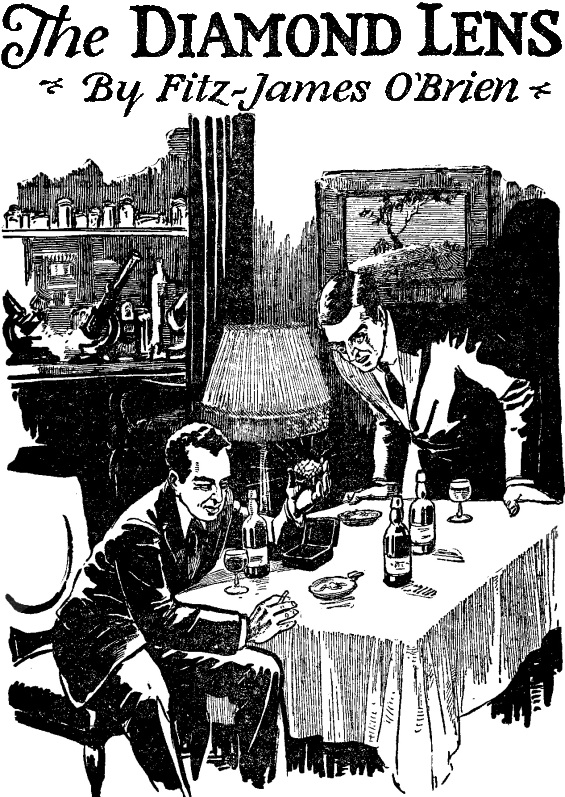
The Diamond Lens by Fitz James O'Brien - illustration uncredited - December 1926 issue of Amazing Stories

I’ve created a |PDF| from the printing in the December 1926 issue of Amazing Stories.

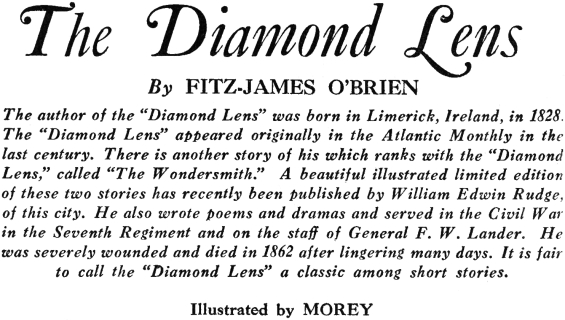
Introduction to the October 1933 issue of Amazing in which The Diamond Lens was published

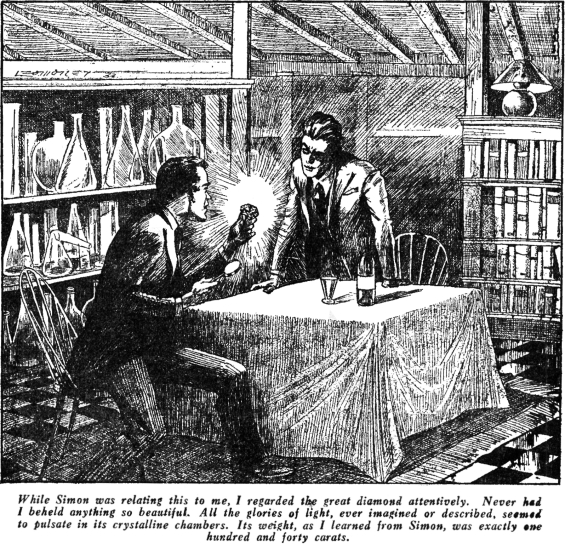
The Diamond Lens - Illustration by Morrey

I’ve created a |PDF| from the printing in the October 1933 issue of Amazing Stories.

In his introductory essay “Expanding The Lens“, found in to the story in The Road To Science Fiction: From Gilgamesh To Wells, editor James Gunn writes:

“[The Diamond Lens] is the first known story in which another world is perceived through a microscope… [this story] opened up another world, not just for readers, but for writers as well.” Gunn goes on to praise O’Brien’s “realistic treatment of the fantastic” and says that “‘The Diamond Lens‘” may be the first modern science-fiction story.”

LibriVox narrator Corrina Schultz describes The Diamond Lens this way:

“This story has a bit of everything – obsessive scientist, psychic medium contacting the dead, clever murder cover-up, racism, creepy stalker, college student shirking his studies, the painful results of pursuing forbidden knowledge, the noble savage…”

Atop those words I myself can heap a few other attractors:

1. The Diamond Lens is bizarre in both plot and focus, with episodic like writing <-Weird for a short story. 2. It has the sensibility of a foreign culture <-The 19th century attitude toward seances is pretty fucking foreign! 3. The protagonist is a mad microscopist. <-Perhaps he was demented by the illicit lure of science? 4. The story features a brutal killing. <-With a whackjob of added racism to complicate matters! 5. It has a noir ending. <-My favourite kind. As you may have guessed I quite enjoyed The Diamond Lens.

Stories like Harl Vincent’s Microcosmic Buccaneers (1929), Theodore Sturgeon’s Microcosmic God (1941) and both Sunken Universe (1942) and Surface Tension (1952) by James Blish all stem from the microscopic pioneering of The Diamond Lens. Whereas the theme, of an alien female object of adoration in an unreachable land, also brings to mind a mighty parallel with Jack Williamson’s The Green Girl (1930). And one final note, a quick read of the Wikipedia entry for Fitz James O’Brien makes me think some of the tale is autobiographical!

LibriVoxThe Diamond Lens
By Fitz James O’Brien; Read by Corinna Schultz
1 |MP3| – Approx. 57 Minutes [UNABRIDGED]
Publisher: LibriVox
Published: FORTHCOMING
A scientist, having invented a powerful microscope, discovers a beautiful female living in a microscopic world inside a drop of water. First published in the January 1858 issue of The Atlantic Monthly.

The Weird CircleThe Diamond Lens
Based on the story by Fitz-James O’Brien; Performed by a full cast
1 |MP3| – Approx. 25 Minutes [RADIO DRAMA]
Broadcaster: MBS, NBC, ABC
Broadcast: December 31, 1944
Provider: Archive.org

Arthur C. Clarke describes The Diamond Lens (from an article in Playboy)

Posted by Jesse Willis