News, Reviews, and Commentary on all forms of science fiction, fantasy, and horror audio. Audiobooks, audio drama, podcasts; we discuss all of it here. Mystery, crime, and noir audio are also fair game.
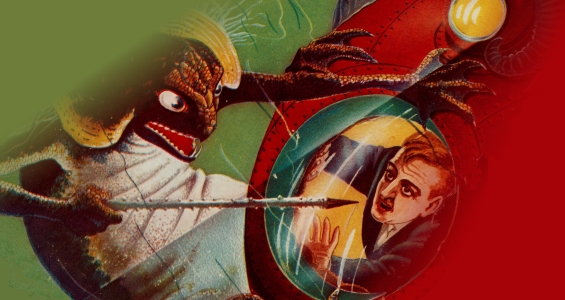
A very good reading of one of H.G. Wells’ long neglected stories, In The Abyss, is now available from LibriVox. James Christopher narrates this pioneering tale of first contact with a submarine civilization and he does it with the skill that comes from more than five years of contributions to LibriVox!
Those who’ve read H.P. Lovecraft’s The Shadow Over Innsmouth will appreciate the Well’s description of what sounds like Deep Ones:
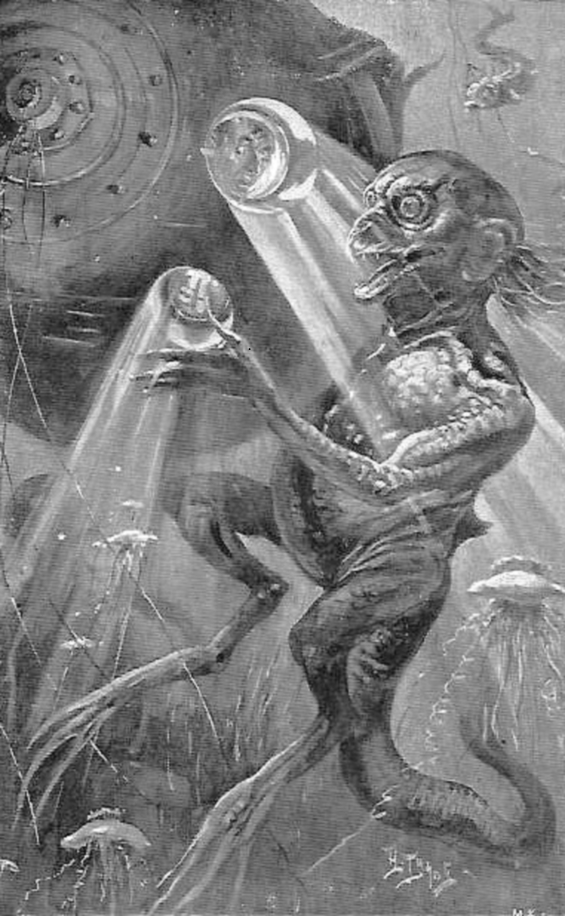
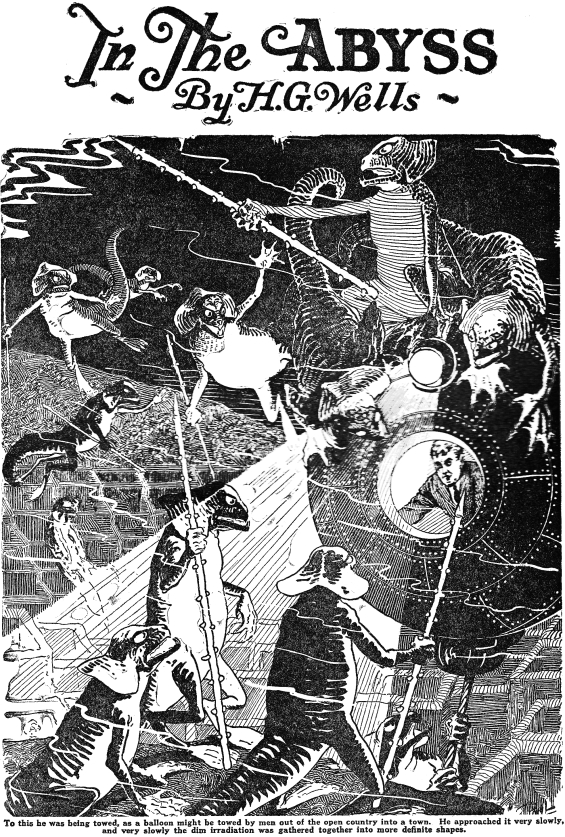
“Two large and protruding eyes projected from sockets in chameleon fashion, and it had a broad reptilian mouth with horny lips beneath its little nostrils. In the position of the ears were two huge gill-covers, and out of these floated a branching tree of coralline filaments, almost like the tree-like gills that very young rays and sharks possess. But the humanity of the face was not the most extraordinary thing about the creature. It was a biped; its almost globular body was poised on a tripod of two frog-like legs and a long, thick tail, and its fore limbs, which grotesquely caricatured the human hand, much as a frog’s do, carried a long shaft of bone, tipped with copper. The colour of the creature was variegated; its head, hands, and legs were purple; but its skin, which hung loosely upon it, even as clothes might do, was a phosphorescent grey.”
In The Abyss
By H.G. Wells; Read by James Christopher
1 |MP3| – Approx. 36 Minutes [UNABRIDGED]
Publisher: LibriVox.org
Published: July 3, 2013 “To this he was being towed, as a balloon might be towed by men out of the open country into a town. He approached it very slowly, and very slowly the dim irradiation was gathered together into more definite shapes.” First published in Pearson’s Magazine, August 1, 1896.
Here’s an illustrated |PDF| made from the printing in the Amazing Stories, September 1926. And here’s the |PDF| made from the illustrated first printing in Pearson’s Magazine, August 1896.
Here’s an illustration from an early French translation:
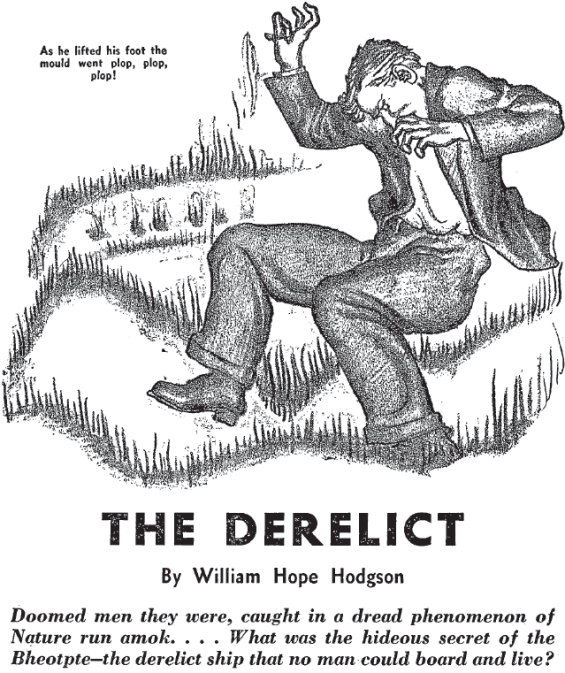
The SFFaudio Podcast #219 – The Derelict by William Hope Hodgson; read by the wonderful Mike Vendetti. This is a complete and unabridged reading of the story (1 hour 13 minutes) followed by a discussion of it. Participants in the discussion include Jesse, Mike Vendetti, and Sam Gafford (from the William Hope Hodgson blog).
Talked about on today’s show:
Most popular stories, Audible.com, Out Of The Storm by William Hope Hodgson, The House On The Borderlands, one of the best novels of the twentieth century, a classic of Science Fiction and Horror, The Ghost Pirates, The Boats Of The “Glen Carrig”, The Night Lands, one of the best horror novelists ever, WWI, Belgium, Ypres, Mike did the Vietnam thing, Ambrose Bierce, a love hate relationship with the sea, the merchant marine, why didn’t Hodgson join the Royal Navy?, Sailing Alone Around The World by Joshua Slocum, the sea as an evil monster, a hair pin as a deadly weapon, the sea becomes your god, an indifferent sea, H.P. Lovecraft, a lappet rather than a tentacle, the same basic take on how the universe works, Supernatural Horror In Literature,
Of rather uneven stylistic quality, but vast occasional power in its suggestion of lurking worlds and beings behind the ordinary surface of life, is the work of William Hope Hodgson, known today far less than it deserves to be. Despite a tendency toward conventionally sentimental conceptions of the universe, and of man’s relation to it and to his fellows, Mr. Hodgson is perhaps second only to Algernon Blackwood in his serious treatment of unreality. Few can equal him in adumbrating the nearness of nameless forces and monstrous besieging entities through casual hints and insignificant details, or in conveying feelings of the spectral and the abnormal in connection with regions or buildings.
ghost stories, the frame story, the spontaneous generation of life, The White People by Arthur Machen, Frankenstein, The Eclogues by Virgil, a recipe for wasps, dead matter, The Voice In The Night (Hodgson’s most famous story), don’t come any closer!, the mold taking over, Matango: Attack of the Mushroom People, The Terror Of The Water Tank, Hodgson in the bookstore, Night Shade Books, The Hog, where is the manuscript?, Brown University, Lord Dunsany, Sam Moskowitz, S.T. Joshi, a gathering of papers, the Titanic, the “nautical” theme, travel by sea, Cpt. “Sully” Sullenberger, radio telegraphy, Widow’s walk, Why I Am Not At Sea, the romance of the sea, personal abuse, physical culture, ‘all those reports are untrue’, Slocum may have been on the other side, Hodgson was a hunk, photography, Hodgson’s gym, directing artillery fire, too early, diet and exercise, Super Man and the superheroes, Gladiator by Philip Wylie, 98-pound weakling, Charles Atlas, sailor, soldier, writer, photographer, what didn’t he do?, Hodgson’s family, religion, Blackburn, Downstairs On A Bicycle, Harry Houdini, a flurry of stories and novels, a hungry rejected writer, where did this writing come from?, a notoriety seeker, Arnold Schwarzenegger, good reviews and poor sales, The Night Lands is incomparable, Olaf Stapledon, the ending of 2001: A Space Odyssey, H.G. Wells, The Bookman magazine, Edgar Allan Poe, Hodgson’s women, The Dream Of X, writers rights (copyright), short stories sell better, writing order vs. publication order, The Ghost Pirates is Sam’s favourite, seeping dimensions, Mike is fast, outside sales, Mike Vendetti audiobooks on Audible.com, Robert E. Lee, text was meant to be read aloud, music and reading were social activities, actors are turning to audiobooks.
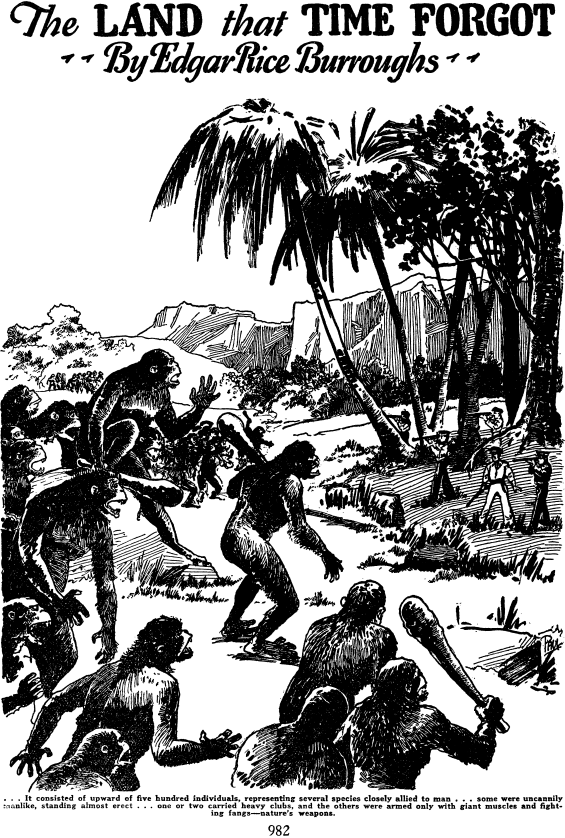
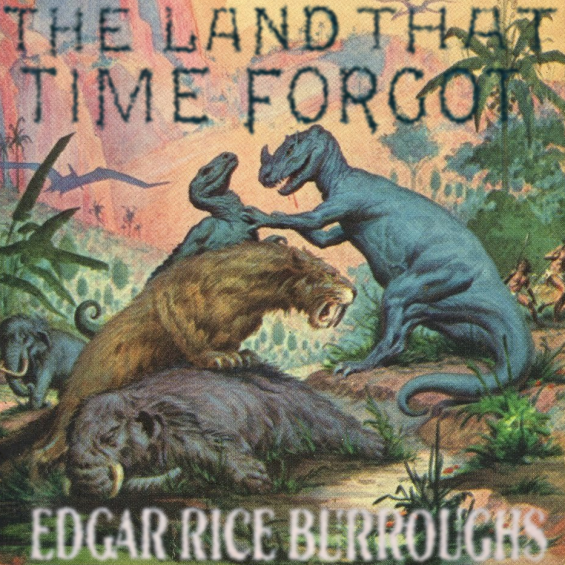
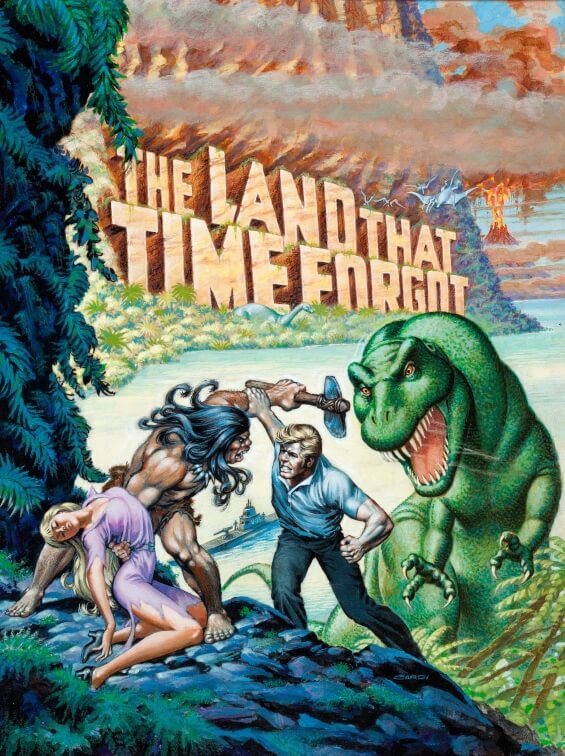
The SFFaudio Podcast #218 – Jesse, Luke Burrage, David Stifel and John Feaster discuss the audiobook of The Land That Time Forgot by Edgar Rice Burroughs (narrated by David Stifel) – you can get the free podcast of the audiobook HERE.
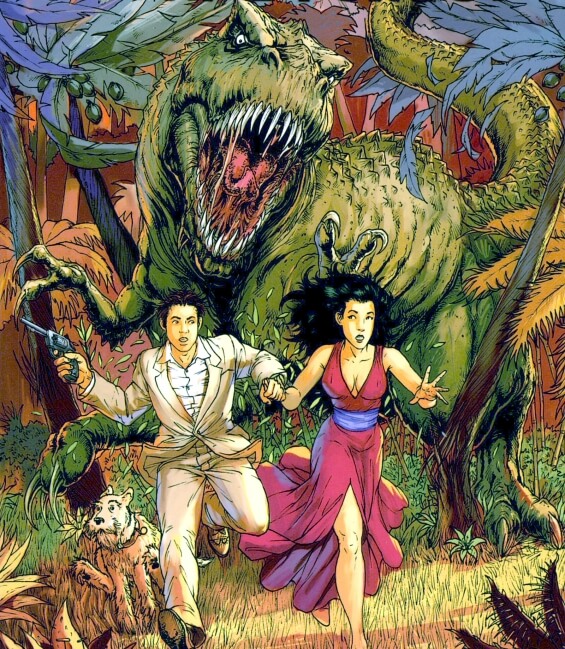
Talked about on today’s show: This Burroughs Guy, The Caspak Series, Irwin Borges biography of Edgar Rice Burroughs, Blue Book magazine, The Lost U-Boat, the 1975 movie (The Land That Time Forgot), The People That Time Forgot, weird science ideas, evolution, this is how evolution works here (maybe?), tadpoles, the irony, Tarzan Of The Apes, dead baby ape, “And now this creature of my brain and hand had turned Frankenstein, bent upon pursuing me to my death.”, WWI Germans, The Lost World by Sir Arthur Conan Doyle, Journey To The Center Of The Earth by Jules Verne, navigating an underground river with a u-boat, Yellowstone Park, lost continent, high tech, necessary irony, a classic story, Jurassic Park, a UNIX system, “Californians, as a rule are familiar with jiu-jitsu.”, casual racism, Japs vs. J.A.P.s, the Huns (the Bosch), the rape of Belgium, trouble with Germans in the 1920s, Tarzan The Untamed, “full German racism”, Greenland, “imaginative idiots”, the frame story, John Carter of Mars, the tides took a thermos from the Antarctic Indian Ocean to Greenland in the space of a year, very outlandish stories, sardonic humour, Luke on framing stories, werewolves, vampires, zombies, The Player, meta self-referential recursive, we never learn the protagonist’s name until the last chapter, Bowen, the Lafayette Escadrille, Earnest Hemingway, he’s no Tarzan, a techno-geek, a romantic flop, Crown Prince Nobbler aka Nobs (an Airedale), Tintin and Snowy, was Tintin gay?, strange lands, X-Men #10, The Savage Land (of Ka-Zar), fewer dinosaurs, Plesiosaur soup, Pterodactyls, Allosaurus attack, the farther north you go the farther you go in evolution, Ahm, Cro-Magnon man, Out Of Time’s Abyss, embryology, “we’ve all got gills at that point”, flowers, “it’s always below the surface”, “we are more developed from them <- is wrong", whaddya mean kinda racist??, "the black people are below the white people on this chart", H.P. Lovecraft, one could call it evil (but fun adventure), something else, action adventure story, refining your own oil, the hero must always find a dog and a girl and exactly what he needs, the damsel in distress is a bit wet, the movie commander is sympathetic, ape like monsters, Michael Moorcock, volcanic eruptions, Baron Friedrich von Schoenvorts, shelling the fort on the way, evil bastards, shelling the lifeboats is wholly malice, soooo propaganda, Prussian honor, who was the bad guy in WWI?, proposed German peace terms if they had won WWI, domino theory, communism, let's head for Caspak, The Temple by H.P. Lovecraft, an incident blown out of proportion?, terror attacks vs. gun accidents, war crimes?, water-boarding, Otto Skorzeny, bombing dykes and dams (not a war-crime because we did it too), conducting operations while in enemy uniforms, Harry Turtledove’s alternate history, Benito Mussolini, real-life James Bond (was Austrian), Skorzeny’s smite, more Burroughs, The Mucker by Edgar Rice Burroughs, “socially relevant fiction”, yellow peril looking dudes, quite adventurey but with interesting ideas, the pre-Socratics philosophers on spontaneous generation of life, spontaneous or parallel development, again with the weird women birthing practices, Marvel Comics, The Savage Land, Tarzana’s racial segregation, white supremacy, Glenn Beck’s planned community, racists believe in races, socially constructed, genetic racism?, the monkeysphere, H.G. Wells’ work, The War Of The Worlds, Burroughs’ heroic heroes vs. Wells’ horrible people, the sympathy is in us not the book, the artilleryman, a bit of a loon, the Zulu, the Martini rifle, one day one day!, Japan’s aspirations, we need some warships, we’ve got to control our own shit, navel vs. naval, it happened to Germany too, “too cold and full of penguin’s let’s take Poland instead”, The People That Time Forgot, Out Of Time’s Abyss, more Tarzan, how long does it take?, Tarzan And The Jewels Of Opar, the Venus series, Jerry Schneider, Pirates Of Venus, invalid copyright renewals, more Mars please, Mastermind Of Mars, permission requires money, the bigger gorilla, Audible.com, Burroughsguy.com, re-writing for less racism, a blow by blow comparison, lynching, The Lost Continent by Edgar Rice Burroughs (aka Beyond Thirty), perfidy, the lost continent is Europe, a black super-state!, 30 Longitude West, prejudices, vilontely pro-capitalist in the Ayn Rand sense, Burroughs loathed the labour movement, the Industrial Workers of the World are the real bad-guy, “women don’t really want to be equal to men”?, deep down atheists really believe in God?, the mystery will be unveiled.
The Voice in the Night – No matter how many times I read this story, it continues to have an amazing impact. If Hodgson is to be remembered for ONE story, it will be this one. The feeling of desperation and desolation is overwhelming and the story operates on several different layers which need to be studied in more depth.
I haven’t read enough Hodgson to name a top ten but I agree The Voice In The Night is a fabulously frightening horror tale.
If you’ve never read The Voice In The Night before, gird yourself, and prepare something light and fluffy to cleanse your mind for afterward, otherwise it may creep you out so much you will fear to sleep.
Having sampled a fair amount of steampunk fiction I’d pretty much concluded it was a genre best relegated to photography or film, not text. But there may be another place steampunkery may be successful – computer games. The BioShock series looks promising, but perhaps even more promising is the 2012 game Dishonored. Here is the trailer:
Sailing Alone Around The World
By Joshua Slocum; Read by Alan Chant
1 |M4B|, 22 Zipped MP3 Files, or Podcast – Approx. 7 Hours 52 Minutes [UNABRIDGED]
Publisher: LibriVox.org
Published: May 9, 2007
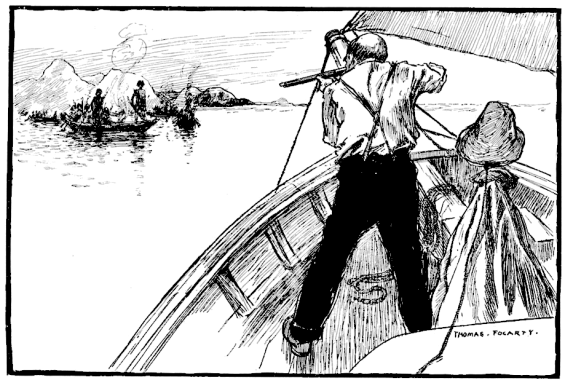
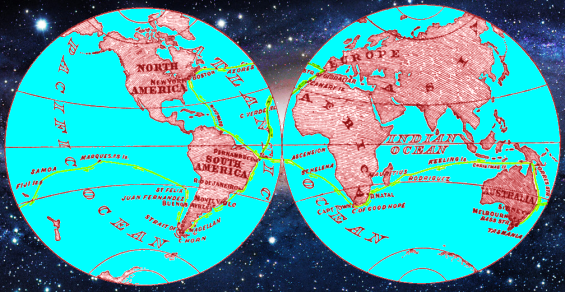
|ETEXT| Joshua Slocum was the first man to sail around the world alone in a small boat. He personally rebuilt an 11.2 metre sloop-rigged fishing boat that he named the Spray. On April 24, 1895, he set sail from Boston, Massachusetts. More than three years later, he returned to Newport, Rhode Island, on June 27, 1898 having circumnavigated the world, a distance of 46,000 miles (74,000 km). In 1899 he described the voyage in Sailing Alone Around the World now considered a classic of travel literature. It is a wonderful adventure story from the Age of Sail and a book of which Arthur Ransome declared, “boys who do not like this book ought to be drowned at once.”
I was listening to an episode of the CBC Radio One Ideas podcast, entitled Sailing Alone Around The World |MP3|, and was struck by the story of the first man to do that very thing. The program uses excerpts from Slocum’s book of the same name, and interviews those modern solitary sailors who’ve followed in Slocum’s wake. The fact that, in some sections of the sea, the next nearest human being to a lone sailor might be someone on the International Space Station, was an astounding revelation to me. The fact that there have been fewer solitary circumnavigators than there have been people in space, also astounding. So, not even half-way through the show I set my sights on LibriVox, where I searched for, found, and downloaded an M4B of the audiobook.
Slocum was an Canadian by birth and a naturalized American. In the late 19th century, upon finding himself out of work (the age of coal powered ships had begun in earnest), Slocum found there was no more call for a tall ship captain. One day Slocum finds himself having been gifted with an aged sloop. And so he sets about refitting it, hires himself out to himself plans to write a book (serialized in the Century magazine), loads up his cabin with food, supplies and lots of books, and sets sail on a solitary circumnavigation of the planet earth.
What he finds in the adventure is, simply put, real adventure! Slocum is alone for the entire trip except for The Spray itself, Slocum’s sloop, which is full of emotions (it feels happy when the sailing is good, and becomes anxious when in port too long). Similarwise he has a few passengers, there’s a hungry goat, a sneaky bilge rat, and a long suffering spider (it meets another just like it half a planet away from where it was born).
In his more than three years at sea Slocum meets with ship thieves, admirals, colonial governors, the widow (and adopted son) of Robert Louis Stevenson, friendly natives, hostile natives, officious bureaucrats, friendly bureaucrats, storms, reefs, sickness, and even a ghost!
Along the way he salute’s the sea god Neptune, ports at many memorable anchorages, including the island of the real life inspiration for Daniel Defoe’s Robinson Crusoe (Alexander Selkirk), and becomes an international celebrity.
Slocum’s narrative is helped by his enjoyable sense of humor and hindered by his prejudices. And while the various characters that he meets in the book may sometimes benefit from Slocum’s breezy writing style I got no real sense of the other side of the story. Incidents with thieves, one man steals his pistol, and one South American boy tries to steal his ship, come across as far less frightening than they might really have been. Indeed, there’s something of a deliberate storyteller to this travel narrative, something which reminds me of Sławomir Rawicz’s extraordinary adventure memoir The Long Walk (it may have been entirely made up). That said, the documentation seems far more present, and the journey here does seem to have actually occurred.
Narrator Alan Chant has an English accent and a relaxed reading style. There’s a bit of background noise in the recording, but the audio is very serviceable. Each chapter begins and ends with a bit of seabird song. Recommended.


 In The Abyss