The SFFaudio Podcast #149 – TOPIC: METAPHOR in Science Fiction and Fantasy

Podcast

The SFFaudio PodcastThe SFFaudio Podcast #149 – Jesse, Luke Burrage, and Professor Eric S. Rabkin talk about METAPHOR in Science Fiction and Fantasy.

Talked about on today’s show:
Science Fiction and Fantasy sort of undercut the scholastic meaning of metaphor, my friend Bill, metaphors come in two parts – the vehicle and the tenor, giants vs. ogres, denuding the metaphor, Aldebaran 6 has astonishingly beautiful humanoids, unknown vehicles deliver us, The Monsters by Robert Sheckley, The War Of The Worlds, a Tolkienesque task, A Voyage To Arcturus by David Lindsay, Dark Universe by Ron Goulart, Plato’s cave, blindness, dead metaphors, the Burning Bush, Saul vs. Paul, a sound idea, Germanic grounds for divorce, Star Maker by Olaf Stapledon, The Door Into Summer by Robert A. Heinlein, 1984 by George Orwell, “the clock stuck thirteen”, constructing meaning, William Shakespeare, awful as in creating awe, Moses and Mount Sinai, “shining like the sun”, a sun god, Sampson, hairy like the sun, bald like the moon, Genesis, “you may look upon my hindparts”, Childhood’s End by Arthur C. Clarke, unconscious metaphors, Frankenstein by Mary Shelley, wretch, catwomen from Venus, voluptuous sex objects, building up the vocabulary, Halting State by Charles Stross, Neuromancer‘s opening line, text adventure, Enoch lived 365 years (the sun god), The Tower Of Babel by Ted Chiang, comparing the constructed worlds of video games with the constructed worlds of Science Fiction, Battlefield 2, a meta-metaphor for understanding what Science Fiction does for understanding our world, hamartia needs range finding, The Time Machine by H.G. Wells, “any fool can see”, a system of metaphors for the characters and the reader provides meta-uses, metaphor means “carry across”, Greek moving vans are called metaphore, the Morlocks are the workers, the Eloi are the owners, the Time Traveler is the manager, Get That Rat Off My Face by Luke Burrage, Science Fiction as thought experiment, Michael Crichton, deus ex machina, The War With The Newts by Karel Čapek, Finnegan’s Wake, experimental novels, Germinal by Émile Zola, Flatland by Edwin A. Abbott, allusion vs. metaphor, Sampson vs. Goliath, Luke and Eric prime each other, is Science Fiction useful?, should SF be useful?, Science Fiction and Personal Philosophy (SFBRP #100), reading only the Bible, The Cold Equations by Tom Godwin, the hard lesson namely: “sometimes you’re just fucked”, Star Trek II, cannibalism, Eric objects, the physical world vs. unconditional love, NASA staff need to read The Cold Equations, Steve Jobs (and his reality distortion field), a world full of things other than minds, smart by accident, Apollo 13, give the astronauts poetry, the title itself crystallizes the meaning, The Scarlet Letter by Nathaniel Hawthorne, a parametric center, how do we maintain individuality in the face of fascism?, the vehicle/tenor heuristic, The Great Gatsby by F. Scott Fitzgerald, Nick Carraway, the car is the parametric central of The Great Gatsby, martian vampires, Apollo 1 disaster, Velcro and oxygen, “a failure of imagination”, learning from the past, the metaphor falls and leaves behind a lesson about reality.

Posted by Jesse Willis
The SFFaudio Podcast #148 – READALONG: The Odyssey by Homer (Books I – IV)

Podcast

The SFFaudio PodcastThe SFFaudio Podcast #148 – Scott and Jesse, in the first of a six part series, discuss the first four books of The Odyssey by Homer (books I, II, III and IV).

Talked about on today’s show:
Odysseus doesn’t appear in the first four books of The Odyssey, planting the seeds for the end of the story, The Iliad, and the missing epics, why not read The Iliad first?, novel vs. tragedy, Robert Fagles, E.V. Rieu, Ian Mckellan’s narration, The Apology Of Socrates by Plato, Telemachus’ dilemma, The Teaching Company, The Telemache (the first four books of The Odyssey), xenia, xenos (guest, host, foreigner, and friend), hospitality and the ancient world, an exploration of the concept of xenia, Pallas Athena, disguised, “he’s a suitor”, O Brother, Where Art Thou?, war orphans, embracing the stranger, xenophilia, the recurring turns of phrase, “the wine dark sea” and “bright eyed Athena”, the wise don’t lie, Basil Fawlty is not a very wise man, gearing down, Dan Simmons’s Hyperion, a story for a nation of city states, Nestor’s son was the fastest runner, wisdom comes in many flavours, Helen as a host, was Helen complicit with her kidnapping?, how should we read Helen?, dosing the household, the status of women in ancient Greece, the Entitled Opinions podcast (on Homer And Homeric Epics), The Odyssey is the story of a marriage, adventure with gods, the role of The Odyssey in ancient Greek religion, Socrates was convicted (in part) of denying the gods, miracles as an intervention, why do the gods disguise themselves?, are the gods simply external manifestations of human thought?, were the ancient Greeks more gullible than we?, the editorial introduction by E.V. Rieu, one of the greatest books ever, next time will be books V, VI, VII and VIII.

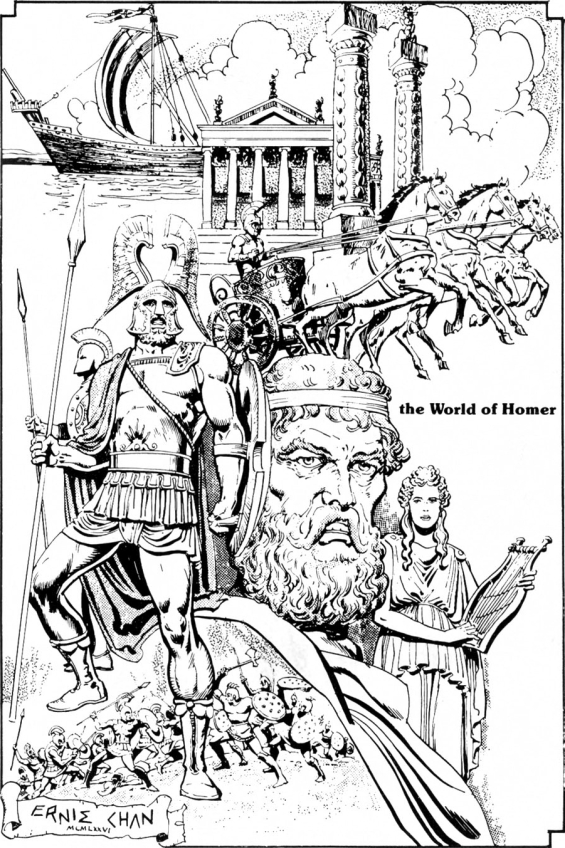
The World Of Homer - illustrated by Ernie Chan

Posted by Jesse Willis

The SFFaudio Podcast #138 – AUDIOBOOK/READALONG: The Crawling Chaos by Winifred V. Jackson and H.P. Lovecraft

Podcast

The SFFaudio PodcastThe SFFaudio Podcast #138 – The Crawling Chaos by Winifred V. Jackson and H.P. Lovecraft, read by Wayne June. This is a complete and unabridged reading of the short story (21 Minutes) followed by a discussion of it (by Jesse, Tamahome, Jim Moon and Wayne June). Here’s the ETEXT.

“In The Crawling Chaos the narrator flees inland, taking his adjectives with him.” -L. Sprague de Camp (from Lovecraft: A Biography)

Talked about on today’s show:
Wayne June is still alive!, first impressions of The Crawling Chaos, Wikipedia’s plot summary of The Crawling Chaos, dream logic, an opium vision, the tripiness, the philosophy behind The Crawling Chaos, The Haunted Palace by Edgar Allan Poe, the self as a haunted palace, Poe is so 19th century, The Raven, The Fall Of The House Of Usher, entropy, there is no meaning in this uncaring universe, “and all the planets mourned”, you’d need a lot of Prozac (or opium) to go through a life like that, the catharsis of apocalypse, a cosmic apocalypse, the plot is a jumble of junk, the biblical echoes, “only the gods reside there” (in Teloe), a very old testament vibe, “lest you turn into a pillar of salt”, the protagonist is us (mankind), Lovecraft’s recurring themes, the ordinary man who swaps places with another, The Shadow Out Of Time, Polaris, Beyond The Wall Of Sleep, transcendental mind-swap stories, the story was a pseudonymous collaboration between Elizabeth Berkley (aka Winifred V. Jackson) and Louis Theobald, Jun. (aka H.P. Lovecraft), Nyarlathotep, “send me some money”, a lot of dross with a powerful effect, “the year of the plague”, the “oriel window” is an eyeball!, “calm down Howard”, “he’s in his own brain”, who or what is “the crawling chaos”?, the ocean pounding is his heart beating, “We’re all doomed!”, what is the crawling chaos?, S.T. Joshi, Rudyard Kipling, the peninsular beach house, Tiger Tiger (from The Jungle Book), The Tyger by William Blake, is the beautiful youth Mowgli?, who are “they”?, a fawn faced youth, Weena from H.G. Wells’ The Time Machine, did Winifred read The Time Machine before sleep?, what is the meaning of “Teloe”? is it teleology, reaching for meaning or purpose and losing it, Amber and Chalcedony, pleasure barges bound for blossomy Cytheron, Liquid Gold, Lord Dunsany, the heavenly host, the destruction of the physical (the corpse-like clay), black clouds like vultures, Supernatural Horror In Literature by H.P. Lovecraft, “the oldest and strongest emotion of mankind is fear”, City In The Sea by Edgar Allan Poe, opium addiction, why opium?, Confessions Of An English Opium-Eater by Thomas De Quincey, Charles Baudelaire, a waking dream, if the story was written in the 1960s…, LSD, morphine and Morpheus (dream), a waking dream, Aldous Huxley, Timothy Leary, The Doors Of Perception, out of Plato’s cave, Philip K. Dick, mindset and environment, mescaline, dreams vs. drug trips, journeys into the unconscious, Mouthpiece by Edward Wellen, decoding the death ravings of Dutch Schultz (HERE), William Burroughs, Robert Anton Wilson, “French Canadian Bean Soup”, stream of unconsciousness, Frances vs. French people, “swimming through New York”, The Librarian TV series, “perfectly ordinary strange adventures”, puns are big for the subconscious, Samuel R. Delany, Groucho Marx.

The Tyger by William Blake

The United Co-Operative, April 1921 - The Crawling Chaos

Posted by Jesse Willis

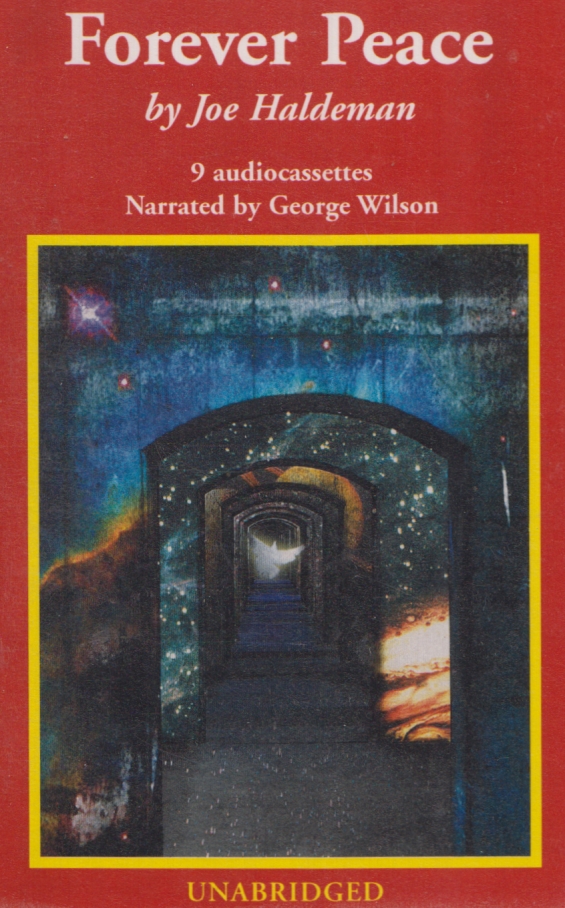
The SFFaudio Podcast #121 – READALONG: Forever Peace by Joe Haldeman

Podcast

The SFFaudio PodcastThe SFFaudio Podcast #121 – Scott, Jesse, Tamahome and Gregg Margarite talk about Joe Haldeman’s novel Forever Peace.

Talked about on today’s show:
The Forever War, Forever Peace, Forever Free, Haldeman’s experiences in South-East Asia (during the Vietnam War), William Mandella, Mandala, Julian Class, Philip Klass (William Tenn), racism, remotely controlled soldier robots, jacks, empathy, sharing menstruation, baldness as a fashion, the nanoforge (a molecular nanotechnology), caper, Stranger In A Stranger Land, heist, “two novellas smushed together”, John W. Campbell, Ben Bova, self help groups, one conceit that remains unexamined, magic machine (aka a sub-atomic replicator), Mack Reynolds, telepathy, asymmetric warfare, prescience, Libya, Pakistan, the two peaces of Forever Peace, what of the aftermath?, applying Isaac Asimov’s Three Laws of Robotics to people, Gregg is a creature capable of killing, not everyone wants to be the black sheep, is 98% of humanity humanizable?, the earth where everyone is gay, the earth where everyone is a clone, “a giant of SF”, The Memory Of Earth by Orson Scott Card, The Moon Is A Harsh Mistress, do you grok the group?, “The Hammer of God”, Jonestown, David Koresh, a religion that requires you believe in evolution, punctuated equilibrium, treating the bible like a science book (is problematic), we’re gonna drill into you brain and then you won’t have those feelings anymore, a utopian dystopia, Malthusian theory, the singularity, A Clockwork Orange, moral conviction vs. physical restriction, Gregg needs his murderer (and we do too), Starship Troopers, false consciousness, Women’s Studies, The Tea Party,

“False consciousness is the Marxist thesis that material and institutional processes in capitalist society are misleading to the proletariat, and to other classes. These processes betray the true relations of forces between those classes, and the real state of affairs regarding the development of pre-socialist society”,

following orders (as false consciousness), Stockholm syndrome, identifying with your oppressor, why do people do things that are against their own interests?, Costa Rica, withholding technology vs. holding resources hostage, Plato’s cave, “from each according to his ability, to each according to his need”, is Jesse making an argument for absolute truth?, what is truth?, “one person’s murder is another person’s dinner”, “God exists or he doesn’t exist”, “assuming we agree on the definition of God”, “we have a bedrock of truth”, Aristotle’s law of non-contradiction, “we’re here and we’re invading your software”, our perception of reality changes, “how can it not always be this way?”, “it’s The Matrix“, Gregg can find reasonable doubt in his own existence, Cogito Ergo Sum (I think therefore I am), René Descartes, “I doubt therefore I am”, Tama has no take, good and bad vs. right and wrong, a mass of conflicting impulses (ambivalence), Heinlein’s militaristic thinking vs. Haldeman’s militaristic thinking, Heinlein’s Future History series, religious conversion, telepathy vs. total immersion, Jonathan Swift, “you can’t reasons someone out of something they weren’t reasoned into”, there are two tenets in Greggism, what you believe doesn’t has to be true, Alan Moore’s personal made-up religion, Scott isn’t a Catholic because of feeling alone, Joseph Campbell “everything is true”, “he was born with a plowshare”, magical thinking, “that’s true for you and that’s fine”, a religious wacko who wants to end the world seems like a tired villain, Source Code, Moon is fantastic (but Source Code is not), the Norwegian whack job, can’t we find another kind of religion, Carl von Clausewitz, The Operative from Serenity (played by Chiwetel Ejiofor), effective villains, Robert E. Lee, Adolph Hitler vs. Joseph Stalin vs. Mao Zedong, the Tehran Conference, “Uncle Joe”, Stalin’s ending was noir, Pandora’s Star by Peter F. Hamilton has a great (and dirty) villain, Orson Scott Card’s Buggers, Speaker For The Dead, Ender’s Game, zombies are like a force of nature, Heinleinian villains are not diabolical, the ultimate orbital platform, the English Empire, “besides we’re better than you”, why do English actors always play villains? American accents = movie stars, Vancouver is a science fiction ghetto, iambk audio, the proper pronunciation of “about” in Canada, shock vs. shark, accents are lazy ways of speaking, George Wilson (the narrator of Forever Peace), P.G. Wodehouse, Bertie and Jeeves, the secret language of (drunken) Cockneys, no stupid voices please (in audiobooks), if you hire Nicholson for you movie your movie is a Jack Nicholson movie, Gregg’s signature voice may lose him work, why does the narrative switch between first and third person throughout Forever Peace, Yes, Minister, Goodreads.com, senior civil servant (3rd person) vs. elected official (1st person), The Long Habit Of Living by Joe Haldeman, The Forever War is told in first person (right?)

RECORDED BOOKS - Forever Peace by Joe Haldeman

Posted by Jesse Willis

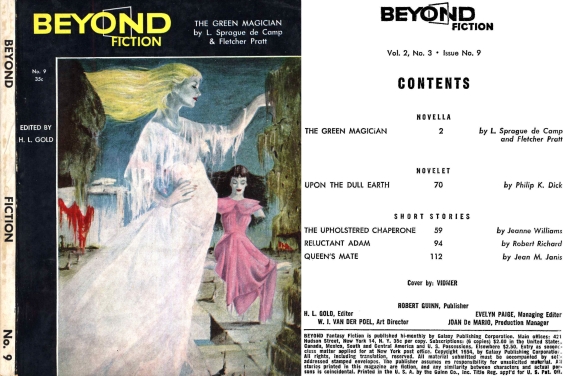
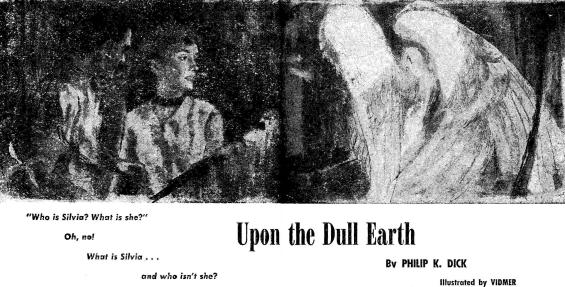
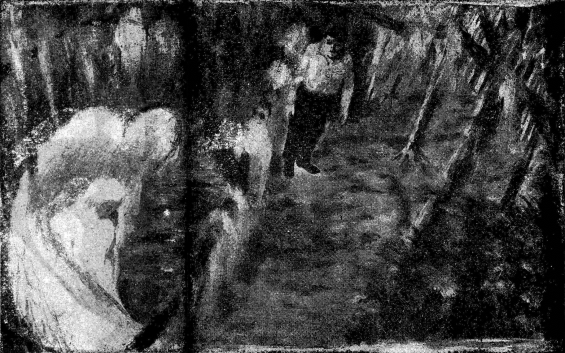
The SFFaudio Podcast #118 – READALONG: Upon The Dull Earth by Philip K. Dick

Podcast

The SFFaudio PodcastThe SFFaudio Podcast #118 – Scott, Jesse and Tamahome talk about Philip K. Dick’s wonderful novelette Upon The Dull Earth (available in Blackstone Audio’s The Selected Stories Of Philip K. Dick Volume 2)

Talked about on today’s show:
Beyond Fantasy Fiction, the prolific Philip K. Dick, Galaxy Magazine, H.L. Gold, is Upon The Dull Earth Fantasy or Science Fiction, suburban romance?, rural romance, Jesse loves the setting, cedars, angels, The Odyssey, On Stranger Tides by Tim Powers, Jesse’s terrible Philip K. Dick impersonation, a wooden faucet?, a one way ladder to another plane, using your coffin as a cocoon, “Rick, I cut myself.”, Rick is responsible for her death, is Rick in hell?, Silvia is a sick chick, shortly after Silvia’s incineration, blood from a New Jersey abattoir, Upon The Dull Earth would be perfect for the A Good Story Is Hard To Find podcast, God has moved on up, HE is capitalized, she’s Fantasy, he’s Science Fiction, she’s elf-like, he’s machine-like, iron and spirits don’t mix, ridding one’s self of civilization, Inferno by Larry Niven and Jerry Pournelle |READ OUR REVIEW|, uisge beatha mean “the water of life” (or whisky), is Silvia depressed?, YA, valkyries, insects, The Hanging Man had insects too, witch vs. saint, remember Prometheus and the fire?, ripples from the event, kraals of white skinned young women, is this all going on in Rick’s head, Rick picks up a hitchhiker to use him as a guinea pig, “you’re crowding me man”, going into the underworld to get back your dead girlfriend, when someone dies you mourn your loss, Plato (and Aristophanes’) story about the mythological division of male from female (The Symposium), “we were meant to be together”, “you complete me” and similar cliches, what happens at the end?, Fair Game by Philip K. Dick, Philip K. Dick stories often have a roadside cafe scene and a gas station scene, “like the doves in a John Woo movie”, where does the title of Upon The Dull Earth come from?, she was merely playing at death, disturbed spirits thirsty for blood, the natural of order of things has been violated, William Shakespeare’s The Two Gentlemen of Verona (Act 4, Scene 2, the character name Sylvia comes from the play, but sylvan means “of the wood”, is she a fairy?, HBO’s True Blood, Icarus, the Wikipedia entry for Upon The Dull Earth, the many mentions of clay, Wonder Woman came from clay, Batman: False Faces by Brian K. Vaughn, J. Michael Straczynski, the Golem, Ted Chiang’s Seventy-Two Letters, The Adventures Of Cavalier And Clay by Michael Chabon, capricious (adj.) Given to sudden and unaccountable changes of mood or behavior, religion, Steven H Silver’s review of Seventy-Two Letters (and Stories Of Your Life And Other Stories), FREE TED CHIANG!, Saint Bernadette, Philip K. Dick really cares about the way the story is told, we never see inside a character’s mind, the authorial view, is Dick popular in for movies for this reason?, it’s grotesque!, she filled the Silex, “We’re all going to have wings!”, “We won’t be worms anymore”, Silvia’s looking for an abusive relationship, Blackstone Audio, the audiobook, Upon The Dull Earth is best read aloud, Tama didn’t know how fantastical Dick was, The Twilight Zone, The Outer Limits, its a Noir Horror Science Fiction Fantasy story, anime, Berserk, Project A-Ko, Princess Mononoke, I only understand Japanese movies made by Akira Kurosawa, Rashomon, The Seven Samurai, “I can barely understand the people wearing a Storm Trooper costumes”, Jesse needs some accessible anime, Spirited Away, what are the background assumptions in anime, Cowboy Beebop intro, Luke’s review of Solaris on SFBRP, Erik S. Rabkin, Just Imagine is a crazy musical with plenty of background assumptions (like prohibition), Hey Want To Watch A Movie? podcast, is there an MST3K podcast?, Tam was thinking of the non-podcast Rifftrax.com, readalong vs. watchalong, The Thing, The Thing From Another World, The Thing (2011), Captain America: The First Avenger, The Amazing Spider-Man, comic books vs. Hollywood, The Avengers will be written and directed by Joss Whedon, swastikas are banned in Germany, it’s a case of it’s time to end the podcast.

Upon The Dull Earth by Philip K. Dick - BEYOND FANTASY FICTION #9 (November 1954) illustrations by Rene Vidmer

Upon The Dull Earth by Philip K. Dick - BEYOND FANTASY FICTION #9 (November 1954) illustrations by Rene Vidmer

Upon The Dull Earth by Philip K. Dick - BEYOND FANTASY FICTION #9 (November 1954) illustrations by Rene Vidmer

Upon The Dull Earth by Philip K. Dick - BEYOND FANTASY FICTION #9 (November 1954) illustrations by Rene Vidmer

Posted by Jesse Willis

LibriVox: Phaedo by Plato

SFFaudio Online Audio

LibriVoxBob Neufeld’s reading of the Phaedo, Plato’s account of the final day of Socrates (in 399 BC), is of professional audiobook quality. There’s no way I could overstate how impressed I am with this audiobook. Neufeld’s pronunciation and character discrimination are spot-on and the sound quality of the recording is absolutely stellar. If you haven’t read any Plato I think you’ll be amazed at how clear and compelling the dialogue is. Its an accessible introduction to the thought of Socrates (and Plato) in that it discusses a very down to earth subject: death.
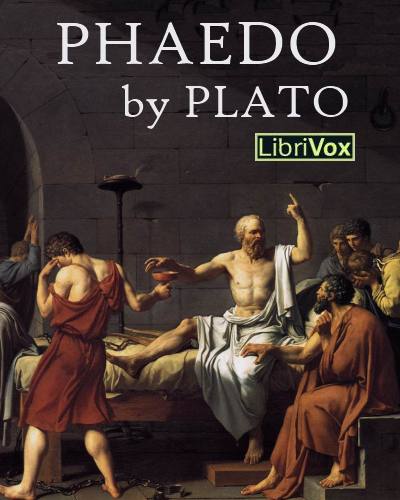
LIBRIVOX - Phaedo by PlatoPhaedo
By Plato; Translated by Benjamin Jowett; Read by Bob Neufeld
8 Zipped MP3 Files or Podcast – Approx. 3 Hours 4 Minutes [UNABRIDGED]
Publisher: LibriVox.org
Published: May 2, 2011
Socrates has been imprisoned and sentenced to death by an Athenian jury for not believing in the gods of the state and for corrupting the youth of the city. The dialogue is told from the perspective of one of Socrates’ students, Phaedo of Elis. Having been present at Socrates’ death bed, Phaedo relates the dialogue from that day to Echecrates, a fellow philosopher. By engaging in dialectic with a group of Socrates’ friends, including the Thebans Cebes and Simmias, Socrates explores various arguments for the soul’s immortality in order to show that there is an afterlife in which the soul will dwell following death. Phaedo tells the story that following the discussion, he and the others were there to witness the death of Socrates.

Podcast feed: http://librivox.org/rss/4421

iTunes 1-Click |SUBSCRIBE|

[Thanks also to Barry Eads]

Posted by Jesse Willis