News, Reviews, and Commentary on all forms of science fiction, fantasy, and horror audio. Audiobooks, audio drama, podcasts; we discuss all of it here. Mystery, crime, and noir audio are also fair game.
Mack Reynolds is an SF author who needs more attention. Unfortunately his non-public domain works, the majority of his work, are languishing, orphaned. Escape Pod has paired this less than stellar novelette with an excellent narrator, Corson Bremer, but even so it’s a less than stellar representative example of Reynold’s most thoughtful societal thinking. Expediter merely hints at the kinds of things Mack Reynolds could do. Come to think of it, what we really need is an expediter to make the still copyrighted works of Mack Reynolds available as ebooks (and audiobooks).
Expediter
By Mack Reynolds; Read by Corson Bremer
1 |MP3| – Approx. 1 Hour 22 Minutes [UNABRIDGED]
Podcaster: Escape Pod
Podcast: October 28, 2013 His assignment was to get things done; he definitely did so, Not quite the things intended, perhaps, but definitely done. First published in Analog, May 1963.
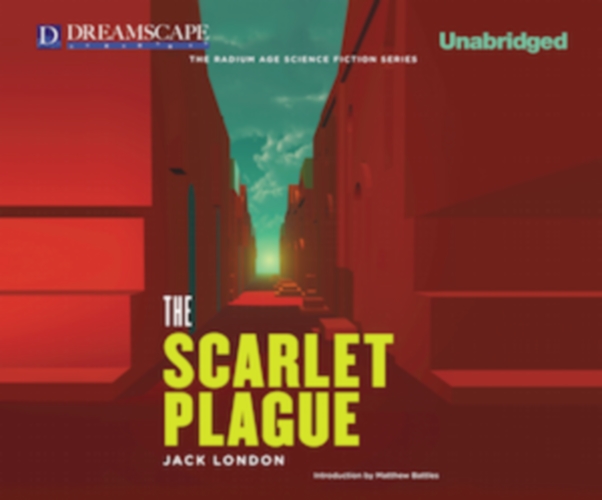
The Scarlet Plague
By Jack London; Read by Drew Ariana
Approx. 2 Hours 13 Minutes [UNABRIDGED]
Publisher: Dreamscape Audio
Published: August 20, 2013
Themes: / Science Fiction / San Francisco / Plague / Post-Apocalypse / Disease / Philosophy / Politics / Class Conflict /
The year is 2013 and plague has struck. Not a wannabe killer like SARS or the Spanish flu, but a tsunami type devastation that swallows every living thing, check that, every person, in its path. Its nickname is the red death because at its arrival the first thing that happens to the infected person is they start sporting a red face – like a beacon for everyone else around them to – RUN. The next thing that happens is they die. Well a little more goes on in between, numb feet, numb hands, a heart so numb it stops. All within an hour, or a few hours if the person is lucky/unlucky enough to have it drag out that long. Then for fun what’s left of the numbed, red faced, ex-person, immediately starts decomposing, falling apart before the eyes of anyone still around to witness it, practically shooting decomposing germs into the air like a plant shooting its spores. There are two classes of people, the ultra rich and everyone else. As the ultra rich jump into their airships to get as far away as possible, they just carry death with them – first class. Everyone else simply falls down and dies where they are. The devastation’s full name is Scarlet Plague. Sixty years into the future when the very few last contenders of what was once the mighty human race hear tell about it, they can’t even decipher what scarlet means because language (like life) has degraded to the point of only holding on to what’s necessary. Scarlet is red. Counting only needs to go as high a ten. The squiggles on money and books are meaningless, but that’s of no consequence because neither books nor money are in use anyway. Apologies, I’m getting ahead of myself. About 160 years ahead.
The Scarlet Plague by Jack London, published in 1912 is about the plague that will strike 100 years from his time, told from a perspective 60 years hence by the last man alive who’s ever seen an airship or read a book. 2013, a hundred years into the future for Jack London, is today and yesterday, this week. Hearing this story now, is like what it was to read (or re-read) 1984 in 1984. Sort of surreal. Interestingly 1984 is a year that was mentioned in the story of the plague. Did George Orwell choose that year with a tip of his hat? Probably. I’ve heard George was a fan.
Back to Jack. What did he get right? What did he miss? Commercial airships? Instant wireless communication? Check, check. About 8 billion people planet wide? Check. The ultra rich and everyone else, hmmm, not that far off the mark, probably pretty close considering he was most likely exaggerating a little to make a point. The work didn’t actually feel like science fiction, it felt contemporary, the section that describes this part of the century anyway. Like his projection to 2073 started from here, not from a century ago. Because the today part of the story is so right, it makes the rest of the story worse.
Not worse as in it’s a bad story. It’s an excellent, superbly imagined, tangible story. Worse in regards to how Mr. London judged the human condition. 60 years from now, 160 years from when the book was written, James Howard Smith or Grandsir, is telling his three grandsons the story of the plague. A story that was in great demand 20 or 30 years before, is quickly becoming lost – now of passing interest to two of the boys, and of real interest to only one. For one thing Grandsir’s sentences are way too complicated, especially when he goes off into his memories and starts speaking as he used to do when he was professor of English literature at Stanford. Speech has become staccato and minimalist, the niceties of language having died off with everyone that had time for that sort of thing. The other problem is the things Grandsir talks about make no sense to the boys. Cities, cars travelling by air, exchanging things with money, wasting time with written markings, all of it is so outside of what the boys know it might as well be make believe. The ramblings of a deranged, lost, old mind. With an estimated world population of less than 500, life has become a question of survival. If you want to eat then you have to go out and kill yourself some dinner. Grandsir calls his grandsons savages. When he was a boy (one of his constant refrains) there were those who gathered food and those who ordered its gathering. His progeny has been reduced to food gatherers. Interestingly Grandsir’s still got them gathering food for him. Old habits die hard I guess.
So why was this professor of classical literature spared to help re-forge humanity? No reason. One in every few million just didn’t get red faced. Maybe death momentarily blinked as it passed them by or got distracted by the particularly amusing scene of the mountains of bodies piling up at its feet. A couple of feeble minded, the very richest most splendid woman in America, a violent, vile, wife beating chauffer who made himself her husband, our friend the professor – just a few random cards in the deck. Life’s like that. You build your magnificent cities, you spend your time creating art and pondering the great questions, and life responds by carelessly wiping itself out. Careless in that it doesn’t quite finish the job. But no matter, because life will make its way forward again.
And now we come to the worst part of the story. It’s not the plague and what happens in the aftermath. The author makes it clear that ultimately, in the long run, humanity will rally back. They’ll rebuild and create again. The worst part is what Mr. Jack London sees after that.
Drew Ariana who read the story in this recording did a good job. My only issue was the character voice he assumed for Grandsir. I didn’t have a problem with the voice, the problem was, so much of the story was told using this voice it became a little distracting. Otherwise, an easy, pleasant listen.
By the end of the book, awash in dystopia, I was seeing a little red. Too delightful not to share, here’s a little red (or Scarlet) for you. “All man’s toil upon the planet was just so much foam. He domesticated the serviceable animals, destroyed the hostile ones, and cleared the land of its hostile vegetation and then he passed and the primordial flood of hostile life rolled back again, sweeping his handy work away.”
The SFFaudio Podcast #226 – Jesse, Jenny, and Bryan Alexander discuss The Iron Heel by Jack London.
Talked about on today’s show:
Jenny is not an economist, a Heinlein vibe, God Emperor Of Dune, The first half of this book is talk, a terrible novel but an interesting book, The Moon Is A Harsh Mistress, the distancing narrators, 700 years into the future, the audience is for seven hundred years in the future (or is that six hundred), prizefighting, grub = food, the purpose of the footnotes, The Sleeper Awakes by H.G. Wells, Avis Everhard, alternate history, Michael Bishop, an underground book, an underground society, that Buck Rogers stuff, Armageddon—2419 AD by Philip Francis Nowlan, exchanging socialism for the Yellow Peril, Asgard, Seoul, set in the year 419 B.O.M. (Brotherhood of Men), A Thousand Deaths by Jack London, The Island Of Doctor Moreau, predictions, war with Germany, a surprise attack on December 4th, William Randolph Hearst, war economy as a solution to national surplus, Trotsky’s letter to Jack London, London had good reason to be a socialist, work conditions and natural disasters, a chaotic time, Jackson’s arm, race vs. class, Jack London’s racism, The Heathen by Jack London, the dog stories, class consciousness, grinding out the middle class between the 1% and the people of the abyss, The Shadow And The Flash by Jack London, manly overachievers, oligarchy doesn’t use race to divide people, do you want you fruit to be picked or not?, Japanese segregation in California classrooms, Canadian politics, Cooperative Commonwealth Federation, Franklin D. Roosevelt, John Steinbeck, ‘temporarily embarrassed millionaires’, the quote attributed to Abraham Lincoln:
“I see in the near future a crisis approaching that unnerves me and causes me to tremble for the safety of my country… corporations have been enthroned and an era of corruption in high places will follow, and the money power of the country will endeavor to prolong its reign by working upon the prejudices of the people until all wealth is aggregated in a few hands and the Republic is destroyed.”
Dwight D. Eisenhower, “the military-industrial complex”, Eugene Debs, why was The Iron Heel not more popular?, The Black Hundreds, Das Kapital, Marxian fan-fiction, ‘social evolution is exasperatingly slow’, sooo sad, Marx’s essay on Napoleon III, a Darwinian model, do we live under an oligarchy?, government regulation (anti-trust and child labour laws), why socialism didn’t take hold in the early 20th century USA, Larry Summers, the Chilean cover of The Iron Heel, Salvador Allende, a novel read by revolutionaries, Science Fiction within the novel, the aesthetic end, the role of religion, the God of the Oligarchs, mostly air with a little bit of vertebra, Chicago, religious revivals and the apocalypse, Azusa Street Revival, the 1906 San Fransisco earthquake, William Randolph Hearst, Patty Hearst, John Waters, Cecil B. Demented, personal charisma and bulletproof arguments, Everhard is a porn star name, Benjamin Franklin, London’s didactic reading, Marx’s surplus theory of value, economy is not a science, power wins, the French Revolution, the Commonwealth of England, George Orwell’s review of The Iron Heel, 1984 is in The Iron Heel, coincidental dates, London’s insight into fascism, too much love from the strong and not enough love for the weak, Eric S. Rabkin, unmanning, ‘designed to be crucified’, father figures are destroyed, the chapter titles, The Call Of The Wild, a powerful beast is unmanned, builds up and builds through interaction with others, a sated king, a dominant primordial beast, The Sea Wolf, reading London is like a shot of adrenalin to the heart, surplus value, colonialism, the machine breakers, the trusts did not advertize, consumerism, Paul Krugman, petty bourgeoisie, the genocide of Chicago, the Paris Commune, gothic wooing, We by Yevgeny Zamyatin, Looking Backward: 2000-1887 by Edward Bellamy, the education of the oligarchy,
“They, as a class, believed that they alone maintained civilization. It was their belief that if ever they weakened, the great beast would ingulf them and everything of beauty and wonder and joy and good in its cavernous and slime-dripping maw. Without them, anarchy would reign and humanity would drop backward into the primitive night out of which it had so painfully emerged.”
excusing colonialism, the white man’s burden, ignoring the starving masses, the Roman Empire, steampunk, Lloyd Blankfein “doing God’s work”, Margin Call, oppositional films, “The Social Network deeply hates Zuckerberg and the online world”, Nine Inch Nails, Michael Douglas, Wall Street, the cleaning lady, why isn’t The Iron Heel more generally appealing to SF readers?, British Space Opera vs. American Space Opera, Commune 2000 A.D. by Mack Reynolds, a broken utopia, job cash vs. job love, the social end of SF, the storytelling technique doesn’t attract, the unsuccessful revolution, Winston Smith’s diary, looking back when writing doesn’t have the same power, the Goldstein Book, brainwashing, the bomb in congress, spy and counterspy, Starship Troopers is a series of lectures punctuated by gunfire, Frank Herbert, “a raving genius”, doing Dune (and Dune Messiah), Chilton Books, the boot crushing the human face forever, the leaky suspense, a Norton critical edition, how to record The Iron Heel, the footnotes are problematic, a crazy wild marvelous book, WWI, WWII, Metropolis, armoured cars or tanks, The Last Man by Mary Shelley, a terrifying future found in a cave written on leaves, A Journal Of The Plague Year by Daniel Defoe, The Scarlet Plague by Jack London, Idiocracy, The Marching Morons by C.M. Kornbluth, on Lenin’s deathbed he was read Jack London, The Cold Equations, To Build A Fire, The Empire Strikes Back,
“The cold of space smote the unprotected tip of the planet, and he, being on that unprotected tip, received the full force of the blow.”
cosmic and Lovecraftian, as snug as a Jedi in a hot tauntaun, Robert Sheckley, Metro 2033 by Dmitry Glukhovsky.
When a repairman accidentally discovers a parallel universe, everyone sees it as an opportunity, whether as a way to ease Earth’s overcrowding, set up a personal kingdom, or hide an inconvenient mistress. But when a civilization is found already living there, the people on this side of the crack are sent scrambling to discover their motives. Will these parallel humans come in peace, or are they just as corrupt and ill-intentioned as the people of this world?
Philip K. Dick’s The Crack in Space was published in 1966, however the novel has its genesis in the short story Prominent Author which debuted in the May 1954 issue of IF: Worlds Of Science Fiction. This story has been featured previously on the SFFaudio website and is available as a PDF.
The focus of this story is a futuristic teleportation device known as a Jiffi-scuttler which is a product of the Terran Development company. In the short story, a prototype of the device is defective, which while works as a teleportation device, also serves as a sort of gateway into alternate times and/or realities. I recommend reading the short story first before tackling the novel as some of the key concepts are introduced which took some time to get used to in the full length novel.
The Crack in Space take places in the year 2080 and is interesting to read today as the focal character Jim Briskin is in the midst of a political campaign to become the first black president of the United States. This campaign takes place at a time that the country is still very much racially divided, with the population divided between “Cols” and “Caucs,” terms which are abbreviated forms of the words “Coloreds” and “Caucasians.” Due to the overpopulation, a large number of people (mostly “Cols,”) are kept in a state of cryogenic sleep while waiting for a time when the economy turns around and a solution to the overpopulation problem is found. These people are referred to as “bibs.”
The narration is handled by Benjamin L. Darcie who does a great job with the material. Benjamin also handles narration for Philip K. Dick’s A Maze of Death as well as has narrated a variety of other crime, sci-fi/fantasy, and horror titles. In addition to acting and film, Ben Darcie is also the beer editor for West Michigan’s REVUE magazine and known for the Beer Tasting Classes he hosts at breweries around Grand Rapids. I recommend the audiobook of The Crack in Space as a very interesting read with a contrasting mid-60’s view of the future given the current state of politics in the United States.
Arguably: Essays
By Christopher Hitchens; Read by Simon Prebble
24 CDs – Approx. 28.5 Hours [UNABRIDGED]
Publisher: Hachette Audio
Published: September 1, 2011
ISBN: 9781611139068
Themes: / Non-fiction / History / War / Biography / Science Fiction / Fantasy / Iran / Afghanistan / Germany / North Korea / France / Dystopia / Utopia / Religion / Tunisia / Piracy / Terrorism / Feminism / Pakistan /
The first new collection of essays by Christopher Hitchens since 2004, Arguably offers an indispensable key to understanding the passionate and skeptical spirit of one of our most dazzling writers, widely admired for the clarity of his style, a result of his disciplined and candid thinking. Topics range from ruminations on why Charles Dickens was among the best of writers and the worst of men to the haunting science fiction of J.G. Ballard; from the enduring legacies of Thomas Jefferson and George Orwell to the persistent agonies of anti-Semitism and jihad. Hitchens even looks at the recent financial crisis and argues for arthe enduring relevance of Karl Marx. The audio book forms a bridge between the two parallel enterprises of culture and politics. It reveals how politics justifies itself by culture, and how the latter prompts the former. In this fashion, Arguably burnishes Christopher Hitchens’ credentials as-to quote Christopher Buckley-our “greatest living essayist in the English language.”
Here’s a question I was thinking about while listening to Arguably.
What is fiction for?
One answer, the bad one, is that it’s for entertainment. That’s certainly where many readers are willing go, and the fiction writers who write it too. Maybe that’s precisely why so much fiction is just so very shitty.
To me, if you aren’t exploring ideas in your fiction, then you really aren’t serving a greater purpose. Idea fiction, fiction with ideas rather than just action and plot, is to my mind a kind of supplement to the wisdom found in writings on history, biography and science.
Of the many lessons learned I in listening to the 107 essays in Arguably I was particularly struck by the wisdom Christopher Hitchens gleaned from his reading of fiction. Hitchens reviews many books in this collection, nearly half of the essays are book reviews. Books like 1984, Animal Farm, Flashman, The Complete Stories Of J.G. Ballard, Our Man In Havana, and even, surprisingly, Harry Potter And The Deathly Hallows all get fascinating, critical, and reverent reviews.
Yet Hitchens also takes the lessons with him into his writing about his travels. Hitchens writes about visits to such places as North Korea, Cyprus, Afghanistan, and Kurdish Iraq. When talking about his visit to Beirut we see what comes when Hitchens, a man of ideas, acts upon them. The essay, The Swastika and the Cedar sees the convictions of the commited anti-fascist Hitchens beaten and nearly kidnapped for an act of vandalism on a prominently displayed swastika. Writes Hitchens:
“Well, call me old-fashioned if you will, but I have always taken the view that swastika symbols exist for one purpose only—to be defaced.”
In a review of two books, Lolita and The Annotated Lolita, Hitchens applies the controversial subject in a real life look at the modern, and very non-fictional oppression and objectification of women. Indeed, the ideas he appreciated in fiction helped Hitchens to come to grips with the real world.
I think the worst essay in this collection is the one on the serving of wine and restaurants, Wine Drinkers Of The World, Unite. It was simply a waste of the talent, too light, too easy a target. And yet, even that essay, the worst essay in all 107 has a memorable anecdote: “Why,” asks Hitchens’ five year old son, “are they called waiters? It’s we who are doing all the waiting.”
As to the narration of the audiobook. I’m ashamed to admit that I was initially dismayed when I saw that Christopher Hitchens had not narrated this audiobook himself. I was wrong to worry. Incredibly, Simon Prebble seems to have have become Hitchens for this narration. Prebble perfectly captures the erudite words, so eloquently performs them, and with an accent so like that of Hitchens’ own so as to make me think that it was Hitchens who had actually read it.
I think the worst essay in this collection is the one on the serving of wine and restaurants, Wine Drinkers Of The World, Unite. It was simply a waste of the talent, too light, too easy a target. And yet, even that essay, the worst essay in all 107 has a memorable anecdote: “Why,” asks Hitchens’ five year old son, “are they called waiters? It’s we who are doing all the waiting.”
Here’s a list of the book’s contents, with links to the original etexts when available, along with my own notes on each:
The Private Jefferson – a review of Jefferson’s Secrets: Death And Desire At Monticello by Andrew Burstein
Jefferson Vs. The Muslim Pirates – a review of Power, Faith, And Fantasy: America In The Middle East: 1776 To The Present by Michael B. Oren
Benjamin Franklin: Free And Easy – a review of Benjamin Franklin Unmasked: On the Unity of His Moral, Religious, And Political Thought by Jerry Weinberger
John Brown: The Man Who Ended Slavery – a review of John Brown, Abolitionist: The Man Who Killed Slavery, Sparked The Civil War, And Seeded Civil Rights by David S. Reynolds
Abraham Lincoln: Misery’s Child (aka Lincoln’s Emancipation) – a review of Abraham Lincoln: A Life by Michael Burlingame
JFK: In Sickness And By Stealth – a review of An Unfinished Life: John F. Kennedy, 1917–1963 by Robert Dallek
Saul Bellow: The Great Assimilator – review of six novels by Saul Bellow (The Dangling Man, The Victim, The Adventures Of Augie March, Seize The Day, Henderson The Rain King, and Herzog)
Vladimir Nabokov: Hurricane Lolita – reviews of Lolita by Vladimir Nabokov and The Annotated Lolita edited and annotated by Alfred Appel, Jr.
John Updike: No Way – a review of The Terrorist by John Updike (with reference to The Coup too) John Updike: Mr. Geniality – a critical review of the affable Due Considerations: Essays And Considerations by John Updike
Vidal Loco – Gore Vidal went crazier, more elitist and perhaps more racist as he got older (with attention and quips for Quentin Crisp and Oscar Wilde and Joyce Carol Oates)
America The Banana Republic – Hitchens on the “socialistic” bank bailout of 2008 (“socialism for the rich and free enterprise for the rest”)
An Anglosphere Future – a review of The History Of The English Speaking Peoples by Andrew Roberts (with reference to both Sherlock Holmes and The White Company by Sir Arthur Conan Doyle as well as to Cecil Rhodes and Rudyard Kipling)
Political Animals – a review of Dominion: The Power Of Man, The Suffering Of Animals, And The Call To Mercy by Matthew Scully
Old Enough To Die – on capital punishment as applied to children In Defense Of Foxhole Atheists – a visit to the United States Air Force Academy and the tax funded proselytizing
ECLECTIC AFFINITIES Isaac Newton: Flaws Of Gravity – a stroll through the medieval streets of Cambridge with the scientists, mathematicians, and philosophers who worked there
Gustave Flaubert: I’m With Stupide – a review of Bouvard et Pécuchet by Gustave Flaubert translated by Mark Polizzotti The Dark Side Of Dickens – a review of Charles Dickens by Michael Slater a biography (Hitchens was a not uncritical admirer of the subject)
Marx’s Journalism: The Grub Street Years – a glowing review of Dispatches for the New York Tribune: Selected Journalism Of Karl Marx edited by James Ledbetter, foreword by Francis Wheen (Marx admired the United States, and other fascinating facts about the father of communism)
Rebecca West: Things Worth Fighting For – an introduction to Black Lamb and Grey Falcon: A Journey Through Yugoslavia by Rebecca West
Ezra Pound: A Revolutionary Simpleton – a review of Ezra Pound, Poet: A Portrait Of The Man And His Work: Volume I: The Young Genius, 1885-1920 by A. David Moody (a biography of the fascist poet)
John Buchan: Spy Thriller’s Father – a review of John Buchan The Presbyterian Cavalier by David R. Godine (with discussion of The 39 Steps and a fantasy novelette The Grove Of Ashtaroth)
Fraser’s Flashman: Scoundrel Time – a look at the George MacDonald Fraser series of Flashman books and the connection with The Adventure Of The Empty House
AMUSEMENTS, ANNOYANCES, AND DISAPPOINTMENTS Why Women Aren’t Funny – a controversial essay on why more comedians are male and why women laugh at them the way they do
As American As Apple Pie – a literary and chronological history of the blowjob, with reference to Valdamir Nobokov’s Lolita
So Many Men’s Rooms, So Little Time – a fascinatingly insightful argument on what’s was going on with the Larry Craig bathroom airport scandal and related phenomena
A War Worth Fighting – a persuasively systematic review of Churchill, Hitler And The Unnecessary War: How Britain Lost Its Empire And The West Lost The World by Pat Buchanan
Just Give Peace A Chance? – a critical review of Human Smoke by Nicholson Baker
Don’t Mince Words – the disenfranchisement of south Asians in Britain isn’t the cause of bombings, hatred of women is.
History And Mystery – al-Qaeda in Iraq, jihadists, or “insurgents”? Do words matter? Of course they bloody well do.
Words Matter – political slogans make of “every adult in the country” an “illiterate jerk who would rather feel than think”
This Was Not Looting – how can a government “loot” it’s own weapons manufacturing facility? The government of Iraq managed it according to The New York Times.
The “Other” L-Word – a lighthearted piece on the prominence of the word “like” and it’s use
The You Decade – what’s wrong with you (marketing to the selfish)
Suck It Up – the Virginia Tech shootings prompted the wrong response from the world (namely that it prompted one)
A Very, Very Dirty Word – the English empire, in centuries to come, may only be remembered for soccer and the phrase “fuck off”


 Expediter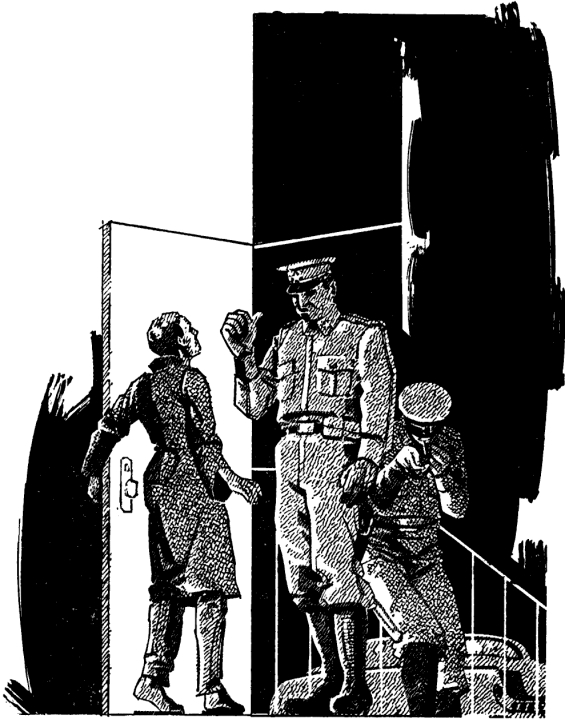





 The Crack in Space
 Arguably: Essays