Review of Venus by Ben Bova

SFFaudio Review

Science fiction Audiobook - Venus by Ben BovaVenus (The Grand Tour Series)
By Ben Bova; Read by Stefan Rudnicki
10 CDs – Approx. 11.7 Hours [UNABRIDGED]
Publisher: Blackstone Audio
Published: February 2011
ISBN: 9781441775726
Themes: / Science Fiction / Hard SF / Near future / Space travel / Planets /

The surface of Venus is the most hellish place in the solar system, its ground hot enough to melt aluminum, its air pressure high enough to crush spacecraft landers like tin cans, its atmosphere a choking mix of poisonous gases. This is where the frail young Van Humphries must go—or die trying. Years before, Van’s older brother perished in the first attempt to land a man on Venus. Van’s father has always hated him for being the one to survive. Now, his father is offering a ten-billion-dollar prize to the first person who lands on Venus and returns his oldest son’s remains. To everyone’s surprise, Van takes up the offer. But what Van Humphries will find on Venus will change everything—our understanding of Venus, of global warming on Earth, and his knowledge of who he is.

Venus by Ben Bova was first released on audio in abridged format in 2002. I reviewed in it 2004, and from what I wrote there I liked it just fine. This unabridged version (no surprise) was a different and better experience.

I am a fan of Ben Bova’s didactic Grand Tour novels. I like how I come away from each of these novels with a better understanding of how space travel works at our current level of knowledge. I also like how Bova uses what we know about the planets before he starts speculating.

In Venus, eccentric billionaire Martin Humphries summons his son, Van Humpries, to the moon. Prior nike zoom vomero 5 to the story, Martin’s oldest son Alex had crashed on Venus and was presumed dead. Martin tells Van that he’s offering $10 billion to the person who can retrieve Alex’s remains and that he’s paying Videos about What is Aluminum Truss, Spigot Truss, Bolt Type Connection Tomcat Truss, Aluminum Stage, Steel for it by cutting Van off financially. Van surprises his father by taking up the challenge himself. There is one other taker, so two teams vie for the prize. Two ships, separately designed and built to withstand the extreme conditions on Venus, race to snag human remains off the surface.

The plot is interesting and satisfying (though with a bit of clunky foreshadowing), but the star of the story is Venus. Bova’s characters reach Venus quickly, so the bulk of the novel is spent floating in their ships. It’s incredibly hot, and the atmosphere thick and roiling. Both ships were designed as dirigibles. Once the crafts reached the atmosphere, they floated like airships through the currents, sinking slowly toward the surface. Of course, it’s not that easy. There are plenty of surprises.

Stefan Rudnicki narrates, and yet again I enjoyed him. He’s one of the best narrators we have. I’m always pleased to hear him perform a good piece of science fiction.

Posted by Scott D. Danielson

X-Minus One: Skulking Permit by Robert Sheckley

SFFaudio Online Audio

skulk (v.) /skəlk/ – Keep out of sight, typically with a sinister, evil or cowardly motive
Example: The thief skulked in the shadows.

Skulking Permit is a cute Robert Sheckley story. Frankly, it is not one of his best. His best stuff will send your brain into a week long head-shaking fugue state that’ll leaving you both laughing and crying at the pathetic beast called man. But, Skulking Permit definitely is cute and it definitely does deliver the anthropological satire that Sheckley is so very fond of.

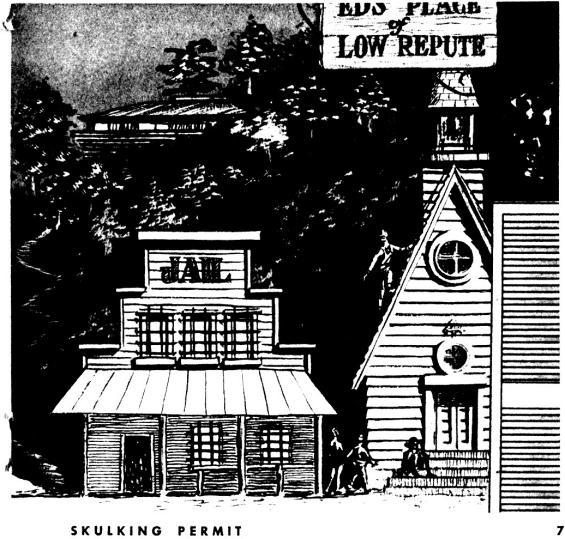
In this case there’s a Earth colony, called New Delaware, which had been cut-off for more than two hundred years. Luckily, it has recently been informed that it’ll be receiving a visit from a representative from Earth. To prepare for the occasion they colonists have decided to make everything familiar to the coming representative – make it all homey, like back on Earth – and so they’ve assigned societal roles to every member of the colony’s community. Everyone is getting used to their characters: the mayor is telling everyone what to do (he’s got to write up some laws real quick) and the police chief has to make his own badge. The little red school house and the little white church are being built and painted and the “no aliens allowed within city limits” sign is being put up. But the plan to make New Delaware a little mirror of Earth aren’t going perfectly smoothly. For what exactly is a criminal? And who can possibly play such a demanding role?

“Wanted: one man to do a totally impossible job. Salary: the knowledge that a planet’s life depends upon his being able to do it!”

X-Minus OneX-Minus One – Skulking Permit
Based on a story by Robert Sheckley; Adapted by Earnest Kinoy; Performed by a full cast
1 |MP3| – Approx. 29 Minutes [RADIO DRAMA]
Broadcaster: NBC Radio
Broadcast: February 15, 1956
Provider: Internet Archive
|SCRIPT|
A small colony, cut off from Earth for generations, must prove they are a model of Earth culture when a ship arrives to effect their ‘reclamation’. They strive to provide archetypes of Earth society, including a town criminal… First published in the December 1954 issue of Galaxy Science Fiction magazine.

Cast:
Dick Hamilton
Wendell Holmes
Joe DeSantis
Joseph Boland
Alan Hewitt
Bill Quinn
Mandel Kramer
Ruby Dee

Announcer …. Jack Costello

Directed by Daniel Sutter

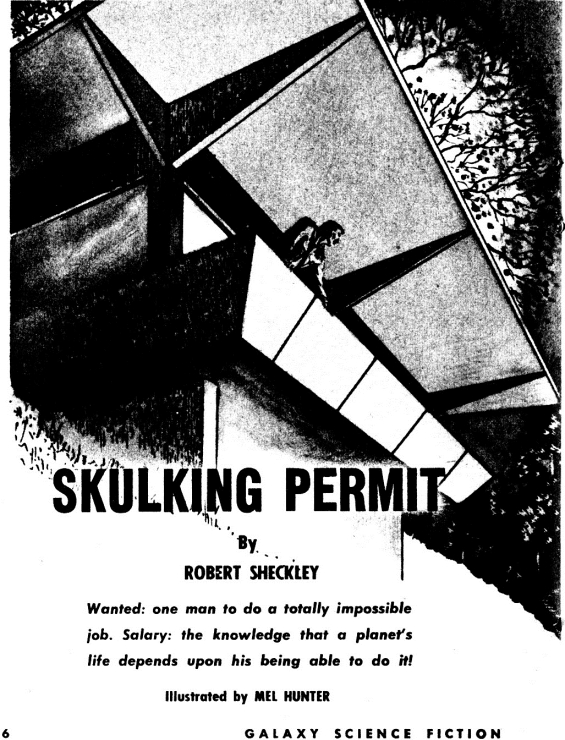
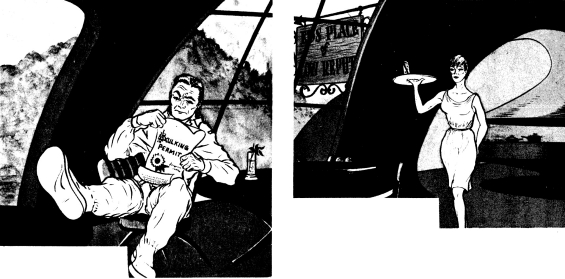
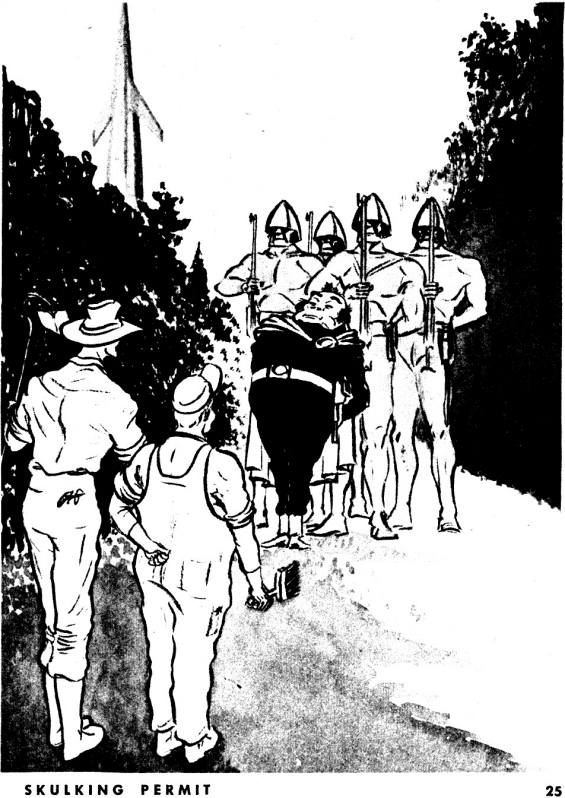
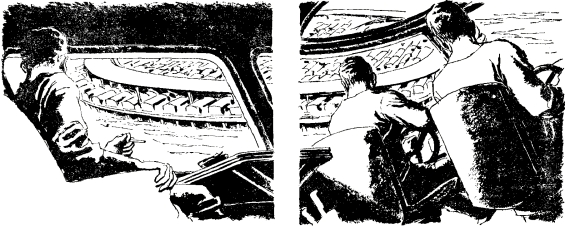
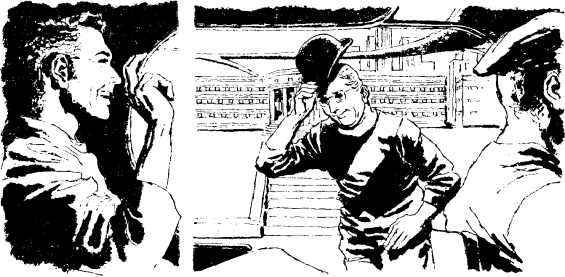
Illustrations, by Mel Hunter, from the original Galaxy publication:

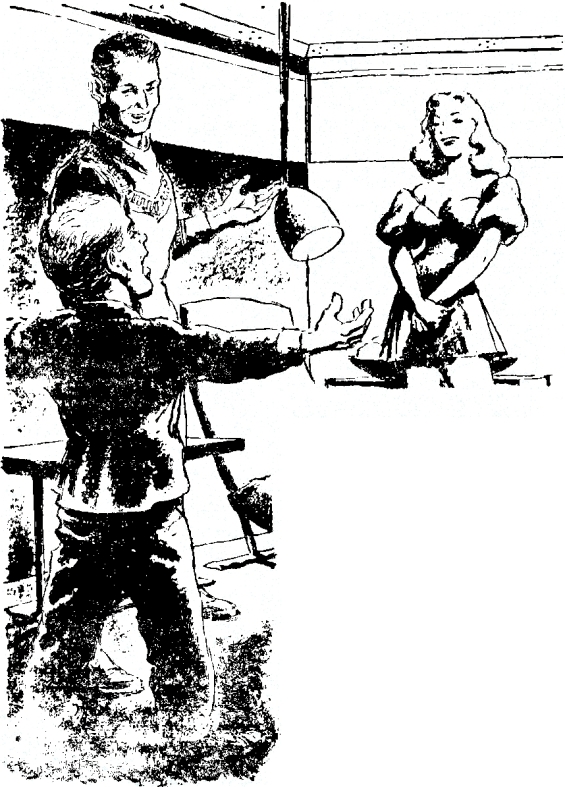
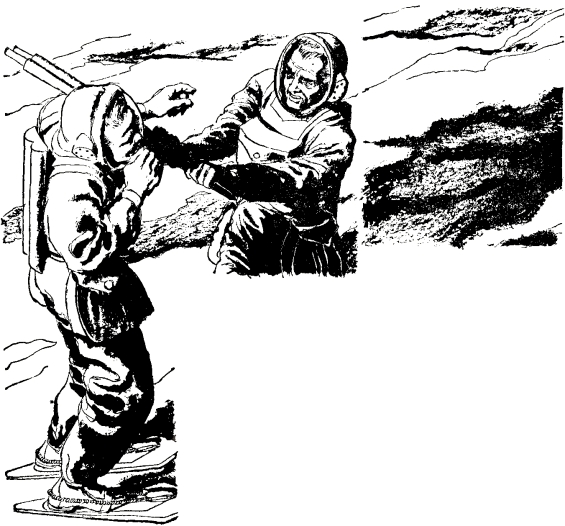
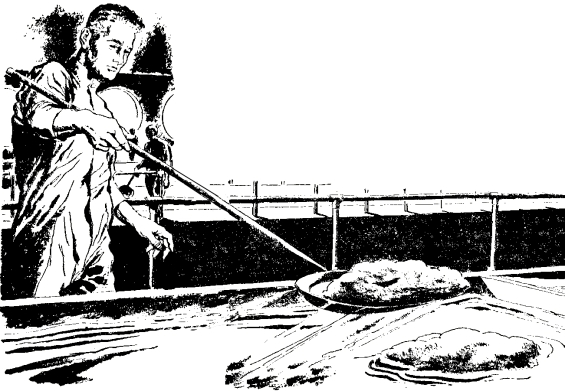
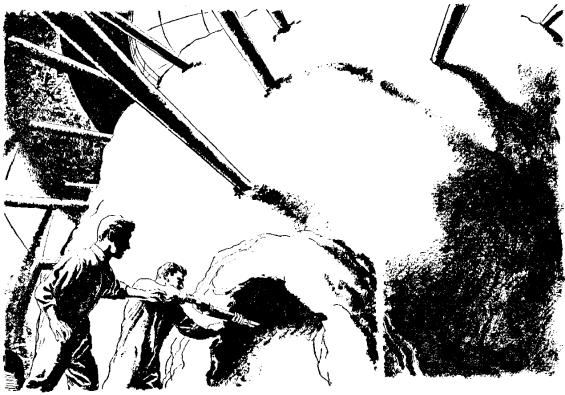
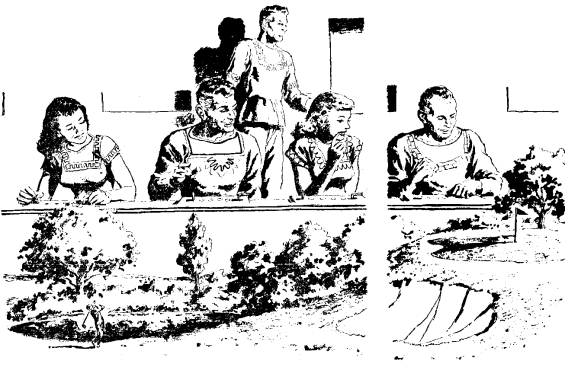
Skulking Permit by Robert Sheckley - illustration by Mel Hunter (Galaxy Magazine's December 1954 issue)

Posted by Jesse Willis

The SFFaudio Podcast #116 – READALONG: The Space Merchants by Frederik Pohl and C.M. Kornbluth

Podcast

The SFFaudio PodcastThe SFFaudio Podcast #116 – Scott, Jesse, Tamahome and Professor Eric S. Rabkin talk about The Space Merchants (aka Gravy Planet) by Frederik Pohl and C.M. Kornbluth

Talked about on today’s show:
Frederik Pohl’s blog, differences between Gravy Planet and The Space Merchants Coca-Cola vs. Yummy Cola, com-pocalypse (a commercial apocalypse), advertizing, conservationists -> connies (or consies) is an analogue for communists -> commies, Tristan Und Isolde, Costa Rica, Chicken Little, Fowler Shocken, 1950s. Jews in “the Science Fiction ghetto”, H.L. Gold, Phlip Klass (William Tenn), Ray Bradbury, Isaac Asimov, the Wikipedia entry for The Space Merchants, a study guide for The Space Merchants, Levittown, Man Plus, The Merchants War, Pohl’s interest in psychiatry, Gateway, structural problems in The Space Merchants, identity theft, a hero’s journey, The Odyssey, katabasis, banana republic, the United Fruit Company, Cuba, U.S. Marines in Columbia, Vance Packard’s The Hidden Persuaders, Jack O’Shea, little people are the perfect astronauts, pilots tend to be small people, the continuing relevance of The Space Merchants, “transformed language”, The Left Hand Of Darkness by Ursula K. Le Guin, “the Glaciers didn’t freeze overnight” (Rome wasn’t built in a day), what side do you oil your bread on, pedaling your Cadillac into the future, are there more cars in the U.S.A. than people?, William Gibson, The future is already here — it’s just not very evenly distributed, corporatocracy, Oliver Stone, does Wall Street run the world or is it Madison Avenue?, representative government per capita (per head) or ad valorem (to value), The Marching Morons, dystopia, utopia, citizen vs. consumer, CBC’s The Age Of Persuasion podcast, the effectiveness of advertizing, feminine hygine products, “it has wings”, coffiest vs. Starbucks, Jon Huntsman, Tim Pawlenty, how effective is advertizing?, saturation of advertizing vs. the message of advertizing itself, does advertizing work?, who consumes dog food?, soyaburger, Chlorella, algae, soylent red, despite what he says Eric is not a jerk vegetarian, seitan (wheat gluten food), Moby Dick, Mountain Dew in the U.S.A. vs. Mountain Dew in Canada, energy drinks, Jolt Cola, phial vs. vile, Philip K. Dick’s Do Android Dream Of Electric Sheep?, the Penfield Mood Organ, caffeine, Tamahome likes unsweetened chocolate, what did Montezuma drink all day long?, does has the internet lessen the impact of advertizing?, the spillage from penis enhancement, Eric bought a wide cross section of pornography, “genuine spurious placebo”, Boeing “forever new frontiers”, the Dubai Ports controversy, Cisco Systems, I, Robot, Minority Report, gesture recognition, Yelp, Wikileaks: U.S. diplomats pressed Boeing deals, Bombardier, “he came from an old family”, Kennedy, Bush, Heddy and Hester, Hedy Lamarr, Hester Prynne, The Scarlet Letter by Nathaniel Hawthorne, Alfred Bester’s The Demolished Man, The Stars My Destination, “Eight sir, seven sir, six sir, five sir, four sir, three sir, two sir, one. Tenser, said the Tensor, Tenser said the Tensor. Tension, apprehension, and dissension have begun.” Rebecca Black’s Friday is a train wreck, Arthur C. Clarke‘s Tales From The White Heart, colonizing your brain, “you haven’t read a book until you’ve talked about it”, is solitary reading a different kind of thing than social reading?, satire, Monty Python’s “The Funniest Joke In The World” sketch, advertizing in books, advertizing in paperback novels, propaganda, recommendation vs. advertizing, making something available vs. thrusting it upon you, metaSFFaudio, The Reapers Are The Angels by Alden Bell, Flannery O’Connor with zombies, why SFFaudio doesn’t link to Amazon.com, Morning Joe, Fox News, Scott is now a politician, Douglas Adams, political debate being replaced by sound bites, Jon Stewart vs. Sean Hannity, Jon Stewart’s appearance on Crossfire, Will Rogers, communication vs. advertizing, jokes are revelations, brand awareness, why do kids want to see Transformers 3?, Cedar Rapids is a coming of age movie about the nature of friendship, why is there no commercial released audiobook of The Space Merchants?, The Puppet Masters by Robert A. Heinlein, Them!, anti-consumerism (anti-Americanism), tobacco packaging warning messages (are ads), the tobacco industry vs. the anti-tobacco industry, church advertizing, Scientology doesn’t sell the same message as many other religions, L. Ron Hubbard, A.E. van Vogt, Dianetics, the premise of Null-A, Friedrich Nietzsche.

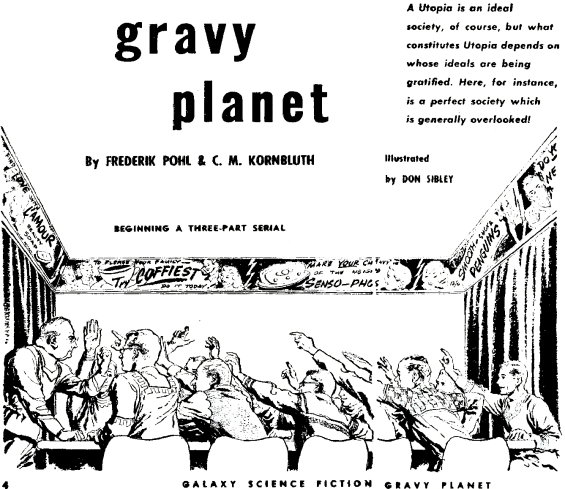
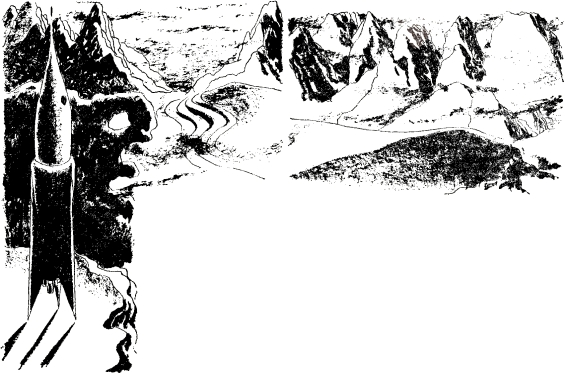
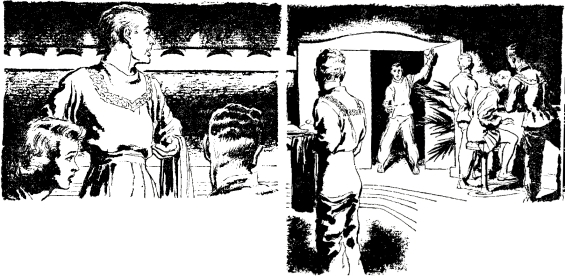
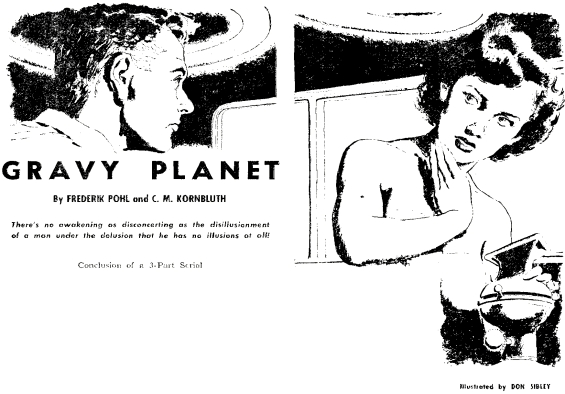
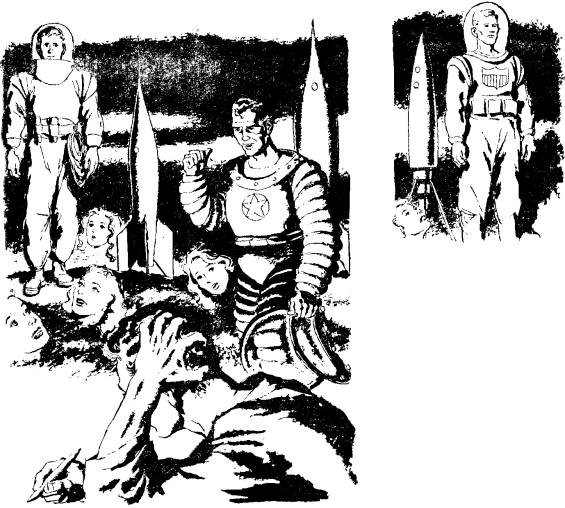
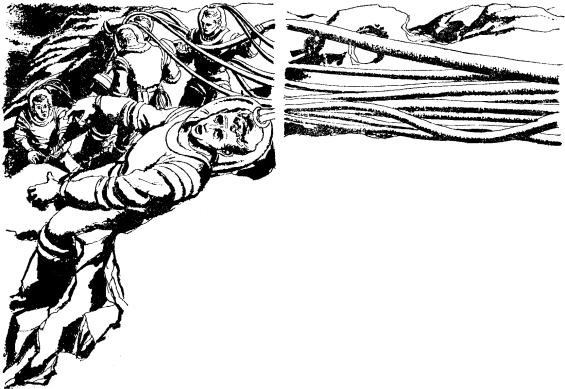
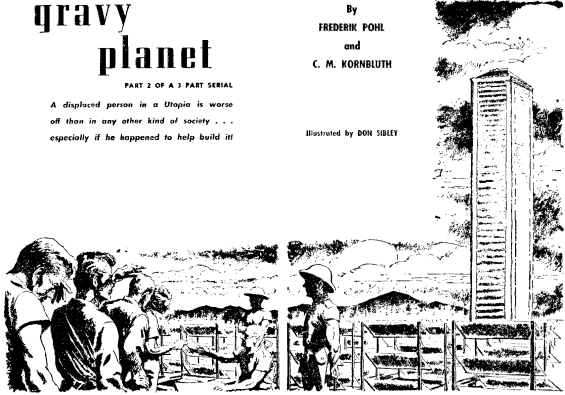
Illustrations from the original serialization of Gravy Planet (aka The Space Merchants) in Galaxy Science Fiction magazine’s July August and September 1952 issues:

Gravy Planet illustrations by Don Sibley

Posted by Jesse Willis

BBCR4 + RA.CC: Daniel Keyes’ Flowers For Algernon RADIO DRAMA

SFFaudio Online Audio

BBC Radio 4RadioArchives.ccSome stories adapt better than others. I think a straight narration of an audiobook of Daniel Keyes’ novelette of Flowers For Algernon would be an easy and natural way to experience most of the story’s power. Sadly, that’s still yet to happen.

The original story, of course, makes great use of spelling mistakes which could not fully be illustrated in any audiobook narration, but a straight single voiced reading of the story still provides the main thrust of the tale’s dramatic technique; we get the grammar of the main character, his account of what his doctors ask of him, and we get what his”friends” think of him.

The film and television versions that I’ve seen have, with video’s visually orientation, have all eliminated much of the very valuable power inherent in the epistolary.

Indeed, as editor James Gunn puts it in his introductory essay to Flowers For Algernon, found in The Road To Science Fiction #4 – From Here To Forever, “Part of the appeal of the story is the comparison of the reader’s knowledge to Charlie’s, and the ability to see more in Charlie’s reports than he knows is there.” Once you actually get out of Charlie’s head you lose his perspective and lose the unreliable narration.

So I was thinking about all of this as I was downloading a 1991 BBC Radio dramatization, via torrent, from RadioArchive.cc.

I was pretty skeptical of any radio dramatization’s ability to convey the story’s full power. Now though, after listening, I’ve come away convinced that it retains much of its power, and offers up a very innovative use of the aural medium. It is actually quite a tricky balance but it totally worked in the way it is put together.

Bert Coules, who adapted the novelette had this to say:

“In 1991 the BBC asked me to suggest some SF material for a short season. I drew them up a list and at the same time put in a claim to do Flowers, which I think is a tremendous story: it completed knocked me out when I first read it as a kid. I was delighted when I got the commission.”

In Flowers For Algernon the central character keeps a diary – in fact, the entire story consists of his diary entries. I changed the diary into a series of audio recordings made on a personal tape machine, and interspersed them with dramatised scenes which are mentioned or implied in Daniel Keyes’ original but which don’t actually appear in the story at all. When you’re writing new material like that, the challenge of course is to keep it consistent with the stuff that does come more or less straight from the book.

Flowers posed a particular problem: if you’ve read the story you’ll know that Charlie Gordon, the central character, goes through some huge changes which are brilliantly depicted by the way his diary entries are written: as he develops, so does his spelling, grammar and punctuation. I had to find a spoken way of reflecting the same journey.”

I believe he’s done a fantastic job with it.

Incidentally, the other plays in that series included: Brave New World, Kaleidoscope, The Midas Plague, The Chrysalids, Space Ache, Who Goes There? and Tiger! Tiger!.

So, like I was saying, if you haven’t read the original novelette, I recommend you experience the story that way, as a piece of text, first. If you have read it, then I heartily recommend you try the audio drama. It’s a wonderful adaptation with excellent acting and a highly innovative use of the microphone.

Flowers For Algernon by Daniel KeyesFlowers For Algernon
Adapted from the novelette by Daniel Keyes; Dramatized by Bert Coules; Performed by a full cast
Approx. 59 Minutes [RADIO DRAMA]
Broadcaster: BBC Radio 4
Broadcast: September 5, 1991
Source: RadioArchive.cc
The play featured as part of a series of forward-looking productions collectively named “The shape of things to come.” Tom Courtenay stars as the intellectually challenged Charlie, who as part of an experiment is offered a “cure” for his low IQ…..First published in The Magazine Of Fantasy And Science Fiction’s April 1959 issue.

Cast:
Tom Courtenay ………………… Charlie
Algernon …………………….. Himself
Joanna Myers …………….. Miss Kinnian
Barrie Cookson …………….. Dr Strauss
Ronald Herdman ………………. Dr Nemur
Clarence Smith ………………….. Bert
Nigel Carrington …………. Joe/Donnegan
Auriol Smith ………….. Mrs Flynn/Ellen
Alan Barker …………. Frank/Sherrinford

Adapted by Bert Coules

Produced by Matthew Walters

Recorded Books produced an unabridged edition of the novelized expansion of the story:

RECORDED BOOKS - Flowers For Algernon by Daniel KeyesFlowers For Algernon
By Daniel Keyes; Read by Jeff Woodman
8 CDs – Approx. 9 Hours [UNABRIDGED]
Publisher: Recorded Books
Published: 1998
ISBN: 9781402550348
Charlie Gordon knows that he isn’t very bright. At 32, he mops floors in a bakery and earns just enough to get by. Three evenings a week, he studies at a center for mentally challenged adults. But all of this is about to change for Charlie. As part of a daring experiment, doctors are going to perform surgery on Charlie’s brain. They hope the operation and special medication will increase his intelligence, just as it has for the laboratory mouse, Algernon. Meanwhile, each day Charlie keeps a diary of what is happening to him. This is his poignant record of the startling changes in his mind and his life. Flowers for Algernon was first published as a short story, but soon received wide acclaim as it appeared in anthologies, as a television special, and as an award-winning motion picture, Charly. In its final, expanded form, this haunting story won the Nebula Award for the Best Novel of the Year. Through Jeff Woodman’s narration, it now becomes an unforgettable audio experience.

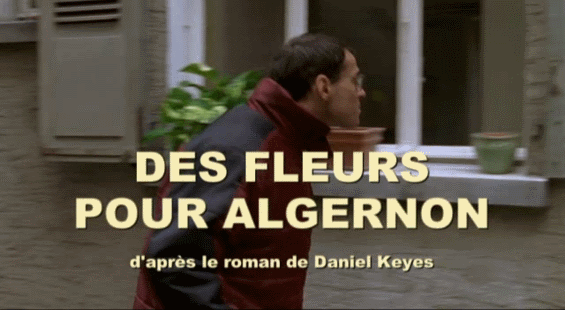
As mentioned earlier there have been four major video adaptations of Flowers For Algernon (three television movies and on theatrical film): Des Fleurs Pour Algernon (a 2006 French TV movie), Flowers For Algernon (a U.S. TV movie from 2000), Charly (a U.S. theatrical release from 1968) and a live broadcast teleplay that aired as a part of The United States Steel Hour in 1961 (it was titled The Two Worlds of Charlie Gordon).

Des Fleurs Pour Algernon

And I’m afraid there was also a frightening looking musical theater version:

Posted by Jesse Willis

Voices In The Dark: The Stolen Bacillus by H.G. Wells

SFFaudio Online Audio

Voices In The DarkFear of disease is probably just as old as disease itself. But the modern fear, the fear that a single individual carrying a vial full of specific incurable pathogen – the fear that one crazed fanatic could decimate an entire city’s population by poisoning its water supply – that fear can probably be traced back to the late 19th century and perhaps even to the inventor of the first true Science Fiction short stories, Mr. H.G. Wells. Had the ending of The Stolen Bacillus been done in a slightly different way it may have spawned the whole zombie contagion phenomenon a century early.

The Stolen Bacillus by H.G. WellsThe Stolen Bacillus
By H.G. Wells; Read by Dawn Keenan
1 |MP3| – Approx. 16 Minutes [UNABRIDGED]
Publisher: Voices In The Dark
Published: 2005
An anarchist, intent on wreaking ruin on a city, steals a phial from a bacteriologist. First published in the Pall Mall Budget’s June 21, 1894 issue.

Posted by Jesse Willis

Galaxy Audio: 5 FREE L. Ron Hubbard audiobooks

SFFaudio Online Audio

Galaxy Audio is offering a set of five FREE audiobooks (and ebooks) on their site HERE. At least a couple of these have been released for free previously. Here’s the official line:

“For a limited time, you can download a FREE eBook or audiobook of your choice! We have selected 5 short stories from the Stories from the Golden Age collection and are offering them for free, no purchase necessary and no strings attached. You can choose from the following genres: action/adventure, science fiction, fantasy, western or romance.”

“Supernatural Romance:”

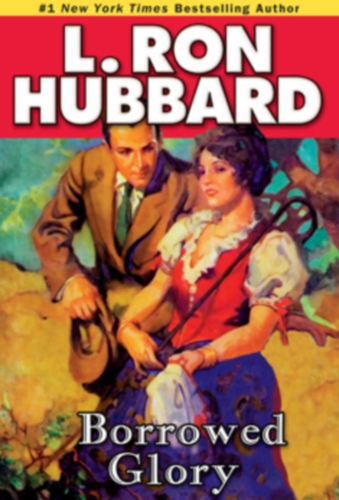
GALAXY AUDIO - Borrowed Glory by L. Ron HubbardBorrowed Glory
By L. Ron Hubbard; Performed by multiple readers
1 |MP3 DOWNLOAD LINK| – Approx. 39 Minutes [UNABRIDGED?]
This haunting tale begins with two immortals, George and Tuffron, who make a wager over the truth or falsity of Tuffron’s insistence that “human beings are stupid and willful.” Their experiment leads to an old woman’s return to youth and the promise of happiness—if only for forty-eight hours.


“Far-Flung Adventure:”

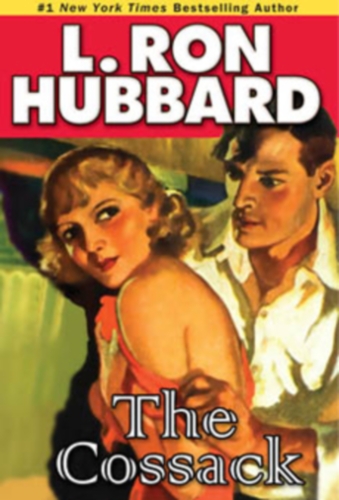
GALAXY AUDIO - The Cossack by L. Ron HubbardThe Cossack
By L. Ron Hubbard; Performed by multiple readers
1 |MP3 DOWNLOAD LINK| – Approx. 41 Minutes [UNABRIDGED?]
Young and handsome Lieutenant Mertz Komroff thinks he has left his past behind when he enlists in the Chinese army—only to stumble onto the vengeful Duchess he had spurned in pre-revolutionary Russia. And she has nothing but his immediate death in mind…


“Science Fiction:”

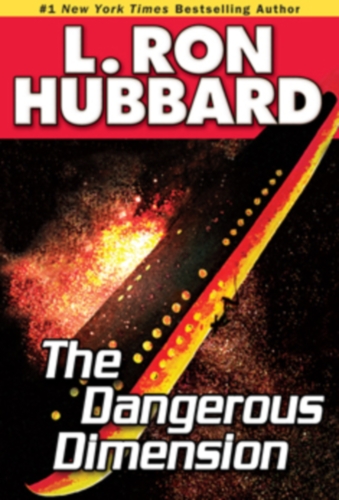
GALAXY AUDIO - The Dangerous Dimension by L. Ron HubbardThe Dangerous Dimension
By L. Ron Hubbard; Performed by multiple readers
1 |MP3 DOWNLOAD LINK| Approx. 45 Minutes [UNABRIDGED?]
Dr. Henry Mudge undergoes a striking personality change when he discovers a mathematical formula—“Equation C”—that defines a mysterious negative dimension. He is instantly transported to any location in the solar system by merely thinking of it—even when he doesn’t want to.


“Fantasy:”

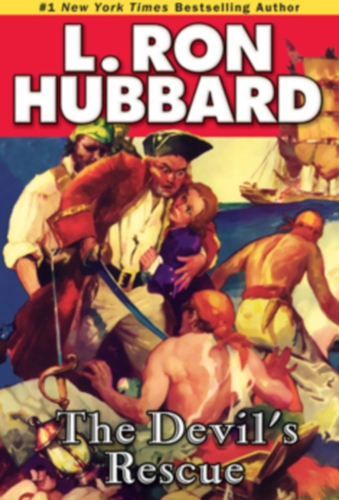
GALAXY AUDIO - The Devil's Rescue by L. Ron HubbardThe Devil’s Rescue
By L. Ron Hubbard; Performed by multiple readers
1 |MP3 DOWNLOAD LINK| – Approx. 43 Minutes [UNABRIDGED?]
When the crew of a spectral old clipper ship rescues Lanson from his drifting lifeboat, he discovers that they are all faceless—except for the captain. Then the dark one and a fateful roll of the dice decides Lanson’s destiny in this chilling encounter with the unknown…


“Western:”

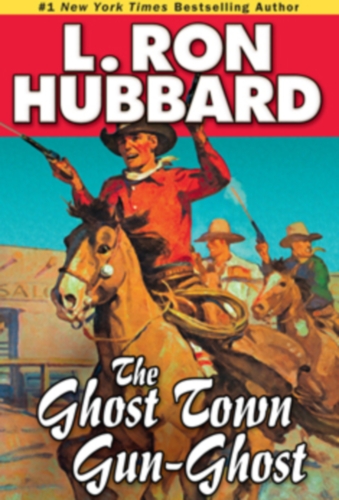
GALAXY AUDIO - The Ghost Town Gun-Ghost by L. Ron HubbardThe Ghost Town Gun-Ghost
By L. Ron Hubbard; Performed by multiple readers
1 |MP3 DOWNLOAD LINK| – Approx. 52 Minutes [UNABRIDGED?]
Pokey McKay is the last living resident of Pioneer, an old deserted mining town. Trouble starts when a stranger arrives, with a murderous sheriff hot on his trail. Pokey couldn’t be happier to have the company, but if he’s not careful, that simple act of courtesy just may spell the end of Pioneer and Pokey MacKay.

Posted by Jesse Willis