News, Reviews, and Commentary on all forms of science fiction, fantasy, and horror audio. Audiobooks, audio drama, podcasts; we discuss all of it here. Mystery, crime, and noir audio are also fair game.
It isn’t often I recycle an old posts. Why would I? They’re all still there! And if there’s something new about one I’ll typically just update the original rather than repost it. But, I’m confident that there are enough people out there, reading this blog now, that never saw our original 2008 coverage of the wonderful podcast/radio series called A Bite of Stars, a Slug of Time, and Thou. Because of that, and the fact that you’d be really missing out, this post can be one of the exceptions – a reminder that there’s a tonne of great old stuff in our archives, and out there on the internet.
First broadcast in 2008 on Resonance FM 104.4 FM in London, U.K, The Forgotten Enemy is an excellent Arthur C. Clarke tale. Set in London, it tells of solitary man waiting for rescue. He can almost hear the helicopters. Yes, the helicopters. The slow, loud, helicopters coming inevitably from the north. But what of the terrible white menace that threatens his lonely existence? Can he survive?
One aspect of the tale may remind you of 28 Weeks Later, another may remind you of The Day After Tomorrow. But fear not, this story pays far greater dividends than either of those.
In the discussion that follows the story is described as a “cozy calamity” and it’s compared to Who Goes There? and A Pail Of Air. It is a wonderful podcast – all around!
A Bite of Stars, a Slug of Time, and Thou – The Forgotten Enemy
By Arthur C. Clarke; Read by Elisha Sessions
1 |MP3| – 1 Hour [UNABRIDGED]
Podcaster: A Bite Of Stars, A Slug Of Time, And Thou
Podcast: 2008 In a bleak snow and ice covered London, a lone survivor faces isolation, polar bears and loneliness. But even his one hope, the idea that a rescue team is crossing the Atlantic ice sheet isn’t enough to stave off The Forgotten Enemy. First published in December 1948, in an issue of King’s College Review, later republished in New Worlds.
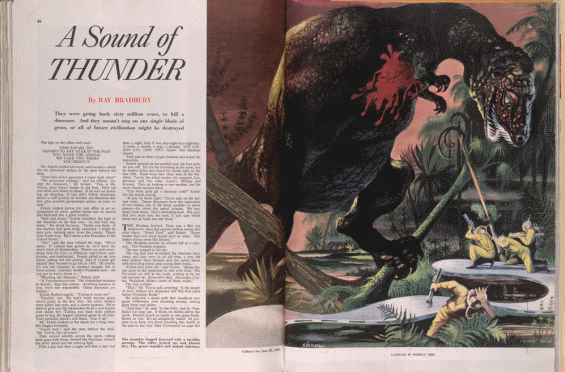
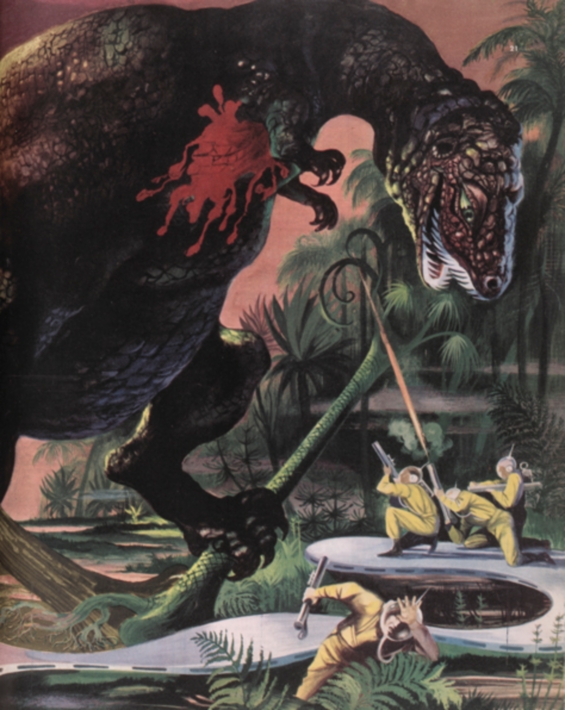
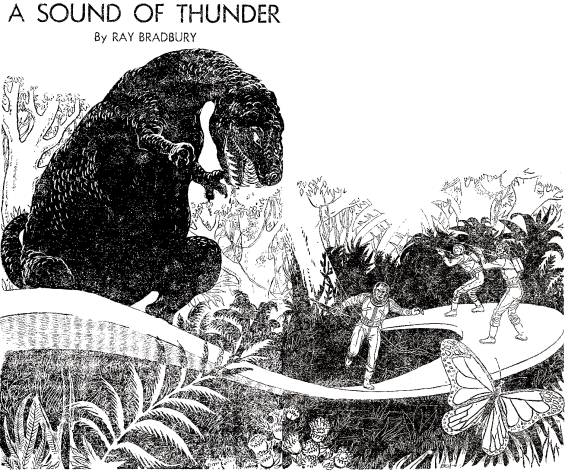
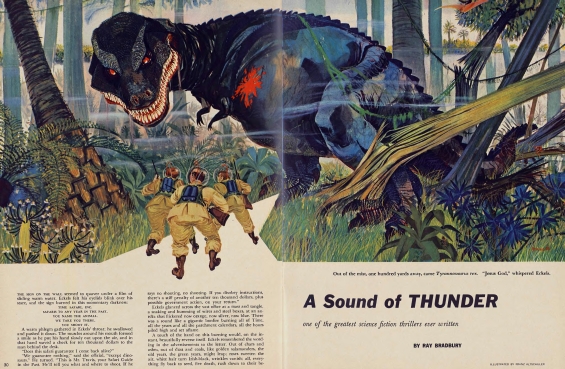
If there is an exemplar of the excellence in modern American audio drama production it has to be the stunning centerpiece in the Bradbury 13 series: A Sound Of Thunder |READ OUR REVIEW|. And Radio Drama Revival has it! This podcast is an absolute must hear! It features the complete production as well as an excellent new interview with Bradbury 13 creator Michael McDonough. As host Fred Greenhalgh sez:
“[It’s] one of the most splendid productions ever to grace the annals of radio drama history. If you ever doubted how stereo sound changed the way we designed sound effects, let this production convince you.”
That’s no hyperbole. When you put on a pair of stereo headphones you’ll be absolutely be blown away by the greatness that is A Sound Of Thunder.
Bradbury 13 – A Sound Of Thunder
Adapted from the story by Ray Bradbury; Performed by a full cast
1 |MP3| – Approx. 58 Minutes [AUDIO DRAMA]
Podcaster: Radio Drama Revival
Podcast: March 11, 2011 “They were going back sixty million years to kill a dinosaur. And they mustn’t step on one single blade of grass, or all of future civilization might be destroyed.” First broadcast on NPR in 1984. Short story first published in Collier’s, June 28, 1952.
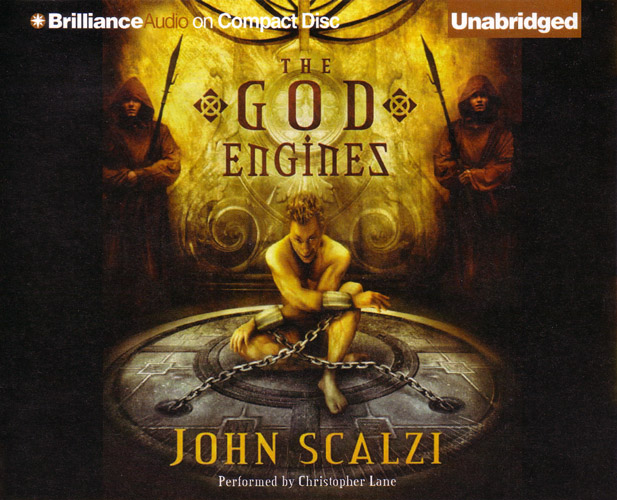
The God Engines
By John Scalzi; Read by Christopher Lane
3 CDs – Approx. 3 Hours 15 Minutes [UNABRIDGED]
Publisher: Brilliance Audio
Published: December 2010
ISBN: 9781441890795
Themes: / Science Fiction / Fantasy / Religion / Galactic Civilization / Space Travel / War /
Captain Ean Tephe is a man of faith, whose allegiance to his lord and to his ship is uncontested. The Bishopry Militant knows this — and so, when it needs a ship and crew to undertake a secret, sacred mission to a hidden land, Tephe is the captain to whom the task is given. Tephe knows from the start that his mission will be a test of his skill as a leader of men and as a devout follower of his god. It’s what he doesn’t know that matters: to what ends his faith and his ship will ultimately be put — and that the tests he will face will come not only from his god and the Bishopry Militant, but from another, more malevolent source entirely… Author John Scalzi has ascended to the top ranks of modern science fiction with the best-selling, Hugo-nominated novels Old Man’s War and Zoe’s Tale. Now he tries his hand at fantasy, with a dark and different novella that takes your expectations of what fantasy is and does, and sends them tumbling. Say your prayers… and behold The God Engines.
The God Engines is the strongest John Scalzi audiobook since Old Man’s War |READ OUR REVIEW|. It provokes thought, flies off in an unexpected direction and doesn’t overstay its welcome. The setting is in an unnamed galaxy, at an unknown time. But space travel, interstellar communication, and bodily healing aren’t technological developments. Instead, they are derived from a rigorous faith in actual, existing gods! These gods are so real, so embodied, that there is one in the center of each starship. It lies their enslaved, guarded and harnessed so as to achieve the ends to which they are put. Command over these powerful beings is achieved by a combination of torture and reward. Their masters are human beings, members of a religion with their own completely manifested god. Their purpose is to war with other religions, enslave new gods and bring more human beings to the worship of their own god. It is an unending holy war, in a fully realized universe, and it works.
I like to see the examination of an interesting idea, without an endless parade of pointless activity to dilute its core of goodness. We have that in this book. There’s something very neat about the running of what is essentially the starship Enterprise on faith. To hear that an officer is changing his prayers to adjust what’s showing up on the viewscreen – that’s something definitely worth seeing. Scalzi’s universe is run on prayer, faith, and relgious belief. It’s a kind of realization of what religions always claim, but shown to be actually functioning in a replicable manner. It’s theology as physics. The whole story feels like it comes from the same place J. Michael Straczynski’s Babylon 5 came from. Where Arthur C. Clarke’s Childhood’s End came from. There’s an indisputable space opera with Lovecraft vibe to it, but unlike so much space opera, the thinking just isn’t mushy and placative. In fact, there was nary a moment where I wasn’t completely engaged with this made up Fantasy/SF tale. The storytelling is expertly intertwined with a careful exposition of the universe’s rules. This works to fully enrich the ideation without coming off as merely a writer going through a checklist. I’d love to see Scalzi, or any other SF writer, write a dozen more books just like this – take a break from the series universe, and write some more idea based SF. Take a simple little premise or vignette, throw in a few characters and have them explore the concomitant interestingness of that idea. The God Engines does exactly that. It shows, very simply what SF storytelling is supposed to look like. This audiobook stands well, on its own, though I could easily imagine it as one half of an old Ace Double. This is very good work. Well done Mr. Scalzi.
Narrator Christopher Lane has about five major characters to play with. The captain is commanding and thoughtful. The second in command is calm and loyal. The ship’s high priest (who also acts as a kind of political commissar) is jealous but clever. The one female role, a rook (which is kind of a cross between a ship’s whore and a priestess), is wise and womanly. But it’s the unnamed god’s voice that is the real standout. Lane’s god is tortured, twisted and devious. It is a very precise performance, one that allows for the sympathy Scalzi was aiming at. The art for the cover comes from Vincent Chong‘s illustration of the Subterranean Press edition.
The SFFaudio Podcast #100 – Scott and Jesse talked to John Joseph Adams about his careers as editor, anthologist, and audio fan
Talked about on today’s show: Wastelands anthology, Book Of Cthulhu canceled, John’s reviews for Audible, Lightspeed Magazine, Joe Haldeman, More Than the Sum of His Parts, I’m Alive, I Love You, I’ll See You, Cats in Victory, Fantasy Magazine, The Dog King, flat fee vs sharing royalties, Locus magazine stats retracted, internet vs print market, Geek’s Guide to the Galaxy #32 discussion – can’t read scifi in the future, David Barr Kirtley, Fantastic Fiction at KGB, Word Wars, The Living Dead anthology, Dan Carlin’s Hardcore History, George R.R. Martin, Brian Dunning the Skeptoid, The Tolkien Professor, The Improbable Adventures Of Sherlock Holmes on audio [Our Review], hard to get all the audio rights, The Living Dead 2 audiobook almost happened, Kitty and the Midnight Hour, Octavia Butler’s Wild Seed, is that John’s picture at lightspeedmagazine.com?, good news — she said yes, swearing is ok, Odyssey writer workshop, Aggie Con, too many writing podcasts?, Jesse doesn’t want to be a writer, reading slush (unsolicited manuscripts), can’t edit yourself, the output of Isaac Asimov, Wastelands modeled after Beyond Armageddon, “anthologies don’t sell”, Brave New Worlds, how about utopian?, role of editor, Passengers by Robert Silverberg, Daemon Knight, to listen to your editor or not, John W. Campbell, The Cold Equations, Flowers For Algernon, Daniel Keyes ignored suggestion, does novel editing still exist?, novels are getting fatter, I Am Number Four — James Frey’s Fiction Factory (James Patterson?), wrong lessons from George Lucas, purpose of scifi?, Harlan Ellison ® is registered, Ben Bova, The Craft of Writing Science Fiction That Sells, Ted Chiang, scifi for schools?, Twilight as homework?, Ray Bradbury, The Pedestrian
Julie Hoverson’s long running and prolific anthology podcast, 19 Nocturne Boulevard, features original and adapted “strange stories.” Since it began back in 2009 I’ve pretty much ignored it completely. This is pretty odd considering that Hoverson’s output rivals that of the mighty Bill Hollweg and that she’s been doing something I’m always boosting (adapting public domain Science Fiction, Fantasy and Horror). To be fair though, I had heard a couple of shows, most recently Snafu, but every time I’d listened to a 19 Nocturne show I’d come away with nothing to say. It took a recent email from Hoverson to get me to write something. Hoverson pointed out her new adaptation of Phillips Barbee’s The Leech. That title stirred a vague memory, then piqued my interest greatly, as I recalled that Phillips Barbee was actually the great Robert Sheckley!
When it was first published, in the December 1952 issue of Galaxy magazine, The Leech was credited to “Phillips Barbee” – a one-off pseudonym, presumably it was only used at all because there were two Sheckley stories running in that issue. All subsequent publications have credited The Leech to Sheckley alone.
As one of the first ever Sheckley stories to be published, The Leech is interesting in itself. But as a kind of precursor to The Blob – which itself has an ancestor of sorts in H.P. Lovecraft’s The Colour Out of Space (which Hoverson has also read) it is even more interesting. The trope of a knowledgeable professor character investigating a dangerous object from space would be picked up for the 1953 BBC serial The Quatermass Experiment. In structure, however, The Leech more closely resembles the 1959 Manly Wade Wellman novel Giants From Eternity (look for a review of that soon). And it also bears some small resemblance to John W. Campbell’s 1938 novella Who Goes there? (and thus the movies The Thing and The Thing From Another World). Even Dean Koontz’s Phantoms |READ OUR REVIEW| has some sort of ancestry or parallel in The Leech. In short this is a kind of a subgenre’s subgenre that I don’t know the name of.
As for Hoverson’s adaptation of The Leech, it’s pretty darned slick, with good acting and sound effects. There’s even a theremin! It’s also fairly faithful to Sheckley’s story going with the humor, using much of the dialogue, the setting and the period. But, as with most audio drama, Hoverson’s script completely disposes with the third person omniscient narration, opting instead for to give the alien a voice – or voices in this case (the Leech seems to be performed as a kind of hive mind). This choice leaves the ending more open to interpretation than does the original text. The Leech is one of the best amateur audio drama adaptations of a public domain story yet! Highly recommended.
19 Nocturne Boulevard – The Leech
Adapted by Julie Hoverson; From the story by Robert Sheckley; Performed by a full cast
1 |MP3| – Approx. 40 Minutes [AUDIO DRAMA]
Podcaster: 19 Nocturne Boulevard
Podcast: February 23, 2011 Classic era science fiction about a very odd visitor from outer space.The Leech was first published in the December 1952 issue of Galaxy Science Fiction.
Cast:
Professor Michaels … Grant Baciocco
Frank Connors … Bryan Hendrickson
Mrs. Jones … Kimberly Poole
Sheriff Flynn … Glen Hallstrom
General O’Donnell … Chuck Burke
Allenson, scientist … Cary Ayers
Moriarty, physicist … Eleiece Krawiec
Brigadier-General … H. Keith Lyons
Driver … Cary Ayers
Soldier1 … John Carroll
Soldier2 … Lothar Tuppan
Pilot … Mark Olson
The Leech … Suzanne Dunn, Will Watt, James Sedgwick, Julie Hoverson
Music by misterscott99
Editing and Sound: Julie Hoverson
Cover Design: Brett Coulstock
And since we’re talking The Leech, I should also point out there is a new reading, found in the recently completed LibriVox Short Science Fiction Collection Vol. 042 collection…
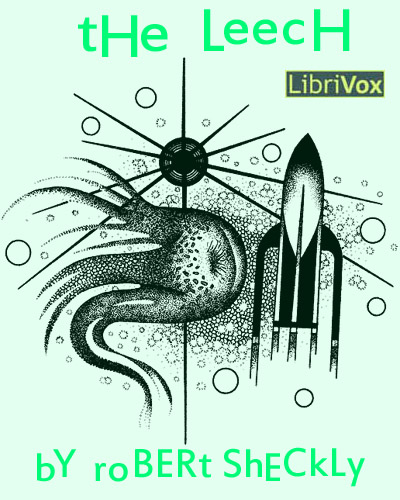
The Leech
By Robert Sheckley; Read by Gregg Margarite
1 |MP3| – Approx. 40 Minutes [UNABRIDGED]
Publisher: LibriVox.org
Published: November 28, 2010
Etext: Gutenberg.org A visitor should be fed, but this one could eat you out of house and home … literally! From Galaxy Science Fiction December 1952.
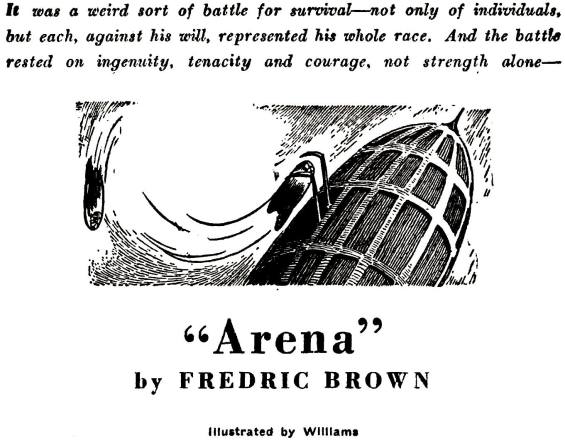
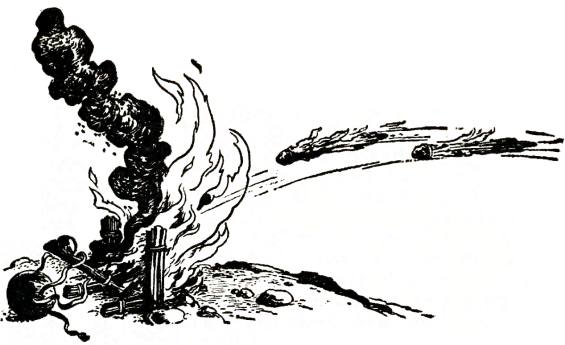
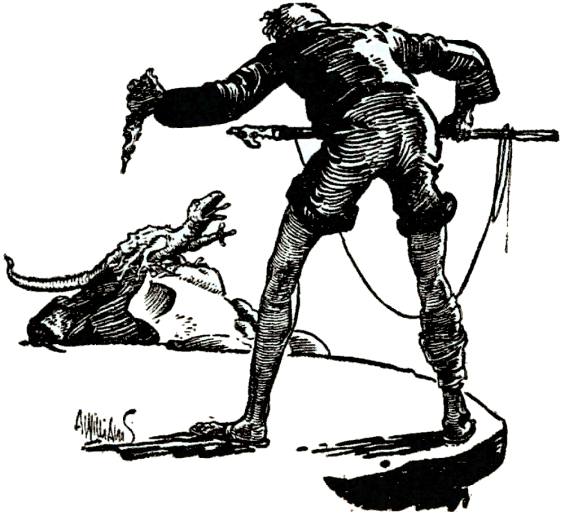
For nearly a year I’ve been studying the extensive influence of Fredric Brown’s 1944 short story, Arena. It took a recent article, on roughly the same topic, over on the excellent bare•bones e-zine blog, to prompt me to actually finish writing up this post – which is essentially a collection of inspired by and/or similar stories. That other post, by Jack Seabrook, mostly covers the Outer Limits‘ response to Arena – which is something that I’ve only briefly mentioned. Seabrook’s article and the thoughtful comments it’s spawned are well worth looking at |HERE|. One of the comments there also points out the connection to Richard Connell’s The Most Dangerous Game (but that’s another post altogether). My post on Arena begins here:
Arena (noun) – [Latin harēna, arēna, sand, a sand-strewn place of combat in an amphitheater, perhaps of Etruscan origin.] -1. An enclosed area, often outdoor, for the presentation of spectacular events -2. The part of a Roman amphitheater that was covered with sand to absorb the blood spilled by the combatants.
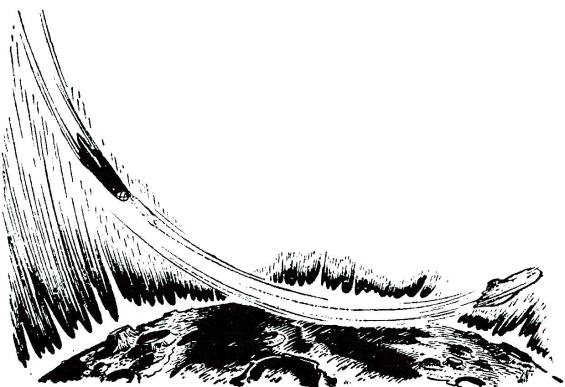
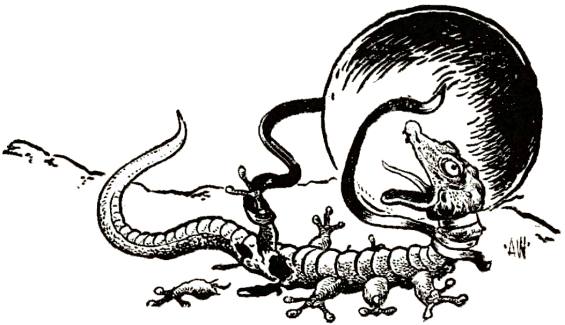
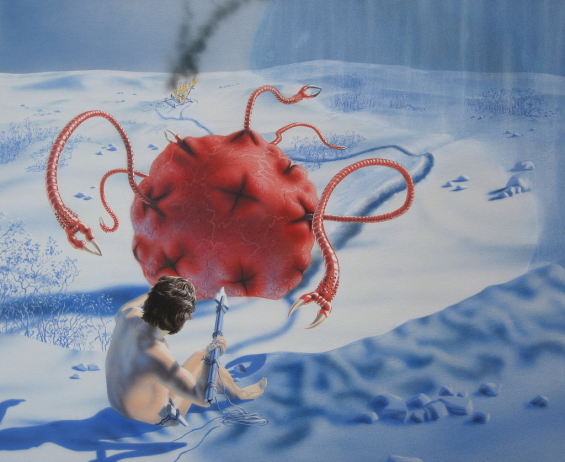
The SFFaudio Podcast #051 had a brief primer, by Professor Eric S. Rabkin, on Fredric Brown‘s spectacular short story Arena. Rabkin pointed out the curious description of the alien, and the year in which the story was first published (1944). The story being a fascinating metaphor for the Pacific War. The description of the alien, a “red sphere with several dozen fully retractable thin tentacles” is nicely comparable it with the Imperial Japanese battle ensign…
War flag of the Imperial Japanese Army:
Now if we keep looking for symbols, we can certainly find them. Take the blue sand of the arena itself. If Carson represents the USA, and the alien represents Japan, would the pervasive blue sand not therefore be representative of the Pacific Ocean? Of course it would!
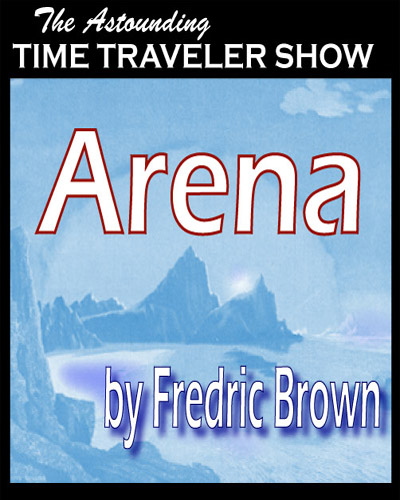
Next, check out the original story, available in an unabridged audiobook version created by Rick Jackson (aka The Time Traveler) for The Time Traveler Show podcast…
Arena
By Fredric Brown; Read by William Spurling
1 |MP3| – Approx. 1 Hour [UNABRIDGED]
Podcaster: The Time Traveler Show
Podcast: July 23rd, 2006 The mysterious Outsiders have skirmished with Earth’s space colonies and starships. Their vessels are found to be faster and more maneuverable, but less well armed. Survivors of these encounters are able to provide little other information about the enemy. Fearing the worst, Earth builds a war fleet. Sure enough, scouts report a large armada approaching the solar system. Earth’s defenders go to meet them. All indications are that the two fleets are evenly matched. First published in the June 1944 issue of Astounding Science Fiction magazine.
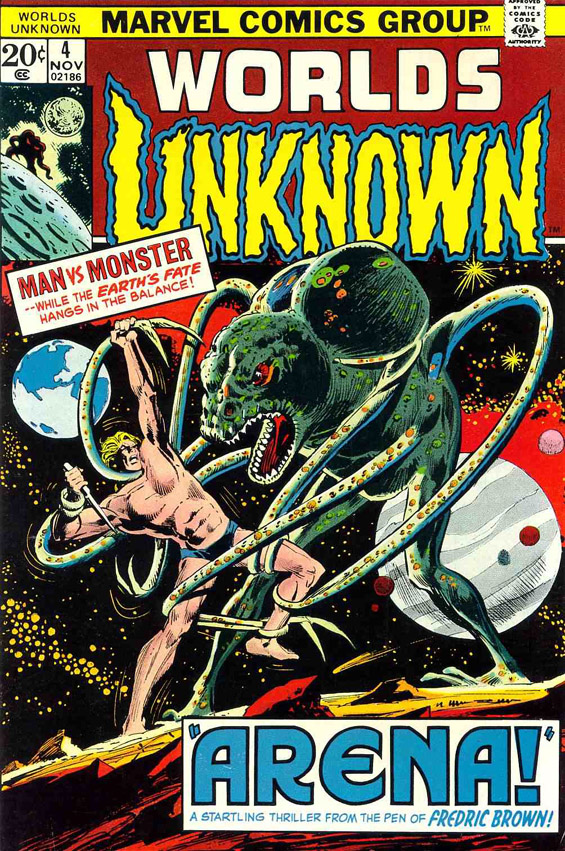
In the comics department, there was a 1976 Marvel Comics magazine adaptation in Unknown Worlds of Science Fiction. Of it, Pete Doree (Of The Bronze Age Of Blogs) sez:
“Arena is one of my all-time favourite one-off comic stories, from Roy Thomas’ short-lived Worlds Unknown. Rascally Roy obviously liked it as much as me, as he reprinted it in the last issue of his b/w follow up Unknown Worlds Of Science Fiction. What I like about it is that it’s storytelling pared right down to the bone: One man. One monster. Winner takes all. It’s that simple, and that elegant. The set up is so primal that you’re practically dealing in archetypes. Plus you get the amazing pairing of John Buscema & Dick Giordano on art. It was adapted from a story by Frederic Brown, a great old school sci-fi writer.”
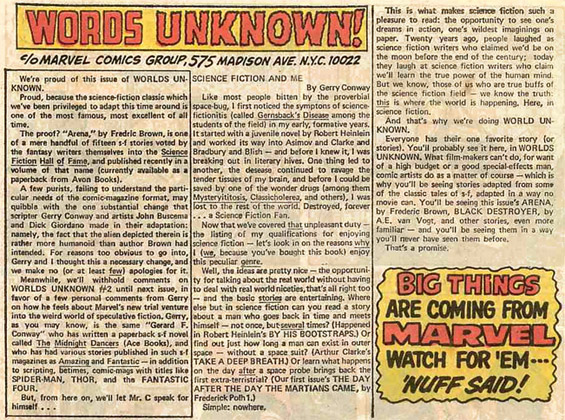
And, check out this editorial from Marvel Comics issue 4 of Unknown Worlds:
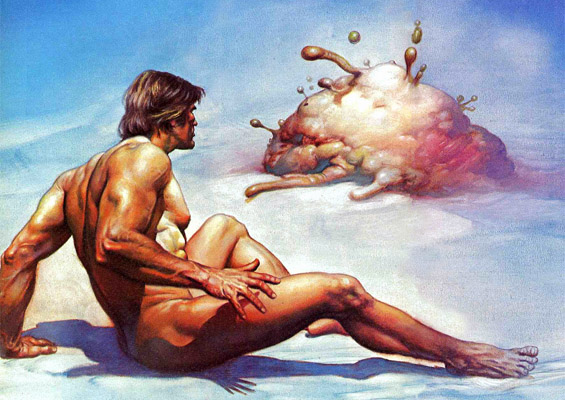
Keeping with the art theme, there’s Boris Vallejo’s depiction from the March 1977 Starlog Magazine printing of Arena (more on that |HERE|):
TV, movies and other SF authors also seem to have taken inspiration or paralleled Fredric Brown’s Arena too:
Star Trek: Arena:
Outer Limits: Fun And Games:
The one man against one man theme, as developed in Arena, departed the SF genre entirely with the 1968 film Hell In The Pacific. The movie stars Lee Marvin and Tishiro Mifune as shot down American and Japanese fighter pilots who make WWII more personal.
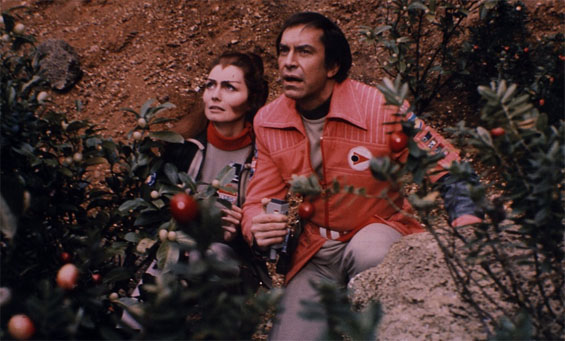
The meme sunk to its lowest low with the frighteningly awful (and least faithful) variation in “The Rules Of Luton” episode of Space 1999.
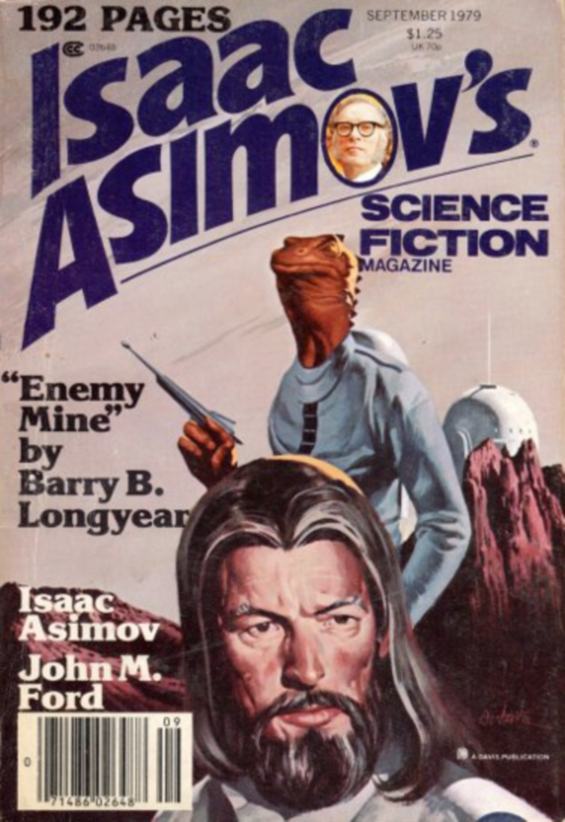
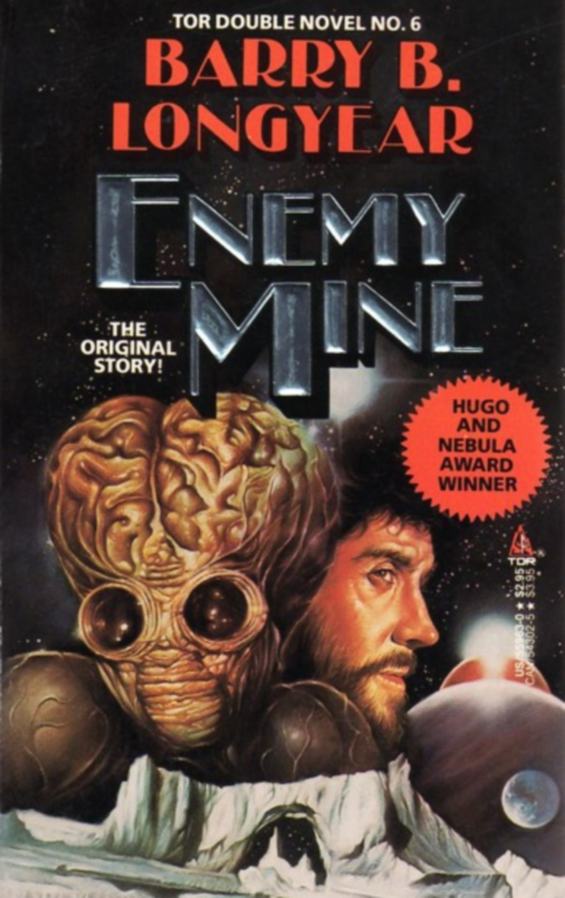
The meme transmogrified back into a man vs. alien confrontation for Barry B. Longyear’s 1979 novella Enemy Mine. Willis Davidge, a human fighter pilot, is stranded along with Jeriba Shigan, a Drac, on a hostile alien planet foreign to them both.
The movie version of Enemy Mine, 1985, magnified the allegory with a theme of racial brotherhood.
In 1989, Star Trek: The Next Generation first adopted the idea for an episode entitled “The Enemy“.
Another variation, in 1991, in an episode of Star Trek: The Next Generation called “Darmok” nearly eliminates the physical conflict, replacing it with an intellectual puzzle on the difficulties of communication.
Star Trek: Enterprise, in an attempt to recycle every previous Star Trek series plot, did their own take with the 2003 episode entitled Dawn:
Update:
David Schleinkofer illustrated the Reader’s Digest Edition of Arena in the early 1980s:

 It isn’t often I recycle an old posts. Why would I? They’re all still there! And if there’s something new about one I’ll typically just update the original rather than repost it. But, I’m confident that there are enough people out there, reading this blog now, that never saw our original 2008 coverage of the wonderful podcast/radio series called A Bite of Stars, a Slug of Time, and Thou. Because of that, and the fact that you’d be really missing out, this post can be one of the exceptions – a reminder that there’s a tonne of great old stuff in our archives, and out there on the internet.
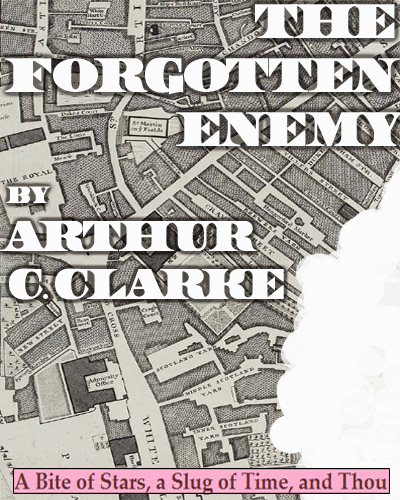 A Bite of Stars, a Slug of Time, and Thou – The Forgotten Enemy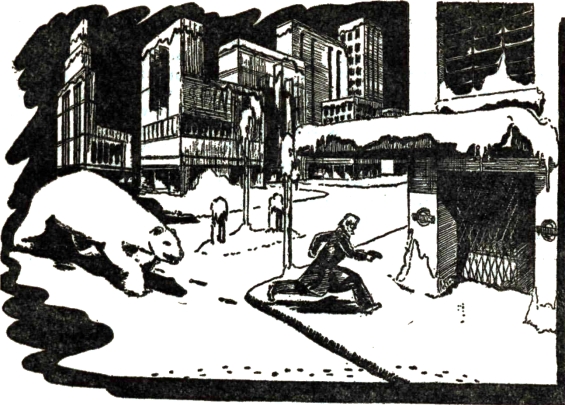

 Bradbury 13 – A Sound Of Thunder