Here’s the recently released Short Science Fiction Collection Vol. 010 from LibriVox! I had a chance to listen to most of the stories and I’ve highlighted a few:
1. As Long As You Wish, a cool kind of time travel tale, seems at first to have some volume problems, but it actually doesn’t, it’s a little creative interpretation that will become clear later in the story. The Coming Of The Ice is old, feels old fashioned, but isn’t so dated as to be unreadable. In fact, the story is rather terrific! It feels very much like a H.G. Wells story.
2. The Coming Of The Ice explains the strange and sad fate of a man who undergoes an operation to make him immortal (and sterile). This is a really terrific reading by the English accented Giles Baker (who could have a career in audiobooks ahead of him). The story itself is also significant in another respect – it was the first all new story ever purchased or published in Amazing Stories magazine (the first all-science fiction mag).
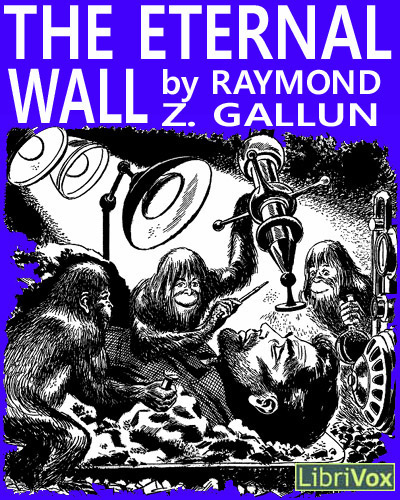
3. The Eternal Wall, deals similarly, offering a man another kind of one way trip to the future, this time though, not of his choosing. Speaking of Wells stories, the last tale in this collection is a Wells story – and it feels as close as Herbert George ever came to noir. From the perspective of a noir aficionado, there’s one flaw with it (and with War Of The Worlds for that matter) – in that Wells sets it all up well but he doesn’t have the guts for the all important follow through. But, speaking from a non-noir-loving perspective, it’s a damn fine story – and proves once again that Wells had more original ideas kicking around than almost anybody else before or since. Narrator Gregg Margurite’s setup isn’t perfect, he sounds a little muffled, but his reading voice is very good.
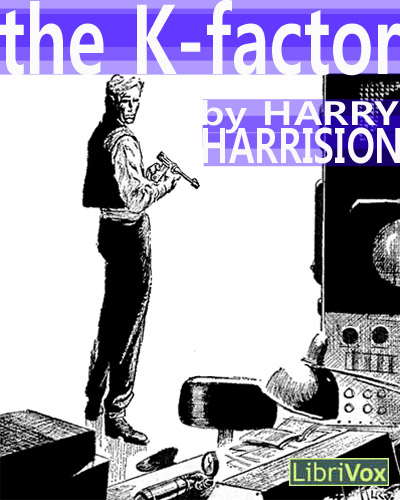
4. The K Factor Also read by Gregg Margurite, with the same setup as with all his recordings, muffled. Margurite has also recorded a full length Harrison Novel Deathworld! Societics is “The applied study of the interaction of individuals in a culture, the interaction of the group generated by these individuals, the equations derived therefrom, and the application of these equations to control one or more factors of this same culture.” It feels as if Harrision had been reading some Isaac Asimov and then Thomas Kuhn had been reading this story.
5. Star Mother while well written, is barely Science Fiction at all, seeing as the events that it reports would be happening mere 2 years after the story was originally published. Unfortunately Janet Moursund’s reading of Star Mother has too many mouse clicks in the recording.
6. Solander’s Radio Tomb is pretty funny, though more than anything else what I took away from it was an even greater fear of legal wills than I already had – if making plans are what make us human then the ability to revoke a plan does also – unfortunately, being dead you aren’t up for revoking much. So ya, I’m afraid of legal wills.
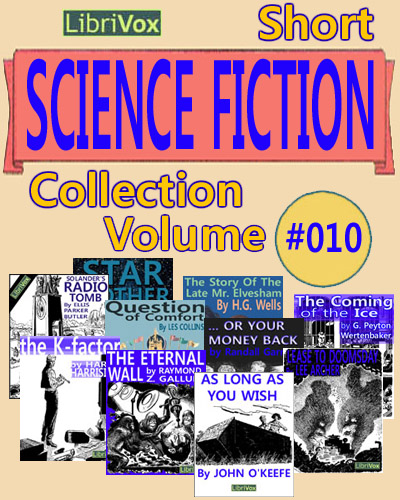 Short Science Fiction Collection Vol. 010
By various; Read by various
10 Zipped MP3 Files or Podcast – Approx. 5 Hours 38 Minutes [UNABRIDGED]
Publisher: LibriVox.org
Published: February 04, 2009
Science fiction (abbreviated SF or sci-fi with varying punctuation and case) is a broad genre of fiction that often involves sociological and technical speculations based on current or future science and technology. This is a reader-selected collection of short stories that entered the US public domain when their copyright was not renewed.
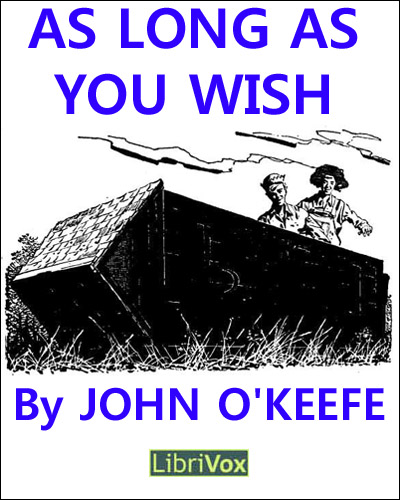 As Long as You Wish
By John O’Keefe; Read by Sean O’Hara
1 |MP3| – Approx. 10 Minutes [UNABRIDGED]
Publisher: LibriVox.org
Published: February 2008
If, somehow, you get trapped in a circular time system . . . how long is the circumference of an infinitely retraced circle? First published in Astounding Science Fiction, June, 1955.
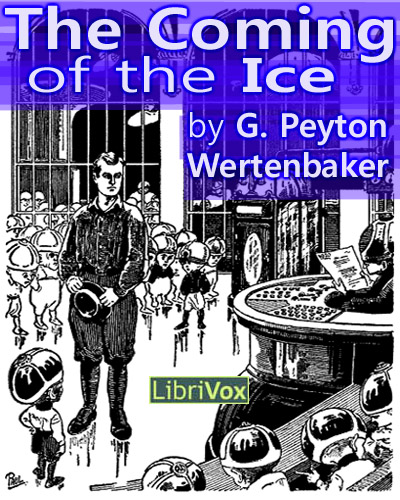 The Coming of the Ice
By G. Peyton Wertenbaker; Read by Giles Baker
1 |MP3| – Approx. 40 Minutes [UNABRIDGED]
Publisher: LibriVox.org
Published: February 2008
Strange men these creatures of the hundredth century …
First published in Amazing Stories June 1926, reprinted in Amazing Stories July 1961 with an introduction by Sam Moskowitz.
 The Eternal Wall
By Raymond Z. Gallun; Read by Gregg Margarite
1 |MP3| – Approx. 26 Minutes [UNABRIDGED]
Publisher: LibriVox.org
Published: February 2008
A scream of brakes, the splash into icy waters, a long descent into alkaline depths … it was death. But Ned Vince lived again—a million years later! From Amazing Stories April 1956, first published in Amazing Stories November 1942.
 The K Factor
By Harry Harrison; Read by Gregg Margarite
1 |MP3| – Approx. 54 Minutes [UNABRIDGED]
Publisher: LibriVox.org
Published: February 2008
Speed never hurt anybody—it’s the sudden stop at the end. It’s not how much change that signals danger, but how fast it’s changing…. From Analog December 1960.
 Lease To Doomsday
By Lee Archer; Read by Tom Weiss
1 |MP3| – 35 Minutes [UNABRIDGED]
Publisher: LibriVox.org
Published: February 2008
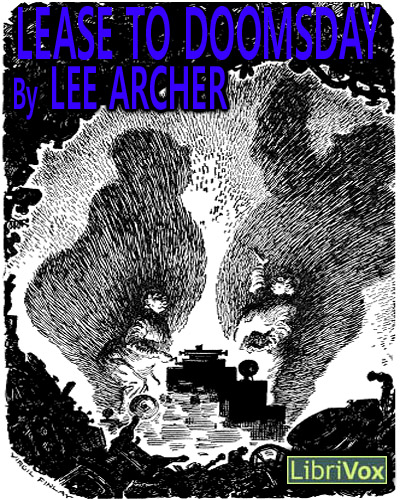
The twins were a rare team indeed. They wanted to build a printing plant on a garbage dump. When Muldoon asked them why, their answer was entirely logical: “Because we live here.” From Amazing Stories September 1956.
 …Or Your Money Back
By Randall Garrett; Read by Tom Weiss
1 |MP3| – Approx. 51 Minutes [UNABRIDGED]
Publisher: LibriVox.org
Published: February 2008
There are lots of things that are considered perfectly acceptable … provided they don’t work. And of course everyone knows they really don’t, which is why they’re acceptable…. From Astounding Science Fiction, September 1959 (published under the David Gordon pseudonym).
 Question Of Comfort
By Les Collins; Read by Tom Weiss
1 |MP3| – Approx. 52 Minutes [UNABRIDGED]
Publisher: LibriVox.org
Published: February 2008
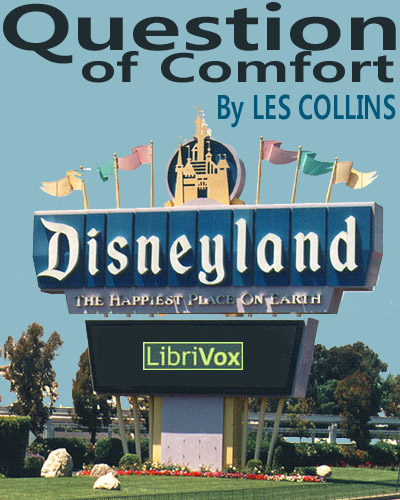
From Amazing Science Fiction Stories March 1959. The Gravity Gang was a group of geniuses—devoting its brilliance to creating a realistic Solar System for Disneyland. That was the story, anyway. No one would have believed all that stuff about cops and robbers from outer space.
 Solander’s Radio Tomb
By Ellis Parker Butler; Read by qqqsimmons
1 |MP3| – 18 Minutes [UNABRIDGED]
Publisher: LibriVox.org
Published: February 2008
First published in Amazing Stories June 1927, later in Amazing’s April 1956 issue. “I first met Mr. Remington Solander shortly after I installed my first radio set. I was going in to New York on the 8:15 A.M. train and was sitting with my friend Murchison and, as a matter of course, we were talking radio.”
 Star Mother
By Robert F. Young; Read by Janet Moursund
1 |MP3| – Approx. 13 Minutes [UNABRIDGED]
Publisher: LibriVox.org
Published: February 2008
A touching story of the most enduring love in all eternity. From Amazing Stories January 1959.
 Story Of The Late Mr Elvesham
By H.G. Wells; Read by James Christopher
1 |MP3| – Approx. 38 Minutes [UNABRIDGED]
“I set this story down, not expecting it will be believed, but, if possible, to prepare a way of escape for the next victim. He, perhaps, may profit by my misfortune. My own case, I know, is hopeless, and I am now in some measure prepared to meet my fate.”
Podcast feed:
http://librivox.org/bookfeeds/short-science-fiction-collection-010.xml
Posted by Jesse Willis



 Little Fuzzy