Human Is by Philip K. Dick

SFFaudio Online Audio

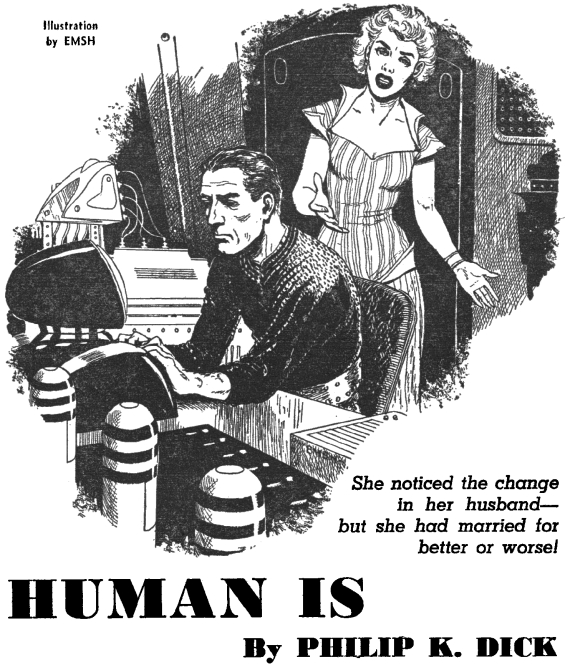
Human Is by Philip K. Dick - illustration by Ed Emshwiller

Here is the first second ever audio publication of Human Is by Philip K. Dick.

1 |MP3| – Approx. 33 Minutes [UNABRIDGED]

Narrated by Morgan Scorpion, this story of a dissatisfied housewife and her unfeeling husband has a very 1950s domesticity feel to it – that is until the husband returns from an interplanetary work trip with an entirely new personality.

First published in Startling Stories, Winter 1955.

And here’s a |PDF| of the story.

Posted by Jesse Willis

Review of The Poison Belt by Arthur Conan Doyle

SFFaudio Review

The Poison BeltThe Poison Belt
By Arthur Conan Doyle; Read by Gildart Jackson
Publisher: Dreamscape Audiobooks
[UNABRIDGED] – 3 hours, 24 minutes

Themes: / apocalypse / poison / science fiction /

Publisher summary:

What would you do if you had discovered that the planet was about to be engulfed in a belt of poisonous “ether” from outer space? Professor Challenger invites a hand-picked crew of adventurers and scientists to his home outside London, which has been fortified with several hours’ worth of oxygen. Challenger & Co. assemble in front of a picture window to witness the end of all life on the planet. As birds plummet from the sky, trains crash, and men and women topple over before their horrified gaze, they debate everything from the possibilities of the universe to the “abysses that lie upon either side of our material existence.”

I like Sherlock Holmes but I am much fonder of Arthur Conan Doyle’s other fiction. He was a skilled teller of “weird tales” and I have heard he was proudest of his historical fiction which I really enjoy. The Poison Belt is the second in a series of fantasy and science fiction novels featuring the brilliant and overpowering Professor Challenger.  It functions very well as a stand alone novel.

Having assembled a newsman, big game huntsman, and another scientist to explore South America in their first adventure, The Lost World, it is only logical that Challenger would call upon the same group for this scientific emergency. Professor Challenger puzzles them when he asks each to bring along a cylinder of oxygen. They are well acquainted with Challenger’s eccentricities but little do they suspect that he anticipates an apocalyptic event.

I’d say more but I think reading the whole description would have ruined my astonishment and interest in the story as it unfolded in this superb audiobook. In fact, having grabbed this review book solely based on my enjoyment of The Lost World, I hadn’t read the description at all. I was stunned to find this was such an apocalyptic novel. It is really well written and thought through. I was frequently surprised as various events occurred because I simply hadn’t thought through the consequences of an apocalypse in 1913 England.

Part of the enjoyment of The Poison Belt comes from the adventurers’ interactions. Doyle is very good at inserting humor, often through the two scientists’ bickering over conclusions, and at other times in hunter Lord John’s casual comments as in this instance when Challenger has asked the group to look at an amoeba through a microscope.

Lord John was prepared to take him on trust.

“I’m not troublin’ my head whether he’s alive or dead,” said he. “We don’t so much as know each other by sight, so why should I take it to heart? I don’t suppose he’s worryin’ himself over the state of OUR health.”

I laughed at this, and Challenger looked in my direction with his coldest and most supercilious stare. It was a most petrifying experience.

“The flippancy of the half-educated is more obstructive to science than the obtuseness of the ignorant,” said he. “If Lord John Roxton would condescend—-”

“My dear George, don’t be so peppery,” said his wife, with her hand on the black mane that drooped over the microscope. “What can it matter whether the amoeba is alive or not?”

“It matters a great deal,” said Challenger gruffly.

“Well, let’s hear about it,” said Lord John with a good-humoured smile. “We may as well talk about that as anything else. If you think I’ve been too off-hand with the thing, or hurt its feelin’s in any way, I’ll apologize.”

Part of the humor comes across thanks to the excellent narration by actor Gildart Jackson. As is often the case with actors, his reading is rife with expressive accents, subtle nuances, and changes of pace. This isn’t a very long book and goes along at a rattling pace. I was hooked from the beginning.

I don’t know when I’ve enjoyed an audiobook more and I hope that Dreamscape is considering more of Arthur Conan Doyle’s fiction for the future.

Posted by Julie D.

The SFFaudio Podcast #243 – READALONG: Herland by Charlotte Perkins Gilman

Podcast

The SFFaudio PodcastThe SFFaudio Podcast #243 – Jesse, Jenny, Bryan Alexander, Terpkristin, and Maissa Bessada discuss the 1915 novel Herland by Charlotte Perkins Gilman.

Talked about on today’s show: [Note: references to the novel are in bold, while references to the eponymous country are not.] “Lost utopian novel”; first appeared in book form in 1979 as part of an effort to rediscover works by female authors; was it suppressed by patriarchy?; the novel launches with action; features Heinlein-esque; the story feels very alien despite transpiring on Earth, takes place in an unnamed jungle region presumed to be either South America or Africa; Herland grouped as part of a trilogy along with an unrelated novel Moving the Mountain and the direct sequel With Her in Ourland; the book originally appeared in serialized form in Charlotte Perkins Gilman’s own magazine; grounded in “utopian” and “lost race” tradition of the period which pick apart aspects of society; Heinlein’s and Gilman’s sexism compared and contrasted; “virgin impregnation” compared with conception of Christ; foundation of Herland as a Roman-style slave revolt; “what a world of slaves it was” Goslings quote echoed in Herland; utopian ecology (plants, animals); Jesse calls it “Mother Knows Best totalitarianism”; “intentional Darwinism”; eugenics foreshadowing World War II; Bryan brings up The King in Yellow again; protagonists give threefold approach to women; punishment in Herland more akin to child-rearing foregoing execution; Leviticus does advocate execution; both the male protagonists and the Herland women are archetypical; The Yellow Wallpaper; utopia or dystopia; unreliable narrator and narrative; Jesse argues that there’s “no drama in a perfect society” and the book has a terrible plot; eighteenth-century feminist utopia Millennium Hall; Jenny says the sequel’s plot is even worse; immortality and living in Heaven; no dogs in Herland, only cats; subservience of aesthetics to productivity; “their country was as neat as a Dutch kitchen”; childhood Jesse conflated cats and dogs; cats and dogs emblematic of gender relations in Herland; Herland is a baby-proof world; more about narrator bias in the novel; Gilman projecting her own views on mental disorder into the book; 1984 parallels; The Mysterious Doctor Fu Manchu; comparison to Goslings; why does Herland want to integrate men?; sexual dynamics in marriage; Castle Waiting by Linda Medley, a medieval utopia about bearded women; Y: The Last Man series by Brian K. Vaughan; female politicians behaving like men e.g. Margaret Thatcher; Barbara W. Tuchman and the “fallen tower” of World War I era society; utopian societies lack practical advice for the here-and-now; Origin of Species debated as source of eugenics; education in Finland; education as driving force in Herland; “only our best become teachers”; Montesori; No Child Left Behind; the perils of individualism in a utopia; “fashion and women go together” says Jesse; Jenny shares insights on potential contributions from women in the sequel; a debate on why Herland never took off; patriotism and its linguistic roots; more on the novel’s World War I context; Willa Cather’s WWI novel One of Ours; “trilogy” of novels packaged as e-book.

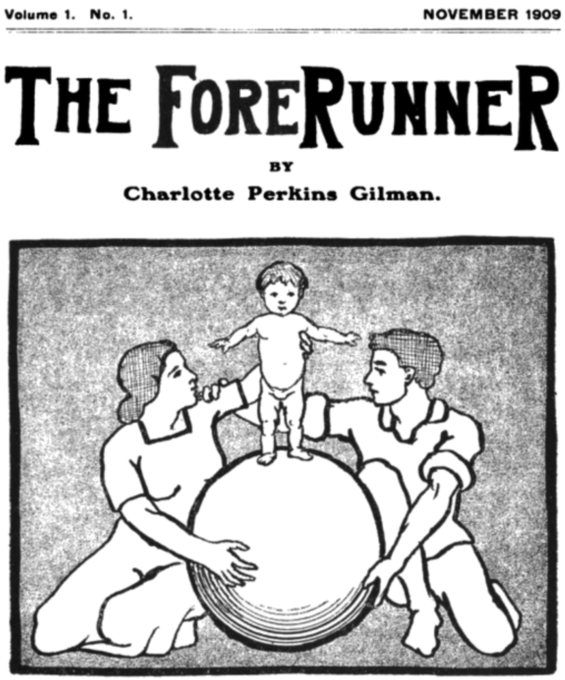
The ForeRunner by Charlotte Perkins Gilman

Posted by Jesse Willis

The SFFaudio Podcast #242 – AUDIOBOOK: Herland by Charlotte Perkins Gilman

Podcast

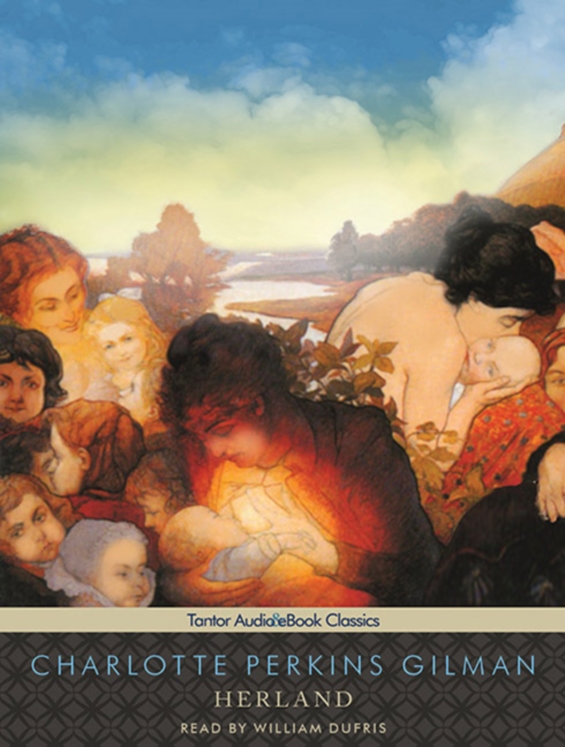
The SFFaudio PodcastThe SFFaudio Podcast #242 – Herland by Charlotte Perkins Gilman, read by William Dufris.

First published serially from January to December 1915 in The ForeRunner, this UNABRIDGED AUDIOBOOK (7 Hours 2 Minutes) comes to us courtesy of Tantor Media and their collection of “Unabridged Classics”.

Thanks Tantor!

Three American young men discover a country inhabited solely by women.

Come back for our next episode (SFFaudio Podcast #243) to hear our discussion of Herland.

TANTOR MEDIA - Herland by Charlotte Perkins Gilman

Posted by Jesse Willis

The SFFaudio Podcast #241 – READALONG: Goslings by J.D. Beresford

Podcast

The SFFaudio PodcastThe SFFaudio Podcast #241 – Jesse and Jenny discuss the 1913 novel Goslings: A World Of Women by J.D. Beresford and the 2013 audiobook from Dreamscape Audiobooks.

PUBLIC DOMAIN |ETEXT|

Talked about on today’s show:
Dreamscape Audiobooks, narrator Matthew Brenher, English dialects (and accents), a casual apocalypse, running out of water, “he’s going to beat his family”, “and we’re very English and we’re moving on”, a world of women,

A global plague has decimated England’s male population and the once-predictable Gosling family is now free to fulfill its long-frustrated desires. When Mr. Gosling leaves his family to peruse his sexual vices, the Gosling daughters, who lack experience and self-independence, find shelter in a matriarchal commune. However their new life is threatened by the community elders’ views on free love.

that’s not what it feels like, what do the women want?, Thrail and his perspective, the Gosling’s perspective, Thrail’s journal, an implicit trust in the British authorities, fathoming an empty world, what is Mother Gosling’s ultimate fate?, a very gentle book, the cruelest moment in this book is the confrontation at the tobacconist’s, “you stupid slut”, a gentle apocalypse, 70% of the population dies, The Stand by Stephen King, exploding heads, Earth Abides, the war of all against all, almost all the men die, the harem, Thrail is asexual, a dalliance with a coquette, Jenny blames Father Gosling, the proximal cause, “we’re wasting the potential of women”, Eileen (aka Lady Eileen), marriage never really protected women, a world of slaves, men can be feminists too, why does it take a man to write a book about a world of women?, J.D. Beresford modeled Thrail on H.G. Wells, Jack London, the 1910s, the Bolshevik revolution, Mastering The Art Of Soviet Cooking, Mastering the Art of Soviet Cooking: A Memoir of Food and Longing by Anya Von Bremzen, an anti-disestablishment bill, the Anglican Church, church and state, the fundamentalist religious people in this book, so many critiques, a very thoughtful book, intellectualism, “you don’t want books, keep your eyes open and think”, Thrail worked on every continent, Thrail is needed for his manly skills (not just his sperm), “the Jewess”, is this casual racism?, this is a weird book because its about fashion, a Science Fiction novel about FASHION!, the clothing, pants, work clothing, Thrail is the Beresford mouthpiece, Thrail’s Dr. Watson, “you’re so mighty!”, women want to attract mates but their worried about what other women think, and men are into fashion too, a vigorous bike ride, “get out of the city”, the suppressed lech, “I saw the god in the father”, a transition back to nature, Sterling, the ending, what’s going on in America, this story would never work now, Goslings is completely of its time, a really well written book, Beresford wrote a book about H.G. Wells, Neil Gaiman, the neat ending undercuts the book, a new way to be, why do we like these downer books, Jenny likes to see what happens when things get torn apart, a farm commune, the thieving, the religious group, class distinctions, fashion and class, Louis Vuitton, a signifier of class, men are not the oppressors, people are oppressing themselves, we weren’t even slaves to intelligence and efficiency, a strong educated woman, a funny utopian book, utopia/dystopia, compared to the end of Earth Abides, the war bride phenomena, think of the children, Virus (1980) aka Day of Resurrection (PUBLIC DOMAIN), an inversion of the situation in Goslings, rape is not okay, how do we rebuild the world with only eight women and eight hundred men?, The Best Of All Possible Worlds by Karen Lord, On The Beach by Nevil Shute, Gooses?, Ganders?, goslings grow up, growing up, Blanche is the elder daughter, Millie becomes a harem girl, beautiful hair, “if you stop I’m gone”, Thrail doesn’t want to suffer the fools, sex in that bush, the women are jealous, “history is a series of stories about the worst fucking people in the world”, bastard after bastard, asshole after asshole, “slut” is the insult word for women, etymology of swear words, bitch, bastard, a term of unworthiness, men worry about bastard children, women are worried about having sluts near their husbands, the terms don’t apply anymore, religious sects that don’t sexually reproduce, the Shakers, the rapture, J.D. Beresford was agnostic and then a theosophist, Paris intellectuals, Madame Blavatsky, the universal over-soul, séances, the cause, the 19th century, “newspapers newspapers newspapers”, disposable income, social negotiations, the girls could push their dad’s buttons, when the hard truth comes…, Jean Claude Van Damme, Jenny plows her own fields, “more beets, less kale”, the prepper phenomenon, a seed bank, all the planting zones are shifting, growing beets and kale in Antarctica, there are only two flowering plants in Antarctica.

Dreamscape Audiobooks Goslings by J.D. Beresford

Posted by Jesse Willis

The SFFaudio Podcast #240 – READALONG: Frankenstein by Mary Shelley

Podcast

The SFFaudio PodcastThe SFFaudio Podcast #240 – Jesse, Scott, Julie Davis, and Bryan Alexander discuss Frankenstein by Mary Shelley.

Talked about on today’s show:
The 1818 edition versus the 1831 edition, the half-made up prologue, Leaves Of Grass, are there any body changes?, “the corpus”, Downpour.com’s version with Simon Templeman, Anthony Heald, Stefan Rudnicki, Frankenstein vs. the monster, creature, wretch, demon, insect, incoherent with rage, face to face, moving on, the fainting hero or heroine, swooning, Lovecraftian fainting, cosmic horror, Herbert West: Re-Animator, Young Frankenstein, Cool Air by H.P. Lovecraft, Edgar Allan Poe, M.R. James, becoming god, why are we reading a book by a teenager from almost 200 years ago, Edinborough, the broken reader, Sir Walter Scott, Ivanhoe, etymology, Paradise Lost, Gulliver’s Travels, Percy Shelley, William Shakespeare, Macbeth, Caliban, The Tempest, Science!, hey I’m killing your family and stuff, Spirits!, Russia, the Arctic, Prospero, Caliban the dogsbody, Sycorax, the pre-science world to the science world, Christopher Marlowe, “I’ll burn my books!”, the education of young Victor, religious swearing, Brian Aldiss, spark, the electrical element, Galvani and the frog’s legs, more chemical (than electrical), the Romantics, the heart of the the book, “the modern Prometheus”, nature, the North Pole, Siberia, Things As They Are; Or, The Adventures of Caleb Williams by William Godwin, berries and nuts, vegetarianism, the bringing of fire, The Wonderstick (the coming of the bow) “spooky action at a distance”, fire as technology, Eric S. Rabkin, fire -> knowledge -> enlightenment, the blasted oak, the family tree destroyed, this mortal clay, body stealing, Burke and Hare (are a lot of fun), ‘there are some things man was not meant to know’, a motherless monster, Young Frankenstein, what’s so cool about Young Frankenstein is that it solves the problems caused by previous movie adaptations, “Hey there handsome”, is the creature really hideous?, “a very Jewish movie”, “this is a boy that the world will love”, community, Victor had no Igor, Eyegor, or Fritz, well formed, euphemisms, dull yellow eye, proportionate limbs, is he veiny?, black and flowing hear, a pearly whiteness, a feminist novel, a misogynist fantasy, the framing narrative, males behaving badly, Gothic, gender coding, the curse of the Frankensteins, Frau Blücher, the Kenneth Branagh adaptation of Frankenstein, The Revolt Of Islam by Percy Bysshe Shelley, Justine (and the lack of justice she receives), Anne Rice, “I’m never going to sleep again”, the path of evil, Victor had a temper, the abnormal brain (Abbie someone), a “blank slate”, Henry Frankenstein, Young Frankenstein retcons the book and the 1931 movie (and the Hammer movies), Froderick Frankenstein, Boris Karloff, Transylvania Station, The Body Snatcher, Robert Louis Stevenson, The Black Cat (1934), Bela Lugosi, a movie from a parallel dimension, the perfect romantic character, the “noble savage” and the “blank slate”, flowery language and obfuscation, a baby story, that’s Science Fiction right there, an eight foot baby, how do we detect the world, what is light?, a blind man given sight, sphere vs. pyramid, Johann Wolfgang von Goethe, an urbane monster, the ideal syllabus, Mary Shelley is showing the heck off, Paradise Lost, The Sorrows Of Young Werther, suicide, Lives Of The Noble Greeks And Romans by Plutarch, Ruins Of Empires by Constantin-François de Volney, Frankenstein’s lab notes, Safie, the Ottoman Empire, Turkey as a proxy for European society, Olaf Stapledon, the hapless fate of the aboriginals of North America, Shelley’s hanging out with radicals, an anti-American dream, three years after the fall of Napoleon, Lord Byron, dreams, “how are we living with each other?”, Prometheus Unbound, The Last Man, Prometheus should be our hero, Harlan Ellison, Walton, Bryan’s dissertation was on Frankenstein, The Rime Of The Ancient Mariner, The Narrative Of Arthur Gordon Pym Of Nantucket, At The Mountain Of Madness, Star Trek, doppelgangers, doubles all the way down, perfectly symmetrical, The Prestige by Christopher Priest, Melmoth The Wanderer by Charles Maturin, The Saragossa Manuscript by Count Jan Potocki, the fire and ice, “in the cottage we are the monster”, lookism, when they see the monster, “as a lion rends the antelope”, Blade Runner‘s ending, all those murders, a child having a temper-tantrum, where you gonna get that wood?, standing on an ice-floe, Dante’s Inferno and the final circle of hell, Inferno by Larry Niven and Jerry Pournelle, Bryan reads Frankenstein every year, teaching Frankenstein in high-school, a perfect ending, is the monster still out there?, Edison’s 1910 film adaptation of Frankenstein (it’s 10 minutes), imagine Tesla adapting Frankenstein, a shameless self-promoter, “Victory Frankenstein fucked with Mother Nature, and She bore him a strong son”, ‘there are some things that man was not meant to know’, Walton wants to find the source of the pole’s magnetism, “it’s not just loving your family – it’s also loving your fellow being”, “if you make a mistake – own up”, Walton learns from the story, Young Frankenstein, it’s an ethics book, mad scientists, a Kennedy son, Moby Dick, C.L.R. James, a ship as a microcosm of society, “I smell readalong!”, Hitlerland: American Eyewitnesses to the Nazi Rise to Power by Andrew Nagorski, “the kids loved Uncle ‘Dolf”, “charisma leaking out all over the place”, charisma and beauty, a bear doesn’t understand charisma, real-life parallels, what is the function of Henry Clerval in the book, is he us?, a homoerotic reading, Percy and Bryon go hiking, it’s Simon Pegg and Nick Frost, World’s End, Shaun Of The Dead, Hot Fuzz, Elizabeth’s provenance and the weird relationship with her cousin/brother/owner Victor, a subterranean psychodrama, Victor’s wild dream in which Elizabeth dies and then turns into his mom, grave worms, a maternal figure and a corpse.

Theodor von Holst - Frankenstein

Frankenstein - illustration (possibly by Ernie Chan)

Frankenstein

FRANKENSTEIN - The Bride Of The Monster - illustration by Mike Ploog

FRANKENSTEIN - illustration by Dino Castrillo

These Books Make Me Feel...

World Of Wonder - Mary Shelley

LEGOized Frankenstein

The Creation Of Frankenstein's Creature - illustrated by Jesse

Posted by Jesse Willis