The SFFaudio Podcast #141 – READALONG: The Island Of Doctor Moreau by H.G. Wells

Podcast

The SFFaudio PodcastThe SFFaudio Podcast #141 – Last week’s podcast was an unabridged reading of The Island Of Doctor Moreau by H.G. Wells. This week Scott, Jesse, Tamahome and Professor Eric S. Rabkin form an ad hoc community discuss it!

Talked about on today’s show:
Are we men or animals?, Charles Laughton, The Island Of Lost Souls, Burt Lancaster, Marlon Brando, Val Kilmer, let the movie atrophy and evaporate, changing the name Prendick to Prentice to Parker, Margaret Atwood, Moor, death, water, Moreau, Gustav Moreau, etchings of Dante’s Inferno, ebony, anthracite, Moreau is a funeral shroud, prig + dick (thick), prender, Prendick appropriates Moreau’s island, the manuscript, Prendick is a user, “a false church”, Edward (the happy guardian), Charles (the common man), “a private gentleman”, the single biggest theme in the book (modern European culture deforms the natural state of things), beastilizing humans or humanizing beasts, the white man’s burden (and his name is black), pro-science vs. anti-progress, Darwin brings the questioning of the moral narrative of humans, Montgomery and Moreau lack moral direction, Prendick too is directionless (all at sea), vivisection, “life is the house of pain”, Wells (and Mary Shelley) are deeply concerned with the relationship of scientists with the larger community, Eric thinks science unaware of moral obligation is the target, Prendick is a disingenuous narrator, Moreau is a colonial overload, “The Lady Vain”, Lady Day (Billie Holiday) vs. Lady Day (the Catholicism meaning), “Lady Day” is an ironic reversal of “Saint Mary”, Ipecacuanha = ipecac, Gulliver’s Travels, what are the chances of a collision with a derelict ship in the middle of Pacific?, M’Ling, mankind’s way of finding destruction, “ship of fools”, the ships are microcosms, a foreshadowing of destruction (of an unsustainable ), “Wells is just so God-damned smart”, Addaneye Island vs. Adonai (God), M’Ling is Manling, is M’ling a dog or an ape?, Thomas HobbesLeviathan, “solitary, poor, nasty, brutish and short”, “the great chain of being”, “In the afternoon, Moreau, Montgomery, myself, and M’ling went across the island to the huts in the ravine.” Montgomery = defender of the mountain, Prendick’s narration belies the events of the story, poetic justice, “he attacks Helmar with his hands”, men don’t sink like stones, cannibalism, “when every animal is a person then you better have a law against cannibalism”,

A sudden convulsion of rage shook me. I was almost moved to batter his foolish head in, as he lay there helpless at my feet. Then suddenly his hand moved, so feebly, so pitifully, that my wrath vanished. He groaned, and opened his eyes for a minute. I knelt down beside him and raised his head. He opened his eyes again, staring silently at the dawn, and then they met mine. The lids fell.

“Sorry,” he said presently, with an effort. He seemed trying to think. “The last,” he murmured, “the last of this silly universe. What a mess — ”

I listened. His head fell helplessly to one side. I thought some drink might revive him; but there was neither drink nor vessel in which to bring drink at hand. He seemed suddenly heavier. My heart went cold. I bent down to his face, put my hand through the rent in his blouse. He was dead…

Eric thinks Prendick is trying to exonerates himself, abolutionism a theme of abstinence and alcohol, “you’re Mr. Shut Up”, Lem Johnson, Governor George Gawler‘s 1838 speech to the local Aborigines in the Adelaide area:

“Black men – We wish to make you happy. But you cannot be happy unless you imitate good white men. Build huts, wear clothes, work and be useful. Above all things you cannot be happy unless you love GOD who made heaven and earth and men and all things. Love white men. Love other tribes of black men. Do not quarrel together. Tell other tribes to love white men, and to build good huts and wear clothes. Learn to speak English. If any man injure you tell the protector and he will do you justice.”

language as an instrument of repression, “this is an impossible story”, vivisection cannot create men, “this is a fable”, Thomas Henry Huxley, Wells was an apprentice to Huxley, natural selection and animal nature, if you can evolve can you devolve?, Montgomery is Moreau’s vicar (or Pope), an experiment with a snake, the Garden of Eden, Prendick is a liar, there is no great chain of being, Brits don’t have the right to change Indians, neither the force of arms, nor the claim of church, nor the claim of law can justifiably impose on one’s fellow man, The Time Machine, cannibalism is a transformation of murder, The Island Of Doctor Moreau as a fable, Sigmund Freud’s essay on “the uncanny” (make the metaphorical literal), The Eyes Have It by Philip K. Dick, it looks like a beast fable, “animal swiftness”, The Rime Of The Ancient Mariner by Samuel Taylor Coleridge, rabbits and Easter and eggs, Prendick destroys the symbol of christian resurrection, “a boat of community”, The War Of The Worlds as a kind of coda to The Island Of Doctor Moreau, Frankenstein, human beings are social animals, Boer Wars, South Africa, The Invisible Man, The Kingdom Of The Blind by H.G. Wells, one man is no match to a community, all of Wells’ protagonists seem to be horrible human beings, “a private gentleman”, if you have means you have an obligation to participate in the world, the doubting Thomas Marvel, the ocelot man, the pig men, the monkey man, “he’s a five man”, “big thinks” vs. “little thinks”, “it takes a real man to tell a lie”, sex and marriage and community in Frankenstein, Doctor Moreau Explains, man-making vs. woman-making, the puma-woman, Brian Aldiss, The Other Island Of Doctor Moreau, Frankenstein Unbound, “when suffering finds a voice”, vivisection, social class, PETA, the British Museum, the National Anti-Vivisection Society, The Invention Of Morrel by Adolfo Bioy Casares, Jorge Luis Borges, “an atrocious miracle”, “youthful blasphemy”, are there any contemporary reviews for The Island Of Doctor Moreau?, Henry James vs. H.G. Wells, little picture vs. big picture, psychology vs. sociology, characters vs. ideas, our Rainbow’s End discussion, Wells is undervalued because he is so easy to read, the consumption of food and drink, Wells learned it all, The Outline Of History by H.G. Wells, Samuel Johnson’s dictionary, ramify, The Lord Of The Flies by William Golding, The Inheritors is an elegiac recognition of the importance of community, neanderthals.
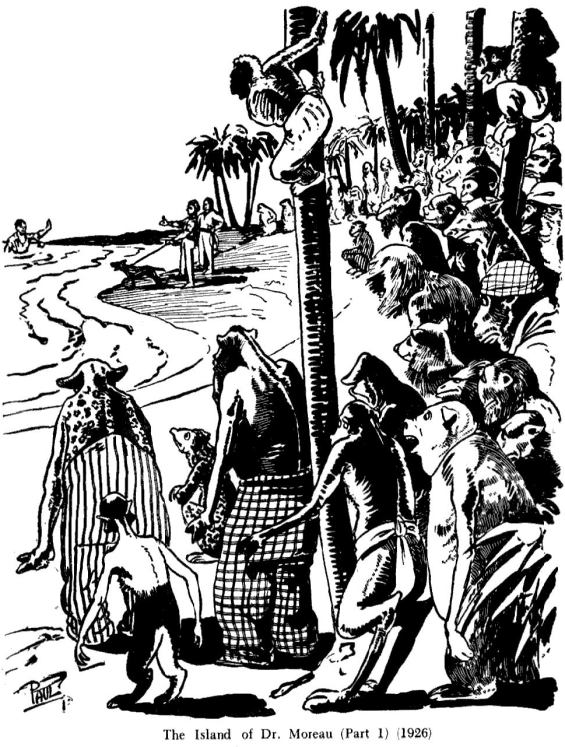
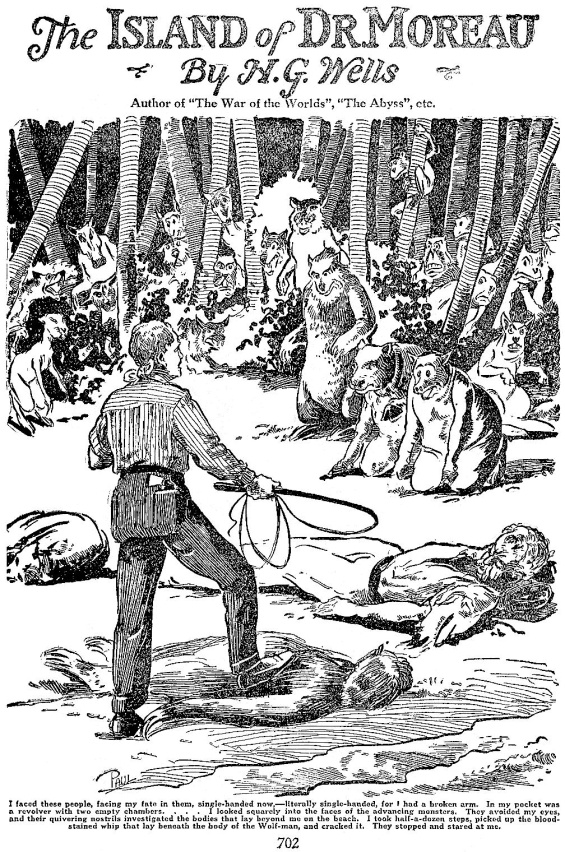
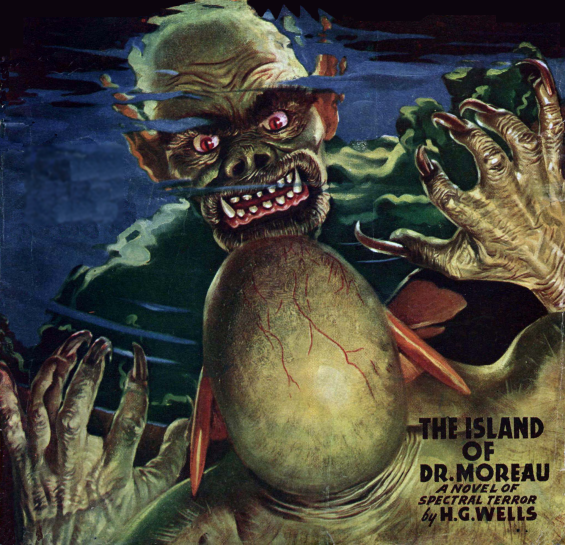
The Island Of Doctor Moreau by H.G. Wells - Illustration by Frank R. Paul for Amazing Stories

The Island Of Doctor Moreau by H.G. Wells - Illustration by Frank R. Paul for Amazing Stories

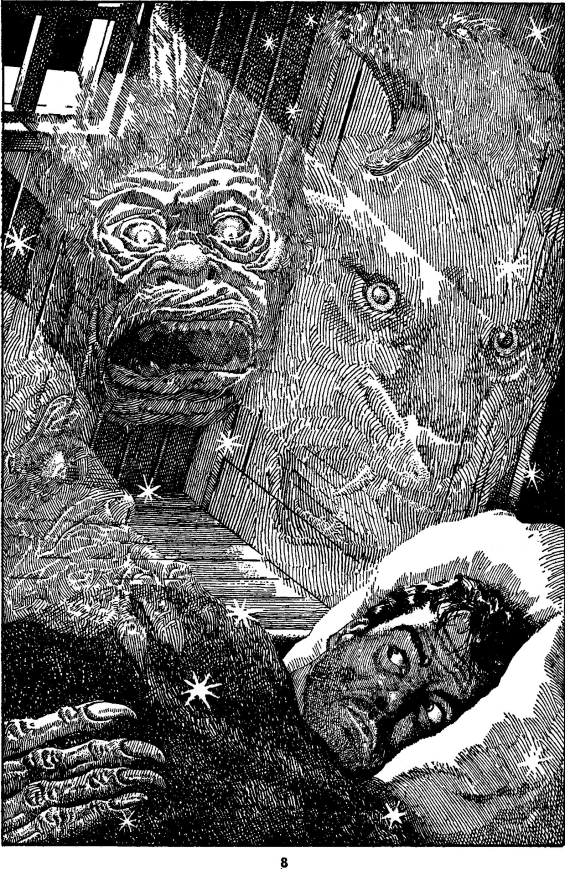
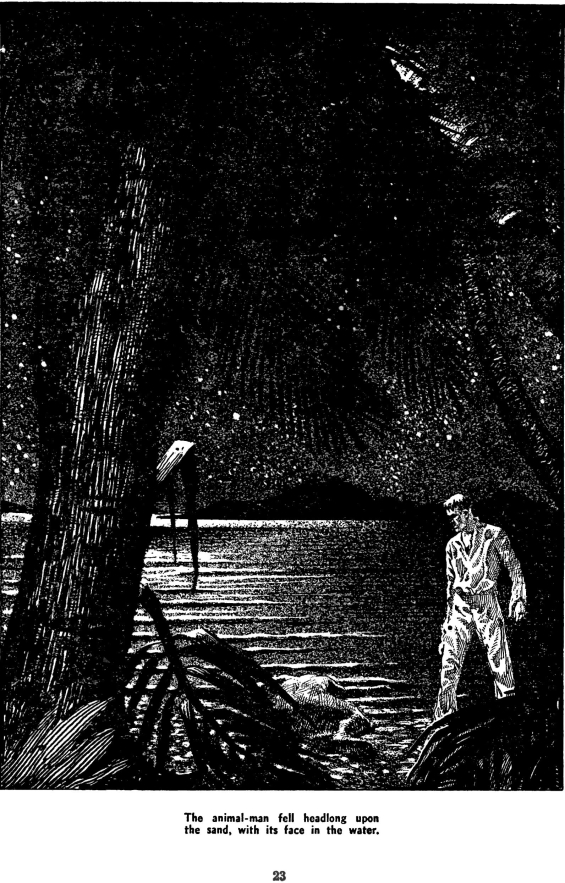
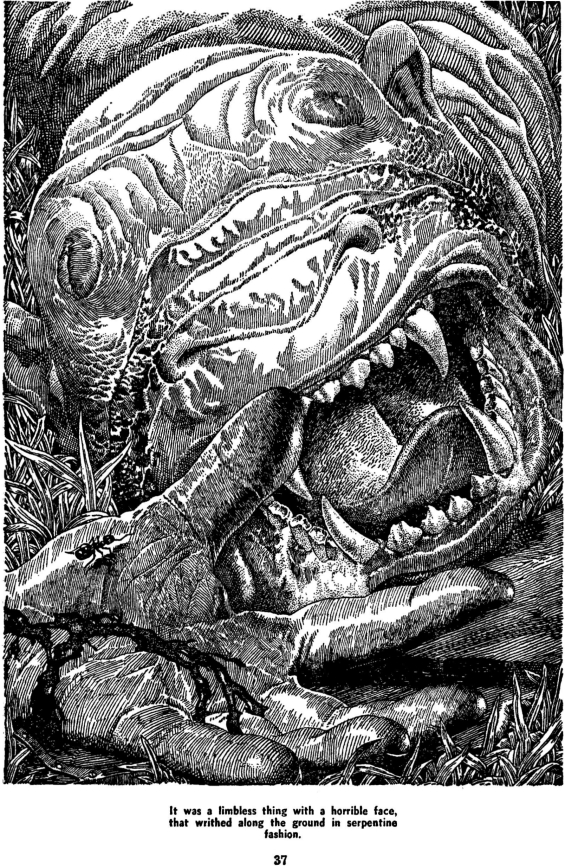
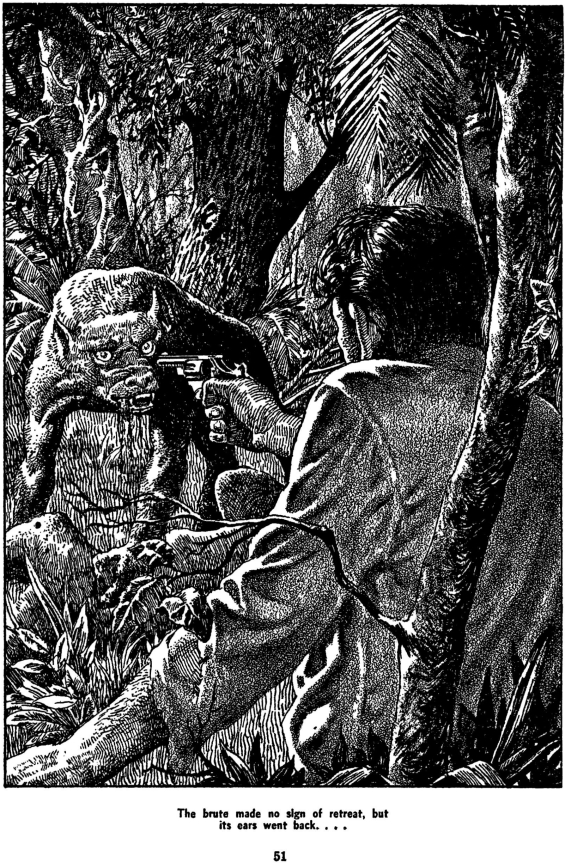
Famous Fantastic Mysteries - THE ISLAND OF DOCTOR MOREAU

Famous Fantastic Mysteries - THE ISLAND OF DOCTOR MOREAU

Famous Fantastic Mysteries - THE ISLAND OF DOCTOR MOREAU

Famous Fantastic Mysteries - THE ISLAND OF DOCTOR MOREAU

Famous Fantastic Mysteries - THE ISLAND OF DOCTOR MOREAU

Famous Fantastic Mysteries - THE ISLAND OF DOCTOR MOREAU

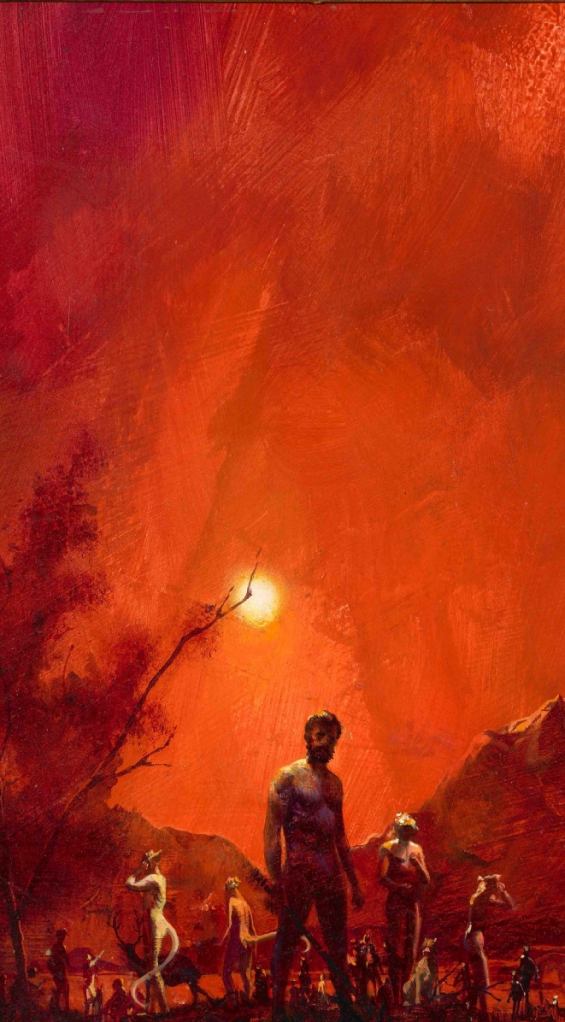
The Island Of Dr. Moreau - Cover illustration by Paul Lehr

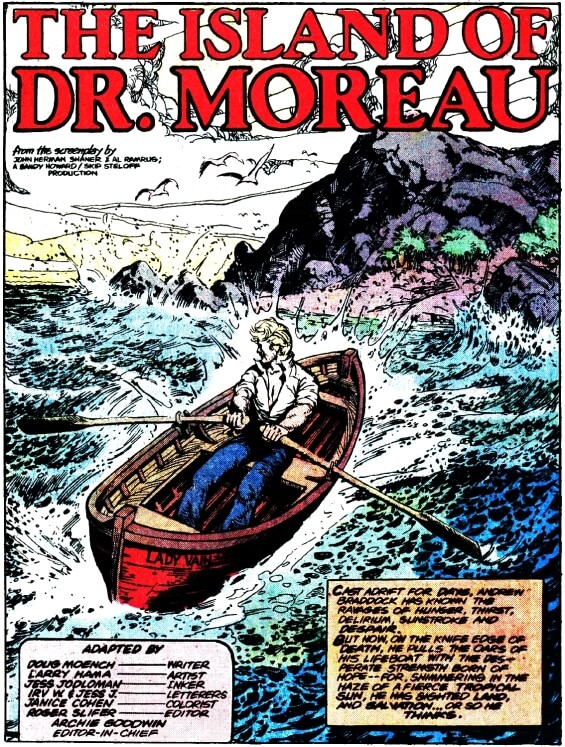
H.G.WELLS' The Island Of Dr Moreau - MARVEL

Posted by Jesse Willis

The Country Of The Blind by H.G. Wells

SFFaudio Online Audio

TITLE - The Country O fThe Blind by H.G. Wells

Here’s the editorial introduction to The Country Of The Blind from Amazing Stories, December 1927:

We take many things for granted in this world. We accept many preconceived notions about an amazing large number of things, which, like as not prove to be amazingly wrong. If any story ever proved this point, The Country Of The Blind certainly is that one. The author exploits the well-known saying , “In the country of the blind the one-eyed man is king.” Indeed that statement is most easy to believe and all logic should point that way. In reading this interesting story, you will soon find out how far wrong even seemingly good logic can be.

The above, presumably written by Hugo Gernsback himself, ably covers most of what I thought to say about this story. But that didn’t quite stop me.

This audiobook was my first time reading this story. I’m starting to think that H.G. Wells always wrote allegory and fable. The main character in this piece, and all Wellsian fiction, is completely unlikeable. The society he creates is unlikeable too. What does it say about me that I appreciated the story, even if I didn’t like it? What does it say about modern SF that stories with unlikeable protagonists in unlikeable societies are so few?

I guess I appreciated The Country Of The Blind because there’s a very deep skepticism to it, about human nature, about society but most importantly about the claim of wisdom. Man is a foolish, foolish beast. His only guide to the future is what has come before. But we’re always tempted to take some distilled bit of wisdom and use it that to do our thinking for us. What does it say for us when for every proverb we use to rationalize a decsion there is another proverb that could have supported an alternate?

Better, perhaps, to reject proverb entirely.

LibriVoxThe Country Of The Blind
By H.G. Wells; Read by llite (aka George Cooney)
1 |MP3| – Approx. 61 Minutes [UNABRIDGED]
Publisher: LibriVox.org
Published: January 17, 2010
While attempting to summit the unconquered crest of Parascotopetl, a mountaineer named Nunez slips and falls down the far side of the mountain. At the end of his descent, down a snow-slope in the mountain’s shadow, he finds a valley, cut off from the rest of the world on all sides by steep precipices. Nunez has discovered the fabled Country of the Blind. The valley had been a haven for settlers fleeing the tyranny of Spanish rulers until an earthquake reshaped the surrounding mountains and cut it off forever from future explorers. The isolated community prospered over the years despite a disease that struck them all blind. As the blindness slowly spread over the generations and the last sighted villager had died, the community had fully adapted to life without vision. First published in the April 1904 issue of the Strand Magazine.

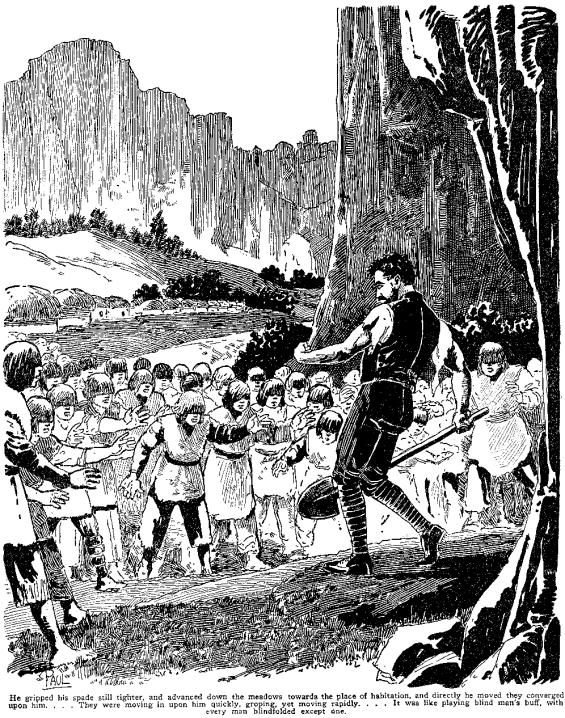
The Country Of The Blind - illustrated by Frank R. Paul

Included below are all the audio drama adaptations I could find. I recommend the episode of Escape with Paul Frees.

EscapeEscape – The Country Of The Blind
Based on the story by H.G. Wells; Adapted by John Dunkel; Performed by a full cast
1 |MP3| – Approx. 29 Minutes [RADIO DRAMA]
Broadcaster: CBS Radio
Broadcast: November 26, 1947
produced/directed by William N. Robson
Cast:
William Conrad … Ibarra
Paul Frees … Nunez
Produced/directed by William N. Robson

EscapeEscape – The Country Of The Blind
Based on the story by H.G. Wells; Adapted by John Dunkel; Performed by a full cast
1 |MP3| – Approx. 30 Minutes [RADIO DRAMA]
Broadcaster: CBS Radio
Broadcast: June 20, 1948
Cast:
Berry Kroeger … Ibarra
Paul Frees … Nunez

EscapeEscape – The Country Of The Blind
Based on the story by H.G. Wells; Adapted by John Dunkel; Performed by a full cast
1 |MP3| – Approx. 30 Minutes [RADIO DRAMA]
Broadcaster: CBS Radio
Broadcast: March 20, 1949.
Cast:
Berry Kroeger … Ibarra
Edmund O’Brien … Nunez
Produced/directed by Norman MacDonnell

SuspenseSuspense – The Country Of The Blind
Based on the story by H.G. Wells; Adapted by John Dunkel and William N. Robson; Performed by a full cast
1 |MP3| – Approx. 19 Minutes [RADIO DRAMA]
Broadcaster: CBS Radio
Broadcast: October 27, 1957
Cast:
Raymond Burr

SuspenseSuspense – The Country Of The Blind
Based on the story by H.G. Wells; Adapted by John Dunkel and William N. Robson; Performed by a full cast
1 |MP3| – Approx. 24 Minutes [RADIO DRAMA]
Broadcaster: CBS Radio
Broadcast: December 13, 1959
Cast:
Bernard Grant
Produced/directed by Paul Roberts

Favorite Story Favorite Story – Strange Valley
Based on The Country Of The Blind by H.G. Wells; Adapted by ???; Performed by a full cast
1 |MP3| – Approx. 27 Minutes [RADIO DRAMA]
Broadcaster: KFI
Broadcast: April 23, 1949
Cast:
Ronald Coleman … Nunez

[via Escape-Suspense.com]

Posted by Jesse Willis

The SFFaudio Podcast #140 – AUDIOBOOK: The Island Of Doctor Moreau by H.G. Wells

Podcast
H.G. WELLS' The Island Of Dr Moreau
The SFFaudio PodcastThe SFFaudio Podcast #140 – The Island Of Doctor Moreau by H.G. Wells, read by Jonathan Kent.

This UNABRIDGED AUDIOBOOK (4 Hours 8 Minutes) comes to us courtesy of Tantor Media and their collection of “Unabridged Classics”. Thanks Tantor!

Come back for our next episode (SFFaudio Podcast #141) to hear our discussion.

Here’s the ETEXT.

TANTOR MEDIA - The Island Of Doctor Moreau by H.G. Wells

Incidentally, I believe this is the first time an entire novel has been podcast as one big file.

Posted by Jesse Willis

BBC Radio 4 Extra: Seven Blake’s 7 RADIO DRAMAS to air

SFFaudio Online Audio

BBC Radio 4 ExtraBBC Radio 4 Extra (the station formerly known as BBC Radio 7) will be airing the excellent Blake’s 7 series of prequel adventures over four consecutive Saturdays starting on Xmas eve. From the Blake’s 7 blog:

The BBC Radio 4 Extra season includes the premiere of ESCAPE VELOCITY on Saturday 24 December at 18:00hrs. Featuring ZOË TAPPER, JASON MERRELLS and TRACY-ANN OBERMAN, ESCAPE VELOCITY is scripted by award-winning writer/novelist, James Swallow. Other audio drama premieres included FLAG AND FLAME, written by Marc Platt, and POINT OF NO RETURN, also written by James Swallow.

BLAKE’S 7: THE EARLY YEARS is a thrilling new prequel series of audio stories that explores the origins of key BLAKE’S 7 characters before they met rebel leader Roj Blake, taking you back to where the seeds of rebellion against the Federation really began.

These re-imagined BLAKE’S 7 audio adventures have been described by news-stand magazine SciFiNow as “… a bold and revitalising addition to the Blake’s 7 story” and by SFFAudio.com as “morally complex, deeply noir.”

The audio dramas feature well-known names including COLIN SALMON (Doctor Who), KEELEY HAWES (Ashes To Ashes), BENEDICT CUMBERBATCH (Sherlock), GEOFFREY PALMER (As Time Goes By), MICHAEL COCHRANE (Sharpe) and ALISTAIR LOCK as Zen.

Here are the broadcast dates and (U.K.) times:SFFaudio Essential

Escape Velocity – Saturday 24th December, 2011 at 18:00 |READ OUR REVIEW|
Point Of No Return – Saturday 31st December, 2011 at 18:00 |READ OUR REVIEW|
Eye Of The Machine – Saturday 31st December, 2011 at 18:30 |READ OUR REVIEW|
Flag And Flame – Saturday 7th January, 2012 at 18:00 |READ OUR REVIEW|
Blood And Earth – Saturday 7th January, 2012 at 18:30 |READ OUR REVIEW|
The Dust Run – Saturday 14th January, 2012 at 18:00 |READ OUR REVIEW|
The Trial – Saturday 14th January, 2012 at 18:30 |READ OUR REVIEW|

Posted by Jesse Willis

Review of Blake’s 7 The Early Years – Jenna: The Trial / The Dust Run (Vol. 1.5)

SFFaudio Review

Blake's 7 The Early Years - Jenna: The Trial / The Dust Run (Vol. 1.5)SFFaudio EssentialBlake’s 7 The Early Years – Jenna: The Trial / The Dust Run (Vol. 1.5)
By Simon Guerrier; Performed by a full cast
1 CD – Approx. 70 Minutes [AUDIO DRAMA]
Publisher: B7 Productions
Published: November 30, 2009
ISBN: 9781906577087
Themes: / Science Fiction / Galactic Empire / Dystopia /

The Dust Run – Jenna Stannis has grown up as a spacer, where the normal rules don’t apply. No school, no police, no public imperatives – that’s still all to come. But the situation on Earth is changing and the effects are slowly being felt throughout the Vega system. It’s going to mean trouble for a brash boy called Townsend – who Jenna doesn’t fancy at all. Soon Jenna and Townsend are competing in the Dust Run – racing shuttles through an asteroid field without using computers, making the complex calculations in their heads. It’s dangerous, fool-hardy and really good fun. But they’re playing for the highest of stakes…

The Trial – The election is going to change everything. A man called Roj Blake promises the voters new hope, an end to years of corruption. There are those who can’t let him be heard. But Jenna Stannis is determined to get his message out to the colonies. It’s been years since the Dust Run, and Jenna’s a changed woman. She’s left the Vega system far behind, using her exceptional piloting skills to carve out a life as a smuggler. Blake’s message could earn her a fortune – or cost her, her life.

This is the final two stories in the first Blake’s 7 The Early Years series. First up is The Dust Run. It starts with a framing story in which we see the cruelty of the Earth Federation up close. Under torture Jenna, a young woman, reveals everything about her truant past. Then, in the story proper, we meet her as a charming teen. She comes from an underemployed spacer family, has just a few friends but none of them are particularly trustworthy. For fun Jenna likes piloting shuttles at high speed through a region of space filled with a heavy concentration of particulates. It’s precisely her lightheartedness that sets Jenna up for a fall.

The Trial also uses the framing device but skips ahead in time to the events which lead to Jenna’s incarceration. The problem is that her interrogator also claims to be acting as her advocate! If Jenna is to have any chance of avoiding imprisonment on Cygnus Alpha she’ll have to shade the truth. This episode reminded me of the other great Orwellian episodes of serial SF (like Star Trek: The Next Generation‘s “Chain of Command” – in which Picard is tortured and Babylon 5‘s “Intersections In Real Time” – in which Sheridan is tortured). The darkness of Jenna Stannis’ Federation universe is equally Orwellian, but, as I’ve mentioned in other reviews of this series it has more than a touch of Brave New World in it too. This new Blake’s 7 series, like it’s TV predecessor, is an intelligent Science Fiction series that masquerades as consumable pop-culture “sci-fi”.

Carrie Dobro, who played a charismatic alien thief in the Babylon 5: A Call To Arms TV-movie and on the prematurely canceled Babylon 5 spinoff Crusade, stars as Jenna Stannis. Dobro has a star-level magnetism in both these productions. She’s sure of herself, a devious and clever power seeker, never fully in control, always seeking it, but at heart a sympathetic survivor. Simon Guerrier and Carrie Dobro have created a worthy back-story for Jenna Stannis. Highly recommended!

Posted by Jesse Willis

Review of Blake’s 7: The Early Years: Zen: Escape Velocity

SFFaudio Review

B7 PRODUCTIONS - Blake's 7: The Early Years: Zen: Escape VelocitySFFaudio EssentialBlake’s 7: The Early Years: Zen: Escape Velocity (Volume 2.1)
By James Swallow; Directed by Andrew Mark Sewell; Performed by a full cast
1 CD – Approx. 1 Hour [AUDIO DRAMA]
Publisher: B7 Productions
Published: April 26, 2010
ISBN: 978190657709
Themes: / Science Fiction / Artificial Intelligence / Cloning / War / Aliens /

Based on Terry Nation’s seminal 70s science fiction TV series, The Early Years is a prequel series of audio stories that explores the origins of key Blake’s 7 characters prior to them meeting rebel leader Roj Blake. This latest entry to the ever-expanding series takes a new twist, concentrating on a character that doesn’t breathe or have any parents, the synthetic intelligence known only as Zen. When Roj Blake first stepped on board the mysterious, derelict alien spaceship Liberator, his every movement was monitored by the ship’s controlling intelligence, Zen Luckily, Blake and his rebel crew managed to gain the ‘confidence’ of this creation from an alien world and so he was able to use the Liberator in their quest for justice against the Federation. But the origins of Zen have remained a mystery, until now. What terrible catastrophe left the Liberator drifting and shattered? What drove the ship’s intelligence to murder its original crew? What dark secrets lie at the heart of this alien machine? And are Blake and his crew really safe on board the Liberator?

Often, you’ll want to know somebody’s back-story, and then later, when you actually get it – in a prequel story – you’ll find that it is far, far, far less interesting than whatever was going on in your imagination. For me, the years between 1980 and 1999 were ones filled with near-reverence for a fascinating character, the ultimate baddie: Darth Vader. But no amount of apologetics can possibly remove the sickly saccharine story of a nine-year-old Darth Vader filled with “a high concentration” of midichlorians. Yuck. And yet “prequel” is not always a dirty word. I don’t feel that way about The Young Indiana Jones Chronicles, and likewise the Blake’s 7 prequel stories (1.1 |READ OUR REVIEW|, v.1.2 & 1.3 |READ OUR REVIEW|, 1.4 |READ OUR REVIEW|). By far the most mysterious character in the original TV series was Zen, the artificial intelligence. Zen was pretty closed-circuit about its past, not revealing much over the two years it appeared in the series (1978 – 1980). In life Zen “projected a dour, non-committal personality” and would “reply to certain questions with the phrase ‘That information is not available.'” This left left open the possibility that Zen was hiding secrets or “secretly executing its own agenda.” In this magnificent audio drama we are given a genuinely interesting explanation as to why Zen was so very melancholic, why the ship was found crew-less, seemingly abandoned and drifting near Cygnus Alpha.

Zen: Escape Velocity clearly reveals the frightening truth about all of Zen’s character quirks and its cryptic answers from the TV series. But it also shows more. Back in 2008 I reviewed the Blake’s 7 – Audio Adventures boxed set |READ OUR REVIEW| – the first three episodes of the new B7 audio drama series. One detail found within that review was that Zen was, unlike the original series, suicidal at the time of its discovery. Listening to Zen: Escape Velocity you will discovery exactly why that was so.

Six actors, Zoë Tapper, Jason Merrells, Tracy-Ann Oberman, Alastair Lock, Sam Woodward and Pamela Banks play different members of the original crew of the Liberator (back when it was still called “Deep Space Vehicle 2” and when Zen was called “SHIP-MIND”). The story, told by a careful cross-cutting backwards and forwards in time, shows the original crew welcoming their new PILOT, Zoë Tapper, aboard DSV2. Strangely, she is having memory problems and needs shepherding by the ship’s doctor. As the crew takes its positions and readies themselves for battle, we learn about their fascinating society. This is wonderful social Science Fiction like nothing exactly I’ve read or seen or heard before!

Zen (SHIP-MIND) only used the first-person, singular personal pronoun (“I”) once on the television series – it is used multiple times in this production. Zoë Tapper (who appeared in another Terry Nation re-imagined series) and Jason Merrells (playing the doctor), are the central sympathetic heroes of Zen: Escape Velocity. Alastair Lock, who also acts as a post-producer, musician and sound effects man for the CD, portrays SHIP-MIND (Zen). Sounds are rich, deep and best experienced in a quiet room. The stereo effect and a good set-of headphones,as I used, will bring an immense visual experience that belies the fifty-six minute running time. A five minute “Bonus Music Track” (original to this episode) rounds out the disc.

Posted by Jesse Willis