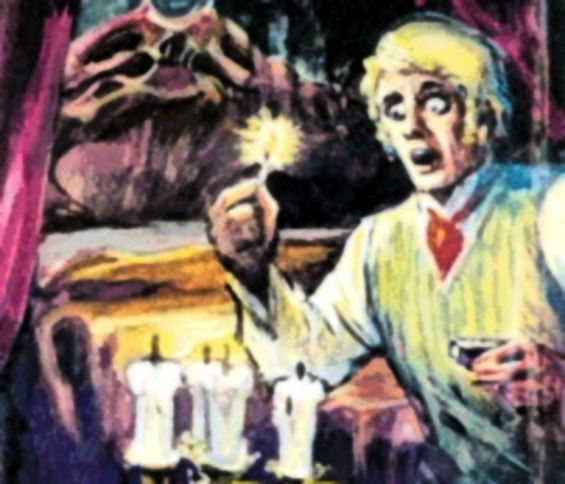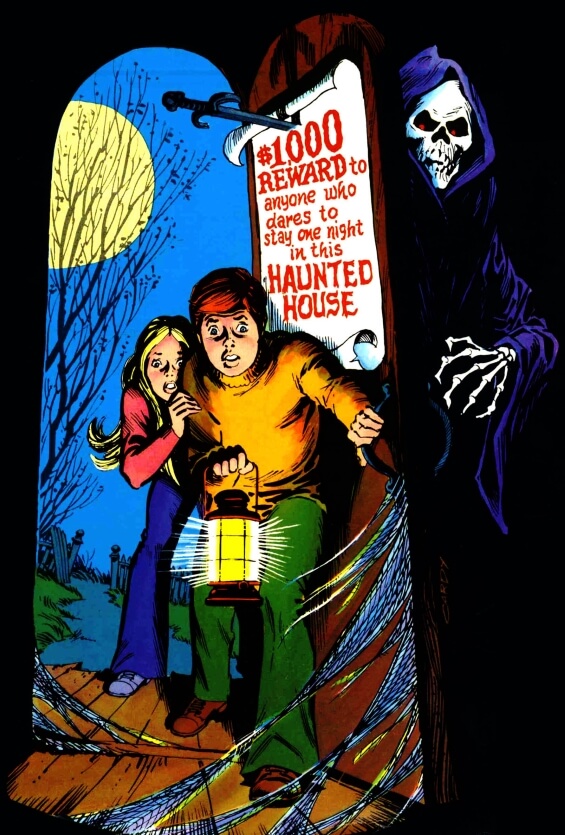

The SFFaudio Podcast #255 – AUDIOBOOK/READALONG: The Repairer Of Reputations by Robert W. Chambers

Podcast

TheSFFaudioPodcast600The SFFaudio Podcast #255 – The Repairer Of Reputations by Robert W. Chambers; read by Mark Turetsky. This is a complete and unabridged reading of the short story (1 hour 25 minutes) followed by a discussion of it. Participants in the discussion include Jesse, Mr Jim Moon, and Mark Turetsky!

Talked about on today’s show:
The King Of Yellow, 1895, novelette, the connections between the stories, Cynthia, the coda, The Mask, Paris, the lethal chamber (a suicide booth), the Fates, revision of judgement, questioning the reader’s sanity, The Yellow Sign, Hildred Castaigne, the future setting (or lack thereof), the statue of Garibaldi (at Washington Square Park), the Carcosa Mythos, weird tales, weird romances, New York City, Mr. Wilde, Hawberk, Dr. Archer, the geography of Washington Square, the elevated train, a subway entrance (as a death chamber), the Wikipedia entry, Futurama (and New New York), a bohemian place, NYU, why is everything militarized?, what’s with the jingle of metal?, the expansion of the American Empire, “citation needed”, dragoons, hussars, lancers, the Prussian style, New Jersey, the texture of the fantasy future, a courtly atmosphere, colouring psychosis, a Napoleonic fascist sate, the meta-fictional nature of The King In Yellow, the Cthulhu Mythos vs. the Yellow Mythos, a surrealist existential nightmare, a fall from a horse, “he’s in the biscuit box”, it’s not horror, weird fiction, Ambrose Bierce, Science Fiction, science, the pinnacle of technology is a dreadnaught, The Structure Of Scientific Revolutions by Thomas Kuhn, Copernicus, Ptolemy, Galileo, the Moons of Jupiter, we’re living in a paradigm, a time of scientific flux, modern atomic theory (and The Mask), H.P. Lovecraft’s cosmicism, Steve Job and the “reality distortion field“, a social reality, Mr. Wilde’s career is the ability to distort social reality, “Napoleon, Napoleon, Napoleon”, Charlemagne, George Bernard Shaw: “The reasonable man adapts himself to the world; the unreasonable one persists in trying to adapt the world to himself. Therefore, all progress depends on the unreasonable man.“, Emperor Norton, California, Ambrose Bierce, “A sure sign of a genius is that all of the dunces are in a confederacy against him.”, the Hawberk (aka the Duke of Avonshire), the Metropolitan Museum, why does Louis visit Hildred?, the lethal chamber is central to the action, under the thrall of the Yellow Sign, Who Knows? by Guy de Maupassant, insanity and isolation, how is Hildred employed?, how Schizophrenia works, going along with the delusion, what is the significance of the cat?, the crisis comes when the cousin has to move, the crush on Constance, the anti-story nature of the work, the unreliable narrator (not Mark!), “suspension of disbelief”, Samuel Taylor Coleridge (and the old romantic poets), a reaction against science, are the ships real?, aren’t the ships and cavalry set up as a Chekov’s Gun that will go off?, internal inconsistencies, how old are the characters?, Hildred vs. Louis, the statue of General Sheridan, Académie Julian, artists and prostitutes and models, The Mask by Robert W. Chambers, what photography did to painting, impressionism, disruptive ideas, the homunculus, the missing fingers, the damaged ears, Mr. Wilde’s manuscript is the story we’re reading!, is the Chamber is a reference to Chambers himself?, The Street Of The First Shell by Robert W. Chambers, the siege of Paris (during the Franco-Prussian War), Two Fishers by Guy de Maupassant, the Benedict (80 Washington Square East), HBO’s True Detective and the connections to The King In Yellow by Robert W. Chambers, detecting reality (and identity), the purple ears vs. pink ears, how does repairing reputations work?, Hildred’s reputation, a Strangers On A Train-esque clearing house for murder, Scandal (we haven’t seen it), Osgood Oswald Vance, crouching, who killed Mr. Wilde?, the cat did it!, the cat must be symbolic, Oscar Wilde and The Yellow Book, a web of fantasies, “folie à deux”, ‘don’t make fun of crazy people because their folly lasts longer than our own’, we don’t have perfect access to reality, WWI, a social reality vs. a harsh physical reality of artillery, madman vs. a fool, craziness vs. folly, Omar Khayyám, Act 1, Act 2 will make you insane, densely packed with world and incidence, revolutionary science, speculation, no Shyamalan twists please, Cohle and Hart, precedents for a twelve year gap, Battlestar Galactica, Vikings, Rome, Lost, it won’t be a happy ending, suicide is hugely important in both stories, ‘death is not the end’, back to the cat, The Street Of The Four Winds by Robert W. Chambers, cats, dark magic, evil omens, The Black Cat by Edgar Allan Poe, No mask?, Stefan Rudnicki talking about The King In Yellow, the “pallid mask”, is it a skull?, Boris, the face in the fates, the bird on the statue, a jigsaw puzzle, “the long arm of The King In Yellow reaches forward and backward in time and space”, David Lynch’s Lost Highway, is Mr. Wilde real at all?, a very readable book, stylistically it’s surprising modern, the artisty milieu, a freshness, “beware of The King In Yellow“.
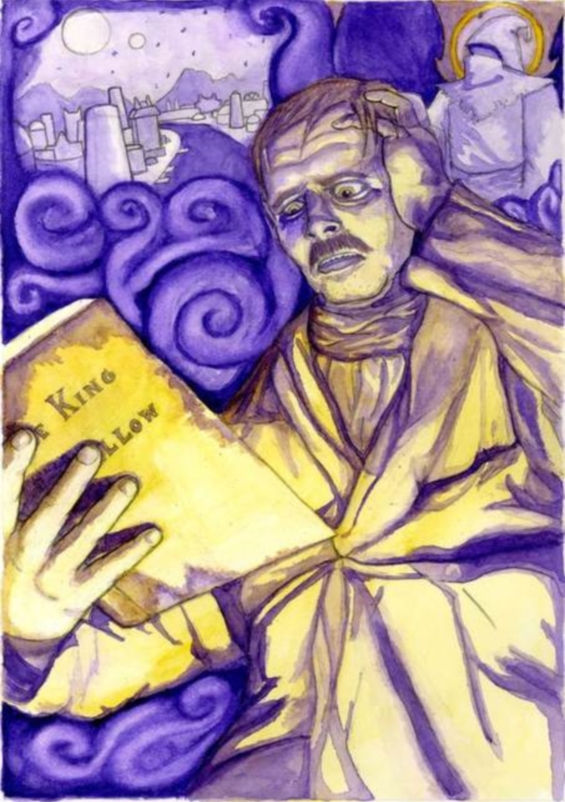
The Repairer Of Reputations by Robert W. Chambers - illustration by Tucker Sherry

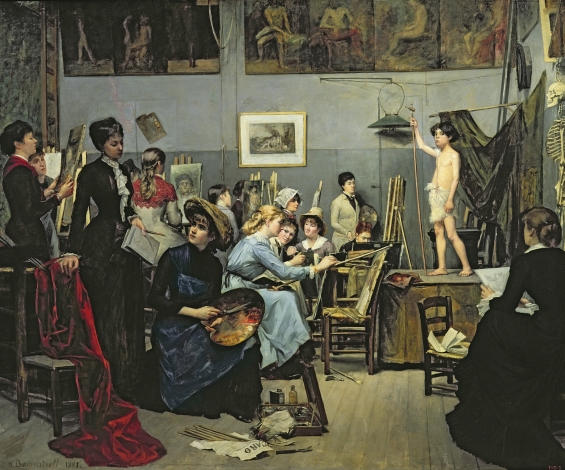
In The Académie Julien In Paris by Marie Bashkirtseff

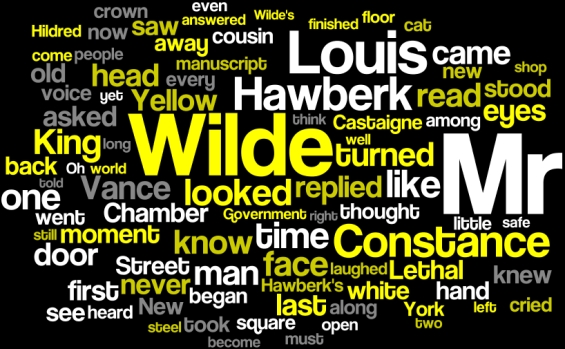
The Repairer Of Reputations by Robert W. Chambers - WORD CLOUD

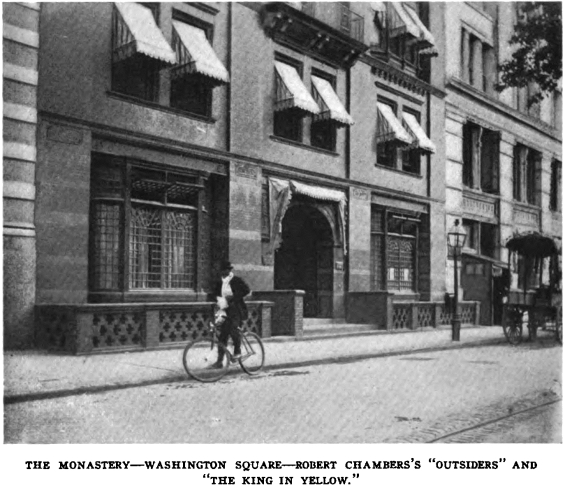
Washington Square, New York - The King In Yellow

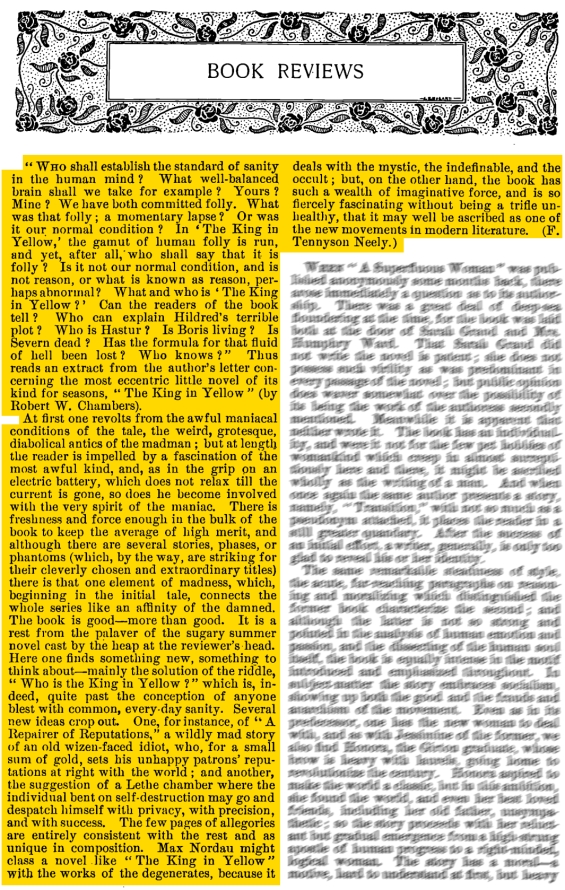
A review of The King In Yellow from Godey's Magazine, June 1895

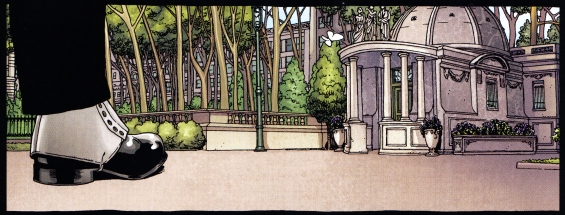
The Lethal Chamber from PROVIDENCE by Alan Moore and Jacen Burrows

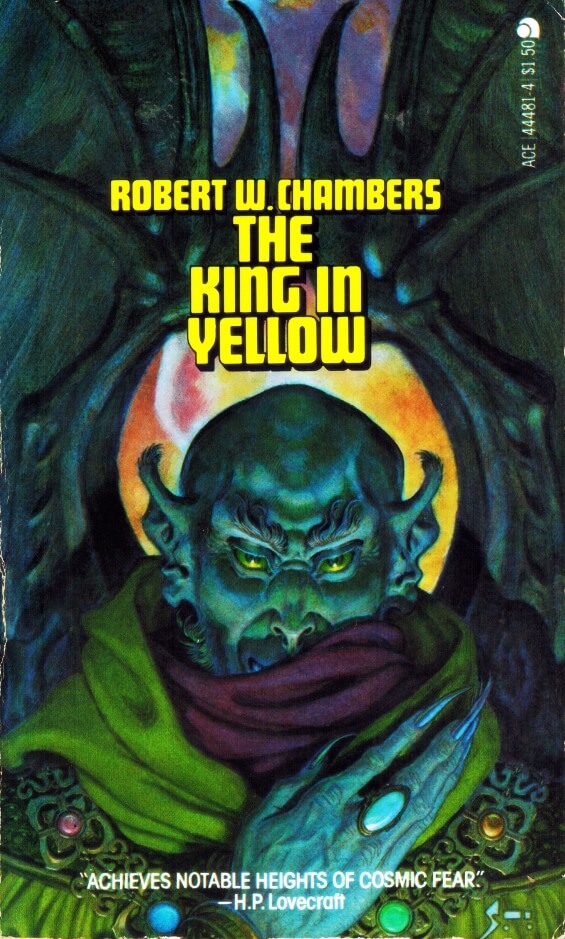
ACE - The King In Yellow by Robert W. Chambers

The King In Yellow by Robert W. Chambers - Signed by Kurtz

Posted by Jesse Willis

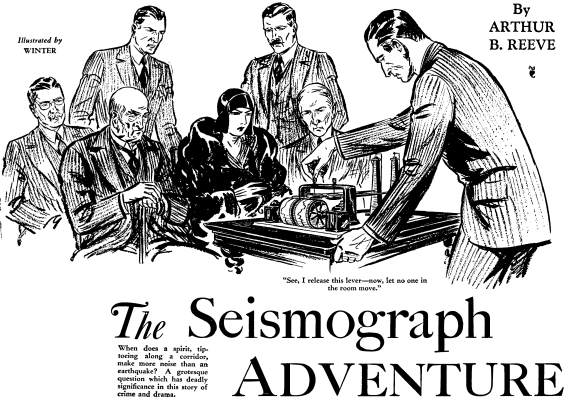
The Seismograph Adventure by Arthur B. Reeve
Aural Noir: Online Audio

The Seismograph Adventure - illustrated by Winter
Professor Craig Kennedy, a scientific detective similar to Sherlock Holmes, uses his knowledge of chemistry, psychoanalysis, and the scientific method to solve mysteries. In this adventure he foresees “potentialities and possibilities unrecognized by ordinary minds, and with his profound knowledge of applied sciences, is able to approach the enormous tasks confronting him from a new and scientific angle.”

And according to Hugo Gernsback The Seismograph Adventure is “one of the finest, as well as scientific, of Arthur B. Reeve’s stories.”

LibriVoxThe Seismograph Adventure
By Arthur B. Reeve; Read by Elliott Miller
1 |MP3| – Approx. 50 Minutes [UNABRIDGED]
Publisher: LibriVox.org
Published: 2010
“Can ghosts walk? And if they do, can their footsteps be recorded on a machine? And are the spirits of the phantom world subject to the same physical phenomena as our human bodies? These are tantalizing questions which arise during the thrilling and complex mystery into which Craig Kennedy and Jameson are plunged without warning.” First published in Cosmopolitan, April 1911.

And here’s a 10 page |PDF| made from its republication in Scientific Detective Monthly, March 1930.

Posted by Jesse Willis

The SFFaudio Podcast #240 – READALONG: Frankenstein by Mary Shelley

Podcast

The SFFaudio PodcastThe SFFaudio Podcast #240 – Jesse, Scott, Julie Davis, and Bryan Alexander discuss Frankenstein by Mary Shelley.

Talked about on today’s show:
The 1818 edition versus the 1831 edition, the half-made up prologue, Leaves Of Grass, are there any body changes?, “the corpus”, Downpour.com’s version with Simon Templeman, Anthony Heald, Stefan Rudnicki, Frankenstein vs. the monster, creature, wretch, demon, insect, incoherent with rage, face to face, moving on, the fainting hero or heroine, swooning, Lovecraftian fainting, cosmic horror, Herbert West: Re-Animator, Young Frankenstein, Cool Air by H.P. Lovecraft, Edgar Allan Poe, M.R. James, becoming god, why are we reading a book by a teenager from almost 200 years ago, Edinborough, the broken reader, Sir Walter Scott, Ivanhoe, etymology, Paradise Lost, Gulliver’s Travels, Percy Shelley, William Shakespeare, Macbeth, Caliban, The Tempest, Science!, hey I’m killing your family and stuff, Spirits!, Russia, the Arctic, Prospero, Caliban the dogsbody, Sycorax, the pre-science world to the science world, Christopher Marlowe, “I’ll burn my books!”, the education of young Victor, religious swearing, Brian Aldiss, spark, the electrical element, Galvani and the frog’s legs, more chemical (than electrical), the Romantics, the heart of the the book, “the modern Prometheus”, nature, the North Pole, Siberia, Things As They Are; Or, The Adventures of Caleb Williams by William Godwin, berries and nuts, vegetarianism, the bringing of fire, The Wonderstick (the coming of the bow) “spooky action at a distance”, fire as technology, Eric S. Rabkin, fire -> knowledge -> enlightenment, the blasted oak, the family tree destroyed, this mortal clay, body stealing, Burke and Hare (are a lot of fun), ‘there are some things man was not meant to know’, a motherless monster, Young Frankenstein, what’s so cool about Young Frankenstein is that it solves the problems caused by previous movie adaptations, “Hey there handsome”, is the creature really hideous?, “a very Jewish movie”, “this is a boy that the world will love”, community, Victor had no Igor, Eyegor, or Fritz, well formed, euphemisms, dull yellow eye, proportionate limbs, is he veiny?, black and flowing hear, a pearly whiteness, a feminist novel, a misogynist fantasy, the framing narrative, males behaving badly, Gothic, gender coding, the curse of the Frankensteins, Frau Blücher, the Kenneth Branagh adaptation of Frankenstein, The Revolt Of Islam by Percy Bysshe Shelley, Justine (and the lack of justice she receives), Anne Rice, “I’m never going to sleep again”, the path of evil, Victor had a temper, the abnormal brain (Abbie someone), a “blank slate”, Henry Frankenstein, Young Frankenstein retcons the book and the 1931 movie (and the Hammer movies), Froderick Frankenstein, Boris Karloff, Transylvania Station, The Body Snatcher, Robert Louis Stevenson, The Black Cat (1934), Bela Lugosi, a movie from a parallel dimension, the perfect romantic character, the “noble savage” and the “blank slate”, flowery language and obfuscation, a baby story, that’s Science Fiction right there, an eight foot baby, how do we detect the world, what is light?, a blind man given sight, sphere vs. pyramid, Johann Wolfgang von Goethe, an urbane monster, the ideal syllabus, Mary Shelley is showing the heck off, Paradise Lost, The Sorrows Of Young Werther, suicide, Lives Of The Noble Greeks And Romans by Plutarch, Ruins Of Empires by Constantin-François de Volney, Frankenstein’s lab notes, Safie, the Ottoman Empire, Turkey as a proxy for European society, Olaf Stapledon, the hapless fate of the aboriginals of North America, Shelley’s hanging out with radicals, an anti-American dream, three years after the fall of Napoleon, Lord Byron, dreams, “how are we living with each other?”, Prometheus Unbound, The Last Man, Prometheus should be our hero, Harlan Ellison, Walton, Bryan’s dissertation was on Frankenstein, The Rime Of The Ancient Mariner, The Narrative Of Arthur Gordon Pym Of Nantucket, At The Mountain Of Madness, Star Trek, doppelgangers, doubles all the way down, perfectly symmetrical, The Prestige by Christopher Priest, Melmoth The Wanderer by Charles Maturin, The Saragossa Manuscript by Count Jan Potocki, the fire and ice, “in the cottage we are the monster”, lookism, when they see the monster, “as a lion rends the antelope”, Blade Runner‘s ending, all those murders, a child having a temper-tantrum, where you gonna get that wood?, standing on an ice-floe, Dante’s Inferno and the final circle of hell, Inferno by Larry Niven and Jerry Pournelle, Bryan reads Frankenstein every year, teaching Frankenstein in high-school, a perfect ending, is the monster still out there?, Edison’s 1910 film adaptation of Frankenstein (it’s 10 minutes), imagine Tesla adapting Frankenstein, a shameless self-promoter, “Victory Frankenstein fucked with Mother Nature, and She bore him a strong son”, ‘there are some things that man was not meant to know’, Walton wants to find the source of the pole’s magnetism, “it’s not just loving your family – it’s also loving your fellow being”, “if you make a mistake – own up”, Walton learns from the story, Young Frankenstein, it’s an ethics book, mad scientists, a Kennedy son, Moby Dick, C.L.R. James, a ship as a microcosm of society, “I smell readalong!”, Hitlerland: American Eyewitnesses to the Nazi Rise to Power by Andrew Nagorski, “the kids loved Uncle ‘Dolf”, “charisma leaking out all over the place”, charisma and beauty, a bear doesn’t understand charisma, real-life parallels, what is the function of Henry Clerval in the book, is he us?, a homoerotic reading, Percy and Bryon go hiking, it’s Simon Pegg and Nick Frost, World’s End, Shaun Of The Dead, Hot Fuzz, Elizabeth’s provenance and the weird relationship with her cousin/brother/owner Victor, a subterranean psychodrama, Victor’s wild dream in which Elizabeth dies and then turns into his mom, grave worms, a maternal figure and a corpse.

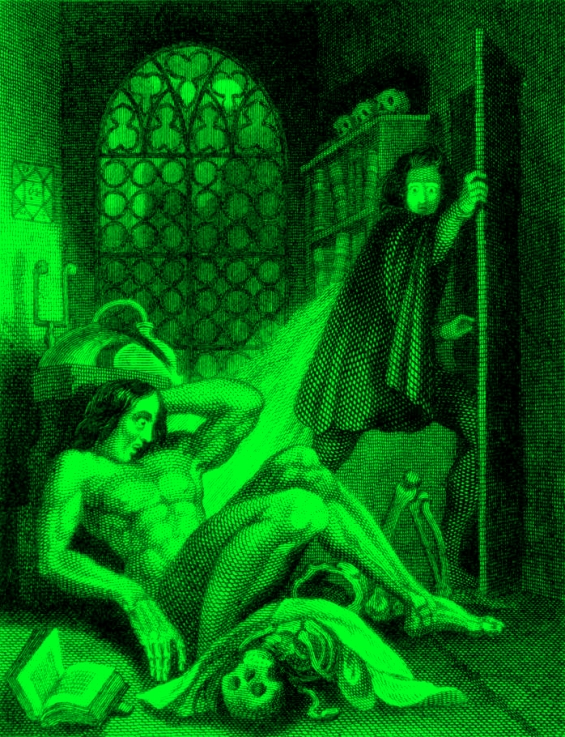
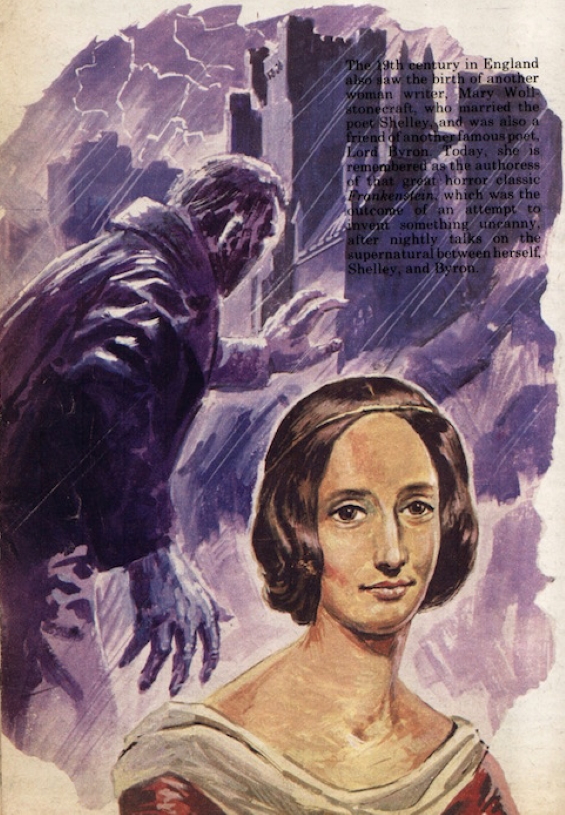
Theodor von Holst - Frankenstein

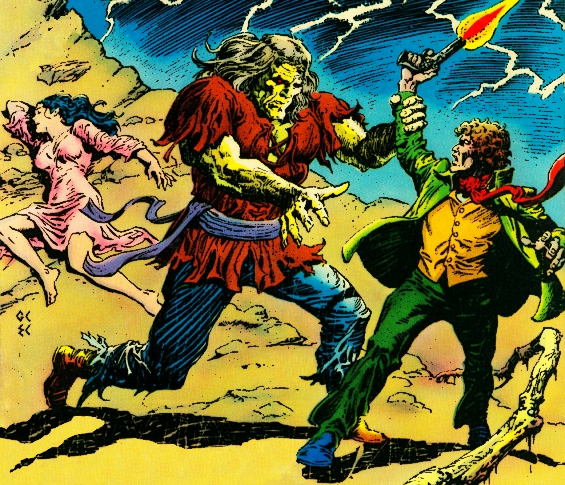
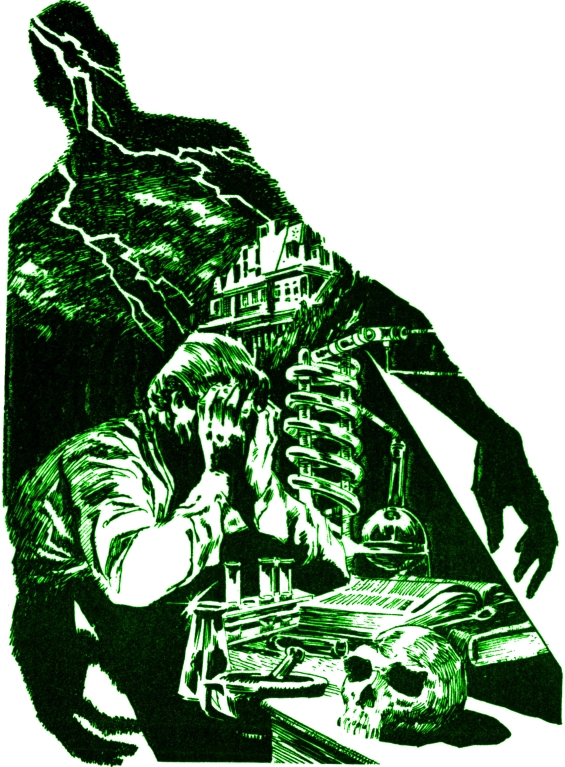
Frankenstein - illustration (possibly by Ernie Chan)

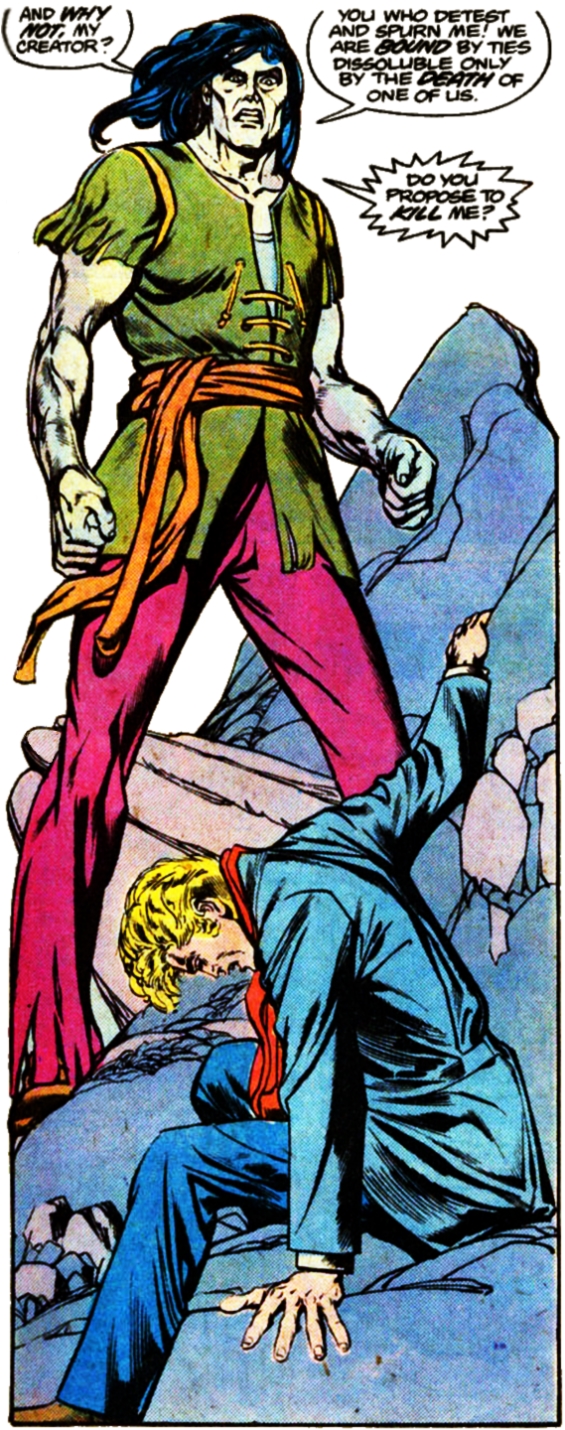
Frankenstein

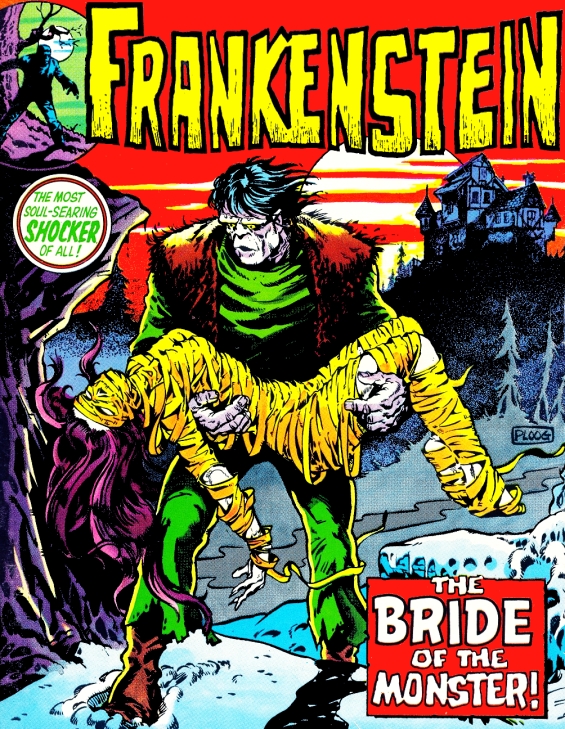
FRANKENSTEIN - The Bride Of The Monster - illustration by Mike Ploog

FRANKENSTEIN - illustration by Dino Castrillo

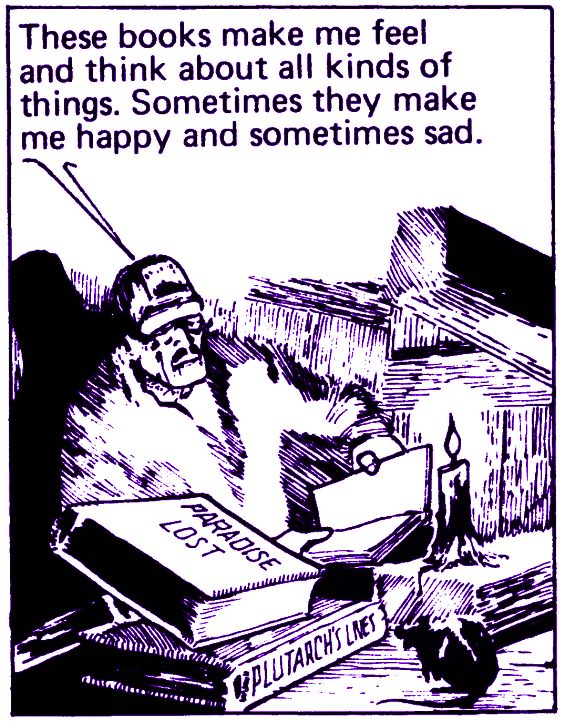
These Books Make Me Feel...

World Of Wonder - Mary Shelley

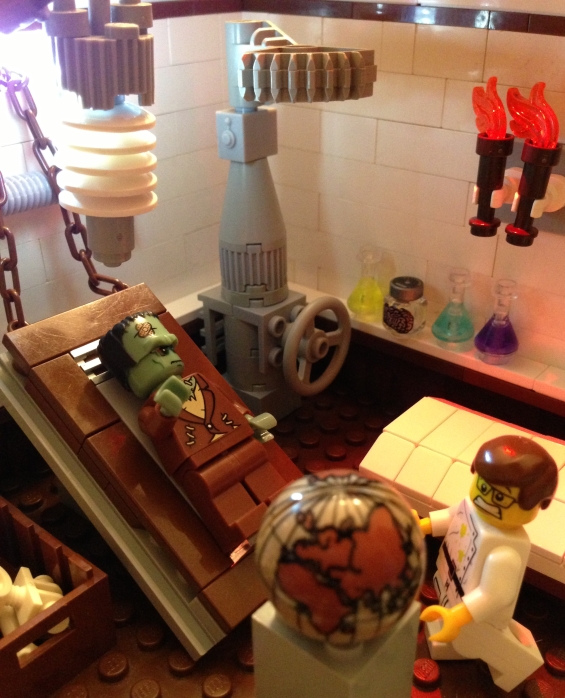
LEGOized Frankenstein

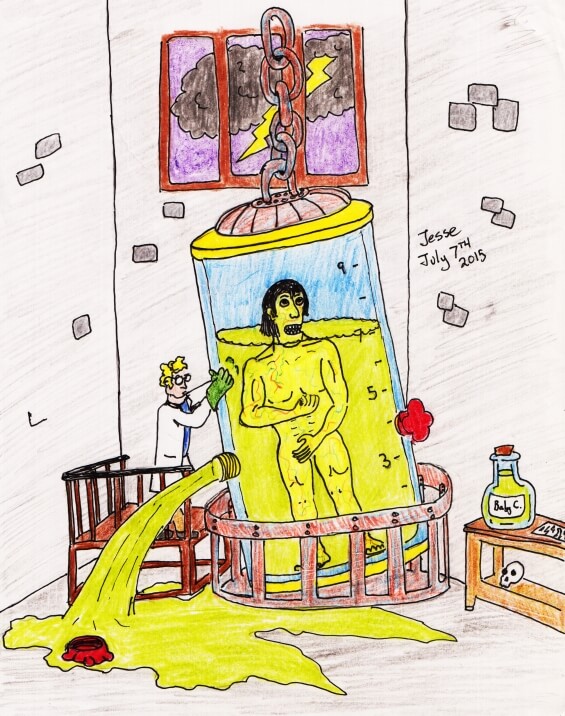
The Creation Of Frankenstein's Creature - illustrated by Jesse

Posted by Jesse Willis

The SFFaudio Podcast #238 – AUDIOBOOK: The Invisible Man by H.G. Wells

Podcast

H.G. Wells' The Invisible Man

The SFFaudio PodcastThe SFFaudio Podcast #238 – The Invisible Man by H.G. Wells, read by Cathy Barratt (for LibriVox.org).

This audiobook, 4 hours 35 minutes, is complete and unabridged.

Griffin, a scientist, devoted himself to research into optics – he invented a chemical that could change his body’s refractive index to that of air – he absorbs no light, he reflects no light – he is completely invisible.

First published in Pearson’s Magazine, June 12, 1897.

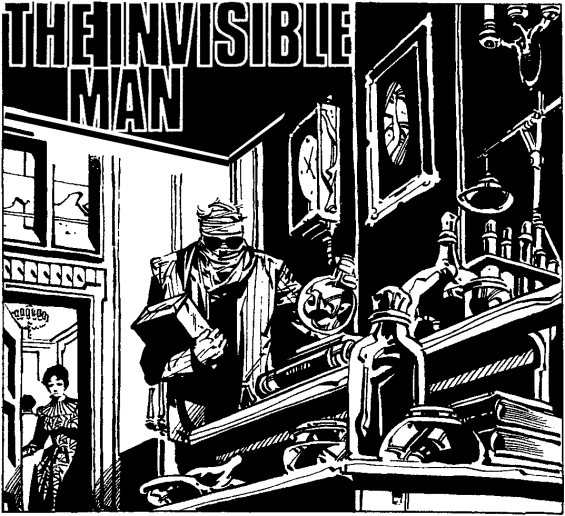
The Invisible Man - illustration by Dino Castrillo and Rudy Mesina

The Invisible Man arrives - illustration by Val Mayerik and Dan Atkins

The Invisible Man - illustration by Val Mayerik and Dan Atkins

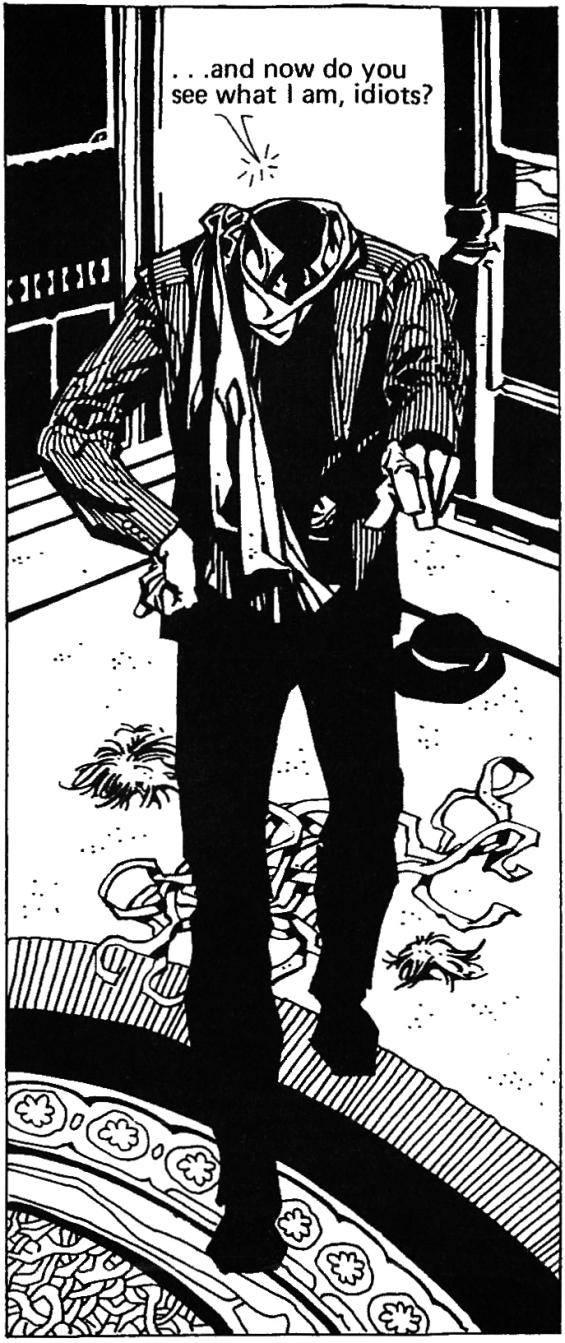
And Now Do You See What I Am, Idiots?

The Invisible Man by H.G. Wells - POCKET CLASSICS

The Invisible Man by H.G. Wells

Posted by Jesse Willis

The SFFaudio Podcast #230 – AUDIOBOOK/READALONG: The Red Room by H.G. Wells

Podcast

The SFFaudio PodcastThe SFFaudio Podcast #230 – The Red Room by H.G. Wells, read by Simon Vance. This is a complete and unabridged reading of the story (24 minutes) followed by a discussion of it. Participants in the discussion include Jesse, Luke Burrage, Bryan Alexander, and Simon Vance.

The Red Room (aka The Ghost Of Fear) was first published in The Idler, March 1896.

Talked about on today’s show:
Are there any supernatural elements in The Red Room?, what is the genre of this story?, Gothic Fiction, a deconstruction of the gothic, the ultimate psychological horror story, the apparatus of gothic horror, a psychoanalysis of horror, what we do to ourselves, we scare ourselves, the scary clothes horse, “as long as this house of sin endures”, what happened to the candles, Luke’s theory, what is the sin?, the old people, bad candles?, trick candles?, a Scooby Doo interpretation of the story?, coincidence, how reliable is the narrator?, the origins of the horror are in a fake scare, the changing description of the men, distorted and crouching, the man with the shade, shadow?, ghost?, a blue phial, a green shade, a story of generational transfer, the rising generation of science, the significance of the narrator’s age (28 years), what’s up with the gun?, an impossible sturdiness, the unknowableness of your own mind, the final word – or is it?, The Turn Of The Screw by Henry James, Eric S. Rabkin, an evil relationship, Ganymede with an eagle (Zeus), cup-bearer is a euphemism, does the Chinaman statuary represent the Yellow Peril?, clothing fashioned in dead brains, the generational interpretation, the grotesque, why not three norns?, the three disabilities, a tremendous tremor, 150% spillage, a mocking shadow, a pro-science story, fire = knowledge, the light of science, the return of ignorance with the return of darkness, why is the narrator there?, is this a Hound Of The Baskervilles situation, the previous tenant, the glass before the fire, the three mirrors, Mise en abyme, “your own choosing”, Sir Arthur Conan Doyle, Harry Houdini, what side in the public debate of new spiritualism, it felt modern to Luke, The Pit And The Pendulum by Edgar Allan Poe, Dracula is a contemporary of The Red Room, the subterranean passage, Eric is a big Freudian, a meticulous forensic analytic description, this isn’t Mulder this is Scully, Simon Vance has voiced Dracula twice, Fangland (a modern 60 Minutes style retelling of Dracula), updates to Dracula, The Dracula Tapes, The Stone Tape (1972), byte by byte, Nigel Kneale, The Quatermass Experiment, Lorraine Castle, generic European castle, skeptics haunted by a ghost that isn’t a ghost, a modern Gothic horror story, is it the carbon monoxide coming off the fungus?, the stone as a medium, solid state recording, a scientific explanation, a Lovecraftian pre-human recording, it may not be need to be remade, Quentin Tarantino remakes bad movies as a good movies, haunted digital media, Alien, MOTHER is basically HAL, Demon Seed, the anti-Japaneses bias as a more modern Yellow Peril, the medium of the tale, the staircase, “it’s not there’s nothing there”, the good-time gal, the wrong interpretation, The Crawling Chaos by H.P. Lovecraft and Winifred V. Jackson, becoming lost in your own head, he brought the ghost into the room, spirits as ghosts, why is it a red room?, red in the flames, it’s like the grate is a prison, a slick tunnel to the red room, a womb like room, a beige room, Ash spurting sperm everywhere, a haunted castle in space, Alien as the opposite of Star Wars, the science hero angle, gothic explique, teasing out a Gothic reading, in medias res, Freudian spaces, on this night of all nights, its like their casting a spell, is he a journalist?, Simon thinks the narrator is the new owner, Christopher Priest, The Prestige, why Christopher Priest is not as popular as he should be, his head and his lips are bloody, a bashed face, The Door In The Wall by H.G. Wells, is the story open, Luke is skeptical about the openness and the double blooding, belying the begrudgement, the curious escape,”H.G. Wells is a genius writer”, The War Of The Worlds from the alien perspective, Little Wars, “a heavy blow at last upon my forehead”, an almost 2nd person POV shift, “global warming is a fake”, the haunted man not the haunted room, Gene Wolfe, gothic markers, Henry James, Boon, the judgements of history, Wells’ agenda, The Time Machine, The Chronic Argonauts, horrific jellyfish and rabbits, nameless characters, minimal information, the Wells-Wolfe connection, The Shadow Of The Torturer, the always unreliable narrator, Understanding Comics by Scott Mccloud, Hello Kitty, part of the appeal of the Twilight books is in how badly drawn Bella is, inviting blankness, Things To Come.

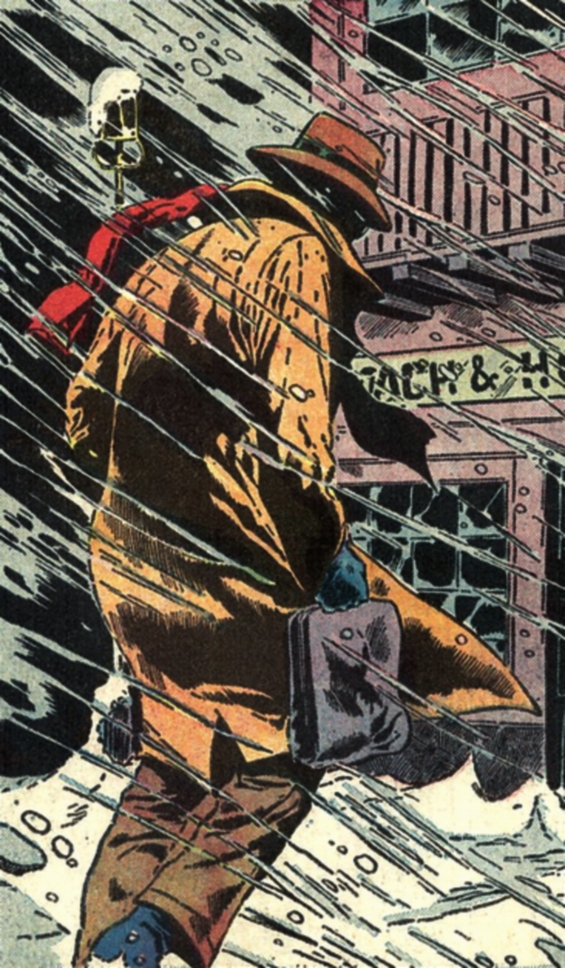
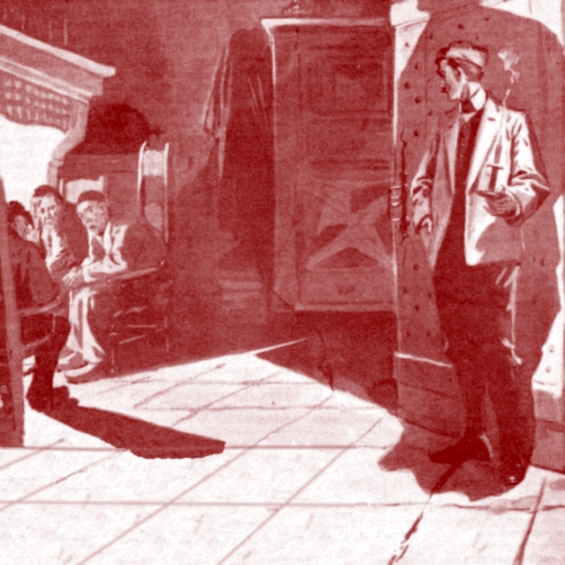
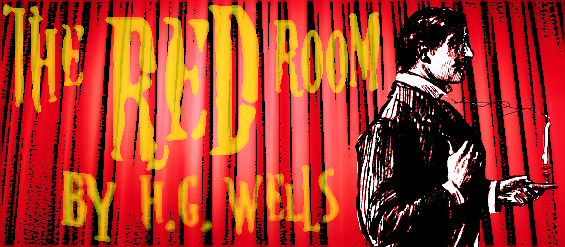
The Red Room by H.G. Wells

The Red Room by H.G. Wells

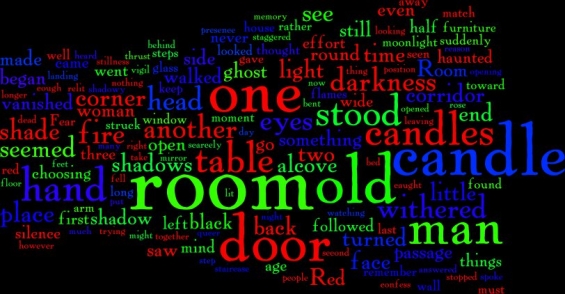
The Red Room Word Cloud

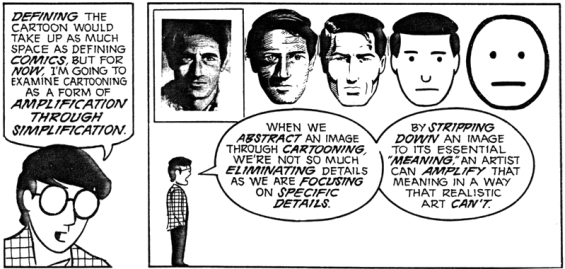
Understanding Comics - Amplification Through Simplification

The Red Room by H.G. Wells

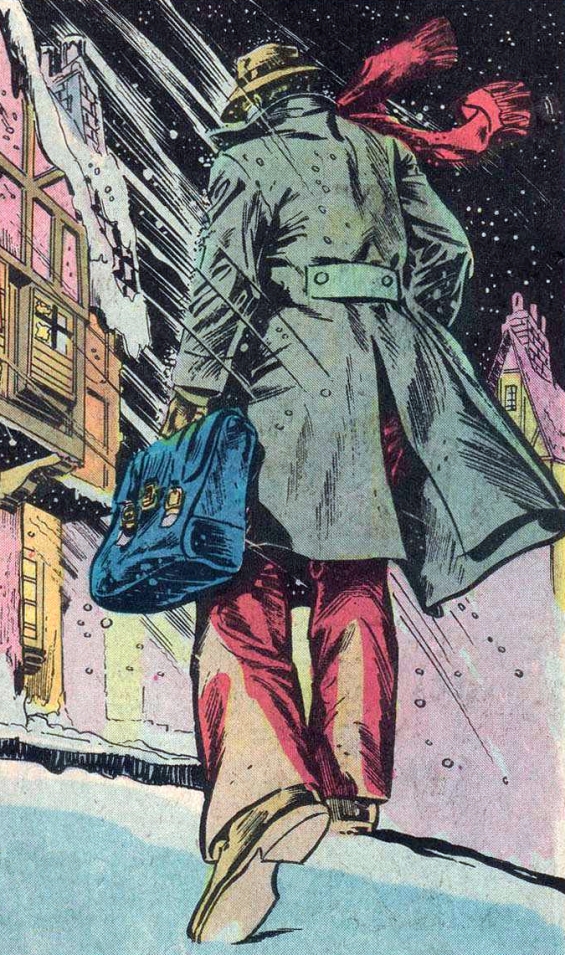
Art for the cover of DC Comics GHOSTS Limited Edition Collectors Edition

Posted by Jesse Willis