The SFFaudio Podcast #166 – TOPIC: SFF FORMS (Short Story, Novella, Novellete, Novel, Fix-up, Trilogy, World)

Podcast

The SFFaudio PodcastThe SFFaudio Podcast #166 – Jesse, Luke Burrage, and Eric S. Rabkin discuss, at length, the SFF FORMS (Short Story, Novella, Novellete, Novel, Fix-up, Trilogy, World). Here’s the premise:

Science Fiction Forms: Short Story, Novella, Fix-Up, Novel, Trilogy, and World. Respectively, they might be exemplified thus: Short Story (“Mars Is Heaven!“), Novella (“Flowers for Algernon“), Fix-Up (The Martian Chronicles, which contains a revised version of “Mars Is Heaven!” or The Seedling Stars, Accelerando, and Beggars In Spain, all of which began as novellas), Novel (originals, like 1984, and derivatives like Flowers for Algernon or Varley’s novel Millennium coming from his short story “Air Raid“), Trilogy (original Foundation series), World (the ultimate Foundation world or Heinlein’s Future History [shared with others] or Banks’s Culture or LeGuin’s Hainish series [created just for the authors, but let’s not forget about fan fiction]). What are the special challenges and rewards in reading and writing in these diverse forms? What special challenges or rewards attend on reusing material in another form? Is the formal plasticity of SF unique among literary genres?

Talked about on today’s show:
Eric’s suggestion, literature with a capital “L”, The Dead by James Joyce, The Portrait Of The Artist As A Young Man, Doomsday Book by Connie Willis, Luke’s Science Fiction Book Review Podcast, the format, the themes, the variability of short story form, the feghoot, Day Million by Frederik Pohl, Accelerando, Stories Of Your Life And Others by Ted Chiang, The Tower Of Babel, stripped away vs. embellished to the nth degree, Flowers For Algernon by Daniel Keyes, Understand by Ted Chiang, The Bells by Edgar Allan Poe, The Black Cat, fantasy, the unexplicit story, valid reactions, the etymology of “text”, Earth Abides by George R. Stewart, a persuasive existential journey, The Scarlet Plague by Jack London, San Fransisco, short stories as objects of frivolity or training, the brilliance of an idea is not always enough, a novel can act as a community to an individual, Fahrenheit 451 by Ray Bradbury vs. The Fireman by Ray Bradbury, is the novel inherently more participatory than a short story?, the failure of technology vs. the power of nature, The Masque Of The Red Death, teaching Science Fiction with short stories and novels, The Science Fiction Hall Of Fame (Volume 1), the composite novel, Winesburg, Ohio by Sherwood Anderson, A.E. van Vogt, the fix-up, The Martian Chronicles by Ray Bradbury, Accelerando by Charles Stross, Lobsters by Charles Stross, the cat changes function, “an intellectual framework”, Robert A. Heinlein’s future history, the composite novel, Isaac Asimov, future history vs. psychohistory, Michael Moorcock, I, Robot, Robbie, the three laws, Stephen Byerly and Susan Calvin, unAsimovian assumptions, the full dose of SF, Reason, The Evitable Conflict, is Stephen Byerly a robot or a man?, the Mérode Altarpiece (a medieval iconographic trope), art history, Luke doesn’t think Asimov is that clever, R. Daneel Olivaw, the three laws are fairytale laws, positronic brains are positive, the three laws are for people (not just robots), The Bicentennial Man, Asimov’s powers, Asimov’s business acumen, Brandon Sanderson, shared worlds, gods, Mormonism, Daniel Clowes, The Death Ray, Elantris, “The Alexandria Quartet” by Lawrence Durrell, reading The Martian Chronicles backwards, Luke’s fiction, Alastair Reynolds, Sherlock Holmes, Baker Street Irregulars, whodunit ain’t the attraction, The Adventure Of The Speckled Band, a matter of cutting, A Clockwork Orange, it’s better without the extra chapter, the commercial effect (or the effect of commercialism), popular literature, the flabby novel, Robert J. Sawyer, Hominids, Calculating God, William Shakespeare, The Royal Ontario Museum, horse evolution, God needs a starship!?, where to find a paleontologist, “a hundred pages of nothing happening”, a circular argument, writing to the story’s demands, Kevin J. Anderson, commercial constraints shouldn’t be points of pride, the thickness of books, The Lord Of The Rings, does more succinct = more better?, novellas are novels with threads missing?, The Hobbit, the ambition of the author, Luke is rejecting the basic premise, The Stand by Stephen King, is it a better story short or long?, changes and updates and additional material, don’t let Asimov near a typewriter unless you want something written, Against The Fall Of Night by Arthur C. Clarke, The City And The Stars, expanding everything, Monster Story, “it came to me in a dream”, Minding Tomorrow, Nightfall (the short story) vs. Nightfall (the novel), “it’s a lot like a perfectly nice novel that eventually becomes a masterpiece”, The Lion of Comarre, it’s not a commercial podcast, a civil rowdiness, Eric’s Coursera course: Fantasy and Science Fiction: The Human Mind, Our Modern World, rechunking, forums, essays, 18,000 registered students, University of Michigan, only the competitors are qualified to judge the competitors, a history of the U.S. Civil War, Luke’s kitchen, grades, “there is no absolute abstract grade for anything”, Science Fiction and Politics (Courtney Brown), the governor of a steam engine, Luke confuses two professors, “yes, by golly, that was a very good thing of it’s kind”, The Odyssey by Homer, a foundational classic, The Bible, the Benjamin Franklin bible, there should be an SFBRP review of The Odyssey, Luke’s Matthew Mark Luke Skywalker, Star Wars, Joseph Campbell, time for coffee!

The Mérode Altarpiece

Startling Stories, November 1948 - Against The Fall Of Night by Arthur C. Clarke

Against The Fall Of Night by Arthur C. Clarke (page 11 of Startling Stories, November 1948)

Against The Fall Of Night by Arthur C. Clarke (page 12 and 13 of Startling Stories, November 1948)

Posted by Jesse Willis

The SFFaudio Podcast #160 – AUDIOBOOK/READALONG: Red Nails by Robert E. Howard

Podcast

The SFFaudio PodcastThe SFFaudio Podcast #160 – Jesse, Tamahome, and Brian Murphy (of The Silver Key and Black Gate) talk about Red Nails by Robert E. Howard (read by Gregg Margarite for LibriVox). The audiobook runs 3 Hours 21 minutes and the discussion begins after that.

Talked about on today’s show:
Comics, the comic adaptation of Red Nails, Conan Saga, Savage Tales, Barry Windsor-Smith, John Buscema, Storyteller, Wolverine, the REH Comics Yahoo! Group, Beyond The Black River, Tower Of The Elephant, Karl Edward Wagner, Queen Of The Black Coast, grimness, pirates, torture, lesbianism, happy endings, “so much for that decades old gang war”, it’s Red Nails is like a Tom Baker Doctor Who serial, haunted city, a feud culture, Tolkemec’s laser, “if it bleeds we can kill it”, Conan the chauvinist, Valeria kicks ass, is the story told from Valeria’s POV?, it begins like a mystery, the “dragon” is a dinosaur (sort of), Techotl, writer shorthand, Star Trek (Let That Be Your Last Battlefield), Techotl is Gollum-like, Red Nails as a gang war, why didn’t they all get rickets and starve, Howard was the original locavore, a roofed city vs. a domed city, Hatfields vs. McCoys, the black pillar of vengeance, ConanRedNails.com, HBO can do no wrong, copyright vs. trademark, Dark Horse’s Chronicles Of Conan #4, colour and colouring, Howard as a stylist, Book X of The Odyssey, The Land of the Lotus Eaters, The Dark Man: The Journal Of Robert E. Howard Studies, using digital copies to research (control-f), Aztec, Toltecs, cannibalism, Jack London, Harold Lamb, William Morris, J.R.R. Tolkien, H.P. Lovecraft, sword and sorcery, horror, The Black Stone, Worms Of The Earth by Robert E. Howard, Tantor Media’s tantalizing collection Bran Mak Morn: The Last King, condemn Howard’s racism praise his writing, Orson Scott Card, Al Harron of The Blog That Time Forgot, Apparition In The Prize Ring by Robert E. Howard, Ace Jessel, Solomon Kane, what will we do after?, just an average weekend with laser beams, the gonzo ending of Red Nails, BrokenSea’s The Queen Of The Black Coast audio drama, Bill Hollweg, legal trouble, Sherlock Holmes, Disney’s John Carter vs. Dynamite Entertainment‘s Warlord Of Mars.

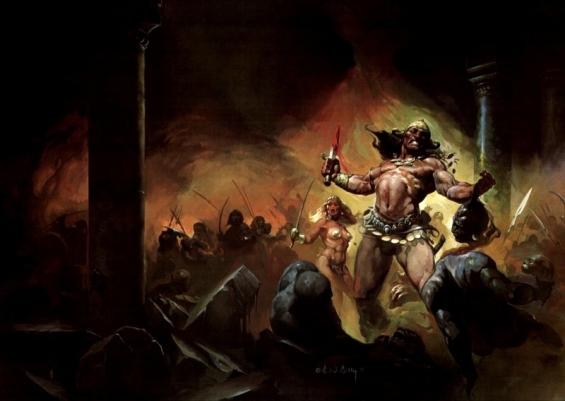
Red Nails - interior fold out art by Ken Kelly

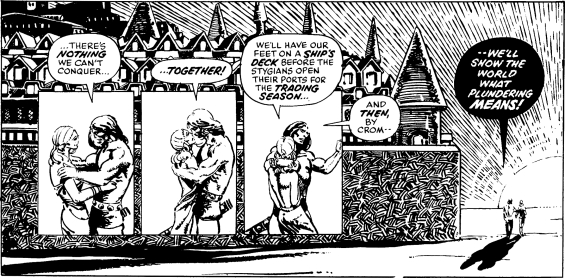
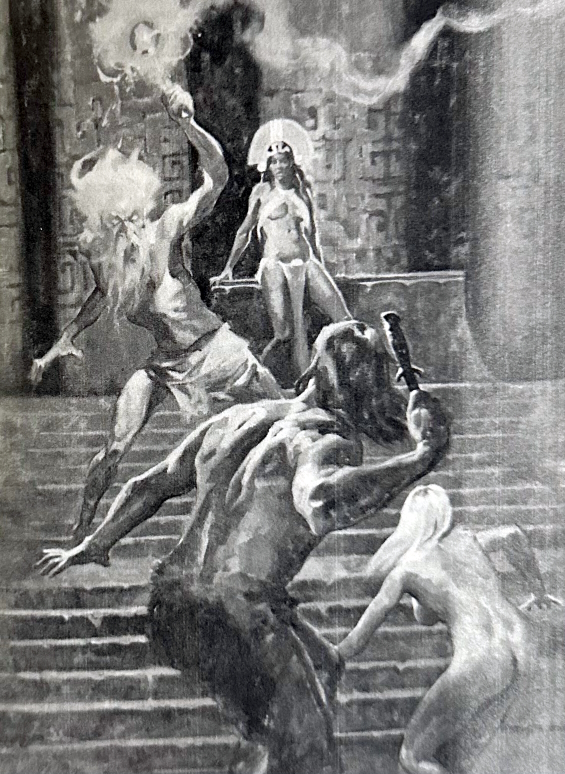
Red Nails - Ending - art by Barry Windsor-Smith

Red Nails by Robert E. Howard

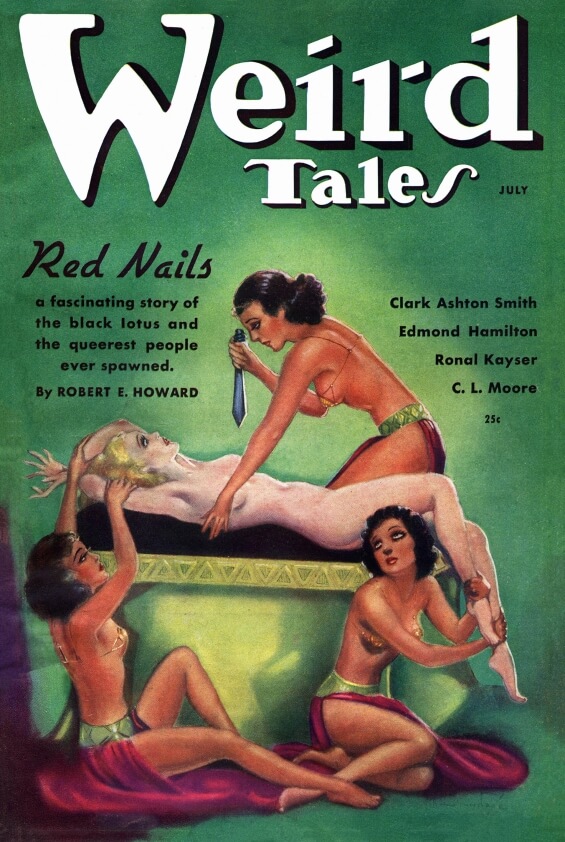
Red Nails illustration by Margaret Brundage from Weird Tales, July 1936

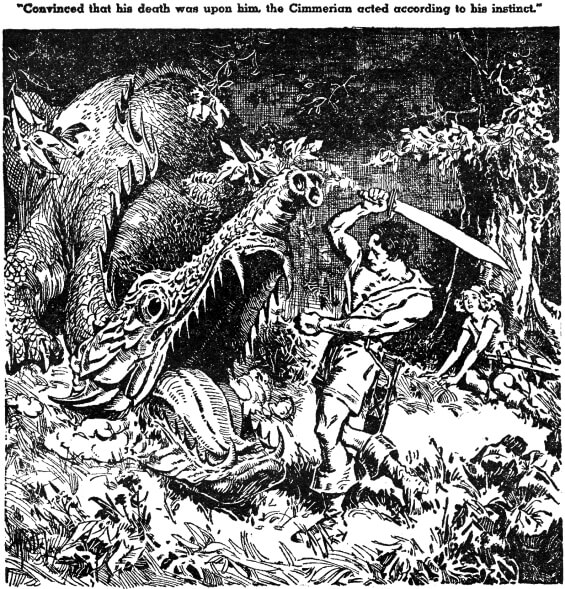
Red Nails illustration by Harold S. De Lay from Weird Tales, July 1936

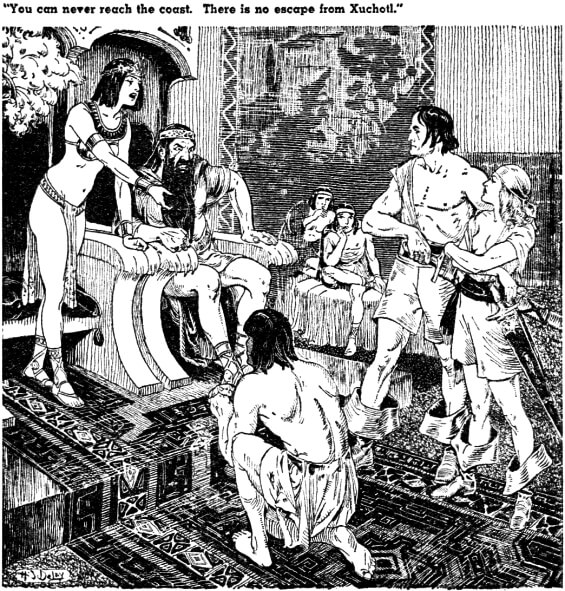
Red Nails illustration by Harold S. De Lay from Weird Tales, August September 1936

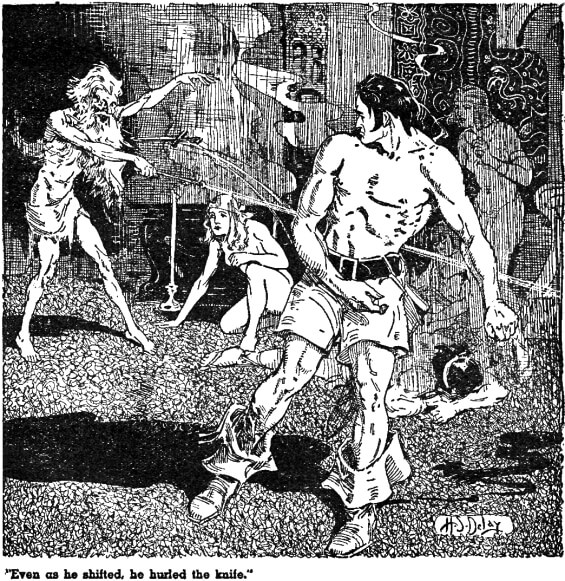
Red Nails illustration by Harold S. De Lay from Weird Tales, October 1936

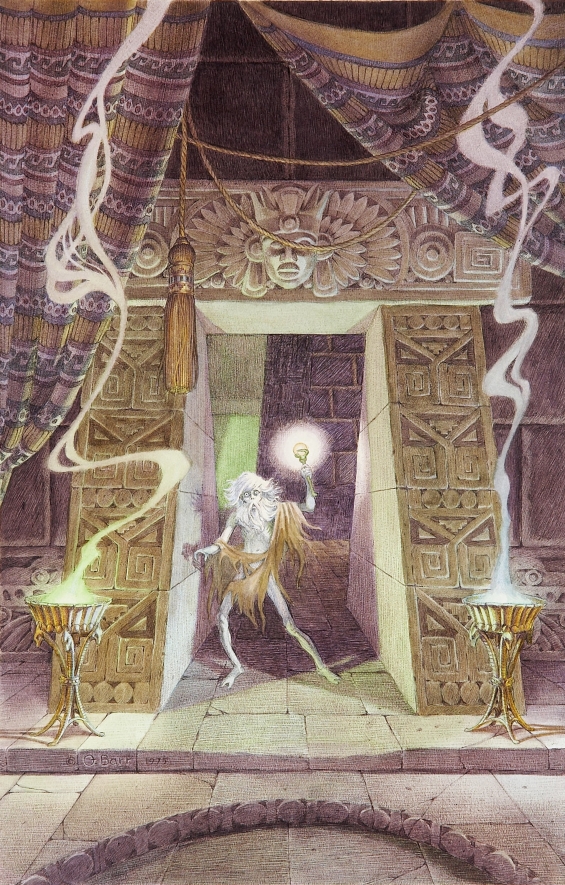
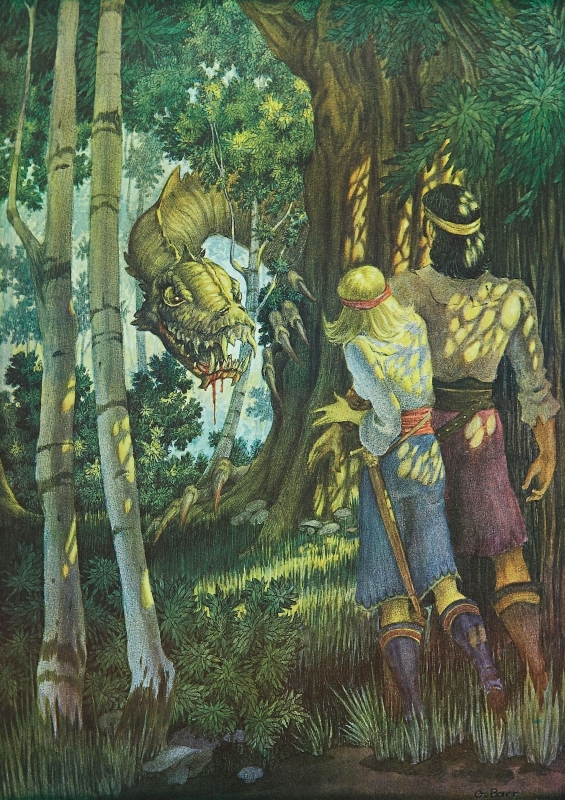
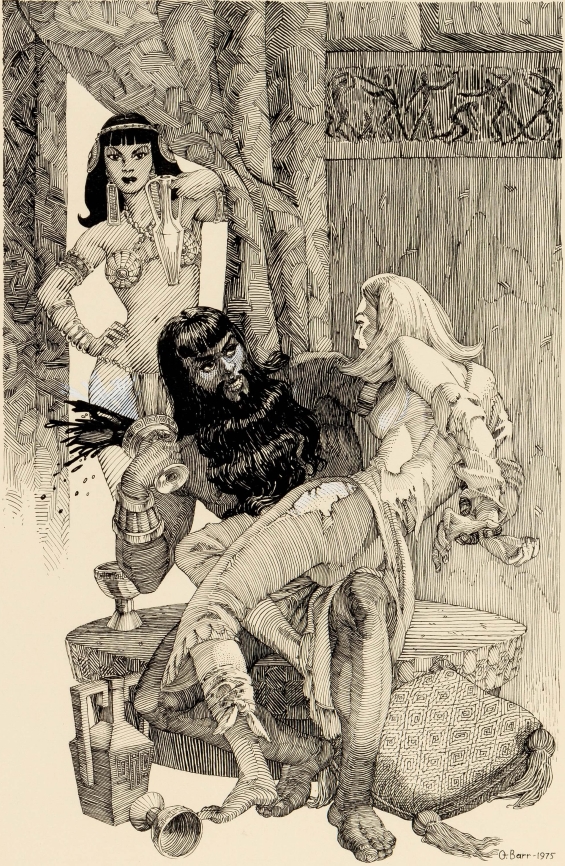
Red Nails by Robert E. Howard - illustration by George Barr

Red Nails - illustration by George Barr

George Barr ILLUSTRATION for Red Nails

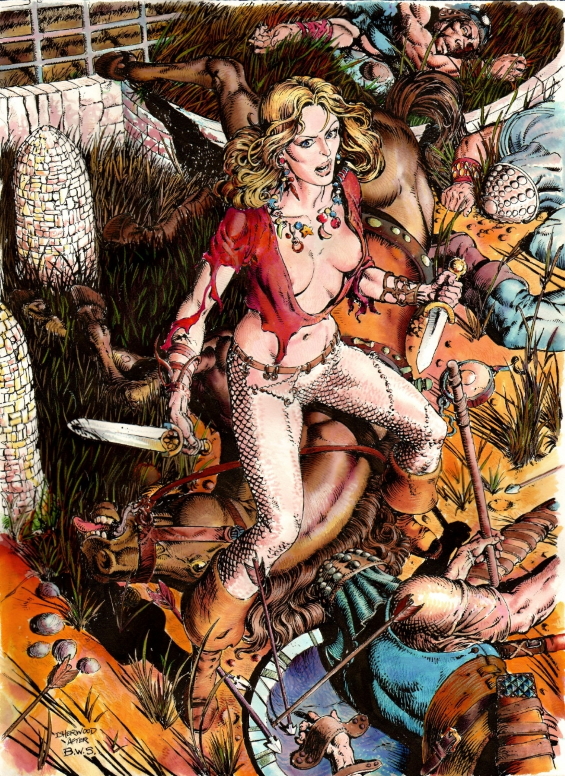
Valeria by Geoffrey Isherwood (in the style of Barry Windsor Smith)

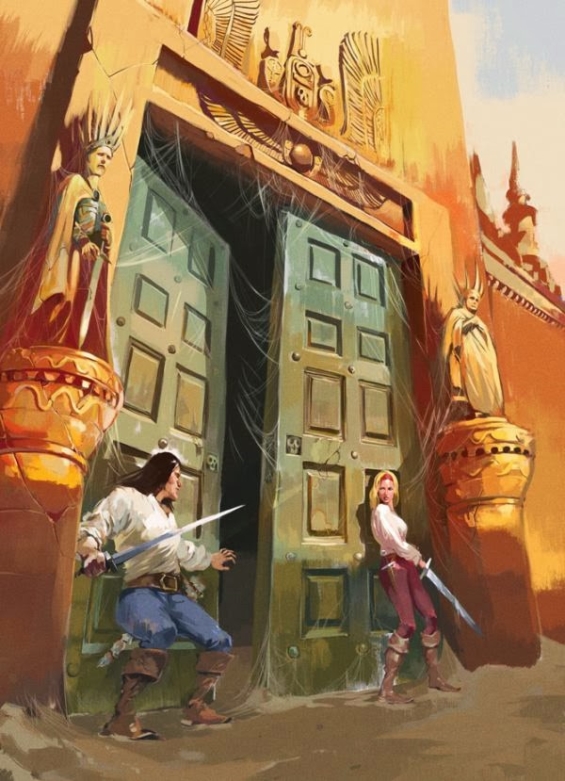
Red Nails - illustrated by Gregory Manchess

Posted by Jesse Willis
Cinefantastique Spotlight Podcast: Sherlock Holmes: A Game Of Shadows

SFFaudio Online Audio

Cinefantastique The Cinefantastique Spotlight Podcast (which is somehow connected with the Mighty Movie Podcast) had me nodding in agreement yesterday when I heard their review of Sherlock Holmes: A Game Of Shadows. Recorded last year, the show features an hour long discussion that echoed many of the thoughts I had while watching the film. I liked the movie, thought it actually improved on the previous entry in the Downey/Law Holmes/Watson film series, but wasn’t exactly sure what to make of some of the more “fantastique” elements. This podcast mostly sorted me out. Here’s the official description:

Come join Cinefantastique Online’s Steve Biodrowski, Lawrence French, and Dan Persons as they weigh the merits and demerits of this further retooling of a literary classic.

The only part that still has me scratching my head is all the military hardware that’s used in the film. The movie is set in 1891 but some of the guns are about a decade (or two, or three, or four, or five) early.

|MP3|

Posted by Jesse Willis
The SFFaudio Podcast #134 – READALONG: The Curious Incident Of The Dog In The Night-Time by Mark Haddon

Podcast

The SFFaudio PodcastThe SFFaudio Podcast #134 – Jesse, Scott, Tamahome, Eric S. Rabkin, and Jenny talk about The Curious Incident Of The Dog In The Night-Time by Mark Haddon.

Talked about on today’s show:
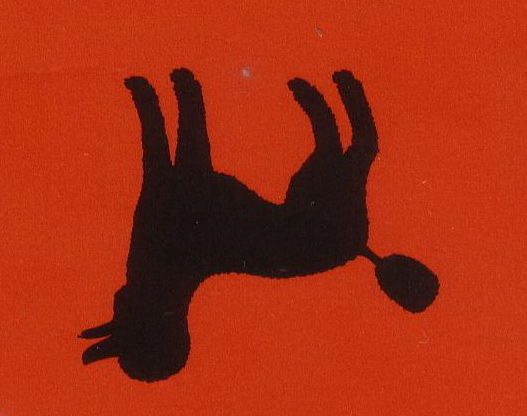
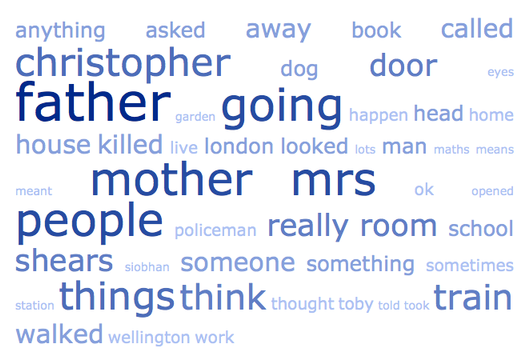
the upside-down dog cover, Jesse doesn’t like the cover, Eric finds hidden meaning in the cover, Sir Arthur Conan Doyle, is it mainstream or a mystery or YA?, Asperger’s or autism?, what is it like to be inside another person’s head?, generates tolerance, Elaine’s post on TED Talk: Elif Şafak on The Politics Of fiction, neurotypical characters, extraordinary abilities and extraordinary deficits, Constituting Christopher: Disability Theory And Mark Haddon’s by Vivienne Muller, Scott loves lists, the reader is ahead of the narrator, unreliable narrators, Flowers For Algernon by Daniel Keyes, The Speed Of Dark by Elizabeth Moon, mystery vs. family drama, Oedipus, “Sophocles not Freud”, Christopher Robin, (Winnie The Pooh), “there is something naively wonderful going on”, information vs. meaning, who did it? vs. why did it get done?, moving from what to why, Eric found the book joyful and uplifting, at the end?, abusive vs. human vs. murderous, PETA would not be pleased, “sometimes people want to be stupid”, Occam’s Razor, “now I know what box they fit into”, Cinderella, the Grimm Brothers, Jesse loves the infodumps, the asides are a highlight, where is Siobhan?, the Recorded Books audiobook version has a great narrator (Jeff Woodman), prime numbered chapters, are the pictures necessary?, Orion (the hunter in the sky), the most common word in the book is ‘and’, “he’s adding things up”, “this is a very true book”, “lies expand infinitely in all directions”, what Science Fiction and mystery look for, “sometimes people want to be stupid”, prime numbers are like life, rationalism vs. empiricism, Christopher yearns for uniqueness, right triangles, the appendix (is not in the audiobook), the brown cow joke, unreliable narrator, Conan Doyle’s beliefs, information vs. understanding, Harriet The Spy, dude don’t stab people, “a tag cloud of the novel”, Alexander And The Terrible, Horrible, No Good, Very Bad Day by Judith Viorst, Slaughterhouse Five by Kurt Vonnegut, Jr., “Repent Harlequin!”, Said The Ticktockman by Harlan Ellison, sense of wonder, Toby the rat (Algernon), Uncle Toby, The Life And Opinions Of Tristram Shandy by Laurence Sterne, the poet “does not number the streaks of the tulip 18th century”, The History of Rasselas by Samuel Johnson, Candide by Voltaire, books inside books, Have Spacesuit, Will Travel by Robert A. Heinlein, Three Men In A Boat by Jerome K. Jerome, Donald E. Westlake, Lawrence Block, Jo Walton’s Among Others, the third season of Star Trek, art making reference to itself, The Time Machine by H.G. Wells, Star Trek‘s third season, Spectre Of The Gun, “we just need the skeleton to tell the story”, “most of the protagonists in Science Fiction novels don’t read Science Fiction”, Jenny’s review of Ready Player One, The Emperor Of Mars by Allen_Steele (audio link), standing the test of time, Jesse’s extended metaphor about winnowed books washing up on beaches 100 years later, Eric is reading Uncle Tom’s Cabin by Harriet Beecher Stowe, propaganda melodrama, Super Sad True Love Story by Gary Shteyngart, Light In August by William Faulkner, the humanizing influence, comparing The Curious Incident Of The Dog In The Night-Time with The Speed Of Dark, the novel’s form shapes the novel market, Jesse thinks series hurt readers, wondering what’s going to happen next vs. what idea is being explored, the value of series, the train trip, the maths exam, “the walls are brown”, in Science Fiction metaphors are real, clarified butter and clarified mother, the word “murder”, Julie Davis’s reading of Uncle Tom’s Cabin, Carrot Juice Is Murder by Arrogant Worms, the fairy tale that is Sherlock Holmes, is the father good?, a clarified father, Jesse was tricked into reading this book, Jenny likes Margaret Atwood’s trilogy, “get ‘im Jenny”, Oryx And Crake, H.G. Wells didn’t need any sequels!, sequel is as sequel does, David Copperfield by Charles Dickens, The Godfather, the market rules, the world building is the point (for series and authors), Agatha Christie, The Tyranny Of The “Talented” Reader, The Wheel Of Time by Robert Jordan, has Neuromancer by William Gibson passed it’s prime? (tune in next week to find out), Home Is The Hunter by Henry Kuttner, Jesse looks to books to deliver on ideas (not to make time pass).

Posted by Tamahome

Tantor Media: FREE AUDIOBOOK: The Memoirs Of Sherlock Holmes by Sir Arthur Conan Doyle

Aural Noir: Online Audio

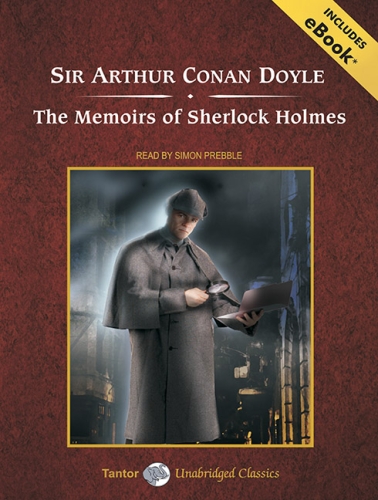
Tantor MediaTantor Media is releasing another new limited time FREE MP3 audiobook download. Despite what it looks like on the cover (apparently Sherlock Holmes had a Macbook Air) The Memoirs Of Sherlock Holmes is an all original, un-remixed, collection of Sherlock Holmes stories, first collected in 1894.

You will need to have an account with Tantor Media, and to login to it. Start by clicking HERE. Accounts are free and do not require a credit card. The free audiobook should be available through the end of June 2011. I know some folks have had difficulty figuring out how to either “log in” or “create an account.” You must have an account and be logged in to get to the download. It is a two step process as illustrated below.

Step 1: Create An Account And Log In

First Create An Account Or Log In

Step 2: After Signing In, You Get Your Download Link

After Signing In Get Your Download Link

As usual there was a bit of trouble the first couple of times I downloaded the zipped file, but it now works and downloads. You will, of course, also need to unzip the MP3s once the download completes.

TANTOR MEDIA - The Memoirs Of Sherlock Holmes by Sir Arthur Conan DoyleThe Memoirs Of Sherlock Holmes
By Sir Arthur Conan Doyle; Read by Simon Prebble
11 Zipped MP3 Files – Approx. 8 Hours 30 Minutes [UNABRIDGED]
Publisher: Tantor Media
Published: March 2010
Sample: |MP3|
|ETEXT|
The Memoirs Of Sherlock Holmes are overshadowed by the event with which they close—the meeting of the great detective and Moriarty, the Napoleon of Crime. When The Final Problem was first published, the struggle between Holmes and his arch nemesis, seemingly to the death, left many readers desolate at the loss of Holmes, but it also led to his immortality as a literary figure. The stories that precede it included two narratives from Holmes himself—on a mutiny at sea and a treasure hunt in a Sussex country house—as well as a meeting with his brilliant brother Mycroft.

Stories included: Silver Blaze, The Yellow Face, The Stock-Broker’s Clerk, The ‘Gloria Scott’, The Musgrave Ritual, The Reigate Puzzle, The Crooked Man, The Resident Patient, The Greek Interpreter, The Naval Treaty, and The Final Problem.

I should also point out that like most publications of this collection in the USA, over that last 117 years, this collection omits The Adventure Of The Cardboard Box for what Wikipedia indicates are reasons of morality.

If you’re not quite so squeamish The Adventure Of The Cardboard Box is available through LibriVox as two MP3 Files (Part 1 |MP3| Part 2 |MP3|). |ETEXT|

Posted by Jesse Willis
Blackstone Audio: Grover Gardner interviews Stacy Keach

Aural Noir: Online Audio

Blackstone AudiobooksJeremy Brett was Sherlock Holmes and Stacy Keach is Mike Hammer. I’ll brook no arguments to dispute either claim. See, I’ve been a Stacy Keach fan since I was a kid. Sure Ralph Meeker was an absolutely terrific Mike Hammer in Kiss Me Deadly, no question there, but that was not the defining portrayal. That started with Keach in the Mickey Spillane’s Mike Hammer 1984/1985 TV series. Two more Mike Hammer TV series followed, and then it propagated into several of the 1980s audiobooks (I’ve still got Keach’s reading of I, The Jury somewhere around here). So now you know why I was so excited to see that Grover Gardner, himself recently a guest on SFFaudio Podcast #093, had posted a truly engaging new interview with Stacy Keach on the Blackstone Audio blog.

They talked about Blackstone’s Kiss Her Goodbye, a new Max Allan Collins/Mickey Spillane novel, the ongoing The New Adventures Of Mickey Spillane’s Mike Hammer (Volumes 1, 2, 3) audio drama series (which I shamefully still haven’t heard) and they even touch on Keach’s new boxing/crime/family drama TV show Lights Out in which he plays the cagey patriarch to a pair of boxer sons.

Have a listen |MP3|

Posted by Jesse Willis