Review of White Witch, Black Curse by Kim Harrison

SFFaudio Review

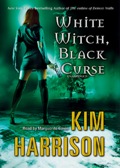
White Witch, Black Curse by Kim HarrisonWhite Witch, Black Curse
By Kim Harrison; Read by
Marguerite Gavin
15 CDs – Approx. 18 hours [UNABRIDGED]
Publisher: Blackstone Audio
Published: 2009
ISBN: 1433270314
Themes: / Fantasy / Urban Fantasy / demons / vampires / banshees / pixies / memory / detective / romance /

White Witch, Black Curse is the seventh entry in Kim Harrison’s Hollows series, also called the Rachel Morgan series after its protagonist. For the sake of full disclosure, I should state that I haven’t read the previous books in the series. It’s a testament to Harrison’s storytlling that I was still able to jump into the tale with only a minimal perusing of Wikipedia for character background. That said, purists will probably want to start with the first book in the series,  Dead Witch Walking, as indeed I intend to do.

Rachel Morgan is a witch who, along with her vampire companion Ivy Tamwood, runs a supernatural investigative agency called Vampiric Charms. She’s the supernatural equivalent of Janet Evanovich’s Stephanie Plum. Modern Cincinatti, in Harrison’s alternate history world, knows of the existence of supernatural beings, collectively dubbed inderlanders. Two federal agencies, the human-staffed Federal Inderlander Bureau and the otherworldly Inderlander Services security agency, maintain relations between the human world and that of the “ever-after” whence all other races came. Vampires, pixies, witches, and other strange beings walk the streets of Cincinatti, and not once in White Witch, Black Curse does their presence pass for comment among the book’s human characters. This marks a refreshing departure from other urban fantasy I’ve read, in which supernatural beings live underground, beyond the awareness of most everyday people.

As the novel opens, Rachel is attempting to solve the murder of her vampire boyfriend Kisten. In theory, this shouldn’t pose a problem, since she was present when the crime took place. But someone, somehow, has wiped her memory of that night’s events, and as she examines the crime scene she experiences only brief flashes of recollection and insight. A recent string of attacks apparently connected to a banshee also calls for her attention. As in most mysteries, these seemingly separate plotlines inevitably intersect at certain points as the novel progresses. The narrative hits several satisfying crescendos and climaxes throughout the book, but on the whole the plot plods along without any clear impetus to drive it forward.

The depth and dynamism of protagonist Rachel Morgan, however, redeems the novel from its mediocre plot. Like many heroines of urban fantasy and paranormal romance, she’s a badass. Unlike many other heroines, her character is balanced by a believable measure of insecurity, self-doubt, and even a hint of self-loathing. As a witch, she’s mostly confident in her magical abilities, but even in this realm she sometimes expresses hesitance. In the sphere of romance, she questions her suitability as a partner, calling herself an “albatross” who brings ruin upon those upon whom she bestows her love. No doubt this has something to do with the death of her former lover Kisten, and events in earlier novels might well bear this belief out as well. She also exhibits the tendency to rush bullheadedly into situations without considering the implications for herself or her circle of friends.

And Rachel is blessed with fast friends, family,  and other acquaintances who don’t comfortably fit into a single category. The unlikely highlight among the cast of supporting characters is the pixie Jenx, who often accompanies Rachel on her adventures. The foul-mouthed, irreverent little guy at first appears to serve as nothing more than comic relief, flitting around on a trail of pixie dust and spouting clever obscenities. Yet he stands–flutters?–by her when the going gets tough and many others have abandoned her.

The emotional textures of White Witch, Black Curse further offset the deficit of the novel’s mediocre plot. Rachel’s relationships seldom develop in predictable ways. Her friendships with her partner Ivy, FIB agent Captain Edden, and even the pixie Jenks, all come under occasional strain. The Morgan family dynamics are alo fraught with tension. And then there’s the romance. Rachel seldom devolves into the weak-kneed, crooning damsel of other romance novels. For the most part, she’s remarkably intellectual and circumspect in approaching relationships.

The book’s emotional power even extends to its magic. While not particularly organized or systematic in any “scientific” sense, the magic of the Hollows also hinges on feelings. FIB psychologist Ford has the empathic gift of reading emotional states of those around him. Auras also figure heavily into the plot as an external representation of a character’s internal state. Even a character of sound physical health might be in danger if their aura has been weakened by a recent traumatic experience.

Marguerite Gavin’s performance of White Witch, Black Curse isn’t the best audio rendition of urban fantasy I’ve heard, but it certainly does Harrison’s writing justice. Again, Jenx the pixie is the standout; she lends a nasal, sing-song voice to the spry winged creature which sparkles nearly as much as he does. On the whole, though, the best I can really say about Gavin’s performance is that it’s unobtrusive.

Fans of Kim Harrison’s Hollows series will find White Witch, Black Curse a satisfying continuation to the series. Urban fantasy and paranormal romance enthusiasts will also likely find much to like in Harrison’s unique world. Hardcore fantasy readers, on the other hand, might find themselves put off by a hit-and-miss plot and a lack of any real intellectual depth. Still, the book’s strong characters and emotional power make it a good candidate for some fun summertime reading.

Posted by Seth Wilson
Review of Witchling by Yasmine Galenorn

SFFaudio Review

Greetings fellow SFFaudio readers! I just thought I’d introduce myself as one of the new geeks slated to post reviews for the site. I’m legally blind, and have relied on SFFaudio for years to direct me to fantasy and SF audio, from new blockbuster releases to hidden diamonds in the rough scattered around the Interwebs. I’m therefore thrilled to be contributing to the site, and look forward to giving something back to this awesome community. Okay, that should suffice for an introduction–now on to the review!

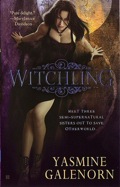
Witchling by Yasmine GalenornWitchling
By Yasmine Galenorn; Read by Cassandra Campbell
Audible Download – 10 Hours [UNABRIDGED]
Publisher: Tantor Media
Published: 2008
Themes: / Supernatural Romance / Urban Fantasy / Vampires / Dragons / Faeries / Seattle /

I was a little hesitant to delve into Yasmine Galenorn’s Sisters of the Moon series, since it’s generally categorized as “supernatural romance”. Yes, this shows contempt prior to investigation on my part. I’ve never read any “paranormal romance”, or much “romance” at all, for that matter. Yet from the first page, I found myself enjoying the world and characters of Witchling. The book reaffirms my belief that genre labels like “paranormal romance” have more to do with marketing convenience than actual substance.

“Urban fantasy” hits nearer the mark. The events of Witchling unfold in Seattle and the surrounding countryside, including the stunning Mount Rainier. The story follows the three D’Artigo sisters, half-human half-faerie beings from Otherworld who conduct work for the Otherworld Intelligence Agency (OIA) to keep their homeland safe. The murder of Jocko the gentle giant by a demon sets the detective-story plot in motion, told through the voice of witch Camille D’Artigo.

For the most part, the pages of Witchling are populated with fantasy staples. Delilah D’Artigo is a changeling able to transform into a tabby cat, and the third sister Menolly was changed into a vampire. Dragons, demons, and sprites also lumber, skulk, and flit about. Though these might seem trite and cliché, Galenorn lends them all enough life and originality that they seldom detract from the story. More inventive figures also make appearances, most notably the Japanese kitsune (fox) demon Morio.

Like other first-person urban fantasy books I’ve read, Witchling’s style is contemporary, witty, and laced with humor. Despite hailing from Otherworld, Camille has apparently spent enough time on Earth to learn its ways, its slang, and its pop culture references, which she uses to good effect in her speech and exposition. The sprightly writing more than makes up for the slow pacing in the book’s first half. In fact, I really enjoyed the dialogue-driven, character-based opening chapters.

While at its heart Witchling is a fun trans-dimensional detective story, it does touch, in a desultory way, on some more serious themes. Since the D’Artigo sisters are half-bloods, born of a human mother and faerie father, they face prejudice and discrimination from both sides of the race divide. Sadly, this dynamic seldom crops up in the plot, but Camille does occasionally reflect on its ramifications for her family.

And, yes, there is romance. Throughout the novel, Camille is preoccupied to some degree with her love life, and this subplot moves apace with the main narrative thread. I found Camille’s libidinous mental musings distracting from the story at times, but overall the romantic scenes and trajectory fit the book’s tone.

Likable characters, an engrossing plot, and smart, snazzy, sexy writing make Witchling an enticing read. Hints throughout the novel and especially during its conclusion reveal that the events depicted are but the tip of the iceberg in an impending battle between faeries and demons, a battle in which it’s likely that humanity will become embroiled. I look forward to exploring Galenorn’s universe further in the sequel Changeling, which it appears is told from the perspective of werecat Delilah D’Artigo.

Cassandra Campbell’s narration of Witchling is solid but uninspired. She imbues a real sense of emotion into the characters, especially the three D’Artigo sisters. The novel’s contemporary style and numerous pop culture references flow naturally into her narration. Campbell sometimes has a tendency to drift into melodrama, however, and the male villains seem particularly overdrawn. On the whole, though, Campbell handles the material well.

For more information on Sisters of the Moon and Yasmine Galenorn’s other projects you can follow her on Twitter.

Posted by Seth Wilson

CBC Radion One’s Tapestry interviews: Anne Rice

SFFaudio Online Audio

CBC Radio One - Tapestry with Mary HynesCBC Radio One’s excellent Tapestry (a program about spirituality, faith and religion) talks to Anne Rice about her books and her religion. Anne Rice promises not to write about Vampires now that she’s rediscovered her faith. Host Mary Hynes knows how to do an interview, and this is a good one. Also on this particular show Wanita Bates travels to Iceland “where belief in elves is something of a national pastime.”

Have a listen |MP3| or subscribe to the podcast:

http://www.cbc.ca/podcasting/includes/tapestry.xml

Posted by Jesse Willis

P.S. CBC free Al!

Review of Already Dead by Charlie Huston

SFFaudio Review

Science Fiction Audiobook - Already Dead by Charlie HustonAlready Dead
By Charlie Huston; Read by Scott Brick
8 CDs – 9 hours – [UNABRIDGED]
Publisher: Blackstone Audio
Published: 2008
ISBN: 9781433235795
Themes: / Horror / Hard-boiled / Detective / noir / Vampires / Zombies /

I lent this audiobook to a friend. Later, listening to me waxing enthusiastic over the book, he said in a dubious tone, “That’s the book where the zombies and vampires are fighting?”

Hardly.

It is true that vampirism is a key element of detective Joe Pitt’s character as practically everything he does entails watchful details to stay alive and undetected for what he is. Already Dead is, first and foremost, heart and soul, a hard-boiled detective novel. One might be forgiven for thinking that Charlie Huston is merely another author taking advantage of the recent trend featuring vampires as key characters in fiction. However, they would be dead wrong. What becomes very clear is that Huston is taking advantage of this fantastical setting to examine good versus evil, rising to humanity versus sinking to the level of animals, the societal urge to define oneself by the group one joins, and, of course, what constitutes true love. It is no surprise then to find that some of the greatest intentional evil is perpetrated not by vampires but by mere human beings. All of these themes are set forth for us in crackling dialogue that hearkens back to the best of Raymond Chandler and Billy Wilder, who one is irresistibly reminded co-wrote the screenplay for the film-noir classic Double Indemnity. In fact, a scene toward the end of the book between Joe and his girlfriend Evie is a noir-style dialogue masterpiece that sends thrills through the listener and that would not be out of place in that movie.

The nub of the story is that Joe Pitt is hired to track down the runaway teenage daughter of a wealthy couple. He delves deeper into the case and increasingly complex and sordid details come to light. Naturally, this is set against a background of New York City vampirism which is the result of catching a virus. The zombies also are the result of a virus, albeit quite a different one which robs the victim of any brain power and leaves them with an insatiable urge for human flesh. It is through tracking down a zombie in order to dispose of it before regular human attention is drawn to the existence of various virus-challenged individuals that Joe is drawn into the case. A loner, Joe must walk a careful line between the Coalition, the Enclave, and various other gang-like power brokerages that exist in vampire society, all of which are interested in some aspect of the investigation. Joe’s girlfriend, Evie, is a regular human infected with HIV, who knows nothing about Joe’s infection. The mutual affection and the need between two such lonely people makes an interesting contrast when one considers Joe’s virus is keeping him alive while Evie’s will eventually kill her.

I have read descriptions comparing Huston to Elmore Leonard and that didn’t ring true until considering The Society, which always made me giggle. (Yes, giggle. Deal with it.) The Society is made up of progressive vampires who are committed to diversity and look forward to the day when vampires are accepted in society as merely another minority. Joe occasionally winds up in their custody and the scraps of conversation he overhears before they realize he is conscious are always humorous. Consider the fact that zombies are termed “Victims of Zombification” as per The Society vote. All conversation halts when someone mistakenly uses the politically incorrect “zombie” until they can be patiently corrected. Extremely Elmore Leonard-esque indeed.

I originally checked the hardback out of the library but it failed to hold my interest for reasons I cannot now remember. However, the narrative fairly blazes alive the second one hears the world-weary Joe Pitt voiced by Scott Brick. My admiration grew as a suave mob boss, The Society leader Terry exhorting Joe to “be cool,” a loving mother who is nonetheless a lush, and a host of other characters all sprang instantly to life with subtle but masterful voicing. I didn’t realize the narrator was the well-known Brick, whose occasional blogging and podcasting I have followed with interest. Listening to this book I realized how skillful he is at his trade. I’m now a fan, not only of author Charlie Huston, but also of Scott Brick.

Highly recommended.

Warning: The language and situations are explicit although not to an unnecessary degree in most cases. This is a modern, gritty novel and listener discretion is advised.

Posted by Julie D.

Review of Fangland by John Marks

SFFaudio Review

Science Fiction Audiobook - Fangland by John MarksFangland
By John Marks; Read by Ellen Archer and others
10 CDs – Approx. 12.5 Hours [UNABRIDGED]
Publisher: Tantor Audio
Published: 2007
ISBN: 1400103592
Themes: / Horror / Fantasy / Vampires / Romania / New York / Television /

In the annals of business trips gone horribly wrong, Evangeline Harker’s journey to Romania on behalf of her employer, the popular television newsmagazine The Hour, deserves pride of place. Sent to Transylvania to scout out a possible story on a notorious Eastern European crime boss named Ion Torgu, she has found the true nature of Torgu’s activities to be far more monstrous than anything her young journalist’s mind could have imagined. The fact that her employer clearly won’t get the segment it was hoping for is soon the very least of her concerns.

Authors are supposed to write what they know. If John Marks is writing what he knows there’s one hell of a story that 60 Minutes never aired. As a former producer for that show Marks brings what feels like a pure authenticity to all the scenes revolving around the New York office politics and what it takes to make a show like 60 Minutes. Those office characters really do feel like those craggy faced reporters we’ve seen on 60 Minutes all these decades. And if for nothing nothing else, this makes Fangland a unique experience.

The plot should be very familiar to most, it’s a fairly faithful retelling of Bram Stoker’s Dracula. Differences being that Fangland is set in the modern day, a post-9/11 New York and a post-Soviet Romania. Like the original novel Fangland is told in epistolary form. That is, its chapters are entire emails, letters or notes, written by witnesses recalling recent events. But, at the novels culmination Marks breaks out of letter writing. The transition isn’t too jarring. Making the Jonathan Harker character female adds a new flavor to the flow. I can’t say as how the paperbook was received, but with this audio version, we get four terrific readers. This is a well selected cast of familiar Tantor voices. Ellen Archer predominates, as she voices Evangeline. She’s sympathetic, a little naive, but a confident modern woman confronted by a terror from Transylvania’s ancient past. Todd McLaren, Michael Prichard, and Simon Vance then take turns playing her 60 Minutes The Hour producers, other on-air reporters, a concerned father, the fiance and more. The novel runs a little too long, mostly in the middle. In terms of pay-offs though, the only thing this novel didn’t deliver on was an Andy Rooney (or equivilent) column at the end. I kept expecting Andy to show up and start telling us what bugs him about ‘being undead’ or some such.

This is not a classic, but if you dig vampires, Stoker’s Dracula, or Horror fiction that doesn’t come out of a modern horror tradition, you’ll quite dig Fangland. I’d stake my reputation in it.

Posted by Jesse Willis

Carpe Jugulum at Forgotten Classics

SFFaudio Online Audio

Forgotten Classics PodcastHi everyone! Jesse very kindly has invited me to do occasional reviews here. I am really looking forward to this as I am a longtime SFF Audio fan.

By way of introduction, I invite you to pick up the latest bit of lagniappe (a little something extra) at my podcast. This is a favorite bit of Terry Pratchett’s Carpe Jugulum which means that it includes, of course, vampires. Here is the |MP3|.

Or get the feed for the podcast:

http://feeds.feedburner.com/forgottenclassics

Posted by Julie D.