The SFFaudio Podcast #162 – AUDIOBOOK/READALONG: The New Mother by Lucy Clifford

Podcast

The SFFaudio PodcastThe SFFaudio Podcast #162 – The New Mother by Lucy Clifford, read by Heather Ordover (of Craftlit). This is a complete and unabridged reading of the short story (21 Minutes) followed by a discussion of it by Jesse, Tamahome, Julie Davis, and Heather Ordover.

Talked about on today’s show:
Brownies!, The Mote In God’s Eye by Larry Niven, what is the lesson of The New Mother, naughtiness will be punished without chance of redemption, Lucy Clifford’s children were good, the big people, Coraline by Neil Gaiman, button eyes, crafty, The Father Thing by Philip K. Dick, Philip K. Dick had two fathers, glass eyes and a wooden tail, stand the baby on it’s head, “don’t talk to strangers”, free range children, scared straight, dancing dogs, hopelessness, don’t give in to temptation, “listen to your mother”, the magic cupboards, cargo cult mindset, is the girl the devil?, Something Wicked This Way Comes, creepy warnings, has the girl been the victim of a curse?, a moral story, evil things sometimes look attractive, Anyhow Stories: Moral And Otherwise, the Wikipedia entry for Coraline, The Father Thing and Coraline have hope, horror, The Shining by Stephen King, G.K. Chesterton “fairy tales are more than true”, The Hanging Stranger by Philip K. Dick, To Kill A Mockingbird, Stand By Me, BB guns vs. aliens, did Dick read The New Mother?, Beyond The Door by Philip K. Dick, fantasy, the world is a magical place for children, the magic of housework, mom’s like God providing manna, the “good clock” that tries to keep going, frozen peas and creamed corn, the McCarthy era, The Twilight Zone, The Monsters Are Due On Maple Street, Invasion Of The Body Snatchers, child abuse, untrustworthy parents, “this is real”, stepping into adulthood, 19th century, 1950s, Coraline’s ineffectual parents, the Turkey and Blue Eyes, what happened to the turkey?, what’s up with the peardrum?, the Dictionary Of American Regionalisms, horrormasters.com, “it’s too heavy“, deception vs. self-deception, when do we learn do we naughty?, or do we learn it?, is it a game?, naughty vs. evil, reverse psychology, Tom Sawyer, a dead rat on a string, what’s the deal with the missing father?, fairy tales, Persuasion by Jane Austen, away at sea, fun garages, the feeling of bigness, Julie makes it all sound homey, Philip K. Dick’s father was a WWI veteran, pastoral vs. mechanized hell, Vietnam veterans, the new father in Coraline, the s-word, the movie of Coraline, a giant spider with bony arms, Neil Gaiman’s inspirations are classic literature, The Graveyard Book, The Jungle Book, Silas, Nobody Owens’ governess is named Mrs. Lupescu, Mr. Lupescu by Anthony Boucher, Weird Tales, Neil Gaiman is a fantasy master like J.R.R. Tolkien or Robert E. Howard, The Sandman, Aladdin, The Sandman: Season Of Mists, rescuing readers with Neil Gaiman, the teacher’s conundrum, there’s nothing better for a young reader than comics, Red Nails by Robert E. Howard, comic adaptations, don’t play down to your audience, Gargoyles, William Shakespeare, don’t pile on memorization, pile on fun, everything of value is learned through story, if you invert everything the girl in The New Mother you still don’t know what’s going on, is she just evil?, did she sit upon a baby?, are the two dogs the man and woman missing from the box?, many locks and many keys, unanswered questions, “perhaps you’ve lost yourself”, levels of naughtiness, being naught isn’t following orders, truth in advertizing, critical thinking, Grimm’s fairy tales, the etymology of “grim”, the University of Arizona, Grima Wormtongue, Harry Potter, Grimm, Once Upon A Time, Lee Arenberg, “to wend the grim tooth” (to recourse to harsh measures).
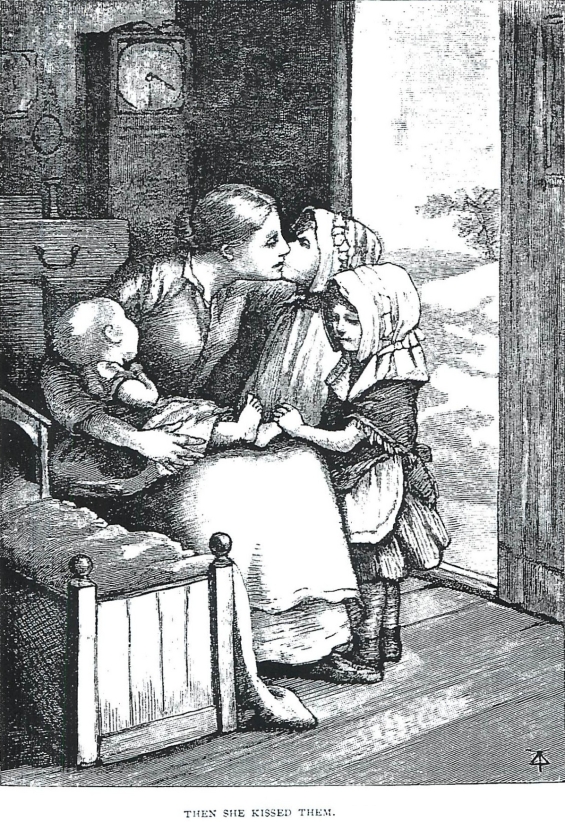
The New Mother - Then She Kissed Them
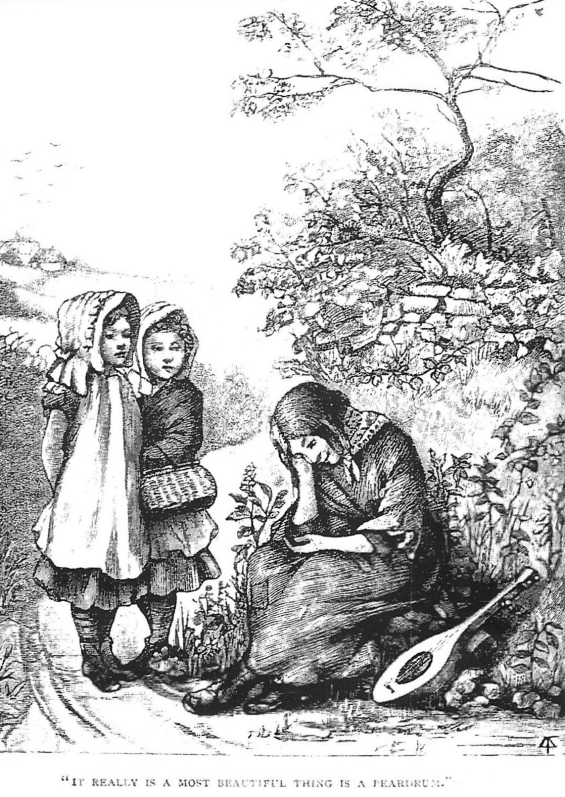
The New Mother - A Peardrum

Posted by Jesse Willis

The SFFaudio Podcast #149 – TOPIC: METAPHOR in Science Fiction and Fantasy

Podcast

The SFFaudio PodcastThe SFFaudio Podcast #149 – Jesse, Luke Burrage, and Professor Eric S. Rabkin talk about METAPHOR in Science Fiction and Fantasy.

Talked about on today’s show:
Science Fiction and Fantasy sort of undercut the scholastic meaning of metaphor, my friend Bill, metaphors come in two parts – the vehicle and the tenor, giants vs. ogres, denuding the metaphor, Aldebaran 6 has astonishingly beautiful humanoids, unknown vehicles deliver us, The Monsters by Robert Sheckley, The War Of The Worlds, a Tolkienesque task, A Voyage To Arcturus by David Lindsay, Dark Universe by Ron Goulart, Plato’s cave, blindness, dead metaphors, the Burning Bush, Saul vs. Paul, a sound idea, Germanic grounds for divorce, Star Maker by Olaf Stapledon, The Door Into Summer by Robert A. Heinlein, 1984 by George Orwell, “the clock stuck thirteen”, constructing meaning, William Shakespeare, awful as in creating awe, Moses and Mount Sinai, “shining like the sun”, a sun god, Sampson, hairy like the sun, bald like the moon, Genesis, “you may look upon my hindparts”, Childhood’s End by Arthur C. Clarke, unconscious metaphors, Frankenstein by Mary Shelley, wretch, catwomen from Venus, voluptuous sex objects, building up the vocabulary, Halting State by Charles Stross, Neuromancer‘s opening line, text adventure, Enoch lived 365 years (the sun god), The Tower Of Babel by Ted Chiang, comparing the constructed worlds of video games with the constructed worlds of Science Fiction, Battlefield 2, a meta-metaphor for understanding what Science Fiction does for understanding our world, hamartia needs range finding, The Time Machine by H.G. Wells, “any fool can see”, a system of metaphors for the characters and the reader provides meta-uses, metaphor means “carry across”, Greek moving vans are called metaphore, the Morlocks are the workers, the Eloi are the owners, the Time Traveler is the manager, Get That Rat Off My Face by Luke Burrage, Science Fiction as thought experiment, Michael Crichton, deus ex machina, The War With The Newts by Karel Čapek, Finnegan’s Wake, experimental novels, Germinal by Émile Zola, Flatland by Edwin A. Abbott, allusion vs. metaphor, Sampson vs. Goliath, Luke and Eric prime each other, is Science Fiction useful?, should SF be useful?, Science Fiction and Personal Philosophy (SFBRP #100), reading only the Bible, The Cold Equations by Tom Godwin, the hard lesson namely: “sometimes you’re just fucked”, Star Trek II, cannibalism, Eric objects, the physical world vs. unconditional love, NASA staff need to read The Cold Equations, Steve Jobs (and his reality distortion field), a world full of things other than minds, smart by accident, Apollo 13, give the astronauts poetry, the title itself crystallizes the meaning, The Scarlet Letter by Nathaniel Hawthorne, a parametric center, how do we maintain individuality in the face of fascism?, the vehicle/tenor heuristic, The Great Gatsby by F. Scott Fitzgerald, Nick Carraway, the car is the parametric central of The Great Gatsby, martian vampires, Apollo 1 disaster, Velcro and oxygen, “a failure of imagination”, learning from the past, the metaphor falls and leaves behind a lesson about reality.

Posted by Jesse Willis

The Shepherd by Fredrick Forsyth; Read by Alan Maitland

SFFaudio News

If you were to take a stab at guessing the favourite audiobook of Canadians you’d be well to guess a Christmas story that includes a vampire, a ghost, and a mosquito.

Produced for CBC Radio this classic reading of Frederick Forsyth’s The Shepherd is superbly read by Alan Maitland (aka Frontporch Al, aka Fireside Al, aka Graveside Al).

Bonus: A CBC interview with Frederick Forsyth about the story, the interviewer is Barbara Budd!

Vampire

Mosquito

Posted by Jesse Willis

BBCR4 + RA.cc: A Night With A Vampire – David Tennat reads stories by Calmet, Tolstoy, Maupassant, Freeman, Gautier

SFFaudio Online Audio

BBC Radio 4RadioArchive.ccLast year The Book At Bedtime, BBC Radio 4’s evening book reading program, also had a collection of five short stories called A Night With A Vampire (you may have noticed I just posted about the sequel).

The first story in this collection of five vampire tales was written by a Benedictine Monk. It purports to be non-fiction (the author having surveyed Europe for real life eighteenth century stories in his book The Phantom World). The second story, by Aleksey Nikolayevich Tolstoy (a Soviet SF writer with an asteroid named after him) may be the best of the bunch – it’s romantic and creepy. The third story, by Guy de Maupassant, well we did a whole show on that one, is extremely abridged with only about a quarter of the original text still present. Numbers four and five didn’t do much for me, but maybe you’ll find them more engaging than I did.

From November 22nd to 26th, 2010 (BBC R4 22:45-23:00) David Tennant narrated five 14 minute (abridged) short stories. The complete set is available as a |TORRENT| from RadioArchive.cc.

1. Dead Persons In Hungary by Antoine Augustin Calmet – Read by David Tennant [ABRIDGED]
Antoine Augustin Calmet published an apparently serious anthropological history of the Vampire throughout Europe in the early 19 century called “The Phantom World.” All the people he spoke to were adamant about what they had witnessed. His account therefore appears all the more disturbing and became the basis for the flights of Vampiric fancy that took off in the Victorian age.

2. The Family Of The Vourdalak by Alexis Tolstoy – Read by David Tennant [ABRIDGED]
Leo Tolstoy’s lesser known brother has written this compelling story about a patriarch who sets off on a mysterious mission but fears he may come back a Vampire. If he should return to their village after 10 days – he begs his family to deny him access and plunge a stake through his heart.

3. The Horla by Guy de Maupassant – Read by David Tennant [ABRIDGED]
After an unusual Brazilian ship enters the harbour – our hero suddenly begins to feel unwell, and starts to have feverish and disturbing visions. Only too late does he discover the demonic nature of the South American ship’s cargo.

4. Luella Miller by Mary E. Wilkins Freeman – Read by David Tennant [ABRIDGED]
Luella Miller seems incapable of surviving on her own – so she calls on friends, relatives and lovers to help her. And they all die – one by one – until there is no one left to lift a finger to assist this most demanding of women. An unusual tale – set in small town America.

5. Clarimonde by Theophile Gautier – Read by David Tennant [ABRIDGED]
As a young man approaches his first moments as a priest his eyes glance to heaven – and sees leaning over the sanctuary railing – a young woman of extraordinary beauty. And so begins a sensational struggle for his soul…

Producer: Clive Brill
A Pacificus production for BBC Radio 4.

Posted by Jesse Willis

BBCR4 + RA.cc: A Night With A Vampire 2 – David Tennant reads stories by Wharton, Matheson, Lieber, Swindells, Carter

SFFaudio Online Audio

BBC Radio 4RadioArchive.ccThe Book At Bedtime, the serialized audiobook slot on BBC Radio 4, last week featured a collection of five short stories called A Night With A Vampire 2. From November 29th to December 3rd, 2011 (BBC R4 22:45-23:00) five 14 minute (abridged) stories were read by David Tennant. Now the set is available via |TORRENT| for download at RadioArchive.cc.

As you might guess from the title, these are all vampire stories.

My pick of the lot is Richard Matheson’s Drink My Blood (aka Drink My Red Blood… aka Blood Son) which was Matheson’s seventh published short story. I find it to be extremely creepy. Parents will probably find it doubly so. Also good is Fritz Leiber’s Girl With The Hungry Eyes which is a bit less sanguineous and a bit more sexual.

The Lady Of The House Of Love by Angela Carter – Read by David Tennant [ABRIDGED]
“This wonderful retake on the Sleeping Beauty story first appeared in Carter’s 1979 volume “The Bloody Chamber“. A virginal English soldier, travelling through Romania by bicycle, finds himself in a deserted village. He comes across a mansion inhabited by a vampiress who survives by enticing young men into her bedroom and feeding on them. She intends to feed on the young soldier but his purity and virginity have a curious effect on her…”

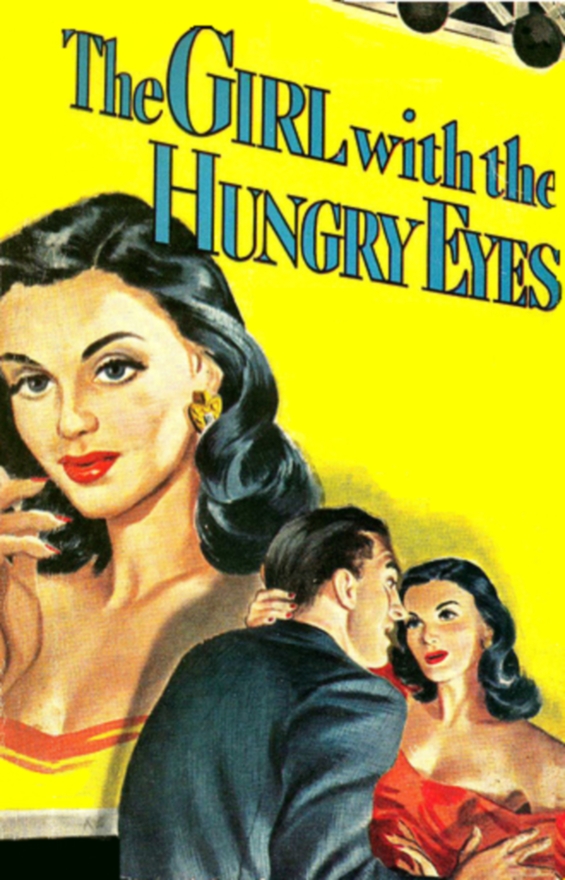
The Girl With The Hungry Eyes by Fritz Lieber – Read by David Tennant [ABRIDGED]
“This 1949 story has exerted it’s grip on many an imagination and has been filmed several times. It concentrates on the magnetic power of the Vampire and – in this case – the utterly captivating and inescapable lure of a Vampiress cum glamour model.”

The Girl With The Hungry Eyes by Fritz Leiber

Bewitched by Edith Wharton – Read by David Tennant [ABRIDGED]
Saul still goes out to see his previous girlfriend…even though she died years ago.

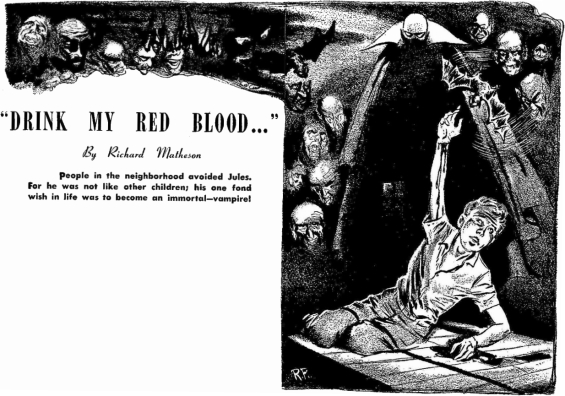
Drink My Blood by Richard Matheson – Read by David Tennant [ABRIDGED]
A young schoolboy whose only ambition in life is to become a vampire.
First published in Imagination, April 1951 (as Drink My Red Blood).

Drink My Red Blood by Richard Matheson

A Lot Of Mince Pies by Robert Swindells – Read by David Tennant [ABRIDGED]
A group of carol singers visit the same cottage every year.

Producer: Clive Brill
A Pacificus Production for BBC Radio 4.

[via Roy in the SFFaudio Yahoo! Group]

Posted by Jesse Willis

Review of Hounded by Kevin Hearne

SFFaudio Review

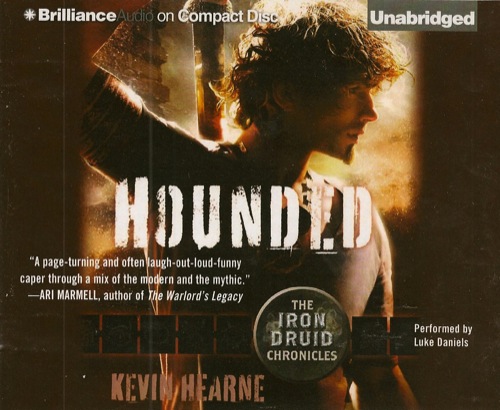
YA Fantasy Audiobook - Hounded by Hounded: The Iron Druid Chronicles
By Kevin Hearne; Read by Luke Daniels
8 Hours – [UNABRIDGED]
Publisher: Brilliance Audio
Published: 2011
Themes: / Fantasy / YA / Druids / Occult / Werewolves / Vampires /

This is the first of a hugely popular YA series, highly recommended by a friend and, luckily for me, available as a review book from SFFaudio.

Here’s the brief summary for those who, like me, hadn’t heard of this book:

Atticus O’Sullivan, last of the Druids, lives peacefully in Arizona, running an occult bookshop and shape-shifting in his spare time to hunt with his Irish wolfhound. His neighbors and customers think that this handsome, tattooed Irish dude is about twenty-one years old — when in actuality, he’s twenty-one centuries old. Not to mention: He draws his power from the earth, possesses a sharp wit, and wields an even sharper magical sword known as Fragarach, the Answerer. Unfortunately, a very angry Celtic god wants that sword, and he’s hounded Atticus for centuries. Now the determined deity has tracked him down…

The book begins with verve as Atticus is a charming narrator who introduces us to his friends, who are mainly from the supernatural world. We meet Druid gods, local werewolves, a Viking vampire, the local coven of witches, and Atticus’s Irish wolfhound, Oberon, with whom Atticus can carry on mental conversations. There are few genuine humans in Atticus’s life and none are developed beyond a paltry few amusing characteristics, such as the Irish widow who likes to get drunk before going to Mass and forgives murder on her lawn if she is told the victims were British. The most likable character in the group is the dog Oberon who is charmingly focused on doggish things and has just enough understanding of Atticus’s world to offer his own solutions from time to time.

My initial attraction to the story soon ground to a halt. The problem with this book, and it is a large problem, is that Atticus is a perpetual Peter Pan character. His emotional development seems to be frozen at several years younger than his outward 21 years since a heaving bosom is all it takes to permanently distract him from whatever he’s doing. Pity. One would have hoped that 2,100 years of living would result in a certain amount of experience leading to wisdom. Instead, Atticus spends more time in a practical joke on an ambulance attendant than in thinking through how much he should have healed himself from a bullet wound to make it seem convincing to local law enforcement. That’s ok though because Atticus has friends and allies who unfailingly show up to give an easy solution without readers ever feeling that Atticus himself is too worries about the outcome. This leads to a permanent lack of dramatic tension.

It’s a pity there isn’t a “Wendy” to accompany Atticus’s “Peter Pan.” That would give Hounded the necessary depth and contrast. Now we can see how wise J.M. Barrie was in the construction of his tale. Without a truly human element who lacks control of the situation, all the adventures are one boring episode after another with nary a worry about how Atticus will escape.

The one good thing about this book is the narrator, Luke Daniels. I haven’t come across him before but will keep an eye out for him in the future. His talents kept me listening long past the point where I would have given up. His voicing of Oberon has found its way into my head whenever we “speak” for what our dogs in our household.

Sadly, Daniels’ talents aren’t enough to make this shallow story worth your time. There are many wonderful YA stories out there that are worth reading and rereading: The Graveyard Book by Neil Gaiman, the Harry Potter series by J.K. Rowling, Eon: Dragoneye Reborn by Alison Goodman, White Cat by Holly Black, and Assam and Darjeeling by T.M. Camp are just a few.

For that matter, try Peter Pan by J.M. Barrie. You’ll see what Hounded could have been with proper attention given to the storytelling.

Posted by Julie D.