The SFFaudio Podcast #163 – NEW RELEASES/RECENT ARRIVALS

Podcast

The SFFaudio PodcastThe SFFaudio Podcast #163 – Jesse, Tamahome, and Jenny (from Reading Envy) talk about newly released and recently arrived audiobooks.

Talked about on today’s show:
please send Jenny audiobooks for review, a lack of a listing of the short stories on audiobooks, kudos to Welcome To Bordertown, George R.R. Martin’s Warriors II and Down These Strange Streets (urban fantasy), Jenny is reading around the world in 52 books, Tigana is sort of Italian, future releases, Happy Audiobook Month, audiobook sale at Tantor, Nick wants Redshirts by John Scalzi, coming soon on Audible, Audible Modern Vanguard, Colin Firth narrated the Graham Greene novel The End Of The Affair, Redshirts has three codas (short stories), Terry Pratchett and Stephen Baxter’s The Long Earth, Flood, Discworld has giant turtles, Good Omens is great in audio, Stephen Baxter is doing a Doctor Who (The Wheel Of Ice), Gregory Benford’s free audio novelette The Hunger For The Infinite is part of the Galactic Center series, sort of like I Have No Mouth And I Must Scream, sheer amount of David Brin audiobooks, Jenny might read Kiln People, how do Scott and Jesse truly feel about David Brin? (Jesse’s review of Startide Rising), the value of awards, The Greatest Science Fiction Stories Of The 20th Century has a good Brin and others, (Ben Bova was in the news not David Brin), The Postman book and movie, “if you build it they will come”, Heinlein’s Glory Road narrated by Pinchot, it’s one of Jo Walton’s least favorites, How To Build An Android also narrated by Pinchot, Alastair Reynolds’s Blue Remembered Earth, reviewed by Luke, Heinlein’s The Number Of The Beast (666?), Moonwar by Ben Bova, 21st Century Dead (zombies), Jenny’s collecting subgenres, Daniel Wilson’s Amped (1st three chapters on io9), someone stole that title, Energized by Edward M. Lerner sounds like Paolo Bacigalupi, Kim Stanley Robinson’s 2312, separate chapters like the Nova tv show, Red Mars, super science!, Jonathan Maberry, Robert Bloch’s Psycho series, “did he escape?”, H.G. Wells stuff added, Etsy 101: Sell Your Crafts On Etsy, Jenny wants N.K. Jemisin’s The Killing Moon in audio, Liz Williams’s Worldsoul has librarian heroes, “X-men meets The Breakfast Club”, Sfsignal’s book cover gallery for June, is body horror the same as splatterpunk?, Postmodern Science Fiction and Temporal Imagination looks like a Jenny book, The Islanders by Christopher Priest (author of The Prestige), waiting for international books, Paul McCauley’s In The Mouth Of The Whale is not in America, “I would buy the ebook”, small fonts, William Gibson is only in mass market paperback, many Philip K. Dick novels with plain covers, the value of book covers, “it’s like a good looking person”, “that screams I am a literary miracle”, Edwin A. Abbott’s Flatland, get the annotated one, Die, Snow White! Die, Damn You! A Very Grimm Tale by Yuri Rasovsky (audiodrama), so many fairy tales, a superficial interest in Further: Beyond The Threshold by Chris Roberson, a law that a bookcover should be honest, “that’s enough on that”, C.S. Friedman?, Adam-Troy Castro is not always super creepy, Paul Krugman’s End This Depression!, he was just on Geek’s Guide, “oh that kind of depression”, Justinian’s Flea, The Most Powerful Idea In The World, The Swerve: How The World Became Modern, author on The Bookworm podcast, Chuck Wendig’s Blackbirds, “I’m sensing a pattern with your reading, Tam”, Delany interview, Delany’s Nova, Tigana is the Sword and Laser pick for June
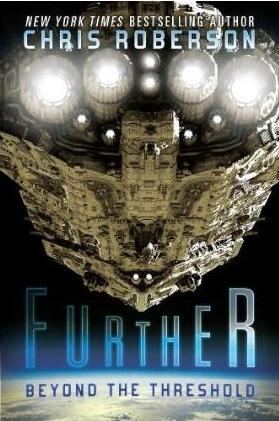
cover for Chris Roberson's Further: Beyond The Threshhold

Posted by Tamahome

The SFFaudio Podcast #149 – TOPIC: METAPHOR in Science Fiction and Fantasy

Podcast

The SFFaudio PodcastThe SFFaudio Podcast #149 – Jesse, Luke Burrage, and Professor Eric S. Rabkin talk about METAPHOR in Science Fiction and Fantasy.

Talked about on today’s show:
Science Fiction and Fantasy sort of undercut the scholastic meaning of metaphor, my friend Bill, metaphors come in two parts – the vehicle and the tenor, giants vs. ogres, denuding the metaphor, Aldebaran 6 has astonishingly beautiful humanoids, unknown vehicles deliver us, The Monsters by Robert Sheckley, The War Of The Worlds, a Tolkienesque task, A Voyage To Arcturus by David Lindsay, Dark Universe by Ron Goulart, Plato’s cave, blindness, dead metaphors, the Burning Bush, Saul vs. Paul, a sound idea, Germanic grounds for divorce, Star Maker by Olaf Stapledon, The Door Into Summer by Robert A. Heinlein, 1984 by George Orwell, “the clock stuck thirteen”, constructing meaning, William Shakespeare, awful as in creating awe, Moses and Mount Sinai, “shining like the sun”, a sun god, Sampson, hairy like the sun, bald like the moon, Genesis, “you may look upon my hindparts”, Childhood’s End by Arthur C. Clarke, unconscious metaphors, Frankenstein by Mary Shelley, wretch, catwomen from Venus, voluptuous sex objects, building up the vocabulary, Halting State by Charles Stross, Neuromancer‘s opening line, text adventure, Enoch lived 365 years (the sun god), The Tower Of Babel by Ted Chiang, comparing the constructed worlds of video games with the constructed worlds of Science Fiction, Battlefield 2, a meta-metaphor for understanding what Science Fiction does for understanding our world, hamartia needs range finding, The Time Machine by H.G. Wells, “any fool can see”, a system of metaphors for the characters and the reader provides meta-uses, metaphor means “carry across”, Greek moving vans are called metaphore, the Morlocks are the workers, the Eloi are the owners, the Time Traveler is the manager, Get That Rat Off My Face by Luke Burrage, Science Fiction as thought experiment, Michael Crichton, deus ex machina, The War With The Newts by Karel Čapek, Finnegan’s Wake, experimental novels, Germinal by Émile Zola, Flatland by Edwin A. Abbott, allusion vs. metaphor, Sampson vs. Goliath, Luke and Eric prime each other, is Science Fiction useful?, should SF be useful?, Science Fiction and Personal Philosophy (SFBRP #100), reading only the Bible, The Cold Equations by Tom Godwin, the hard lesson namely: “sometimes you’re just fucked”, Star Trek II, cannibalism, Eric objects, the physical world vs. unconditional love, NASA staff need to read The Cold Equations, Steve Jobs (and his reality distortion field), a world full of things other than minds, smart by accident, Apollo 13, give the astronauts poetry, the title itself crystallizes the meaning, The Scarlet Letter by Nathaniel Hawthorne, a parametric center, how do we maintain individuality in the face of fascism?, the vehicle/tenor heuristic, The Great Gatsby by F. Scott Fitzgerald, Nick Carraway, the car is the parametric central of The Great Gatsby, martian vampires, Apollo 1 disaster, Velcro and oxygen, “a failure of imagination”, learning from the past, the metaphor falls and leaves behind a lesson about reality.

Posted by Jesse Willis

The SFFaudio Podcast #143 – NEW RELEASES/RECENT ARRIVALS

Podcast

The SFFaudio PodcastThe SFFaudio Podcast #143 – Scott, Jesse, Tamahome, and Kristin (A.K.A Terpkristin) talk about recently arrived audiobooks, new releases and more.

Talked about on today’s show:
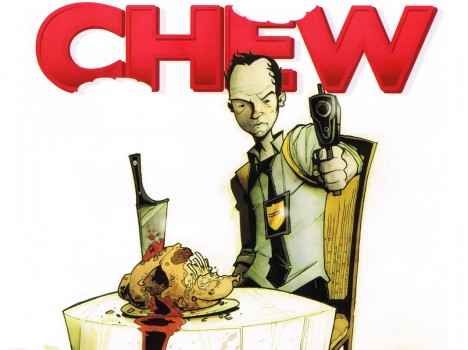
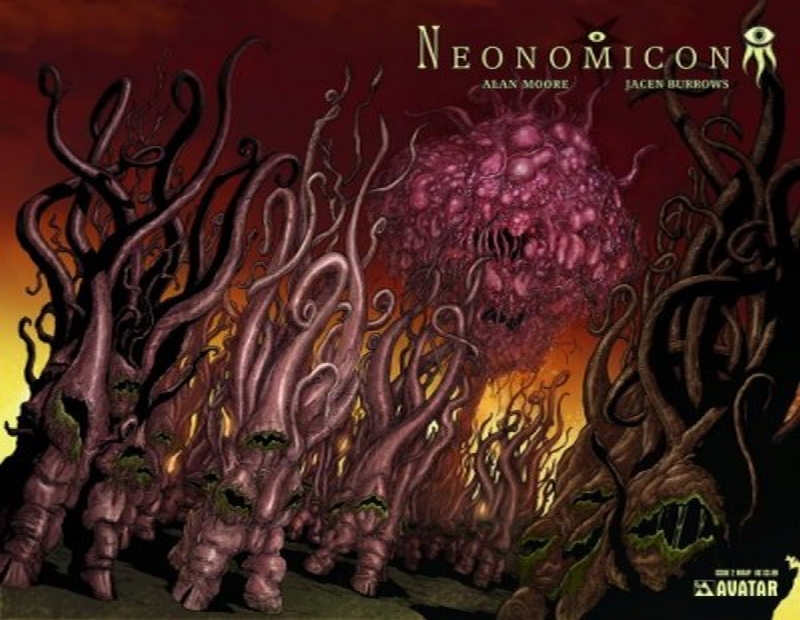
The origin of the name ‘Terpkristin’, Scott has a pile of audio, (see also the NewAudioBookIn twitter feed), Hominids and Humans from Robert J. Sawyer, evolved Neanderthals, Farseer (the dinosaur book), Flashforward, Kristin’s scientific evaluations, “needs more ego”, Pamela Sargent’s Earthseed (Seed, #1), Greg Bear’s Forge of God, memorable earth destruction, Peter F. Hamilton’s Void Trilogy (‘Hawking m-sink’ weapon), the Star Trek movie, Burning Chrome anthology by William Gibson includes Johnny Mnemonic, when will they list all the short stories on the audiobook package?, precursor to Neuromancer, William Gibson’s non-fiction Distrust That Particular Flavor is out from Tantor (Jesse will establish later), he’s a crossover, who will read Sisterhood Of Dune?, extending a series, Zelazny’s Amber series, Glasslands (Halo, #8) by Karen Traviss (she also did a lot of Star Wars books), “stuff happens fiction”,  Eve Online, “gateway books”, James Blish Star Trek books, Splinter Of The Mind’s Eye, The Thirteen Hallows by Michael Scott and Colette Freedman, I Am Number Four, YA series, “contractual sweatshop”, Infernal Devices by K.W. Jeter, a steampunk pioneer, “quick off the mark”, Little Big by John Crowley narrated by the author, Stephan Rudnicki was denied Aegypt (at 43 min), the legend of the Cottingley Fairies, Sir Arthur Conan Doyle believed it, “the Fairy Gap”, Larry Niven’s The Ringword Engineers and The Ringworld Throne, The Protector, the Security Now science fiction episode, “The Ringworld is unstable!  The Ringworld is unstable!”, A Canticle For Leibowitz by Walter M. Miller Jr., NPR dramatized it, good for Scott and Julie’s A Good Story Is Hard To Find podcast?,  Working For The Devil (Dante Valentine, #1) by Lilith Saintcrow, Dante is a woman?, Neal Stephenson’s Currency (The Baroque Cycle, Book 3, Vol. 7), they broke it down, Kristin read the whole thing!, Tantor has drm-free downloads, A Fall Of Moondust by Arthur C. Clarke, a Poseidon adventure on the moon, BBC Radio drama version, Timecaster by Joe Kimball, sounds like Minority Report, an idea for someone else to write, the Assassin’s Creed game, Brent Weeks’s Night Angel trilogy, hoodies are popular, the comic Chew‘s gruesome premise, Mur Lafferty likes it (5 stars on Goodreads!), Aces High (Wild Cards, #2) edited by George R.R. Martin, Jenny’s special message about A Wrinkle In Time, the 50th anniversary, a parallel world thing, the Pern series, The Greg Mandel trilogy by Peter F. Hamilton, my review of Mindstar Rising (Greg Mandel, #1), psychic powers, Lady And The Tramp, Scott’s box of audio has become infected with a zombie virus, Rise by Gareth Wood, “we’re not desolate or empty!”, entering New Releases territory, Blackstone, Raylan by Elmore Leonard, Justified tv show does a good Leonard, style, Out Of Sight movie and book, it was J-lo’s best, Sixth Column by Heinlein, Jesse can’t remember it, The Voice From The Edge series by Harlan Ellison, he’s got a passion, I Have No Mouth And I Must Scream was dramatized on BBC radio too, Robert Sheckley’s Immortality, Inc. (our readalong should be out next week), Bronson Pinchot narrated, (I think this is where I lost my mic because I was trying to say “transplant!” from that audiobook), A Door Into Ocean by Joan Slonczewski, a classic feminist science fiction novel, no men needed, Brilliance audiobooks are cheap!, “Someone explain the point of Audible” (at least I can still text), “What’s the fascination with zombies?”, societal significance or commercial? (I’m starting to think they’re ignoring me), Twilight and their ilk, Night Of The Long Knives by Fritz Leiber, how these subgenres are grouped together, vs the U.K., Dragonflight by Anne McCaffrey is fantasy or science fiction?, Star Wars gadgetry, Alan Moore’s Lovecraft salute comic Neonomicon, the Audible app, Tamahome is in the hole

Posted by Tamahome

The SFFaudio Podcast #139 – AUDIOBOOK/READALONG: The Pyramid Of Amirah by James Patrick Kelly

Podcast

The SFFaudio PodcastThe SFFaudio Podcast #139 – The Pyramid Of Amirah by James Patrick Kelly, read by James Patrick Kelly. This is a complete and unabridged reading of the short story (16 Minutes) followed by a discussion of it (by Jesse, Tamahome, and James Patrick Kelly himself). Here’s the ETEXT.

Talked about on today’s show:
Call him Jim!, James Patrick Kelly’s FREE READS podcast, “a gift story”, PBS, Mayan temples, ancient Mayan empire, Copán (Honduras), “time passes”, “2,000 words of nothing happening and 200 words of everything changes”, is it Science Fiction or Fantasy?, David G. Hartwell, Katherine Cramer Year’s Best Fantasy 3, 3D TV, the Earstone is the iPod Nano’s successor, Catholicism, religion, it’s a Horror story, sacrificial victims who volunteer, is Amirah hallucinating?, David Hume on miracles, take a miracle and make it a recipe, Memphis (Egypt), is religion a fantasy?, what is slipstream?, proto-slipstream, “Kelly Link is a goddess”, Feeling Very Strange: The Slipstream Anthology edited by James Patrick Kelly and John Kessel, cognitive dissonance, slipstream encourages cognitive dissonance, “for every religion there is an equal and opposite religion”, “making the familiar strange and the strange familiar”, horror, comedy, Fantasy, The Lord Of The Rings, Science Fiction, Nine Billion Names Of God by Arthur C. Clarke, The Crawling Chaos, James Patrick Kelly doesn’t fully understand The Pyramid Of Amirah, is the Dalai Lama happy?, stay in your god tombs, The Girl Detective, Karen Joy Fowler, Carol Emshwiller, Franz Kafka, readers are happier when they’re really really surprised, most readers don’t re-reread stories, slipstream is a balcony on the house of fiction, behind the push of science is the turbulence of religion and the fantastic, Bruce Sterling, Ted Chiang is slipstream?, J.R.R. Tolkien, some short stories are Rorschach tests, Bruce Coville’s Full Cast Audio, Robert A. Heinlein’s juvenile novels, the love hate relationship with Heinlein, Heinlein’s villains are all straw men, Starship Troopers, The Moon Is A Harsh Mistress, Heinlein’s sexy mother, Heinlein’s late career needed editing, Stranger In A Strange Land, stories in dialogue with other stories, Think Like A Dinosaur is in dialogue with The Cold Equations by Tom Godwin (and the controversy about it), The New York Review Of Science Fiction, not all problems are institutional problems (you are going to die), institutional facts vs. brute facts, John W. Campbell, was Campbell a terrible editor?, “all stories must have telepathy”, the story that must not be named (in Galaxy SF April 1975), Jim Baen, religious Science Fiction, Death Therapy by James Patrick Kelly, Terry Carr, The Best Science Fiction of the Year #8, collaborations, John Kessel, Jonathan Lethem, Robert Frazier, ISFDB, The Omega Egg, Mike Resnick, Kafkaesque: Stories Inspired by Franz Kafka, Tachyon Publications, The Secret History Of Science Fiction, The Drowned Giant by J.G. Ballard, The Lottery Of Babylon by Jorge Luis Borges, Max Brod, Joe Hill, Heart Shaped Box, You Will Hear The Locust Sing by Joe Hill, T.C. Boyle, Michael Chabon, Carter Scholz, Don DeLillo, Lucius Shepard, The Nine Billion Names Of God by Carter Scholz, A Recursion In Metastories by Arthur C. Clarke, post-cyberpunk stories, what is post-cyberpunk?, Mirrorshades: The Cyberpunk Anthology, Cheap Truth, the way technology changes the way we are, Cory Doctorow, Charles Stross, a new cyberpunk anthology is in the works, is there pre-cyberpunk?, Blade Runner, Philip K. Dick isn’t really cyberpunky, steampunk has a vision, what is the ethos of a steampunk story?, alternate history, goggles and zeppelins vs. computer hacking and mirror-shades, Pavane by Keith Roberts, William Gibson, Boneshaker by Cherie Priest, Bernardo’s House is an iconically Jim Kelly short story, Isaac Asimov, robots, a post-cyberpunk character, a prim and proper sex doll, There Will Come Soft Rains by Ray Bradbury, Mary Robinette Kowal, puppets, a stage adaptation of There Will Come Soft Rains.

A Recursion In Metastories by Arthur C. Clarke (Galaxy SF, October 1966 - Page 78)

The Pyramid Of Amirah by James Patrick Kelly - from Fantasy & Science Fiction, March 2002

Posted by Jesse Willis

The SFFaudio Podcast #136 – READALONG: Neuromancer by William Gibson

Podcast

NEUROMANCER
The SFFaudio PodcastThe SFFaudio Podcast #136 – Jesse, Tamahome, Eric S. Rabkin, and Jenny talk about Neuromancer by William Gibson.

Talked about on today’s show:
What was really going on in 1984, the introduction to the audiobook, 3 MB of RAM, Commodore 64, Apple IIe, TI-99/4A, the 10 Year Anniversary Edition of Neuromancer, video arcade vs. arcade, Tank War Europa, Spy Hunter, Sinistar, BBC audio drama adaptation of Neuromancer, cyberpunk, Jenny couldn’t connect with Case the first time, Alfred Bester, the revolutionary effect of Neuromancer, “a very special book”, Mexico City, “an important novel”, Yevgeny Zamyatin’s We, The New Yorker’s parody of Neuromancer, the New Wave, “one great new idea per book”, Samuel “Chip” Delany, The Einstein Intersection, The Lovesong Of J. Alfred Prufrock by T.S. Eliot, “The sky above the port…”, Blade Runner, “time to murder and create”, Hesiod, “And he never saw Molly again.”, an untethered morality, the Rastafarian religion, WWI, virtual worlds, Second Life, Gibson’s intentions, Gravity’s Rainbow by Thomas Pynchon, conspiracy, The Crying Of Lot 49, William S. Burroughs, Naked Lunch, “the silent frequency of junk”, The Wonderful Wizard Of Oz, Dorothy’s shoes, L. Frank Baum, “the face of evil is the face of total need”, The Electric Kool-Aid Acid Test by Tom Wolfe, “slouching through the streets of Paris”, Case is a “man of decided inaction”, God was Adam’s employer, Dixie Flatline wants to die, Free Will, Eric felt for Case, 1980s, Watergate, a totemic fascination with color and material, branding, Pattern Recognition, the Sanyo spacesuit, Hosaka is a computer?, a dead channel would be blue (today), Ian Fleming, James Bond, Walther PPK, “elegance and cosmopolitanism”, John Brunner’s Stand On Zanzibar, Escape From New York, Johnny Mnemonic, the fear of what technology is going to bring, Case’s youth, detritus vs. kipple, Philip K. Dick, Martian Time-Slip, Galactic Pot-Healer, “you can’t prove that the United States exists” in Neuromancer, Case was a street-kid, Gibson has built something that has mythic power, the lame Braun robot, Molly -> Mother -> Mary, SSN vs. SIN, a Case study (pun), he has been assigned a SIN, Oedipus, they function as if they were physical, Case: “You know you repeat yourself man.” Dixie: “Yeah, it’s my nature.”, the Sprawl trilogy and “when it changed”, when is Neuromancer set?, “a rich kid’s hideout”, real kipple vs. fake kipple, “built by carpenters to look rustic”, 18th century fake ruins, Versailles (and the Hameau de la reine), the Tessier-Ashpool are fucked up, Mona Lisa Overdrive, cloning, Count Zero, “they dumped themselves into this matrix”, communication technologies begin with porn, A Chorus Line, SimStim gets short shrift in Neuromancer, Strange Days, Molly’s meat-puppet memories, 1-900 numbers, the lotus eaters, Circe, the Sirens song, The Lion of Comarre by Arthur C. Clarke, the heisters are motivated or moved by their A.I. puppet-master, Case’s motivation, Molly’s motivation, Corto/Armitage’s motivation, like Rabbit in Vernor Vinge’s Rainbow’s End, these characters want to believe in their own free will, Neuromancer‘s motivation, “who’s the bad guy in this book?”, “who isn’t?”, the shuriken is the only moral totem in the book, dystopia vs. dystopic, “the wavelength of amphetamine”, spit instead of cry, Jenny is kind of cheating (because she’s read the sequels), is Molly wrong for Case?, Eric questions the new pancreas, it’s Noir (because everyone smokes), Jo Walton’s review of Neuromancer (see the top and comment 59.), Jesse appreciates the world (and the great motivation of the plot), Eric likes Case (in part) because he’s the only one who doesn’t want to physically hurt anyone else, O’Neil colony, the fake French youths, Case is not Neo, The Matrix is a fairy tale with a prophecy whereas Neuromancer is Science Fiction, the Sprawl Trilogy vs. The Matrix Trilogy, Star Wars, “stuck in bullet time”, V: For Vendetta is a fantastic movie, Jenny thinks we should listen to the soundtrack to The Matrix, “the machine and the moment”, Tama thought the second half of Neuromancer dragged, Mary Shelley’s Frankenstein is also Necromancer‘s antecedent ,”what do we owe to what we create?”

Neuromancer

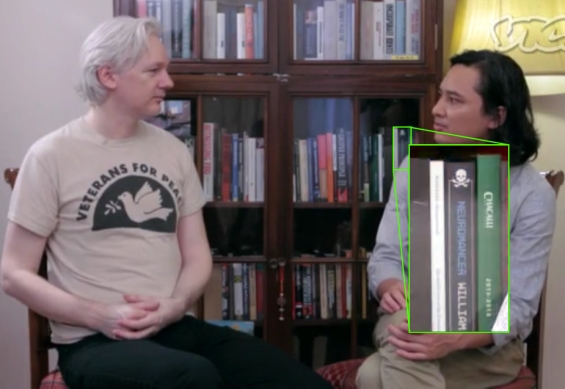
Julian Assange has a copy of Neuromancer by William Gibson

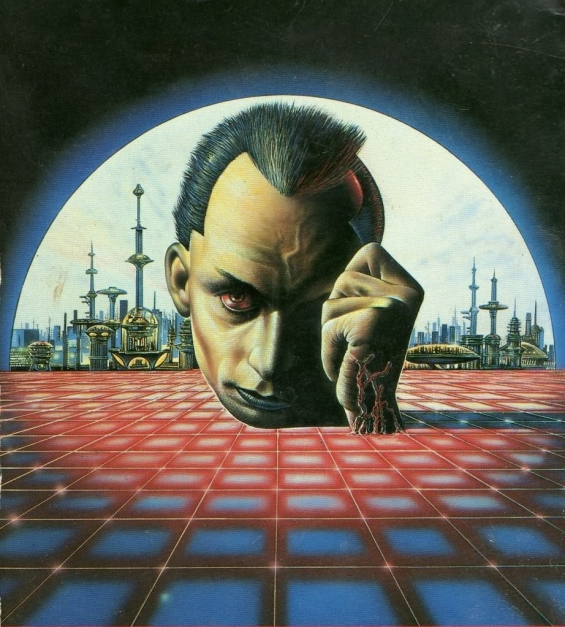
NEUROMANCER - illustration by Barclay Shaw

Posted by Jesse Willis