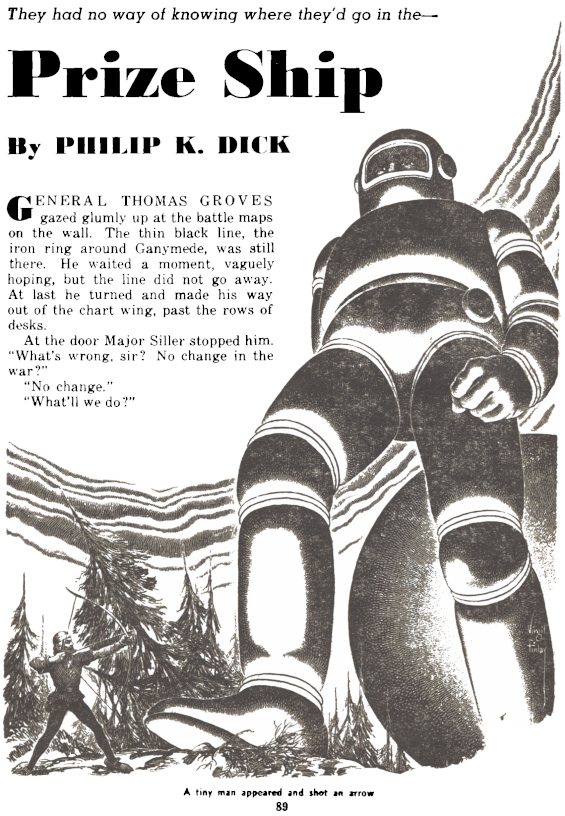
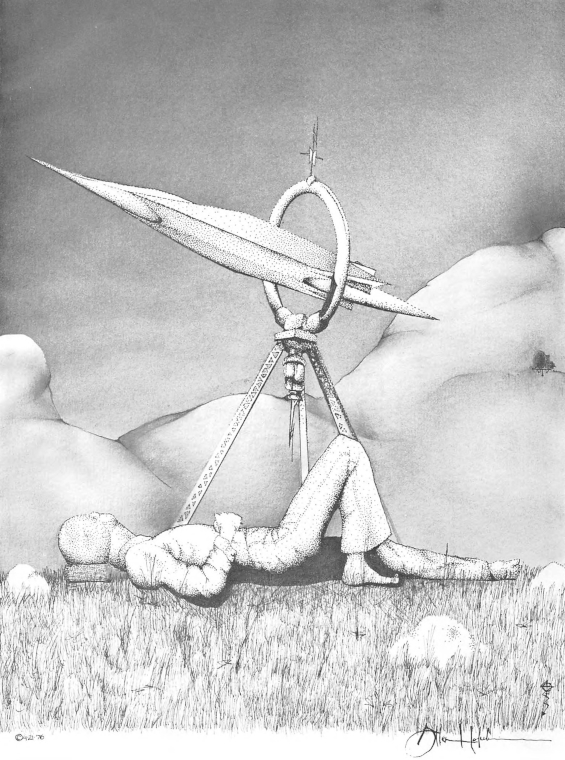
The SFFaudio Podcast #849 – Prize Ship by Philip K. Dick (42 minutes) and The Ship Who Sang by Anne McCaffrey (41 minutes). Both are read by Tommy Patrick Ryan. These are followed by a discussion of both. Participants in the discussion include Jesse, Will Emmons, and Tommy Patrick Ryan.
Talked about on today’s show:
1954, 1961, 42 minutes or so, one is far superior to the other, which is which?, Prize Ship is superior to The Ship Who Sang, largely similarish time frame, pairing them thematically, Mr. Spaceship, thematically, far superior, first time Anne McCaffrey, a trick story, not a particularly well executed one, he muted himself but doesn’t know, this wide of a gap, particularily phenomenal, a trick, some comments, Jonathan Swift, Gulliver’s Travels, never mentioned, Brobdingnag, Dragon Riders Of Pern, Eric’s book club with Tommy, okay, fun and interesting, themes, the Dick thing relied so heavily, the expanding universe, that gimmick is so thin, an interesting idea, naturally leads to sequels, leaves it open, the worldbuilding that she does, mentally good, physical deformities, these dudes are comin over, they go inside of her, try to charm her, passin out drinks, she signed off on this, that’s gross, being in love with him, a girl story, Philip K. Dick’s story is a peice of shit, way too long for the material, some other solar system, this one stupid moon, Ganymede, they don’t use cradle technology, horrible Ganymedeian emperor, so many characters, any distinction from each other, the Plutonians are Soviets or something, that’s on Philip K. Dick writing in his shit mode, time wasting stories, doesn’t put a foot wrong, leaves open the possibility of endless series, girl ideas, girl mindset, a houseparty inside of her, she sets her cap, she gets to have it every which way, she’s the girl in the wheelchair at the dance party, brain, brawn, a terrific story, also a little bit pretty, in sympathy, we probably agree, not the finest story you’ve ever read, the best McCaffrey story Jesse has ever read, what if this story were weirder or more upsetting, it should be upsetting, programming people, putting them in institutions, concerned citizens, step by step eliminates objections, increases the history, brain ship the third generation, Star Trek [The Next Generation] where Majel Barrett is the ship and Will Riker is her only crewman, girl fantasy romance in space, great at girl psychology, fetish weirdness, coyness with regard to sexuality, silly beyond 40 minutes, our primary brawn, he looks at her, being seen, whole bunch of titanium, he still looks at her, he doesn’t dance with her out of obligation, valid points, more comments about the Dick story, more to be critical of, better to shoot first on a strange planet, he fundamentally doesn’t understand military organization or business structures, when he fakes it he comes across as stupid, there’s greatness in the story idea, it’s a 4 second story, a joke story, a twist story, Gulliver’s Travels, junior year of college, of a regular curriculum, every planet and many moons, deep in the future, their own tech, an excuse to revisit the ideas that blue Philip K. Dick’s socks off when he was a kid, time travel not being really worth it, being silly, throw away characters, so long for the material, the guy who didn’t know the story, a fun brief discussion point, gone to the future, everything could be real, Wonderland, Oz, Middle Earth, Narnia, Neverland, today’s lexicon, maybe it’s not worth it, felt more dated, still out there, the story is dated by it’s dated references, when this is supposed to be, perhaps others, Erewhon, Pellucidar, all the the fantasy’s dreams, jum jum jum, Edgar Rice Burroughs’ hollow earth, going into it, tickled at the imagination, sorta fun, so referential, so meta in that way, way deep into the story, so much setup, so lame, the whole senator scene, boring, he’s terrible at that shit, so useless, did nothing for the story, the Ganymedean at the end, could have been half as long, one of these is a classic, the other one is absolutely forgetable, Return To Lilliput, something that is on his mind, boobs, direct references to The Odyssey, Strange Eden, childhood reading, work through this, social satire not science fiction or a true story, he can’t help himself, the joke is better, Prominent Author, the joke is really good, commuting, who the hell writes about commuting, multiple times, fucked by the robot at home, very fun, gotta commute, tiny little people, doesn’t report the hole, the joke is, slips of paper, not aliens from other planets, they’re the Israelites, he is god, Moses!, busy writing down the ten commandments, cribbing from the bible at work, a good joke, also this weird idea, what kind of idea is that, a result of technology, no such thing as commuting, transit time, your work can be hours away, a six hour drive to work, come back once a week, a second place in the Chicago area, relocate, a fundamental science fiction idea, the consequences of technological change, time travel is real rather than cradle technology, expanding universe isn’t just space between stars, the size of everything grows, he buries it, the title, buried by it’s own garbage, done as kind of a joke, vitriol, by having this discussion, the worst time travel story, pretty silly, it’s an idea, Robert J. Sawyer in a dinosaur novel, Shadow In Space by Philip Jose Farmer, any female characters?, liliputian female, not even a quivering look at her boobs, meat and potatoes make money mode, my beating heart, no emotions in this story, don’t care, things I should hate, Jesse hates characters and emotions, character makes you read big long series, Dragons Of Autumn Twilight, Dragons Of Winter Dawn, Dragons of Summer Festing, Time Of The Twins, reading for character, the death of Sturm Brightblade!, a way of tricking people into reading, how their stories go, the Dresden Files, Dragonlance, Drizt?, high literature, we literally form a relationship, we like them, Tanis Half-Elven, Wolverine, half-girlfriend, anti-Cyclops feelings, the X-Men has science fiction ideas sometimes, a bit of both, a bit of allegory, the junk story, the gem has problems, you want to see what happens next, the guy dies, that’s awesome, dumb, naive, the grandmother ship coming along, leads to the possibility, this federation, drug smugglers and vaccines, also The Cold Equations, a plague on Woden, just like Balto, a dog one, our noble brawn, so fucking girl psychology, the relationship between and ugly girl or a disabled girl, maybe she’s got pimples, kids exposed to thalidomide, We Didn’t Start The Fire, Jesse is very suspicious of music, things that Jesse should be worried about: institutions, corruption, abuse, is she being abused?, “power seek”, these brainships, total slaves, they have agency, how limited is that agency, later sequels, pick her person, it felt backwards, having a party inside of her, a gang rape [gang bang], a man who doesn’t suck, all as good as you can get, top 1 percent in everything, good at everything, they’re all Rikers, they’re not Barkleys and not Picards, fine starfleet officer, an exploration of the borderlines of the idea, a ship’s counselor, understand emotions, looks good in her outfit, her role is expanded when you have characters like Barkley, fucking up at work, expansive, read the whole series, the next story will be more of the same, and largely girl fantasy, all the men coming into her, a crew choosing party, courted like Jane Austen, the song by Rebecca Black called Friday, immensely inane, kick it in the back seat, that’s her life, zionists?, the disparity, her major problem is which seat should she sit in?, hilarious and endearing and stupid and anti-intellectual, almost asexual, the central question of the story, some level of agency is nice, Pride And Prejudice, just brooding, scary eyebrows, happy for Elizabeth, filthy rich, a bonus, take pity, he likes her for her, not for her money, that’s nice, themes in there, she’s the one who makes things happen in the home, she invites a man into her, they go out adventuring, planted on the ground giving advice, goes and talks to the nuns, we’re running out, runs back, they all follow Riker back into the ship, heroic efforts, a manly hero, it has everything, woman being virginal, woman being sexual, so perfect with regards using a science fiction idea, to explore female psychology, so good at it, is there a scene wasted here?, usally to give us a little information, to allay fears of abuse, institutions being very dangerous, separating kids from their families, either than our she’s going to be euthanized, pick up that ball and run with it, her other option, the Jedi in Star Wars, force sensitive, taken from their families, they can be good monks, in Judge Dredd, indoctrinated from age 5, a kind of priesthood or nunhood, saving this colony of nuns, this handsome man, parallels, jealous, only has eyes for her shell, the alternatives, the modern equivalent, put in the incinerator, a reality, taken away from your parents immediately, how the Spartan system works, out in barracks, murder a Helot, horrible disciplinary stuff, the British Public School system, brainships are female, the singing, initial attraction, her reputation, a girl in a wheelchair, a girl with a birthmark on her face, a girl with a limp, so girl psychology, it exceeds its premise, an excellent science fiction story, less luke war, the totality of the storyline, one of the joys of discussion, this does do a lot of stuff, reverse discrimination, she’s in charge, more examples, not desired, not into her for her looks, who and what they are, personality is important, physically deformed, an exterior body that’s powerful and capable, she’s the homunculus, a very Eric reading, a different kind of commuting, a pretty positive story, a female author, accomplished so well, artistic, she’s a person, not just a machine, makes her more fully round, she can paint the Last Supper on the head of a screw, and now the women are going to play the harpsichord, music, needlework, doemestic entertainment, business partners or whatever, the billiards room, a gathering at the piano, if you’re advertising for piano lessons, what sets this ship apart, she sings, music is one of the greatest things to exist, hostile, actively suspicious, it’s math in sound, what happens when people get patriotic, you shouldn’t get teary eyed at propaganda, music is fuckin dangerous, why the Puritains were worried about dancing, hymns, used to manipulate, why am I crying, I wanna get down on Friday, it shouldn’t be popular, Gagnam Style, a song about a guy who attracts girls, he’s your uncle, age and gender, older brother dances like this, he gets all the girls, translates from another language that we don’t understand, music is a direct line into people’s fuckin minds, the concern, they’re not all equal, try to get a millenial to watch a movie, Will’s seen 5 movies, try with a zoomer, obsessed with Star Wars, not all modes are equal, insidious inside of you, Mein Kampf, very few, into your ears whether you want it or not, a Burger King commercial, college sports, an earworm, Beethoven, Mozart, The Silmarillion, a joke, the opening, they make music, everything is vibration, Tolkien wasn’t a dumb man, all power has potential to be dangerous, when we make music, the source or the force, some would call God, music and yoga, more than church, about peace and stuff and understanding, use any too for good or evil, the knife that harms, toddlers are given nuclear weapons, undersea mountains, a power range, in law, noise violations, decibels or hours vs. content, physical contact is the point of assault, that demarcation, sound is everywhere, incumbent, upset at muzak in an elevator, brain activity, enjoying my audiobook, working in schools, special ed, have to put headphones, Jesse is weird and Will amped it up on purpose, Will is an agitator, not unprofitably, a key factor in human development, having heard that diatribe, we recognize the power of music, perfume, fresh bread not offense, laundry pods, but why?,no wasted characters, lots of interesting technology, psychology, what if Einstein’s theory implies this, also Lilliput, clearly they’re quite different, leaning towards Dick, the datedness, toxic masculinity, lack of women, patriarchy, not unitl Jennan comes along is she truly alive, apparently not interesting contributors, The Gun, doesn’t sound right, this is a classic science fiction story, dial down 2024 sensibilities, 2025, things have changed, [Project 2025], the only person who’s recorded those public domain stories, mostly bored, vibing, cringing, totally immersed in 1950s science fiction, had to turn in his first draft on this one, get canceled, in a very different light, not publishable in 2025, it would be independent and very popular, a tune up, it might be gay, Murderbot books, supposed to be really good, it’s awesome, character, Luke Burrage reviewing with Julianne, total Jesse hate, character based, relationship to humans, autistic relationship, book series, more more more character, Lord Of The Rings, Frodo’s going to off to the Grey Havens, oh no the story is over!, a little echo with Sam and his wife, I gotta read it again, that is a mistake, it doesn’t need sequels by other hands, several endings on it, The Scouring Of The Shire, longest epilogue, a great tramping, everything is opening up, this is depressing, debate about potatoes, what happened to Mr Sam’s frying pans, attention and relationship a reader has to the material, Murderbot is indulgence, how do we feel about Conan in this context, Conan vs. Howard, a space in which he can operate, forced to fit into a certain mode, with Dragonlance, become addictive, gather at a treehouse, they have food, two brothers, twins, warriors, gladiator, learn evil magic, fight the evil, oh, it’s epic, by book 30, am I really getting a lot of value out of this, Dragon Ball Z, Conan Doyle kept killing off Sherlock Holmes, that happens, people literally care, writing more to give people more, inevitably always happens, the fixup, that’s the first book, at least 7 books, enough already, not interesting at all, Siler, the German guy, Bassett was British, male lead, he’s Han Solo and Will Riker, a bard who’s handsome, everything a girl could loved, just like his father, the cowboy, the American, not well known for his great characters, The Wub is a great character, it’s Jesus, come to accept, non-superflouous, Instrumentality of Man, negative feedback, Player Of Games by Iain M. Banks, dangerous and insidious, the culture is like heaven, as a standalone it would be fine, anti-utopian societies, is this a utopian society?, the same premise every time, given you’re in heaven…, the edges of heaven, neat points, playing board games, video games, kids, 24 hours, their behavior afterward, what are you really getting done, fetch quests, 15 seasons of Supernatural, insightfully, “Jesse don’t you have any happy movies”, Paperback Romance (1994), disabled lady with a gimpy leg, My Big Fat Greek Wedding, admires her writing, a great movie, soft and sucky, if that is the range of your film wanting, brokenness inside of you, binging and other things, what is it for, how should we use it, how should we recognize what it is, many traps in the world, shared setting vs. series, the Ringworld books, the theory of series, diminishing returns, intellectual laziness, when sick, the ability to do the work, instead of going over to the machine, watch a couple John Carpenter movies, operating like that all the time, watch it again!, not just as a pacification, understanding and realization, somehow disabled, something comfortable, to stimulate and edify, to raise up, edify define, instruct or improve, when you’ve learned something, having the guy catch all your fish for you, good as a trilogy, gotten past the worldbuilding, The Empire Strikes Back, The Two Towers, how dense those middle parts are, they don’t want to have to learn it again, the prequels, the sequels, Rey and Finn, give me something new, not edifying, an excellent story, shown Tommy the light, take a dump in a bag and stamp literature on it, word rates, F&SF, a more literary snobby, actually produces good results, we don’t like your kind here, Boucher, by [19]61 he was gone, Robert P. Mills, quality wise it is excellent, they don’t have interior art generally, Astounding and Galaxy art, Virgil Finlay, a banana on the cover, a nebula and a galaxy and a banana, what the ship size is, the Millennium Falcon size, cooler looking, less knobby, light frigate sized, so much like the starship Enterprise, a landing gantry, female writer that Tommy’s mom likes, newer equipment, feedback, an entire book, any notes, the different accents, the interpretation an audiobook narrator brings to a story, Will is more open to dramatic readings than Jesse is, well done, is it appropriate for a man to do a story that’s so female focuses, Barbara Rosenblat, much more clunky, that’s the story, bounces around, there is no distinction between the characters, Rosencrantz and Guildenstern, the most notable character, closer and warmer always is nicer, a cold room, a bigger room, they mean the same thing, less echo more close, microphone based, room based, back off the microphone, snuggled into my microphone, get closer to the cardioid, dialing down the [gain], projection, tend to Levelate, just for volume, Levelator, levelation, when you look at a million LibriVox files, nice and snuggled, breaks all of the lows and all of the high, for volume control, raw files, too sick for too long, Will got his homework done, nice and short, a lot of audiobooks, Tommy’s stuff’s pretty good, awful Hegel audiobook, teach a man to fish for compliments, technical stuff, fish the pond out, theatrical experience, theater mode, theater voice, recording stories, one should do things, playing board games for money, how to stream games for money, you’re in your bedroom, a side hustle, as a performance for other people, a horror show, sing in the car, sharing something that has value, it’s not just fun, it’s edifying, Jesse’s conviction, some listeners that have similar experiences, saying similar, that’s enough, the superior man studies literature, it’s a simplified version of the world, that is enough, I can do these things, a chance to listen to it, put some headphones in, wash the dishes, do the laundry, next week is Eaters Of The Dead by Michael Crichton, The Jameson Satellite and Mellonta Tauta, Mr. Spaceship?, asking about utopias, Mack Reynolds, not his later novels, Border, Breed, Nor Birth, Mercenary, a strange new meaning, read by Mark Nelson, 23rd of February, probably Ben Tucker, Phil Chenevert, can I be late several minutes, much appreciated, always a pleasure, salient points, appreciate, mails it in, held him on a pedestal, may the Force be with you, so fucked up by illness on Vancouver Island, a great book: Project Pope, not exactly on Catholic matters, Lilith by George MacDonald as well, done for adults, people with lots of limbs, kinda about suicide, a new reality, very interesting, more Catholic redeption, The Magic City, Edith Nesbit, they meet a man she knew as a child, she is going to marry him, super-resentful, mom and sister is being taken away, the boy acts like a jerk, secretly he builds a city out of household objects, kinda like the DREAMLANDS, everything is magical, a fantasy of child creation, The LEGO Movie is very good, ip, Batman and Star Wars, childhood materials, Lord Business, he’s mad because his dad is always at work, creates a world and falls into it, redeeming, nice right, very charming, pastoral inside of a fake city, what food do they eat, there’s a prophecy, a visitor will comes, nice little nested story, what’s going on, reading a lot, gotta do that sometimes, making reviews and notes, ancient Chinese philosophy, worth understanding Confucius and Mencius, human nature as basically good, filial duties, an elder, and so sick, we have to consider that, in the Confucian framework, a stronger duty, equal universal love, snow melt?, safe inside, Haitian independence, what does this consist of?, ate food, strange and normal, honorary Germans?, every kind of person, weird conversations, a communist, comes across as very normal, into Chairman Gonzalo, the Peruvian Communist Party, a good time, Haitian soup, a savoury quality, pork, cabbage, the broth, squash, a tasty experience, spicy chicken pastries, blood pressure down, meat and meat associated products, lots of salt, crazy things we were told, salt’s fine, you need salt to live, why animals and humans lick it, not being productive, a very strange lady, 70 years old, highly disabled, huge knowledge network, hundreds of chickens and goose and 7 cattle, nature and nurture, a little genetics and little philosophy, being sick is frustrating and annoying, take vacations, why you trying to punish me, comb the beaches, explore them, map them, learn the lore, go fishing, 6 hour podcast to edit up tonight, get Jesse and Will talking, bad habits, a long show, The Journey Of Joenes, very good time, another human, good guy.
Posted by Jesse Willis








 Junkyard