News, Reviews, and Commentary on all forms of science fiction, fantasy, and horror audio. Audiobooks, audio drama, podcasts; we discuss all of it here. Mystery, crime, and noir audio are also fair game.
The Metamorphosis (in German, Die Verwandlung, “The Transformation”) is a novella by Franz Kafka, first published in 1915, and arguably the most famous of his works along with the longer works The Trial and The Castle. The story begins with a traveling salesman, Gregor Samsa, waking to find himself transformed into a giant “monstrous vermin”.
This narration by David Barnes is really terrific! One reviewer put it this way: “Slow, dignified, fitting for Kafka.” Another this way:
“A wonderful recording … Many thanks to Mr Barnes for his wonderful reading … [a] nightmarish and chilling tale of horror and abandonment. It is one of the most powerful texts written by Kafka and quite worth listening to.”
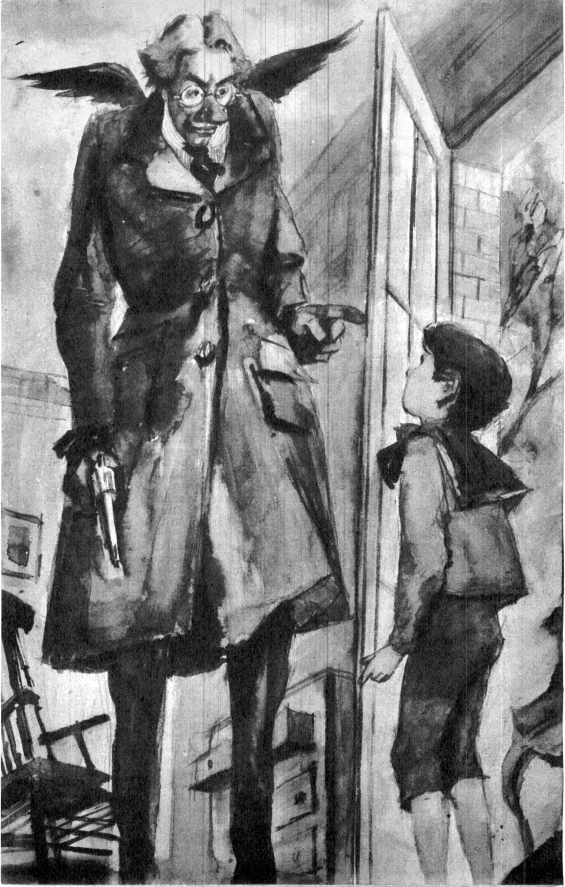
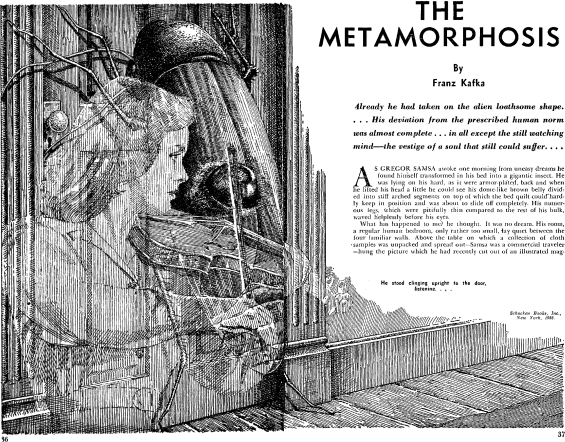
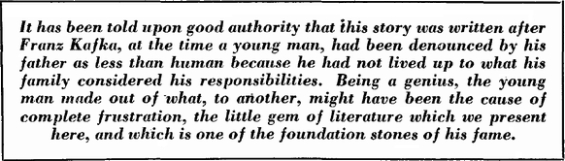
Here are the illustrations, and a brief editorial, from the June 1953 publication of Famous Fantastic Mysteries.
The Metamorphosis
By Franz Kafka; Translated by Ian Johnston; Read by David Barnes 3 Zipped MP3 Files or M4B – Approx. 2 Hours 34 Minutes [UNABRIDGED]
Publisher: LibriVox.org
Published: December 11, 2006
|ETEXT| “Already he had taken the alien loathesome shape … In all except the still watching mind – the vestige of a soul that still could suffer…”
Public Radio International’s To The Best Of Our Knowledge has a new Philip K. Dick special up. Here’s how they describe it:
Nobody blurred the line between his life and his literature more than the legendary science-fiction author, Philip K. Dick. And that’s only fitting since one of the major themes of his fiction is, “What is reality?” This week we take a look at the life and work of the man who’s been described as “one of the most valiant psychological explorers of the twentieth century,” as we commemorate the 30th anniversary of his death.
And here’s the list of speakers:
Jim Fleming, Steve Paulson, Anne Strainchamps, Jonathan Lethem, Anne Dick, Umberto Rossi, and David Gill.
Here’s the audio |MP3| but I’m afraid the file isn’t directly HuffDuffable (though it does readily download).
Mister Jesse has lots of friends, and they all do something you wouldn’t ever think of, not in a squillion years.
One of Mister Jesse’s friends is named Mister Jim Moon. He is one of Mister Jesse’s very good friends, though Mister Jesse has never really seen Mister Jim Moon.
Sometimes Mister Jesse thinks that Mister Jim Moon isn’t real. But because Mister Jim Moon is so fun to play with Mister Jesse doesn’t want to think too hard about it. He doesn’t want Mister Jim Moon to disappear!
Mister Jim Moon’s podcast, Hypnobobs, is full of wonderfully terrible stories of the weird and the macabre.
Mister Jim Moon’s latest podcast is a short collection of weird poems. But the one before that, Hypnobobs #68, is entitled “Imaginary Fiends” and includes two short stories with imaginary friends at their center.
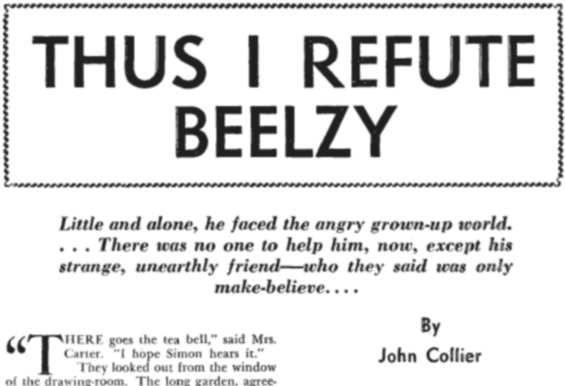
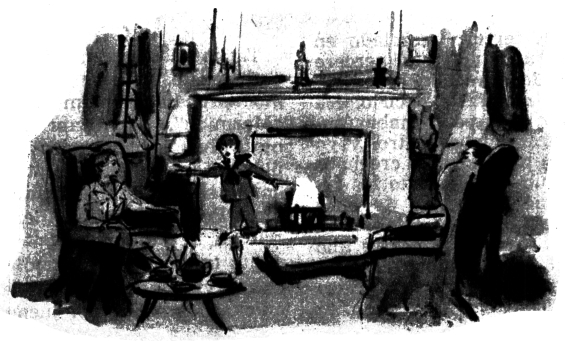
One story is named Thus I Refute Beelzy. It was written by Mister John Collier. And the other is called Mr. Lupescu and was written by Mister Anthony Boucher.
It seems likely to Mister Jesse that Mister Anthony Boucher’s story inspired one of the characters in Mister Neil Gaiman’s The Graveyard Book.
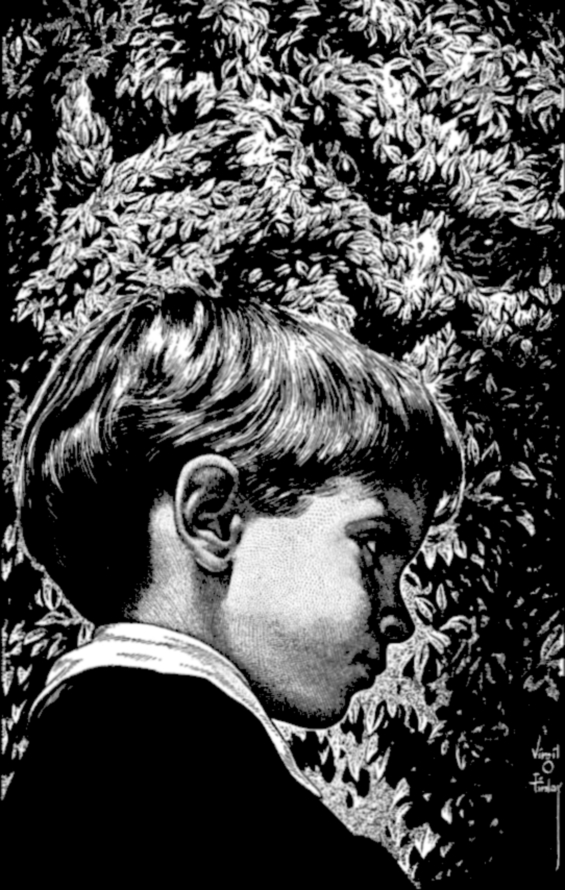
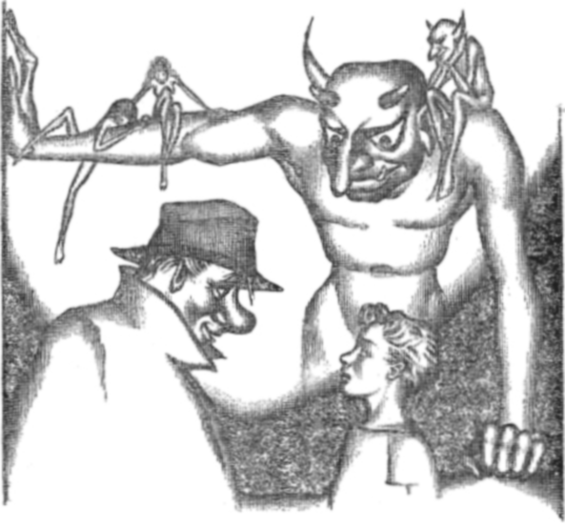
Mister Jesse has tracked down the accompanying illustrations from the print publications and made PDFs too!
CBCer and SF fan Joe Mahoney put up this |MP3| on his blog, Assorted Nonsense. It’s a hilarious Science Fiction story recorded for the event called Grownups Read Things They Wrote As Kids, which was organized by Dan Misener of CBC’s Spark.
Joe wrote the story when he was 12, back in 1977. At that time it was meant to be a serious story. But as it was written when he was a kid it seems a whole lot funnier now.
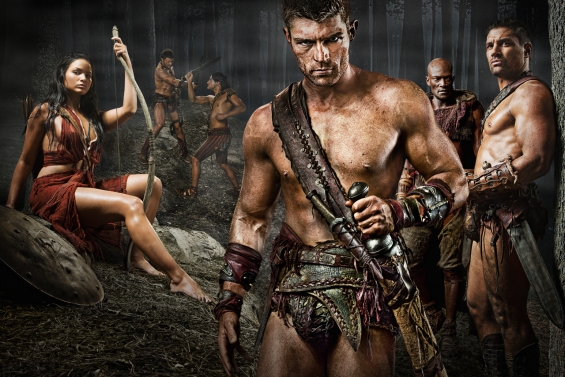
I’ve been enjoying, with a growing admiration, the New Zealand based Spartacus television series. I like it not least for the unique grammar the writers have developed. It’s a kind of a latinized English – mighty and subjectless sentences that are admirable.
The first episode nearly made me dismiss the show entirely. I didn’t like the 300-style effects, the slow motion blood, the constant bobbling of boobs nor the wall to wall green screening. But as the season went on I realized there was more to the show that the jeering mobs, the spectacle, and the nudity. By the final episode I was hooked. That was Spartacus: Blood and Sand. It gave us our hero’s origin story and his various reactions to slavery (denial, acceptance, pride, rebellion). And just as good were a pair of intensely (un)likeable villains, played by a pair of terrrific actors, showcased a cockeyed view of morality, Roman morality. Indeed, that first season began to tell the same story as the 1960 epic film staring Kirk Douglas (which itself was based on an book by Howard Fast). It did so at a slower pace, allowing for more of the historical detail to be played out.
Then there was the prequel series, Spartacus Gods Of The Arena, showing more of the background for the villains and supporting players. That season was supposed to be a stopgap, and it was, telling stories that were themselves only a background for the later seasons. But their own resonances resonated and proved themselves worthy. And now with the second (or third season depending on how you look at it) we have Spartacus: Vengeance, which outlines the beginnings of the bigger story, the latter half of the film version, and the massive slave rebellion that began in the Roman Republic.
the time, the first century BC, approximately 25% of all persons in Italy were slaves. And that’s where the heft of Spartacus comes from. It’s like Battlestar Galactica, but with a grounding in actual history. Spartacus was a real person. As were Crixus and Oenomaus. In these current episodes we see the foundations of the Third Servile War. It is history as drama, but it’s also the history of the opressed, not the rich, not popes, or kings, or robber barons. And this makes Spartacus unique among television programs currently airing.
Here are a couple of excellent old podcasts that made the show work all the better for me:
Mike Duncan’s excellent and long running The History Of Rome podcast covered the Spartacus story back in 2008. It’s still available and still fascinating!
Also in 2008 George Hageman, who had a great podcast called the Military History Podcast, looked at the story of Spartacus from a more battles-based-perspective. Perhaps giving us a peek at the next season?
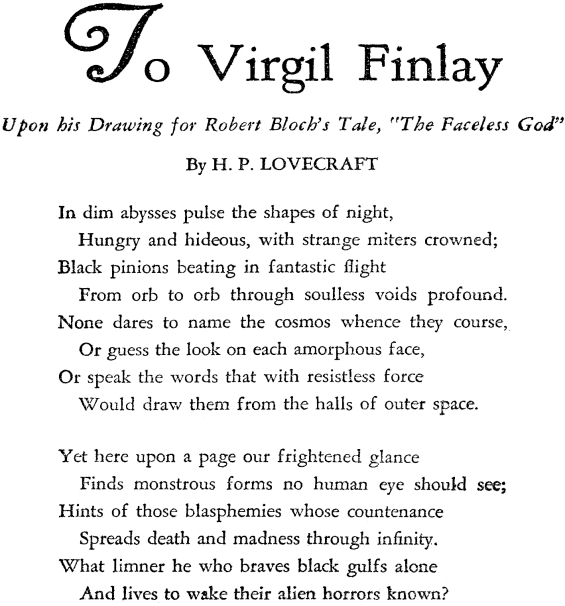
I mentioned to Wayne June that I’d found the above poem in the July 1937 issue of Weird Tales. He hadn’t heard of it before. Then he went and narrated it for us!
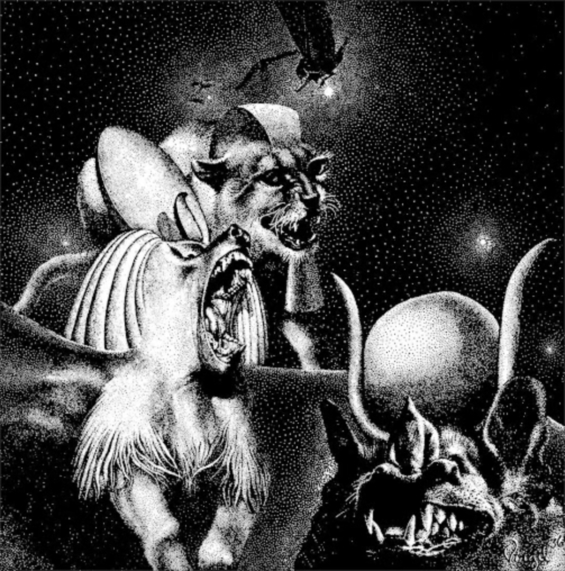
Written in a letter, dated November 30, 1937, it was sent from H.P. Lovecraft to Virgil Finlay. It was inspired by art drawn for a Robert Bloch story, published in the May 1936 issue of Weird Tales, and entitled The Faceless God. Here’s the illustration that inspired it:
Here’s at least part of the letter:
“I could easily scrawl a sonnet to one of your masterpieces if you weren’t too particular about quality. For example –
To Virgil Finlay Upon his Drawing Of Robert Bloch’s Tale “The Faceless God”
By H.P. LOVECRAFT
In dim abysses pulse the shapes of night,
Hungry and hideous, with strange miters crowned;
Black pinions beating in fantastic flight
From orb to orb through soulless voids profound.
None dares to name the cosmos whence they course,
Or guess the look on each amorphous face,
Or speak the words that with resistless force
Would draw them from the halls of outer space.
Yet here upon a page our frightened glance
Finds monstrous forms no human eye should see;
Hints of those blasphemies whose countenance
Spreads death and madness through infinity.
What limnner he who braves black gulfs alone
And lives to wake their alien horrors known?
Well well – quite in the Yuggoth tradition! I’ll have to keep a copy of this to try on one or another of the fan magazines!”



 The Metamorphosis