Review of Escape From New York AUDIO DRAMA

SFFaudio Review

WARNING: This review is a bit of an aberration, it’s a bit more gonzo. It was written this way out of necessity and it is thus perhaps only suitable for those who… ‘heard he was dead.’

BrokenSea Audio Productions - Escape From New York - FAN AUDIO DRAMAEscape From New York
Based on the screenplay by John Carpenter and Nick Castle; Adapted by Bill Hollweg; Performed by a full cast
5 MP3 Files or Podcast – Approx. 2 Hours 15 Minutes [AUDIO DRAMA]
Podcaster: BrokenSea Audio Productions
Podcast: April 2009 – March 2010
Themes: / Crime / Dystopia / Science Fiction / Alternate History / WWIII / Prison / Horror / New York /

Part 1 |MP3| Part 2 |MP3| Part 3 |MP3| Part 4 |MP3| Part 5 |MP3|

In the year 1988 the crime rate in the United States rises 400%. The once great city of New York becomes the one maximum security prison for the entire country. A fifty foot containment wall is erected along the New Jersey shoreline, across the Harlem river, and down along the Brooklyn shoreline. It completely surrounds Manhattan Island. All bridges and waterways are mined. The United States Police Force, like an army, is encamped around the island. The prison’s name: New York Maximum Security Penitentiary, Manhattan Island. There are no guards inside the prison, only prisoners, and the worlds they have made. The year now… 1997.

In the opening crawl (detailed above) we are given a world rife with Science Fiction glory. Escape From New York has a premise full of promise. It is a story pregnant with possibilities – nearly all of which are fulfilled. Escape From New York, my friends, is both a powerful satire of our times and a powerful cinematic experience movie. Now, thanks to the creative love and attention by fans at BrokenSea Audio Productions it is a wondrous audio drama made by fans for fans.

Now hang with me on this. I hope I don’t end up seeming like a crazed french film critic, arguing for the superiority of the second Star Wars trilogy (The Phantom Menace et. al) over the original Star Wars and Empire. Take that first statistic: “the crime rate in the United States rises 400%” – how would that be possible? It certainly wouldn’t match any conventional trend or shift in population growth. Might it then be categorized under some sort of Freakonomics-style explanation? Maybe. But, I think we could argue, quite convincingly, that the only way to increase the crime rate 400% overnight would be to make a whole lot more human behaviors crimes. Disrespecting authority, sharing files with friends, or as the trailer for Escape From L.A. puts it “No talking, no smoking, no littering, no red meat, no freedom of religion. And remember all marriages must be approved by the Department of Health.” So, the world of Escape From New York is really fun. But a world is not enough. You need a plot and a set of characters. As to the latter…

The anti-hero takes many forms but I have a special fondness for Snake Plisken. As in an IMDB grendelkhan says:

“Snake Plissken is the classic anti-hero, ala Clint Eastwood’s Man-with-no-name. Plissken is an ex-soldier turned criminal, recruited/blackmailed into rescuing a hostage president from the prison of New York City. Plissken is a walking ball of anger and a survival machine.”

Indeed, a survival machine who’s been betrayed, lied to shat on by his own government – and he’s got a cool eye-patch, a reverse tramp stamp of a cobra, and a gravelly voice. He is a great character.

“But what of his motivation?” You ask.

Read on…

Plisken, call him Snake, lives in a parallel universe – a USA run like a fun-house-lensed double craptoberfest of moral hypocrisy. If you’ve seen the movie Escape From New York, you’re seeing the 1980 zeitgeist of Manhattan as the epitome of ghettoic urban decay. This fear, that your neighbors are out to get you, the horror that politicians so often rely upon, works great in movies (and in the opening credits to The Equalizer). But this isn’t only a horror story. The prison genre is one of my favorites (check out Animal Factory). Like westerns, these genre stories have a certain set of conventions or constraints that make a story told within those constraints far more satisfying. But neither is Escape From New York just a prison story. For it
is also a quest story, a revenge story, an all out action adventure. There are MacGuffins galore for Plisken to chase after: First up is a world peace conference that is about to end in disaster lest a certain audio cassette is retrieved, then there’s a kidnapped President Of The United States to be rescued, and of course there’s a jet glider (don’t think too hard about that one) as their only escape, but to top it all off there’s a pair of ticking time-bombs in Snake’s body! That’s not just motivation, that’s entertainment folks!

Snake, now motivated, has enough-knock-down-drag-out adventures in the course of just less than 24 hours, so as to numb any thoughy you had about suspending any disbelief. Or as Samuel Taylor Coleridge argued: “[if a writer could infuse a] human interest and a semblance of truth [into a fantastic tale, the reader would suspend judgment concerning the implausibility of the narrative].” If you look at it another way this is the original 24, but with a hard-assed biker veteran saving the USA instead of a Kiefer Sutherland. In the course of just over 2 hours Bill Hollweg and the folks at BSAP have created a faithful and loving tribute to one of 1981’s best movies.

Speaking of 1981, I look forward to hearing BSAP adapt Clash Of The Titans (1981), Excalibur (1981) and Body Heat (1981). They’re already working on a Mad Max II (1981)-inspired series.

Posted by Jesse Willis

Review of The Red Panda Adventures – Season 5

SFFaudio Review

Superhero Audio Drama - The Red Panda Adventures - Season FiveThe Red Panda Adventures – Season 5
By Gregg Taylor; Performed by a full cast
12 MP3 Files via podcast – Approx. 6 Hours [AUDIO DRAMA]
Podcaster: Decoder Ring Theatre
Podcast: 2009 – 2010
Themes: / Fantasy / Superheroes / Mystery / Crime / Nazis / Adventure / Toronto / Magic / Dinosaurs / Telepathy / Amnesia / Airships / Time Travel / Caribbean / New York / Los Angeles / Espionage /

Of the many terrific episodes in this season’s dozen, I think Just Like Clockwork is my overall favourite. It’s an exemplary episode and it’s probably as close as Gregg Taylor will come to adapting a Philip K. Dick story. Events in any given Red Panda show can stand completely alone, but they’ll still often add to a developing story. Like in all the previous seasons villains rise, and fall, rise and then fall again. But sometimes the villains aren’t really villains, and sometimes the heroes are more frightening than we’d like them to be. By the final episode of Season 5 we know were heading towards some serious World War II stories. Here’s my description of each episode:

Episode 1 – “Nightshade” |MP3|
The newly married super-couple, August Fenwick (aka The Red Panda) and Kit Baxter Fenwick (aka The Flying Squirrel), are returning from their honeymoon in Europe. It was a working holiday, but they’re looking forward to a relaxing flight home aboard a Zeppelin. But there is a mysterious passenger aboard, and she has other plans.

Episode 2 – “Flight Of The Bumblebee” |MP3|
Doctor Darius, an earnest rooming-house tenant with a “felonious past,” is having trouble paying his rent. If he can only perfect his “royal jelly” formula … well, let’s just say that not all super-villains, it seems, are motivated by megalomania.

Episode 3 – “The Puzzle Master” |MP3|
A fiendish deathtrap, in the form of a labyrinth, faces any victim of The Puzzle Master. Can RP and FS, with the help of “Doc Rocket”, navigate the maze?

Episode 4 – “Just Like Clockwork” |MP3|
An amnesiac awakes in a dark alley. He meets a young woman, she wants to help, and he’s definitely in need of it. Meanwhile, the Red Panda is hunting for someone or something that poses a threat to someone or something somewhere in Toronto. It’s a mystery! It’s a love story! And it has all got to end either with a bang, a twist, or in tears!

Episode 5 – “Murder Wears A Mask” |MP3|
An old debt must be repaid with a trip to New York City. But unlike in Toronto, NYC has licensed superheroes, the mayor has given them badges and charged them with tracking down one of their own. But two crusaders from the Great White North don’t need no stinkin’ badges.

Episode 6 – “Terror Walks The Night” |MP3|
A cold spell, and a series of suicides isn’t likely to be a dastardly plot. Not during the 1930s depression. But when those suicides coincide with a series of disappearances then a certain something must be up. Right? Add in a snake cult and this looks like a job for a certain married couple, in thermal tights!

Episode 7 – “The Secret City” |MP3|
A dozen unsolved “society” kidnappings are followed up by an “impossible” $80,000 jewel robbery – the police are baffled but Red Panda (and wife) are on the case. Perhaps one jocular simian and his Oliver Twist-like crew are responsible?

Episode 8 – “A Dish Best Served Cold” |MP3|
A stakeout, some “ritualistic nonsense” and a gravelly voiced villain leading a covert cabal of criminal creeps may spell the extermination of both Panda and Squirrel. Can anyone stop The Red Panda Revenge Squad?

Episode 9 – “Song Of The Siren” |MP3|
A Caribbean vacation for Mr. and Mrs. August Fenwick is cut short when a Havana based pleasure boat, reported in distress and then missing, proves irresistible to this power couple. Could a mysterious high pitched cry, and an inconspicuous island deep in the epicenter be signs of a secret testing base? But testing for what? And for whom?

Episode 10 – “Eyes Of The Idol” |MP3|
Late one night in Los Angeles two security guards pass the time by talking. One has a strange tale to tell. It seems there was once an uninhabited island off the coast of India. On that island was an ancient ruined city. In that city was a certain eldritch idol. And that idol had two jewels for eyes, now called the “Eyes of Doom.” Now one of the guards has one. Two means doom.

Episode 11 – “Sins Of The Father” |MP3|
Is it only coincidence when Fenwick Industries is plagued by accidents? After all, accidents happen. But sometimes accidents aren’t actually accidents at all! And a sniper assassin is no kind of accident. Its all very hush hush, but what exactly does the suspicious Colonel Fitzroy know about it?

Episode 12 – “The Great Fall” |MP3|
Set in late August 1939, with a recently signed non-aggression pact between the Third Reich and the Soviet Union. One hero, and her husband, will fight one final holding action in a losing war, the Occult War. Their opponent is Professor Friedrich Von Schlitz and a division of SS scum.

Happy Canada Day everybody, go celebrate with some RED PANDA!

Here’s the podcast feed:

http://decoderring.libsyn.com/rss

Posted by Jesse Willis

Review of Edgar Allan Poe Collection, Volumes 9 and 10

SFFaudio Review

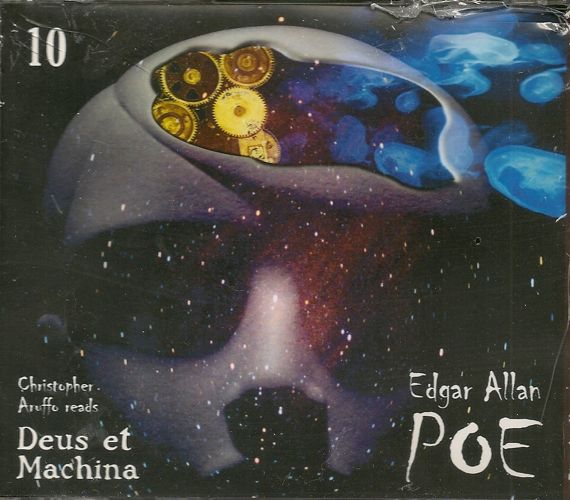
Horror Audiobook - Deus Et Machina by Edgar Allan PoeDeus Et Machina
By Edgar Allan Poe; Read by Christopher Aruffo
4 CDs – 4.5 Hours – [UNABRIDGED]
Publisher: Acoustic Learning
Published: 2009
ISBN: 9780980058161
 
 
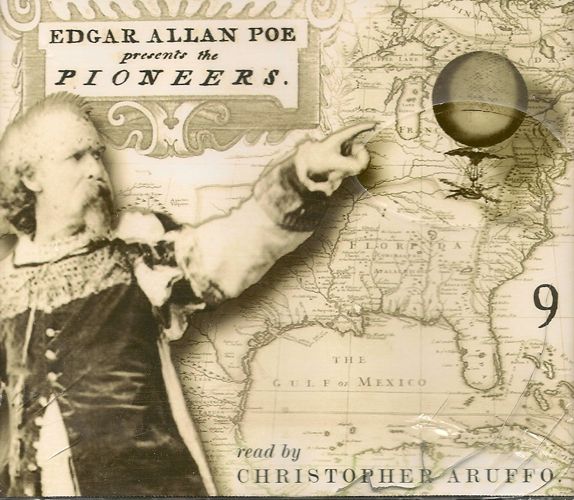
Horror Audiobook - The Pioneers by Edgar Allan PoeThe Pioneers
By Edgar Allan Poe; Read by Christopher Aruffo
6 CDs – 7.5 Hours – [UNABRIDGED]
Publisher: Acoustic Learning
Published: 2009
ISBN: 9780980058154
 
 
Themes: / Horror / Science fiction / Travelogue / Angels / Space Travel / Hot Air Balloons / Alchemy /

We don’t know Poe. The mad success of his weird fiction, combined with the myth of his erratic lifestyle, supply more than 90% of what we think we know about Edgar Allan. But was he really erratic, obsessed and disturbed? And even if he was, is that the whole story?

The folks at poeaudio.com are attempting to tell something close to the whole story of Poe with a series called the Edgar Allan Poe Audiobook Collection. In multiple volumes, the greats of the Poe prose oeuvre—your Rue Morgues, your House of Ushers and your Masques of the Red Death—are read with histrionic flair by actor Christopher Aruffo. Here, however, we review volumes 9 (The Pioneers) and 10 (Deus et Machina) which contain lesser-known works.

These two volumes bring out into the fresh air some of the more musty trunks from the attics of Poe’s cobwebbed mind. They will be of thrilling interest to Poe fans and scholars with completest proclivities. For the rest of us, they are of mixed interest. I’ll let you know which tracks are worth a listen.

Vol. 9, The Pioneers gathers together writings about travel. Some pieces are journalistic descriptions of underappreciated natural scenery in the United States; these are of mild interest. “The Journal of Julius Rodman” purports to be the journal of an explorer who became the first white man to cross the Rocky Mountains; this hoax, written by Poe, is a rather dull read to anyone not fooled by its true origin. (And worse, it stands unfinished.)

“The Balloon-Hoax” does a better job of passing its truth-in-labeling test, and describes the crossing of the Atlantic by a famous aeronaut which never happened. (What’s with all these hoaxes? Orson Wells, eat your heart out.) Again, the lack of any suspense on the part of the present-day audience renders this story uncompelling. Better read the history of these two stories than the stories themselves.

The one really interesting work of volume 9 is “The Unparalleled Adventure of Hans Pfaal”, an novella about a balloon ride—no kidding—from the Earth to the Moon. What shocks me is Poe’s attempt here, before the genre had even been invented, to create a work of hard (yes, I mean it, hard) science fiction. He goes to some length to marshal scientific evidence for the possibility of at least some atmosphere in deep space, based on the existence of zodiacal light, the faint glow that Poe assumed was atmospheric haze, but is scattered by space dust in the ecliptic.

This, and other tech-y details, such as the description of the balloon flipping over when the moon’s gravity becomes predominant, reveals Poe’s endearingly quaint attempt at scientific rigor. He seems to understand that his scenario goes too far, however, because he ends with a plot device meant to give him deniability regarding the seriousness of the story. (It’s that hoax thing again!) “Hans Pfaal” is the one work of this volume I strongly recommend.

Vol. 10, Deus et Machina (that’s a pun in the title, not a typo) focuses on metaphysics and technological advances. This latter emphasis is a real eye-opener. It turns out Poe was a tech geek! I would have never guessed–it’s the one big revelation of the audiobook. If he were alive today, he’d be writing articles for Seed Magazine. Poe loves to report especially on the latest in printing techniques, and, oddly enough, street paving. These articles are short, and very revealing of Poe’s psyche. I recommend them.

His big hobby horse is the advantage of wooden streets, which he seems to prefer especially because they make the urban environment quieter. (Here, he is entirely consistent with our myth of him as the high-strung, hyper-sensitive genius.) Discussing the main objection to using wood as paving material—it rots—he takes seriously concerns about unhealthy “miasmas” rising from the decay, yet he reacts with eye-rolling prose to fears that mercury-based preservatives might have any health impact.

The two headliners of this volume, “The Facts in the case of M. Valdemar” and “Von Kempelen and His Discovery,” are diverting but not especially compelling. “Valdemar” is an exploration of mesmerism interacting with what I can only call the death process. It posits a state of suspended animation which was meant to creep us out, but falls flat. Dude: mesmerism is so over. “Von Kempelen” is less original, and no more plausible: a slight account of the discovery of the laboratory of a successful alchemist. Leave these stories to the serious Poe fans.

Least interesting of all are Poe’s metaphysical musings in the form of angelic dialogs. These are some of the most difficult audio narration I’ve ever heard. (Or tried to hear. Multiple listening left me asking myself: what the heck was that about? What did he just say?)

The one gem in this metaphysical manure pile is The Conversation of Eiros and Charmion. It’s is another angel dialog, but it explores a speculative concept that merges apocalypse (in the Biblical, as well as more modern, sense) with science fiction in a way that must have been very advanced in its time. The surprise ending really shocks, and gives a taste of that old Poe horror we know and love. This one has aged very gracefully and is highly recommended.

Posted by the Fredösphere

Review of Vampire$ by John Steakley

SFFaudio Review

Horror Audiobook - Vampire$ by John SteakleySFFaudio EssentialVampire$
By John Steakley; Read by Tom Weiner
10 CDs – Approx. 10 Hours [UNABRIDGED]
Publisher: Blackstone Audio
Published: 2010
ISBN: 1441727213
Themes: / Horror / Vampires / Religion / Catholicism / Mercenaries /

Suppose there really were vampires. Dark, stalking, destroying. They’d have to be killed, wouldn’t they? Of course they would. But what kind of fools would try to make a living at it? In best-selling author John Steakley’s vampire classic, one tightly knit band of brothers devotes itself to hunting down the monsters that infest the modern world—for a price. An exciting blend of horror and western genres, Vampire$ is a twenty-first-century Ghostbusters with an edge.

I first found out about John Steakley when watching John Carpenter’s Vampire$. The on screen accreditation didn’t mean much then. I figured that what goodness was found in that movie came from Carpenter. And that’s largely true. Their rather different in plot, or at least in the way the plot plots out. Its clear that John Steakey’s novel served more as the inspiration than a blueprint for the movie. The novel feels much richer, much wider, and also much more personal, than Carpenter’s version.

Now, having read this audiobook after John Steakley’s other novel, Armor |READ OUR REVIEW|, I’ve come to the conclusion that Steakley has a pattern or two. First up there’s the name thing. Two names are recycled from Armor (even though they aren’t the same characters). Felix, the gunslinger (and ex-drug trafficker) has an important role in Vampire$. Jack Crow, the lead vampire hunter, is arguably the main protagonist. Armor, which is set maybe a thousand years in the future, has two characters with those exact names too, and they play similar importance in the plot. This is a novel full of twists and turns that even a fan of the movie based on the novel can be surprised by Similarwise, the emotional impact is the primacy of the novel’s power. Sure, this novel has maybe a few innovations I’ve never read before:

1. God is real AND vampires are too.
2. A team of mercenaries, with pure hearts, are taking cash for cleaning up vampire infested towns.
3. The anti-vamp mercs are in league with the Pope and the Vatican, who know and support their efforts.

Narrator Tom Weiner gets to play a fairly wide range of characters. On top of the brooding Felix and the unstoppable Jack Crow he’s got a compassionate pope, an irate Texas sheriff, and a bloodsucking vampire (or two) too.

This is a case where a good movie was based on an very good novel and a good novel got made into a great audiobook. Vampire$ is an emotionally impactive audiobook that surprises with its innovate approach to an old foe: those old evil vampires fucks that you gotta love, and Jack Crow’s gotta hate.

Posted by Jesse Willis

Review of Armor by John Steakley

SFFaudio Review

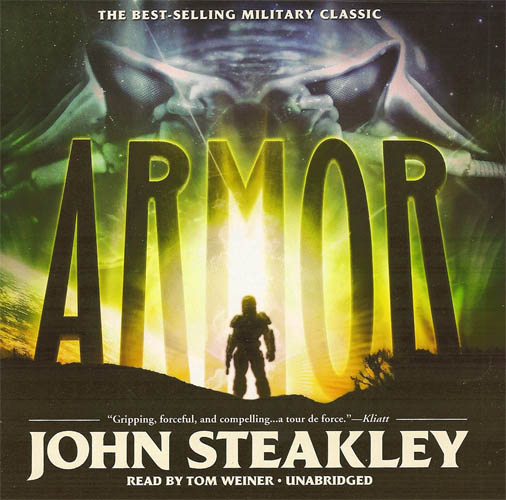
Science Fiction - Armor by John SteakleySFFaudio EssentialArmor
By John Steakley; Read by Tom Weiner
11 CDs – Approx. 13.5 Hours [UNABRIDGED]
Publisher: Blackstone Audio
Published: 2009
ISBN: 1433294834
Themes: / Science Fiction / Military SF / War / Leadership / Drugs / Psychology /

The planet is called Banshee. The air is unbreathable, the water poisonous. It is the home of the most implacable enemies that humanity, in all its interstellar expansion, has ever encountered. Felix is a scout in A-team Two. Highly competent, he is the sole survivor of mission after mission. Yet he is a man consumed by fear and hatred. And he is protected not only by his custom-fitted body armor, the culmination of ten thousand years of the armorers’ craft, but also by an odd being which seems to live with him, a cold killing machine he calls “the Engine.” This best-selling science-fiction classic is a story of the horror, the courage, and the aftermath of combat and also of how strength of spirit can be the greatest armor of all.

Armor is a novel that was clearly inspired by Robert A. Heinlein’s Starship Troopers. It makes use of both powered exoskeletons and insect-like alien enemies. But, instead of being a novel of politics and leadership it is a very different kind of story. At first I thought it was about the psychological effects of violence and the various kinds of heroism that can exist within a person. I was wrong because that isn’t enough. This novel is not one or two things. It isn’t the normal kind of idea driven SF that I so love – instead its ideas flow more through the emotions, eliciting our sympathies. I think this was acomplished by it changing, turning over and over, with it’s many plot surprises.

Early on Felix, our viewpoint character, refers to something he calls an “engine.” I thought he was describing the powered armor of the title. That would make sense, there was a video game called Heavy Gear that, like than Mechwarrior, had men and women doing battle in humanoid shaped tanks. I think it refereed to its “mechs” as “engines.” Felix seems pretty much like any of the other soldiers he’s been dropped with on planet Banshee. Maybe he’s a bit more of a hick – he doesn’t know the names of the winners at the Powered Olympics. Felix makes no waves, volunteers for nothing. He just wants to survive the battle to come. But when the waves of enemy aliens pour out of their holes only Felix survives – and keeps on surviving.

Armor has taut battle scenes, flowing exposition, and realistic dialogue. Had John Steakley written more, and his other novel Vampire$ |READ OUR REVIEW|, I think he’d be a very well known author.

The first third (or so) of the novel follows Felix, a low ranking scout in the invasion of the planet Banshee. Here the action somewhat resembles that of Starship Troopers. Then there is an abrupt switch – the novel seems to lurch into an an entirely different scene and setting. Set a few years later and following in first person perspective this time we meet a man named Jack Crow. Crow is a notorious galactic scoundrel. A well known thief, pirate, and adventurer – his legend is long and precedes him even to an obscure research station on a planet called Sanction. Crow is there to infiltrate, but eventually finds himself involved in an experiment – one that drains him of his half-hearted bravado and changes his life. If were talking about where this novel fits in the SF library I’ll say this: Armor synthesizes the action of Heinlein’s Troopers with the emotional impact of Haldeman’s The Forever War – but still comes off as a completely unique story.

Tom Weiner, who seems to be narrating almost every Blackstone Audio audiobook that I’m listening to these days, delivers his usual letter perfect narration. Weiner animates Felix with a weary melancholy of a veteran scout, brightens audibly with the cocksure Crow, pulls a vocal Tom Bombadil with Louis, feminizes for Lya, and geeks it all up for Holly (a star-struck scientist). That’s pretty impressive. Check this audiobook out!

Posted by Jesse Willis

Review of The Magicians by Lev Grossman

SFFaudio Review

Fantasy Audiobook - The Magicians by Lev GrossmanThe Magicians
By Lev Grossman; Read by Mark Bramhall
17 Hours – [UNABRIDGED]
Publisher: Penguin Audio
Published: 2009
Themes: / Fantasy / Magic / Wizard School / Meta Fiction / Alternate Worlds / Fictional fictional characters /

It would be too easy to simply compare this book to the Harry Potter series. There are obvious elements that are present in both, specifically the magic school. But Lev tells a story that only uses that as a means to bring the characters together and move onto the main story, which really kicks off once they graduate.

The main character, Quentin Coldwater, is a very bright high school kid who is busy applying to Universities. Despite his academic excellence, Quentin struggles to connect with the real world. He has a fascination with a series of fantasy books about a land called Fillory. In those books he can see a purpose to existence that he can’t find in his own life.

One university, Brakebills Academy, takes an interest in him and gives him an exam. It is during this exam that Quentin discovers that he is one of those few who have a talent for magic. He is enrolled in the school and goes from the smartest kid in his school to about average in his year. He pushes himself to excel and eventually finds that he is being skipped ahead a year. He makes friends and finds love. But his time there is not without upset. Eventually he and his friends graduate and we are not even half-way through the book.

Struggling to decide what to do with their lives, Quentin and his college friends drift through life for a short time. The world of the wizards isn’t challenging to them. This secret culture looks after their own, keeping a low profile and pretty much doing whatever interests them. Lacking direction and guidance Quentin and his friends have too much money and no responsibilities. They party. Drink, drugs and sex. But then they discover something that even their tutors didn’t know about. Fillory, the land from Quentin’s books, is real and they have a way to get there. They gear up and mount a small expedition to find adventure and fill the hole in their lives. They go into this with a tactics and planning of a group of fantasy role-players. They see everything in terms of the stories of Fillory. They expect quests will turn up to tell them what they need to do, and indeed one does.

The parallels between Fillory and Narnia are much stronger than those with the Harry Potter series, and pervades through much more of the novel. In the Fillory novels, a family of children, the Chatwins, from rural England in the early 1900’s keep finding secret paths into Fillory where they have adventures, defeat enemies to the land and return home as if no time has passed. While there isn’t a Lion god, there is Ember and Umber the twin Ram gods, who clean up any remaining mess and sends the Chatwin children back home. The events and characters in these books are real and have a serious impact on Quentin and his friends as they try to figure out what really happened in Fillory. There are hints and clues throughout that a second reading would put into a clearer context after knowing the ending.

The narrator, Mark Bramhall, gives an excellent performance, keeping most of the voices distinct.

Although this is described as a coming of age novel, I would hesitate to recommend it to younger teen readers. There are several strong uses of offensive language, all fitting with the characters and their situation. Definitely not aimed at the same primary market Harry Potter was.

Posted by Paul [W] Campbell