
The SFFaudio Podcast #369 – READALONG: The First Men In The Moon by H.G. Wells

Podcast

The SFFaudio PodcastThe SFFaudio Podcast #369 – Jesse and Juliane Kunzendorf discuss The First Men In The Moon by H.G. Wells.

Talked about on today’s show:
1900, 1901, dystopia, Looking Backward by Edward Bellamy, The Sleeper Awakes, “on the moon” vs. “in the moon”, Neil Armstrong and Buzz Aldrin, the 1964 movie, the framing story, a multinational crew, technical issues, the 2010 adaptation, putting a frame around the story, a Moon Landing fair, a grumpy old man, a kinematoscope, the “real” first Moon landing, Bedford, differences, no plants on the Moon, drugged up, introducing a woman, men acting stupid, a comedy, how Bedford and Cavor meet, passive aggressive, the three workman, almost comedic, a sinister undertone, The War Of The Worlds in reverse, a disappointing ending for the movie, a really strong ending for the book, to make it a family movie, light and amusing vs sinister and serious, coming from Elizabeth Moon’s Trading In Danger, Wells’ language, The Invisible Man, explaining some scientific principle, analogies, maybe there is something like cavorite, the detection of gravitational waves, glass, bromine solution, transparent to gravity, a dodecahedron, a glass sphere, louvered blinds of cavorite, at the bottom of an ocean of air, shooting all of the Earth’s atmosphere into space, genius, genius!, flying to the Moon, the spaceship as an eye, driving school, always look where you want to go, how eyes work, why the movies have been forgotten, the last transmission, the 2010 movie ending, symmetry, what Wells is saying with this book, the last word, ambiguity, the loneliness of humanity, lost, he’s not his identity, what Cavor is doing in those transmissions, utopia/dystopia, wrestling with our purpose as human beings on the surface of the Earth, one definition of work: activity on or near the Earth’s surface, astronauts and miners, the great mind, hive mind, so much Science Fiction afterwards, how life works, ants, on the topic of war, Bedford is the classical monster character, The Country Of The Blind, crystallized in the 1964 movie, hiding from his debts, Blake, once you start suspecting this guy, some of that story is true, putting a good spin on it, subtlety, gold chains, the Selenite’s head broke just like an eggshell, turning the moon into another colony, the whole history of humanity, fighting over useless things, a mirror in front of humanity, the Native Americans, scientific naivety, are we gonna reform our ways?, WWI, giving ultimatums, honor, respect to warriors, (in vino veritas), the surplus population, later SF, Brave New World by Aldous Huxley, the latter half of this book, the brain, the dictionary, the one who likes to draw, one who is really good at metaphor, off in lala land thinking lala thoughts, the communication specialist, the one who knows all the stuff, the illustrations, the alphas the betas the gammas the deltas, the three worker specialists, the joiner, the earth worker, the metal worker, the name Cavor – caver?, it sounds good, caver vs. cavor, the Lord Bedford, claiming the Moon for the Queen, the BBC audio drama, a very serious book, the Mooncalves, the word “mooncalf”, “abortive fetus of a cow or other farm animal”, all sorts of resonances, a scene that makes vegetarians, the reading material that Bedord brings: TidBits (magazine), selling fishknives, Cavor brings the complete works of William Shakespeare, another connection to Brave New World, The Tempest, a story of colonialism, the only native occupant is Caliban, he’s funny and wise in his untutored way, one of the insults that Prospero throws at , the title of Brave New World, an ironic usage, the one slip-up that Wells mad that Huxley picks-up, Bedford’s play, it would work as a play, act 1, act 2, act 3, the flight as an interlude, trying to find the sphere again, two hours left to go?, another interlude in space, an epilogue, how you would stage it, the gold that he brings back from the Moon, living in Italy, published in The Strand, very meta, you can really see the staging, Cosmopolitan, November 1900 first then The Strand, December 1900, serialized as he wrote it, the end of the Cosmopolitan serialization, an elaborate suicide, a dream, Moon gold, a most extraordinary communication, alive in the Moon, is he hoaxing me here?, The War Of The World radio drama, how the spaceship disappears, the boy who disappears into space, Bedford In Infinite Space, at least 10 days, something weird about time, Einsteinian relativity, time works differently when you travel, criticism of this book, C.S. Lewis’ objections, one world government, new world order, a fascistic totalitarian society, lets look at this, other writers do their own version, a sign of a good book, taking the essence, other interpretations, audio drama as a soporific, two dreams, dreaming the ending of The First Men In The Moon, that’s exactly what happened!, my unconscious or semi-consciousness heard it, such a great ending, left for dead, did Bedford feel guilty for leaving Cavor on the Moon?, not the kind of person to have self-doubts, not very charitable, how it actually went, the best possible spin, this is just the way he is as a human, humans are terrible, his nature, Jesse’s secret, The War Of The Worlds, one of Juliane’s first SF books, the illustrations, reading it with the old serialized magazines, chapter endings, what a great end, did Wells have an influence on the illustrations, how adaptations will always take away the plants on the Moon, The Lost World by Sir Arthur Conan Doyle, seeing dinosaurs with skin, a resultant mistake, dinosaurs in popular culture arent shown with feathers, Jurassic Park and Jurassic World, a false picture of the reality, we’ll never be able to get passed this point, daylight savings time, were stuck unable to shift out of a system that doesn’t work, we’re stuck, were stuck with war, when Bedford is completely alone he loses his particular niche, if you zoom out, we’re nothing, what are we that we have to fight each other, we’re all stuck here with gravity, why those interludes are so important to the book.

Marvel Classics - The First Men In The Moon by H.G. Wells

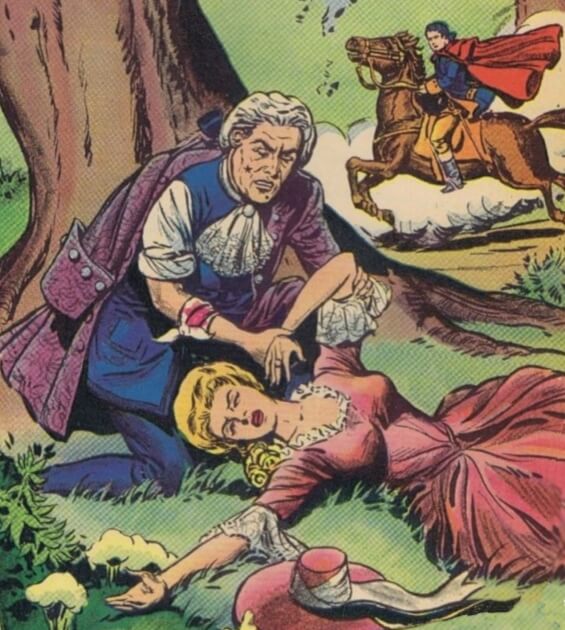
from Charlton Comics - Ghost Manor, Issue 23, 1975

The First Men In The Moon by H.G. Wells - art by Bob Eggleton

The First Men In The Moon by H.G. Wells - The Mooncalves - art by Bob Eggleton

The First Men In The Moon by H.G. Wells - The Selenites illustrated by Bob Eggleton

Posted by Jesse Willis

Reading, Short And Deep #014 – The Library Of Babel by Jorge Luis Borges

Podcast

Reading, Short And DeepReading, Short And Deep #014

Eric S. Rabkin and Jesse Willis discuss The Library Of Babel by Jorge Luis Borges.

The Library Of Babel was first published in English in Encounter, July 1962.

Here’s a link to the PDF of the story.

Posted by Scott D. Danielson

The SFFaudio Podcast #368 – AUDIOBOOK: The First Men In The Moon by H.G. Wells

Podcast
H.G. Wells' The First Men In The Moon
The SFFaudio PodcastThe SFFaudio Podcast #368 – The First Men In The Moon by H.G. Wells, read by Mark F. Smith.

This UNABRIDGED AUDIOBOOK (7 hours 50 minutes) comes to us courtesy of LibriVox.org. The First Men In The Moon was first serialized in Cosmopolitan, November 1900 to April 1901.

The next SFFaudio Podcast will feature our discussion of it!

Cosmopolitan Magazine (Nov., 1900 - June, 1901). H. G. Wells' "The First Men in the Moon."  illustrations by E. Hering

Cosmopolitan Magazine (Nov., 1900 - June, 1901). H. G. Wells' "The First Men in the Moon."  illustrations by E. Hering

Cosmopolitan Magazine (Nov., 1900 - June, 1901). H. G. Wells' "The First Men in the Moon."  illustrations by E. Hering

Cosmopolitan Magazine (Nov., 1900 - June, 1901). H. G. Wells' "The First Men in the Moon."  illustrations by E. Hering

Cosmopolitan Magazine (Nov., 1900 - June, 1901). H. G. Wells' "The First Men in the Moon."  illustrations by E. Hering

Cosmopolitan Magazine (Nov., 1900 - June, 1901). H. G. Wells' "The First Men in the Moon."  illustrations by E. Hering

Cosmopolitan Magazine (Nov., 1900 - June, 1901). H. G. Wells' "The First Men in the Moon."  illustrations by E. Hering

Cosmopolitan Magazine (Nov., 1900 - June, 1901). H. G. Wells' "The First Men in the Moon."  illustrations by E. Hering

Cosmopolitan Magazine (Nov., 1900 - June, 1901). H. G. Wells' "The First Men in the Moon."  illustrations by E. Hering

Cosmopolitan Magazine (Nov., 1900 - June, 1901). H. G. Wells' "The First Men in the Moon."  illustrations by E. Hering

Cosmopolitan Magazine (Nov., 1900 - June, 1901). H. G. Wells' "The First Men in the Moon."  illustrations by E. Hering

Cosmopolitan Magazine (Nov., 1900 - June, 1901). H. G. Wells' "The First Men in the Moon."  illustrations by E. Hering

Cosmopolitan Magazine (Nov., 1900 - June, 1901). H. G. Wells' "The First Men in the Moon."  illustrations by E. Hering

Cosmopolitan Magazine (Nov., 1900 - June, 1901). H. G. Wells' "The First Men in the Moon."  illustrations by E. Hering

Cosmopolitan Magazine (Nov., 1900 - June, 1901). H. G. Wells' "The First Men in the Moon."  illustrations by E. Hering

Cosmopolitan Magazine (Nov., 1900 - June, 1901). H. G. Wells' "The First Men in the Moon."  illustrations by E. Hering

Cosmopolitan Magazine (Nov., 1900 - June, 1901). H. G. Wells' "The First Men in the Moon."  illustrations by E. Hering

Cosmopolitan Magazine (Nov., 1900 - June, 1901). H. G. Wells' "The First Men in the Moon."  illustrations by E. Hering

Cosmopolitan Magazine (Nov., 1900 - June, 1901). H. G. Wells' "The First Men in the Moon."  illustrations by E. Hering

Cosmopolitan Magazine (Nov., 1900 - June, 1901). H. G. Wells' "The First Men in the Moon."  illustrations by E. Hering

Cosmopolitan Magazine (Nov., 1900 - June, 1901). H. G. Wells' "The First Men in the Moon."  illustrations by E. Hering

Posted by Jesse Willis

Reading, Short And Deep #013 – The Dog And The Horse by Voltaire

Podcast

Reading, Short And DeepReading, Short And Deep #013

Eric S. Rabkin and Jesse Willis discuss the Dog And The Horse by Voltaire.

The Dog And The Horse was first published as a part of the novel, Zadig, or The Book of Fate, in 1747.

Here’s a link to the PDF of the story.

Posted by Scott D. Danielson

August Derleth reviewed and praised The Outsider And Others (which he edited) under a pseudonym

SFFaudio News

In my constant researches for the Public Domain PDF Page I’ve just come across this seemingly heretofore unknown factoid about August Derleth:

He reviewed, and praised, his own book under a pseudonym.

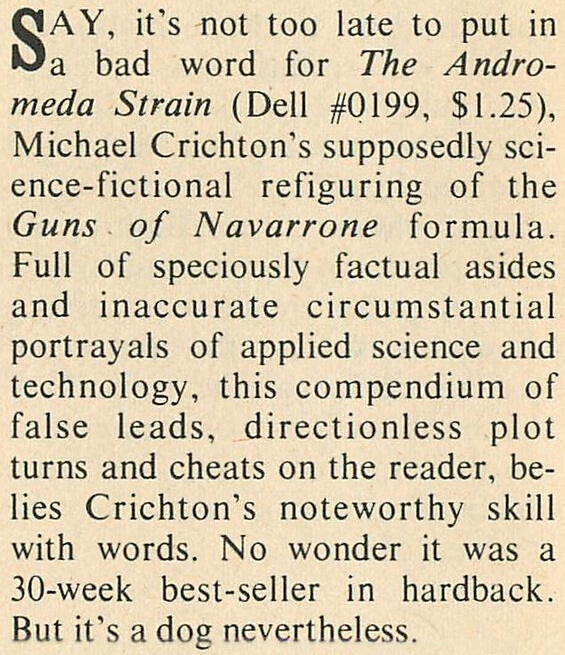
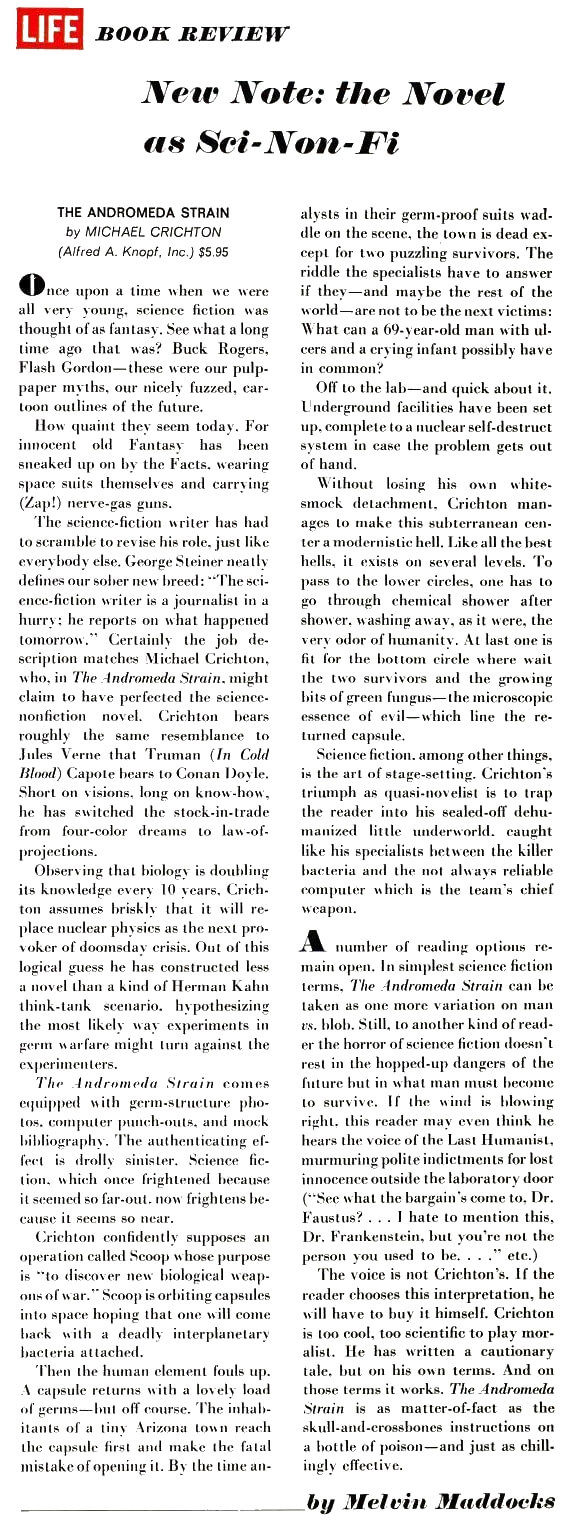
Here is the review from page 126 of Thrilling Wonder Stories, April 1940:

Thrilling Wonder Stories, April 1940 - Page 126 - August Derleth reviews his own book

The name “Eldon Heath” is an obscure pseudonym for Derleth, who used several, it turns up only two entries on ISFDB.org, one for the review above, and the other for a story entitled “Joliper’s Gift” (published in Strange Stories, April 1940).

Note in the original publication of “Joliper’s Gift” that Heath is author of “The Missing, A Visit From The Stars, Etc.”

Joliper's Gift by Eldon Heath - from Strange Stories, April 1940

I could find no evidence that such stories as “The Missing” of “A Visit From The Stars” were ever published.

Yet, in combing through the copyright records, under “DERLETH, AUGUST. – 1940” I came across this renewal claim:

“R413659. Joliper’s gift. (In Strange stories, Apr. 1940) © 1Feb40”

In the review of his book Derleth calls himself ‘a popular writer in his own right’ and gives himself a deserving “big hand” for the “perfect job” he has done.

Using pseudonyms in pulps was a very common practice, but I’ve never before seen an author reviewing his own book under a pseudonym.

Posted by Jesse Willis

The SFFaudio Podcast #367 – READALONG: The Prince And the Pauper by Mark Twain

Podcast

The SFFaudio PodcastThe SFFaudio Podcast #367 – Jesse, Julie Davis, and Maissa talk about The Prince And the Pauper by Mark Twain.

Talked about on today’s show:
1881, 1882, Julie’s Mark Twain obsession, realistic fiction, children’s literature, reading with teenagers, old books teach you their vocabulary, quasi-historical fiction, Tom Sawyer, something classier, Sir Walter Scott, like Dickens-lite, sooo Dickens!, Huckleberry Finn, young people of all ages, anything public domain was marketed for children, appealing to children, sympathetic characters, lacking wry cynicism, less biting, he’s an anglophile, making points, how do we treat people, trading places, The Pickwick Papers, Nicholas Nickleby, Bleak House, the progress of an author, everybody knows the story, enters the popular culture like a fable, a meta-issue, where’s the science fiction and the fantasy?, Jesse’s thinking, The Prisoner Of Zenda, Ruritania, inspired by, precursors, an immediate classic, that Ringo (1974) movie, Carrie Fisher, that Monty Python thing, so much fun, and his talentless half brother, Vincent Price, John Ritter, chock-full of fun, The Man In The Iron Mask by Alexandre Dumas, Double Star by Robert A. Heinlein, this phenomenon, replacing the king, Citizen Of The Galaxy, the influence of Twain is in SF, Three Men In A Boat by Jerome K. Jerome, Great Expectations, David Copperfield, the Wishbone adaptation, way down into the culture, Dave (with Kevin Kline and Sigourney Weaver), Moon Over Parador with Richard Dreyfuss, in that continuum, A Connecticut Yankee In King Arthur’s Court, research and divergence, footnotes, Edward, Lady Jane Gray, Star Trek: Mirror, Mirror, parrallel worlds, Freaky Friday, so many avenues, Big with Tom Hanks, swapped identity, genre defining, what it says on the tin, parody versions, The Monkees, 25 minutes of ridiculous, The Monkees a fake version of The Beatles, Twain’s Joan Of Arc book, incredibly well plotted, dreaming the life of a king, Tom is the king of Offal Court, crazy, King of the Gamecocks and King Foofoo, Miles Hendon’s story is parallel to Prince Edward’s plot, it goes really deep, Tom’s two sisters, Nan and Bess, Mary and Elizabeth, everybody gets to be king or queen for a day, queen for nine days, Mary’s short reign, Elizabeth’s long reign, a lot of pain and torture and unjust punishment and superstition, the psychological irony, every king should live by the laws of his subjects, the Blue Laws, pardonings, wise judgement, chapter 22/23, not a joke book, situational humour, doing the Robin Hood thing, the Ruffler, a beggar who refuses to beg, threatening the tinker with a soldering iron, a thief who won’t steal, putting a clime on him, a cant term for an ulcer, a slatternly woman and a diseased baby on the side of the road, an here’s the recipe, the mother daughter witches, witchcraft, the wisdom of Solomon from the mouths of babes, foolishly wise, native common sense, hath it always this dread effect?, a parallel scene, when Edward is in gaol as Tom, the crime of being Baptists, who burned?, burned at the stake, Tom had watched a procession, crisp flesh, some gruesome stuff, not a satire, straightforward historical (romanticized), Errol Flynn as Miles Hendon in the 1937 movie, the Oliver Reed movie adaptation (1977), tainted by Ringo, too heavy, Ernest Borgnine, Rachel Welch, interchangeable beauty, you monster!, he’s Errol Flynn-ing it all over the place, a heavy focus on the Miles story, Charlton Heston as Henry VIII, he was every historical male figure, all the time travelers form the 1970s movies, Miles’ brother is sent to the American colonies and becomes a politician, making it more satirical, the 1977 adaptation is very faithful to the novel, comedy, Edith, the children’s hospital, when Twain visited Europe he bought a lot of books, after his ordeal, teachings out of books, The Merchant Of Venice, reading the classics, I’ll make a classic tale, as if it has been with us forever, absolutely historical fiction and yet…, a Disney version, a timeless story, remember the humanity of the people around us, applying your humanity, anchor in reality, the kids, forgoing the crazy laws, I’m going to honor children always, meta-stuff, a short reign, the romantic relationship, she spurns Tom and marries a rich old Earl, Romeo And Juliet, twin brother from another mother, Ivanhoe, close enough, about as far away from SFF as Jesse will go, Moby Dick, Wrath Of Khan, William Shatner is the white whale, Patrick Stewart, the whipping boy, “to cheapen miracles by wasteful repetition”, he’s going places, what do you do with your time?, the Prince’s eyes flashed, speak on, we wade and swim in the canals, reality was so dreary, be careful what you wish for, the grass is always greener, delicious irony, adults child relationships, Mark Twain’s relationship with Dorothy Quick, on a trans-Atlantic crossing, a Disney movie about their relationship, Dorothy Quick was a Weird Tales poet, a New York Times obituary for March 16th, 1962:

DOROTHY QUICK, POET AND AUTHOR
Mystery Writer Dies – Was Friend of Mark Twain

Mrs. Dorothy Quick Mayer of 880 Park Avenue and East Hampton, L.I., a writer who treasured a childhood friendship with Mark Twain, died yesterday at her home here after a long illness.

Miss Quick was a girl of 11 in 1907 when she met the famous author on an Atlantic crossing. She was returning to Plainfield, N.J., from Europe with her parents, the late Mr. and Mrs. Henry Quick.

Recognizing Twain (Samuel L. Clemens) by his wavy hair and white suit, she walked around and around the deck, passing very slowly by his chair each time, until he finally came over and introduced himself.

“It was the beginning of a friendship that was to last until the very day of his death,” [1910] she recalled in 1954.

After the voyage she received a telegram from Twain asking whether she would prefer as a birthday present “one elephant or 10,000 monkeys.” She replied that she would prefer his books – which he sent her, along with a tiny white elephant.

Her memories of Mark Twain were published last year by the University of Oklahoma Press under the title “Enchantment.”

Miss Quick was married in 1925 to John Adams Mayer, who died in 1940. She continued to write under her maiden name. Her collected poems were published by the University Press, Washington. She also wrote mystery stories and contributed a weekly column for many years to newspapers in East Hampton and Riverhead, L.I.

Since 1960 Miss Quick had been honorary president of the Mark Twain Association of New York. Her other literary memberships included the P.E.N. Club, Pen and Brush, the National League of American Penwomen, the Brooklyn Poetry Circle, Women Poets of New York, and the Society of Composers, Artists and Authors.

over-sexualizing everything, Jack London and H.G. Wells, Nathaniel Hawthorne and Herman Melville, Wilkie Collins and Charles Dickens, Edgar Allan Poe and Charles Dickens, a persuasive fan letter, Poe and Dickens had a private lunch, my pet raven, the end of Barnaby Rudge, a can of leaded paint, Poe had been struggling with a particular poem: The Raven, Dickens is the epitome of success, his reviews, there’s a reason why, put that in, worth a reread!

Mark Twain and Dorothy Quick

Posted by Jesse Willis