Review of We’re Alive: A Story of Survival – Season One

SFFaudio Review

Blackstone Audio - We're Alive: A Story of Survival - the First SeasonWe’re Alive: A Story of Survival – Season One
By Kc Waylan and Shane Salk; Performed by a full cast
12 CDs – Approx. 14.2 Hours [AUDIO DRAMA]
Publisher: Blackstone Audio
Published: 2011
ISBN: 9781455114580
Themes: / Horror / Zombies / Post-Apocalypse / Los Angeles /

This exciting audio drama is based on an immensely popular podcast that has received hundreds of positive reviews and has had over four million downloads—and counting.

Uneven and slightly amateurish, but also fun, mildly addictive and highly listenable, We’re Alive: A Story of Survival, the first season (Modern Myth Productions, LLC) should appeal to fans of the zombie/post-apocalyptic/survivalist genres.

Unlike most audiobooks, which typically feature a single narrator reading text in unadorned style, We’re Alive is an audio drama. It employs a large cast, incorporates a wide range of sound effects, and is scripted in a way that caters to the ear, emphasizing dialogue and interpersonal relationships over lengthy descriptive narrative. Our minds are left to fill in the gory details, and it works. It’s simultaneously fresh and retro, reminding me of what the old radio shows of yesteryear must have been like. We’re Alive was launched and remains an ongoing podcast (check it out HERE) but you can obtain the entire first two seasons from Blackstone Audio, Inc.

The storyline is about what you’d expect: A zombie apocalypse strikes without warning, quickly overwhelming most of the population. Three young Army reservists (Michael, Angel, and Saul) commandeer a humvee and seek out survivors in downtown Los Angeles. After rescuing a couple civilians they find an apartment building, clear it of zombies, and begin to fortify it, rigging it up with a generator and stocking up on food, water, and ammunition. More survivors eventually trickle in and/or are rescued by the group, including Burt, an aging Vietnam veteran who acts and sounds a lot like Clint Eastwood. Soon there’s a small but thriving community holed up in the apartment building.

We’re Alive has a few problems. I had a hard time distinguishing between some of the women. The men are generally given more agency and are more fully developed characters. There are some writing weaknesses, including characters that bicker and bitch over trifles and at times seem more concerned with saving face than staying alive. This creates plenty of distractions and gets the group in more trouble than it should, at first with zombies and later with a greedy, nasty group of human convicts (the “Mallers”). Also, a few of the characters’ skill-sets seem a bit too fortuitous (one of the women is a pro archer — rather convenient).

The story also uses zombies that break sharply with most undead traditions. Some have a rudimentary intelligence, at least one can talk and strategize, and at times they are directed by some unseen controlling force to capture and carry away their victims rather than consuming them. While I’m not a strict zombie purist, these traits lessen their scare factor and weakened them as a threat. Zombies are at their best when they’re relentless, merciless eating machines; take away that characteristic and they become caricatures. There’s even some species of large zombie monsters lurking in the background, though they’re not described well and it’s impossible at least through season one to determine if they’re a large zombified animal or a creature of pure fancy. In short, if you’re a zombie purist, or expecting undead in the Romero mold or new Dawn Of The Dead style, be prepared for a lot of “rule breaking.”

But We’re Alive also has plenty of good things going on, enough to give it my recommendation. Most of the characters grow on you and the voice acting is reasonably good. There are enough plot twists and turns to keep you guessing. There’s a hardly a dull moment—when not fighting the undead or the Mallers, the survivors are fighting amongst themselves, often chafing against Michael’s inflexible never-question-my-orders military style of leadership. Ex-lawyers and teachers find themselves growing vegetables on the rooftop, serving as quartermasters, or standing guard duty, with inevitable grousing and dereliction of duties. As the survivors’ supplies start to dwindle, they’re forced to take increasingly dangerous runs for food and ammo into the “hot zone” of zombie and looter-infested downtown L.A. There’s also a larger backstory about the hows and whys of the zombie outbreak that’s still unrevealed but will undoubtedly be a part of latter seasons.

While it lacks the moral/philosophical questions and hardcore grittiness of The Walking Dead, We’re Alive is nevertheless fun stuff and I’m looking forward to listening to season two.

Posted by Brian Murphy

Hypnobobs: The Origins Of ALIEN

SFFaudio Online Audio

Hypnobobs #80 - The Origins Of ALIENA recent Hypnobobs podcast features two guests from The Black Dog podcast talking with host Jim Moon about the origins of ALIEN. It’s a lengthy discussion, running 2.5 hours, touching on the many filmic inspirations for the 1979 film written by Dan O’Bannon.

|MP3|

Podcast feed: http://feeds.feedburner.com/Hypnobobs

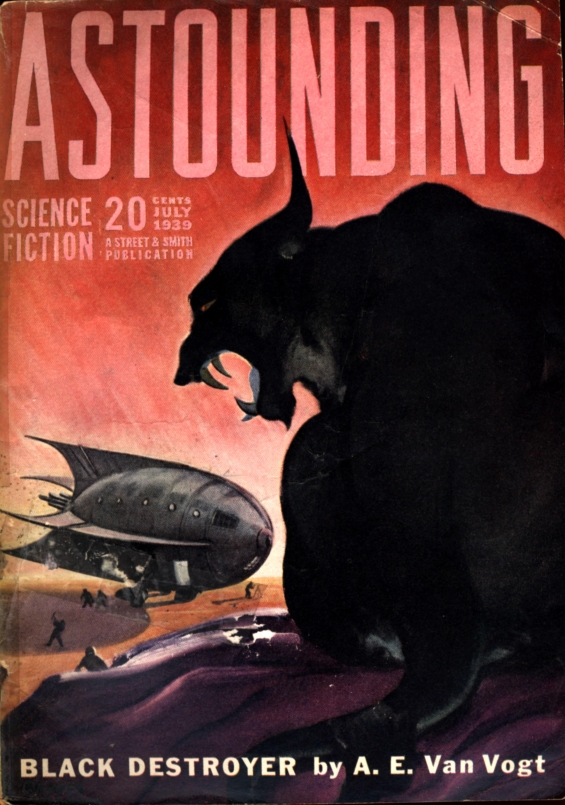
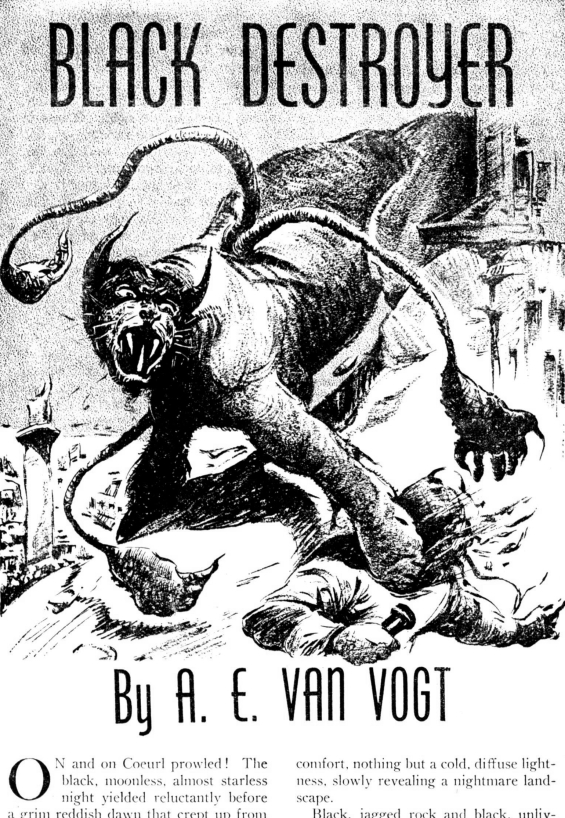
This is the perfect excuse for me to point out something that Moon and guests didn’t – namely the original literary source, perhaps, for all the films they mention and, perhaps, for ALIEN itself. It is a 1939 short story by A.E. van Vogt entitled Black Destroyer (later assembled into a part of a fix-up novel entitled The Voyage Of The Space Beagle).

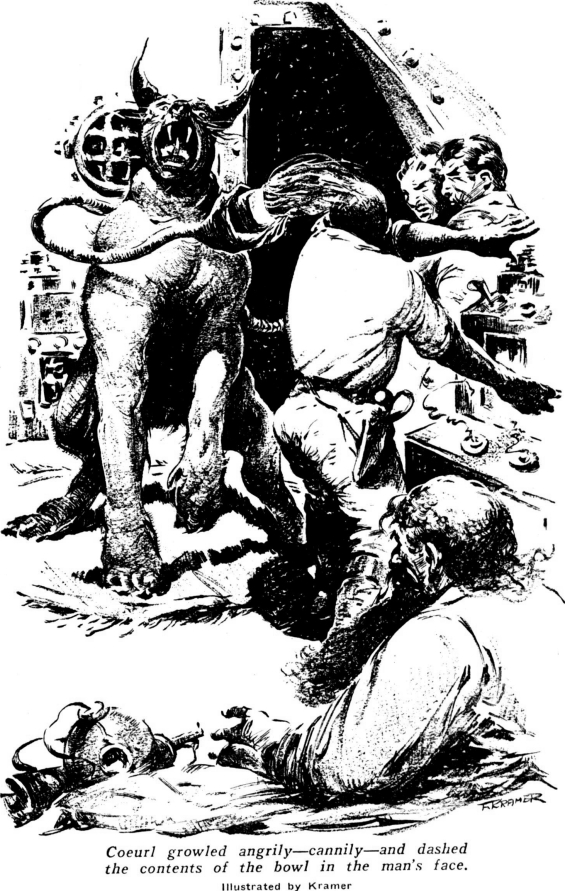
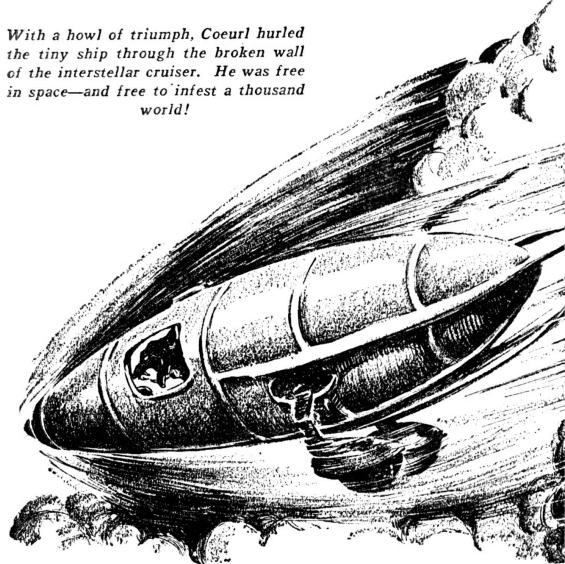
Check out the original art:

Astounding, July 1939 - Black Destroyer by A.E. van Vogt
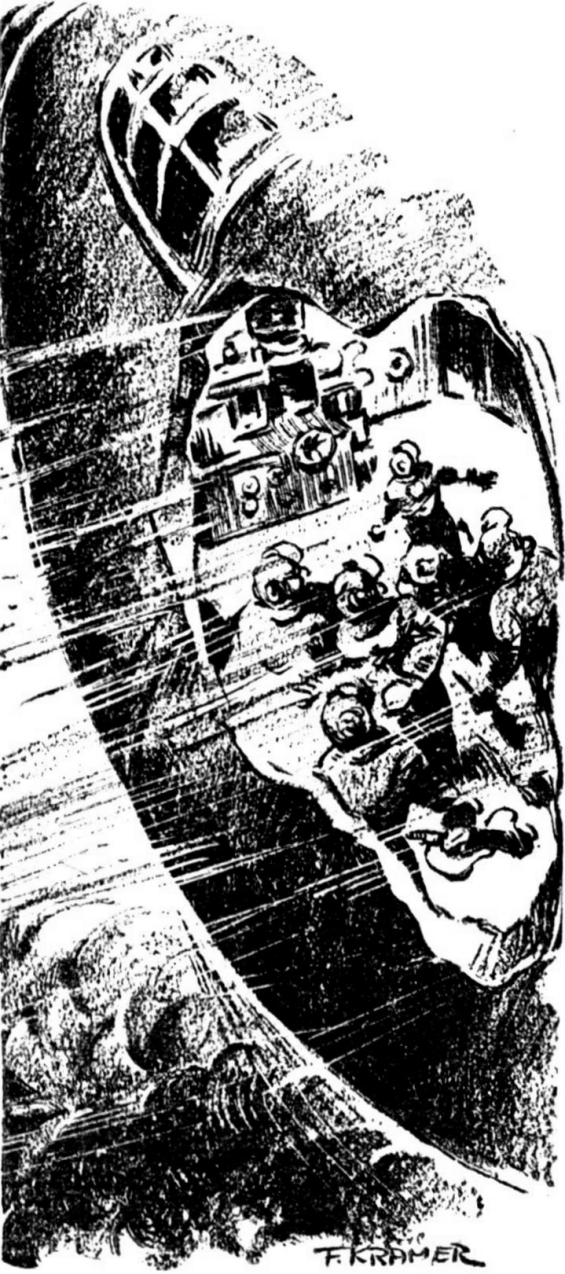
Black Destroyer by A.E. van Vogt - illustrated by Kramer

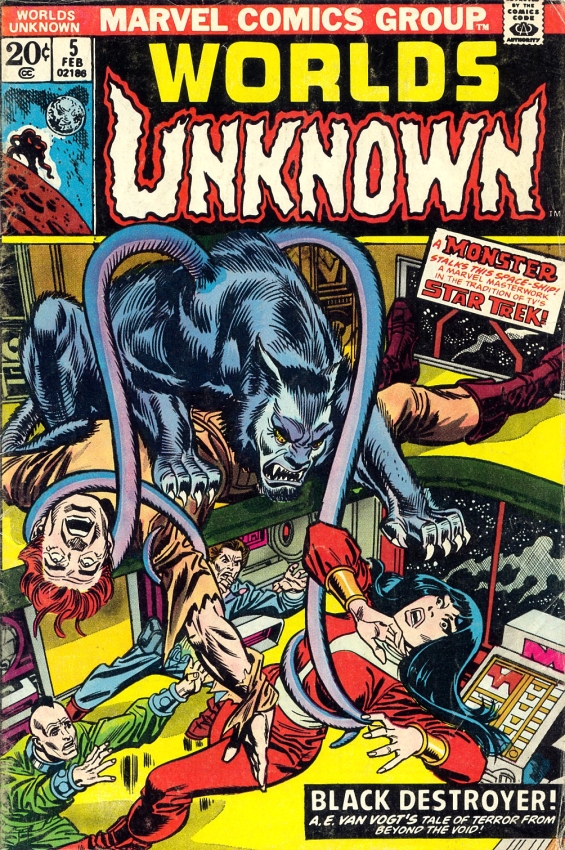
In 1974, Marvel Comics’s Worlds Unknown did an adaptation, with a cover illustrated by Gil Kane:
Worlds Unknown #5 - Black Destroyer (COMICS adaptation)

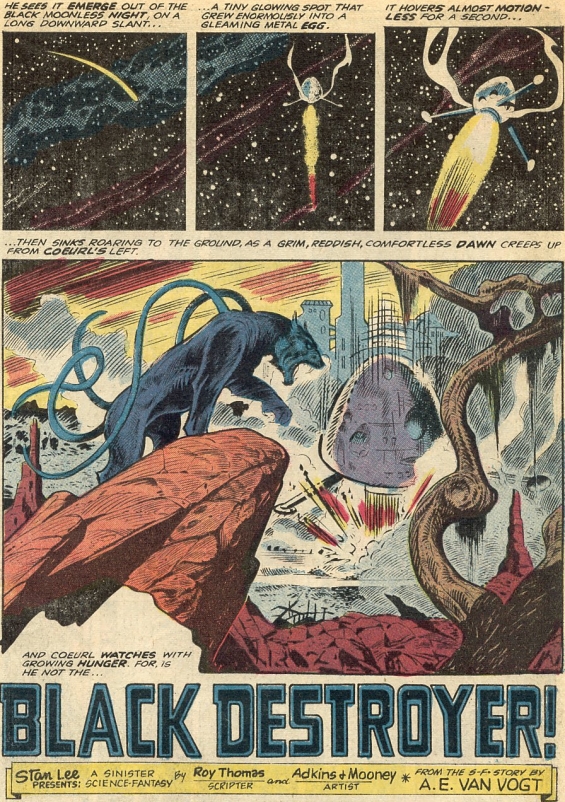
Black Destroyer adaptation - adapted by Roy Thomas with interior art by Dan Adkins and Jim Mooney

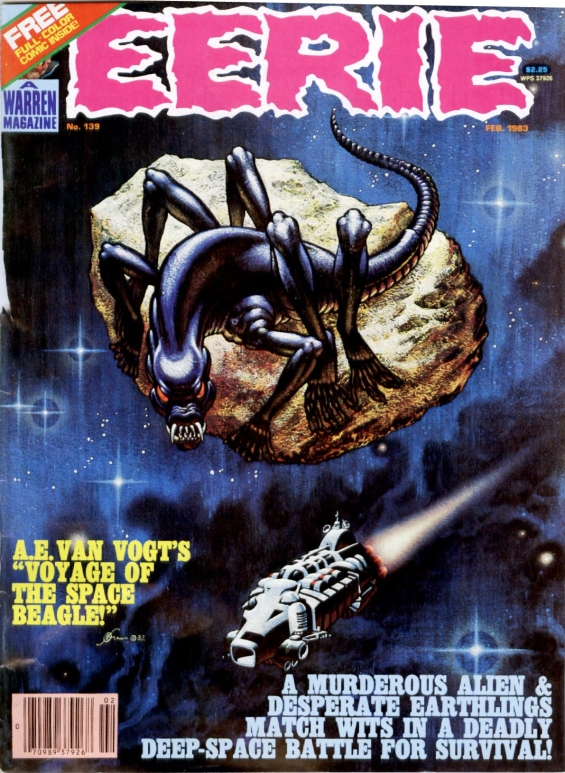
And then, a couple years after ALIEN was released, somebody at EERIE magazine made the connection:
EERIE, February 1983 - adaptation of The Voyage Of The Space Beagle - cover art by Kelly Freas

Posted by Jesse Willis

LibriVox: The Cats Of Ulthar by H.P. Lovecraft

SFFaudio Online Audio

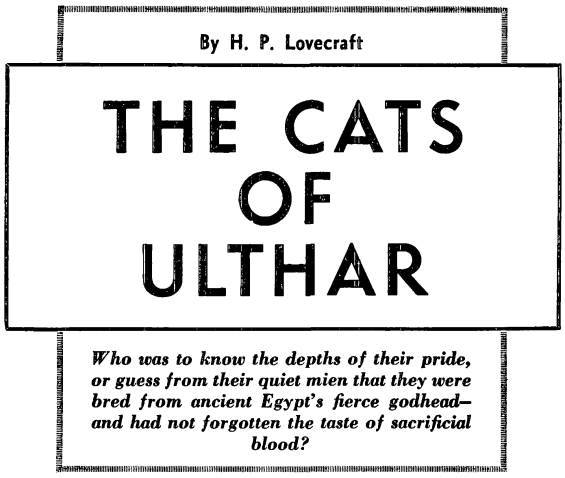
The Cats Of Ulthar by H.P. Lovecraft

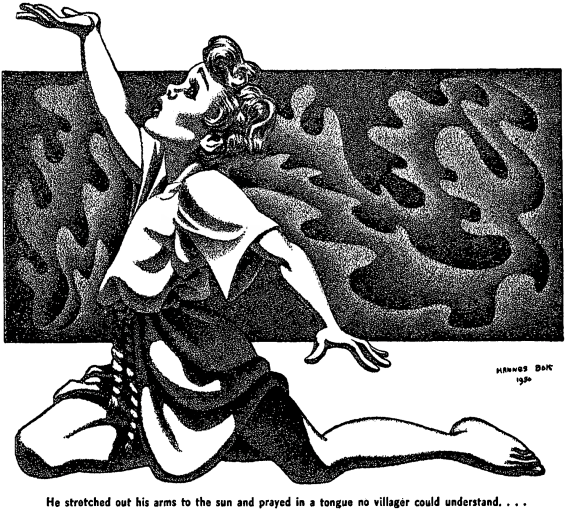
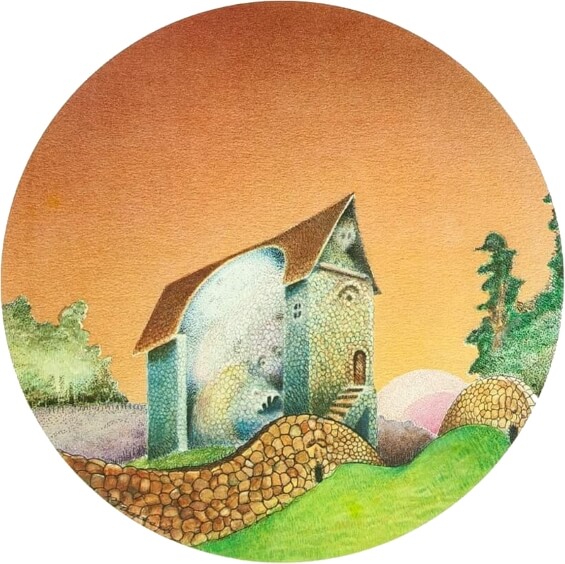
Hannes Bok illustration for The Cats Of Ulthar by H.P. Lovecraft

Hannes Bok illustration for The Cats Of Ulthar by H.P. Lovecraft

First published in Tryout, November 1920, The Cats Of Ulthar is an unusual tale by H.P. Lovecraft. It reads more like an old fashioned fairy tale than any other I’ve read. The story features a young boy named Menes who loves cats. Lovecraft probably took that name from the writings of a Greek historian named Diodorus Siculus who related a tale of a legendary Egyptian pharaoh named Menes that he heard from some crocodile-god priests. Menes it was said fled from his own dogs, who attacked him, while hinting. His escape was assisted by a crocodile. But no dogs or crocodiles are mentioned in The Cats Of Ulthar.

LibriVoxThe Cats Of Ulthar
By H.P. Lovecraft; Read by James Pontolillo
1 |MP3| – Approx. 9 Minutes [UNABRIDGED]
Publisher: LibriVox.org
Published: October 19, 2008
|ETEXT|
First published in Tryout, November 1920.

And here’s a |PDF| made from the publication in Fantastic Novels, January 1951.

Posted by Jesse Willis

The SFFaudio Podcast #164 – READALONG: The House On The Borderland by William Hope Hodgson

Podcast

The SFFaudio PodcastThe SFFaudio Podcast #164 – Jesse, Wayne June and Mirko Stauch talk about The House On the Borderland by William Hope Hodgson.

Talked about on today’s show:
Wayne undersold the novel, it’s shockingly interesting, you can really see the influence on Lovecraft, Supernatural Horror In Literature by H.P. Lovecraft, blasphemous hybrid anomalies, “a classic of the first water”, the framing sequence, The Willows by Algernon Blackwood, description of sense experience, the best you can expect from the universe is indifference, cosmic horror, Olaf Stapledon, Star Maker, Last And First Men, reading in translation, Chad Pfifer, the readalong concept, getting into the book, Under The Knife by H.G. Wells, the swine beasts, the sister – “she knows he’s fucking nuts”, there’s a lot of going to bed in this book, a very relatable character, Arthur C. Clarke, one of the finest works of Science Fiction ever written, marking the transition from Gothic horror to cosmic horror, 2001: A Space Odyssey, the cover art, the Corben comic book cover, the town (or street) that can’t be found, it’s a kind of haunted house story, compression of time, Einsteinian relativity, Pepper is dead and dust, Brian Stableford, Camille Flammarion, The Night Lands by William Hope Hodgson, Edgar Rice Burroughs, Percival Lowell, S.T. Joshi, parallel development, authors write cosmic horror in cosmic horror time, astronomy,

“In the future, when the end of things will arrive on this earth, the event will then pass completely unperceived in the universe. The stars will continue to shine after the extinction of our sun, as they already shone before our existence.”

Enlightenment thinking and the decline of religion – tying your own shoes for eternity, The Raven by Edgar Allan Poe, you can’t love anything in this universe, the jade house in the arena, mythological creatures, Kalpas (is Sanskrit for aeons), it’s meta, before this book we’re living in a world run by God and after this book were living in a post God world, deep time, the recluse, are the swine people are the villagers, what book is the recluse reading?, two incommensurable realities, Messrs Tonnison and Berreggnog, haunting, Clarke’s third law, Poltergeist, the door inward, the start as poets but they don’t end that way, the unnamed lover (let’s call her Lenore), The Crawling Chaos (SFFaudio Podcast #138), The Conqueror Worm by Edgar Allan Poe, The House Of Usher, Roger Caillois: “The fantastic is always a break in the acknowledged order, an irruption of the inadmissible within the changeless everyday legality” (from Au Coeur Du Fantastique), reading old literature, C.S. Lewis, a passion for commas, a gripping book (while the character’s mind wanders), a pregnant book.

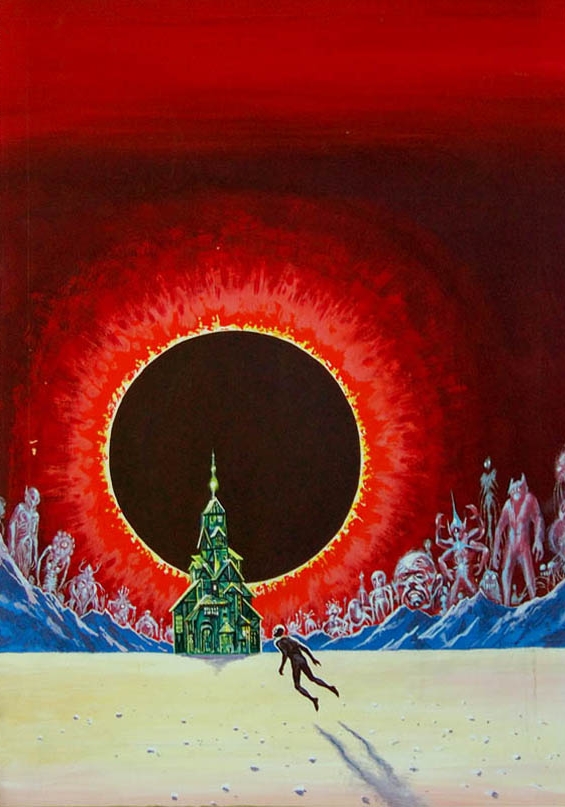
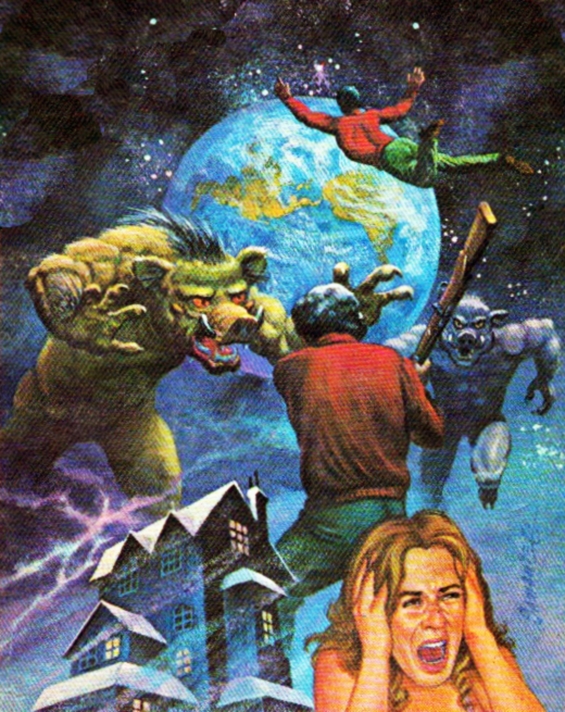
Ed Emshwiller painting for The House On The Borderland by William Hope Hodgson

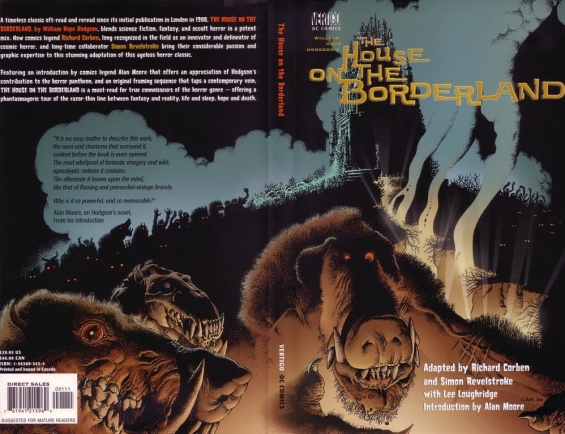
Vertigo Richard Corben -The House On The Borderland

William Hope Hodgson's The House On The Borderland

The House On The Borderland by William Hope Hodgson - illustration by Ian Miller

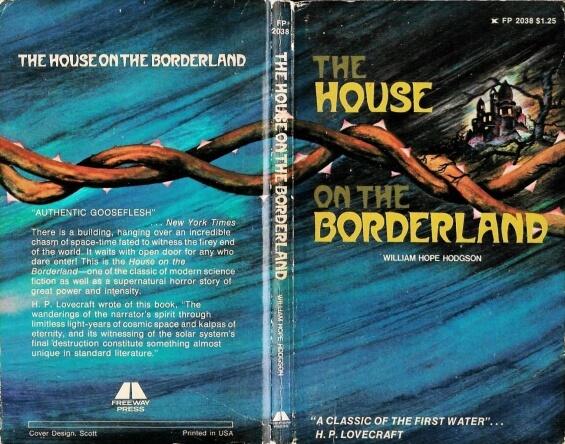
Freeway Press - The House On The Borderland by William Hope Hodgson

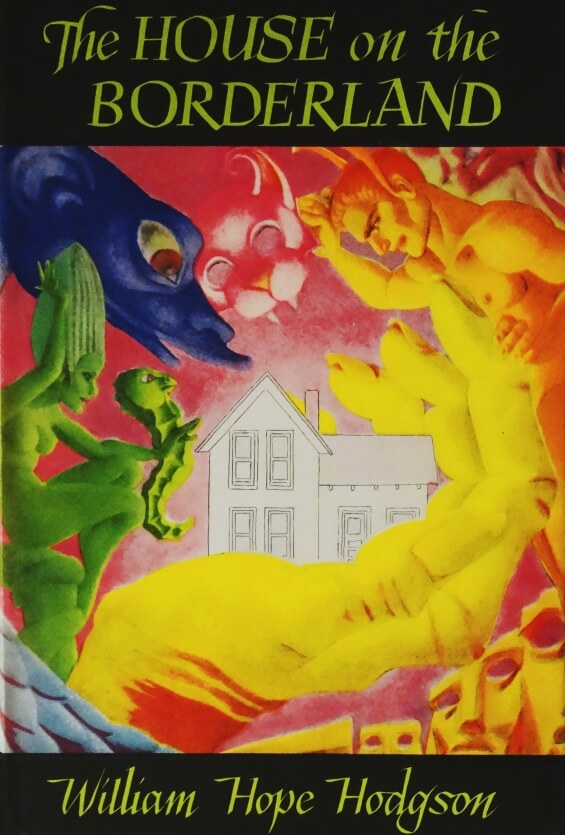
The House On The Borderland by William Hope Hodgson - dustjacket

The House On The Borderland - illustration by Peter Manesis

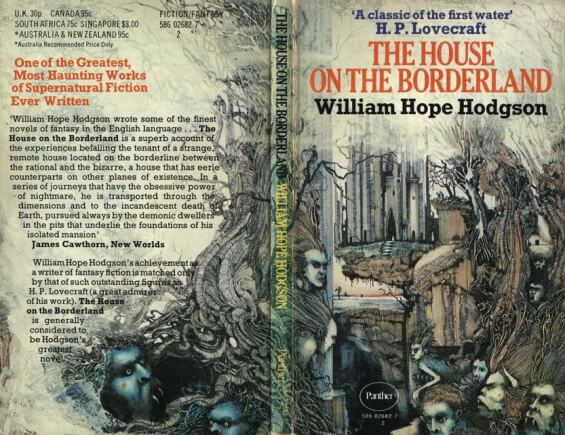
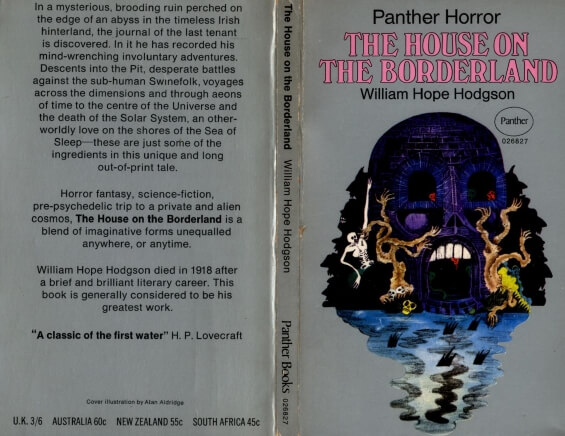
PANTHER - The House On The Borderland by William Hope Hodgson

Posted by Jesse Willis

PBS: WonderWorks: Ray Bradbury’s All Summer In A Day (1982)

SFFaudio News

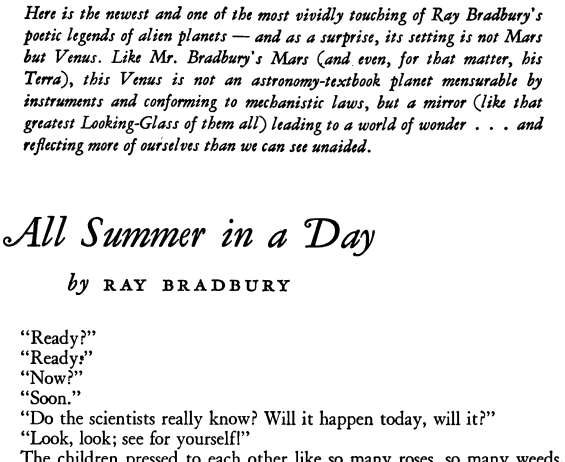
All Summer In A Day by Ray Bradbury

From the PBS series WonderWorksAll Summer In A Day was first broadcast in 1982 – the uploader of the torrent version (available HERE) says: “I don’t think it’s ever been released on DVD.” I think he or she is right. This is a low budget adaptation and it’s pretty terrific.

On the planet Venus, it rains almost constantly. A classroom full of young children are excited to hear that the rain will stop today, for just one hour. But they are also resentful of a new classmate from Earth, who remembers what it’s like to see the sun.

[Thanks to Mike Konczewski for the summary]

Posted by Jesse Willis

Radio Drama Revival: Bradbury 13: The Veldt

SFFaudio Online Audio

Radio Drama RevivalOf all the adaptations of Ray Bradbury stories, my favourites are the Bradbury 13, a series of thirteen radio dramatizations currently available through Blackstone Audio. They make for an absolutely wonderful experience. I’m not the only one who feels that way. When Fred Greenhalgh of Radio Drama Revival, and Final Rune Productions, heard of Ray Bradbury’s death – he contacted Mike McDonough – the producer of the famous Bradbury 13 and got permission to podcast another episode – he got it, and so we got it!

Bradbury 13Bradbury 13 – The Veldt
Adapted from the story by Ray Bradbury; Performed by a full cast
1 |MP3| – Approx. 47 Minutes [RADIO DRAMA]
Podcaster: Radio Drama Revival
Podcast: June 8, 2012
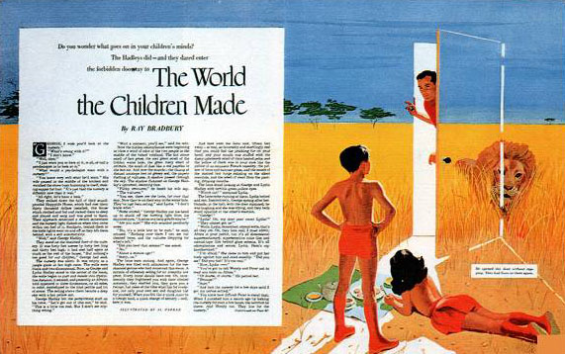
A wealthy couple builds the ultimate virtual playroom for their spoiled children, complete with an African savanna and man-eating lions. It is so real, you can even smell the lions’ last meal. First broadcast on NPR in 1984. Short story first published in The Saturday Evening Post, September 23, 1950, under the title The World The Children Made.

Podcast feed: http://feeds2.feedburner.com/RadioDramaRevival

Here is Al Parker’s illustration from The Saturday Evening Post:

The World The Children Made - from The Saturday Evening Post, September 23, 1950 - illustration by Al Parker

[With thanks to BradburyMedia]

Posted by Jesse Willis