
First podcast October 27, 2008.
Like Batman, but with less hypocrisy.
HERE are the shownotes.
Posted by Jesse Willis
News, Reviews, and Commentary on all forms of science fiction, fantasy, and horror audio. Audiobooks, audio drama, podcasts; we discuss all of it here. Mystery, crime, and noir audio are also fair game.

First podcast October 27, 2008.
Like Batman, but with less hypocrisy.
HERE are the shownotes.
Posted by Jesse Willis
We’ve got the audiobook version, and here’s cool radio drama adaptation from the 1970s. I’ll be listening to this tonight as I drift off into dreamland.
 CBS Radio Mystery Theater – #0643 – Wuthering Heights
Based on the novel by Emily Brontë; Adapted by Elizabeth Pennell; Performed by a full cast
1 |MP3| – Approx. 45 Minutes [UNABRIDGED]
Broadcaster: CBS
Broadcast: April 29, 1977
Provider: CBSRMT.com
Heathcliff, an adpoted son, returns home to the family that mistreated him as a youth.
Cast:
Lloyd Battista
Paul Hecht
Russell Horton
Roberta Maxwell
Bryna Raeburn
Bonus: The Semaphore Version of Wuthering Heights (courtesy of Month Python):
Posted by Jesse Willis

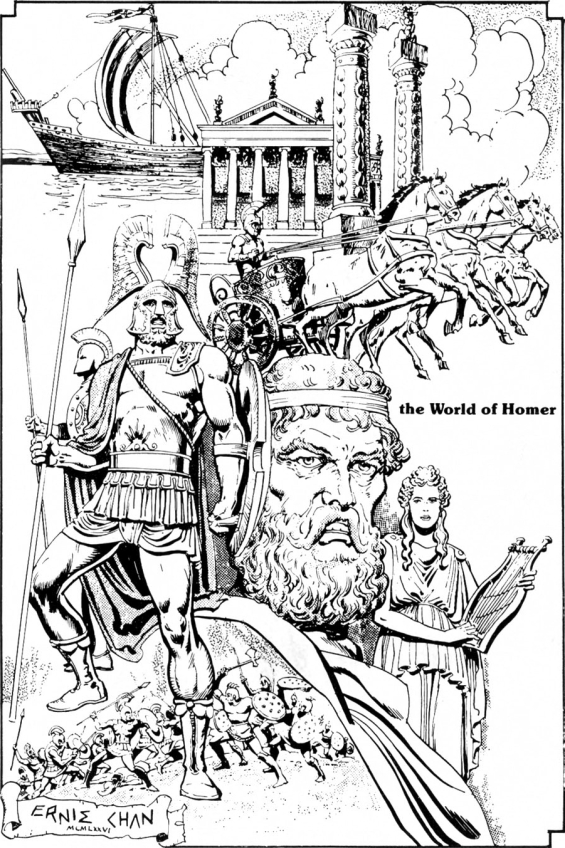
 The SFFaudio Podcast #148 – Scott and Jesse, in the first of a six part series, discuss the first four books of The Odyssey by Homer (books I, II, III and IV).
Talked about on today’s show:
Odysseus doesn’t appear in the first four books of The Odyssey, planting the seeds for the end of the story, The Iliad, and the missing epics, why not read The Iliad first?, novel vs. tragedy, Robert Fagles, E.V. Rieu, Ian Mckellan’s narration, The Apology Of Socrates by Plato, Telemachus’ dilemma, The Teaching Company, The Telemache (the first four books of The Odyssey), xenia, xenos (guest, host, foreigner, and friend), hospitality and the ancient world, an exploration of the concept of xenia, Pallas Athena, disguised, “he’s a suitor”, O Brother, Where Art Thou?, war orphans, embracing the stranger, xenophilia, the recurring turns of phrase, “the wine dark sea” and “bright eyed Athena”, the wise don’t lie, Basil Fawlty is not a very wise man, gearing down, Dan Simmons’s Hyperion, a story for a nation of city states, Nestor’s son was the fastest runner, wisdom comes in many flavours, Helen as a host, was Helen complicit with her kidnapping?, how should we read Helen?, dosing the household, the status of women in ancient Greece, the Entitled Opinions podcast (on Homer And Homeric Epics), The Odyssey is the story of a marriage, adventure with gods, the role of The Odyssey in ancient Greek religion, Socrates was convicted (in part) of denying the gods, miracles as an intervention, why do the gods disguise themselves?, are the gods simply external manifestations of human thought?, were the ancient Greeks more gullible than we?, the editorial introduction by E.V. Rieu, one of the greatest books ever, next time will be books V, VI, VII and VIII.
Posted by Jesse Willis
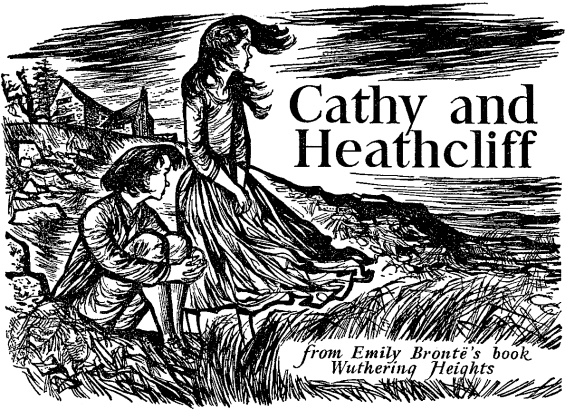
I’ve been looking for an excuse to begin reading Emily Brontë‘s Wuthering Heights!
Now I’ve got one.
This excerpt from the novel works well on it’s own, and makes up the bulk of chapters IV, V, and VI.
I found it in a great uncopyrighted (and undated) kid’s book from the mid 20th century called The Crackerjack Book For Girls!

I love these old collections, they combine terrific illustrations with a level of intelligence that’s hard to find in modern kid’s books.
What I’ve actually done here is taken the story’s text and images |PDF| and matched them up with the terrific solo narrated audiobook as performed by the talented Ruth Golding for LibriVox. Or to put it another way I abridged the public domain audiobook of Wuthering Heights to match the text as it appears in The Crackerjack Book For Girls. Here’s the |MP3|.
I should also point out that the complete audiobook of the novel is HERE).
Before you listen, read, or watch the video check out the introduction to Cathy And Heathcliff as it appeared in The Crackerjack Book For Girls:
Emily Brontë was one of three sisters – all if them writers – who lived in the first half of the nineteenth century. Their father was a clergyman and their home was Haworth Parsonage, a bleak, rather forbidding house with the gravestones if the churchyard on one side and the wild, desolate Yorkshire moors on the other.
Their lives were spent in this lonely little village if the West Riding, and the Yorkshire character and landscape colour all their writings. Emily, particularly, loved the windswept, moorland country which surrounded their home, and Wuthering Heights, her only novel, owes its sombre, fascinating atmosphere to the background if her life.
Of the three sisters, Charlotte, Emily and Anne, only the work of Charlotte gained recognition in the author’s lifetime; but now, a century later, we recognise the true genius if Emily. The beauty of her poetry, and the power and dramatic quality if her novel far excel anything written by her sisters (even Charlotte’s masterpiece, Jane Eyre).
Wuthering Heights relates the histories of two neighbouring Yorkshire families, the Lintons and the Earnshaws, through three generations; and the changes if fortune brought upon both of them by the chance action if Mr. Earnshaw, which is described in the excerpt from the book which follows. The strange little foundling boy grows up to be the principal actor in the drama. This is Heathcliff, a character drawn with a power and assurance which at once mark Emily Brontë as a great English writer.
(The story is told in the first person, and is taken up in turn by minor characters in the book. Here Nellie Dean, an old family servant, is telling the story.)
And here’s the afterword:
This incident marked the close of a chapter in Heathcliff’s life. The Cathy who came back to Wuthering Heights had changed beyond his recognition; her stay with the Lintons had turned her into an elegant young lady with fine clothes and manners. In bitter disappointment and despair, Heathcliff fled. Years later he returned, a grown man. Hatred and a desire for revenge had taken complete possession of him, and his one reason for living had become vengeance upon Hindley.
Posted by Jesse Willis

Back in 2006 Jason Rennie was my podcasting archfoe. He had a podcast called The Sci Phi Show. Back then I used to post about it a lot. It podfaded sometime in 2008.
Jason was a podcaster with whom I had many, many arguments. The problem was I just couldn’t help myself.
Part of it was that he was always talking about topics I loved to think about. And normally that would be cool. But with Jason it always felt more like this…

Now I don’t think Jason was actually out to get me – he lives in Australia so he’d have a long way to swim – it’s more like he was a mirror universe version of myself. I just had to fight him!
And part of it was that he was rather like me – he liked to look for the philosophy in Science Fiction – that’s my thing!
He was doing it wrong.
Jason was a big, big fan of belief.
I too like the idea of certainty (which is a kind of ersatz twin of belief). But having grown fairly comfortable with the fact that certainty is itself a very elusive end to chase I’ve learned not to often persue it.
Incidentally, check out this awesomely funny sentence from the Wikipedia entry on certainty:
![It is widely held that certainty about the real world is a failed historical enterprise (that is, beyond deductive truths, tautology, etc.).[1]](https://www.sffaudio.com/images12/FromTheWikipediaEntryOnCertainty565.jpg "It is widely held that certainty about the real world is a failed historical enterprise (that is, beyond deductive truths, tautology, etc.).[1]")
So like I was saying, Jason Rennie was the antipodean Jesse Willis.
He was a self-confessed Christian, and he metaphorically wore a crucifix round his neck in every single podcast he produced.
This is rather unlike me. As I am a nothing, holding no religious belief and answering the question of my religious convictions much like THIS when asked.
But somehow, listening to Jason’s show, I always found myself drawn in.
I think it was something about the assumptions he made in every podcast. And how they just lay there, unchallenged.
It’s not like I have a very big atheistic axe to grind, not having being raised with any religious belief that I’ve now overcome or dispensed with …. I mean …. how could I have any real axe to grind? I was never even given a metaphorical helve!
Jason used to insist that I had a worldview and that I was just refusing to articulate it. I think he was wrong, and is wrong. But I’ve thought about that a lot since then. The closest I think I come to having a worldview is with a conversation game I like to play.
At a party, or around a dinner table, I like to ask everyone to figure out what a given person’s favourite word (or phrase) is. And then I ask what that word or phrase might mean about him or her.
So for example, at one such party we figured out that my mom’s favourite phrase is “at least” – and we figured that perhaps that meant that she was always looking on the bright side of things.
Fun right?
My favourite word, apparently, is the word “apparently.”
Personally I like to think my extensive use of “apparently” is because I care greatly about precision and that that the word works as a kind of bulwark to my skepticism about my own statements. Apparently others hold other opinions on this matter.
My friend Luke Burrage’s favourite phrase on SFBRP seems to be “it’s a bit strange.”
I think it’s a bit strange that that’s his favourite phrase because I’m not sure what it means.
Now, having listened to Jason’s podcast, I think his favourite phrase was “intellectually lazy.” I don’t know exactly what that means about him either. It’s more of an observation at this point. I’d need to discuss the matter more with people who’ve heard him use it in context. Figure out if it really is a phrase that stands out and if so what meaning it might have.
This all would have been of little interest except, apparently, Jason had recently un-podfaded his podcast!


And it seems he is actually producing two podcasts now!
One is familiar in name and substance. It’s called The Sci Phi Show, a ressurectied version of the old show with new recordings on familiar topics. And the other is wholly new, but similarly themed show called Christian Meets World.
I’ve listened to a few episodes of both.
And, apparently I’m still a sucker for Jason’s magnificently targeted antagonism, all these years later.
I wouldn’t have said anything, but for Twitter.
It’s been a few days now I’ve been unable to get this horrible tweet out of my head:
What can I say to that?
It’s like a tractor beam … must resist … can’t resist!
‘Say nothing’, my friends tell me, ‘it’s just linkbait’ they say.
And I want to listen to them …. but Jason is …. just …. so …. wrong!!!
I think I’m going to quit looking at Twitter.
Posted by Jesse Willis
Also:
Jason can’t have his old archfoe status back, that slot is currently occupied by a fiend of a different ilk.
A terrible menace that apparently doesn’t even know of his own status as such.
I speak of course, of that arch-villain, that Professor Moriarty of podcasting, that obstructionist joker known as Patrick Hester.
