Writing Class by Robert Sheckley

SFFaudio Online Audio

In a provocative move (for a novice) one of Robert Sheckley’s earliest stories, Writing Class, is 1,000 word wonder about the proper construction of stories. This story came at the beginning of a career that would later produce 250 short stories. It took more than fifty years for it to get reprinted.

The audiobook for it was narrated by our friend William Coon for SFFaudio Challenge #6. Thanks Bill!

Eloquent VoiceWriting Class
By Robert Sheckley; Read by William Coon
1 |MP3| – Approx. 7 Minutes [UNABRIDGED]
Provider: Eloquent Voice
Recorded: November 13, 2011
Etext: |RTF|
“Never use cliches in describing alien life-forms,” Professor Carner admonished his class. But Eddie persisted—with good reason! First published in Imagination, December 1952.

And here’s the |PDF|!

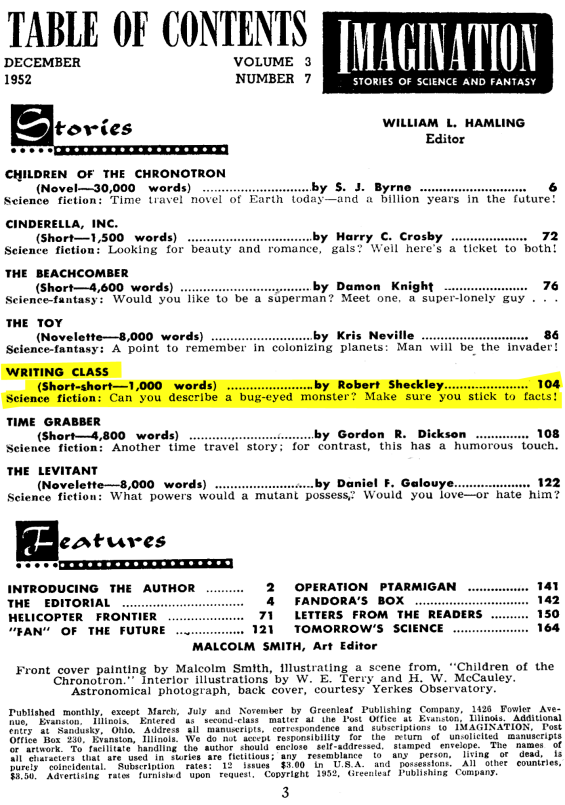
Imagination December 1952 - Table Of Contents - includes Writing Class by Robert Sheckley

Posted by Jesse Willis

Learning it wholesale – my Halloween 2011 class on Philip K. Dick’s We Can Remember It For You Wholesale

SFFaudio Online Audio

World's Best Science Fiction 1967 - We Can Remember It For You Wholesale - illustration by Jack Gaughan

My favourite class at the moment is Monday 4pm-6pm. The students are all about at the same level, all diligent scholars, and all engaged with the material. Since September we’ve been working our way through many of Philip K. Dick’s short stories. Dick is great for teens. Reading his stories we get to thinking deep thought, write essays about interesting topics, and learn plenty of valuable vocab. On Halloween 2011 we finished off Philip K. Dick’s We Can Remember It For You Wholesale. You might think of it as a junior version of The SFFaudio Podcast.

|MP3|

Podcast feed: http://huffduffer.com/tags/rememberit/rss

iTunes 1-Click |SUBSCRIBE|

Learning it wholesale – my Halloween 2011 class on Philip K. Dick’s We Can Remember It For You Wholesale : SFFaudio on Huffduffer

Students in the class in, order of appearance, include Kevin, Jennifer, Jay and (eventually) Selina. The actual class doesn’t begin until about twenty minutes in.

If you’re a teacher, and curious, we used the Citadel Press edition, which is a cheap trade paperback (I wish there was a hardcover edition available):

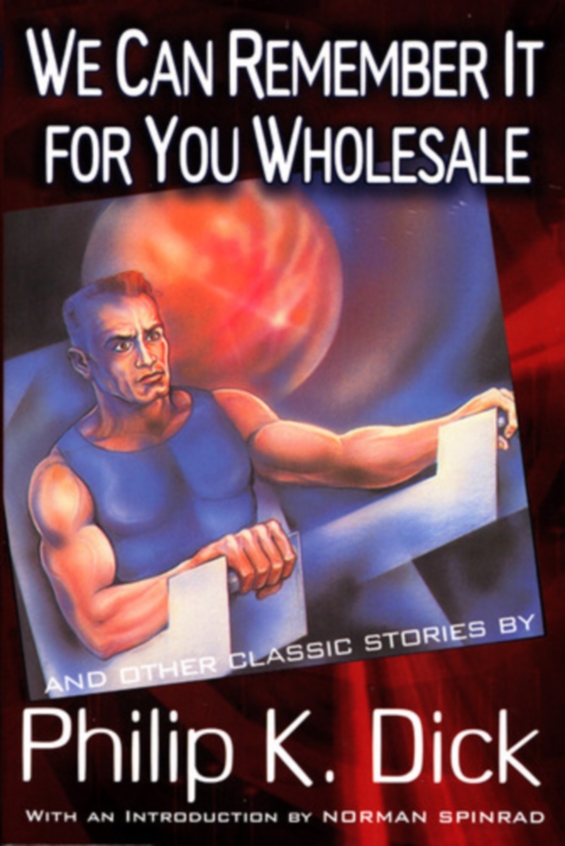
CITADEL PRESS - We Can Remember It For You Wholesale And Other Classic Stories BY Philip K. Dick

I love my job.

Posted by Jesse Willis

The SFFaudio Podcast #136 – READALONG: Neuromancer by William Gibson

Podcast

NEUROMANCER
The SFFaudio PodcastThe SFFaudio Podcast #136 – Jesse, Tamahome, Eric S. Rabkin, and Jenny talk about Neuromancer by William Gibson.

Talked about on today’s show:
What was really going on in 1984, the introduction to the audiobook, 3 MB of RAM, Commodore 64, Apple IIe, TI-99/4A, the 10 Year Anniversary Edition of Neuromancer, video arcade vs. arcade, Tank War Europa, Spy Hunter, Sinistar, BBC audio drama adaptation of Neuromancer, cyberpunk, Jenny couldn’t connect with Case the first time, Alfred Bester, the revolutionary effect of Neuromancer, “a very special book”, Mexico City, “an important novel”, Yevgeny Zamyatin’s We, The New Yorker’s parody of Neuromancer, the New Wave, “one great new idea per book”, Samuel “Chip” Delany, The Einstein Intersection, The Lovesong Of J. Alfred Prufrock by T.S. Eliot, “The sky above the port…”, Blade Runner, “time to murder and create”, Hesiod, “And he never saw Molly again.”, an untethered morality, the Rastafarian religion, WWI, virtual worlds, Second Life, Gibson’s intentions, Gravity’s Rainbow by Thomas Pynchon, conspiracy, The Crying Of Lot 49, William S. Burroughs, Naked Lunch, “the silent frequency of junk”, The Wonderful Wizard Of Oz, Dorothy’s shoes, L. Frank Baum, “the face of evil is the face of total need”, The Electric Kool-Aid Acid Test by Tom Wolfe, “slouching through the streets of Paris”, Case is a “man of decided inaction”, God was Adam’s employer, Dixie Flatline wants to die, Free Will, Eric felt for Case, 1980s, Watergate, a totemic fascination with color and material, branding, Pattern Recognition, the Sanyo spacesuit, Hosaka is a computer?, a dead channel would be blue (today), Ian Fleming, James Bond, Walther PPK, “elegance and cosmopolitanism”, John Brunner’s Stand On Zanzibar, Escape From New York, Johnny Mnemonic, the fear of what technology is going to bring, Case’s youth, detritus vs. kipple, Philip K. Dick, Martian Time-Slip, Galactic Pot-Healer, “you can’t prove that the United States exists” in Neuromancer, Case was a street-kid, Gibson has built something that has mythic power, the lame Braun robot, Molly -> Mother -> Mary, SSN vs. SIN, a Case study (pun), he has been assigned a SIN, Oedipus, they function as if they were physical, Case: “You know you repeat yourself man.” Dixie: “Yeah, it’s my nature.”, the Sprawl trilogy and “when it changed”, when is Neuromancer set?, “a rich kid’s hideout”, real kipple vs. fake kipple, “built by carpenters to look rustic”, 18th century fake ruins, Versailles (and the Hameau de la reine), the Tessier-Ashpool are fucked up, Mona Lisa Overdrive, cloning, Count Zero, “they dumped themselves into this matrix”, communication technologies begin with porn, A Chorus Line, SimStim gets short shrift in Neuromancer, Strange Days, Molly’s meat-puppet memories, 1-900 numbers, the lotus eaters, Circe, the Sirens song, The Lion of Comarre by Arthur C. Clarke, the heisters are motivated or moved by their A.I. puppet-master, Case’s motivation, Molly’s motivation, Corto/Armitage’s motivation, like Rabbit in Vernor Vinge’s Rainbow’s End, these characters want to believe in their own free will, Neuromancer‘s motivation, “who’s the bad guy in this book?”, “who isn’t?”, the shuriken is the only moral totem in the book, dystopia vs. dystopic, “the wavelength of amphetamine”, spit instead of cry, Jenny is kind of cheating (because she’s read the sequels), is Molly wrong for Case?, Eric questions the new pancreas, it’s Noir (because everyone smokes), Jo Walton’s review of Neuromancer (see the top and comment 59.), Jesse appreciates the world (and the great motivation of the plot), Eric likes Case (in part) because he’s the only one who doesn’t want to physically hurt anyone else, O’Neil colony, the fake French youths, Case is not Neo, The Matrix is a fairy tale with a prophecy whereas Neuromancer is Science Fiction, the Sprawl Trilogy vs. The Matrix Trilogy, Star Wars, “stuck in bullet time”, V: For Vendetta is a fantastic movie, Jenny thinks we should listen to the soundtrack to The Matrix, “the machine and the moment”, Tama thought the second half of Neuromancer dragged, Mary Shelley’s Frankenstein is also Necromancer‘s antecedent ,”what do we owe to what we create?”
Neuromancer

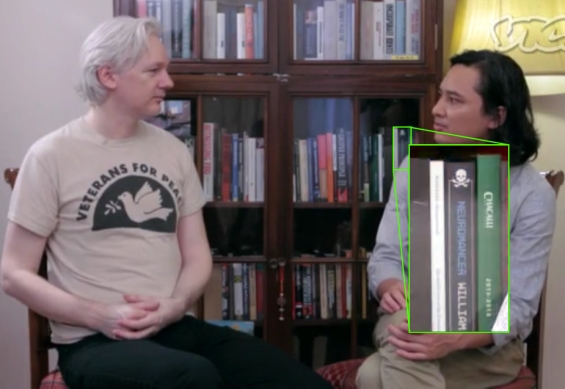
Julian Assange has a copy of Neuromancer by William Gibson

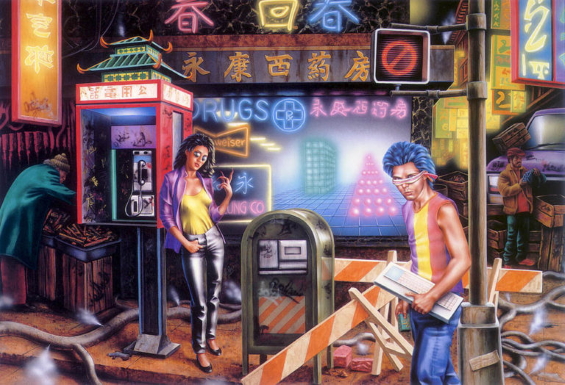
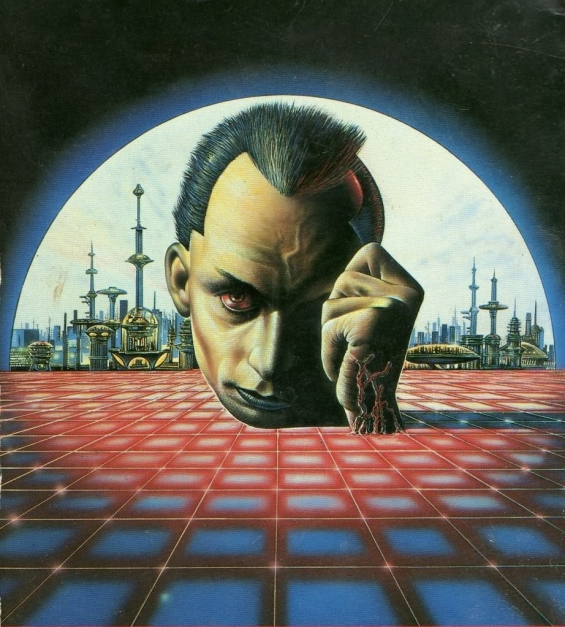
NEUROMANCER - illustration by Barclay Shaw

Posted by Jesse Willis

Commentary: How to convert iPhone Voice Memos to MP3 (or WAV) in iTunes

SFFaudio Commentary

iTunes Preferences

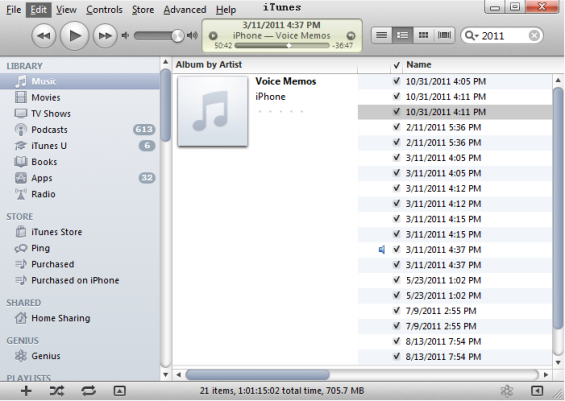
I use my iPhone as a portable audio recorder. But the default recording format is M4A. This is not an easily manipulable format. If you, like me, want to use Audacity (and/or Levelator) to fiddle with your files you’ll want to be able to convert your files into other formats. iTunes has this capability, but figuring out how to make it happen in iTunes is not straightforward. Here’s the process in seven steps:

1. Go into the “Music” section of iTunes (which is where Voice Memos are found)
2. Click on the “Edit” tab
3. Select “Preferences”
4. Select “General”
5. Go down to “When you insert a CD” and select “Import Settings”
6. Change “Import Using” from “AAC Encoder” to “MP3 Encoder” (or “WAV Encoder”)
7. Now, when you right click on the Voice Memo, you will now have the option to “Create MP3 Version” (or “Create WAV Version”)

Here’s a video that shows the same process:

Posted by Jesse Willis

Hunter’s Planet Of the Apes Archive: BBC interview with Hunter Goatley

Online Audio

Hunter's Planet Of the Apes ArchiveHunter Goatley’s Planet Of The Apes Archive has been on my radar since 2007. That’s when I discovered the abridged audiobook reading of Pierre Boulle’s Planet Of The Apes (La Planète Des Singes) original novel there. It’s still available and still excellent.

What’s new over there is this BBC Radio 3 Three Counties Radio interview, by Roberto Perron, with Hunter Goatley. Among other things Goatley discusses Rise Of The Planet of the Apes. |MP3|

Maria Lectrix: The Pot Of Tulips by Fitz James O’Brien

SFFaudio Online Audio

Sez Maureen O’Brien: “This ghost story is pretty fun. Lost treasure! A wronged heiress! Communication from beyond the grave!”

Sez Bibliophilia Obscura:

“The purely supernatural has its place in O’Brien’s stories as well. The Pot of Tulips effectively retells a story, as old as antiquity, of a miser who in death reveals through signs and symbols the location of his hidden fortune.

O’Brien writes most of the stories in the persona, apparently well know to him, of the comfortable bachelor, ensconced in his cozy lodgings, be it a haunted boarding house or a decaying Dutch mansion in upper Manhattan. Late evenings with cigar or opium, discussing supernatural possibilities with companions set a cozy tone, which will be upended by a shift of reality as objects of speculation become all too real. It would be wrong to judge O’Brien’s themes as hoary simply because we have encountered them in more well known authors who followed him down these speculative paths. Taken as exemplars of early nineteenth-century speculative fiction, these stories are still worth a read on a chill winter’s night.”

The Pot Of Tulips by Ftiz James O'BrienThe Pot Of Tulips
By Fitz James O’Brien; Read by Maureen O’Brien
1 |MP3| – Approx. 48 Minutes [UNABRIDGED]
Podcaster: Maria Lectrix
Podcast: October 30, 2005
Source: Archive.org
A lost treasure, a lady in distress, and a message from beyond the grave! This 1855 story is an earlier appearance of Harry Escott from “What Was It? — A Mystery“, and features the same entertaining mixture of science fiction, fantasy, and horror. First published in Harper’s, Nov. 1855.

Posted by Jesse Willis