

BBCR4X + RA.cc: Topkapi by Eric Ambler

Aural Noir: Online Audio

BBC Radio 4 ExtraRadioArchives.ccAccording to the Wikipedia entry, BBC Radio 7 was renamed BBC Radio 4 Extra back in April. I’m not much for re-branding – it’s a grubby little idea that makes me think of scientific management, focus groups and meetings … endless … unproductive … meetings. The more I think about meetings the less I want to think.

Hopefully the new name will last a few years, and then perhaps BBC management can go ahead and arrange to have a meeting about considering the update of their antiquated delivery methods – perhaps they’ve already started as I hear they’ve finally dropped RealAudio (the web’s first big audio technology).

Speaking of delivery methods, I discovered my first interesting BBC Radio 4 Extra offering over on RadioArchive.cc. RA.cc is my favourite site for public radio, its chock full of great taxpayer funded programming. The site is extremely well organized and make even people who are wary of the word “torrent” comfortable with the technology. Files are, naturally, in the MP3 format, and when well seeded, a program the size of Topkapi will take only about TEN minutes to download. That’s service folks!

Topkapi, aka The Light Of Day, is a 1962 novel Eric Ambler. I’d heard about it – but until it showed up on RadioArchive.cc I never even thought to investigate it. Well, after investigating it turns out that The Light Of Day was an Edgar Award winning novel, 1964, and has a fair cachet in espionage and crime fiction circles. The name change, for this reading, was likely done to remind BBC listeners of the movie – Topkapi is pretty famous, the Ottoman Sultans used it as their personal residence as well as an “impregnable fortress” that housed its famous seraglio/harem.
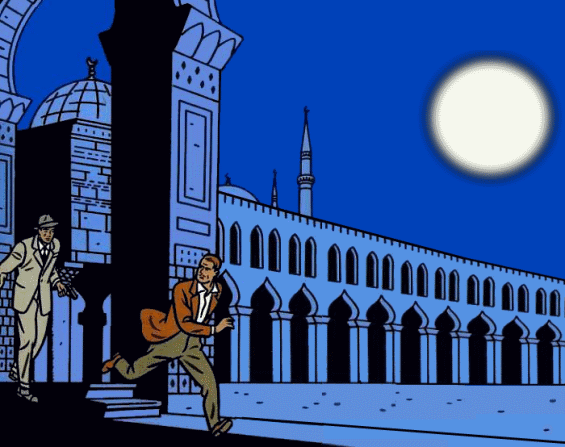
the Topkapi Palace by night

The Wikipedia entry for Ambler has this gem:

“A recurring theme in Ambler’s books is the amateur who finds himself unwillingly in the company of hardened criminals or spies. Typically, the protagonist is out of his depth and often seems for much of the book a bumbling anti-hero, yet eventually manages to surprise himself as well as the professionals by a decisive action that outwits his far more experienced opponents.”

That certainly fits Topkapi.

I can’t say how much of the novel was excised for this abridgement, but I can say the novel definitely works as a quick listen. There are some unnecessary sound effects added, but when they show up they don’t overwhelm the text. The story is told in first person, by the clever, but unlucky anti-hero. David Westhead, the reader, is truly excellent in performing the lead character. He’s got a wonderfully subdued humor, and the voice and accent work he provides for the man supporting characters adds a lot of color.
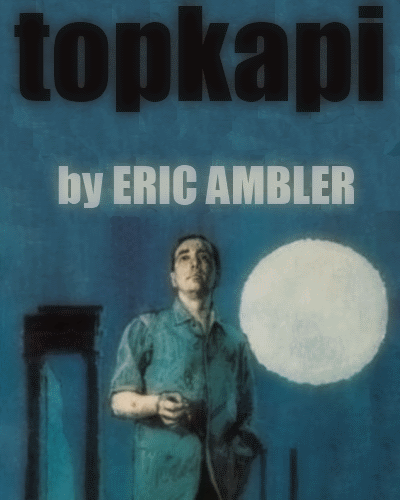
Topkapi by Eric AmblerTopkapi (aka The Light Of Day)
By Eric Ambler; Read by David Westhead
Six 30 minute episodes – Approx. 3 Hours [ABRIDGED]
Broadcaster: BBC Radio 4 Extra
Broadcast: May 2011
Source: RadioArchive.cc
Small time operator Arthur Abdel Simpson is an illegitimate stateless half British half Egyptian pimp and pornographer. He makes his living fleecing tourists in Athens, Greece. When he picks up a likely looking pigeon at the airport he soon discovers that he’s the one in trouble. He’s then blackmailed into driving a car to Istanbul.

1/6. Minor crook Arthur Abdel Simpson spots a likely mark at Athens airport
2/6. Arthur Simpson is interrogated by Turkish security for unintentional arms smuggling.
3/6. Arthur is now seconded to Turkish security. He also has to work at the suspect’s villa.
4/6. Unwilling agent Simpson watches a group of ‘tourists’, while he works as their driver.
5/6. Arthur Simpson witnesses a vicious knife fight and waits for news of Fischer.
6/6. Arthur Simpson is still on the roof. He has just reluctantly robbed the Treasury.

Here’s the trailer for the film version:

I’ll try to find a copy of the film itself, and maybe see if its anything like the audiobook.

Posted by Jesse Willis

The SFFaudio Podcast #110 – READALONG: Dream Park by Larry Niven and Steven Barnes

Podcast

The SFFaudio PodcastThe SFFaudio Podcast #110 – Scott and Jesse talk with Julie Davis about the Audible Frontiers audiobook Dream Park by Larry Niven and Steven Barnes.

Talked about on today’s show:
Scott’s virtual velvet lounge (has a jazz band), Dream Park, Jerry Pournelle, Stefan Rudnicki, Scott ranked it 3/5 stars on GoodReads.com, zombies, cargo cult, murder mystery, World Of Warcraft, LARPing, the wikipedia entry for Dream Park, The Barsoom Project, Seventh Victim by Robert Sheckley, Dungeons And Dragons, The California Voodoo Game, Dream Park is much more interesting than DisneyWorld, Niven novels have robotic personal interactions, misogyny, The Mote In God’s Eye, Lucifer’s Hammer, Around The World In Eighty Days by Jules Verne |READ OUR REVIEW|, the murder provides a plot, California, holographic technology, H.P. Lovecraft, Alex Griffin, “The South Seas Treasure Game”, cementing relationships through gaming, Zork, “open mailbox”, Infocom, The Hitchhiker’s Guide To The Galaxy, Baldur’s Gate, Tolkien-derived adventure play, the least interesting part of Dungeons & Dragons is the mechanics, too many players (characters), Call of Cthulhu (role-playing game), pen and paper RPGs can be incredibly immersive, consensual hallucination, William Gibson, Community‘s spoof of Dungeons and Dragons, The IT Crowd, Fallout 2, Fallout 3, avoid the “Dunwich Building”, Baldur’s Gate II: Shadows of Amn, RPG mechanics can get in the way of RPG storytelling, reality game shows, The Amazing Race, 1980s Dungeons & Dragons hysteria, Mazes And Monsters, comic book hysteria, video game hysteria, StarCraftas a lifestyle, The Guild, the Afterword of Dream Park is missing from the audiobook, Papua New Guinea, Inuit mythology, Mars, has time been kind to Dream Park?, Audible Frontiers, “this is weakest Larry Niven book I’ve ever read”, The Dungeon Master: The Disappearance of James Dallas Egbert III by William Dear, Columbine by Dave Cullen |READ OUR REVIEW|, psychopath, the problem of psychopathy, parental responsibility, The Psychopath Test by Jon Ronson, Minority Report, gesture control, the Spruce Goose, The Aviator, Martin Scorsese, WWII, HBO’s The Pacific, World War II in HD, the Battle of Saipan, HBO’s Band Of Brothers, Australia, Chicago, Museum Of Science And Industry, submarines, San Francisco, Get Lamp, Helvetica (a documentary on a font), Futura, Gothic doesn’t look gothic in Helvetica, narrators are like the fonts of audiobooks,

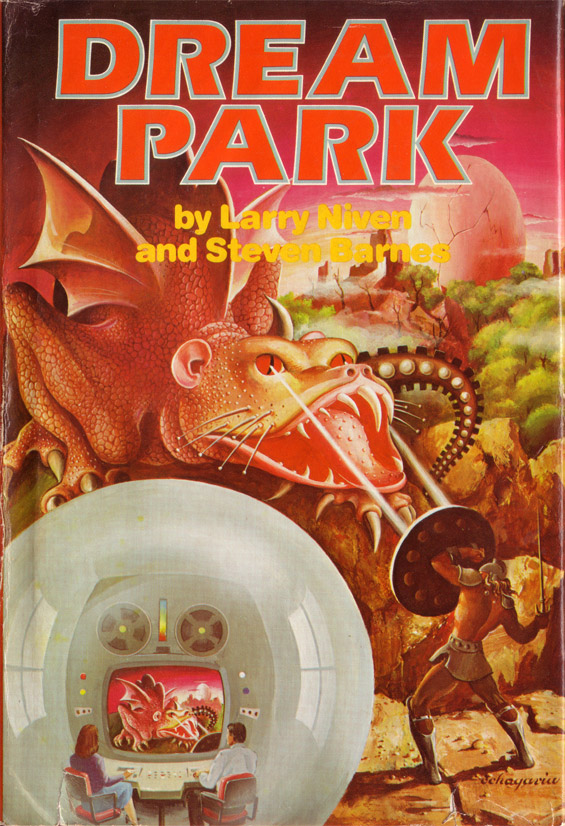
ACE BOOKS - Dream Park by Larry Niven And Steve Barnes

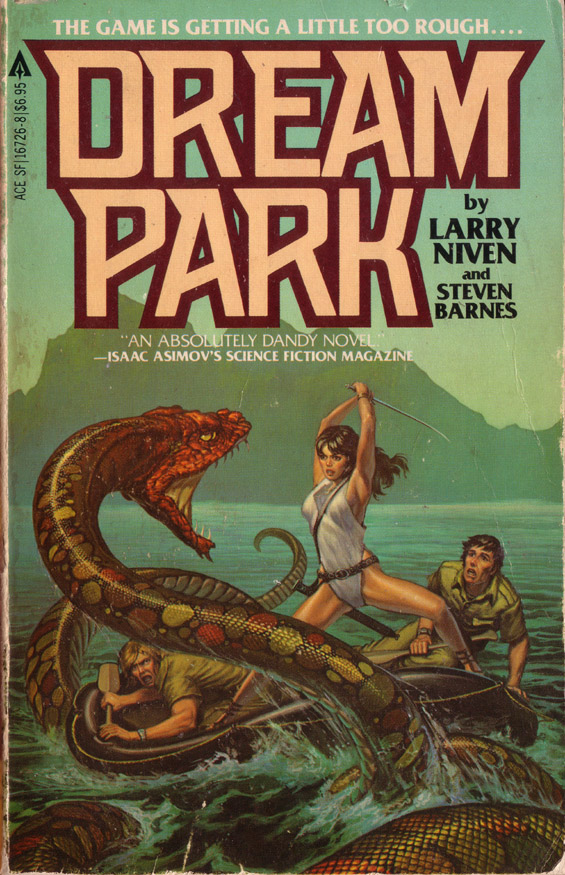
ACE BOOKS - TPB - Dream Park by Larry Niven

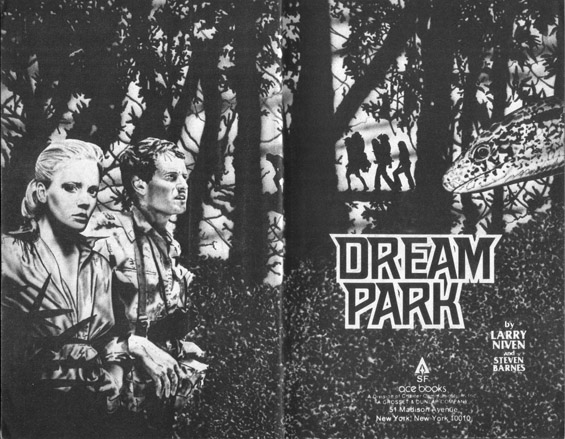
ACE BOOKS - Dream Park by Larry Niven - Interior Illustrations

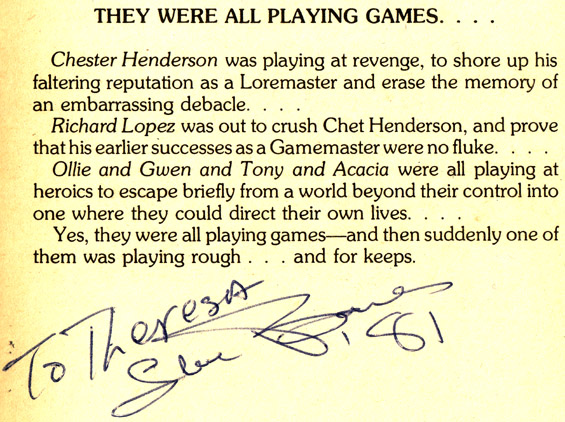
Steve Barnes Signature in DREAM PARK

Dream Park Spine

Posted by Jesse Willis

Alberta Reader’s Choice Award

SFFaudio News

I’ve recently been thinking about the value of awards. If they are simply a popularity contest, as most seem to be, and the award is merely a trophy, then why should I care if a book has won one?

The author of that book should care – an award can help prompt sales with at least some readers – but unless that award is backed up by something substantial, like cold hard cash, what should make me, a skeptical reader, take notice of any one award over another?

There are more than 40 SFF related awards listed on Wikipedia entry for “science fiction awards”!

I can’t say I’d trust a single one to deliver me something I’d like to read.

Maybe the fact they mostly don’t offer prizes, other than the honor of winning, is the problem.

The Nobel Prize is a big, big deal. It offers big money to its recipients (more than $1,000,000 USD over the last couple of years). The Man Booker Prize offers presents a prize of £50,000. The Pulitzer offers $10,000 USD.

The Hugo Award and Nebula Award, the two most prestigious SFF awards, only offer trophies.

Alberta Readers Choice AwardI just got an email, informing me that Michael Martineck’s Cinco de Mayo, published by EDGE Science Fiction and
Fantasy
, is a finalist for a new award the Alberta Readers Choice Award.

That was a new one to me, but unlike the Hugo and Nebula awards, it is a real cash award – $10,000 CDN. Apparently this is the “first time that a Science Fiction novel has made it to the finals.”

The books sounds pretty interesting with a premise similar to Robert J. Sawyer’s FlashForward |READ OUR REVIEW|. Sez Janice of Edge books: “this great book that tells the story of what happens in the world after May 5th, when suddenly every man, woman and child ends up with a second set of memories in their mind along side their own”

If you’ve read the novel, consider voting for it (within the next couple of days).

Awards with money behind may carry the possibility of being something more substantial.

Here’s the author, Michael Martineck, presenting Cinco de Mayo‘s premise:

Posted by Jesse Willis

The Coode Street Podcast talks novellas

SFFaudio Online Audio

Notes From Coode StreetWhat is ‘Notes from Coode Street’?  No, it’s not a superhero from Southpark, but a podcast where two sf editors, Gary K. Wolfe and Jonathan Strahan, talk books.  In episode #52, they talk with the editor of Locus, Liza Trombi.  At around time 21:30, I got interested in this conversation about novellas.  Are novellas the ideal length for an author to try out an idea?  But are novels the ideal length for readers?  It almost makes want to give up novels and try novellas (about 100 pages) for a while.

Here’s the direct link to the |MP3|

Posted by Tamahome

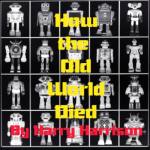
How The Old World Died by Harry Harrison

SFFaudio Online Audio

Added sound effects, and real rush job on the reading don’t detract too much from the appeal of this cute short short story by Harry Harrison (its just five pages). Here’s the description from MisterNizz’s blog:

“A self-replicating machine is, as the name suggests, an artificial self-replicating system that relies on conventional large-scale technology and automation. Certain idiosyncratic terms are occasionally found in the literature. For example, the term “clanking replicator” was once used by Drexler to distinguish macroscale replicating systems from the microscopic nanorobots or “assemblers” that nanotechnology may make possible, but the term is informal and is rarely used by others in popular or technical discussions. Replicators have also been called “von Neumann machines” after mathemetician John von Neumann, who first rigorously studied the idea. In this short story, Harry Harrison depicts a future in a world transformed by Von Neumann machines.”
After listening to the story it sounds like a macro scale precursor to the grey goo problem to me.

How The Old World Ended by Harry HarrisonHow The Old World Died
By Harry Harrison; Read by Walt O’Hara
1 |MP3| – Approx. 10 Minutes [UNABRIDGED]
Podcaster: misternizz.podbean.com
Podcast: May 26, 2011
This is how the world ended – and this is what will happen next! First published in the October 1964 issue of Galaxy Science Fiction.

[via Mister Nizz’s HuffDuffer.com]

Posted by Jesse Willis

Five Free Favourites: Memorial Day Weekend

SFFaudio Online Audio

Five Free Favourites

Every Memorial Day Weekend, thousands of Americans take to the roads for a vacation over the long weekend. Since the price of gasoline is so high, vacationers might want to take advantage of these free audiobooks about travel. These books were chosen to be fun, well-produced, and short, so go ahead and download more than one. Click on the title of each book for a full review and other download options.

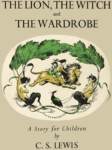
1. Traveling with children:The Lion, The Witch, And The Wardrobe by C.S. Lewis

The Lion, The Witch and the Wardrobe by C.S. Lewis.

Narrated by Chrissi Hart

Ancient Faith Radio (iTunes link)

It may be too warm to travel by sled, but this classic about children traveling to a magical world by way of a wardrobe is sure to keep both you and the kids entertained.

2. Traveling to a foreign nation:

The Prisoner of Zenda by Anthony Hope.

Narrated by Andy Minter

LibriVox (zipped mp3s)

When I visit another country, I want to spend time among the people, not just snap pictures as an outsider. The protagonist of Prisoner of Zenda takes this philosophy a little too far when switches places as a lookalike of the king of the fictional European nation of Ruritania.

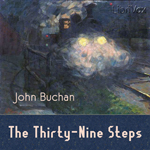
3. Traveling to get away:39 steps cover

The Thirty-Nine Steps by John Buchan.

Narrated by Adrian Praetzellis

LibriVox (zipped mp3s or M4B file)

A South African man visits England, but finds London boring. When his chance involvement in a counter-espionage plot goes wrong, he must escape across the British countryside.

4. Traveling to a family reunion:

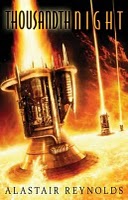
Thousandth Night by Alastair Reynolds.

Narrated by Sam Mowry

Subterranean Press (part 1 | 2 | 3 | 4 | 5 | 6 | 7 | 8 | 9 | 10 | 11 | 12 | 13 | 14 | 15)

In the distant future, humankind can travel across the galaxy and clone themselves into a thousand copies. As one group of clones meets up to share their experiences, a plot is underfoot that could either save or harm the galaxy. Note: This book contains scenes of sex and violence.

5. Traveling through time:TANTOR MEDIA - The Time Machine by H.G. Wells

The Time Machine by H.G. Wells.

Narrated by Scott Brick

Tantor Media (requires free registration)

Going on a long car trip only seems like it takes thousands of years. In H.G. Wells’ classic story, a man actually does travel thousands of years into the future and discovers what humanity has become.

Posted by Seth