LibriVox: Space Prison by Tom Godwin

SFFaudio Online Audio

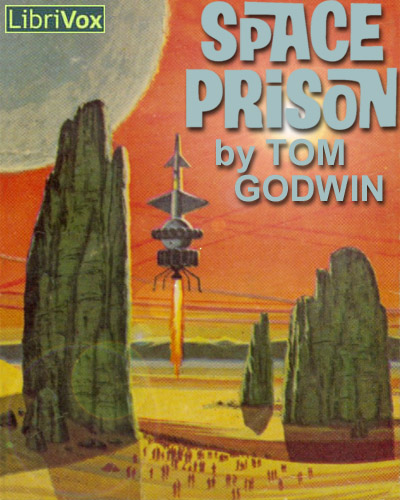
LibriVoxSpace Prison (first published as: THE SURVIVORS) is a new audiobook of an old pulply paperback by Tom Godwin! Narrator extraordinaire Mark Douglas Nelson, has courteously posted it to LibriVox.org for the use by anyone for anything. Being that this is now a public domain audiobook you can do pretty much anything you can think of with it.

Me? Oh, I’m old fashioned. I’ll just be listening to it.

Here’s the teaser:

“One of the truly unusual novels of science-fiction—a vivid portrayal of the deadliest planet ever discovered!”

And here’s the Wikipedia description:

The Survivors is a science fiction novel by author Tom Godwin. It was published in 1958 by Gnome Press in an edition of 5,000 copies, of which 1,084 were never bound. The novel was published in paperback by Pyramid Books in 1960 under the title Space Prison. The novel is an expansion of Godwin’s story ‘Too Soon to Die‘ which first appeared in the magazine Venture.”

LIBRIVOX - Space Prison by Tom GodwinSpace Prison
By Tom Godwin; Read by Mark Douglas Nelson
12 Zipped MP3 Files or Podcast – Approx. 5 Hours 59 Minutes [UNABRIDGED]
Publisher: LibriVox.org
Published: December 21, 2009
AFTER TWO CENTURIES….The sound came swiftly nearer, rising in pitch and swelling in volume. Then it broke through the clouds, tall and black and beautifully deadly — the Gern battle cruiser, come to seek them out and destroy them. Humbolt dropped inside the stockade, exulting. For two hundred years his people had been waiting for the chance to fight the mighty Gern Empire … with bows and arrows against blasters and bombs!

Podcast feed: http://librivox.org/rss/3659

iTunes 1-Click |SUBSCRIBE|

[Special thanks too AnnSterling and Laurie Anne Walden]

Posted by Jesse Willis

Diabolic Plots: The Best Of Pseudopod

SFFaudio Online Audio

Diabolical PlotsThe Diabolical Plots blog has a post called “The Best of Pseudopod” here’s a snippet:

“Since July I’ve been plumbing the depths of Pseudopod’s backlog and now I’m sad to say I’ve listened to everything they’ve offered to date. Now I only get one new Pseudopod a week like the rest of the world (released every Friday). But now that I’ve listened to all of Pseudopod’s offerings, I feel qualified to make a list of the Best of Pseudopod, my top ten favorite stories that have been posted to the site (and a few that ALMOST made the list).”

And here are the top 10 picks:

1.
PseudopodDeep Red
By Floris M. Kleijne; Read by Ben Phillips
1 |MP3| – Approx. 20 Minutes [UNABRIDGED]
Podcaster: Pseudopod
Podcast: November 21st, 2008


2.
PseudopodSuicide Notes By An Alien Mind
By Ferrett Steinmetz; Read by Phil Rossi
1 |MP3| – Approx. 34 Minutes [UNABRIDGED]
Podcaster: Pseudopod
Podcast: October 2nd, 2009


3.
PseudopodStockholm Syndrome
By David Tallerman; Read by Cheyenne Wright
1 |MP3| – Approx. 21 Minutes [UNABRIDGED]
Podcaster: Pseudopod
Podcast: June 29th, 2007


4.
PseudopodCome To My Arms, My Beamish Boy
By Douglas F. Warrick; Read by Phil Rossi
1 |MP3| – Approx. 32 Minutes [UNABRIDGED]
Podcaster: Pseudopod
Podcast: April 17th, 2009


5.
PseudopodThe Button Bin
By Mike Allen; Read by Wilson Fowlie
1 |MP3| – Approx. 42 Minutes [UNABRIDGED]
Podcaster: Pseudopod
Podcast: June 12th, 2009


6.
PseudopodLast Respects
By Dave Thompson; Read by Scott Sigler
1 |MP3| – Approx. 27 Minutes [UNABRIDGED]
Podcaster: Pseudopod
Podcast: March 30th, 2007


7.
PseudopodHometown Horrible
By Matthew Bey; Read by Elie Hirschman
1 |MP3| – Approx. 25 Minutes [UNABRIDGED]
Podcaster: Pseudopod
Podcast: July 24th, 2009


8.
PseudopodStepfathers
By Grady Hendrix; Read by Nerraux
1 |MP3| – Approx. 8 Minutes – [UNABRIDGED]
Podcaster: Pseudopod
Podcast: June 20th, 2009


9.
PseudopodThe Music of Erich Zann
By H.P. Lovecraft; Read by B.J. Harrison
1 |MP3| – Approx. 30 Minutes [UNABRIDGED]
Podcaster: Pseudopod
Podcast: July 25th, 2008


10.
PseudopodGarbage Day
By Russell L. Burt; Read by Elie Hirschman
1 |MP3| – Approx. 3 Minutes [UNABRIDGED]
Podcaster: Pseudopod
Podcast: January 1st, 2008

[via SFSignal]

Posted by Jesse Willis

The SFFaudio Podcast #041

Podcast

The SFFaudio PodcastThe SFFaudio Podcast #041 – Jesse and Scott are joined by SF author Robert J. Sawyer to talk about his audiobooks, writing Science Fiction novels, and the TV show based on his novel FlashForward.

Talked about on today’s show:
FlashForward (the TV series), FlashForward by Robert J. Sawyer, Blackstone Audio, David S. Goyer, Marc Guggenheim, Jessika Borsiczky, Brannon Braga, Lost, Battlestar Galactica, does the TV show of FlashForward have a plan?, idea based SF, time travel, The Time Machine by H.G. Wells |READ OUR REVIEW|, differences between the television show and the novel versions of FlashForward, WWW: Wake by Robert J. Sawyer |READ OUR REVIEW|, Inconstant Moon by Larry Niven, philosophy in Science Fiction, Calculating God by Robert J. Sawyer |READ OUR REVIEW|, Jonathan Davis, Audible Frontiers, atheism and religion in SF, scientific institutions in Science Fiction, The Royal Ontario Museum, CERN, The Sudbury Neutrino Observatory, science, Robin Cook, Michael Crichton, Launchpad Astronomy Workshop, Edward M. Lerner, Joe Haldeman, science literacy amongst Science Fiction authors, Karl Schroeder, Charles Stross, post-singularity SF, Clarke’s Third Law, NASA Ames Research Center, TRIUMF, Human Genome Project, Neanderthal Genome Project, military SF, S.M. Stirling, Harry Turtledove, alternate history, consciousness, aliens, spaceship, time travel, the WWW trilogy, Audible.com, Starplex by Robert J. Sawyer, Star Trek, alien aliens, Larry Niven, Niven’s aliens, Golden Fleece by Robert J. Sawyer, how did fantasy and Science Fiction get lumped together? Donald A. Wollheim, dinosaurs, artificial intelligence, genetics, time travel, the Internet, quantum physics, CBC Radio’s version of Rollback, Alessandro Juliani.

Jessika Borsiczky on adapting the novel of FlashForward to television:

Trailer for Sawyer’s WWW trilogy:

Posted by Jesse Willis

Review of The Martian Chronicles by Ray Bradbury

SFFaudio Review

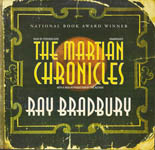
Blackstone Audio - The Martian Chronicles by Ray BradburySFFaudio EssentialThe Martian Chronicles
By Ray Bradbury; Read by Stephen Hoye
8 CDs – 9.3 Hours – [UNABRIDGED]
Publisher: Blackstone Audio
Published: 2009
ISBN: 9781433293498
Themes: / Science Fiction / Mars / Mythology / Colonization / Aliens /

All right, then, what is Chronicles? Is it King Tut out of the tomb when I was three? Norse Eddas when I was six? And Roman/Greek gods that romanced me when I was ten? Pure myth. If it had been practical, technologically efficient science fiction, it would have long since fallen to rust by the road.

-Ray Bradbury, The Martian Chronicles

I’ve never been a big reader of science fiction, largely because, rightly or wrongly, my perception is that SF worships at the altar of technology, and is fixated upon cold, clinical subject matter for which I have little interest. But if the SF genre contained more books like Ray Bradbury’s The Martian Chronicles, I might view it a lot differently.

The Martian Chronicles tells the story of mankind’s colonization of the red planet. Driven by curiosity and the impending destruction of a worldwide atomic war, men send rocket expeditions to Mars in hopes of settling the planet and finding a place to carry on their civilization. It’s not a traditional novel, but a collection of short stories originally published in Planet Stories, Thrilling Wonder Stories, and a handful of other defunct SF magazines, which Bradbury ties together with a series of vignettes.

The Martian Chronicles was first published in 1950 and Bradbury set the first story, “Rocket Summer,” in a fictional (and then-distant) 1999; this latter printing advances the timeline to 2030. The Martian Chronicles certainly has some SF surface trappings, and the tale “There Will Come Soft Rains” (a haunting story about the aftermath of an atomic war) probably fits that category. But it’s certainly not hard SF. Bradbury doesn’t dwell on the Martian technology nor describe how it works. What little there is described in Bradbury’s inimitable short strokes of brilliant, poetic color: Houses with tables of silver lava for cooking bits of meat, pillars of rain that can be summoned for washing, metal books that sing their stories, like a fine instrument under the stroke of a hand.

In the introduction to the 2009 Blackstone Audio, Inc., production of the book, Bradbury says that the larger themes and deeper meanings of his work were buried in his subconscious as he wrote. It wasn’t until he saw an onstage production of The Martian Chronicles, juxtaposed with a viewing of a traveling Tutankhamun exhibit at the Las Angeles Art Museum, that he made the leap—he had written a myth, not a science fiction story:

“Moving back and forth from Tut to theatre, theatre to Tut, my jaw dropped. ‘My God,’ I said, gazing at Tutankhamun’s golden mask. ‘That’s Mars. My God,’ I said, watching my Martians on stage, ‘That’s Egypt, with Tutankhamun’s ghosts.’ So before my eyes and mixed in my mind, old myths were renewed, new myths were bandaged in papyrus and lidded with bright masks. Without knowing, I had been Tut’s child all the while, writing the red world’s hieroglyphics, thinking I thrived futures even in dust-rinsed pasts… Science and machines can kill each other off or be replaced. Myth, seen in mirrors, incapable of being touched, stays on. If it is not immortal, it almost seems such.”

Rather than explaining the hows and whys of rocket travel, or the describe the atmospheric conditions of the red planet, Bradbury uses The Martian Chronicles to explore the age-old problems of colonization/colonialism, our fears of the unknown, our longing for simpler times, and the limitations of science and technology. It’s intensely elegiac, an ode to the quiet towns and neighborhoods of the 1920s and 30s, before the sprawl of cities and suburbs and the opening of the Pandora’s Box of atomic power.

The heart of the book is the short story, “And the Moon be Still as Bright,” which concerns a fourth rocket expedition to the red planet. The first three missions have failed. Mars is empty, its cities ghostly and vacant. The Martians have been hit hard by chicken pox, infected by the crew of one of the previous expeditions. When several crewmembers of the latest expedition get drunk and vandalize a beautiful Martian city of glass spires, one of the crewmen, Jeff Spender, turns on them in a murderous rampage.

Later, atop a hill, Captain Wilder approaches Spender in an effort to get him to surrender. Spender, who initially seems crazy, is revealed as the man with the clearest vision. He knows what modern man is like, a professional cynic who wants to tear down and rebuild in his own image, citing Cortez’s mission to Mexico (which wiped out nearly all traces of the Aztec Empire). Spender has read the Martians’ books and seen the relics of their culture, and discovers that it is a perfect balance of science and religion, nature and man (Martian) in harmony, with neither side dominant. Says Spender:

“[The Martians] quit trying too hard to destroy everything, to humble everything. They blended religion and art and science because, at base, science is no more than an investigation of a miracle we can never explain, and art is an interpretation of that miracle. They never let science crush the aesthetic and the beautiful. It’s all simply a matter of degree. An Earth Man thinks: ‘In that picture, color does not exist, really. A scientist can prove that color is only the way the cells are placed in a certain material to reflect light. Therefore, color is not really an actual part of things I happen to see.’ A Martian, far cleverer, would say: ‘This is a fine picture. It came from the hand and the mind of a man inspired. Its idea and its color are from life. This thing is good.’”

It’s interesting to note that the Martians are not perfect, and in striving for balance they may have lost something. In “Ylla,” the second story/chapter of the book, a Martian woman upsets her husband to the point of murder. As the Martians are telepathic, Ylla is able to “speak” to the astronauts as they draw near in their silver rocket. She learns their burning desires and their strange songs. Despite the harmonious, tranquil, idyllic environment all around her, the brown-skinned, golden-eyed Ylla wants to be swept away to earth, crushed in the embrace of the white-skinned, dark-haired, blue-eyed Nathaniel York. For all its piggishness and destructiveness, the race of men is passionate, burning with the desire to live and explore.

As with all of Bradbury’s tales, The Martian Chronicles contains its share of humor, terror, heartbreak, and hope, and is written in Bradbury’s beautiful, one-of-a-kind style. It holds a deserved place as science fiction classic, even as it transcends the genre and defies our attempts to categorize it.

Posted by Brian Murphy

LibriVox: Short Science Fiction Collection Vol. 023

SFFaudio Online Audio

LibriVoxIn addition to the readers, this audiobook was produced by:

Book Coordinator: Gregg Margarite
Dedicated Proof-Listener: Wendel Topper
Meta-Coordinator/Cataloging: Lucy Burgoyne

Thanks guys!

I haven’t had a chance to listen to half of these yet but I did get a chance to enjoy the final tale in this collection. It’s by Fritz Leiber and is super-funny. It’s the tale of an alien invasion — of privacy. See when a Martian visitor lands on Earth he has the good sense to make his first contact with a professor of anthropology. The only question is, will the formalities actually start after the naturally necessary bodily functions finish?

If you find another good one in this collection put in a comment. I’d be much obliged!

LibriVox - Short Science Fiction Collection Vol. 023Short Science Fiction Collection 23
By various; Read by various
10 Zipped MP3 Files or Podcast – Approx. 4 Hours 22 Minutes [UNABRIDGED
Publisher: LibirVox.org
Published: August 4, 2009
Science Fiction is speculative literature that generally explores the consequences of ideas which are roughly consistent with nature and scientific method, but are not facts of the author’s contemporary world. The stories often represent philosophical thought experiments presented in entertaining ways. Protagonists typically “think” rather than “shoot” their way out of problems, but the definition is flexible because there are no limits on an author’s imagination. The reader-selected stories presented here were written prior to 1962 and became US public domain texts when their copyrights expired.

Podcast feed:

http://librivox.org/bookfeeds/short-science-fiction-collection-23.xml

iTunes 1-Click |SUBSCRIBE|

LibriVox - Bolden's Pets by Floyd L. WallaceBolden’s Pets
By Floyd L. Wallace; Read by Bev J. Stevens
1 |MP3| – Approx. 45 Minutes [UNABRIDGED]
Publisher: LibirVox.org
Published: August 4, 2009
The price of life was a life for a life—which was all the reward the victim looked for! From Galaxy Science Fiction, October, 1955.


LibriVox - A Filbert Is A Nut by Rick RaphaelA Filbert Is A Nut
By Rick Raphael; Read by Linda Dodge
1 |MP3| – Approx. 20 Minutes [UNABRIDGED]
Publisher: LibirVox.org
Published: August 4, 2009
That the gentleman in question was a nut was beyond question. He was an institutionalized psychotic. He was nutty enough to think he could make an atom bomb out of modeling clay! From Astounding Science Fiction November 1959.

LibriVox - The Hated by Frederik PohlThe Hated
By Frederik Pohl; Read by Gregg Margarite
1 |MP3| – Approx. 23 Minutes [UNABRIDGED]
Publisher: LibirVox.org
Published: August 4, 2009
After space, there was always one more river to cross … the far side of hatred and murder! From Galaxy Science Fiction January 1958.


The Plattner Story
By H.G. Wells; Read by Gregg Margarite
1 |MP3| – Approx. 46 Minutes [UNABRIDGED]
Publisher: LibirVox.org
Published: August 4, 2009

LibriVox - Regeneration by Charles DyeRegeneration
By Charles Dye; Read by Wendel Topper
1 |MP3| – Approx. 24 Minutes [UNABRIDGED]
Publisher: LibirVox.org
Published: August 4, 2009
So long as there are men and women alive, in a livable environment, then a new beginning is possible. From Future combined with Science Fiction stories September 1951.

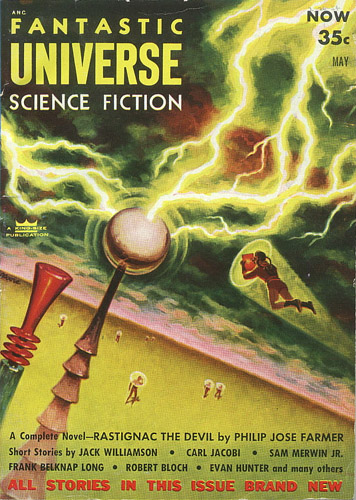
Fantastic Universe May 1954Rex Ex Machina
By Frederic Max; Read by Synergy
1 |MP3| – Approx. 6 Minutes [UNABRIDGED]
Publisher: LibirVox.org
Published: August 4, 2009
The domination of the minds of tractable Man is not new. Many men have dreamed of it. Certainly some of them have tried. This man succeeded. A science fictional letter from a father to a son. From Fantastic Universe May 1954.

Tales of Space and Time; The Star
By H.G. Wells; Read by Linda Dodge
1 |MP3| – Approx. 32 Minutes [UNABRIDGED]
Publisher: LibirVox.org
Published: August 4, 2009

LibriVox - The Success Machine by Henry SlesarThe Success Machine
By Henry Slesar; Read by Troy Bond
1 |MP3| – Approx. 25 Minutes [UNABRIDGED]
Publisher: LibirVox.org
Published: August 4, 2009
Mechanical brains are all the rage these days, so General Products just had to have one. But the blamed thing almost put them out of business. Why? It had no tact. It insisted upon telling the truth! From Amazing Science Fiction Stories January 1960.

LibiVox - Unspecialist by Murray F. YacoUnspecialist
By Murray F. Yaco; Read by Wendel Topper
1 |MP3| – Approx. 29 Minutes [UNABRIDGED]
Publisher: LibirVox.org
Published: August 4, 2009
A machine can be built to do any accurately described job better than any man. The superiority of a man is that he can do an unexpected, undescribed, and emergency job … provided he hasn’t been especially trained to be a machine. From Astounding Science Fiction, January, 1960.

LibriVox - What's He Doing In There? by Fritz LeiberWhat’s He Doing In There?
By Fritz Leiber; Read by Gregg Margarite
1 |MP3| – Approx. 12 Minutes [UNABRIDGED]
Publisher: LibirVox.org
Published: August 4, 2009
He went where no Martian ever went before—but would he come out—or had he gone for good? From Galaxy Science Fiction December 1957.

Posted by Jesse Willis

SFsite: reviews of audiobooks and audio dramas

SFFaudio News

SFSite.comJust posted over on SFSite.com several reviews of audiobooks:

A review of Nightmare at 20,000 Feet by Richard Matheson
Narrated by various readers, unabridged, Blackstone Audio, 10.5 hours
review by Susan Dunham |MP3|

A review of Blue Moon Rising: Part 1 by Simon R. Green
Multicast performance, Graphic Audio, 5 hours
review by Fred Greenhalgh |MP3|

A review of Aliens Rule edited by Allan Kaster
Narrated by Vanessa Hart and Tom Dheere, unabridged, Infinivox, 3 hours, 43 minutes
review by Susan Dunman

A review of Sleep Traveler by Marcus Hame
Multi-cast production, unabridged, Synerge Books, 1 hour, 50 minutes
review by Bonnie L. Norman

A review of Glass Houses: Morganville Vampires, Book 1 by Rachel Caine
Narrated by Cynthia Holloway Tantor Audio, 8.5 hours
review by Gil T. Wilson

Posted by Jesse Willis