Review of Genesis by Bernard Beckett

SFFaudio Review

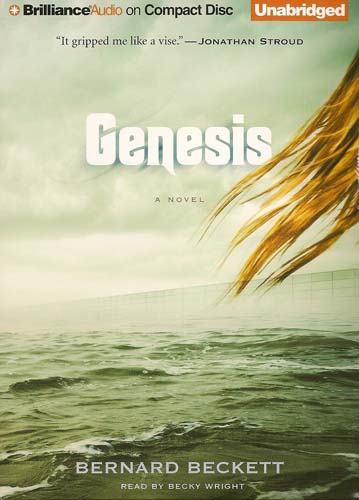
Genesis by Bernard BeckettGenesis
By Bernard Beckett; Read by Becky Wright
4 CDs – 4 Hours [UNABRIDGED]
Publisher: Brilliance Audio
Published: 2009
ISBN: 9781423381501
Themes: / Science Fiction / Philosophy / Artificial Intelligence / Freedom /

Anax is a student who wants to enter the prestigious Academy and who is undergoing her final exam. A grueling oral presentation of several hours long given before examiners who conduct question and answer sessions is the device used by Bernard Beckett to show us Anax’s world. Anax’s presentation is about an almost mythological figure of history, Adam Forde. Adam lived in a time when the outside world suffered from catastrophic plagues which were responded to by building a wall around their island republic and shooting anyone who tried to break through. When he breaks one of the republic’s most sacred laws, Adam is put on trial. It is Adam’s crime and trial that Anax analyzes.

As Anax takes us further into Adam’s story we gradually become engrossed in questions of personal freedom versus safety and quality of life that arise. Beckett pushes this question further toward the end where Adam becomes engaged in a life-and-death game of wits that turns on the differences between mechanical intelligence and human intelligence. As Adam struggles to find a defining difference we become involved as well in considering what it is that makes us human.

The examiners are philosophers which, as Plato imagined in The Republic, are the rulers of Anax’s society. The emphasis on philosophy in the question and answer session is anything but dry. Anax is forced to push her knowledge and logic past any limits she has previously imagined in order to perform adequately. Ultimately Anax is forced to the same sorts of examinations that we have been doing through the story, which culminate in an interesting twist.

Becky Wright’s narration perfectly points up the elegant prose and superb style of writing. She does an excellent job especially since there is not a lot of action in the novel and most of it is told through conversation or Anax’s presentation of her story.

This is a short audiobook at only four hours long. Yet it is a gripping four hours. Highly recommended.

Posted by Julie D.

LibriVox: Lone Star Planet by H. Beam Piper and John J. McGuire

SFFaudio Online Audio

LibriVoxMy friend Luke Burrage, of the Science Fiction Book Review Podcast, has been talking with me about the Planetary Romance subgenre of Science Fiction. We’re both big fans of it. It’s an old genre, probably best sired by Edgar Rice Burroughs with his novel A Princess Of Mars.

Here is the definition of Planetary Romance from the introduction to The Ultimate Guide Of Science Fiction: The Definitive Illustrated Guide (edited by David Pringle):

PLANETARY ROMANCE: a romantic adventure story set on a colourful alien planet, often involving an element of swordplay (or science fiction equivalent).

I bring this all up because the most recent Planetary Romance to draw my attention is one that’s Texas-sized in scope, but short in length (running under 3.5 hours). And of course the necessary swordplay element has naturally been replaced by gunplay – it is a planet full of Texans after all!

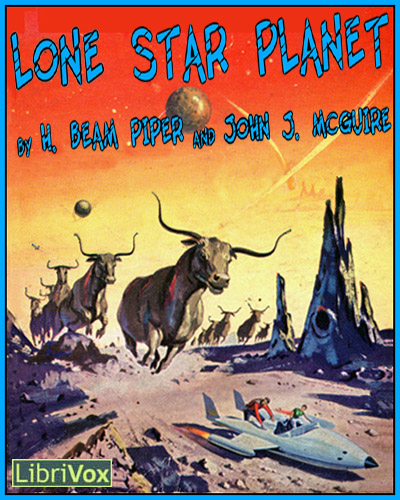
LibriVox - Lone Star Planet by H. Beam Piper and John J. McGuireLone Star Planet
By H. Beam Piper and John J. McGuire; Read by Mark Douglas Nelson
5 Zipped MP3 Files or Podcast – Approx. 3 Hours 22 Minutes [UNABRIDGED]
Publisher: LibriVox.org
Published: October 25, 2009
New Texas: its citizens figure that name about says it all. The Solar League ambassador to the Lone Star Planet has the unenviable task of convincing New Texans that a s’Srauff attack is imminent, and dangerous. Unfortunately it’s common knowledge that the s’Srauff are evolved from canine ancestors—and not a Texan alive is about to be scared of a talking dog! But unless he can get them to act, and fast, there won’t be a Texan alive, scared or otherwise!

Podcast feed:

http://librivox.org/bookfeeds/lone-star-planet-by-h-beam-piper-and-john-j-mcguire.xml

iTunes 1-Click |SUBSCRIBE|

And, if you’re looking for more terrifically narrated Planetary Romance audiobooks you couldn’t do better than to start with another one read by Mark Douglas Nelson … The Green Odyssey by Philip Jose Farmer.

[Thanks also to libraryanne and James Christopher]

Posted by Jesse Willis

The SFFaudio Podcast #040

Podcast

The SFFaudio PodcastThe SFFaudio Podcast #040 – Jesse and Scott are joined by Steve Feldberg of Audible.com to talk about Audible Frontiers and other Audible.com projects. We talk audiobooks the whole show, giving particular attention to those produced by Audible.com itself. Steve tells us all about a bunch of the upcoming Science Fiction, Fantasy, espionage, and crime audiobooks we can expect to see showing up in the Audible catalgoue this year and next!

Talked about on today’s show:
Audible.com, Audible Frontiers, Gateway by Frederik Pohl, Robert J. Sawyer, Frederik Pohl, how to translate font and textual changes to audio, Oliver Wyman, Jonathan Davis, METAtropolis |READ OUR REVIEW|, Calculating God by Robert J. Sawyer |READ OUR REVIEW|, narrator performance, The Wind Up Girl by Paolo Bacigalupi, how do you pick stuff?, Battlestar Galactica, Mike Resnick‘s Starship series, space opera, dialogue driven audiobooks, David Weber‘s Honor Harrington series, female protagonists, Mike Shepherd‘s Kris Longknife series, military SF, Elizabeth Moon’s Vatta’s War series, novella and novelette length audiobooks, METAtropolis, Michael Hogan, Alessandro Juliani, Rollback by Robert J. Sawyer, Stefan Rudnicki, Ender’s Game by Orson Scott Card |READ OUR REVIEW|, Scott Brick, Hopscotch by Brian Garfield, espionage novels, Death Wish by Brian Garfield, Hopscotch (1980) starring Walter Matthau, Six Days Of The Condor by James Grady, mystery and thriller audiobooks, Jim Thompson, copyright disambiguation, Hard Case Crime, BBC Audiobooks America, Christa Faust, The Ghosts Of Belfast by Stuart Neville, Gerard Doyle, Eragon by Christopher Paolini, Jeremy Gage, Lawrence Block, pseudonymous narrators, Grover Gardner (aka Tom Parker), Mercedes Lackey‘s Elemental Masters series, fairy tales, Starplex by Robert J. Sawyer, WWW: Wake by Robert J. Sawyer |READ OUR REVIEW|, Golden Fleece by Robert J. Sawyer, Kristine Kathryn Rusch‘s Retrieval Artist series, William Gibson, Mona Lisa Overdrive, Count Zero, All Tomorrow’s Parties are all coming to audiobook, wouldn’t a multi-voiced version of Neuromancer be great? Yes it would!, Stanisław Lem, audiobooks are coming, Gene Wolfe‘s The Book Of The New Sun is coming to audio, epic fantasy is hard to turn into audiobooks, David Eddings, Subterranean Press, how the audiobook experience is different than the paperbook experience, Harlan Ellison as a narrator, we need some Jack Vance audiobooks, Brilliance Audiobooks, On Stranger Tides by Tim Powers, Seeing Ear Theatre, audio drama, James Patrick Kelly, copyright disambiguation part II, the Bradbury 13, J. Michael Straczynski‘s City Of Dreams, Mary Burkey’s Audiobooker Blog, audiobook reading groups, The Help by Kathryn Stockett, Audible.com’s internal book club.

Posted by Jesse Willis

LibriVox: Short Science Fiction Collection Vol. 023

SFFaudio Online Audio

LibriVoxIn addition to the readers, this audiobook was produced by:

Book Coordinator: Gregg Margarite
Dedicated Proof-Listener: Wendel Topper
Meta-Coordinator/Cataloging: Lucy Burgoyne

Thanks guys!

I haven’t had a chance to listen to half of these yet but I did get a chance to enjoy the final tale in this collection. It’s by Fritz Leiber and is super-funny. It’s the tale of an alien invasion — of privacy. See when a Martian visitor lands on Earth he has the good sense to make his first contact with a professor of anthropology. The only question is, will the formalities actually start after the naturally necessary bodily functions finish?

If you find another good one in this collection put in a comment. I’d be much obliged!

LibriVox - Short Science Fiction Collection Vol. 023Short Science Fiction Collection 23
By various; Read by various
10 Zipped MP3 Files or Podcast – Approx. 4 Hours 22 Minutes [UNABRIDGED
Publisher: LibirVox.org
Published: August 4, 2009
Science Fiction is speculative literature that generally explores the consequences of ideas which are roughly consistent with nature and scientific method, but are not facts of the author’s contemporary world. The stories often represent philosophical thought experiments presented in entertaining ways. Protagonists typically “think” rather than “shoot” their way out of problems, but the definition is flexible because there are no limits on an author’s imagination. The reader-selected stories presented here were written prior to 1962 and became US public domain texts when their copyrights expired.

Podcast feed:

http://librivox.org/bookfeeds/short-science-fiction-collection-23.xml

iTunes 1-Click |SUBSCRIBE|

LibriVox - Bolden's Pets by Floyd L. WallaceBolden’s Pets
By Floyd L. Wallace; Read by Bev J. Stevens
1 |MP3| – Approx. 45 Minutes [UNABRIDGED]
Publisher: LibirVox.org
Published: August 4, 2009
The price of life was a life for a life—which was all the reward the victim looked for! From Galaxy Science Fiction, October, 1955.


LibriVox - A Filbert Is A Nut by Rick RaphaelA Filbert Is A Nut
By Rick Raphael; Read by Linda Dodge
1 |MP3| – Approx. 20 Minutes [UNABRIDGED]
Publisher: LibirVox.org
Published: August 4, 2009
That the gentleman in question was a nut was beyond question. He was an institutionalized psychotic. He was nutty enough to think he could make an atom bomb out of modeling clay! From Astounding Science Fiction November 1959.

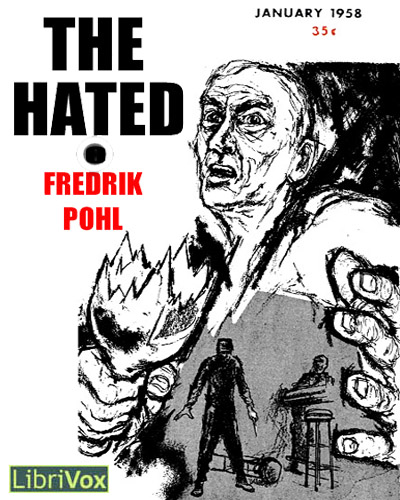
LibriVox - The Hated by Frederik PohlThe Hated
By Frederik Pohl; Read by Gregg Margarite
1 |MP3| – Approx. 23 Minutes [UNABRIDGED]
Publisher: LibirVox.org
Published: August 4, 2009
After space, there was always one more river to cross … the far side of hatred and murder! From Galaxy Science Fiction January 1958.


The Plattner Story
By H.G. Wells; Read by Gregg Margarite
1 |MP3| – Approx. 46 Minutes [UNABRIDGED]
Publisher: LibirVox.org
Published: August 4, 2009

LibriVox - Regeneration by Charles DyeRegeneration
By Charles Dye; Read by Wendel Topper
1 |MP3| – Approx. 24 Minutes [UNABRIDGED]
Publisher: LibirVox.org
Published: August 4, 2009
So long as there are men and women alive, in a livable environment, then a new beginning is possible. From Future combined with Science Fiction stories September 1951.

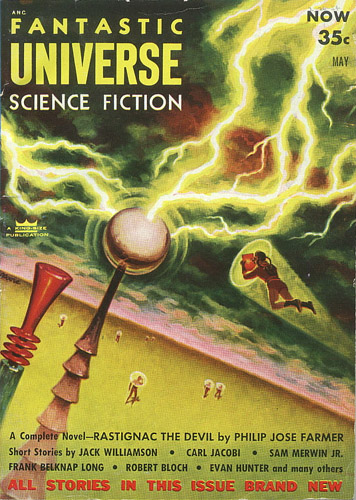
Fantastic Universe May 1954Rex Ex Machina
By Frederic Max; Read by Synergy
1 |MP3| – Approx. 6 Minutes [UNABRIDGED]
Publisher: LibirVox.org
Published: August 4, 2009
The domination of the minds of tractable Man is not new. Many men have dreamed of it. Certainly some of them have tried. This man succeeded. A science fictional letter from a father to a son. From Fantastic Universe May 1954.

Tales of Space and Time; The Star
By H.G. Wells; Read by Linda Dodge
1 |MP3| – Approx. 32 Minutes [UNABRIDGED]
Publisher: LibirVox.org
Published: August 4, 2009

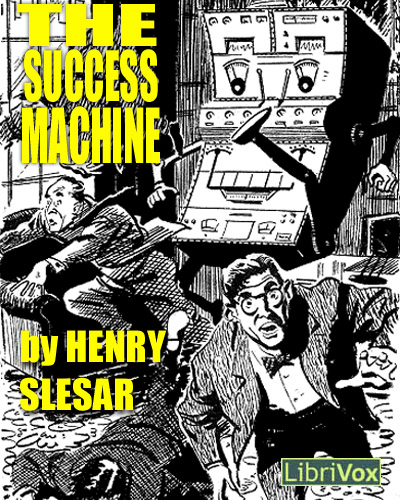
LibriVox - The Success Machine by Henry SlesarThe Success Machine
By Henry Slesar; Read by Troy Bond
1 |MP3| – Approx. 25 Minutes [UNABRIDGED]
Publisher: LibirVox.org
Published: August 4, 2009
Mechanical brains are all the rage these days, so General Products just had to have one. But the blamed thing almost put them out of business. Why? It had no tact. It insisted upon telling the truth! From Amazing Science Fiction Stories January 1960.

LibiVox - Unspecialist by Murray F. YacoUnspecialist
By Murray F. Yaco; Read by Wendel Topper
1 |MP3| – Approx. 29 Minutes [UNABRIDGED]
Publisher: LibirVox.org
Published: August 4, 2009
A machine can be built to do any accurately described job better than any man. The superiority of a man is that he can do an unexpected, undescribed, and emergency job … provided he hasn’t been especially trained to be a machine. From Astounding Science Fiction, January, 1960.

LibriVox - What's He Doing In There? by Fritz LeiberWhat’s He Doing In There?
By Fritz Leiber; Read by Gregg Margarite
1 |MP3| – Approx. 12 Minutes [UNABRIDGED]
Publisher: LibirVox.org
Published: August 4, 2009
He went where no Martian ever went before—but would he come out—or had he gone for good? From Galaxy Science Fiction December 1957.

Posted by Jesse Willis

Review of Terminal Freeze by Lincoln Child

SFFaudio Review

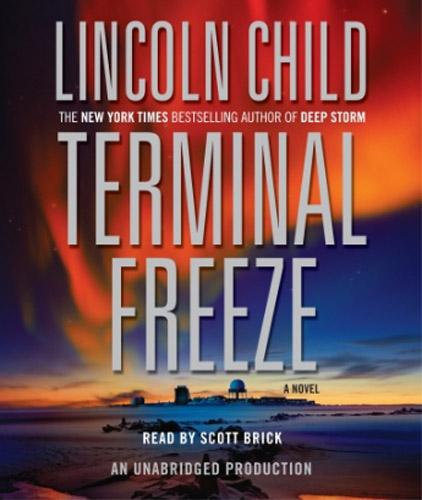
Random House Audio - Terminal Freeze by Lincoln ChildTerminal Freeze
By Lincoln Child; Read by Scott Brick
9 CDs – Approx. 10 Hours 30 Minutes [UNABRIDGED]
Publisher: Random House Audio
Published: February 2009
ISBN: 9780739382028
Themes: / Horror / Thriller / Techno-thriller / Science / Biology / Evolution / Paleoecology / Alaska / Ice / Ice Road Trucking /

Four hundred miles north of the Arctic Circle lies Alaska’s Federal Wilderness Zone, one of the most remote places on Earth. But for paleoecologist Evan Marshall and a small group of fellow scientists, an expedition to the Zone represents the opportunity of a lifetime to study the effects of global warming. The expedition changes suddenly, however, with an astonishing find. On a routine exploration of a glacial ice cave, the group discovers an enormous ancient animal encased in solid ice. The media conglomerate sponsoring their research immediately intervenes and arranges the ultimate spectacle—the animal will be cut from the ice, thawed, and revealed live on television. Despite dire warnings of a local Native American village, and the scientific concerns of Marshall and his team, the “docudrama” plows ahead—until the scientists make one more horrifying discovery. The beast is no regular specimen…it may be an ancient killing machine. And they may be wrong in presuming it dead.

Lincoln child begins Terminal Freeze by quoting all but the last couple sentences of THIS. It’s not exactly a scholarly article, more of a “fun science facts” story. But like Child there are plenty of other folks willing to proffer their own answers to this “mystery.” AboveTopSecret.com (a forum devoted to “conspiracies, UFO’s, paranormal, secret societies, political scandals, new world order, terrorism”) and AnswersInGenesis.org (a site about Young Earth creationism and a literal interpretation of the Book of Genesis) both have explanations for the seemingly flash frozen mammoth that fit into other “theories.” If Child’s solution to the mystery, this novel, wasn’t presented as fiction it’d be just as ridiculous.

So, this isn’t really a Science Fiction novel. At first I had a hard time figuring out what it was. I clued in about the time I started hearing the scientists protags talking about something called “the Callisto Effect” – it sounded like utter bunk – so I looked it up. Yup it is bunk, it’s a fictional theory first invented for the Lincon Child/Douglas Preston novel The Relic (which got turned into a pretty good horror movie). The Callisto Effect is a Child/Preston invention, a kind of a fictional spin-off of the saltation hypothesis. As one other reviewer of this book noted the Callisto Effect can be summed up like this:

“…when a species becomes too numerous or starts to lose evolutionary vigor a monstrous superpredator suddenly appears and kills until it can kill no more.”

So ya, like I was saying, there are scientists in Terminal Freeze, and they talk about pseudo-scientific ideas, but this is just window dressing for the plot of a monster hunt.

We might think of the “techno-thriller” as a kind of a modern gothic novel. Even as far back as the 19th century, Edgar Allan Poe and Jules Verne, were setting their “fantastic tales in the remaining unexplored regions of the world. By the early 20th the likes of H.P. Lovecraft, and John W. Campbell only had one unexplored continent: Antarctica. The same would be true for a modern audience but now that even Antarctica has been laregly de-mystified we’re having to place our monster horror stories in inaccessible caves and hidden military bases (at least that’s the route Terminal Freeze takes).

The story is rather drawn out, with a number of blandish stock characters brought in seemingly only to be picked off one by one (which surpringly both does and doesn’t happen). The scientists, none of whom are particularly interesting, end up working with a local native, who was also co-incidentally a former soldier at Fear Base, and also a former junior scientist there, and also a co-discoverer of the original monster (back in the 1950s). Given those credentials you’d think then that he’d be absolutely instrumental in solving the mystery of what the frozen monster is and how it escaped. But no, he just gives a highly ineffectual and unrealistically cryptic warning (at the beginning of the novel) is promptly ignored – shuffles off the stage only to be brought back later, like Chekhov’s gun, jumbling around a bag of religious artifacts – which do nothing. Apparently the gun on the mantle was just a prop. Child added in an absolutely unnecessary batch of TV documentary people. The only reason I can think they’re there for is that it’d make for some good visuals should they make a movie of this novel. They’re all there when the monster in the ice escapes from the mysteriously melted ice. And of course their there when people start dying grizzly deaths as they wander off alone. But they don’t do much with those cameras and they end up leaving before the end.

After finishing the novel I was kind of interested in finding out if any of the locations in this novel were real. In the book there is a mountain called “Mount Fear,” a glacier called “Fear Glacier,” and a “Fear Base” (a D.E.W. Line style military facility). It turns out that they all don’t really exist, they are all made up.

One thing I did like about the novel was the discussion about the different types of ice. When the scientist are sitting around trying to explain how the creature in the ice escaped they briefly discuss different ways water crystallizes into ice, how these different types of ice are formed, and their differing properties. This briefly re-invigorates the mystery – but it is ultimately thrown away – discarded and replaced with a less than satisfactory explanation.

Scott Brick, who probably reads more books than any other audiobook narrator working today, does his best with what he’s given. The baddies come off badish, the heroes come off goodish, the monster comes off monsterish. The most interesting portion of the novel is actually a bit, almost completely tangential to the monster plot when an “ice road trucker” has to drive the survivors to safety. Brick works hard to make the cracking of the ice and the freezing cold compelling. And that’s the part of the novel is more believable.

Posted by Jesse Willis

Steampunk Scholar: Steampunk audiobooks

SFFaudio News

Steampunk Scholar
I’ve been half ready to board the steampunk train (or the metaphorical steam powered conveyance of your choice) for a while now. I’m not sure exactly why it is so appealing to me. I love airships, I love Sherlock Holmes, I love reading about Victorian and Edwardian eras – but is that it?

I remember when William Gibson and Bruce Sterling wrote The Difference Engine – I was digging the concept. I remember when the RPG game Space: 1889 came out – and I was digging the vibrations that was throwing off too. The only problem was, and is, I still haven’t played the game and still haven’t read the book. I’ve really been quite negligent in my steampunk studies. Luckily there’s a neighbour, over in Alberta, who’s set himself a five year mission, to blog about the genre in a scholarly way.

And his latest post is about steampunk audiobooks! Check it out. He makes a list of Audible.com available audiobooks with the steampunking theme.

Posted by Jesse Willis