We Can Remember It For You Wholesale by Philip K. Dick

SFFaudio Online Audio

Philip K. Dick’s novelette, We Can Remember It For You Wholesale, is a tale full of false memories, soulful wishes, and the planet Mars – all classic Dick themes. It’s hero, Douglas Quail, is a man who longs to visit Mars yet is shrewish wife denies him even the day-dream. But when he discovers that he’s actually already been there, as an agent for a sinister government agency, things start getting a bit confused. Is he really a deep cover Black-Ops assassin with suppressed memories and a false identity? Or is he just a sad shmendrik with delusions of grandeur?

World's Best Science Fiction 1967 - We Can Remember It For You Wholesale - illustration by Jack Gaughan

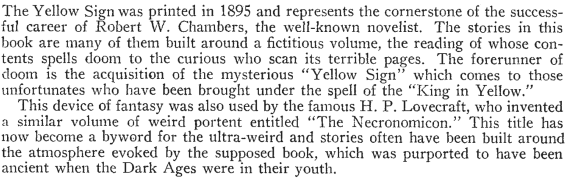
Here’s the editorial introduction, from the publication in Fantasy & Science Fiction, for We Can Remember It For You Wholesale. The article mentioned as being on “page 62” is by Theodore L. Thomas, a noted SF writer and prolific columnist for F&SF in the 1960s. Thoma’s article is based on another entitled “THE FOOD THEY NE’ER HAD EAT” which is available as a |PDF|.

We Can Remember It For You Wholesale - Editorial introduction from F & SF

One audiobook version was recorded for BBC Radio 7, now called BBC Radio 4 Extra, and broadcast back in 2003. It’s available via torrent at RadioArchive.cc.

RadioArchives.ccWe Can Remember It For You Wholesale
By Philip K. Dick; Read by William Hootkins
2 MP3s via TORRENT – Approx. 64 Minutes [UNABRIDGED?]
Broadcaster: BBC Radio 7 (now called BBC Radio 4 Extra)
Broadcast: September 2003
Doug Quail lives in a future world of memory implants and false vacations. Doug wants to visit the planet Mars but after a mishap at a virtual travel agency, he discovers that he’s already been there. First published in Fantasy & Science Fiction, April 1966.

And, here’s the trailer for the remake of the movie of the story that Philip K. Dick wrote:

Posted by Jesse Willis

The Voice In The Night by William Hope Hodgson

SFFaudio Online Audio

If you want some idea as to what William Hope Hodgson’s short story, The Voice In The Night, is about first think of Samuel Taylor Cooleridge’s The Rime Of The Ancient Mariner.

Then imagine it told at night.

Now collapse that imagined story down to a simple love story.

Let it shiver, pulse, and flow.

Add in a white mist, legions of creeping sporelings, and now imagine all that as if it was written by H.P. Lovecraft.

Now you have an idea.

SF historian Sam Moskowitz, in his introduction to it in Science Fiction By Gaslight, had some high praise for William Hope Hodgson and The Voice In The Night.

“Of the dozens of authors who wrote science fiction by gaslight, Hodgson is one of the very few a portion of whose work will endure … Within the limited range of mounting and sustaining a peak of unrequited horror, [he] achieved heights of genius.”

I’m not sure that this horror tale is going to make you think it’s SF. That’s not what I thought of when I heard it. But Moskowitz is right.

It also, I think, ably demonstrates that horror need not involve a hint violence. That said, The Voice In The Night does have violation in the form of the bloodless monster of the natural world. Others have called it a “minor classic” and I agree, it goes into the sublimely creepy depths of horror.

“Mr. Hodgson is perhaps second only to Algernon Blackwood in his serious treatment of unreality. Few can equal him in adumbrating the nearness of nameless forces and monstrous besieging entities through casual hints and insignificant details, or in conveying feelings of the spectral and the abnormal” – H.P. Lovecraft – from Supernatural Horror In Literature

LibriVoxThe Voice In The Night
By William Hope Hodgson; Read by James Christopher
1 |MP3| – Approx. 27 Minutes [UNABRIDGED]
Publisher: LibriVox.org
Published: July 11, 2009
A fisherman aboard a ship caught in the doldrums of the North Pacific, on night watch in a fog-bank, hears a voice call out from the sea. The voice asks for food, but it insists it can come no closer, that it fears the light, and that God is merciful. In payment for the food it tells a tale more frightening than any I’ve ever heard around a campfire. First published in the November 1907 issue of Blue Book Magazine.

PseudopodPseudopod 250: The Voice In The Night
By William Hope Hodgson; Read by Wilson Fowlie
1 |MP3| – Approx. 39 Minutes [UNABRIDGED]
Podcaster: Pseudopod
Podcast: October 7, 2011
A fisherman aboard a ship caught in the doldrums of the North Pacific, on night watch in a fog-bank, hears a voice call out from the sea. The voice asks for food, but it insists it can come no closer, that it fears the light, and that God is merciful. In payment for the food it tells a tale more frightening than any I’ve ever heard around a campfire. First published in the November 1907 issue of Blue Book Magazine.

Tales To TerrifyTales To Terrify No. 29: The Voice In The Night
By William Hope Hodgson; Read by Lawrence Santoro
1 |MP3| – Approx. 50 Minutes [UNABRIDGED]
Podcaster: Tales To Terrify
Podcast: July 26, 2012
A fisherman aboard a ship caught in the doldrums of the North Pacific, on night watch in a fog-bank, hears a voice call out from the sea. The voice asks for food, but it insists it can come no closer, that it fears the light, and that God is merciful. In payment for the food it tells a tale more frightening than any I’ve ever heard around a campfire. First published in the November 1907 issue of Blue Book Magazine.

Wikisource |ETEXT|
|PDF|

Illustration by Franz Altschuler for it’s appearance in Playboy, July 1954:
The Voice In The Night by William Hope Hodgson - Illustrated by Franz Altschuler in Playboy, July 1954

Posted by Jesse Willis

Review of Counter-Clock World by Philip K. Dick

SFFaudio Review

Counter-Clock World by Philip K. DickCounter-Clock World
By Philip K. Dick, Read by Patrick Lawlor
8 hours [UNABRIDGED]
Publisher: Brilliance Audio
Published: June 2012
ISBN: 978-1-4558-1430-5
Themes: / Time travel
/ Science Fiction / Reanimation

Publisher summary:  

In Counter-Clock World, time has begun moving backward. People greet each other with “goodbye,” blow smoke into cigarettes, and rise from the dead. When one of those rising dead is the famous and powerful prophet Anarch Peak, a number of groups start a mad scramble to find him first — but their motives are not exactly benevolent, because Anarch Peak may just be worth more dead than alive, and these groups will do whatever they must to send him back to the grave.

What would you do if your long-dead relatives started coming back? Who would take care of them? And what if they preferred being dead? In Counter-Clock World, one of Dick’s most theological and philosophical novels, these troubling questions are addressed; though, as always, you may have to figure out the answers yourself.

Counter-Clock World is an expansion of Philip K. Dick’s short story Your Appointment Will Be Yesterday. The ideas are interesting enough to flesh out into a longer story, but that also allows the cracks to show.

In this world, because of something called the Hobart Effect, time has begun moving backward. People get younger, rise from the dead, food is disgorged, and knowledge is destroyed. Because of that, libraries hold all the power. Even the police are terrified of the librarians.  The bits with the terrifying librarians were particularly funny, and this reader may have laughed hysterically in her car.

Time moves backwards… but not exactly. While everyone has to unsmoke their cigarettes and disgorge their food, there are still events going on that didn’t happen before. And when a human has unaged enough that they have to go back into the womb, any old womb will do. Some of those inconsistencies make the world not as plausible as it should have been in order to focus on the story.

The world building is more successful than the characters, which are terribly flat and uninteresting. Lotta, the wife of Sebastian Hermes, the owner of the Hermes Vitarium, is particularly vapid. Of course, she’s getting younger and dumber all the time, so maybe that is to be expected. The female characters are all conniving or sniveling, and the male characters are heroic but stupid. It got old. The main plot point is about a prophet coming back to life, but that kind of gets lost in the laser battles in the library.

Patrick Lawlor is a great reader with excellent enunciation. By listening to it, I realized how often Philip K. Dick uses alliteration and adverbs, she says knowingly.

Posted by Jenny Colvin

Review of The Magician King by Lev Grossman

SFFaudio Review

Fantasy Audiobook - The Magician King by Lev GrossmanThe Magician King
By Lev Grossman; Read by Mark Bramhall
13 CDs – Approx. 16 Hours [UNABRIDGED]
Publisher: Penguin Audio
Published: 2011
ISBN: 1611760259
Themes: / Fantasy / Magic / Wizard School / Alternate Worlds / Gods /

What does it mean to be the Hero on a Quest? What does it cost? Perhaps this is something you might want to find out before you go looking everywhere for one.

It is two years since the final scene in The Magicians (Read the Review). Quentin Coldwater is now one of the Kings of Fillory, that Narnia-esque fantasy land from the series of books he read as a child. Fellow King and Queens are fellow Brakebills Academy graduates Elliot, the self-obsessed fop, and Janet with whom Quentin had a very brief dalliance, with tragic consequences. There are to be two Kings and two Queens of Fillory with Quentin’s pre-Brakebills friend Julia taking the fourth crown.

Quentin is still emotionally scarred from the tragedies of the first book and is struggling to find a reason in his life. Again this leads him towards a search for a Quest. Despite being a King in a magical realm where you would have to go far out of your way to prevent the land from producing a bountiful harvest. It still isn’t enough, Quentin feels the need to be doing something important. One thing the Fillory was good for in the books about it that he read while growing up, was that the Chatwin children always had a quest to complete when they visited.

After a false start on a quest involving a madly thrashing over-sized clock-tree, Quentin embarks on a trip to the most remote island of the realm of Fillory. To collect on unpaid taxes. He was getting desperate to find his quest and this come up at the wrong time. Never mind that the cost of outfitting the ship and getting there would out strip the value of the unpaid taxed several times over.

Accompanying Quentin on his fools quest is Queen Julia. In The Magicians Julia was the school friend that also sat the Brakebills entrance exam, but didn’t make the cut. Half of The Magician King is told from Julia’s perspective, as we follow what brought her from failing that exam to where we found her floating in the air beside Elliot and Janet at the end of The Magicians. This half of the book is the more compelling of the two as we learn about the world of Magic that isn’t controlled by the establishment as exemplified by the Brakebills Academy.

The main quest that Quentin and Julia follow, The Search for the Seven Golden Keys of Fillory, inadvertantly takes them out beyond the furthest isle of Fillory and lands them in the one place neither of them ever wanted to be. Back home of Earth. Although Earth isn’t as magical as Fillory, there are still wonders here to be found, such as Dragons.

Julia is the real treasure in this novel. A minor character in the first book, she rivals and surpasses Quentin for the position of protaginist. Although half the book is written from Quentin’s perspective, you should pay close attention to Julia. The two halfs tell of the terrible path that this poor tortured woman drove herself along after glimpsing the secret world of Brakebills. She is a broken and empty shell as Queen Julia, slowly finding parts of herself as she and Quentin struggle to find the Keys that will prevent Magic from dissappearing from all of the different realities. Especially important to Fillory as it can’t even exist without Magic. For the Old Gods have returned. No, not Cthulu. The Gods who created the Neitherlands, and accidentily left open the loophole that allows humans to do magic at all.  Something got there attention and now they know that there is a loophole, and they are working to close it.

Quentin and Julia are both compelling characters. Quentin is still a bit of the Emo kid he was in the first book and his desire to be the Hero teaches him the cost real Heros must be prepared to pay. Julia through the two storylines has a woderful depth to her. She isn’t necessarily likeable, she is even more obsessive then Quentin in the flashback story. An obsession that costs her dearly.

Grossman’s world of Magic, although having some of the trappings of a Narial-like fairytale, it has much more in common with the original dark fairytales before they were sweetened for Victorian children. Magic is powerfull and the consequences, when they come, are swift, severe and utterly pittyless. We do get to see the awesome potential of the Magic that Quentin wields as he finds in himself the real Magician King. What he and his friends had been doing before was just playing with kid-gloves.

Mark Branhall again narrates, bringing out each character well and maintains consistent voices for characters from The Magicians.

This is a more developed narrative than the first book, which stood well on it’s own and didn’t leave you feeling there was a need for a sequel. The Magician King‘s story is also self-contained, but you should have read book one to appreciate it properly.

Posted by Paul [W] Campbell

Review of Steel by Richard Matheson (from Steel And Other Stories)

SFFaudio Review

BLACKSTONE AUDIO - Steel And Other Stories by Richard MathesonSteel And Other Stories – Steel
By Richard Matheson; Read by Scott Brick
Approx. 59 Minutes [UNABRIDGED]
Publisher: Blackstone Audio
Published: 2011
ISBN: 1455112127
Themes: / Science Fiction / Boxing / Robots /

Steel, a novelette, was first published in the May 1956 issue of The Magazine of Fantasy & Science Fiction.
The editorial introduction preceding it described Steel as a “tale of strength and endurance” and as “a science fiction sports story so realistic, simple and powerful that it should prove moving even to sports-loathing readers who have never let a boxing bout darken their television screens.” The story would just a few years later, in a 1963 adaptation as an episode of the Twilight Zone brighten the living rooms of many. And, in 2011 it would inspire the big budget movie Real Steel. So, how does the original novellete, stand up to repeated blows of history?

Pretty well. If you like Matheson’s writing Steel is definitely worth hearing. This story captures in a relatively short space the oddity, the kind of quirk that Matheson seems forever working on. It’s something I’ve noticed in practically every story by Matheson that I’ve read. His main characters always seem to want to make a human connection with strangers, and in their efforts to do so always fail – and always for the same reason. In their desire to be heard, and be understood, they always disregard the needs and desires of those strangers. I’ve never seen a writer tackle anthing like this, over and over, like Matheson always seems to. Let’s tale Steel as our example. One of the two main characters, Paul, goes to great lengths to get engage an uninterested stranger in a conversation about the exploits of his dilapidated robot boxer. That the stranger, who doesn’t know anything about boxing, doesn’t care about boxing, and has never even heard of Paul’s robot, is obviously completely uninterested in what Paul is saying. This doesn’t seem to occur to Paul. It’s as if Paul’s own need to reach out and be heard – to be something – is greater than the interests of the stranger – whatevber those interests might be. It’s not so much a Science Fiction issue as it is an existential one. It’s almost as if Matheson is using his fiction to try to find a way to navigate around a massive blind spot in human relations. Like in his novel The Incredible Shrinking Man Matheson has the plot of Steel be a manifestation of a character’s internal difficulties.

Scott Brick narrates this bare bones dialogue driven story. I’m often ambivalent about Brick’s narrations. Sometimes he works for me, sometimes he doesn’t – and I think I’ve finally realized why. Brick is excellent at delivering emotion. But if the emotion is from a third person perspective it comes across as too operatic. But, if the story is told in first person perspective then it work well. In Steel there are basically only two voices – Paul’s and Kelly’s. And when Brick voices either one I can’t readily enough distinguish difference between them. Yet when a story is told in first person Brick’s narration really works. Take this sample |MP3| from Nelson DeMille’s The Lion’s Game (which is first person perspective). And now compare it with this |MP3| from Steel.

I came away feeling somewhat unsatisfied with Steel. It’s not that the story is uninteresting, or unoriginal, Steel is both original and interesting. Kelly and Paul are a pair of boxing enthusiasts – and I’m more of an enthusiast of ideas. There’s just not enough intellectual heft to their journey. I think The Twilight Zone adaptation, penned by Matheson himself and starring Lee Marvin, does the story better mostly because it’s a lot quicker too it. The movie version is hardly an adaptation, being much more of a family father and son traditional conservative values tale than an existential exploration. None of versions of the story did what I wanted them to do, namely get into the robot’s POV. The fact that none of the adaptations treat the robot as anything other than an external manifestation of their root interests is kind of depressing. But then again, I don’t go to Matheson for uplifting, I like his depressing ideas.

Posted by Jesse Willis

The SFFaudio Podcast #168 – AUDIOBOOK: Cool Air by H.P. Lovecraft

Podcast

The SFFaudio PodcastThe SFFaudio Podcast #168 – a complete and unabridged reading of Cool Air by H.P. Lovecraft.

The narrator is Jonathan Davis!

More details, and alternatively formatted versions of this recording, are available HERE.

Cool Air by H.P. Lovecraft

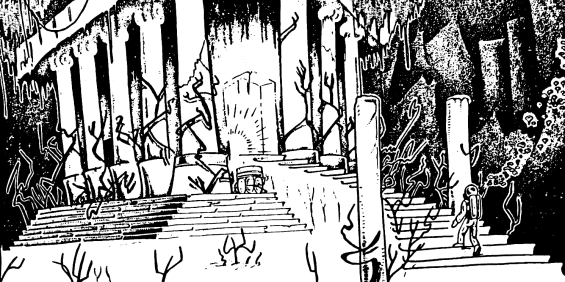
Michael C. Smith adaptation of Cool Air - from Skull Comics No. 4 (1972)

Cool Air by H.P. Lovecraft- illustration by Harry Ferman

Providence #01, Regular - JACEN BURROWS
Providence #01, Portrait - JACEN BURROWS
Providence #01, Women Of H.P.L. - JACEN BURROWS

Cool Air by H.P. Lovecraft

Posted by Jesse Willis