Fantasy and Science Fiction: The Human Mind, Our Modern World with Eric Rabkin

SFFaudio News

Our good friend, Professor Eric S. Rabkin, is teaching one of the free summer Coursera courses. It’s entitled Fantasy and Science Fiction: The Human Mind, Our Modern World and all of the required readings, except for two of the novels, are available free online!

Here’s the official description:

Fantasy is a key term both in psychology and in the art and artifice of humanity. The things we make, including our stories, reflect, serve, and often shape our needs and desires. We see this everywhere from fairy tale to kiddie lit to myth; from “Cinderella” to Alice in Wonderland to Superman; from building a fort as a child to building ideal, planned cities as whole societies. Fantasy in ways both entertaining and practical serves our persistent needs and desires and illuminates the human mind. Fantasy expresses itself in many ways, from the comfort we feel in the godlike powers of a fairy godmother to the seductive unease we feel confronting Dracula. From a practical viewpoint, of all the fictional forms that fantasy takes, science fiction, from Frankenstein to Avatar, is the most important in our modern world because it is the only kind that explicitly recognizes the profound ways in which science and technology, those key products of the human mind, shape not only our world but our very hopes and fears. This course will explore Fantasy in general and Science Fiction in specific both as art and as insights into ourselves and our world.

This course comprises ten units. Each will include a significant reading, typically a novel or a selection of shorter works. I will offer video discussions of each of the readings and also of more general topics in art and psychology that those readings help illuminate. Each unit will include online quizzes and ask you to write a brief essay offering your own insights into the reading. In order, the units are:

Grimm — Children’s and Household Tales
Carroll — Alice’s Adventures in Wonderland and Through the Looking-Glass
Stoker — Dracula
Shelley — Frankenstein
Hawthorne & Poe — Stories and Poems
Wells — The Island of Dr. Moreau, The Invisible Man, “The Country of the Blind,” “The Star
Burroughs & Gilman — A Princess of Mars & Herland
Bradbury — The Martian Chronicles
LeGuin — The Left Hand of Darkness
Doctorow — Little Brother

In Unit I, the specific stories are the ones in the Lucy Crane translation (1886) which was published by Dover and is available online through Project Gutenberg (http://www.gutenberg.org/ebooks/5314). In Unit V, the specific readings are: Hawthorne’s “The Birthmark,” “Rappaccini’s Daughter,” “Dr. Heidegger’s Experiment,” and “The Artist of the Beautiful“; Poe’s “The Fall of the House of Usher,” “The Tell-Tale Heart,” “The Black Cat,” “The Facts in the Case of M. Valdemar,” “The Bells,” “The Raven,” “Annabel Lee.” All the readings except Ray Bradbury’s The Martian Chronicles and Ursula K. LeGuin’s The Left Hand of Darkness will be available online at no charge.

[thanks Jenny!]

Posted by Jesse Willis

The SFFaudio Podcast #164 – READALONG: The House On The Borderland by William Hope Hodgson

Podcast

The SFFaudio PodcastThe SFFaudio Podcast #164 – Jesse, Wayne June and Mirko Stauch talk about The House On the Borderland by William Hope Hodgson.

Talked about on today’s show:
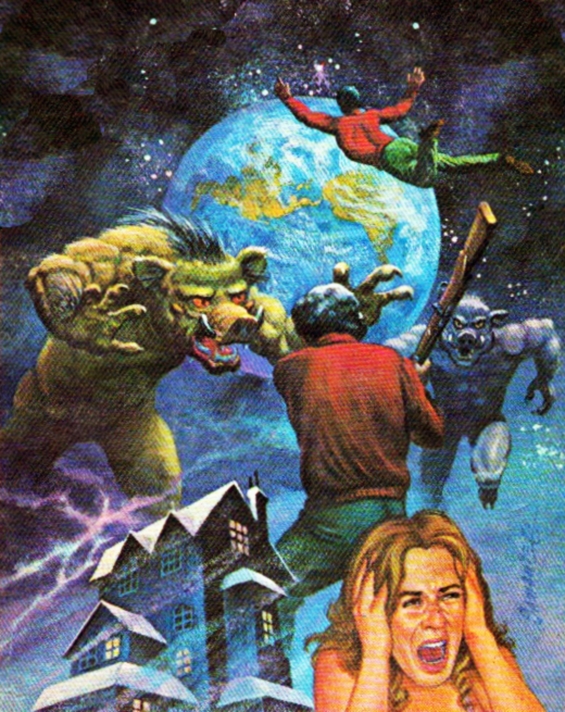
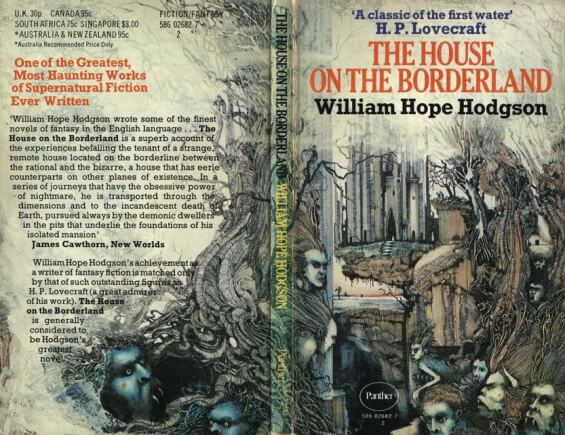
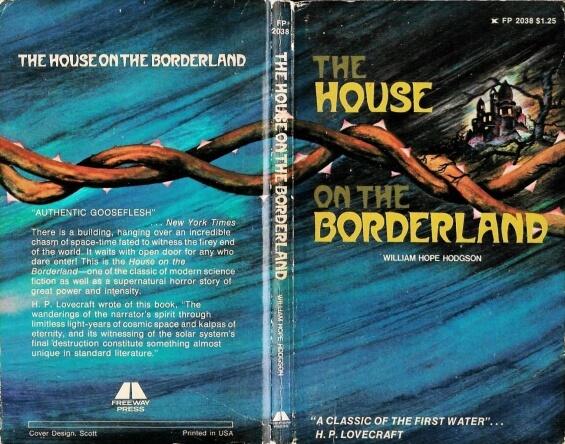
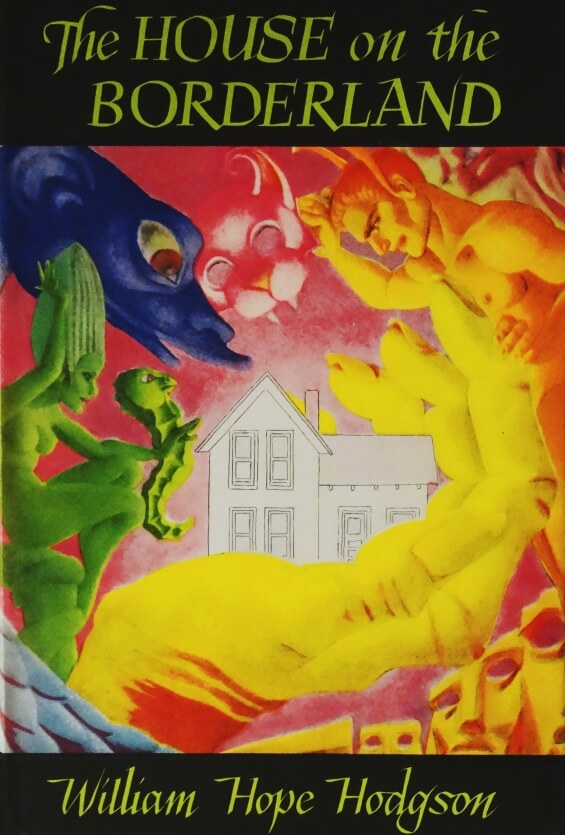
Wayne undersold the novel, it’s shockingly interesting, you can really see the influence on Lovecraft, Supernatural Horror In Literature by H.P. Lovecraft, blasphemous hybrid anomalies, “a classic of the first water”, the framing sequence, The Willows by Algernon Blackwood, description of sense experience, the best you can expect from the universe is indifference, cosmic horror, Olaf Stapledon, Star Maker, Last And First Men, reading in translation, Chad Pfifer, the readalong concept, getting into the book, Under The Knife by H.G. Wells, the swine beasts, the sister – “she knows he’s fucking nuts”, there’s a lot of going to bed in this book, a very relatable character, Arthur C. Clarke, one of the finest works of Science Fiction ever written, marking the transition from Gothic horror to cosmic horror, 2001: A Space Odyssey, the cover art, the Corben comic book cover, the town (or street) that can’t be found, it’s a kind of haunted house story, compression of time, Einsteinian relativity, Pepper is dead and dust, Brian Stableford, Camille Flammarion, The Night Lands by William Hope Hodgson, Edgar Rice Burroughs, Percival Lowell, S.T. Joshi, parallel development, authors write cosmic horror in cosmic horror time, astronomy,

“In the future, when the end of things will arrive on this earth, the event will then pass completely unperceived in the universe. The stars will continue to shine after the extinction of our sun, as they already shone before our existence.”

Enlightenment thinking and the decline of religion – tying your own shoes for eternity, The Raven by Edgar Allan Poe, you can’t love anything in this universe, the jade house in the arena, mythological creatures, Kalpas (is Sanskrit for aeons), it’s meta, before this book we’re living in a world run by God and after this book were living in a post God world, deep time, the recluse, are the swine people are the villagers, what book is the recluse reading?, two incommensurable realities, Messrs Tonnison and Berreggnog, haunting, Clarke’s third law, Poltergeist, the door inward, the start as poets but they don’t end that way, the unnamed lover (let’s call her Lenore), The Crawling Chaos (SFFaudio Podcast #138), The Conqueror Worm by Edgar Allan Poe, The House Of Usher, Roger Caillois: “The fantastic is always a break in the acknowledged order, an irruption of the inadmissible within the changeless everyday legality” (from Au Coeur Du Fantastique), reading old literature, C.S. Lewis, a passion for commas, a gripping book (while the character’s mind wanders), a pregnant book.

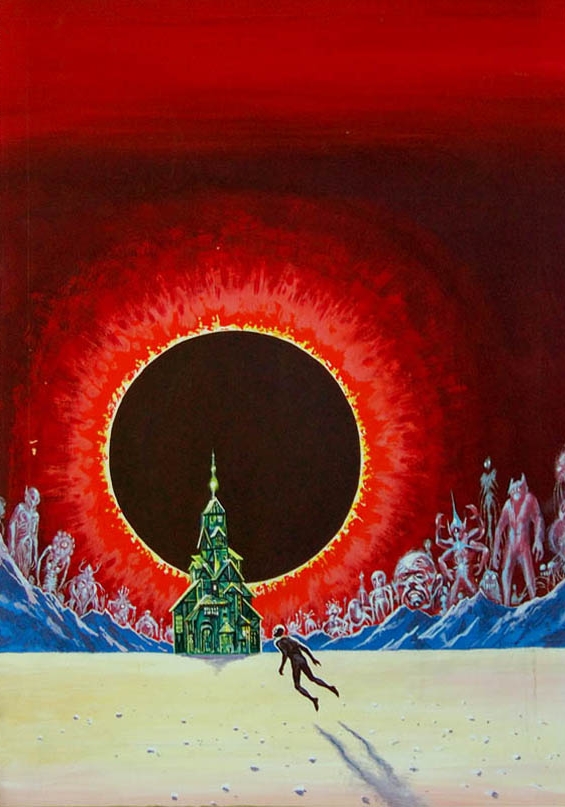
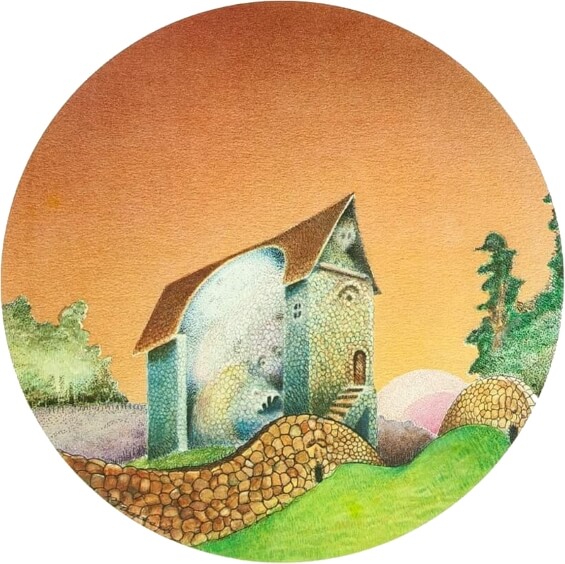
Ed Emshwiller painting for The House On The Borderland by William Hope Hodgson

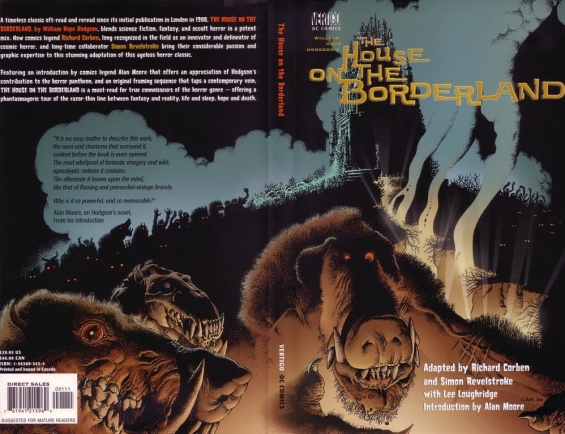
Vertigo Richard Corben -The House On The Borderland

William Hope Hodgson's The House On The Borderland

The House On The Borderland by William Hope Hodgson - illustration by Ian Miller

Freeway Press - The House On The Borderland by William Hope Hodgson

The House On The Borderland by William Hope Hodgson - dustjacket

The House On The Borderland - illustration by Peter Manesis

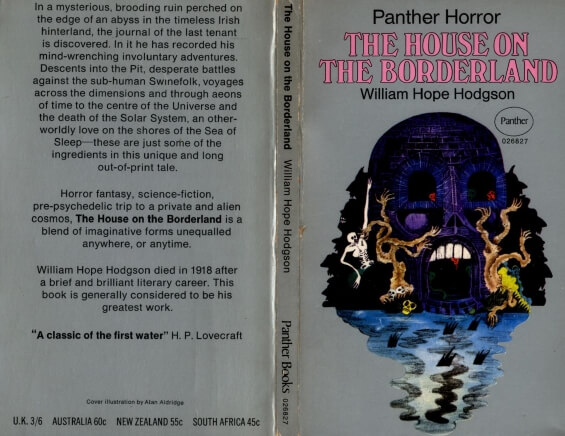
PANTHER - The House On The Borderland by William Hope Hodgson

Posted by Jesse Willis

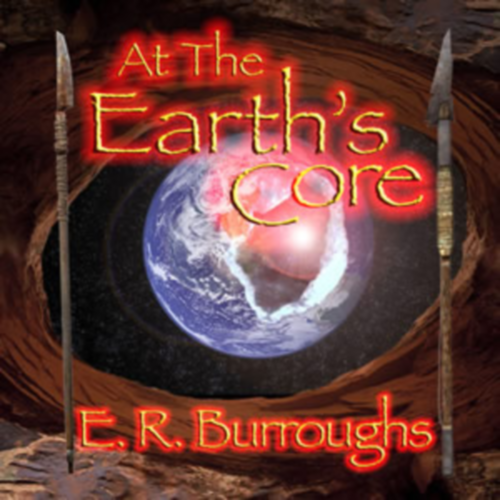
Featured Promotion: At The Earth’s Core and The House On The Borderland

Featured Promotion

I’ve put up a couple of new ads on the top right of the website. They’re for the latest projects by two excellent audiobook narrators:

The House On The Borderland by William Hope Hodgson – READ BY WAYNE JUNE

and

At The Earth’s Core by Edgar Rice Burroughs – READ BY DAVID STIFEL

Both David and Wayne have taken public domain novels and made them into wondrous unabridged audiobooks. Both narrators are consummate professionals, as well as being two really cool dudes who love the stuff they’re recording.

Both have also made their audiobooks available for FREE (Stifel podcasts his audiobooks and June streams them).

I’ve heard both novels, and I can heartily recommend them to you. In fact, both The House On The Borderland by William Hope Hodgson and At The Earth’s Core by Edgar Rice Burroughs are the subject of individual upcoming readalongs for The SFFaudio Podcast!

Click on through – and if you can afford it, please consider buying their audiobooks. These guys are truly awesome, I consider their audiobooks the definite editions, and their work is absolutely worth supporting.

Posted by Jesse Willis

The SFFaudio Podcast #158 – READALONG: The Syndic by C.M. Kornbluth

Podcast

The SFFaudio PodcastThe SFFaudio Podcast #158 – Last week’s podcast was an unabridged reading of The Syndic by C.M. Kornbluth. This week Jesse discusses it with the narrator, Mark Douglas Nelson!

Talked about on today’s show:
SciPodBooks.com, the SciPodCast, The Syndic by C.M. Kornbluth, The City At World’s End by Edmond Hamilton, the virtues of democracy, Oath Of Fealty by Larry Niven and Jerry Pournelle, H. Beam Piper, Space Viking, a wealth of ideas, Frederik Pohl, the story as a straw man, Robert A. Heinlein, telepathy, witches, dystopia, utopia, polo played with jeeps (mounted with 50 caliber machine guns), the syndicate vs. the mob, Ireland, Iceland, libertarianism, the Prometheus Unbound review of The Syndic, polyandry, an economy run on alcohol, sex, and gambling, laissez faire capitalism, monopolies, robber barons, taxes vs. shakedowns, “a real mess of a book”, should a society compromise its ideals to save itself?, is the joke on us?, a velvet gloved invisible hand, The High Crusade by Poul Anderson, the children’s crusade, WWII, rule by mob vs. rule by mobsters, Ron Paul, the sustainability of a war based economy need not much concern the arms manufacturer, Isaac Asimov, The City At World’s End has a real plot, disaster stories, new ideas trump big flaws, “writing by the seat of your pants”, space opera, E.E. “Doc” Smith, respect for science and scientists, Farnham’s Freehold by Robert A. Heinlein, The Green Odyssey by Philip Jose Farmer, LibriVox.org, Riverworld series, rolling ships, Hyperion by Dan Simmons, the problem of endless series, StarShipSofa, The Truth Is A Cave In The Black Mountains by Neil Gaiman, A Princess Of Mars by Edgar Rice Burroughs, A Voyage To Arcturus by David Lindsay, “philosophy, philosophy, philosophy”, it starts with a séance, C.S. Lewis, Right Ho, Jeeves by P.G. Wodehouse, Jeeves And Wooster, Leave It To Jeeves, LibriVox’s new funding (from the Andrew W. Mellon Foundation), Orson Scott Card, Harlan Ellison, Airborn by Kenneth Oppel, Gregg Margarite, Lone Star Planet by H. Beam Piper, Kevin J. Anderson, Principles Of Economics, iambik audio, Wonder Audio, All Or Nothing by Preston L. Allen, The Tattoo Murder Case by Akimitsu Takagi, Toshiro Mifune, Akira Kurosawa, High And Low, Netflix, Sweet And Lowdown, One O’Clock Jump by Lise McClendon, A Is For Alibi by Sue Grafton, Talents Incorporated by Murray Leinster, goofy, the William Woodsworth Microphone Showdown, do expensive mics make great narrators?

Posted by Jesse Willis

David Stifel’s Home Studio

SFFaudio News

David Stifel, of The Fantastic Worlds of Edgar Rice Burroughs website, sent me the pics of his new home recording studio booth. You may recall that David joined us for SFFaudio Podcast #137 in which we discussed A Princess Of Mars by Edgar Rice Burroughs (and his wonderful narration of it). Check these out:

booth exterior
booth doors open
booth

I find it baffling that I’ve never posted anything like this before. Get it? BAFFLING!

Posted by Jesse Willis